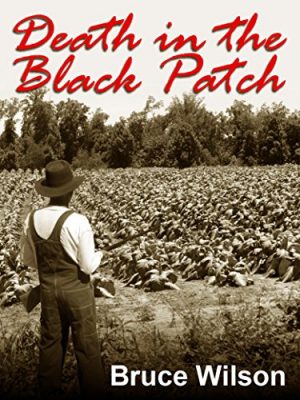
Drawing on fact, fable and inherited lore, author Bruce Wilson has created an imaginative, at times unsettling view of upheaval in southern American history and its effects on local culture, economy and family ties.
With a large brood to care for, Wes Wilson grows tobacco in a region known as the Dark Patch, a cluster of counties in Kentucky and Tennessee. Their way of life suddenly comes under threat when the greedy reach of the newly burgeoning American Tobacco Company seeks a monopoly on the crop.
In a powerful pushback, zealous local farmers form an Association sworn to combat ATC’s grip on their livelihood. To join the Association, or to ally with ATC, becomes Wes’s obsessive dilemma. Day by day he calls on his brother, cousin, and friends to see which way they are tending. Night by night he and his son Anthie keep vigil with firearms, lest their property becomes one of the targets of the Association, which menaces, even destroys, farms whose owners, like Wes, are still uncommitted in their loyalties. Wes’s steadfast wife Zora carries on the ceaseless round of women’s tasks, worrying and praying as she sees Wes more likely to take comfort from whiskey than from the Lord. The situation grows daily more perilous until Wes realizes that someone he believed he could trust with his secrets has turned traitor, and hell finally breaks loose.
Author Wilson, a History Teacher by trade, has pieced his novel together from tales told by his father and a few snippets of evidence detailing his forebears’ involvement in what became known as the Black Patch Tobacco Wars of 1904-1909. Wilson’s settings and dialog are well rooted in the time and region. His ability to delve into the minds of his characters is a notable strength.
Wes is introspective but gutsy—willing to step outside the comfort of his culture to examine all sides of the questions he faces while defending his homestead and family at any cost. Zora is the long-suffering partner who knows her husband as both a hard-drinking man with a deep well of anger and a hero who will put himself at risk to maintain his responsibilities. Their oldest boy, Anthie, is in love, and, seeking more time to pursue romance, often resents his father’s domination, while stolidly obeying him. Others add to the suspenseful plot creating depth and intrigue that will likely thrill readers.
Wilson’s Death in the Black Patch is historical fiction at its best, melding a little- known patch of the big American picture with an exploration of one man’s willingness to fight corruption, destruction, and greed with the few weapons at his disposal—weapons that include a dogged determination to do what is right.
Death in the Black Patch by Bruce Wilson won 1st Place in the 2017 CIBAs for American Western Fiction, the Laramie Awards.
Anyone who has fantasized about what it would be like to be a time traveler or have had a strong desire to put on a thinking cap then solve a puzzling murder might well find both of these wishes fulfilled vicariously through Keith Tittle’s début novel, Drawn Back.
Set in Portland, Oregon, this tale of greed, corruption, ruthless murder and love that spans many decades shifts back and forth between 1929 as the stock market crash approaches and the much-less calamitous year of 1991.
A dreadful murder takes place at the beginning of the novel to kick off the action in 1929; a preamble of what’s to come. Fast-forward to 1991 as Professor Patrick O’Connell is just beginning his tenure at Portland State’s history department, with a wage that’s not quite a living wage and a desire to find a place to live while he grades papers and contemplates his failed marriage. The answer comes sooner than expected when he meets the beautiful and charming Rachel Wirth, whose wily grandmother, Julia, insists that he move into her family home gratis instead of paying rent.
In his 10-Question Author Interview, Tittle admits that his approach to storytelling is strongly influenced by his love of movies from the 1930s and ‘40s – and a very good influence indeed. Tittle weaves a solid who-dun-it character-driven story, a multifaceted mystery incorporating elements of romance and time-travel. Despite the need for one more editorial pass, Drawn Back invites the readers to “…explore its characters’ motivations and morality in the darkest of circumstances.” A Matter of Justice, the author’s second title won the CIBA 2016 Clue Awards for Mystery and Suspense novels.
Unable to truly comprehend his newfound luck with these two remarkable women, O’Connell wanders about the otherwise empty house (both women live elsewhere) and literally steps back into the same dwelling 62 years earlier and becomes the sole witness of a well-planned murder. Then, by intervening with a critical piece of “placed” evidence, the wheels are set in motion for an incredible journey through time where any wrong move by the “guest” could have disastrous ramifications in the future yet to come.
Tittle delivers a most believable narrative that finds its focus around corporate greed, villains who are willing to do whatever it takes to “win,” and two women who are waiting for their hero to uncover the truth.
The question becomes, can our hero right the wrongs of the past without destroying the future? Readers will delight in the answers.
Growing up in an estranged family atmosphere brings questions that beg for answers in this complex multigenerational memoir.
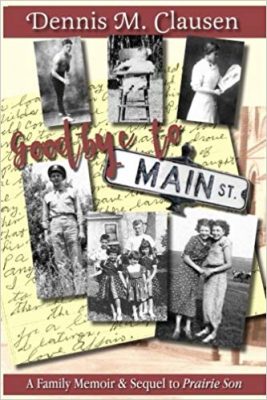
Author Dennis M. Clausen recalls his early years growing up in the latter half of the last century with a detached, mostly absent father and a disabled, emotionally conflicted mother. In his tribute to small-town America, the author eloquently sketches the Minnesota village where he spent most of his youth, a place where the awnings on Main Street were opened and shut at the same time each day, and family secrets were hinted at but never discussed. Among the secrets was the enigma surrounding Clausen’s father, Lloyd, a wanderer who could never settle in one place, keep one job or stay with one woman for very long.
There are many idyllic elements to Dennis’s upbringing. Though poor and often struggling for basic necessities, his mother and siblings got by, sometimes helped by the largesse of the community. On occasion, a visitor might sleep on the couch, and tuck nickels or dimes strategically into the sofa’s cushions, leaving Dennis and his brother, Derl, the means to go to the local movie theater. The boys also managed a paper route together.
Reaching college age, there was no money, so Dennis stayed in his hometown at a newly created branch of the university. There he was fortunate to have as a mentor a legendary professor of American literature who recognized what the town’s librarian had noticed years before: that Dennis had great zeal for reading.
As Clausen matured and closely observed the clan he was born into, certain flaws appeared in the pleasant but rather fuzzy picture that had been painted for him. He felt increasingly guided by hints – and finally by some handwritten memoirs from his father – to explore their shared past. In the years of Clausen’s youth, polio was a killer stalking the country and then was miraculously eliminated, but the psychological concept of “attachment disorder,” which undoubtedly afflicted Lloyd, was unheard of. In sifting through his father’s memorabilia, Clausen learned that Lloyd’s adoptive parents always regarded their charge more as free labor than loved one. In Prairie Son, Clausen has written vividly of Lloyd’s life as a mistreated orphan. The many remarkable results of that investigative work comprise the second portion of Goodbye to Main Street, complete with documentation and photographs in what can be seen as Clausen’s second vocation as the family detective.
Clausen’s work has garnered a following among family both here and abroad who have contributed to his diligent search for his ancestry and among orphans and children of orphans who sense his empathy. There are many poignant moments in his coming-of-age account that will resonate with the experiences of an earlier generation of Americans. Perhaps this is the pull of Clausen’s memoir, the story of how one boy grew to manhood and overcame the odds, to become something other than what he was born into: from grinding poverty to successful academic.
Now, after making numerous nostalgic visits to the old hometown and to various gravesites as part of his delving into family lore, he has come to see life as “a journey” and to respect its mysteries.
Goodbye to Main Street won 1st Place in the CIBAs 2018 Journey Awards for Narrative Non-Fiction.
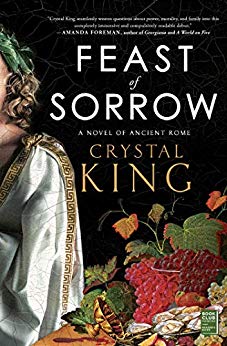
In the twenty-sixth year of Augustus Caesar’s reign, Marcus Gavius Apicius purchased nineteen-year-old Thrasius for twenty thousand denarii, enough money to buy more than sixty normal slaves, but Thrasius is more than the typical slave. Born to a slave woman who died in childbirth and whose name he never knew, Thrasius has trained for seven years as a cook in the kitchens of Flavius Maximus, a man known for his unforgettable dinners, and Apicius hopes the young coquus will lead him to the ultimate culinary fame, gastronomic advisor to Caesar himself.
Grateful to be saved from the cruelty of the slave trader, Thrasius throws himself headlong into the new role and proves tremendously successful, but an ominous prophecy given to Apicius on the day he purchased Thrasius looms over every achievement. As Apicius climbs higher and higher in the Roman political world, Thrasius becomes an ever-growing asset eventually becoming more advisor than cook and feels the pressure of helping Apicius accomplish his fame at any cost, even his family and friends. His chase for fame becomes both consuming and destructive. Though Apicius refuses to see the price of his obsession, Thrasius knows a reckoning is coming and prays the gods can save him from the man who controls his life.
This masterful thirty-year tale rejuvenates life in ancient Rome, a place where favors become life-changing, where people are bought and sold, and where death could reside in a glass of wine or in a snake-filled box. The complex, rich storyline, entwines real Romans with endearing fictional characters. Readers will recognize historical figures like Pliny and Ovid, who burst to life on the pages of this novel. Though perhaps not as well-known as some of the other characters, Marcus Gavius Apicius, an overly ambitious man who bankrupted his vast fortunes with his sumptuous cenas and expensive gifts, is credited with the first cookbook and a cooking school. Readers will see the rise and fall of this man who desired fame over everything. His single-minded ambition is contrasted with Thrasius, his fictional foil in many respects. Where Apicius wants his recipes in every Roman kitchen and his name spoken in jealous whispers, Thrasius seeks only to create good food and safe life for his love, Passia.
Fate plays a major role in the lives of the characters and poses important philosophical questions throughout the novel. From the opening pages, the importance Romans placed on omens, fortunes, and premonitions is evident. Apicius, a man who refuses to acknowledge the undesirable part of his sinister fortune, often with acts with dire consequences, begging the question is fate fixed, or do men create their own? In taking charge of his destiny, does he, in essence, destroy himself?
Even when he is told that he will have “as much sadness as there is success,” he continues to connive and conspire until he loses everything. He finally gains his coveted position but at the expense of a man’s life and a debt which will take everyone he loves.
In his blindness to everything but fame, he turns this prophecy into truth, bringing about the “greater failures [clustered] to the sides” of each success. Even the wholesome Thrasius isn’t immune to the question of fate versus free will when he curses Sejanus, a cruel, unscrupulous man. Though his curse takes twenty-five years to come to fruition, Thrasius wonders how much blood is on his hands when the culmination of the curse also results in the death of people Thrasius loves. Has he doomed himself by fiddling with fate? In taking fate into their own hands, both Apicius and Thrasius pay enormous costs.
Obscene wealth and devastating poverty. The height of fame and the desolation of obscurity. On the backs of many, one man builds his legacy while another prays for freedom. Feast of Sorrow creates a world where curses are feared, blessings hinge on blood sacrifice, and history becomes real.
Feast of Sorrow by Crystal King won 1st Place in the CIBA 2017 Chaucer Awards for Early Historical Fiction.
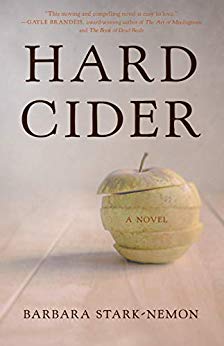
Abbie Rose Stone is a woman determined to follow her newly discovered dream of producing her own craft hard apple cider while navigating the ups and downs of family life with her grown sons and husband.
Abbie Rose knows how to deal with adversity, and dives headfirst into this new chapter of her life with energy and passion. She describes her early adulthood years of infertility struggles and the hardscrabble way she built her young family through invasive medical procedures, a surrogate attempt, and adoption barriers.
After finishing a successful career in education and raising her three sons, Abbie Rose now sees an opportunity to create a new segment of her life’s work in a blossoming business venture. She’s set to take on this new venture by herself, determined to succeed, with or without her husband’s support. Yet, while she lays out her meticulous plans for her cider business, life keeps happening around her, attempting to derail Abbie Rose at every turn.
Hard Cider is a well-researched second novel for Stark-Nemon, providing intricate details on everything from orchard planning and cider creation to knitted handicrafts. Stark-Nemon leaves no stone unturned and is meticulous with her descriptions of the lands and seasons of Michigan. So much so, that readers may leave this story ready to travel to this Midwest region and will find familiarity in the real-life scenes based on her elaborate imagery.
The story builds slowly, relying upon richly descriptive settings to create the Stone family and the world in which they live. The tidbits of information presented about infertility, a shocking house-fire, parenting a troubled child, and marital woes are intriguing, and some may find, too brief, leaving the reader wanting more. Which isn’t altogether a bad thing. In fact, the strength of this work is that the reader is left wanting more, imagining what might happen next for this cast of characters we’re not quite ready to leave behind.
A central theme of this down-to-earth story is the word new. New business ventures, new life changes, new family mixed with old, and new lives for the Stone family. Abbie Rose handles each of these life-altering adaptions with courage and a reflecting thoughtfulness. She teaches those around her what it means to manage life with a grace we can all hope to emulate.
All in all, Hard Cider is a thoughtful literary novel of one woman and her ambitions to rise above what life has handed her to create an experience of beauty, one that is formed not void of hardship, but despite it. Recommended.
Hard Cider won Grand Prize in the CIBA 2018 Somerset Awards for Literary Fiction.
In 1968, Tyrone Lewis was murdered by KKK members for daring to love Allie Camhurst, a white preacher’s daughter. Tyrone and Allie had secretly been dating for months, and when Allie discovered she was pregnant, the two planned to elope when four men in white robes and hoods stabbed Tyrone and raped Allie. Fearing for her life, Allie escaped her hometown of Witherston, Georgia, and began a new life with a new identity.
Fifty years later, Witherston is again the scene of what appears to be a racially-motivated murder, but this time Crockett Wood, a member of a white supremacist group known as the Saxxons, has been shot to death. The killing comes hard on the heels of a controversial decision by the Witherston town council which recently voted to make Witherston a sanctuary city, taking in and aiding illegal aliens by refusing to cooperate with ICE (Immigration and Customs Enforcement) and drawing criticism both within and without. This small town becomes split along racial lines, and tensions boil over as the past and the present collide when Dr. Charlotte “Lottie” Byrd, a retired college professor, opens her own investigation into Tyrone’s case and finds its twisted connection to Wood’s recent murder.
The fictional town of Witherston, Georgia, is an American patchwork quilt of diversity, and racism plays a prominent role. From a native Cherokee village to same-sex couples who call the small town home, Witherston is a celebration of heterogeneity, a microcosm for modern America. Though the majority of citizens feel their community is advanced and forward-thinking, it becomes clear that prejudice is not dead when the Saxxons threaten the town – mirroring events occurring in America in recent times. As the threats become more vicious, the Witherstonians must decide whether to let the hate of some overwhelm the lives of all. A clear message emerges in the attitude of characters like Lottie, Beau Lodge, and the Arroyo twins. Despite the hate-spewing white supremacists, the townspeople band together and choose happiness and unity over fear and factions.
Lottie’s nephews, Jaime, and Jorge Arroyo, and their friend Beau Lodge are the true champions of the novel both literally and figuratively. As biracial millennials, these seventeen-year-olds represent all that is good in ignoring racial distinctions and, instead, celebrating those differences. The boys are smart and clever and most importantly, courageous in the face of prejudice. It is through that bravery that the culminating events occur.
Saxxons in Witherston is sure to find its audience among those who enjoy history, as the author has done her research, and fans of the Witherston Murder Mystery series.
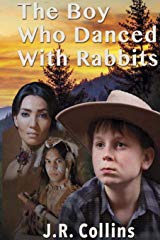
J.R. Collins has given a voice to an ancestor, Jeb Collins, who was almost killed at birth – twice. His survival is significant for that, but also for the fact that in another part of the Georgia mountains, a Cherokee boy, Wolf, is born on the same night. The families of the two boys will meet and mix in the early days of American settlement when everyone had to struggle for survival, and such friendships were still possible.
Jeb learns smatterings of Cherokee language, and Wolf and his kin pick up English with a sharp mountain twang from their settler neighbors. Together Jeb and Wolf explore the mystical, mountainous part of Appalachia named Cho-E-Sto-E for the prevalence of rabbits there.
Both of the boys’ fathers remember and despise the British who killed the American rebels and betrayed the Indians who agreed to help them; and both hate all evil-doers, like the ones who kidnapped Jeb’s sister or the sneak-thieves who stole from Jeb’s family. But most of all, they will stand united against a nearby tribe that wants Wolf’s sister as a bride for their leader.
The author grew up in the region he describes so vividly in this, his first novel, and has a sequel, the award-winning, Living Where the Rabbits Dance. The story, focusing on the boy’s view of a sometimes-dangerous world, is told in a satisfyingly recognizable dialect, using many endearing folk expressions – one of our favorites being, My heart melted like butter on a hot biscuit.
This multilayered saga presages the time that will come when the Cherokees will be marched away on the Trail of Tears, and family connections like those depicted here will be destroyed in the name of Manifest Destiny. It is heartening to read about the few years enjoyed by such friends as Jeb and Wolf when they could roam the land together with the approval of their elders. There is a finely-honed homage paid to two religions, the Christianity of the Collins clan and the animist visionary beliefs of the Cherokees, each playing a role in Jeb’s perceptions of the world around him.
From learning to fish to making bead bracelets from local gemstones, to seeing visions invoked by Cherokee spirits, here is a tale of a boy coming of age in a significant time and place. Collins’ book records that history, that atmosphere, with equal measures of zeal and reverence.
The Boy Who Danced with Rabbits by J. R. Collins won First Place in the 2017 CIBAs for the Goethe Awards, Western Fiction.
While mothers are as varied and diverse as the many varieties of flowers in the world, none of us would be here without them! When I think of the word “mother,” there is no possible way I can disassociate the word from my mother. She is strong-willed, strong-minded, and strong-opinioned. And her love rivals the strength of the greatest army the world has ever known. She is my mother. She is the one person who loves me enough to tell me when I am wrong and, yet, loves me anyway.
How and When was “Mother’s Day” Started
As all things of Western Civilisation seem to have started in ancient Greece it seems (reference: My Big Fat Greek Wedding), so did Mother’s Day. Well, sort of, honoring the goddess, Cybele/Rhea (depending on time and region). The early Christian Church co-opted the day, calling it “Mothering Sunday,” a festival day in which the faithful would return to the church of their birth.
When is Mother’s Day Celebrated Around the World?
Mother’s Day is celebrated on thesecond Sunday in May, in the USA, Canada, most European countries, Australia, New Zealand, India, China, Japan, the Philippines, and South Africa.
The UK and Ireland celebrate Mother’s Day on the fourth Sunday in Lent.
Most Arab countries celebrate Mother’s Day on March 21st (vernal equinox).
Most East European countries celebrate Mother’s Day on March 8th. For a complete overview of the dates of Mother’s Day around the world see Mother’s Day on Wikipedia.
The Rise of Mother’s Day in America
Before the Civil War, Ann Jarvis and her friend, Julia Ward Howe decided to set up regional clubs, “Mothers Day Work Clubs” designed to teach young mothers how to care for their infants. Their involvement and the clubs continued throughout the Civil War and once the war ended, they held a Mothers’ Friendship Day and invited both Union and Confederate soldiers and their mothers to attend. Big strides toward reconciliation were made through the efforts of these women.
The women who inspired Mother’s Day were social activists, abolitionists, suffragettes, and educators who wanted to make their world – and their children’s world a much better place. And that is something to celebrate!
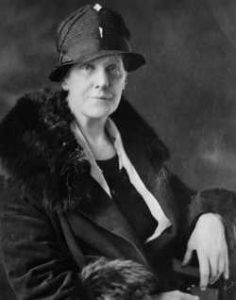
It was all made a legal holiday when Anna Jarvis, inspired by her social activist mother, Ann Maria Reeves Jarvis, decided to memorialize a day in which to celebrate her mother. In 1907, three years after her mother’s death, she did just that. She chose a white carnation to inspire people to remember their mothers and what they sacrificed for them.
“Its whiteness is to symbolize the truth, purity and broad-charity of mother love; its fragrance, her memory, and her prayers. The carnation does not drop its petals, but hugs them to its heart as it dies, and so, too, mothers hug their children to their hearts, their mother love never dying. When I selected this flower, I was remembering my mother’s bed of white pinks (flowers)…” – Anna Jarvis (quote)
It wasn’t until 1914 that Woodrow Wilson signed a decree that designated the second Sunday in May as the United States official day to celebrate Mother’s Day. Of course, Mother’s Day is celebrated all over the world (in at least 49 countries) on different days.
It should be noted that Anna Jarvis wasn’t very happy with the commercialization of Mother’s Day and she fought long and hard to try and get it withdrawn as a national holiday, but we all know how that ended. And if you don’t, well, let’s just say it is a most intriguing mystery…
Suggested Reads
Because mothers are incredibly diverse in their habits and reading lists, we invite you to dive into our reviews and choose what’s you think your mother would like to read most and to perhaps enjoy the books yourself.
Chanticleer Mother’s Day Reading List!
Jaimie Ford‘s Love and Other Consolation Prizes is powerful storytelling from a master storyteller! Jaimie Ford breathes to life a little-known piece of Seattle history spanning the early to the mid 21st century. And a truly unique story of the many ways a mother’s love can manifest itself.
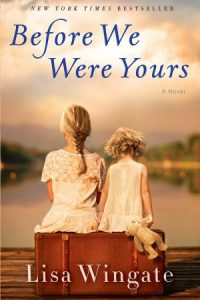
Before We Were Yours by Lisa Wingate is a disturbing look into what those who should know better, choose to do to society’s most vulnerable during the 30-years between 1920 and 1950 at the Tennessee Children’s Home Society.
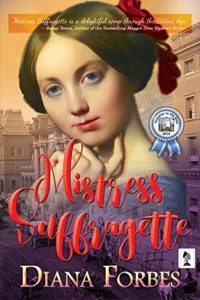
Diana Forbes‘ Mistress Suffragetteexamines the facts of life, the challenges of social restrictions, and the woes of youthful love through the eyes of a sharp-minded, sharp-shooting young woman. Mistress Suffragette is now available on Audible!
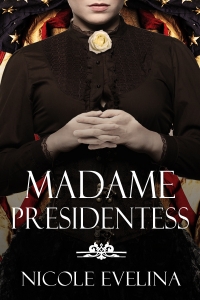
Nicole Evelina‘s Madame Presidentessis a fascinating story of a woman’s meteoric rise from rags to riches, from subservience to achievement – based on a true story that was instrumental in propelling the Suffragette Movement.
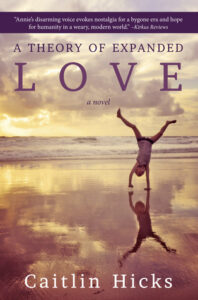
A Theory of Expanded Love by Caitlin Hicks is a bold, authentic, & captivating –a young teen in the 1960s confronts doctrine when it threatens to outweigh compassion.
Caregiving Our Loved Ones by Nanette Davis, Ph.D.Dr. Davis passes on her knowledge to caregivers for dealing with the ongoing emotional, financial and health toll of taking care of someone who will never get better.
Nick Adams‘ Away at War: A Civil War Story of the Family Left Behind is a rich and fascinating account of day-to-day life in rural America in the mid-19th century set against the backdrop of the Civil War. Taken from primary sources, this narrative brings to life all that was loved and all that was lost.
This is just the beginning of our list! To find more amazing reads in every genre, please click here to discover our favorites!
We would like to wish all mothers, mothers-to-be, stand-in mothers, and those who possess the mothering instinct, a very Happy Mother’s Day!
In 1902, the year of the Boxer Rebellion in China, five-year-old Yung Kun-ai watches as his mother buries his newborn sister in a tiny grave that she has dug with her fingers. The starving mother hadn’t been able to feed her. She kisses her son and gives him her only possession, a filigreed hairpin, then tells him he must remain in the cemetery until his “uncle” comes to take him to America, to a new life in a new world. “This is my gift to you,” she says as she shuffles away.
These words, and the poignant story that follows, bring to mind two words from the title of author Jamie Ford’s New York Times bestseller first novel—‘bitter’ and ‘sweet’. This is his third…worthy of equal praise.
Yung spends that chilly night shivering, in fear of the nearby fighting between rebels and soldiers, and in doubt of his future. But his mother’s gift does indeed come to pass. A voyage of many weeks in the hold of a freighter takes him to Seattle. His early years there are not easy, however. Fathered by a white missionary, he is a half-breed and the brunt of taunting and worse by both his peers and his elders. Nonetheless, he ably gains an education, takes the name of Ernest Young, and begins to earn a living as the twelve-year-old houseboy and driver at a high-class brothel called The Tenderloin in Seattle’s Garment District. The other occupants—servants as well as the ‘working girls’—become the family he has yearned for. Some years later, he has his own family with Gracie, a Japanese immigrant known as Fahn when he met her (for the second time) at The Tenderloin.
The story hops back and forth between the first and seventh decades of the century, centering on Seattle’s Alaska-Yukon-Pacific (AYP) Expo in 1909 and the city’s World Fair in 1962. A raffle at the former is what brings Ernest to The Tenderloin. During the latter, Ernest and Gracie’s daughter Juju, a journalist, has been asked by her editor to write a then-and-now story of the two fairs, based on interviews with old-timers who have been to both. Her primary interviewee is to be her father, she thinks, but he stalls her, offering only tidbits—nothing that would put her story on the front page. Why is he so reluctant? Is there a tale he doesn’t want to share, not only with the newspaper’s readers but even with his daughter?
This historical novel is brought to a literary level not only by the author’s expertise with language but also by the extent of his research into the facts around which the story is woven. In an Author’s Note, Ford explains that his inspiration for writing is a “never-ending appetite for lost history—the need to constantly turn over rocks and look at the squishy things underneath.”
For this novel, one of those rocks was the 1909 Alaska-Yukon-Pacific Exposition. From yellowing newspaper articles relating to the Expo, he learned that both the suffrage movement and “social evils” such as brothels (not only the moral evil but the spread of syphilis) were at their height in Seattle at that time. One article told of a child (named Ernest), who was donated by the Washington Children’s Home Society as a raffle prize at the AYP. Another described a climb up Mount Rainier by Washington suffragettes. Much was written about the plight of East Asian immigrants, economically forced into servitude and prostitution. Jamie Ford drew on these articles and other historical documentation to create this touching story and to bring to life its colorful and accurately drawn characters.
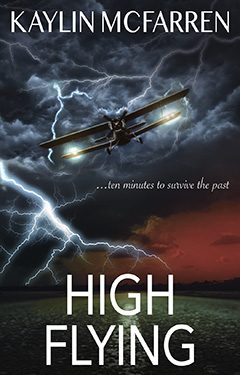
Stunt-pilot, 21-year-old Skylar Haines, honed by a childhood of adversity and trauma, is ambivalent about flying eight new maneuvers for which she’s had little preparation and no in-air practice. A lot could go wrong.
Her father, a pilot, was killed in a plane crash before she was born, triggering her mother’s downward spiral into a life of booze, drugs, and prostitution. When Skylar was seven, her mother died. As an orphan, Skylar fell into the system until her grandfather stepped in — no bed of roses there. Although she emerged an independent, savvy, and street-smart survivor who’d learned to fly along the way, those painful memories of her youth are always fresh in her mind.
Why had she agreed to fly in tandem with her mentor, Jake Brennen, for this performance? She might have said it was a lifelong dream. Or, that she did it out of love. Both would be true, but, of course, there is more…
Before she realizes it, she’s flown into the bowels of a storm, loses radio contact with Jake, and struggles to keep her plane aloft. After a near miss with another aircraft, she regains radio contact. A stranger talks her down into a world before her time.
Skylar uses everything she knows, and everything she’s learned to survive. Dylan Haines, who’s not yet her father, saves her, and she becomes entangled in his life in ways that stretch the imagination. He is caught in a web of danger and deceit destined to kill him. Skylar is tempted to intervene, but she knows his fate is set. Her father has to die, in order for her to live.
Like a modern-day H.G. Wells, Kaylin McFarren’s High Flying, ventures boldly into the fourth dimension, where history is reimagined, and epiphanies come in three-dimensional, real time. This gritty, emotionally penetrating story, set in Nevada, that not only touches upon social concerns with roots in the past but reaches into the future. The characters have depth, and the dialogue is sparkling authenticity. Here’s a story where everyone has an agenda, there are more crooks than cops, and bullets fly with abandon. In other words, a deliciously twisted sci-fi mystery with plenty of danger and romance!

 Drawing on fact, fable and inherited lore, author Bruce Wilson has created an imaginative, at times unsettling view of upheaval in southern American history and its effects on local culture, economy and family ties.