Tag: Endangered animals

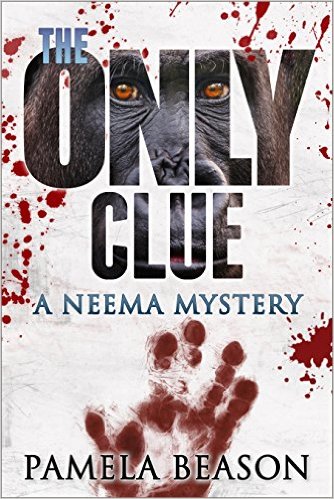
  • The ONLY CLUE — The Neema Mystery Series, Book 2 by Pamela Beason – a gorilla mystery

    The ONLY CLUE — The Neema Mystery Series, Book 2 by Pamela Beason – a gorilla mystery

    When three gorillas disappear, Dr. Grace McKenna stands to lose not only her livelihood and her professional reputation, but also three close friends, in this lively new novel by animal advocate and author Pamela Beason.

    Grace, assisted by a crew of young advocates from the Animal Rights Union,  reluctantly fulfills a request from her project funders to hold a public exhibit of Neema, a mother gorilla, her baby Kanoni, and Neema’s giant, grumpy mate, Gumu. A dedicated cop, Matt Finn, supplies the project’s security protection (and Grace’s romantic interest).

    After the public event,  the apes vanish, a huge pool of blood on the floor of the gorilla compound is “the only clue” to what might have happened. Did they escape into the wild?  Were they “liberated” by ARU operatives, or captured by exotic animal traders?

    Grace can’t believe Neema would desert her, because the two have a close kinship based on their mutual use of sign language. Matt is sure someone connected with the project freed the gorillas on principle, or stole them for cash. He focuses on Tony Zyrnek, father of Jon, Grace’s most trusted assistant. Tony just got out of prison, is charming to a fault, and has a slew of highly questionable, greedy associates.

    The project goes on lockdown, with Grace justifiably fearful of the consequences if word of the disappearance gets out. Matt and Grace are torn apart by the calamity, making it harder for both to function.

    Matt’s investigations become increasingly complicated by crimes outside the compound, but his thorough police work gradually uncovers important evidence about the fate of the missing apes. Major revelations also result from Grace’s desperate delving into the bizarre international underworld where rare animals are bred and sold for profit.

    Beason’s book, the second in her “Neema” series, will excite, enchant, and educate. Readers unaware of the innate intelligence of apes may be surprised to learn that Neema’s rather sophisticated communication abilities are based on verified fact. Beason skillfully shows us the human world through gorilla eyes.

    Both dedicated animal rights proponents and people new to the dynamics of ape/human interaction will empathize with Gumu, Neema, and Kanoni’s struggles; while fans of the “locked room mystery” genre will fix their attention on the plight of the humans and their efforts to find more clues before it’s too late.

    The Only Clue is a well-crafted mystery to inform as well as intrigue and captivate, opening an engaging realm of fictional exploration and speculation—the special bond that can happen between gorillas and people. Highly recommended.
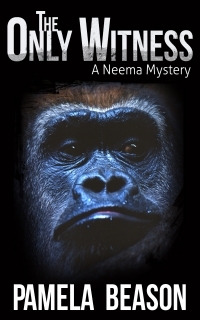
  • Can a Gorilla Identify the Criminal? Read the 1st in the NEEMA Mystery Series by Pamela Beason for 99cents – Left Coast Crime Special

    The Only Witness by Pamela BeasonNeema is a “signing gorilla” that is part of an animal communication research project (think KoKo). She is the only witness to a crime. Lives are at stake and the clock is ticking. Read Chanticleer’s review here.  In honor of Crimelandia Left Coast Crime Scene in Portland, Oregon, Pamela Beason is putting her Chanticleer Grand Prize winner THE ONLY WITNESS  on sale for 99cents.
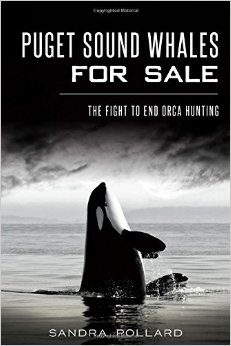
  • PUGET SOUND WHALES FOR SALE: The FIGHT to END ORCA HUNTING by Sandra Pollard

    PUGET SOUND WHALES FOR SALE: The FIGHT to END ORCA HUNTING by Sandra Pollard

    This is the history of two parallel and competing movements involving the beautiful Puget Sound orcas. One is the orcas-as-commodities commercial movement to capture the killer whales and sell them to marine parks all over the world, where they are kept in small pens and trained to perform for public amusement. The other is the growing appreciation of both scientists and the general public for orcas as intelligent, sensitive, family-oriented wild creatures deserving of protection.

    Packed with poignant details, such as a description of captive orcas in Seattle and Vancouver, B.C. talking to each other via a phone call, and reports of newly captured orcas crying so loudly and mournfully that one man said his cat tried to hide under a chair to get away from the heart-rending sound are accounted for in this expose of these cruel practices for the sake of entertainment. The brutality is painful to read about—when the first captures took place, the hunters used harpoons and wire nets to catch the orcas. Later, explosives were thrown into the water to chase the whales into a net. Needless to say, many orcas died during the capture process, and most who survived to be sold into captivity in small pens didn’t live long.

    But as the attendance and profitability of marine entertainment parks exploded, so did the protest movement to stop the brutal practice of capturing whales. Government agencies clashed, with the NOAA Office of Protected Resources enacting the Marine Mammal Protection Act and establishing rules to protect the orcas, while the National Marine Fisheries Service granted “economic hardship” exemptions to SeaWorld Inc. to capture even more whales. Scientists and commercial entities argued over the number of killer whales in existence. Soon it evolved into a media blitz and a court battle, with the state of Washington against the Feds from Washington, D.C. and SeaWorld to stop the practice of capturing orcas.

    Fortunately, the conservationists prevailed and today the orcas of Puget Sound swim free, their number sadly decimated after a decade of captures and killings, and now their small population threatened by human over-fishing and pollution.

    As Pollard points out, killer whales in other locations such as Iceland still face the danger of capture, and orcas are still penned up in amusement parks and forced to perform for entertainment.

    When are wild animals a resource to be harvested for profit? And when do they deserve to be protected from harm? When does capture of a species become kidnapping, training become torture, and captivity become imprisonment? When does the death of a wild animal at the hands of a human become murder? Readers will find themselves pondering these questions as they explore the history presented in this meticulously researched book.

  • An Editorial Review of “I Heard a Ram Call My Name” by Diane Duca

    An Editorial Review of “I Heard a Ram Call My Name” by Diane Duca

    Set in rural Mongolia, Diane Duca’s I Heard a Ram Call My Name sets up a moral standoff between predators and prey by detailing a single hunting expedition for the endangered argali sheep.

    Interweaving human and animal perspectives, this meticulous and detail-rich novel paints a comprehensive portrait of an argali hunt. By following the story of the expedition from beginning to end, it explores every facet of the process from its shady organization to the devastating and lasting consequences for the hunted animals.

    At the novel’s beginning it is centered around a beleaguered German business ambassador working in Mongolia named Helmut. He is desperately trying to make preparations for his company’s executives upcoming hunting trip. Helmut  has personal moral misgivings about the practice of argali hunting, but feels compelled by loyalty to his company to complete the task assigned to him. However, in spite of his desire to organize the expedition and wash his hands of the whole business as quickly as possible, the planning is not going smoothly.

    Only exacerbating Helmut’s conflicted feelings is his flirtatious friendship with a local Mongolian woman named Sheema. An independent artist with a personal history of caring for and interacting with the argali, Sheema feels a strong connection with the sheep and is passionate about their protection from hunters. For Helmut, she serves as a living reminder of the toll organizing the expedition is taking on his conscience, for the reader, of the cultural significance the argali hold for the Mongolian people.

    Helmut’s story is paralleled by that of a wild argali ram named Aries. By following Aries’ life through adolescence and personal conflicts to eventual romance, Duca establishes the argali as people in their own right. They have personalities and relationships that, while somewhat anthropomorphized, are often more engaging than those of the human characters. Although the dialogue between the sheep sometimes feels unnecessary, the story of Aries and his paramour Solongo is compelling, and ultimately culminates in the novel’s most powerful moments.

    I Heard A Ram Call My Name is not a perfect novel. The dialogue is awkward at times, and the sudden switch to a completely different cast of human characters halfway through the novel may make it more difficult for some to stay emotionally engaged by the story.

    However, Duca’s extensive research and knowledge on the subject of the argali and the controversy surrounding them make this an enlightening commentary on the issue, and a persuasive argument for the protection of the argali.