Tag: Editorial Services

  • The CAC25 and the CIBA Awards— An Incredible Weekend with Authors from Around the World!

    Whew! It’s been a busy couple of weeks, but so, so wonderful! 

    The 2025 Chanticleer Authors Conference (CAC25) and International Book Awards’ (CIBA) banquet and ceremony was a great success, with authors from around the world joining us
    to network, learn, and celebrate the best books of the year! 

    Award winners, ribbons, men, women

    CAC25 brings together writers at all levels in their careers to Bellingham, WA each year for four days of Masterclasses, workshops, sessions, and panel discussions. Writers from as far away as Cape Town, South Africa, Sydney, Australia, Mumbai, India, NYC, London, and across North America along locals from our fair city and the PNW who joined us for a beautiful weekend at the Bellingham Yacht Club on Bellingham Bay. We couldn’t have asked for a better weekend—cool sea breezes and warm sunshine made the perfect backdrop to this amazing annual event that culminated with special Chanticleer author events at Village Books, Fairhaven on Sunday.
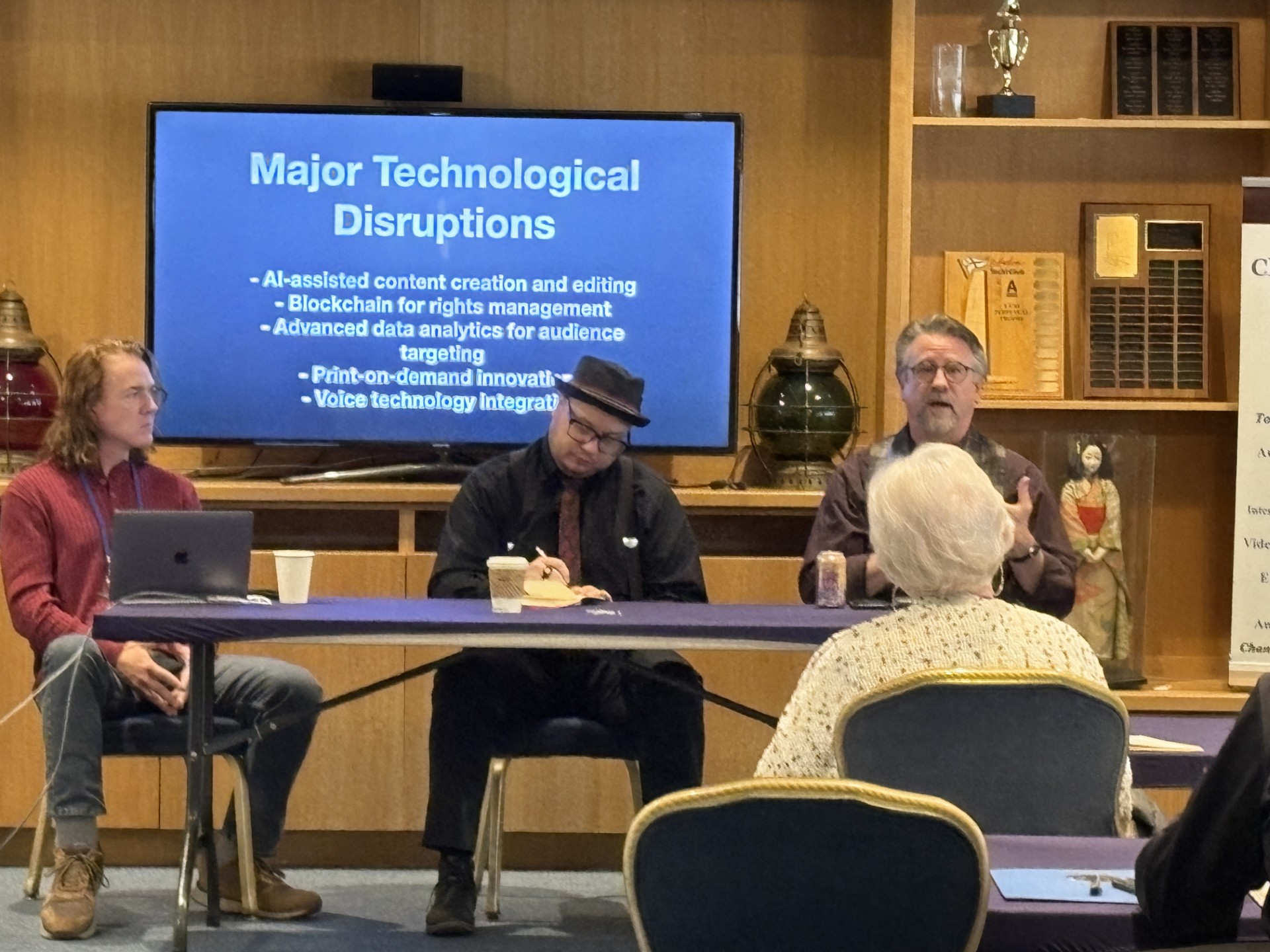
    Panel discussion, screen, three men, hat
    J.D. Barker, J.W. Donaley, Paul Hanson at a panel discussions called “Changes in the World of Publishing and Content”

    A Steller Lineup of Presenters at this Sold Out Event! 

    The event started with Book Doctor, Senior Editor, and Dialog Expert Christine Fairchild teaching her masterclass on craft, and international bestselling author J.D. Barker and Chanticleer’s own tech guru Andy Brown sharing their knowledge on the ever-changing book marketing landscape in their masterclass “Digital Marketing & Alphabet Soup.”

    The next two days were filled with more learning opportunities where CAC authors had the opportunity to learn from experts and specialists such as Damian Fozard, Diane Garland,  Tim Facciola, Glen Dahlgren, and Reenita Hora, who generously shared their knowledge and the stories that inspire all weekend. Twenty publishing professionals presented in forty different workshops, panels, and sessions, covering topics as diverse as writing craft, marketing, legal issues, and technology, with a special classes on AI and its effects on the publishing industry.

    Award-winning author and screenwriter Kim Hornsby was our Friday keynote speaker, providing us with stories from her path to success on bookshelves and in Hollywood. It was a speech filled with twist, turns, and an abundance of inspiration!
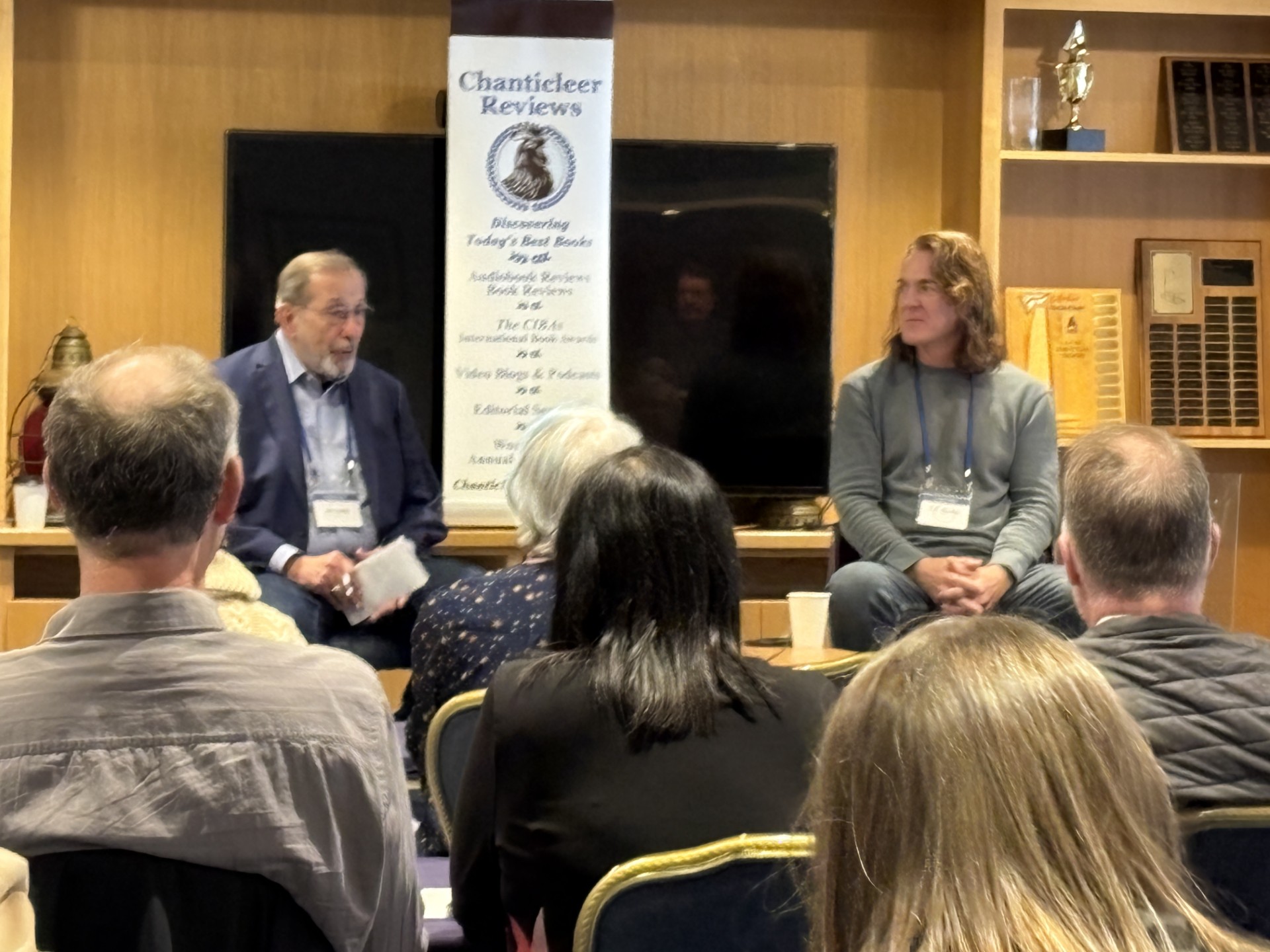
    John DeDakis, J.D. Barker, Sign, room, heads
    Bestselling International author J.D. Barker is interviewed by Sr. Editor John DeDakis at the Chanticleer Authors Conference 2025.

    J.D. Barker delivered the keynote address on Saturday to a packed house of aspiring authors. As the author of an ever-growing list of spine-tingling thrillers, including several co-authored books with James Patterson and praise from the master of horror Stephen King, he kept all of us on the edge of our seats as he explained the innovative, out-of-the-box thinking that has helped him become one of the most successful Indie authors publishing today!

    This year we enjoyed a special treat when J.D. Barker sat down for an interview with John DeDakis, former Sr. Editor for the Emmy and Peabody award-winning CNN news program The Situation Room with Wolf Blitzer. Questions ranged from exploring his background writing for a pop culture magazine in the 90s where he received advice from none other than the artist Madonna, to his inventive approach to promote his latest release, Something I Keep Upstairs.

    CIBA, Awards, Ribbons, Men, Women
    2024 Chanticleer Int’l Book Awards Grand Prize Winners

    The Chanticleer International Book Awards

    The annual CIBA banquet and awards ceremony was a highlight of the conference! Authors from around the world came together to celebrate this year’s best books, with many of the attendees taking home First Place and Grand Prize ribbons. This year’s overall Grand Prize winner was Reenita Malhotra Hora for her novel Vermilion Harvest.

    This year was especially fun because we added two new categories to our list of, now, twenty-eight award divisions!
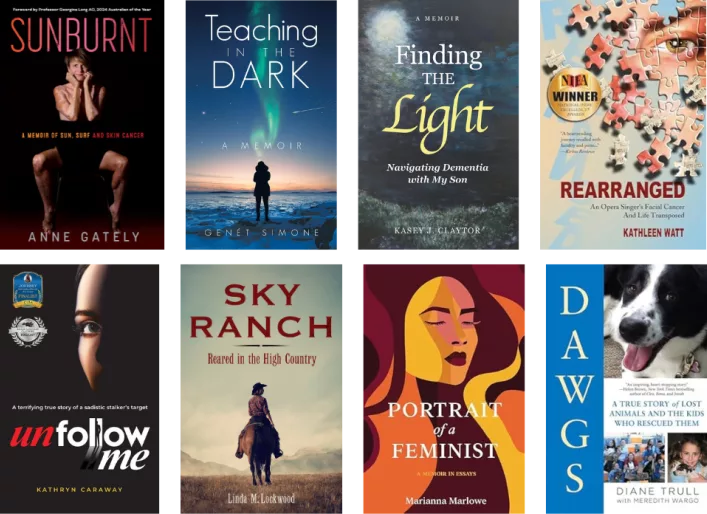
    covers, books, dog, woman, northern lights, horse, woman

    The Fiction and Non-fiction Cover Design awards were a real treat for our judges. The covers represented a broad range of the best cover art we’ve seen throughout the year. It was stiff competition, as so many represented their novels with intriguing images that proved a picture can paint a thousand words.
    A Wreath with the words "CAC 2025" on it to celebrate the Chanticleer Author's Conference!

    Looking forward to another year of great books! 

    Now we all have another year of writing to look forward to, now smarter and recharged by the inspiration and knowledge gained at the Chanticleer Authors Conference. We also have new friendships to grow. That is one of the best things that I take away from the conference. The encouragement, support, and friendship of fellow authors who so generously give their time to help others and value the shared experience of this crazy, sometimes difficult, always inspired world of writing and publishing!

    Now it’s time to turn our attention to the 2026 CAC and CIBA Awards!
    Thank You to Everyone Who Helped
    Make CAC25 an Amazing Success! 

  • On the 3rd Day of Christmas, Chanticleer Brings to Me | 12 Days of Christmas 2024!

    Celebrating the 12 Days of Christmas – One Day at a Time

    On the Third Day of Christmas, Chanticleer brings to me…

    red, pen, paper

    Three Types of Edits!

    Chanticleer is here for you! We offer three different types of editing services to help you get your book to the finish line.

    Line Editing

    If your story still has developmental issues (dialogue, plotting, character development, etc.), your work would benefit from a Line Edit. Line Editing is a line-by-line edit to make sure that each sentence pushes the story forward and creates just the right amount of pacing and tension. Each and every word should count! This is a collaborative edit that is done with the author in approximate chunks of seventy pages at a time.

    Line Edit Review is a final check that all issues and concerns have been addressed by the author and that new problems have not been created in the reworking of the manuscript.

    graphic, hand, orange,red, blue, green, yellow, pencil

    Copyediting includes Style Sheet Generation

    Copyediting is a mechanical edit. It focuses on grammar, punctuation, spelling, typos, continuity errors, and timeline errors. A Style Sheet Guide is created that is the basis of your story-bible. The Style Sheet Guide will ensure that your characters’ names, place names, conventions (examples are: Happy Christmas instead of Merry Christmas or blond or blonde or using kilometers instead of miles), jargon, pet names, time frame, and more — the attention to detail that will set your work apart from the fray.

    Magnifying glass, paper, graphics, red, green, blue, orange

    Proofreading

    Proofreading with a third set of fresh eyes is the final reading to catch the inevitable typos and glitches. The Style Sheet generated by copyedit will used in the final proofing of the work. After proofreading, your manuscript is ready for formatting. Formatting is determined by the publishing platform.

    And just for FUN, a humorous and clever YouTube video about Editing from Elle Cordova –

    The Grammarian vs Errorist  – A Supervillain Showdown

    The Grammarian has an epic showdown with arch nemesis, The Errorist. Ink will spill.

    For more information regarding Chanticleer’s Editing Services, click on the links below:


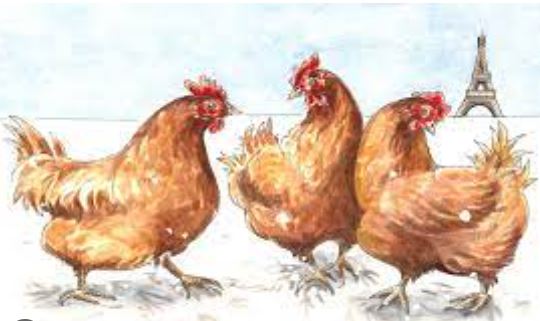
    The Three French Hens gifted on this day represent Faith, Hope, and Love.

    “But Jiminy Crickets, it’s after December 25th! Is it not too late for the 12 Days of Christmas?” you say.

    Not to fear, Chanticleerians! The 12 Days of Christmas begins on December 26th! And it continues to the 6th of January – Three Kings Day. The 24 days leading up to Christmas are known as Advent.

    Some say that December 25th is the first day of Christmas, but we are going with the medieval date of the 26th because revelry could not take place on the 25th as it was a holy day. And the Twelve Days of Christmas are all about revelry!

    So if you haven’t finished wrapping presents, sending out those cards, and baking cookies—don’t worry. Just get it done—you’ve got nine days!

    Happy Holidays to You from the Chanticleer Team! 

    On the 3rd day of Christmas, my true love sent to me

    Three French Hens

    Two Turtle Doves

    And a Partridge in a Pear Tree 

    The Third Day of Christmas

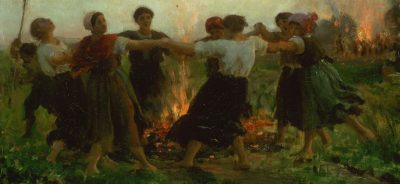
    The Third Day of Christmas celebrates the Feast of St. John who drank a glass of poisoned wine and didn’t get sick! Many EU countries celebrate the Feast of St. John during the longest days of Summer (June 24th) by dancing around a fire. The best way to celebrate? Drink a lot of wine! Of course, if you have a different preferred beverage, that’s totally alright. We’ve been enjoying TÖST, a non-alcoholic wine recently.

    The Feast of Saint John, by Jules Breton, c. 1875


    Stay tuned for the 4th Day of Christmas!

    The Chaicleer Rooster logo wearing a santa hat

    Our favorite part about having the 12 Days of Christmas is that we can have the time we need to celebrate with our loved ones. We have time for wrapping presents, meeting with friends for hot cocoa, and continuing to prepare the Chanticleer Authors Conference and the 2023 CIBA Banquet and Ceremony.

    Wishing you Happy Holidays from Chanticleer from Kiffer, David, Dena, Scott, Anya, and Argus!

  • “It was a Dark and Stormy Night:” How Atmosphere Enhances the Plot and Crafts Immersive Narratives

    Shakespeare knew what he was doing…

    Creating a tangible atmosphere in your storytelling is often a subtle force that plays a critical role in shaping a narrative and enveloping your reader in the story.

    A good atmosphere – created through setting, tone, and sensory details – can transform a simple plot into a rich, immersive experience filled with bright skies, stormy weather, and everything in between. Here we’ll explore how atmosphere enhances the plot and why it’s essential for crafting stories that draws readers into their characters’ world and lets them experience it (nearly) first-hand.

    rocking chair, deserted house, chipped paint, door, window, curtain

    Setting the Scene

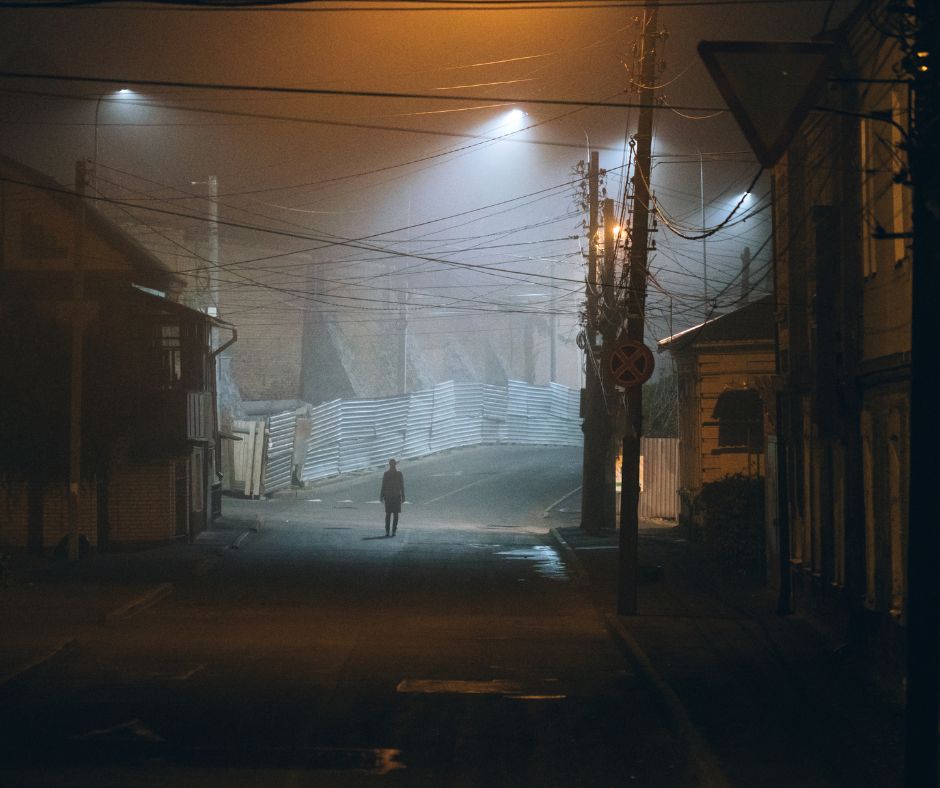
    Atmosphere begins with setting. The world in which a story unfolds is more than just a backdrop. it influences mood, behavior, and narrative flow. Imagine a thriller set in a foggy, empty street at night versus one set in a bright, bustling city. The atmosphere created by each setting will evoke different emotional responses and drive the plot in unique ways.

    In Charles Dickens’s Oliver Twist, for example, the dark, oppressive atmosphere of a decaying mansion reflects the internal turmoil of Miss Havisham’s deteriorated mental state. By adding depth to the setting, it actually becomes a character in itself, influencing the actions and decisions of the protagonists. This synergy between setting and plot helps readers immerse themselves more fully in the story.

    Foggy, street, lights, person, city, alley

    Enhancing Tension and Suspense

    Atmosphere is crucial in creating tension and suspense. A story’s mood can build anticipation and keep readers on edge. For example, a tense atmosphere can heighten the stakes and make moments of danger feel more immediate and pressing.

    Consider a suspenseful scene set on a foggy, deserted street. The shadows and lack of other people can amplify the sense of danger and unpredictability. The atmosphere makes the plot twists more gripping because it engages the readers’ senses and emotions, making the narrative’s tension more palpable.

    snow, trees, clouds, blue, landscape

    Reflecting Internal States

    Atmosphere can also mirror a character’s internal state, providing insight into their emotions and motivations. For example, in the opening scene of Jack London’s White Fang we find two men traveling alone across the snowy Yukon Territory. Their lives are under constant threat from the world around them. This mirrors the theme of the story and the torment its protagonist experiences as a wolf left to constantly fight for his survival.

    This mirroring helps readers connect more deeply with the characters, as the external atmosphere echoes their internal struggles and triumphs. It adds a layer of emotional resonance to the plot, making characters’ experiences feel more authentic and impactful.

    party, blue, glitter, disco ball, windows, people

    Creating Symbolism and Themes

    Atmosphere can enhance themes and symbolism within a narrative. By weaving certain atmospheric elements into the story, authors can subtly reinforce thematic undertones and symbols. For instance, a recurring motif of decay and deterioration in a story can symbolize the moral or societal decline of the characters or setting.

    In The Great Gatsby, F. Scott Fitzgerald uses the opulent but hollow atmosphere of Gatsby’s parties to highlight themes of disillusionment and the emptiness of the American Dream. The atmosphere becomes a glittery vehicle for thematic exploration, enriching the plot’s complexity.

    Leonardo DiCaprio as Gatsby in The Great Gatsby 2013 film
    Leonardo DiCaprio as Gatsby in The Great Gatsby 2013 film

    Guiding Reader Expectations

    The atmosphere can guide readers’ expectations and shape their interpretation of the plot. A story that opens with a cheerful, light-hearted atmosphere might lead readers to anticipate a light, humorous tale. Conversely, a dark, foreboding atmosphere might set the stage for a more serious or tragic narrative.

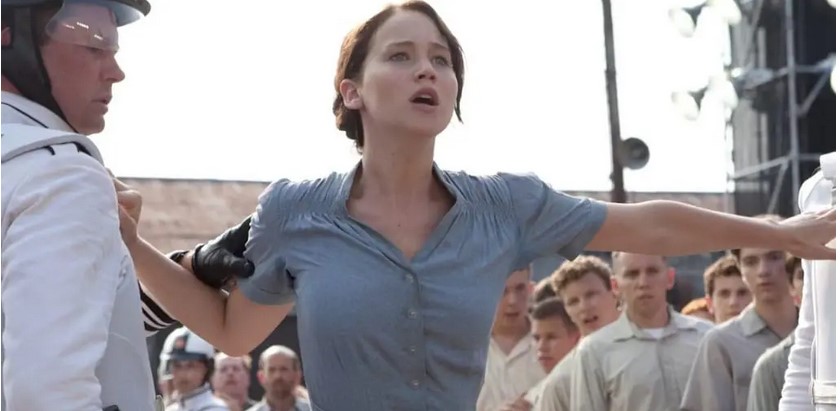
    By manipulating atmosphere, authors can subtly influence how readers engage with the plot, leading them to anticipate certain outcomes or questions about the narrative’s direction. This is seen in Suzanne Collin’s The Hunger Games, where the shanty town world her heroine, Katniss Everdeen, is born into is used as a comparison to the opulent wealth of Capitol City. This adds layers of complexity and surprise to the story as she must use the smarts she gained in her original environment to survive in a new and unusual place.

    Jennifer Lawrence as Katniss Everdeen volunteering as tribute in place of her sister at the barbaric Reaping for the Capitol.

    Deepening Immersion

    Finally, atmosphere plays a crucial role in deepening reader immersion. A well-crafted atmosphere can transport readers to another world, making the plot more engaging and compelling. The sensory details, emotional undertones, and overall mood create a rich tapestry that draws readers in and holds their attention.

    Whether it’s the cozy warmth of a small-town bakery or the cold, sterile environment of a high-tech laboratory, the atmosphere creates a sensory experience that enhances the plot and makes the story come alive. It helps readers visualize and feel the world of the story, making the plot more vivid and impactful.

    Brick walls, windows, wood beams, wood floor

    Brick by Brick You Build A World Your Readers Can Feel

    Atmosphere is a powerful tool in storytelling, enhancing the plot in ways that go beyond mere setting. By influencing mood, creating tension, reflecting internal states, and deepening thematic elements, atmosphere enriches the narrative and captivates readers. When done effectively, it turns a simple story into an immersive experience, making every plot twist and character development resonate more deeply.

    So, the next time you’re crafting a story, remember that the atmosphere you create is as integral to the plot as the characters and events. It’s the subtle force that breathes life into your narrative and keeps readers’ attention until the very last clap of thunder!


    Chanticleer Editorial Services – We’re ready when you are ready!

    Did you know that Chanticleer offers editorial services?We do and have been doing so since 2011!

    Tools of the Editing Trade

    Our professional editors are top-notch and are experts in the Chicago Manual of Style. They have and are working for the top publishing houses (TOR, McMillian, Thomas Mercer, Penguin Random House, Simon Schuster, etc.).

    If you would like more information, we invite you to email Kiffer or Sharon at KBrown@ChantiReviews.com or SAnderson@ChantiReviews.com for more information, testimonials, and fees.

    We work with a small number of exclusive clients who want to collaborate with our team of top-editors on an on-going basis.Contact us today!

    Chanticleer Editorial Services also offers writing craft sessions and masterclasses. Sign up to find out where, when, and how sessions being held.

    A great way to get started is with our manuscript evaluation service. Here are some handy links about this tried and true service: https://test.chantireviews.com/manuscript-reviews/

  • Chanticleer’s Back to School Bundle! Don’t Miss Out on the Chance to Become a Member of The Roost!

    Back to School Sales?

    They’re not just for kids!
    A chalkboard with the words Join us on the Roost and Back to School Bundle

    We have an ever bigger one you can Roost with!

    As summer comes to a close, we’re excited to offer a bundle that includes a year’s worth of access to our online platform filled with goodies and discounts for authors: The Roost!

    A Rooster with the words The Roost at Chanticleer

    The Roost is our exclusive membership platform where we perch together to share knowledge and connect with our community of expert authors.

    Every year after Labor Day the publishing industry comes back to life, and we’re happy to crow with the dawn and welcome it back!

    The Roost is our Favorite Spot to Perch!

    Don’t Miss Out on These Upcoming Events:

    • Weekly Tuesday Morning Write-Ins with David Beaumier
    • Weekly Wednesday Evening Write-Ins with Phoebe Walker and Janet Oakley
    • Monthly Thriller Craft Discussions with Dena Weigel
    • Monthly Writing Craft Discussions with David Beaumier
    • Monthly Recorded Workshops
      • Upcoming is Kickstarting Your Book with Kiffer Brown and David Beaumier, 9/13 at 1pm PST
    • Virtual Happy Hour (9/16 at 5pm PST) with Kiffer Brown
    • We’re available for virtual Office Hours on the Roost!
    • Plus Perpetual Discounts and Early Bird Deals on our Annual Authors Conference, Editorial Reviews, and the CIBAs!
    The Roost is a space driven by community! We build and add to it based on what our members ask for and want. Join us, and help transform the space into whatever you want it to be!

    Roost sign-ups are typically available only in-person at Conferences or for our First Place Winners. We’ve worked hard to cultivate this community of professionals. And it’s open now to you, but only through September 15th!

    Sign up now for

    A Chanticleer Editorial Review ($495)

    Two entries to the Chanticleer Int’l Book Awards ($198)

    And a Full Year as Chanticleer Members on the Roost (priceless)

    All for $645

    What does that include?

    The Objective Editorial Review

    Every book that receives a Chanticleer Editorial Review written by one of our professional reviewers receives the following:

    • Published online on the Chanticleer Reviews website for easy linking
    • Each online published review comes with a built-in All IN One Search Engine Optimization package (AIOSEO) to maximize the review and the book title/author’s digital footprint.
      • AIOSEO interfaces with Google, Bing, Firefox, and Explorer search engines.
      • We carefully apply AIOSEO techniques to increase higher search rankings for each review.
      • AIOSEO allows for easier integration into Google Analytics.
    • Each posted review comes with SEO metadata to optimize Google searches and Amazon crawlers.
    • Digital links to Amazon, Independent Bookstores, and the Author or Publisher’s website.
    • Each review is posted to our social media for easy sharing and commenting by the author/publisher.
    • All our reviews are promoted and highlighted in our Newsletter.
    • We continue to periodically post the review to social media and in blogposts with links to the review on our website for long-term marketing and to refresh digital footprints.

    You do not have to use the Chanticleer Book Review package now. You can use it in the future when you are ready!

    The Coveted Chanticleer Int’l Book Awards (CIBAs)

    You know you want it.

    A blank sample of the Chanticleer Overall Grand Prize Badge with the words "Your Book Here"

    The CIBAs run year round with promotions always popping up on our website to celebrate the incredible authors who advance. Starting at the Long List, we begin promoting work on our high-traffic website, on social media, and in our newsletter.

    From that point we add in digital badges, promotional stickers. By the time we reach the $1000 cash prize for the Overall Grand Prize Winner, we’ve given away over $30,000 worth of prizes!

    With all that plus our under the hood marketing technology, it’s no surprise that the CIBAs are the most popular of all our offerings at Chanticleer.

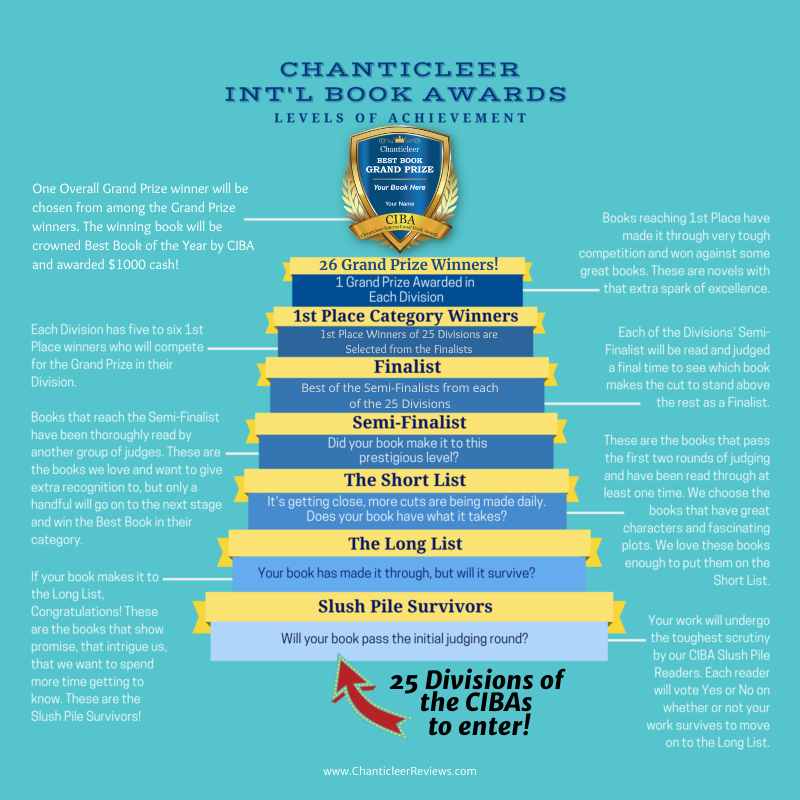
    The tiers of achievement for the CIBAs

    When You’re Ready, We’re Here

    Signing up for this bundle doesn’t mean you have to immediately submit your work to the CIBAs or for Review. We’re happy to hold your spot and check in with you on your terms, when your work is at its best. The same with the two CIBA entries!

    You might write your book alone, but authors live in community.

    Join The Roost today. We’re here, and we can’t wait to support you in your author’s journey and help your book be discovered!

    A Rooster in a laurel saying Welcome to the Chanticleer Authors Club

    Can’t do the bundle but still want to join?

    Reach out to AuthorOutreach@ChantiReviews.com for a discount code and sign up today!


  • The Twelve Days of Christmas! On the Third Day, Chanticleer Brings to me…

    Celebrating the Twelve Days of Christmas – One Day at a Time

    “But Jiminy Crickets, it is the 28th of December! Is it not too late for the 12 Days of Christmas?” you say.

    Not to fear, Chanticleerians! The 12 Days of Christmas begins on December 26th! And it continues to the 6th of January – Three Kings Day. The four weeks leading up to Christmas is known as the Advent.

    Some say that December 25th is the first day of Christmas, but we are going with the medieval date of the 26th because revelry could not take place on the 25th as it was a holy day. And the Twelve Days of Christmas is about revelry!

    So if you haven’t finished wrapping presents, sending out those cards, and baking cookies—don’t worry—you’ve got an extra 10 days!

    Happy Holidays to You from the Chanticleer Team! 

    On the third day of Christmas, my true love sent to me

    Three French hens (Chanticleer’s favorite #justsaying)

    Two turtle doves

    And a partridge in a pear tree 

    Three french Hens - Kate Chidley
    Three French Hens by Kate Chidley

    The Three French Hens represent Faith, Hope, and Charity.

    In France, it is tradition to have thirteen desserts (Les Treize) desserts at the Le Reveillon—Christmas Eve Dinner that begins about 8 p.m. and continues until well past midnight. Desserts may consist of Buche de Noel, cookie assortments (each different kind counts), nougats, candied fruits, nuts, and so on.

    On the Third Day of Christmas, Chanticleer brings to me…

    Three Editorial Services

    Line Editing

    Manuscripts ready to start the line editing service

    If your story still has developmental issues (dialogue, plotting, character development, etc.), your work would benefit from a Line Edit. Line Editing is a line-by-line edit to make sure that each sentence pushes the story forward and creates just the right amount of pacing and tension. Each and every word should count! This is a collaborative edit that is done with the author in approximate chunks of seventy pages at a time.

    Copy Editing

    Book pages spread across a table for story bible services

    A Style Sheet Guide is created that is the basis of your story bible. A Style Sheet Guide will ensure that your characters’ names, place names, conventions (examples are: Happy Christmas instead of Merry Christmas or blond or blonde or using kilometers instead of miles), jargon, pet names, time frame, and more — the attention to detail that will set your work apart from the fray.

    Proofreading

    A page partway through the proofreading service with red ink

    A proof read with a third set of fresh eyes is the final reading to catch the inevitable typos and glitches.

    Why Take the Time for all these services?

    No one knows a book like their author, and still, it’s crucial to have multiple sets of eyes on the work. Chanticleer’s Editorial Services are competitively priced, and can help take your book to the next level needed for publication or querying agents and publishers.

  • NaNoWriMo or Not, here comes November!

    NaNoWriMo or Not, here comes November!

    Time to start your engines because, NaNoWriMo or not, you’re a writer and ideas are key to jump-starting your writing!

    Inspired by Editor and Friend of Chanticleer, Jessica Morrell, let’s dive in!

    The NaNoWriMo logo, a shield crest with a Viking Helm depicting coffee, a computer, pens, and a large stack of blank paper

    For those who may not know, NaNoWriMo is a community effort where people around the world join together, each trying to write 50,000 words of a story in the month of November. For some, 50,000 words is a pittance of what they can normally create in a month; for others, it’s an impossibility.

    No matter where you fall, NaNoWriMo is a great tool to put words on the page and to write with a community rather than all alone.

    Woman in Pink Long Sleeve Shirt Sitting Beside Woman in Green Long Sleeve Shirt
    It’s a myth that writers are solitary creatures

    In the week before you get started, take care of all the basic necessities – i.e. finish your procrastination tasks. Clean your house, stock up on brain food for the upcoming month and write down easy meal ideas. Don’t forget to make sure you have all the coffee and tea you need to fuel you, and then please be sure your laundry is done.

    Ready? Set. WriMo!

    The point of a first draft is to exist. As Stephen King says, the first time you write something down, you’re telling the story to yourself. One of the best ways to motivate your story is to know your characters well. Studying modern characters is a great way to start off.

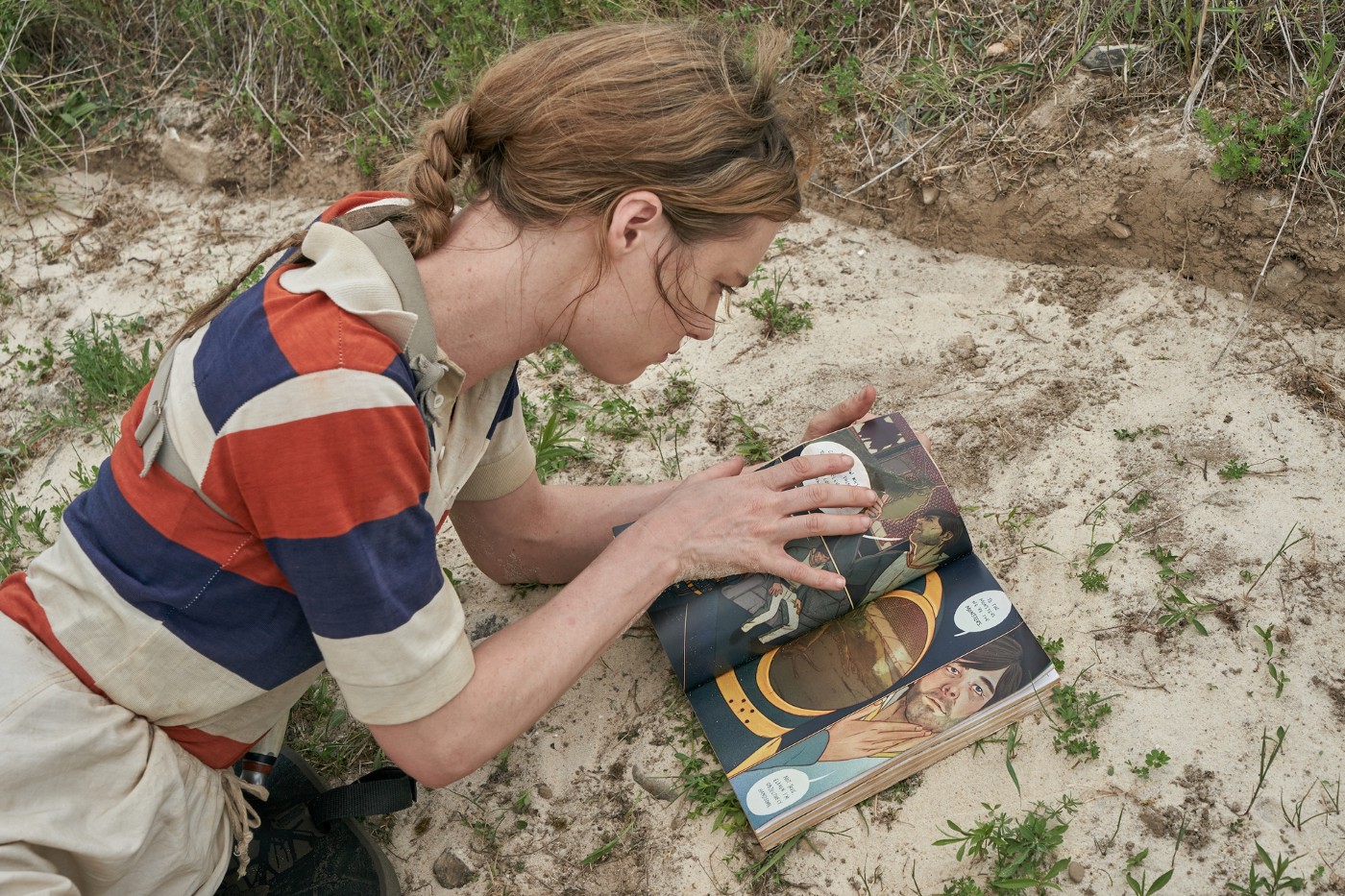
    Station 11 by Emily St. John Mandel

    Kirsten Raymonde reading the titular Station 11 comic book, played by MacKenzie Davis

    Child actor Kirsten Raymonde’s life is forever changed when she witnesses the death of actor Arthur Leander, sending her world into chaos hours before the world is decimated by the Georgia Flu. With the collapse of civilization and the death of her parents and little brother, Kirsten holds on tight to her passion for acting as she grows up, joining the Traveling Symphony and protecting the players and musicians there as if they were her own flesh and blood.

    The Rings of Power on Amazon Prime, based on The Lord of the Rings by J.R.R. Tolkien

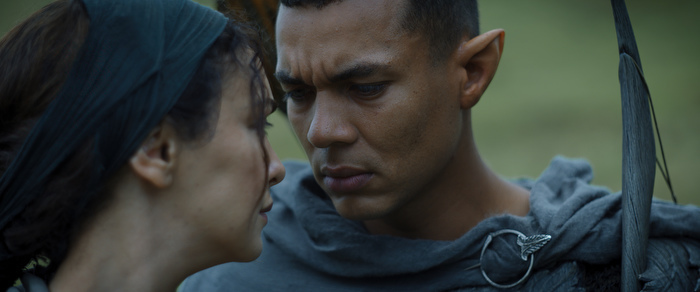
    Arondir (Ismael Cruz Córdova) almost shares a romantic moment with Bronwyn (Nazanin Boniadi)

    Arondir is an elf responsible for the safety of a large swath of human lands in the aftermath of the battles with Morgoth. However, most elves regard the humans with a suspicion that engenders deep distrust between the two races. This prevents him from gathering crucial information about a recent poisoning. On top of that, neither the human inhabitants nor his elven companion approves of the close connection he has with the local healer Bronwyn, who seems quite taken with the handsome Arondir.

    What do we notice?

    Both these characters are firmly set in their backstory, which shows us the goals they have in the status quo at the start. Once the status quo is disrupted, you have the character’s motivation to return to a state of equilibrium, because they are now frustrated in meeting their goals.

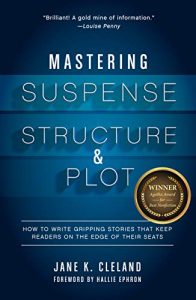
    Consider questions from Mastering Suspense Structure & Plot by Jane K. Cleland:

    • What does this character keep secret?
    • What does this character fear?
    • How does this character respond when their secret is in danger of being exposed?
    • How does this character act when afraid?
    Blue cover for Mastering Suspense Structure and Plot by Jane K. Cleland
    The Roost’s Writing Craft Book Group for November

    Understanding these elements of your character under pressure will help create believable and compelling people for your readers to want to watch and study.

    Remember, even for NaNoWriMo, you need an engine to start!

    Conflict is the engine of your story. What is the conflict in yours? For Station 11, it’s the looming threat of the mysterious Prophet who is terrorizing the communities who are the audience and friends of the Traveling Symphony. In Rings of Power, it’s the growing strength of Sauron, Morgoth’s most loyal disciple. How does this conflict put pressure directly on your main characters?

    HANDY REMINDERS

     If you are NOT participating in NaNoWriMo, then we hope that this post will spur you on as write your work-in-progress (w-i-p) or your next work.

    RULE # 1

    WRITE FAST! 

    EDIT SLOW! 

    Don’t edit your first draft as you write it!

    Writing your first draft should be a mad dash to get your story out of your brain. Don’t hinder it by worrying about each little detail. There will be time for that later. NaNoWriMo or not.

    Not taking our word for that piece of advice?

    Chelsea Cain, a bestselling thriller author (with a TV series to her credit),  gives this piece of advice:

    Write the bare-bones version of the scene first using mostly dialogue, and then move on and in the second draft flesh out the scenes with description and action.

    “Action is dialogue. Dialogue is action.” – Robert Dugoni, Amazon Bestselling Author

    What is YOUR STORY?

    Story is essentially a problem that needs solving for the protagonist. – Jessica Morrell

    • What is your protagonist’s problem that must be solved—or else?
    • What is the worst thing that can happen next to your protagonist?
    • Remember that it is not your problem. It is your protagonist’s problem, obstacle, impossible dream.
    • Start at least one subplot. This subplot(s) should also complicate the protagonist’s goals.

    No matter when the problem begins (it’s always in Act One) the problem is weighty and vexing, perhaps insurmountable. If the problem is not immediately personal, it should become so that it will create a bond (connection) between the protagonist and antagonist. Classic examples are the connection between Sherlock Holmes and Jim Moriarty and Harry Potter and Voldemort. 

    What is the inciting event or threat? 

    The inciting incident might lead to the problem. This event will disrupt the status quo, demand response, and set actions in motion. It’s a threat that unbalances the story world and creates dilemmas that must be dealt with.

    To name a few:

    • The tornado incident in the Wizard of OZ
    • Katniss’s little sister selected for the Hunger Games
    • Luke Skywalker ‘seeing’ and hearing Princess Leia calling for help in Star Wars
     These excerpts above are from The Inciting Incident blogpost


    Environment (internal and external)

    These are great tips to get your creativity groove on!

    • Remember you want to send your protagonist into new emotional territory with new challenges and pressures.
    • And at the same time, she will need to deal with new physical territories such as a new school (Footloose) or a different culture (Dances with Wolves) or a different legal society with different norms (Handmaid’s Tale) or a new environment (Deadwood)  or a different time ( Outlander) or galaxy (Farscape).
    • Don’t be afraid to stage danger in benign or lovely settings or conversely gentle scenes in dangerous and gruesome settings.

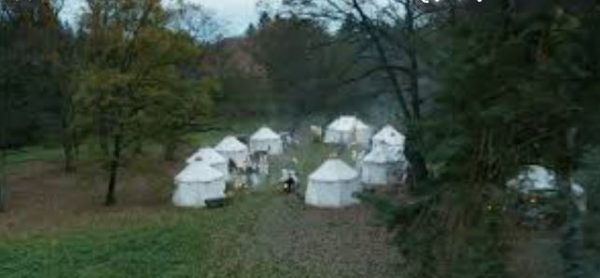
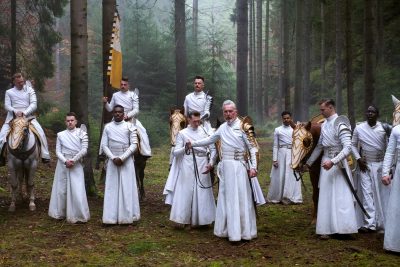
    Kiffer’s Note:  I just saw this bucolic scene while watching The Wheel of Time first episode. All white coats and white tents. And then, bam! We learn that the guys in white are not the “good guys” —at all—even if their name is Children of the Light.

    Bucolic looking camp scene in Wheel of Time inhabited by these characters all in white.

    Atmosphere

    • Allow the overall atmosphere and mood to imbue your writing from the get-go.
    • The atmosphere lends itself to the overall tone and mood of a work. Allow it to permeate your work as you write.

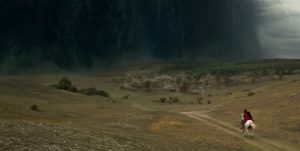
    The atmosphere in Shadow and Bone series by Leigh Bardugo

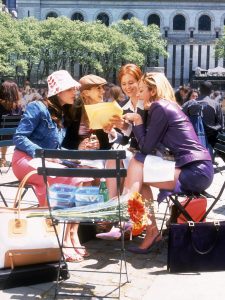
    Or Sex in the City by Carrie Bradshaw

    Why use atmosphere in your first draft? (or during NaNoWriMo)? 

      • Because it will affect your mood and approach to your story.
      • It will make you focus on creating unease–a necessary ingredient not always considered in early drafts.
      • Unease contributes to writing a page-turner.
      • Atmosphere underlines themes–even if you don’t have your themes nailed down yet.

    Here is the link to our Writer’s Toolbox article on Atmosphere

    Emotional Baggage

    • Know your protagonist’s main emotional wound, sometimes called baggage in real life. How is it going to affect his or her ability to solve the story problem? (See the questions below to jumpstart creativity.)

    Remember that Writers (that is you) should carry a notebook everywhere you go. You never know when a brilliant solution is going to appear. Jessica Morrell

      If I could offer a single piece of advice about creating characters it would be this (Jessica Morrell):

      • Take risks with your main characters.
      • Make them stand out from the myriads of fiction published each year.
      • And don’t be afraid to allow eccentricities, quirks, and oddball ways of seeing reality.

      More questions for your protagonist from Jessica Morrell—these are guaranteed to get your creative wheels turning:

      First, ask yourself these questions and then “ask” your protagonist. Have your protagonist go into depth. Find out what your protagonist’s iceberg under the waterline is all about.

      Photo taken in Greenland’s waters.

      Kiffer suggests that you take a walk when you are considering these questions. Be sure to either take notes or record your thoughts on your smartphone while you explore your protagonist’s emotional baggage. Walk a mile in your protagonist’s shoes. 

      • What’s the most embarrassing thing that has ever happened to you?
      • What is your biggest regret?
      • What is your superpower?
      • Who do you cherish most in the world?
      • If you could change one thing about your world, what would it be?
      • What is your average day or schedule?
      • What 5-6 words sum up your values?
      • What do you do after a really bad day?
      • How do you celebrate?
      • The secret you’d never tell your significant other? Your mother? Your sibling?
      • What reminds you of home?
      • What item must you always take along when traveling?
      • Favorite drink?
      • Secret vice?
      • Pizza or tacos? Cookies or tequila?
      • Favorite climate?
      • Reading or television to unwind?
      • Breakfast or coffee only?

      We hope that we helping you, Dear Writer, to arm and prep yourself to get down to the writing of your next work—the reckoning.


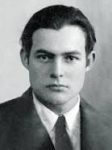
      Ernest Hemingway:  There is nothing to writing. All you do is sit down at a typewriter and bleed.


      Chanticleer Editorial Services

      When you’re ready…

      Did you know that Chanticleer offers editorial services? We do and have been doing so since 2011.

      Our professional editors are top-notch and are experts in the Chicago Manual of Style. They have and are working for the top publishing houses (TOR, McMillian, Thomas Mercer, Penguin Random House, Simon Schuster, etc.).

      If you would like more information, we invite you to email Kiffer or David at KBrown@ChantiReviews.com or DBeaumier@ChantiReviews.com for more information, testimonials, and fees.

      We work with a small number of exclusive clients who want to collaborate with our team of top editors on an ongoing basis. Contact us today!

      Chanticleer Editorial Services also offers writing craft sessions and masterclasses. Sign up to find out where, when, and how sessions are being held.

      A great way to get started is with our manuscript evaluation service, a tried and true resource you can learn about here.

    • Word Nerd – Using the Best Word – the PERFECT Word by Kiffer Brown

      Learning another language has always been my portal to understanding the nuances of my own language, American English. Currently, I am trying to learn European Portuguese to add to my faltering French and German. It is a very slow process but still appeals to my word nerdiness that I attribute to my Latin classes in high school.

      In reviewing books and many other types of media, my most frequent complaint is when the writers are lazy with their word usage. Not punctuation. Not verb agreement. Not even when the writers are being pedantic. What makes me twitch the most is Lazy Word CHOICE!

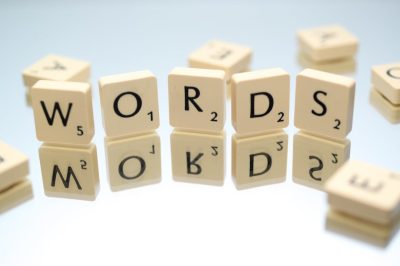
      An image of Scrabble Tiles spelling out the word "Word"

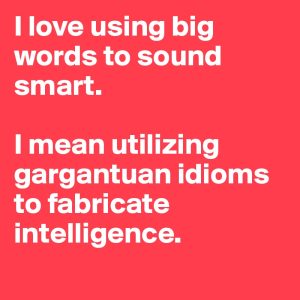
      Not that the words must be sesquipedalian. (Definition at the end of the post.)

      For example, the word PERFECT.

      Would any of these words below be a better fit than “perfect” for conveying your thoughts with a more exact meaning? 

      • impeccable
      • without fault
      • flawless
      • faultless (slightly different than flawless)
      • incomparable
      • sublime
      • ideal
      • the best
      • shiny new
      • perfection
      • absolutely

      None of the words above are sesquipedalian (ahem), but they do have slightly different connotations to convey your thoughts more exactly, don’t they?

      And now, as promised, the definition of sesquipedalia: very long words.

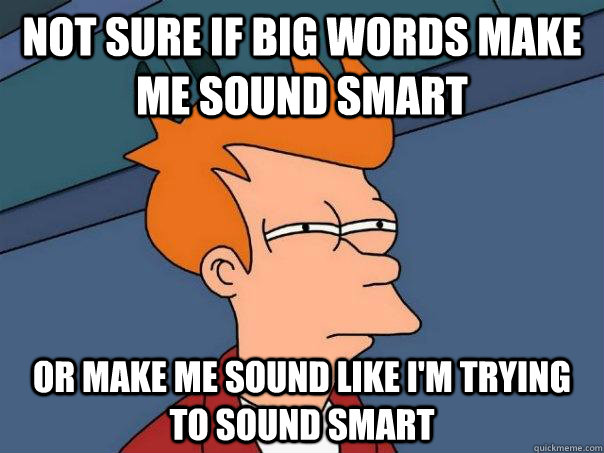
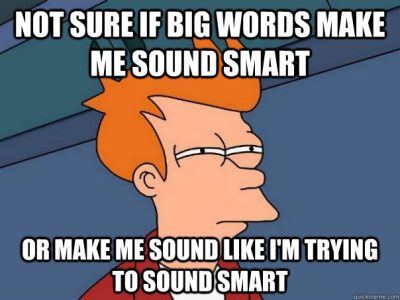
      Sesquipedalian: a person who uses big words to sound smart.

      Even though Diane Garland and I are lexicomanes, I hope that we do not come across as sesquipedalian. However, no one would accuse me of being pauciloquent.

      Lexicomane: lover of dictionaries

      Pauciloquent: using few words in speech or conversation

      The main point is that as a writer, you do not want to bumfuzzle your readers or listeners.

      Bumfuzzle: confuse, perplex, fluster

      To bring this diverting (aka fun, I hope) post to a close, I would like to share some words that I read in a business journal that are supposed to make you sound smarter. However, their synonyms might work better in your works. It depends. Right? Right! Or as my friend with whom English is a second language admonishes me to say, “Correct? Correct!” instead of right—especially when giving directions.

      • articulate (well-spoken)
      • accolades (kudos)
      • brevity (concise)
      • adulation  (excessive flattery)
      • anomaly (odd)
      • pithy (brief, clever remark)
      • lucid (clear and intelligible)
      • bespoke (custom-made)
      • diatribe (rant)
      • vitriolic (nasty, scathing comment or action)
      • aplomb (confidence)
      • resplendent (shining brilliantly)

      Do you have some words that you would love to share or ones that you think should be abolished (scrapped) from the English language? Let me know!

      REMINDER to WRITE FAST and EDIT SLOW

      And remember to not worry about word choice when you are creating your first or second draft.

      WRITE FAST!

      Edit Slow!

      Handy link to our Write Fast, Edit Slow post with a practice exercise. 

      Word choice editing comes after you get your story’s first or second draft draft down in words from the “mindfilm” that you experience when you are creating a work.

      I do hope that you have enjoyed reading this post at least half as much as I enjoyed writing it. Until next time,

      Keep on Writing! Kiffer


      Chanticleer Editorial Services – when you are ready

      Did you know that Chanticleer offers editorial services? We do and have been doing so since 2011.

      Tools of the Editing Trade

      Our professional editors are top-notch and are experts in the Chicago Manual of Style. They have and are working for the top publishing houses (TOR, McMillian, Thomas Mercer, Penguin Random House, Simon Schuster, etc.).

      If you would like more information, we invite you to email Kiffer at KBrown@ChantiReviews.com  for more information, testimonials, and fees.

      We work with a small number of exclusive clients who want to collaborate with our team of top editors on an ongoing basis. Contact us today!

      Chanticleer Editorial Services also offers writing craft sessions and masterclasses. Sign up to find out where, when, and how sessions are being held.

      A great way to get started is with our manuscript evaluation service. Here are some handy links about this tried and true service: https://test.chantireviews.com/manuscript-reviews/

    • WORDCRAFT – HOW to MAKE IT HAPPEN – from Jessica Morrell’s Editing Desk – a Chanticleer Writer’s Toolbox post

      WORDCRAFT – HOW to MAKE IT HAPPEN – from Jessica Morrell’s Editing Desk – a Chanticleer Writer’s Toolbox post

      How Does Wordcraft Happen? by Jessica Morrell

      Focus on Language

      There are so many mechanics of writing style I could write about columns on the topic for years. Come to think of it, I have.

      Let’s focus on layering language into a story with care so that it adds to overall meaning and effect.

      This means making careful choices so that you don’t distract the reader from your narrative. As a writer, search for precise words and comparisons to satisfy your reader. The problem of finding the perfect word or imagery, instead of the almost perfect word, is no small matter.

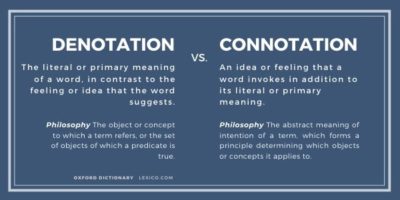
      Denotation or Connotation – Know the Difference

      While the literal or explicit meaning of a word or phrase is its denotation, the suggestive or associative implication of a word or phrase is its connotation. Thus you’re always making choices about meaning and language.

      Merriam -Webster says: “What’s the difference between connotation and denotation?

      While each of these two words has several possible meanings, they are notably distinct from each other in all senses. Denotation is concerned with explicit meaning, and connotation tends to be concerned with implicit meaning. The word home, for instance, has a denotation of “the place (such as a house or apartment) where a person lives,” but it may additionally have many connotations (such as “warmth,” “security,” or “childhood”) for some people.

      Examples of denotation in a Sentence
      The word has one literal denotation but several different connotations.
      The definition provides the word’s denotation.

      We all need a practical, sort of workday vocabulary that is consistent with our voice, and then we also need a vocabulary that’s the writer’s version of the Taj Mahal. Or, as another example, sometimes the style needs to be basic like bread pudding, sometime it needs to be more like a seven-layer wedding cake. Sometimes the best words are clear and simple, and sometimes they need to soar like a heron aloft on an air current. Sometimes stories work well in the style we’ve come to associate with Hemingway—terse, journalistic and economical. And sometimes a story needs all the embroidery and bombast of a stylist like John Updike.

      Obviously there are writing styles that are too gorgeous, too painterly. The same for a style that is too ‘out there,’ too odd to grasp—as if wooly mammoths populate the page.

      For example, boisterous and unexpected adjectives such as claxon or tessellated or the unforgivable boustrophedonic (all used by John Updike)—stop the flow of narrative. Instead of the reader remaining involved in the scene, he steps aside and engages his intellect. Choosing surprising yet apt modifiers is vital, but it’s not a task to be undertaken frivolously.  Playwright David Hare says, “Style is the art of getting yourself out of the way, not putting yourself in it.”  

      Choosing surprising yet apt modifiers is vital. – Jessica Morrell

      Anchoring the Story

      When it comes to figurative language, you want to demonstrate an imaginative range, while remembering figurative language adds layers of meaning while also concentrating the flow of ideas. We use figurative language because it mates images and likenesses, connects with the reader’s associative right brain, and helps anchor the story. With figurative language, you want to demonstrate with freshness and verve. However, don’t range too far with your images or the story becomes tangled and obscure. Wordcraft that makes us shiver is delicious. Wordcraft that exists merely to show off is pointless.

      Analogy and Metaphor

      Analogy and metaphor are always subservient to the viewpoint, yet always take us deeper into the subject or moment as when Truman Capote described Elizabeth Taylor’s “eyes so liquid with life” and “the face, with those lilac eyes, is a prisoner’s dream, a secretary’s self-fantasy; unreal, non-obtainable…” Don’t you wish you’d woven together “a prisoner’s dream” to describe an indescribable beauty? Notice how it makes you feel the allure of Taylor?

      Don’t Try to Do This in Your First Draft

      In your editing process, it’s okay if your first draft is unpretentious, just as it is okay if your first draft is blowsy and lumbering. But then, as you refine later drafts, ask yourself if the writing needs to lift off the page a bit. If it is clean, or simply stark. If lush prose is necessary, or stripped down prose is needed.

      Intensity of Language and the Potency of the Circumstance

      Pay attention to the intensity of language which can range from mild to inflammatory. Match intensity of language to the potency of the circumstance, the sentence, the scene. Note the places in the story where the reader needs to linger and feel emotions and tension. In these passages it’s important to make precise choices, to examine your sentences, and listen hard to what you must say.

      Clichés

      The next thing to ask yourself as you’re revising is ‘have I heard this before?’

      Clichés and trite expressions are often an editor’s first tip off that you’re a lazy or unimaginative writer. “Clichés are the old coins of language: phrases that once made a striking impression but have since been rubbed smooth by repeated handling.”

      In Conclusion

      If the writing seems thin, keep asking yourself a simple question: what does this remind me of?

      Perhaps you’ve written about time running out (always a juicy element) and in the story your character is desperate because a deadline is looming as his kidnapped girlfriend is buried alive in a tunnel under the New York subways. It is mid-February, a blizzard is raging, temperatures are dropping to the lowest in a century, and travel is almost impossible. Your reader needs to be practically digging his nails into his palms; as if the harsh cold is seeping into his joints while turning the pages.

      If the writing doesn’t illustrate those glacial temperatures, the reader won’t be feeling the danger. And will not harbor visions of frostbite or worse, of her frozen body  like a soldier left behind on the Russian Front during World War II. You don’t need to  conjure an analogy or metaphor for every passage, but you’ll need sensory details, until the reader is shivering and the cold has ripped through him.

      You may be interested in reading the Glissando and Wordcraft post. Click here for the link:  https://www.chantireviews.com/2020/02/21/glissando-and-wordcraft-from-jessica-morrells-editors-desk-a-chanticleer-writers-toolbox-blog-post/


      Jessica Page Morrell

      Jessica Page Morrell is a top-tier developmental editor for books and screenplays. Her articles have appeared in Writer’s Digest and The Writer magazines. She is known for explaining the hows and whys of what makes for excellent writing and for sharing very clear examples that examine the technical aspects of writing that emphases layering and subtext. Her books on writing craft are considered “a must have” for any serious writer’s toolkit.

      Jessica will teach the Master Craft Writing Classes at the Chanticleer Authors Conference on Thursday, Sept. 3, 2020  and will present sessions during the conference weekend.

      Did you know that Chanticleer offers editorial services? We do and have been doing so since 2011.

      And that our professional editors are top-notch and are experts in the Chicago Manual of Style. They have and are working for the top publishing houses (TOR, Macmillan, Thomas Mercer, Penguin Random House, etc.). If you would like more information, we invite you to email Kiffer or Sharon at KBrown@ChantiReviews.com or SAnderson@ChantiReviews.com.

      Click here to read more about our Editorial services: https://www.chantireviews.com/services/Editorial-Services-p85337185

      A great way to get started is with our manuscript evaluation service. Here are some handy links about this tried and true service:

      https://www.chantireviews.com/manuscript-reviews/

      We work with a small number of exclusive clients who want to collaborate with our team of top-editors on an on-going basis. Contact us today!

      Writer’s Toolbox

      Thank you for reading this Chanticleer Writer’s Toolbox article. 

    • What Literary Agencies and Acquisition Editors are Seeking in Manuscripts – Refreshing your Writer’s Toolbox from Jessica Morrell’s Editor’s Desk

      What Literary Agencies and Acquisition Editors are Seeking in Manuscripts – Refreshing your Writer’s Toolbox from Jessica Morrell’s Editor’s Desk

      What is it about a particular manuscript that makes it interesting to a literary agent (or the agent’s slush pile reader), acquisition editor, or professional reviewer?

      While it may take more than a crystal ball to figure out exactly what lit agents and publishing houses acquisition departments want and let alone reviewers, guidance can be had.  Line editors do understand what these gatekeepers want to see and, perhaps more importantly, what they do not want to see in a manuscript.

      Advice from line editors can be an author’s first line of defense in climbing out of the slush pile to gaining a gatekeeper’s interest. No crystal ball required.

      Jessica Morrell, a top-tier developmental editor for major authors and publishing houses, knows what these gatekeepers are seeking along with what makes them cringe.

      Editors, agents, and reviewers are word people, most were English or journalism majors in college and have a great love and respect for the written word. They will notice your level of craft within the first sentences, so your efforts must be polished, vivid and exceptional.

      Craft Tips & Techniques by Jessica Morrell, Editor

      (with Added Comments, from Kiffer Brown, publisher of Chanticleer Reviews magazine)

      • Your manuscript lives or dies on your opening sentences and each word must be perfect, precise, and weighted with meaning. 
        • (Most slushers (who work for agents and acquisition departments) do not read past the few pages of a manuscript. Don’t blame them for not reading more of your manuscript. Slushers have more works than they can possibly read in a month but have to slush in a given day. It is the writer’s job, neigh duty, to keep the slusher engaged. Slushers are professional readers who are panning for “gold and gems in the raw.”  This system is by design, btw.) 
      • Editors notice and are turned off by passive voice and wimpy verbs.
        • (Enough said.) 
      • Editors notice when the viewpoint jumps or shifts within a scene.
        • (This is a pet peeve of professional reviewers—an indication of lack of writing craft and skills.)
      • Editors notice too much telling (reporting or summary) and not enough showing in all types of writing including essays and memoir.
        • (A line editor can help with too much telling with comments and questions.) 
      • Editors notice when emotions are announced instead of dramatized.
        • (Reviewers call this “lazy writing.”)
      • Editors notice the frequent use of names in dialogue. Generally, leave out names.
        • (Multiple names, especially names that are similar, are irritating to reviewers. When the reviewer has to make notes about who is whom it had better be for furthering the plot significantly.) 
      • An editor notices sloppy punctuation such as excessive use of exclamation points, quote marks around inner thoughts, improper use of semicolons and ellipsis.
        • (Reviewers see this as the author not being professional about the work  (or his or her writing career) to have it professionally proofed – the most basic type of editing.) 
      • Editors notice protagonists who are not proactive, heroic in some way, and bigger than life. (
        • Reviewer’s Mantra – Novels are depictions of life without the boring bits.) 
      • Editors notice characters with a limited emotional range and expression.
        • (One-dimensional character and cardboard characters are uninteresting.) 
      • Editors notice large and small inaccuracies and inconsistencies—when the character has blue eyes on page 23 and green eyes on page 57; when a character drives an old, beat-up, pick-up truck that is inexplicably equipped with airbags; when an animal, plant, or species of any sort is misnamed or shows up in the wrong region of the country.
        • (Did the author care enough to do the background research for the work? These technical details’ correctness can make or break the construct of a story.)
      • Editors notice when technical details don’t ring true—such as in a mystery when police don’t follow standard arrest procedure; or when a yacht sinks from a single bullet hole; or explosive materials are used haphazardly.                  (See comment above.)
      • Editors notice vague descriptions (plant instead of ivy, a tree instead of oak) and generalities instead of details that bring the reader into a specific time and place.
        • (Vague descriptions are perceived as lazy writing which is not a reputation that an author would want to be known for.) 
      • Editors notice when writers don’t write for all the senses, especially leaving out smells.
        • (This is called the white room syndrome and it makes a manuscript about as boring to read as an old school telephone book.)
      • Editors notice small confusions such as misusing it’s and its, that and which, affect and effect, compliment and complement, lay and lie.
        • (With tools (apps) such as Grammarly and Grammar Girl, there is no reason for these misuses to occur. Additionally, these basics are covered thoroughly in The Elements of Style, a slim tome that is indispensable writers.) 
      • Editors notice overly long paragraphs and a general lack of white space. Generally, paragraphs are five or six sentences long and as taught in grade school introduce a topic, develop a topic, then conclude or lead on to the next paragraph.
        • (Edit, delete, cut your word count—as Stephen King says, “Kill your darlings.” The rule of thumb is that most manuscripts can be cut by 20 percent.)
      • Editors notice a lack of transitions—the words and phrases that announce a change in mood or emotion, time, and place so the reader can easily follow. They also know excess transitions as when you follow your characters across every room and along every sidewalk.
        • (Use transitions as you would salt and pepper—just enough but not too much. The correct amount of transitional phrases are the hallmark of solid writing.)  
      • Editors notice excess modifiers, purple prose, and too much description. The best writing is lean and economical and every word in every sentence has a job to do.
        • (Yes! Every word must move the story forward.) 
      • Editors notice a voice that is flat, inappropriate, or boring. Voice, whether it is the writer’s voice in an essay or the viewpoint character or narrator in fiction, must breathe life into the piece and hint at the person behind the words.
        • (Writing styles can mimick the guests at a cocktail party. There is always the bore who goes on and on and usually in too much detail also. The bore is the one guest who is the least tolerated even more so than the boisterous, the chatty, the tipsy, and even the know-it-all. But everyone loves the one who can tell a good story, or the who has a bit a mystery, and the one who is interested in others and respects others is always invited back. Respect your readers with your writing and your writing will earn respect.)


      Chanticleer Editorial Services

      Did you know that Chanticleer offers editorial services? We do and have been doing so since 2011.

      Our professional editors are top-notch and are experts in the Chicago Manual of Style. They have and are working for the top publishing houses (TOR, McMillian, Thomas Mercer, Penguin Random House, etc.). If you would like more information, we invite you to email Kiffer or Sharon at KBrown@ChantiReviews.com or SAnderson@ChantiReviews.com for more information, testimonials, and fees.

      We work with a small number of exclusive clients who want to collaborate with our team of top-editors on an on-going basis. Contact us today!

      Chanticleer Editorial Services also offers writing craft sessions and masterclasses. Sign up to find out where, when, and how sessions being held.

      Writer’s Toolbox


      Thank you for reading this Chanticleer Writer’s Toolbox article.

      Keep writing, keep dreaming, have heart. Jessica

      Keep on creating magic! Kiffer