The Red Carpet is rolled out for authors looking to take the next step in getting their book Discovered!
As the leaves start to turn and the air begins to crisp, it’s not just kids who are buckling down. We’re here to support you and your writing ambitions!
[Don't forget that PayPal offers 6 months - same as cash - no interest]
Why Join the Roost?
Writing can be a solitary activity, but it doesn’t have to be lonely. The Roost provides Community and Connection, a space where writers meet, share, and support each other’s journeys. It’s your new creative home where the coffee’s always hot and the conversation never ends.
One of the early Roost Happy Hours!
With monthly workshops and discussion led by our staff and expert authors, it’s more than a club: It’s a master class in writing and publishing that runs all year.
Ready for the Roost, but not sure about the rest?
All these benefits are on your time. If your manuscript isn’t quite ready, your Editorial Review and CIBA entries don’t expire. Redeem them at your convenience when your book is ready to be discovered!
If you’re just dipping your toes in. reach out to AuthorOutreach@ChantiReviews.com, and we will send you a special deal to join the Roost for just $10/month. We will honor the discounted rate for as long as you are a Roost Member and you can cancel anytime. Come find out what the crowing is all about!
Don’t Let This Offer Fly the Coop!
The Rooster stops for no one!
Sale Ends September 15, 2024!
Whether you’re on page one of your next bestseller, or ready to start marketing your debut book, The Roost is where the journey to greatness begins. Don’t’ wait – the clock is ticking and this deal won’t last!
Every Author Needs an Effective Website, But What Should You Do to Manage Yours?
Now is the time to freshen your website or seriously consider creating one dedicated to your author brand.
The internet is confusing enough without having to look at the back end of a webpage that’s supposed to draw others in. For many authors, their website will be the first thing online readers will come across, and it should represent the best parts of you and your work.
AUTHOR BRAND – Your website your reflects your author brand
Like a Resume, the Author Website should highlight what’s special about you
If your book receives a positive review or award, crow about it on your website. You can see Nancy Thorne doing that on her site here for her book Victorian Town, which won a First Place blue ribbon in the Dante Rossetti Awards. Having that digital badge can be the difference between someone purchasing your book and passing on it.
Where else will people find information about you?
Aside from your author website, most readers will find out about you from bookstores, social media, through your publisher, or through Reviews and Awards as described above.
The only place you fully control is your Author Website
The Bones (wireframe) of Your Website
These are the key subjects your author website should touch on for readers:
Your AUTHOR BRANDING – this will be a blogpost to itself – please see links at the end of this article,
What do you write – Fantasy? Historical Fiction? Non-Fiction? Children’s Books?
Do you have an elevator pitch for each of your works? If so, this is where you put it. Then drill down with more info.
What information or services you provide?
Are you available to present?
Are you available for Book Clubs? (You do have a Book Club page—right?)
Do you promote/support any causes? Humane Society? Autism? Wildlife? Lover of Libraries? Board Games?
Schedule of where people can meet you? Author Events, Wine Tastings/Lavender Days, Comic-Cons?
Products (books) to sell –
Can they be purchased directly from your website?
Can they be purchased from your fav Indie bookseller? Amazon? Barnes and Noble? Bookchain?
Kudos given your works
Digital badges, links to awards and accolades
Access to your Blog – it should be easily available AND with at least once a week posts.
Blogposts do not have to be long – a short paragraph will do to keep it fresh and earning “browser love” i.e. ranking on search engines
An outdated blog suggests that you are not interested in what you are doing (writing/written).
BIO – why readers should READ your books rather than another author’s works in the same genre
Please have easily downloadable photos, short and snappy bio with an invitation to contact you (see below) if a more in-depth one is needed, and graphics of your book covers available for those who want to promote you and your work. For example – you are going to do a book signing at your local bookseller – they will want to be able to create posters, social media posts, mailings, etc. and will need this basic info easily and readily available.
Also, have links or a listing to where you have presented, been interviewed, and/or published, accolades and awards
Contact info – Social Media Links, a secure way of contacting you, and a place to subscribe to your newsletter .
Social media links – especially LinkedIn and Twitter
Subscribe to your newsletter (yes, you read that correctly)
Secure way of contacting you while allowing for your privacy
However you go about making your website, the first thing to check is that it’s presented cleanly. Simple is going to be better than an over complicated landing page with too many buttons to look at. There should be a natural progression to your website to help visitors navigate it with ease.
Also, it’s worth mentioning that Chanticleerian Rochelle Parry does a deep dive into this subject here here.
1. Communicating What you Write
Readers should automatically know what genre you write in when they look at your website. Ideally this is done with design and by saying it directly. Consider what images are important to the work you do and how you describe the genre of your work. Both should be front and center. Again, the design doesn’t need to be over the top or fancy, but rather focused on communicating directly to the reader to let them know if they’ve landed in the right space. For example, these are the first big buttons anyone who comes to ChantiReviews.com sees:
Obviously we consider our Newsletter, Awards, and Reviews to be fairly important. Ask yourself what the main purpose of your website is—selling books? Selling copyediting services? Providing reviews? Whatever that is, it needs to be the main focus.
2. About Page
This is where you’ll want a professional head shot and a little bit about you and your story. You can ease up on the advertising here, and talk more about why you’re passionate about the subjects you write about.
We’re all about giving this rooster some love here.
An author page that puts the author front and center is Janice S Ellis, PhD’s website here. You get a good sense of who Dr. Ellis is and the reason that she is a reliable authority for her books. A different route is to be a website that primarily highlights your book, like Avanti Centrae’s website here. You can see the difference in focus, especially since Dr. Ellis’s work tends to have a wider range of subjects, while Centrae’s focuses exclusively on VanOps novels and thriller series.
3. Books
Your books will undoubtedly be an important part of your author website. If you’ve won any awards, such as from our Chanticleer International Book Awards (CIBAs), you should include your digital badge to help the book stand out to those who visit your site. Likewise, if you’ve received a good Editorial Book Review from us, you’ll want to make a note of that and link to the review.
The goal is to show readers that your book stands out, and that it’s well connected enough to receive widespread recognition.
One of the biggest things we see with author websites is they forget to list those awards. Your website is a storefront among millions of digital storefronts, and something needs to be there to make your product stand out beyond what other authors have.
4. Contact
The Contact page is where you have a chance to let your audience reach out to you. It’s a great spot for people to request your presence at their book club, writing group, author’s conference, or upcoming Awards Ceremonies.
Your Contact page is also an excellent place to gather information for your Newsletter. Your Newsletter lets you speak directly to your audience, cutting through the algorithms of social media and the whims of the internet to land directly in their inbox. Make sure you share information that’s fun and to the point of what might interest an audience.
5. Interact
If you have a blog and people interact with it, take a little bit of time to respond to them. Likewise, if you have emails from you contact page or responses from your Newsletter, you can take the time to let people know you heard them and respond in a positive way.
Your interactions may not be this cute
This is part of the business side of being a writer, so set up some dedicated time each week to deal with it rather than letting it bother you a little bit every day. Schedules can be the best way to avoid the death of a thousand cuts.
One of the big ways we promote interaction is through The Roost. The Roost is our personally curated social media site that allows authors to network and ask each other questions, while at the same time taking advantage of some extraordinary discounts. Learn more about The Roost here.
6. Avoid Sales Resistance
Sales Resistance is when the design of your website prevents readers from following you or buying your products. This is a huge personal pet peeve of Kiffer herself. To avoid this double check all your buttons and links, and even consider setting up multiple buttons for one product that your visitor can click on to buy your work. It can help here to have a friend explore your website and test it out. A second pair of eyes (or more) can’t hurt!
Hand in hand with that, share your brand! Promote your new book, promote new merchandise, and remind people of the services you offer If you have a new book? Advertise it! Win a new Award or receive a good review? Advertise it! Make sure it’s clear how to contact you, and that your SEO is up to date. What’s SEO you ask?
7. SEO and Publishing Alphabet Soup (How you and your works are found in the Internet of Things)
Possibly the most confusing element to the world wide web is the idea of Search Engine Optimization (SEO). Tags and Keywords are the first start to this. Rather than go with the first idea that comes to mind, so a little bit of searching. The word “raffle” has nearly 90 million searches on Google while “giveaway” has 335 million. Generally, you’ll want to focus on the one that’s more common. The exception to this rule is what makes you shine should be a keyword more unique to you. You can read more about SEO here.
SEO is all about driving traffic back to your website, and you can do this by referencing your website frequently and generously. Have it ready when people ask where to find you on podcasts or guest blogs, and double check to make sure that information is posted to send their audience back to you.
8. Social Media
Links to your social media help so much, because that’s a good way to stay in your reader’s mind throughout the day. You can link individually to your Twitter, Facebook, Instagram, and anything else, but what happens when you need to link to multiple sites (including your author website) from a space like Instagram?
No need to fear Social Media!
At the recent Chanticleer Authors Conference, VCAC21, Chelsea Bennett of LuLu and Alexa Bigwarfe talked about different ways to put up multiple links using Linktree and Shopify.
The big difference between the two is that Linktree is just for sharing links, whereas Shopify also doubles as a storefront, much like Squarespace, but it’s an all in one paid tool. If navigating multiple platforms is a challenge for you, Shopify may be worth the expense.
8. Newsletter
Your Newsletter is one of the best ways to connect with readers. Unlike social media, which is always filtered through automatic algorithms, people have signed up for and chosen to receive your newsletter. You don’t have to pay extra for it, just send it out to regularly tell your readers that you’re thinking of them, and to let them know how best to support you!
Newsletters can seem overwhelming, but you can break them down into a few simple steps. Here are a few possible choices:
Recent Publications
Status of Current Works in Progress
What You’re Reading
Writing Thoughts
Links to your Social Media
You know yourself best, so choose what works best. The other big question with a Newsletter is how often to send one out. Luckily, the answer is you can send it out as little as twice a year. While there should always be a way for your readers to support you in the letter, it’s important that the main thrust of it is in connecting with them.
Your newsletter is a chance to give your books a big hug
What is the Author Website, in the end?
Your website is the hub of your part of the community of writers you’ve joined. It’s like a small inn where you invite readers in and can provide resources and support to your fellow authors. Be kind and excellent to each other.
Thank you for joining us and please stay tuned for the next Chanticleer’s Business of Writing Tools and Tips Article!
Seating is Limited. The esteemed WRITER Magazine (founded in 1887) has repeatedly recognized the Chanticleer Authors Conference as one of the best conferences to attend and participate in for North America.
This Chanticleer article is a little more personal than most. Normally we speak generally, but sometimes you can’t replace a good ol’ personal anecdote.
Haruki Murakami:“Writing a long novel is like survival training.”
Barbara Kingsolver: “I have to write hundreds of pages before I get to page one.”
Jodi Picoult: “You might not write well every day, but you can always edit a bad page. You can’t edit a blank page.”
Diane Gabaldon:“Writing is an active skill; the only way to learn is to do it, to actually sit down and write every day.”
With all this in mind, I want to talk here about my experience taking the advice of Rachel Aaron/Rachel Bach from her article “How I Went From 2,000 Words a Day to 10,000 Words a Day.” Whenever I see a new idea for improving writing, I try to play Peter Elbow’s “The Believing Game.” The Believing Game, in short, is an exercise where you ask yourself what would happen if you accepted a particular suggestion as true, and then practice acting as if it were true and seeing what happens as a result.
This man believes!
1. Track where you write.
This was the one I thought was the silliest. During a pandemic, I don’t write anywhere except my bedroom/office, the kitchen, or the living room. However, when I really pay attention to where I write best, I notice a few things.
First, I write well in groups, even if that’s just online at the Roost (Chanticleer’s Online Community) doing writing sprints with friends and the help of Sprinto. Generally, timers help me quite a bit in my writing, because they give me permission to ignore the rest of the world until the timer goes off.
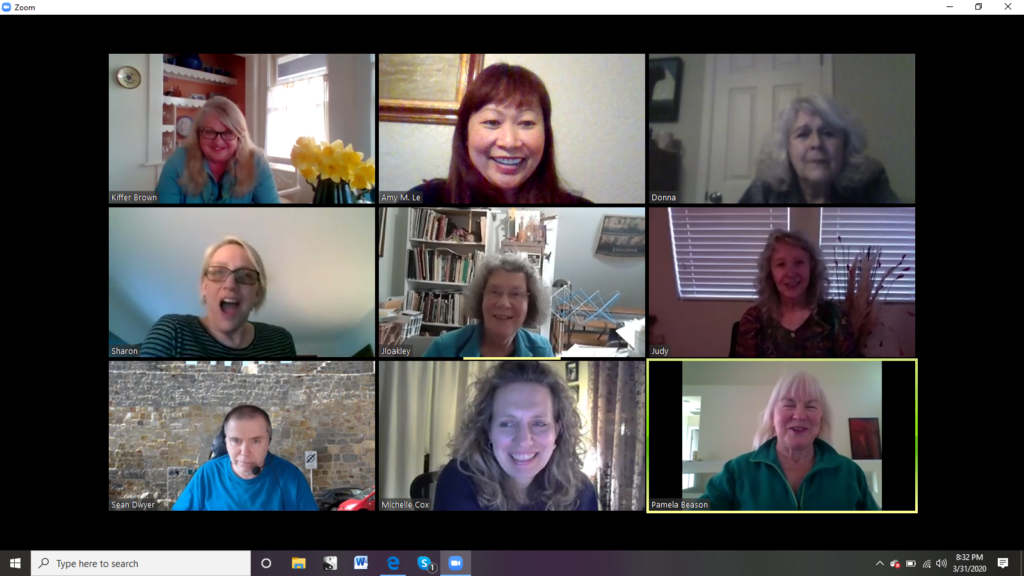
Coffee Klatch Write In is held at the Roost on ZOOM. The next Write-Ins are currently scheduled for Tuesday mornings. However, any Roost member can set up a Write In group to accommodate their time zones—which is handy since Roost members live across North America and around the globe.
Check us out!
We meet up once a week to do some writing. Usually folks join, we chat about what we’re working on for 10-15 minutes, and then dive in to work! Light conversation and the Chat are excellent ways to check in.
Tuesday, Sept. 28, 2021 from 10 a.m. – Noon PST
Tuesday, Oct. 5, 2021 from 10 a.m. – Noon PST
Tuesday, Oct. 12, 2021 from 10 a.m. – Noon PST
I also found out, weirdly enough, that my most productive space is not my desk where I work from home and play videogames, but rather on my futon with plenty of pillows for back support using my laundry basket as a desk.
I don’t know what the magic is, but I really like working on this laundry basket. -DB
I have no idea what it is about these factors. Maybe it’s the giant stuffed pig that’s my quarantine companion, but that’s where I am happiest and most productive. The second-best place is at the dining room table with the roommate’s dog hanging out.
Maya Angelou passed away on May 28, 2014. She preferred writing lying down and leaning on one elbow.
Maya Lou Angelo rented hotel rooms for a few months at a time in her hometown. She would have the management move all of the paintings and decorations out of the room. Also, they were not allowed in to clean or straighten just in case she had thrown away piece of paper with writing on it that might later prove to be useful. Ms. Angelo said that she would head to around 6:30 in the morning and hang out there until about 2:30 then she would head home to edit. The hotel room was creating and writing only. She would average 10-12 pages of written material a day. She would then edit these pages down to three or four pages in the evening at her home.
“Nothing will work unless you do.” Maya Angelou
2. Track when you write.
This next suggestion helps you learn when you are most productive. I have always dreamed of being that person who wakes up at 5am, reads for two hours, writes about what I read for another two hours, and then eats breakfast and jumps into amazing creative work. It would help if I didn’t need at the very least thirty minutes to drag myself out of bed.
NaNoWriMo this year gave me a strong reset to my writing habits. Having the regular goals made me prioritize my work, and being in quarantine removed many of the distractions I usually have. The deep dive even gave me some great community locally and on The Roost that I’m still holding onto.
Things that I ask myself when tracking:
What Project am I working on?
When did I start?
When did I finish?
What was my general mood?
How many pages/words did I get through?
Where did I write?
Additional notes
Doing NaNoWriMo this last November, I’ve finally discovered that while I can sit down and do paid work at almost any time, I do my best creative writing between 8-11pm. This is tricky, because that’s when most people want to hang out, but I can usually make late afternoon work well, too. The times that don’t work for me?Anytime before 11am. I can always do brainstorm work, but if I want to do writing I’m happy with and make progress in a story, I need to set aside some time in the evening.
This isn’t so much how much time you make to write (though that can help). It’s also about how much writing you do in a particular amount of time. Generally, I write 250 words every 15 minutes. I also write about 250 words every 30 minutes. Depending on how I time myself, I come out with a different amount. Likewise, if Aaron/Bach (from the opening paragraph) sits down to write for only an hour, she writes about 500 words. However, if she sits down to write for 5 hours, she can manage 1500 words in that same hour! The amount of time we know we can get lost in the work affects us each differently.
Looking for more advice regarding what to do with your NaNoWriMo? See this article Chanticleer posted in November here.
3. What do you write on?
Rather than the material (desk, floor, laundry basket), this means more to the tools you use to write. Referring back to Aaron/Bach, I write different places for different things. When I first started at Chanticleer (and I still do), took and kept notes in a journal about how things work here. There are a lot of moving parts and “under the hood” technology here at Chanticleer. I’ve noticed that Kiffer carries around a small black notebook and old school small planning calender even though we use Google Calendar apps and the latest digital management apps (hat tip to Argus Brown) here at the home office of Chanticleer.
Using my journal is also handy for our weekly brainstorming meetings. I find that I can generate 7 “ideas” in ten minutes if I am utilizing my trusty journal instead of my laptop. Now, very little of a full article or project would come out this exercise. It’s just brainstorming and laying out my ideas some place where I can keep track of them until I can work on the details. But it works! I’ve noticed that I have much more trouble brainstorming on a computer where the cursor blinks at me with menace and mocking intent.
The mocking cursor and time flying by.
The other thing that drives me up the wall when trying to brainstorm on a computer is there are so many distractions. If I have an idea, I can focus in, but if I’m casting around for thoughts, I’m open to the world, and the internet adores it when I’m open to suggestion. Somehow social media rarely helps me generate ideas for any type of writing.
Now, of course, once I’m running with an idea, I love the speed that I can put words down and edit when I type rather than scribble. Plus, my writing is always legible on a computer.
4. Mood
You know how it is, you’re in a bad mood, you need to do your writing, you sit down to do the work, and you get maybe half what you usually do done. What if that’s a pattern that you can predict? For me, knowing that when I sit down and I’m grumpy that my roommates haven’t wiped down the counters after cooking spaghetti (my first thought always being there has been a murder in my house), or maybe someone has said something mean on social media (somehow social media always features as an obstacle to writing).
5. Where will the story go next?
EL Doctorow famously said, “Writing is like driving at night in the fog. You can only see as far as your headlights, but you can make the whole trip that way.”
While you probably have written down the broad strokes of what happens at the beginning, middle, and end of your story, it’s important to keep other ideas in mind.
I felt good seeing Aaron/Bach suggest this, as it’s been a longtime habit of mine to sketch out what I want to happen next after I bring a writing session to a close. Since I write late, often this is the point where I feel like I really need to sleep, I’ll do a brief summary of how I see the rest of the text going, and if any strong images come to mind, I’ll write those down as well, hoping to use them as the story goes on.
When I return and see those notes, I simply delete them as I write the scene it suggests, keeping my notes clean and easy to read for what comes next. With the images I can even copy and paste them directly into the work as the place I think they’ll fit best appears on the page.
6. What are you excited about in the story?
I just started editing the first draft of a novel I finished in October. One of the big critiques my writing group gives me is that the conflict doesn’t start soon enough, which I thought was ridiculous!
In the first chapter, my YA protagonist has the 3-person panel for his high school senior project possessed by a conduit of 100 dead souls who he has promised to guide from Limbo into Heaven! What could be more intense than that?!
However, in rereading the work with fresh eyes I notice that my characters eat. A lot.
Now, this is probably from my great love of all breakfast foods and missing going out to restaurants, but everyone in this book can’t get to any scenes because they’re too busy giving light exposition at The Old Spaghetti Factory. As I go through, I find myself skipping these scenes to get to the next on, which tells me that, yes, they are not exciting. If as the writer I don’t care about a scene, it needs to go. If there’s key information I feel like is in that scene, I write it down separately and keep an eye out for the right place to insert it, rather than dragging the reader through yet another pointless meal—even if I am craving a Dutch baby with powdered sugar, cinnamon, maple syrup, and fresh fruit. Maybe with a side of breakfast sausage. Mmm. And hmmm.
Dutch Baby with fruit and powdered sugar on it
7. Review your information
So, for me, what I’ve learned is that I write best in areas where I can be comfortable and don’t have easy access to videogames. I like having friends, either virtual, stuffed, or furry, because then I feel like I’m accountable to someone, even if they only want to listen to me brainstorm when I’m giving them pets.
I am officially an evening person. I love mornings for relaxing, watching the bay, drinking coffee, and making extravagant breakfasts. If you haven’t made yourself Spanish tortilla, it’s easier than you’d expect—give it a try.
A few times a week I need to set aside my evenings for creativity, and that means no Mandalorian with the roommates (sorry Baby Yoda) or virtual game night with friends. If they want to hang out, they can come co-work (write) with me.
I do my starting work in a journal of some sort, and then I do the writing work on a computer. Editing and marketing work also happen on computers, mostly out of necessity and the predominance of the internet.
I am gentle with myself when in a bad mood. Rather than lamenting that I couldn’t do as much as the day before or the week before, I remind myself that creativity is a process, and that even though I was in a bad mood I put in the time today, and that habit counts for more than any single day worth of word count.
I write best when I can work from notes that show me what scene I’m most drawn to write about next in my story. That lets me stay focused on excitement as I go through the work.
Finally, now that you can figure all this out for yourself, protect the things that let you write. They’re the loveliest tools you can give yourself.
8. Set goals
Nailed it
Ask yourself what your stretch goals are, and what goals are you confident you can meet. Go back to your goals periodically. Do they need to be adjusted for where you are in your w-i-p (work in progress). Editing requires a different focus than plotting. Plotting requires a different mind set than creating your characters or atmosphere.
What are your methods and writing habits?
We’d love to hear from you! What spurs you on? What trips you up?
Examine your own life to best see how you can maximize your own productivity and be the author you want to be!
Maybe this is getting something to the point where you can use one of our many Chanticleer services, from the Manuscript Overview, to the Editorial Book Review, to testing the mettle of your work in the Chanticleer Awards. Whatever goals you set, make sure that you keep your gaze on meeting them as you write!
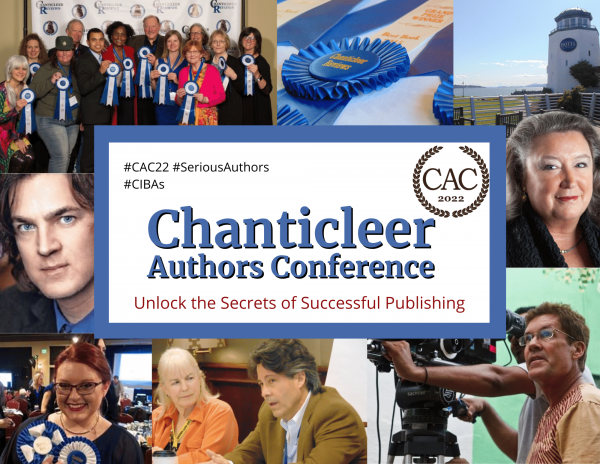
Speaking of the Chanticleer Awards, did you know that we’ll be announcing the Finalists, First Place Winners, and Grand Prize Winners at our Tenth Anniversary Chanticleer Authors Conference (CAC22)? The CIBA Ceremonies will run in tandem with them from April 7-10, 2022! We’re optimistic we will be able to see you in person at the beautiful Hotel Bellwether here in Bellingham, WA.
Writer’s Toolbox
Thank you for reading this Chanticleer Writer’s Toolbox article.
When we sit down to write a story the project can seem overwhelming. The steady on and off of the cursor can be terrifying.
Maybe the blank space will go away if we don’t blink!
But it’s alright. Consider the following steps to help make your writing as easy as a stroll through the barnyard.
Priming the Pump for Your Next Work in Progress?
The pump may be a bit creaky when you start, but keep pumping. It will get easier.
1. Write down the broad strokes of your story.
Consider how you want your story to be structured.
Will it read with a traditional
Introduction
Inciting Incident
Rising Action, Climax
Falling Action
Resolution
Or will it follow something more unique from what’s typical (though the traditional structure obviously still works for many stories). Interested in more of what we’ve said about structure in the past? Check out our interview here with Peter Greene, a 2017 Goethe Award Winner.
Peter Greene, author of the Goethe Grand Prize award-winning “Paladin’s War: The Adventures of Jonathan Moore
From there, write out how you generally see important parts of the story. This might mean you write the story out of order as you highlight any important scenes you want to work out in the beginning, middle, and end of your story. Think of these are your guideposts, leading you through your writing as you like them together, and giving you an excuse to always be excited when you sit down to write because you already have an idea of how the scene will work!
Many authors who do this find that they might end up going a different direction as they try to link up with these guideposts. While it might seem like that just means the writing was good practice, don’t delete the scenes you aren’t using! Save those scenes in a separate file. This can be great inspiration for one off short stories, or they might even fit in better in a future novel project. if by the time you reach that point in your story you realize it doesn’t fit. You can always edit it to fit, or at the very least feel good that you got some good practice in.
2. Brainstorm your characters a bit.
When starting out, many writers find character sheets helpful. The brilliant Jessica Morrell has written about character development and NaNoWriMo here, if you’re interested in reading beyond this. Some suggestions to consider regarding your character:
What are their basic physical characteristics?
How do they respond in stressful situations?
What’s one thing they can’t live without?
Who are the touchstone people in their life?
What do they keep in their refrigerator?
All these questions can lead to fun and surprising answers, but one of the most helpful activities can be writing a therapy session your main characters.
If you don’t know what therapy looks like and you’re a writer…well, you might want to consider therapy.
Joking aside, in a “therapy conversation” the characters must justify why they exist and what they plan to do in the book. How will they respond to the problems their facing? What is their response when the therapist asks them what brings them to therapy today? Now, if the character doesn’t actually get the advice they might receive in this scene (remember, it’s an exercise, not really something that needs to happen in your work), what choices will they make? Writing this out can help the author feel much closer to the characters as real people.
Remember, characters can feel much more real if you, the author, love them. Keep that in mind when you write your terrible villain—someone in your world probably loves them deeply. What makes other characters love your villain and what do you love about them?
3. Worldbuilding
Like character and structure, you’ll want a good handle on your worldbuilding. This can be an excellent time to view your own assumption about how the world works and play those through in a story. Or you can commit to a worldview that fascinates you. One great example of this is Robert Jordan’s Wheel of Time series.
Jordan, who also authored the Conan The Barbarian series, was educated as a nuclear physicist. When his characters step into an alternate dimension (think evil Narnia), time flows differently, which means objects in the characters’ peripheral vision appear closer as the characters move. This little detail blew me away in terms of giving the world a creepy feeling of the forces of evil closing in on the beloved hero, whereas it made my brother who was getting his PhD in particle physics jump up and down in excitement as he explained the why of the description.
The answer was that, following the theory of relativity, when you move extremely fast, the world compresses toward you–really!
Furthermore, Jordan uses a Platonic worldview to govern his magic system. Plato believed that every person and object has an essential and transcendental quality, a whatness that was key to their existence. Whether this is true or not, Jordan’s magic users followed this rule strictly as their magic came from any part of their identity that could be deemed essential—and it was true in Jordan’s world, regardless of the implications in our world.
Some of the most amazing worldbuilding happens in Lab Lit, where authors need to have excellent expertise of the subject they’re writing about, while at the same time understand where they’re going to move into their own interpretation of the world. We all have a way in which we imagine our reality, and it’s important to know that we’re putting that worldview into our own work.
If lab lit describes what you do, consider submitting to ourCygnus Awards or our Global Thriller Awards, both of which offer categories in hard science fiction and lab lit that will let your researched work shine.
All of these will lead, not only to a more cohesive early draft, but to a first draft that finishes sooner. Planning things out means that you always have something to look forward to because you already wrote down all the parts of your book that you felt excited to write.
Remember, your book will be alive and in motion right up until it goes to print (and if there’s a reprint it can always come to life again). Just because you start with a specific good idea doesn’t mean you’re married to it and need to follow it for forever.
For more great advice on World Building, check out Diane Garland’s (Top Story Bible/World Builder Editor) take on it here.
4. The Draft is Done, Now What?
Once you feel like you have a cohesive work, the next step is to find eyes to look over your work. Professional books always have multiple sets of eyes. Ask yourself where you need to go with the draft from here. If you know that there’s going to be a lot of changes, and you’ll be able to catch a good chunk of them, consider a Manuscript Overview here, which will give you a strong sense of what works and what needs to be improved in your story. If you’re at a wall in terms of what can be added, you should check out our Editorial Services here, which will give you a much closer analysis of your work and help you see, on a line level, how you can polish your work to a fine shine.
Working on your own is great, but there’s only so far anyone can go before they need that crucial second set of eyes on their work before it goes off to be edited.
Chanticleer Editorial Services – when you are ready
Did you know that Chanticleer offers editorial services?We do and have been doing so since 2011.
Tools of the Editing Trade
Our professional editors are top-notch and are experts in the Chicago Manual of Style. They have and are working for the top publishing houses (TOR, McMillian, Thomas Mercer, Penguin Random House, Simon Schuster, etc.).
If you would like more information, we invite you to email Kiffer or Sharon at KBrown@ChantiReviews.com or SAnderson@ChantiReviews.com for more information, testimonials, and fees.
We work with a small number of exclusive clients who want to collaborate with our team of top-editors on an on-going basis.Contact us today!
Chanticleer Editorial Services also offers writing craft sessions and masterclasses. Sign up to find out where, when, and how sessions being held.