Tag: Editing Tools

  • Crafting Words and Lassoing Jottings – Writing Advice from Jessica Page Morrell – A Chanticleer Writer’s Toolbox Post

    Crafting Words and Lassoing Jottings – Writing Advice from Jessica Page Morrell – A Chanticleer Writer’s Toolbox Post

    “I try to pull the language into such a sharpness that it jumps off the page. It must look easy, but it takes me forever to get it to look so easy. Of course, there are those critics — New York critics as a rule — who say, Well, Maya Angelou has a new book out and of course it’s good but then she’s a natural writer. Those are the ones I want to grab by the throat and wrestle to the floor because it takes me forever to get it to sing. I work at the language.” ~ Maya Angelou

    ~ Maya  Angelou Source: Source: The Paris Review Interviews: Volume IV

    Maya Angelou’s website: https://www.mayaangelou.com/

    Maya Angelou, her gift for crafting words has forever left us with some of the most inspirational and memorable quotes of our time. “Biography” Jan 29, 2021

    Writing Advice from Jessica Page Morrell – Lassoing the Jottings and Crafting Words

    I’ve been purging my office and as I toss old receipts and rearrange books I’m finding scraps of paper with scrawls and tidbits on them. So I’m lassoing all these jottings. A single word on the back of an envelope says ‘waft’. Now, waft is in my vocabulary, and I’ve used it in writing, but these lists always inspire me. Another envelope back includes: pinprick, squatter, fusty, quisling, shacky, gawk, wheedle, moonwalk, shirk, bupkis, wraith, servile, scuttle, torpor, badger. Because if you’re not constantly gathering words you’re not growing as a writer.

    “…if you’re not constantly gathering words you’re not growing as a writer. – Jessica Morrell

    My next step is to figure out where to record these snippets. If you’re an analogue type like I am, you might have notebooks stashed all over the place. In fact, I’ve decided to stash one in my car’s glove box. Wondering why I haven’t done this years ago since I often hear information on NPR that I scribble on my hand as I’m driving. I’ve written here before about keeping a writer’s notebook, a lens to the world. Some jottings will land in my current writer’s notebook, while others will end up in specific ongoing projects.

    Jessica’s Notebooks

    Ruminate Productively. Question Thought Cycles

    Another note says: Ruminate productively. Question thought cycles. This one struck me hard. There was a tragic death in our family 3 weeks days ago and during the final weeks of my niece’s life, my thoughts returned again and again to her suffering. And her parents’ suffering. And, of course, I suffered too, sad, worried for them all, grieving the unfairness of her shortened life. I also tracked memories along years of family events and unearthed painful memories and tracked over old scars. In other words, unproductive ruminations.

    Poetry

    Sometimes it felt like I needed a lifeline to yank me free of this painful undertow. So I’ve turned to poetry before falling sleep and reading verses during the day. Such solace. And I’m falling into the poems and marveling at the poet’s imagery and turns of thought. Poetry can teach all writers. Poetry can help heal bruised and shattered hearts.[Editor’s Note: See Links above for Maya Angelou]

    Poetry can teach all writers. Poetry can help heal bruised and shattered hearts. – Jessica Morrell

    Track Complicated Emotions and Contradictory Thoughts

    Here’s another morsel: Track complicated emotions and contradictory thoughts. Since I’ve been quarantining for about a century now I’m getting worn down from too much time spent inside my head. Some days thoughts go skittering into strange places which then scare up unexpected emotions. Not always welcome emotions. So, as I ‘hear’ unhelpful inner talk, I try to stop myself. Then I backtrack into whatever I was thinking or feeling. Slow it all down and linger there. Figure out where the thought originated. Listening in to a hidden (or noisy) part of myself. Then, as I’ve been telling myself for years, thoughts aren’t like the weather. I can do something about them; question or entertain them, discard, or act on them. Instead of allowing a storm to brew.

    If you’re not prone to rumination be on the lookout for these complicated emotions on a screen or while reading a novel. For example, don’t you love it when you witness a cocktail of emotions flicker across an actor’s face? Maybe as a painful realization dawns or a joyful understanding blooms. How would you write that? Sir Anthony Hopkins starring in The Remains of the Day as the fusty head butler is an excellent example of how tiny face muscles can express a wide range of emotions.

    “The Remains of the Day” by Kazuo Ishiguro – Stevens the Butler of Darlington Hall, played brilliantly by Anthony Hopkins.

    Contradictions

    But let’s get back to contradictions. I taught online workshops last fall and in one workshop on subplots I explained the potency of contradictions while writing fiction. Contradictory needs and wants (or desires) within your main characters create delicious conflict. In The Remains of the Day, Hopkin’s character Stevens is at war with the truth. He’s blinded by his loyalty to his employer, a Nazi sympathizer, and clings to his duties instead of risking emotional intimacy–needs he dare not admit to. His elderly father dies alone while Stevens tends to an important dinner party and ignores the housekeeper’s–played impeccably by Emma Thompson– interest in him. The film is based on The Remains of the Day by Kazuo Ishiguro and is written as a first-person account by Stevens, a sometimes unreliable narrator.

    You often see this dynamic at work in romance plots and subplots. For example, a woman is attracted to bad boy types, but deep down she longs for marriage, stability, and kids. This scenario played out in Bridget Jones Diary by Helen Felding where readers and viewers recognized what was best for Bridget, but she did not. Bridget was beginning a new year and diary by vowing to cut down on cigarettes, alcohol and calories. Also on her list was to find a stable man, but of course, chaos ensued in the form of a fling with a bad boy. He was played with aplomb by Hugh Grant in the hit film version, while she overlooked stable lawyer Patrick Darcy (Colin Firth) until it was almost too late.

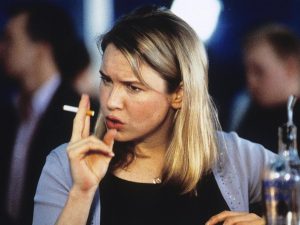
    Bridget Jones and one of her issues – smoking.

    Or a former addict or alcoholic has become clean and sober. All is well, until he is somehow triggered and then slips back into the bottle or ends up visiting his dealer. Meanwhile, as your reader is begging “do not go into that liquor store. Do not screw this up.” And this means your reader might be feeling contradictory feelings too–sympathy for the addiction, but enraged at the character for buckling under pressure.

    Contradictions create suspense and tension. Stay tuned because I’m going to cover this in more depth in the future.

    And as an aside:  Villains MUST Deliver

    This note was scrawled on a legal pad as I was reading a recent client’s manuscript: Villains MUST deliver. If you plop a villain or villainous group into your story they need to embody some form of evil and profound threat. He/she/they cannot remain offstage throughout. If your villains don’t threaten or scare your protagonist up close and personal, then fix the bad guy or your plot.

    Immersive Reading Experience = Resonating with Readers

    These days my notebooks are filled with mannerisms and reactions from the novels I read. In my  editing work I notice that writers use the same emotional responses in their stories. Characters repeatedly look down, shrug, or are wide eyed. I read a novel recently where the author used ‘deadpanned’ five or six times. By the third deadpan, I was wincing.

    Another reason to study other writer’s techniques is to create a more immersive reading experience. If you nail aftermaths or the viewpoint character’s experiences they will resonate with readers. Such as: startled chuff of laughter, a brittle silence settled between them, staring at him with dead, dark eyes, she flinches, settling uncomfortably, his heart started clattering around in his chest.

    Write Your First Draft with Everything You Got

    Don’t worry about finding the perfect words, the right words on your first draft. Just get your story out of your brain and into words.

    Then put the whole thing away for a few weeks or months. Come back to your draft with fresh eyes to see if the story concept is worth your editing time. Meanwhile, start a new story while this one simmers on the proverbial back burner. Have you fallen in love for one or the other?

    Here are two links that may prove helpful in unspooling the story in your brain onto the page:

    Unspooling Your Story

    How to Write Your Story in Four Weeks

    Keep writing, keep dreaming, have heart. Jessica 

    Jessica Morrell is a top-tier developmental editor and a contributor to Chanticleer Reviews Media and to the Writer’s Digest magazine. She teaches Master Writing Craft Classes at the Chanticleer Authors Conference that is held annually along with teaching at Chanticleer writing workshops that are held throughout the year. 


    Chanticleer Editorial Services – when you are ready
    Did you know that Chanticleer offers editorial services? We do and have been doing so since 2011.

    Tools of the Editing Trade

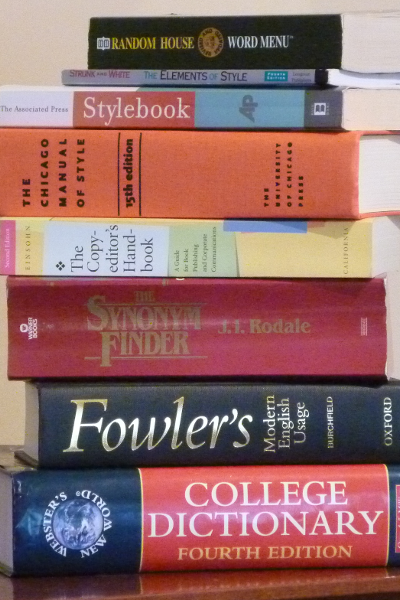
    Our professional editors are top-notch and are experts in the Chicago Manual of Style. They have and are working for the top publishing houses (TOR, McMillian, Thomas Mercer, Penguin Random House, Simon Schuster, etc.).

    If you would like more information, we invite you to email Kiffer or Sharon at KBrown@ChantiReviews.com or SAnderson@ChantiReviews.com for more information, testimonials, and fees.

    We work with a small number of exclusive clients who want to collaborate with our team of top-editors on an on-going basis. Contact us today!

    Chanticleer Editorial Services also offers writing craft sessions and masterclasses. Sign up to find out where, when, and how sessions being held.

    A great way to get started is with our manuscript evaluation service. Here are some handy links about this tried and true service: https://www.chantireviews.com/manuscript-reviews/

    And we do editorial consultations. for $75.  https://www.chantireviews.com/services/Editorial-Services-p85337185

    Writer’s Toolbox

    Thank you for reading this Chanticleer Writer’s Toolbox article.

    Writers Toolbox  a few more Helpful Links: 

    The INCITING INCIDENT: STORY, SETBACKS and SURPRISES for the PROTAGONIST – A Writer’s Toolbox Series from Jessica Morrell’s Editor’s Desk

    ESSENCE of CHARACTERS – Part One – From the Jessica Morrell’s Editor’s Desk – Writer’s Toolbox Series  


  • WORDCRAFT – HOW to MAKE IT HAPPEN – from Jessica Morrell’s Editing Desk – a Chanticleer Writer’s Toolbox post

    WORDCRAFT – HOW to MAKE IT HAPPEN – from Jessica Morrell’s Editing Desk – a Chanticleer Writer’s Toolbox post

    How Does Wordcraft Happen? by Jessica Morrell

    Focus on Language

    There are so many mechanics of writing style I could write about columns on the topic for years. Come to think of it, I have.

    Let’s focus on layering language into a story with care so that it adds to overall meaning and effect.

    This means making careful choices so that you don’t distract the reader from your narrative. As a writer, search for precise words and comparisons to satisfy your reader. The problem of finding the perfect word or imagery, instead of the almost perfect word, is no small matter.

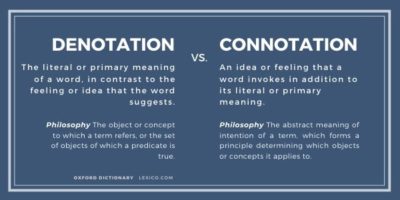
    Denotation or Connotation – Know the Difference

    While the literal or explicit meaning of a word or phrase is its denotation, the suggestive or associative implication of a word or phrase is its connotation. Thus you’re always making choices about meaning and language.

    Merriam -Webster says: “What’s the difference between connotation and denotation?

    While each of these two words has several possible meanings, they are notably distinct from each other in all senses. Denotation is concerned with explicit meaning, and connotation tends to be concerned with implicit meaning. The word home, for instance, has a denotation of “the place (such as a house or apartment) where a person lives,” but it may additionally have many connotations (such as “warmth,” “security,” or “childhood”) for some people.

    Examples of denotation in a Sentence
    The word has one literal denotation but several different connotations.
    The definition provides the word’s denotation.

    We all need a practical, sort of workday vocabulary that is consistent with our voice, and then we also need a vocabulary that’s the writer’s version of the Taj Mahal. Or, as another example, sometimes the style needs to be basic like bread pudding, sometime it needs to be more like a seven-layer wedding cake. Sometimes the best words are clear and simple, and sometimes they need to soar like a heron aloft on an air current. Sometimes stories work well in the style we’ve come to associate with Hemingway—terse, journalistic and economical. And sometimes a story needs all the embroidery and bombast of a stylist like John Updike.

    Obviously there are writing styles that are too gorgeous, too painterly. The same for a style that is too ‘out there,’ too odd to grasp—as if wooly mammoths populate the page.

    For example, boisterous and unexpected adjectives such as claxon or tessellated or the unforgivable boustrophedonic (all used by John Updike)—stop the flow of narrative. Instead of the reader remaining involved in the scene, he steps aside and engages his intellect. Choosing surprising yet apt modifiers is vital, but it’s not a task to be undertaken frivolously.  Playwright David Hare says, “Style is the art of getting yourself out of the way, not putting yourself in it.”  

    Choosing surprising yet apt modifiers is vital. – Jessica Morrell

    Anchoring the Story

    When it comes to figurative language, you want to demonstrate an imaginative range, while remembering figurative language adds layers of meaning while also concentrating the flow of ideas. We use figurative language because it mates images and likenesses, connects with the reader’s associative right brain, and helps anchor the story. With figurative language, you want to demonstrate with freshness and verve. However, don’t range too far with your images or the story becomes tangled and obscure. Wordcraft that makes us shiver is delicious. Wordcraft that exists merely to show off is pointless.

    Analogy and Metaphor

    Analogy and metaphor are always subservient to the viewpoint, yet always take us deeper into the subject or moment as when Truman Capote described Elizabeth Taylor’s “eyes so liquid with life” and “the face, with those lilac eyes, is a prisoner’s dream, a secretary’s self-fantasy; unreal, non-obtainable…” Don’t you wish you’d woven together “a prisoner’s dream” to describe an indescribable beauty? Notice how it makes you feel the allure of Taylor?

    Don’t Try to Do This in Your First Draft

    In your editing process, it’s okay if your first draft is unpretentious, just as it is okay if your first draft is blowsy and lumbering. But then, as you refine later drafts, ask yourself if the writing needs to lift off the page a bit. If it is clean, or simply stark. If lush prose is necessary, or stripped down prose is needed.

    Intensity of Language and the Potency of the Circumstance

    Pay attention to the intensity of language which can range from mild to inflammatory. Match intensity of language to the potency of the circumstance, the sentence, the scene. Note the places in the story where the reader needs to linger and feel emotions and tension. In these passages it’s important to make precise choices, to examine your sentences, and listen hard to what you must say.

    Clichés

    The next thing to ask yourself as you’re revising is ‘have I heard this before?’

    Clichés and trite expressions are often an editor’s first tip off that you’re a lazy or unimaginative writer. “Clichés are the old coins of language: phrases that once made a striking impression but have since been rubbed smooth by repeated handling.”

    In Conclusion

    If the writing seems thin, keep asking yourself a simple question: what does this remind me of?

    Perhaps you’ve written about time running out (always a juicy element) and in the story your character is desperate because a deadline is looming as his kidnapped girlfriend is buried alive in a tunnel under the New York subways. It is mid-February, a blizzard is raging, temperatures are dropping to the lowest in a century, and travel is almost impossible. Your reader needs to be practically digging his nails into his palms; as if the harsh cold is seeping into his joints while turning the pages.

    If the writing doesn’t illustrate those glacial temperatures, the reader won’t be feeling the danger. And will not harbor visions of frostbite or worse, of her frozen body  like a soldier left behind on the Russian Front during World War II. You don’t need to  conjure an analogy or metaphor for every passage, but you’ll need sensory details, until the reader is shivering and the cold has ripped through him.

    You may be interested in reading the Glissando and Wordcraft post. Click here for the link:  https://www.chantireviews.com/2020/02/21/glissando-and-wordcraft-from-jessica-morrells-editors-desk-a-chanticleer-writers-toolbox-blog-post/


    Jessica Page Morrell

    Jessica Page Morrell is a top-tier developmental editor for books and screenplays. Her articles have appeared in Writer’s Digest and The Writer magazines. She is known for explaining the hows and whys of what makes for excellent writing and for sharing very clear examples that examine the technical aspects of writing that emphases layering and subtext. Her books on writing craft are considered “a must have” for any serious writer’s toolkit.

    Jessica will teach the Master Craft Writing Classes at the Chanticleer Authors Conference on Thursday, Sept. 3, 2020  and will present sessions during the conference weekend.

    Did you know that Chanticleer offers editorial services? We do and have been doing so since 2011.

    And that our professional editors are top-notch and are experts in the Chicago Manual of Style. They have and are working for the top publishing houses (TOR, Macmillan, Thomas Mercer, Penguin Random House, etc.). If you would like more information, we invite you to email Kiffer or Sharon at KBrown@ChantiReviews.com or SAnderson@ChantiReviews.com.

    Click here to read more about our Editorial services: https://www.chantireviews.com/services/Editorial-Services-p85337185

    A great way to get started is with our manuscript evaluation service. Here are some handy links about this tried and true service:

    https://www.chantireviews.com/manuscript-reviews/

    We work with a small number of exclusive clients who want to collaborate with our team of top-editors on an on-going basis. Contact us today!

    Writer’s Toolbox

    Thank you for reading this Chanticleer Writer’s Toolbox article. 

  • Continuity and Story Bibles – by Your WorldKeeper Diane Garland – A Chanticleer Writer’s Toolbox post

    Continuity and Story Bibles – by Your WorldKeeper Diane Garland – A Chanticleer Writer’s Toolbox post

    Tools of the Authors’ and Screenwriters’ Trade: Continuity and Story Bibles

    Building a story bible is much like building a house. I know as I am currently going through the very stressful and time-consuming process of having a house built. I’ve found myself agonizing over the rooms (do we really need a formal living room?), the hinges of the windows (9 choices of style, 7 choices of color), the light switches and outlets (how many and where do they go?), and many, many more things I had never even thought about (my favorite being how many caissons should be drilled for the foundation).

    When I’m not overseeing the house, I’m creating story bibles for authors who write series. I’ve been doing this for a variety of authors in multiple genres. Both endeavors require a tight organization of details, an insight into what the finished product should look like and how it all started.

    The major thread that runs through both of my projects is continuity.

    The Importance of Continuity

    Continuity is one of the most under-rated yet, far-reaching aspects of writing a series. It’s the one that is easily glossed over and forgotten in the mad dash to get words on the paper or the screen. It takes a backseat to the development of the world, the characters, the story arcs, and the action. And yet, it is one of the things readers remember most when reading a book. Continuity in a series includes everything from the attributes of the characters to the placement of buildings in the world. It covers the timeline and storylines from book to book, along with the rules of the world. Like building a house, an author needs to include the correct nuts and bolts as needed to plan the best possible design of the world she is creating. And, yes, even pantzers need to do this at some point before typing The End.

    Nuts and Bolts to Include

    Readers thrive on details. They crave information on the setting, the characters, buildings, outdoor spaces and more. These elements create a living, breathing world for the reader to experience. A few basic elements are standard when writing characters–a name, their age and physical characteristics for example. More details will appear over the course of the series i.e. family relationships and a love of animals. An author will also add details to enrich the storyline, a childhood anecdote for example.

    The same goes with the development of the world. Tell the reader what the buildings or outdoor spaces look like, where they are located, and what they are used for. Description provides the reader with more color and more ways of imagining the setting. Remember to take your buildings beyond the four walls. Give them not only structure, but dress them up a bit. When building a house, more happens than naming the rooms. We create a home by filling the rooms with furniture, artwork, blinds on the windows, and paint on the walls. Do the same with the buildings and spaces in your story world. Bring your world to life.

    Not having ambiance or a sense of place in a work is called “the white room syndrome.”  White room syndrome is what our editors note that can be a major weakness found in manuscript evaluations.  There is little or no immersion  for readers in a “white room” and this will cause the dreaded lost of interest in a work. ~Kiffer Brown

    Organizing the Nuts and Bolts

     Organizing the myriad of details of a story world is a necessary evil. Continuity demands this. Writing a series is stressful enough without struggling to recall details from previous books or spending hours searching for that one fact that was mentioned in book 2 (or maybe book 3, or maybe only existed in your thoughts and wasn’t actually mentioned on the page.) Too many authors rely on memory or scraps of notes here and there to keep them on the straight and narrow. Finding a system that works is an important tool in an author’s box of tricks. A story bible is one such tool.

    Creating a Story Bible -not just for Scifi writers

    If you want to pitch your book for a TV series or film or gaming, you will need to create a story bible. Screenwriters depend on it and so should serious authors. The story bible holds all of the tiny pieces of information such as cultural phrases, potential plotting ideas, dialogue, emotions, memories, does the character like dry wines or takes her bourbon neat, coffee black or macchiatos only, and a myriad of other ideas or details. And then there or the locations, timelines, character details, …

    Old school — perhaps

    Creating a story bible requires attention to detail and a lot of patience. The minutiae of a story world can be quite tricky to record. Choosing a structure for the bible that will work best for the author is crucial. Many find various word and writing programs to work best. All information regarding the characters, spaces, timelines, rules of the world, and what makes your story world unique should be listed and arranged in a manner easy to access. Without a good system, continuity across books will suffer, the reader will flounder and the author will inevitably hear about it in letters and reviews.

    It is important for each writer  to find a system that works for her/him per project. One size definitely does not fit all.  

    Specifics on what to include in your story bible along with different systems will be discussed at the 2020 Chanticleer Authors Conference in Diane Garland’s session Your Story World: Beyond Eye Color and the Weather. And we will interview Diane for an OnWord Talks podcast soon!


    Learn from the BEST!

    Diane is always on the go! We invite you to visit the YOUR WORLDKEEPER website at https://yourworldkeeper.com/

    Diane Garland will teach several sessions on planning book series, world building, and creating story-bibles at  CAC20 in Bellingham, Wash.


    Her clients include USA Today Bestselling Author Ann Charles, Winner of four Will Rogers Gold Medallions and the Laramie Award, Jacquie Rogers, NY Times and USA Today bestselling author Sharon Hamilton, USA Today bestselling author Leslie Langtry among others.

    Diane will help you create and write your series efficiently by maintaining continuity and fluidity. Diane, with her crackerjack proficiency in tracking details, locations, timelines,  characters, and more will allow you, the author, to spend your time being creative, and not on tracking details that give works their all-important story construct.” – Kiffer Brown, publishing consultant and CEO of Chanticleer Reviews

    Did you know that Chanticleer offers editorial services? We do and have been doing so since 2011.

    And that our professionals (like Diane) are top-notch and our editors are  experts in the Chicago Manual of Style. They have and are working for the top publishing houses (TOR, McMillan, Thomas Mercer, Penguin Random House, etc.). If you would like more information, we invite you to email Kiffer or Sharon at KBrown@ChantiReviews.com or SAnderson@ChantiReviews.com.

    Click  here to learn more about Chanticleer Editorial Services.

    A great way to get started is with our manuscript evaluation service. Here are some handy links about this tried and true service:

    https://www.chantireviews.com/manuscript-reviews/

    We work with a small number of exclusive clients who want to collaborate with our team of top-editors on an on-going basis. Contact us today! BookEditor@ChantiReviews.com

    Writer’s Toolbox

    Thank you for reading this Chanticleer Writer’s Toolbox article. 

  • An Editor’s Checklist for Manuscript Evaluations of Fiction by Jessica Page Morrell Part Two of the Writing Fiction Guidelines by Jessica Page Morrell

    An Editor’s Checklist for Manuscript Evaluations of Fiction by Jessica Page Morrell Part Two of the Writing Fiction Guidelines by Jessica Page Morrell

    Writer’s Toolbox

    Fiction Checklist for Deep Editing

    A Chanticleer Editorial Services Writing Toolbox Series

    While rules and techniques are not written in stone, most of the basic guidelines of fiction stem from logic and an understanding of dramatic structure. Don’t break the rules until you know them, or better yet, until your first novels have sold. – Jessica Morrell


    The Developemental Editing  Checklist by Jessica Morrell

    VOICE

    From the opening paragraphs, is there a clear, distinct and engaging voice? The writer’s voice should have authenticity, individuality, or originality. 

    Log-Line aka Elevator Pitch

    Is there a single, simple conflict that drives the action? Can your plot be summed up in a single sentence? (Log-line aka The Elevator Pitch). Keep your log-line visible and in plain sight whenever you are editing your work-in-progress to remind you of your story’s focus. 

    Opening – is it grabbing? 

    Does the story begin with a change or threat in the protagonist’s life? Or the loss of something important? Or an action happening that should be prevented. 

    The opening should contain a hook or inciting incident that creates stress, unease, questions, or opens a can of worms. The story needs to start in the first sentence. 

    Is the story driven? 

    Does each scene provide a sense of momentum, or narrative drive pushing the story forward? Does each description? Or are the words there for the writer? 

    Is the story immersive? 

    Is the story highly visual? Can your reader imagine “seeing it” while reading or listening to it? 

    Ticking Clock? 

    Is there a sense of time running out or another driving factor that creates tension? Even light-hearted or humorous stories should have tension. 

    Weather or Atmosphere

    Does the story contain weather? What is the environment or the atmosphere like? Make sure that your story doesn’t have the “empty room” syndrome. 

    Is Backstory on a need to know basis? 

    Have you worked at weaving data, description and backstory into the narrative so that it doesn’t interrupt the forward movement of the story?

    Did You SHOW and TELL? 

    Have you dramatized the action in scenes or have you summarized?

    “Show, don’t tell” is a useful guideline for writers, but fiction is actually ‘told’ and ‘shown.’ A combination of both techniques creates the most effective fiction.

    Scenes are most effective when you’re revealing complicated interactions between characters and emotions change via the scene.

    Exposition is most effective when you’re filling in background information or moving quickly between two scenes. Too much showing or too many scenes make the story too drawn out just as too much exposition makes it static.

    Setting

    Are the settings interesting, unique, memorable?

    Does the setting have the potential to teach readers about a place, a profession, a way of life?

    Or does it overshadow the story?

    Conflict

    Is the conflict weak or boring or not enough to sustain a manuscript of a particular length?

    Or does the conflict seems contrived?

    Or begins too far into the story? This happens far too often.

    Pacing

    Often writers apply the same level of speed or word count to everything in the story from a major heartbreak or ride across town. Sagging middle is another pacing problem so that the reader feels like it takes too long to reach the end.

    Other times, the story plods along only to barrel past the most interesting moments in the story.

    Do the chapter endings make your reader want to keep reading? 

    Have you ended scenes (chapters) with thrusters, surprises or cliffhangers?

    Readers need a reason to keep turning the page and all stories need growing intensity until the climax or resolution. 

    Flashbacks

    Have you relied on flashbacks to relate to the protagonist’s backstory? If so, is the information necessary and do the flashbacks disrupt the momentum of the story?

    Are your characters recognizable? 

    Have you repeated some physical characteristics, descriptions of the characters throughout the story so the reader is reminded of their physical attributes and personality?

    Is each character consistent? Are his or her dominant traits in evidence throughout the story?

    Transitions

    Are your transitions brisk and do they serve to keep the reader moving through time,  space and mood?

    Do you quickly slip in and out of scenes?

    Story Arc

    Are there a series of setbacks, mini-crisis, and complications along the way?

    Does the protagonist have a goal in each scene? Or something that will affect the protagonist is taking place?

    Have you added unexpected events midway in the story?

    Have you deftly handled your theme and premise, or are you on a soapbox preaching or shouting at the reader with an overreaching message pushing an agenda? This happens more often than one would think.

    Dialogue

    When you read the dialogue out loud, does it sound natural?

    Do you trip over words when you read the dialogue out loud?

    Does the dialogue contain tension?

    Does each character sound distinctive?

    Be aware of these problems: overly long exchanges; characters giving speeches, or the dialogue contains no tension or conflict. 

    Does each character sound distinct?

    The Ending

    Is the protagonist the person in the story most involved in the action, most likely to be changed by events in the story?

    Does the ending provide the most emotional and dramatic scenes?

    Does the ending tie up most of the subplots?

    Does the ending deliver? Does it satisfy?

     The best endings are not contrived or convenient. They are the logical and highly dramatic culmination of the proceeding events. The climax is the highest emotional pitch of your story, a decision, a collision of forces, and settling of scores.  Also in this category are too many loose ends and subplots dangling, and questions unanswered.

    The ending is what makes your work “go viral.” Take special care with the ending. –Kiffer

    RULE #1 from Jessica 

    While rules and techniques are not written in stone, most of the basic guidelines of fiction stem from logic and an understanding of dramatic structure. Don’t break the rules until you know them, or better yet, until your first novels have sold.


    Editor’s Note: Often it is hard for the author to objectively read her or his work for the above issues. Authors often “hear and see” their story in their minds’ eyes. The trick is to have someone else hear and see the story from words on the page from outside of the author’s mind. This is where the author’s agent or the publisher’s editor comes into play by doing a close read of the work for these top-level issues before editing begins.

    We, at Chanticleer Reviews Editorial Services, see that it is at the point where authors make the mistake to start copyediting their works when they should have their manuscript evaluated by an editor, agent, or publisher.

    The power of a manuscript overview makes it one of the best tools that traditional publishing houses and literary agents make available to their authors.

    Best-selling authors receive great editing and feedback from agents and senior editors on early drafts, which most self-publishing authors never receive. When feedback comes early in a work’s progress it allows the author to not only create a more polished final product, but also publish more works.

    It can be very difficult for the author  to discern the above issues because it takes fresh eyes and perspective to evaluate the manuscript aka work-in-progress. The entire manuscript should be read and then commented on and evaluated. To learn more about Chanticleer’s Manuscript Overview and Evaluation Service can save you time and money, please click here.


    Click here to download the handy WORD file that you can print out of the above points on Developmental Editing.


    Jessica Page Morrell
    Jessica Page Morrell

    Jessica Morrell is a top-tier developmental editor and a contributor to Writer’s Digest magazine, and she teaches Master Writing Craft Classes at the Chanticleer Authors Conference that is held annually along with teaching at Chanticleer writing workshops.

    Jessica will teach a Master Class and advanced writing craft sessions at CAC19.

    Jessica understands both sides of the editorial desk–as a highly-sought after content development editor and an author. Her work also appears in multiple anthologies and The Writer and Writer’s Digest magazines. She is known for explaining the hows and whys of what makes for excellent writing and for sharing very clear examples that examines the technical aspects of writing that emphases layering and subtext. Her books on writing craft are considered “a must have” for any serious writer’s toolkit. For links for her writing craft books, please click on here.

    Chanticleer Reviews and OnWord Talks will interview Jessica for more of her writing tips and advice. Stay tuned! ~ Chanticleer (who hails from Chaucer’s Canterbury Tales).

    Click here for more information about the 2019 Chanticleer Authors Conference!

  • Story Prep:  Atmosphere, Overall Tone and Mood by Jessica Morrell – Writing Toolbox  –  Words

    Story Prep: Atmosphere, Overall Tone and Mood by Jessica Morrell – Writing Toolbox – Words

    Plan for an overall tone and mood from the get-go. — Jessica Morrell, editor

    Writing Toolbox Series

    I’m not suggesting you skip plotting or structure, I’m suggesting you plan for an overall tone and mood from the get-go. I’ve rarely given this advice for a first draft before, but then I started reading Dean Koontz’ Jane Hawk series. And I’ve been giving a lot of thought to why the novels are bestsellers, what works and what doesn’t quite work.
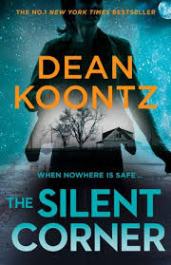
    In this thriller series, Jane Hawk, a rogue FBI agent, takes on government agencies including the FBI and a cabal of villains with a deadly conspiracy. The stories are dark, brutal, and scary.  As you read along, you feel prickly and practically queasy because evil is everywhere.  And the more you read, the more you realize how the author is also inserting real-life horrors into the mix. Because we’re living them in contemporary America.

    Why use atmosphere in your first draft?

    • Because it will affect your mood and approach to your story.
    • It will make you focus on creating unease–a necessary ingredient not always considered in early drafts.
    • Unease contributes to writing a page-turner.
    • Atmosphere underlines themes–even if you don’t have your themes nailed down yet.

    Editor’s Note: Although Jessica is using a thriller as an example, her insightful writing advice may be applied to other genres as well.

    While Jane Hawk spends a lot of time driving across the country searching for answers, a lot of the series is set in California. Now California isn’t exactly Transylvania in the dead of winter, right?  But Koontz is a writer’s writer, and he makes most settings spooksville and dangerous. If Jane reaches a haven or safety, it’s always a look-over-your-shoulder situation and she needs to move on, not rest. And she never ever relaxes. Too much is on the line, including the safety of her beloved 5-year-old Travis.

    The story is set in the near future and the country is sliding into chaos and lawlessness. It opens with a deadly terrorist attack in Pennsylvania as the backdrop and citizens countrywide are uneasy and fearful. Here’s a typical setting description as she’s driving.

    Editor’s Note:  Scott Steindorff, the A-List film producer who presents at the Chanticleer Authors Conference, states that “near-future” is the film industry’s favorite time period. To watch our On WORD Talks with Storytellers 3 minute video with Scott click here. 


    When the wipers swept the blearing stain from the windshield, she saw the nearby Pacific, storm-lashed and misted, rolling toward the shoreless like water and more like a sea of gray smoke pouring off the fires of a nuclear holocaust. The Silent Corner

    Throughout the series, the weather is used in scene after scene, often as bookends. Jane is off the grid so uses public libraries to find information.   From  The Silent Corner before she visits a library: 

    Still, the storm had not broken. The sky over San Diego loomed heavy with midday dark, as if all the water weight and potential thunder stored over distant Alpine had in the last few hours slid unspent toward the city, to add pressure to the coastal deluge that was coming. Sometimes both weather and history broke far too slowly for those who were impatient for what came next.

    In the park adjacent to the library, following a winding path, she saw ahead a fountain surrounded by a reflecting pool, and she walked to it and sat on one of the benches facing the water that flowered up in numerous thin streams, petaling the air with silver droplets.

    This place sounds lovely, doesn’t it? And don’t you wish you’d come up with petaling the air with silver droplets? In case you’re imagining the park as a place or peace or safety, forget about it. Because in fiction it really works to stage danger in benign or lovely settings.

    Let’s check out the same park later when Jane is about to be attacked and run for her life.

    On the flanking streets to the north and south, traffic passed: grumble of engines, swish of tires, hiss of air brakes, rattle of a loosely-fitted manhole cover, the traffic noise seemed curiously muffled, as if the park were encased with insulated dual-pane glass.

    The air remained under pressure, the sky full of iron-dark mountains that would soon collapse in a deluge, the city expectant, the windows of buildings shimmering with light that normally would be faded by the sun at this hour, drivers switching on headlights, the vehicles gliding through the faux dusk like submersibles following undersea lanes.

    Jane had taken only a few steps from the fountain when she detected a buzz like swarming wasps. At first, it seemed to come from above her, and then from behind, but when she turned in a circle and faced again the grove of palms toward which she had been moving, she saw the source hovering twenty feet away: drones.

    Did you notice how the most important word is placed at the end of the paragraph?

    Emulate this. Notice the choice of language: hiss, deluge, collapse, faux dusk, loomed, thunder, grumble, rattle. These words stir the reader’s emotions.

    Remember:

    • Atmosphere underlines themes.
    • Determine the atmosphere of your story: the color, the tone, the mood.
    • Word usage will affect your mood as to how you approach your story.
    • Word usage will affect the mood of your story.

    Stay tuned:  Don’t be afraid of potent backstory (more to come).

    Keep writing. Keep dreaming. Have heart.


    Jessica Page Morrell
    Jessica Page Morrell

    Jessica Page Morrell is a top-tier developmental editor and a contributor to Writer’s Digest magazine, and she teaches Master Writing Craft Classes at the Chanticleer Authors Conference that is held annually along with teaching at Chanticleer writing workshops.

    Jessica has confirmed that she will teach  Master Writing Classes and advanced writing craft sessions at CAC19.

    Jessica understands both sides of the editorial desk. She is known for explaining the hows and whys of what makes for excellent writing and for sharing very clear examples that examines the technical aspects of writing that emphases layering and subtext. Her books on writing craft are considered “a must have” for any serious writer’s toolkit. For links for her writing craft books, please click on here.

    Chanticleer Reviews and OnWord Talks will interview Jessica for more of her writing tips and advice. Stay tuned! ~ Chanticleer (who hails from Chaucer’s Canterbury Tales).


  • Top Eleven Reasons Why a Manuscript is Rejected by Jessica Page Morrell

    Top Eleven Reasons Why a Manuscript is Rejected by Jessica Page Morrell

    Or  “Why your manuscript did not make it past the “SLUSH PILE” [Chanticleer’s Editor’s Note]

    © Jessica P. Morrell

    1. The writing style is flowery, cluttered with modifiers, or sloppy.  Overuse of modifiers is one of the most obvious indicators of an unsophisticated or sloppy writer at work. The simple solution is to limit your use of modifiers and use them only when they contain information that a noun or verb cannot.

    2.  Mechanical errors such as spelling mistakes, grammar slip-ups, poorly constructed sentences, or punctuation problems.  In an increasingly competitive marketplace, these errors will knock you out of the running. Editors and agents are only interested in professional, polished and error-free writing.

    3. The conflict is weak or boring. Conflict ignites and powers a story. Your protagonist must be up against powerful opposition at every turn and must fight these forces with an all-out offensive.

    4. The opening does not contain a hook. The opening of a story is a gathering of forces to be unleashed. Stories always open with a change in the protagonist’s circumstances and this change is usually threatening. Openings also introduce a question that needs answering.

    5. The story and the individual scenes do not have a sense of tension building and suspense. Readers need a reason to keep turning the page and all stories need growing intensity until the climax or resolution. A story where the tension does not rise, without unanswered questions and a series of surprises and reversals, won’t captivate readers.

    6. The manuscript is plagued with dialogue disasters: overly long exchanges; characters giving speeches; or, the dialogue contains no tension or conflict. Other problems: each character does not sound distinct, characters talk about mundane topics not relevant to the story, or speech tags are distracting and filled with adverbs. Properly utilized dialogue defines characters, provides information and pushes the plot forward.

    7. There is too much telling, not enough dramatization. Whenever appropriate bring the story to your readers in scenes, where they can witness it unfold in real time. “Show, don’t tell” is a useful guideline for writers, but fiction is actually ‘told’ and ‘shown.’ A combination of both techniques creates the most effective fiction. Scenes are most effective when you’re revealing characters or complicated interactions between characters. Exposition is most effective when you’re filling in background information or moving quickly between two scenes. Too much showing or too many scenes makes the story too drawn out just as too much exposition makes it static. The best stories usually move back and forth between scene and description.

    8. Characters are underdeveloped. In the best fiction the reader has a sense that the characters have existed before the story began and will carry on after it ends. Memorable fictional characters are richly drawn, consistent, with dominant traits throughout.

    9. The ending doesn’t deliver or satisfy. The best endings are not contrived or convenient. They are the logical and highly dramatic culmination of the proceeding events. The climax is the highest emotional pitch of your story, a decision, a collision of forces, and settling of scores.

    10. The point of view is muddled or inconsistent. The point of view is the filter or lens which we see the story through. It is crucial that you understand who is telling the story and why. Viewpoint characters are generally those who will be most affected by the events of the story. If you’re using a multiple point of view, strive for a logical and consistent pattern.

    Another note from Kiffer Brown,

    One way to make sure that your work is the best that it can be before LINE EDITING and COPY EDITING, is to have a professional manuscript evaluation or manuscript overview assessment of your work-in-progress. This assessment will alert you to any of the above issues before you have your work edited.

    Click on this link or the one above for more information about manuscript overviews. 

    and finally, Number 11 – FORMATTING ERRORS and Erroneous Submissions

    11. The manuscript format is inappropriate or contains errors. There are no exceptions to the guidelines for manuscript submission. Margins, line spacing, fonts, and formats must be adhered to or your manuscript will be ignored.

    11a. The manuscript has been sent to the wrong person or house. For example, you send a category romance to a publisher that only publishes mainstream. Submissions require meticulous research and care. Whenever possible, make contacts in the industry and in general, send brief inquiries before sending any manuscript pages.


    Jessica Page Morrell

    Jessica Page Morrell is a top-tier developmental editor and a contributor to Writer’s Digest magazine,  and she teaches Master Writing Craft Classes at the Chanticleer Authors Conference that is held annually.

    Jessica understands both sides of the editorial desk–as a highly-sought after content development editor and an author. Her work also appears in multiple anthologies and The Writer and Writer’s Digest magazines.  She is known for explaining the hows and whys of what makes for excellent writing and for sharing very clear examples that examines the technical aspects of writing that emphases layering and subtext. Her books on writing craft are considered “a must have” for any serious writer’s toolkit.

    Chanticleer Reviews and OnWord Talks will interview Jessica for more of her writing tips and advice. Stay tuned! ~ Chanticleer

    We are planning a writing craft workshop soon that will be taught by Jessica.

  • USING SOUND and SIGHT to REVISE YOUR WORK by Craig Anderson – Writing Instruction, Editing, Author Toolkit

    USING SOUND and SIGHT to REVISE YOUR WORK by Craig Anderson – Writing Instruction, Editing, Author Toolkit

    When it comes to selecting an approach to review and revise their work writers have plenty of options. They can read it forwards; backward; silently; out loud to themselves, a friend, or even the family pet.


    Regardless of the choice, a writer can end up reading it so many times their eyes cross, blur, or melt.

    I found reading my work aloud was beneficial, but because I sometimes missed simple mistakes, I wasted valuable time going back over the material time and again. It took repeated face plants against the keyboard to uncover my problems.

    Will anyone see my cry for HELP?

    Reading too fast: My brain would fill in a missing word or skip over an unnecessary word: What was supposed to be written versus what I’d actually written.

    Fast eyes; slow mouth: I found my eyes would be five to ten words ahead of my mouth.

    Boring:  Finally, and a most painful realization, I soon became bored at hearing my own voice read something aloud I knew inside and out. Thus, my attention wavered. I remembered my parents complained about my attention— hey, look at the puppy.

    Several years back, I found a cure after listening to a book on my old 3G reader and its Text-to-Speech option. The author overused different iterations of the word grimace throughout the book, which the computerized voice pronounced as ‘gri-moss.’ I reread some of the text and grimace was not as noticeable as hearing it. I knew it was a time for a change.

    Text to Speech (TTS) is a computerized program that turns text (words) into speech and is available on most Windows-based and Mac systems. (FYI: I use a Windows system, which translates into I’m Mac-challenged.) There are commercial TTS programs, free or fee-based, that you can load onto your system.

    I personally prefer the TTS, Windows-based, free program Balabolka for all of my editing and revision. There are different ways to use the program, but I run it on one screen and listen to the words while I follow along with the manuscript on another screen.

    Whenever I find an issue or, more importantly, discover a sentence, paragraph, or scene that is grammatically correct but doesn’t sound quite right or could be sharpened, I’d stop the voice and make the correction.

    The effect is both amazing and humbling.

    I like Balabolka because it’s easy to use; you can adjust volume, pitch, and rate of speech; insert pauses; adjust the pronunciation of words, so you avoid gri-moss and it remembers the change; and, what I think is the best feature, is you can create an MP3 file (similar to a music file) of your work—a sentence, paragraph, or an entire manuscript. Now you can take your work with you and listen to it on a phone, music player, in your car, or send it to a friend for a critique. It’s like an instant audiobook of your own work. Here’s a word of caution. You may not want to listen to your work while on a treadmill because if you hear a mistake and stutter step, you’ll ricochet yourself against another machine and hit the wall. It’ll leave a mark.

    For those who may be skittish about the electronic voice of a TTS program, I urge you to stick with it. For me, I no longer hear it. You can purchase professional programs (for Windows and Mac systems) that offer different languages with regional accents or dialects in adult male, female, and children voices such as: American English—Southern, English—Irish or Scottish, Russian, German, French, Japanese, etc., which can cost between twenty-five and forty bucks. Some companies run periodic sales.

    Some authors I know use the professional voice options to hear their genre-specific manuscripts. For example, a kid or teenager’s voice for Children/Young Adult; southern drawl for a Civil War-era piece; Texan for Western, and so on.

    TTS is a permanent part of my writing toolkit, which means I no longer get bored listening to myself talk.

    Priceless.

    Here are some links to tutorials that you may want to consider:

    Balabolka: An Introduction and Overview

    Balabolka: Text to Speech and Saving Text to MP3

    Balabolka: Importing the Dictionary and Word Pronunciation

    How to use Balabolka for Accessible Textbooks


    A note from the Editor: Craig’s Bio:

    Craig Anderson served for twenty-six years in the US Air Force, completed an MFA in Creative Writing for Fiction, and a Graduate Certificate in the Teaching of Writing. He is a professional book reviewer, manuscript evaluator, mentor, and book editor for nonfiction and multiple fiction genres with Chanticleer Reviews and Editorial Services.  An avid writer, he’s authored the forthcoming thriller Grabbed and Gone. He, his wife, and five large dogs dwell in Eastern Washington State.

    Craig after a cup of coffee...

      Craig Anderson before a cup of coffee…