Tag: Editing Tips

  • Continued – Top Ten Most Popular Writing Craft and Editing Posts for 2021 – Chanticleer’s Writer’s Toolbox Series

    Continued – Top Ten Most Popular Writing Craft and Editing Posts for 2021 – Chanticleer’s Writer’s Toolbox Series

    Top Ten Editing and Writing Craft Articles from Chanticleer’s Writer’s Toolbox Series to Point Your Works into the Right Direction

    Writer’s Toolbox

    Below are the second lot of our most popular writing craft articles in 2021! They are not in order or ranking. 

    5) Putting More Character into Your Characters

    “If you’re going to have a character appear in a story long enough to sell a newspaper, he’d better be real enough that you can smell his breath.” ~ Ford Madox Ford

    She might has well been talking to three empty chairs…

    4)  Component Layers of Successful Fiction

    Elements of successful fiction layer and fold back in on each other to create resonance, nuance, subtext, and undercurrents of great storytelling.

    Causality — the Physics of Writing

    3. Between the Lines: Mastering the Subtle Techniques of Fiction

    You see, it’s impossible to write fiction without understanding its underpinnings such as conflict, scene structure, and character development. Without this understanding , you might write two or three or four hundred pages, but you won’t end up with a story; instead you’ll produce a lot of words on a lot of pages or a haphazard pile of scenes loosely clustered around characters who never quite come to life.

    Causality — the Physics of Writing

    2. Language and Names in Writing Fiction

    The best methods of using language to authenticate your fiction often lies in blending the familiar and new, including fresh word combinations.

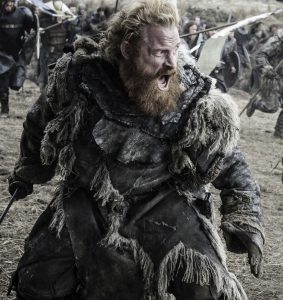
    Tormund Giantsbane of the Free Folk, A Song of Fire and Ice.

    1. Common Fiction Errors – a Checklist    

    The best fiction touches the deep layers in us. A writer achieves this effect by embedding dozens of techniques into his or her story.

    Do your characters sound like this?

    We hope that you have found these encore posts to be useful reminders and prompts for your work-in-progress!

    And in cased you missed it, here is the link to our New Year’s Eve post with the first five articles. Click here. 

    NOW for Kiffer’s Number One Tip for Writers in 2022!

    RULE # 1

    WRITE FAST!  EDIT SLOW! 

    Don’t edit your first draft as you write it!

    Writing your first draft should be a mad dash to get your story out of your brain. Don’t hinder it by worrying about each little detail. There will be time for that later. 

    Try to unspool the “mind-film” in your brain before reworking every sentence. Get your story out. Let the characters introduce themselves to you. Create the Atmosphere.

    There will be plenty of time to craft and hone sentences later. Meanwhile, fall in love with your story. Experience the rush and the thrill of creativity!

    We wish you joy and peace in the New Year from all of us at Chanticleer! 

    We hope to see you at the 2022 Chanticleer Authors Conference and the 2021 CIBA Banquet and Ceremony 

    Our 10th Anniversary Chanticleer Authors Conference (CAC22) will be April 7-10, 2022, where our 2021 CIBA winners will be announced. Space is limited and seats are already filling up, so sign up today!  CAC22 and the CIBA Ceremonies will be hosted at the Hotel Bellwether in Beautiful Bellingham, Wash. Sign up and see the latest updates here!

    Don’t Delay! Register Today! Seating is Limited.

  • Happy New Year! We selected Ten of Chanticleer’s Most Popular Writing Craft Articles Posted in 2021 – Writer’s Toolbox Series

    Happy New Year! We selected Ten of Chanticleer’s Most Popular Writing Craft Articles Posted in 2021 – Writer’s Toolbox Series

    Top Ten Countdown of Writer’s Toolbox Editing Posts for 2021

    These are not in order or ranking — just Chanticleer’s Top Ten Writing Craft Posts for 2021.

    Below are the first five with five more on New Year’s Day along with Kiffer’s Best Tip for Writers in 2022!

    It is our hope that these refreshers will help you with meeting your 2022 Writing Goals!

    10)  Secondary Characters. Supporting Cast – Taking Risks with Your Secondary Characters 

    Secondary Characters. They can drive their co-stars crazy and they can also drive the plot. They can star in their own subplots and often support the protagonist’s goals. Or thwart the protagonist’s goals.

    Benny, the unforgettable secondary character in “The Queen’s Gambit” by Walter Tevis

    9. The Eyes Have It 

    Using characters’ eyes to reveal emotion and meaning. If you’re serious about writing, you must notice subtext and how to convey it. And that often begins with the eyes.

    Beth Harmon knows she will win several moves out in this scene of Queen’s Gambit

    8. Understanding Story Structure

    A look at more advanced ways of considering writing from some of the best craft books to come out in the last decade. Consider the narrator in your story, structure, proportion, and, most importantly, the heart of your work.

    7. Amplify, Magnify, & Stir Up Trouble for Your Main Characters

    How-To tips and examples for adding fuel your characters’ fires. Your character should always have a lot to prove and master, so he or she can get off on the wrong foot and things can go downhill from there. Naturally.

    Hitchhiker’s Guide to the Galaxy protagonist, the last known Earthling – Arthur Dent

    6. Search and Destroy, Cull and Extract, and Other Editorial Tactics for Your Work in Progress

    Learn how to edit ruthlessly with these top tips with handy links! Make sure you get the most out of your next round of editing for your work-in-progress.

    The Editor – going over the ms with an MOV.

    We hope that you have found these encore posts to be useful reminders and prompts for your work-in-progress!


    We wish you joy and peace in the New Year from all of us at Chanticleer! 


    200 Best Happy New Year Wishes, Messages, & Quotes for 2022

    January 1st, 2022, we will post five more of the The Top Ten Writing Posts for 2021 along with Kiffer’s Number One Tip for Writers in 2022! 


    When you’re ready, did you know that Chanticleer offers editorial services? We do and have been doing so since 2011.

    Our professional editors are top-notch and are experts in the Chicago Manual of Style. They have and are working for the top publishing houses (TOR, McMillian, Thomas Mercer, Penguin Random House, Simon Schuster, etc.).

    If you would like more information, we invite you to email Kiffer or Sharon at KBrown@ChantiReviews.com or SAnderson@ChantiReviews.com for more information, testimonials, and fees.

    We work with a small number of exclusive clients who want to collaborate with our team of top editors on an on-going basis. Contact us today!

    Chanticleer Editorial Services also offers writing craft sessions and masterclasses. Sign up to find out where, when, and how sessions being held.

    A great way to get started is with our manuscript evaluation service, with more information available here.

    And we do editorial consultations for $75. Learn more here.

    If you’re confident in your book, consider submitting it for a Editorial Book Review here or to one of our Chanticleer International Awards here.

    Our 10th Anniversary Chanticleer Authors Conference (CAC22) will be June 23-26, 2022, where our 2021 CIBA winners will be announced. Space is limited and seats are already filling up, so sign up today!  CAC22 and the CIBA Ceremonies will be hosted at the Hotel Bellwether in Beautiful Bellingham, Wash. Sign up and see the latest updates here!

  • COMMON FICTION ERRORS – a Checklist from Jessica Morrell’s Editor’s Desk and Kiffer Brown – a Chanticleer Writer’s Toolbox post

    COMMON FICTION ERRORS – a Checklist from Jessica Morrell’s Editor’s Desk and Kiffer Brown – a Chanticleer Writer’s Toolbox post

    Sometimes knowing what not to do is helpful in writing your work-in-progress.

    Jessica Morrell, top-tiered developmental editor, and Kiffer Brown share with us on what to keep in mind as you create your work with this handy list.

    • Not knowing your ending as you write.
      • This lack of  direction not only makes the process more difficult, but results in missed opportunities to insert foreshadowing and clues.
    • Hooks: The opening hook does not raise a compelling question and relate to the whole.
      • Do the individual chapters contain their own hooks to compel the reader to turn the page?
    • Inciting Incident. Not having a catalyst for your story. What is yours?

      Your readers waiting for the inciting incident.
    • Flat Characters. Not understanding your main character, especially how he or  she is  shaped by the past, and using these factors from the past along with motivations as the basis for the plot. Causality.
      • Not giving your main character tangible goals and motivations.
      • Are your characters introduce
    • Lack of Tension. Not making the stakes high enough.
      • Without high stakes, the reader won’t care.
    • Smooth Sailing—does not make for great storytelling. Not creating obstacles for the character to struggle against.
      • Without obstacles, the story will not have enough tension or suspense—even it is a light-hearted romance or a humorous piece.
    • Whatever. Not involving your readers emotionally.
      • It’s important that the reader take on the character’s goals while entertaining them with the events of the story.

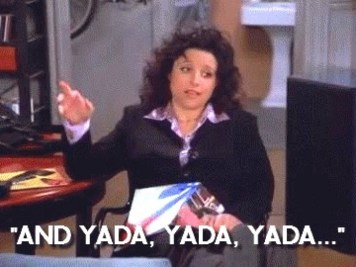
    • Yada Yada Yada. Adding needless flashbacks. Dumping backstory.
      • Use flashbacks only if they add drama and reveal information that cannot be told through present action.
      • Are the first 40 pages for your benefit and not the reader’s?
    • Dialogue: Do your characters all sound alike?
      • Dialogue is generally too long, mundane or  stilted. Do your characters tend to give speeches? Don’t let this happen.
      • Remember, most dialogue exchanges should contain conflict. As Robert Dugoni states: “Dialogue is Action. Action is Dialogue.”
    • Development: Not understanding that fiction requires introducing change throughout the story.
      • Insert enough complications, surprises, reversals, and new elements to create tension, suspense, and to force the reader to discover how these complications turn out.
    • Saggy Middle? Not inserting a major complication or reversal in the middle of the story to push the plot into a fresh direction and increase the reader’s interest. Just when you your reader thinks she knows what happens next, the unthinkable happens.
    • White Room Syndrome. Not writing enough setting details  to create a vivid, real world.
    • Lack of Atmosphere. Not realizing that  setting can interact with plot and character and affect the mood and tone.
    • Dearth of Causality. (Yes, again) Do not forget that causality is a prime factor in plotting.
      • A plot is not a series of random scenes, but connected through a chain of causal, interrelated events.
    • Unsatisfactory ending. Does  your conclusion fail to offer a big pay off.
      • As the plot concludes, tensions are unbearable, and a point of no return is reached. The conflicting forces should meet in a face-to-face contest that resolves the issues, reveals a winner, or at least changes how things look. The ending does not have to be happy, but it does need to be satisfying—even if there is more story to come and more plot questions to answer.

    The best fiction touches the deep layers in us. A writer achieves this effect by embedding dozens of techniques into his or her story. An intimate story takes us to a specific place and coaxes us to remain there. An intimate story is lifelike and feels as real and complicated as the world the reader inhabits. When he finishes the final pages, and leaves the story world, he should feel the satisfaction of the ending, but also a huge sense of loss. Like a friend has moved to another town just when the friendship had reached a level of closeness and trust. — Jessica P. Morrell


    Jessica Page Morrell

    Keep writing, keep dreaming, have heart. Jessica

    Jessica Morrell is a top-tier developmental editor and a contributor to Chanticleer Reviews Media and to the Writer’s Digest magazine. She teaches Master Writing Craft Classes at the Chanticleer Authors Conference that is held annually along with teaching at Chanticleer writing workshops that are held throughout the year. 


    Kiffer Brown

    Keep creating magic! Kiffer 

    Kathryn (Kiffer) Brown is CEO and co-founder of Chanticleer Reviews and Chanticleer Int’l Book Awards (The CIBAs) that Discover Today’s Best Books. She founded Chanticleer Reviews in 2010 to help authors to unlock the secrets of successful publishing and to enhance book discoverability. She is also a scout for select literary agencies, publishing houses, and entertainment producers.


    When you’re ready, did you know that Chanticleer offers editorial services? We do and have been doing so since 2011.

    Our professional editors are top-notch and are experts in the Chicago Manual of Style. They have and are working for the top publishing houses (TOR, McMillian, Thomas Mercer, Penguin Random House, Simon Schuster, etc.).

    If you would like more information, we invite you to email Kiffer or Sharon at KBrown@ChantiReviews.com or SAnderson@ChantiReviews.com for more information, testimonials, and fees.

    We work with a small number of exclusive clients who want to collaborate with our team of top editors on an on-going basis. Contact us today!

    Chanticleer Editorial Services also offers writing craft sessions and masterclasses. Sign up to find out where, when, and how sessions being held.

    A great way to get started is with our manuscript evaluation service, with more information available here.

    And we do editorial consultations for $75. Learn more here.

    If you’re confident in your book, consider submitting it for a Editorial Book Review here or to one of our Chanticleer International Awards here.

    Our 10th Anniversary Chanticleer Authors Conference (CAC22) will be April 7-10, 2022, where our 2021 CIBA winners will be announced. Space is limited and seats are already filling up, so sign up today!  CAC22 and the CIBA Ceremonies will be hosted at the Hotel Bellwether in Beautiful Bellingham, Wash. Sign up and see the latest updates here!

    Robert Dugoni
    Robert Dugoni is one of our most popular speakers

    Writer’s Toolbox

    Thank you for reading this Chanticleer Writer’s Toolbox article.

    Writers Toolbox Helpful Links: 

    At Its Core, the ‘Twilight’ Saga Is a Story About ________

    The INCITING INCIDENT: STORY, SETBACKS and SURPRISES for the PROTAGONIST

    BEATS & CONFLICT: The Engine for Your Book

  • 15 Self-Editing Tips from the Editor’s Desk of Jessica Morrell – Chanticleer Writers Toolbox

    15 Self-Editing Tips from the Editor’s Desk of Jessica Morrell – Chanticleer Writers Toolbox

    Refresh your writing with these Self-Editing Tips

    It is time to Spring Clean our writing habits with precise, fresh language. Jessica Morrell suggests searching for these culprits that can easily sneak into our writing.

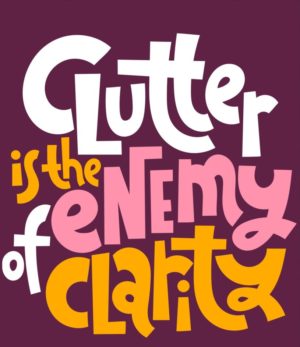
    Declutter Your Sentences by Eliminating These Junk Words

    1. Breathingdeep breathsbarely breathinginhalingexhaling, and other lung movements.  Many writers of all levels reveal their characters’ emotions and reactions using their breath, lack of breath, breathlessness, or as their main method of reacting and showing emotion. “I took a deep breath” is a phrase I’ve seen so often it’s a cliche.  Unless a character has the breath knocked out of him or is in the midst of childbirth, avoid focusing on breathing as your main means to create emotion. Instead collect a variety of mannerisms, reactions, gestures, and body language individual to each character.
    2. Said exclamations: Today’s readers are sophisticated and understand when characters are talking and that at times the character’s voices and emotions change. The notion is the ‘he said, she said’ parts of fiction appear invisible. Readers understand that a character might sound shrill by the circumstances and dialogue spoken so you don’t need to proclaim, Mary Ellen shrieked shrilly. Never write Jason emoted, pleaded, bantered, snarked, smirked, blasted, bleated, peeped, groused. Now occasionally in the midst of a horror story, you might want to underline how terrified a character is, but consider dabbing these attributions in only for the most terrifying or surprising moments.
    3. Down or up. As in Rachel sat down. Now Rachel can collapse into a chair, or sidle into an empty seat in a dark theater, or ease onto a sofa, or flump onto a bed. Sit and sat means a person is lowering himself or herself.  As in down. More accurately sit means supporting your weight on your buttocks.  Question your use of up. It seems so innocent, doesn’t it? Blithe stood up. Stood means up because standing means a person is upright, supporting himself on his feet.  Denzel stood, joining the screaming fans. Also, do not write grabbed up; grabbed suffices. Avoid appending up to spoke, hurry, lift, climb, and rose.
    4. Towards, backwards, forwards, upwards, downwards.  Replace with toward, backward, forward, upward, downward.
    5. ClichésOh how, I hate thee. Eliminate all your I took a deep breath. Ditto for eyes widened, out of the corner of my eye, jaw dropped, raven locks, and steely blue eyes. Then there is:  Each and every, knife to my heart, piece of cake, fire in the belly, he/she took my breath away. And before you write about your characters staring into each other’s eyes, think about how often it happens in real life and how often it happens in your stories.
    6. Mind matters, especially in the first person. You don’t need to report on how the character is reviewing things in his/her mind because this distances the reader and reminds her there is a narrator instead of the reader living amid the story world. So eliminate ‘mind raced‘ ‘thoughts raced‘ ‘mind’s eye‘ (a truly lame term), and ‘searching her mind.’
    7. Really. I mean really? Do you need it? Is the weather really cold or is it frigid or dangerously cold?
    8. I saw. If you’re writing in close first person you don’t need the I saw or I looked part of the sentence. Example: I saw ahead of me three leprechauns frolicking merrily in the grass. Instead: Ahead three leprechauns frolicked merrily in the grass. Why? The reader wants to pretend that he or she is spotting the leprechauns along with the character. Also describing the leprechauns implies the narrator or character is seeing or observing. No need to state it.
    9. Literally means exactly as described or in a literal or strict sense. It does not mean quite, actually or really. Wrong: I was so mad I was literally shaking like a leaf and red-faced. Or, I was so terrified I literally jumped out of my skin. Or, Her death literally brought me to my knees.  Better: The playoffs were watched by literally millions of fans.
    10. Basically, essentially, obviously, basically, totally. Hint: question every adverb you use with an -ly ending because many are so overused they’ve become meaningless. However, the larger issue is many people sow these words into their stories without understanding their correct meanings mostly to maximize or intensify. Over time many adverbs have become meaningless. Basically means at a basic level or fundamental sense, not almost or mostly. Essentially means the essence of something or in an essential manner, not almost or often.  Practically means in a practical manner not almost or mostly. Totally means completely, in every part, not really.
    11. Moments. I’ve read manuscripts where characters pause or think or kiss for only a moment hundreds of times throughout the story. There are plenty of ways to describe brief actions or thoughts.
    12. Suddenly. Because if you’re reading fiction you assume that actions, twists, and surprises will happen abruptly. They are devices used to increase tension and suspense. No need to announce it.
    13. That. If a sentence works without that, ditch it. Easy, right?
    14. Just. No, I’m not just kidding. Too many of us (guilt-hand raised) use this one out of habit. 
    15. Prepositional phrases. Prepositions are the carbohydrates of language. Of course, we need them for clarity but use with care. Instead of a book of poetry, use poetry book. Instead of a tower of flames, use towering flames.

    Kiffer’s Note:  So here’s the trick: When writing your first draft, write it. Don’t worry about the trees—words. Concentrate on the forest—the story. Then, when you are editing fix these issues. Replace dullards with the perfect words that will move your story forward, increase tension, enhance the atmosphere, add depth to your characters, make your dialogue pop, and immerse your reader into the world that you have created.

     A handy tool to help you recognize if these egregious junk words have infiltrated your manuscript is the “Find and Replace” tool that  can be found in WORD or other word processors. This tool finds and highlights specific words so that you can replace if needed to insure that every word counts. Click on this link, if you would like more information and how this tool works:  https://support.office.com/en-us/article/find-and-replace-text-c6728c16-469e-43cd-afe4-7708c6c779b7

    Don’t always use the first word or phrase that pops into your head because you might be using rusty, old clichés. Or fix these dullards when you edit. Like stock still, fast asleep, choking back tears, stirred up a hornet’s nest, did a double take, under the radar, and never in her wildest dreams.

    You are welcome to copy and paste this article into a document and print it for your writing craft and tools notebook for ease of access while you are editing you work-in-progress.


    Jessica Page Morrell

    Jessica Page Morrell is a top-tier developmental editor for books and screenplays. Her articles have appeared in Writer’s Digest and The Writer magazines. She is known for explaining the hows and whys of what makes for excellent writing and for sharing very clear examples that examine the technical aspects of writing that emphases layering and subtext. Her books on writing craft are considered “a must have” for any serious writer’s toolkit.

    Jessica will teach the Master Craft Writing Classes at the Chanticleer Authors Conference on Thursday, Sept. 3, 2020  and will present sessions during the conference. She and Kiffer will also host a fun kaffeeklatch for Word Nerds at CAC20.

    Did you know that Chanticleer offers editorial services? We do and have been doing so since 2011.

    And that our professional editors are top-notch and are experts in the Chicago Manual of Style. They have and are working for the top publishing houses (TOR, Macmillan, Thomas Mercer, Penguin Random House, etc.) and award-winning independent presses. If you would like more information, we invite you to email Kiffer or Sharon at KBrown@ChantiReviews.com or SAnderson@ChantiReviews.com.

    Click here to read more about our Editorial services: https://www.chantireviews.com/services/Editorial-Services-p85337185

    A great way to get started is with our manuscript evaluation service. Here are some handy links about this tried and true service:

    https://www.chantireviews.com/manuscript-reviews/

    We work with a small number of exclusive clients who want to collaborate with our team of top-editors on an on-going basis. Contact us today!

    Writer’s Toolbox

    Thank you for reading this Chanticleer Writer’s Toolbox article.