Tag: Editing

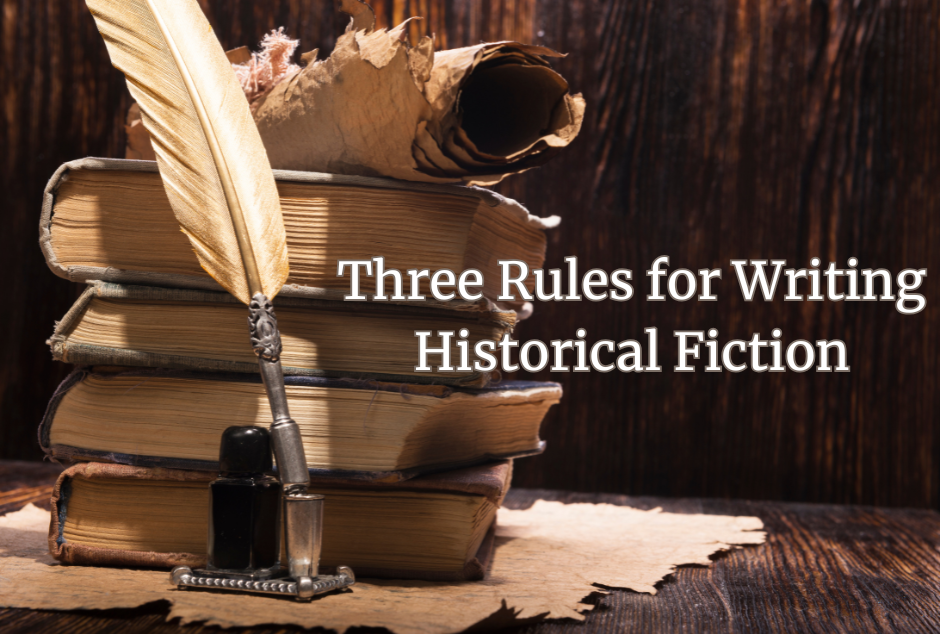
  • Three Rules for Writing Historical Fiction That Will Transport Readers Back in Time

    There is magic in historical fiction.

    Magic that takes you to another time and place. In a time machine, you might say, with a beautiful cover and pages in between.

    That’s what readers expect when reading historical fiction. A time machine. They want to immerse themselves in a world that once was and now can only be visited in their imaginations. But who is this storyteller, this weaver of time, and how, exactly, does this time machine transport readers into the past?

    Books, clock, purple, blue, red

    Let’s look under the hood of that writer’s time machine and get to know the rules of historical fiction!

    1. Immerse Readers in the Past

    Historical fiction requires authenticity. Placing the reader in a world that once existed means they have a sense of that world based on their own experiences and knowledge. This doesn’t mean you can’t shape their beliefs, but to do so you must adhere to the way that world existed. 

    Before you tap one key on your computer, do your research. Immerse yourself in your characters world. Be a reporter from that time and ask yourself the who, what, why, and how questions that will help you set the tone and create the authenticity to make your story ring true.

    Make sure your sources are relevant and reliable. Readers of historical fiction tend to be well-versed in the time periods they are interested in reading about, so it’s up to the writer to make sure the details they put into their story are as accurate as possible.

    2. Characters That Live in the Past and Thrive in the Present

    They say the more things change, the more they stay the same. This thought can be applied to the characters your readers will meet in your story. Styles change, trends evolve, and what was once acceptable in society no longer is, but some things never change. 

    To make relatable characters in historical fiction you must blend the societal norms of their era with issues that can still resonate with readers today. You see this in the anguish over someone’s death, or the joy of seeing your destination after a long, difficult journey. Humanity has always shared similar desires and calamities, use them to bridge the gap between readers and the characters in your imaginary world.

    Blending the past and present is also needed for other details within your story. Maybe it’s clothing or language, or a specific smell or sound that places the reader in the past. Slip inside your character’s skin, but keep in mind the thru lines that humans have always shared.

    Books, hand, sleeve

    3. Restrain Your Research

    If you enjoy writing historical fiction, there’s a good chance you love learning about the past, and that’s where our good intentions can derail our writing process. Each turn of the page generates a new idea for your story, and time slips away before you realize your research has sucked up all the time you’d set aside for actually working on the manuscript.

    To protect yourself from this fast road to nowhere we suggest blocking out dedicated time for the research portion of your designated work time. Set an alarm for a specific time and commit to ending that day’s research no matter where you are in the process so you don’t miss out on writing. That is what timers are for!

    Be clear in your goals for your research to ensure you get what you want from the time spent researching. Organize the appropriate resources and tools you’ll need before sitting down so they’ll be within reach, and write a list of the things you want to accomplish before getting started. If you find yourself straying from your goals, refer to the list to find your next subject to research.

    Create steps for your research to break down the work into manageable tasks. You could do it by subject matter, or resource material, or anything that fits your specific needs. The point is to make it less overwhelming as you move through the tasks. Prioritizing the tasks to get the most important or urgent ones done first will also help you to streamline the process further.
    Don’t forget to take breaks from your research to get out of your headspace and refresh. Sometimes we can become so involved in the worlds we are researching that it’s hard to get into the world of our imagination. By taking a break to refresh, it gives our brain time to process the information and see it anew to incorporate into a plot.

    book, glasses, old, buckles

    Buckle Up for a Long Ride

    There’s no way around it—good research takes time and effort. But the payoff can be amazing for your readers. The more you can place them in the time period of your story, the more the story will infiltrate into their imaginations. The devil is in the details, but the details need to make sense. So don’t rush the process. Set boundaries, work toward goals, and find good, reliable sources and you’ll surely find the valuable information that will take your readers back in time on a magical historical fiction ride all the way to the very last page!

    For more tips on streamlining your research check out these Chanticleer articles:


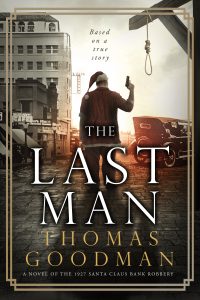
    The Last Man cover

    The Last Man
    Thomas Goodman
    CIBA Grand Prize Winner in the Laramie Division

    In The Last Man: A Novel of the 1927 Santa Claus Bank Robbery by Thomas Goodman, four men in a small, depression-era Texas town lay in wait to carry out their unique plan for a holiday heist.

    It’s December 23 and a man in a Santa Claus suit walks into a bank. But rather than his bag full of Christmas surprises, he’s brought a gun. With the element of surprise on their side, the robber and his two partners would collect the cash, while another partner waited in the getaway car. It all seemed so simple.

    At the time, Texas bankers—in order to deter crimes such as this—promised a $5,000 reward for any dead bandits, “and not one cent” for the capture of a live one. Should anything go wrong, the possibilities for disaster were clear as a Greek tragedy, but what could go wrong?

    Guns blaze within minutes of entering the bank.
    Read more here…

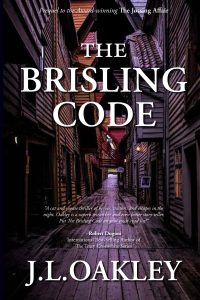
    The Brisling Code

    In The Brisling Code, a fast-paced first installment of her historical thriller series, Oakley weaves a brilliant portrayal of the perils met by the Norwegian Resistance during WWII.

    Layered perspectives—from resistance workers, traitors, and even an SS Officer—create a rich world through which readers can understand the sacrifices that were made to free our world from the tyranny of Nazi Germany.

    Immersed in volatile Nazi-occupied Bergen, Norway, fearless young intelligence agent Tore Haugland and his team of organizers work tirelessly to protect the essential work of the Norwegian resistance.
    Read more here…

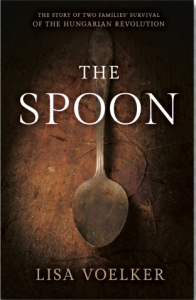
    The Spoon Lisa Voelker

    The Spoon
    By

    Lisa Voelker’s historical fiction novel, The Spoon, takes us back to the 1950s in Hungary during the daring student uprising, and attempted revolution, in Buda and Pest. The author weaves historical facts with fiction in the form of family lore that has been handed down for generations.

    We follow scores of people whose lives intersected during this uprising of 1956. The revolution was, at its inception, a time of joyous upheaval, but in less than two weeks became one of devastating dissolution. People fled Hungary by the thousands, but not before giving the Soviet Union a taste of their discontent.
    Read more here..

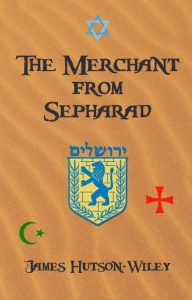
    The Merchant from Sepharad

    Joshua Ibn Elazar, the eager son of a Jewish merchant, travels to al-Andalus (the Iberian Peninsula under Muslim rule) to prove himself in his father’s business. But he finds an unwelcoming, degrading society waiting for him, and begins a journey of misfortune and anger in James Hutson-Wiley’s historical fiction novel, The Merchant from Sepharad.

    Shortly after arriving in the city of Lishbunah, al-Andalus, Joshua is tricked out of the gold for his living expenses. Worse yet, he learns that Jews in Lishbunah suffer under oppressive laws, holding far less status than Muslim citizens. He can only find help in Lishbuna’s Jewish community, meeting Rabbi Hiyya al-Daudi and his son Yaish, who house and feed him.
    Read more here…

    A Siren Called Truth Cover

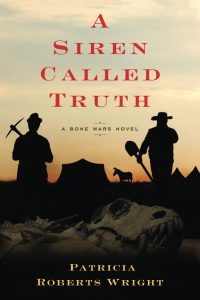
    A Siren Called Truth

    Patricia Roberts Wright’s A Siren Called Truth plunges into the fierce rivalry of the Bone Wars, a real-life scientific feud between paleontologists Edward Cope and O.C. Marsh. Blending history, ambition, and human drama, this gripping historical novel explores the cost of discovery and the lengths people will go to secure their legacy.

    A Siren Called Truth is a character-driven exploration of rivalry. Edward Cope, a self-taught genius, is determined to unearth America’s prehistoric past, but O.C. Marsh stands in his way, a well-funded and politically savvy adversary. Their battle for dominance in paleontology is not just about fossils—it’s about reputation, power, and the relentless pursuit of truth.

    A Siren Called Truth’s prose transports readers to the rugged landscapes where fossils lie buried beneath layers of time.

    Read more here…


    Recognition for Historical Fiction Excellence
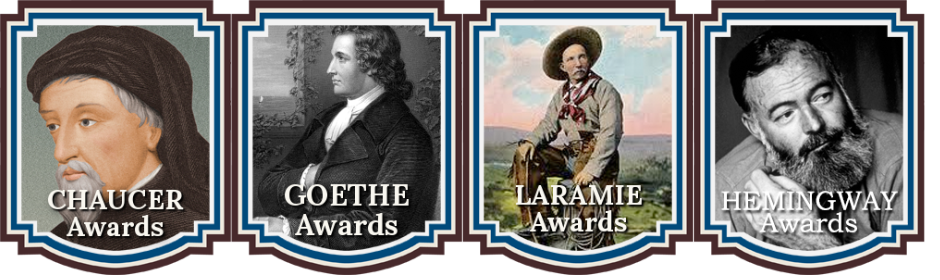
    Chaucer, Goethe, Laramie, Hemingway, CIBA, Awards

    Don’t miss out on your chance to submit to these fabulous Historical Fiction Awards!

    Whether you’re writing pure historical fiction or adding bits of history into other genres, professional recognition celebrates the craft behind effective tales from the past. The Chanticleer International Book Awards recognize outstanding fiction across multiple divisions that dive into the past:

    Chaucer Awards ~ Perfect for Early Historical Fiction (Pre-1750s Historical Fiction Novels

    Goethe Awards ~ Ideal for Late Historical (Post-1750s Fiction Novels

    Laramie Awards ~ Excellent for Western, Pioneer, Civil War, First Nations Fiction Novels and other Historical Fiction Books 

    Hemingway Book Awards ~ Fitting for 20th & 21st century Wartime Historical Fiction Novels

    The 2025 deadline is August 31st! These awards recognize the skillful writing in genres that creates memorable, impactful historical fiction.

    Historical fiction is about creating emotional experiences that resonate in the modern world long after the final page. Whatever your primary genre, adding in great period details, creating relatable characters, and sticking to a good process all the way to the finish can transform good stories into unforgettable ones.

    Submit before August 31 and let professional judges recognize your skill in crafting compelling, historical fiction.

  • What Catches the Eye: Description Techniques in Different POVs from Scott Taylor

    Your story’s point of view affects one thing above all else — description.

    Simply put, Point of View (POV) determines through what eyes we see, what ears we hear, what skin we feel, what nose we… well, you get it.

    Can you discover the Point of View?

    Readers tend to get invested in description that makes them think— about the characters, the setting, what will happen next. Different POVs have different limitations in what you can show, and how you can show it. But so too do they have particular strengths. So, how can we work with our chosen POV to make mentally-engaging prose?

    Let’s take a look at a few descriptive techniques that flourish within and illuminate the strengths of different POVs: First person, Third Person Limited, Third Person Omniscient, and Second Person.

    First Person — the Motivated Storyteller

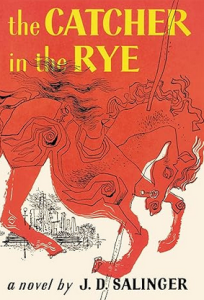
    The Catcher in the Rye by J.D. Salinger has a cover that features a carousel horse

    In this novel, Holden Caulfield takes him time revealing what’s bothering him. Slowly, his painful teenage life unfolds itself before the reader. He’s an untrustworthy narrator, so be careful with what you believe.

    There’s a special kind of intimacy in First Person. A vulnerability on both our parts. You’re the audience of a storyteller— me! And because it’s my story, surely I’m most qualified to decide on which details are important, right?

    Every smell on the wind, little shifting of another person’s posture, texture beneath my fingertips, it’s here because I want it to shape my tale. This is not the objective world, but a carefully-cut slice of it steeped in my thoughts. So, you should be able to put together my motivations and even beliefs based on how I describe my rival’s wine-stained manor, with its air of mismatched perfumes no doubt imported from some overworked farmland on the Rouge Isles, and fine fat jewels resting so brazenly in his family’s recently-designed crest.

    First Person and Third Person Limited — the Revealing Vision

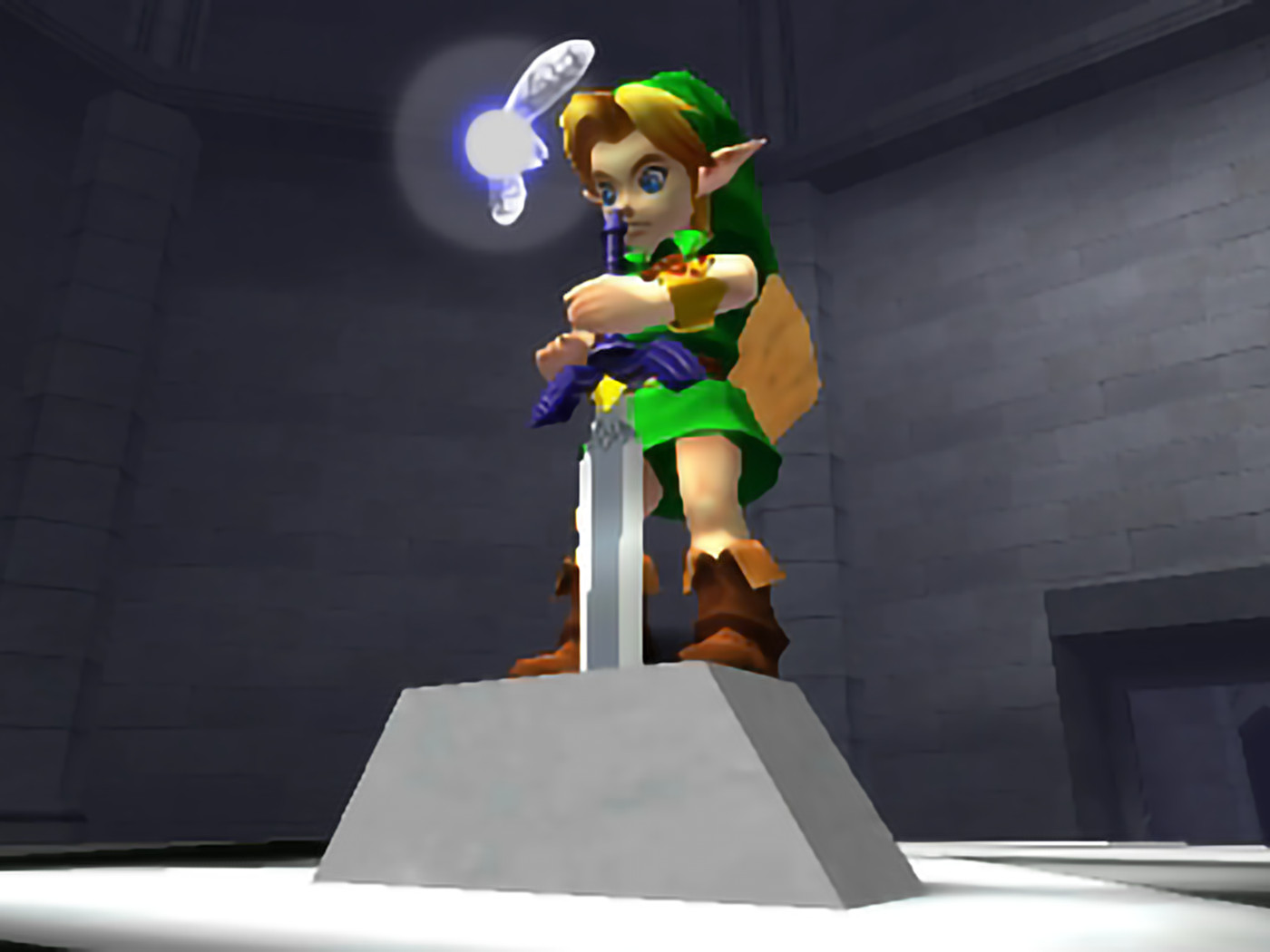
    Many videogames, like The Legend of Zelda – pictured above – use a literal Third Person Point of View that lets you follow directly behind your character as you play, but the camera always only sees your avatar.

    These two POVs share much in common, sometimes being nearly identical except for the pronouns. And while these narrators can be intentional with their descriptions (even unreliable), sometimes the details in the prose can reveal more about them than they would ever choose to tell.

    What sensory information the POV character notices will say something about who they are, how they feel, and even their connections to other characters. Fear might draw their eyes to the heavy doors, the arched roof with its fingers of shadow scratching at the beams, the way the thick walls seem to snuff all sound to a breathless mumble. A former musician, finished with their old craft, might walk down a long tunnel with their footsteps bouncing through the air in soft, irrepressible vibrato rhythm. Someone who spends all day cooped up in an office might bask in the cardinal feathers of a sunset — or fail to notice them at all, as the asphalt presses a growing soreness up through their back.

    Third Person Limited — the Reframed Importance

    Harry Potter is a classic example of third person limited. Everything happens from Harry’s perspective and is colored by his opinion, but sometimes the reader has a chance to catch view of something beyond what Harry sees.

    One way that Limited often varies from First is in its use of multiple perspectives. Not all Limited books have these, of course, but those that do can employ a powerful means of recontextualization.

    How does one character experience a setting, event, or interaction as opposed to how the next character does? Do they see each other differently than they each see themselves? Can they plant a question in the reader’s mind?

    A ‘sweet smile and warm handshake’ from the mountain guide might show Francis to be merely trusting in her own perspective, but that same guide’s ‘wolfish grin and cloying grip’ from Gabriel’s perspective would reframe Francis’s trust to actually be naiveté. Or, perhaps Gabriel has some paranoia eating away at him. Guess you’ll have to keep reading to find out.

    Third Person Omniscient — the Two-Faced Medium

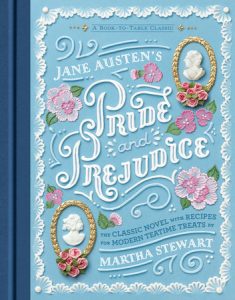
    Blue Pride and Prejudice Cover

    In Pride and Prejudice the narrator moves easily from person to person, showing you what everyone feels and thinks. You know what Mr. Darcy’s opinion is when it’s important, and you know what Elizabeth Bennett’s opinion is almost all the time.

    Finally, the objective truth of things. Where First Person is a personal storyteller, this narrator is like that of a Greek play, come to reveal all the narrative’s most interesting corners — no matter how well hidden.

    Omniscient prose has a powerful ability to indulge in two opposed modes.

    On the one hand, the narrator can use their voice to match information and detail to the sincere experience of the characters, keeping readers close. A spacefaring diplomat might walk down a quiet observation deck, cool glass soothing the tension out of his fingers, an endless crowd of stars looking on in support of his mission of peace with a strange alien species. But elsewhere, deep in the space station, a bomb ticks down.

    This contrast of perspective can radically alter the tone of descriptions, even so much as to invert them completely — a slow, contemplative walk becomes dreadful, every detail the narrator lingers on meaning a few more ticking seconds.

    Second Person — What do You Have to Do with It?


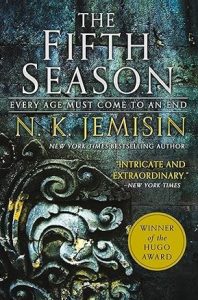
    The Hugo Award winning start to the Broken Earth Trilogy has one third of the story told in the second person. The story follows a “you” named Essun who goes on a journey to save her daughter.

    Second Person is more commonly used in instructional or how-to guides. “You should then add peanut butter” would be an example. This is an uncommon point of view in prose writing as it can invite the reader to identify with someone who shares very little in common with them. That sharing of identities can disconcert the reader, but it can also make them more receptive to even more creative styles of storytelling.

    Locating the reader in Second Person gives them a chance to experience and imagine a world totally outside of their own realm of understanding.

    These techniques are useful beyond POV

    Unreliable narrators don’t have to speak in first person, and dramatic irony can easily be used with multiple limited POVs. These are guidelines, not rules. But, when you’re working through your writing — editing a passage or trying to tease out exactly how to paint a mental picture — consider how you can use the inherent abilities of your chosen perspective to get the sparks flying in your readers’ minds.


    Thank you for joining us for this Writer Toolbox Article

    A red toolbox with the words "What's in your toolbox

    There is so much to learn and do with Chanticleer!

    From our Book Award Program that has Discovered the Best Books since the early 2010s to our Editorial Book Reviews recognizing and promoting indie and traditional authors, Chanticleer knows your books are worth the effort to market professionally!

    When you’re ready, did you know that Chanticleer offers editorial services? We do and have been doing so since 2011.

    Our professional editors are top-notch and are experts in the Chicago Manual of Style. They have and are working for the top publishing houses (TOR, McMillian, Thomas Mercer, Penguin Random House, Simon Schuster, etc.).

    If you would like more information, we invite you to email us at info@ChantiReviews.com for more information, testimonials, and fees.

    We work with a small number of exclusive clients who want to collaborate with our team of top-editors on an on-going basis. Contact us today!

    Chanticleer Editorial Services also offers writing craft sessions and masterclasses. Sign up to find out where, when, and how sessions being held.

    A great way to get started is with our manuscript evaluation service, with more information available here.

    And we do editorial consultations for $75. Learn more here.  

  • Top Revision Tips Before a Manuscript Overview from the desk of David Beaumier

    You’ve arrived at the last page of your story and written those crucial, beautiful words: “The End.”

    A young Asian woman leans back from her computer, done with her work in a generic room.
    Finished at last!

    Well done! You deserve some time to rest before you dive into the next step of editing your story.

    Now, one key piece of advice here is there isn’t a wrong time to put your work in front of a professional for feedback. While this article will take you through steps that will bring your book to be as strong as you can possibly make it on your own, we all are of different skillsets, so if something isn’t for you, that’s when you bring in a professional editor.

    To start out with, what is a Manuscript Overview?

    Someone hard at work on a Manuscript Overview

    Perhaps the easiest definition can be pulled from our page on providing Manuscript Overviews (MOVs).

    It is an objective evaluation of a story idea that is fully formed with a beginning, middle, and end, but still in an early draft stage. The MOV comes before Line Editing and Copy Editing.

    No matter who you pick to perform a Manuscript Overview for your book, you should get one. The amount of time and money it saves on editing by being more general and help you go further with your own writing is on thing, but the most important part is it helps keep your book focused and your narrative strong. Traditional Publishing Houses use them, and it makes sense to follow suit.

    Typically, an MOV will cover

    • compelling nature of story
    • dialogue
    • character development
    • does the scenery and setting work with the story
    • backstory issues
    • professionalism of editing & formatting
    • continuity of storyline
    • plotting and plot-hole issues
    • writing craft

    So, the question remains, how do you get your book to that point: fully formed with a beginning, middle, and end. How do you get it to the best point you can do on your own?

    The Reverse Outline

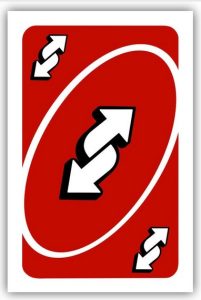
    A Red Uno Reverse Card

    Once you’ve finished your manuscript, even if you already have an outline, you can create one that reflects the actual book you’ve written. From this point, you can edit that outline of your book as is. Working within the outline to create a roadmap to revision often feels much more approachable.

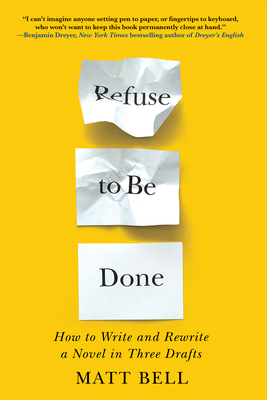
    Next off, we have a recommendation from Matt Bell, author of Refuse to Be Done.

    Rewrite your book.

    You can have the draft you wrote printed out, off to the side, on a separate monitor, whatever feels comfortable, but rewrite it using your new outline as a guide.

    Refuse to Be Done has a yellow cover with the title written out across 3 pieces of paper

    Bell’s theory behind this is that you will copy and paste a bad line (or duplicate scene). But you won’t rewrite a bad line.

    Not sure where to start in creating your outline? Jessica Brody’s beat sheet from Save the Cat! Writes a Novel can help. Brody breaks down the story into actionable beats you can aim for to keep your book flowing along. Check out her breakdown of story beats here!

    Once you’re done rewriting the book, it helps to go through and check to see if you’ve met the goals of a new outline. Ask yourself if your story has a beat and if you can dance to it.

    After all that work, you’re probably ready for a Manuscript Overview.

    What to do while you wait

    A standard Chanticleer MOV takes 6-9 weeks to finish. While that’s going on, we recommend following D.D. Black’s critical advice whenever you’re in writing limbo: Write the next thing.

    D.D. Black presented at CAC24! Check out his incredible series here!

    Not only will that get you out of your head and allow you to be more objective with your manuscript when it comes back, but it will put you ahead of the game for the next book.

    What do our authors say about our MOVs? Read recent testimonials here!

    Wow, huge thank you for this second review! It’s so detailed and very much what I was hoping for. The specifics about moving content and clarity are spot on. I knew it needed structural improvements but I was too close to do it. Please pass on my sincere thanks for this work! I’ve only started some of it & already feel a better flow. I’m hoping to possibly even cut about 10k words to make it tighter. – Sheridan Genrich author of REWIRED: Optimise Your Genetic Potential


    I’m writing to gratefully acknowledge receipt of the Manuscript Overview of my book. I am so pleased to have this close reading and incredibly helpful insights. These comments are far more beneficial than anything I had expected. It will be a pleasure addressing the editor’s critiques and trying out his concrete suggestions. Please extend to him my genuine gratitude. Chanticleer crows again! – John Feist, author of Edged in Purple and many more


    I finally got this copied and read. It’s just what I wanted it to be—a skillful job. I knew there were the kind of holes the editor mentioned, but he’s given me a plan for the revisions. Please pass on my thanks. – Linda Brugger, columnist and accidental author


    Please thank the reviewer for a very relevant and detailed review of my manuscript, ANKANAM. I plan to incorporate all his notes! – Vee Kumari, author of Ankanam.


    This was just what I needed. I am looking at the book with a new focus and have already started working up the suggested changes. The first thing I did was remove those items the editor mentioned should be deleted. It was a bit painful but necessary. There was plenty of meat in his review, which took me a while to digest, but changes are on the way. These will take some time, but I will likely be interested in the Manuscript Reconciliation process. I can tell the editor spent quite some time researching some of the issues raised in the book, which I greatly appreciated. It helped me see the book more from the reader’s perspective than mine. Please pass along my sincere thanks. – Jim Leonard


    Thank you for joining us for this Writer Toolbox Article

    A red toolbox with the words "What's in your toolbox

    There is so much to learn and do with Chanticleer!

    From our Book Award Program that has Discovered the Best Books since the early 2010s to our Editorial Book Reviews recognizing and promoting indie and traditional authors, Chanticleer knows your books are worth the effort to market professionally!


    When you’re ready, did you know that Chanticleer offers editorial services? We do and have been doing so since 2011.

    Our professional editors are top-notch and are experts in the Chicago Manual of Style. They have and are working for the top publishing houses (TOR, McMillian, Thomas Mercer, Penguin Random House, Simon Schuster, etc.).

    If you would like more information, we invite you to email us at info@ChantiReviews.com for more information, testimonials, and fees.

    We work with a small number of exclusive clients who want to collaborate with our team of top-editors on an on-going basis. Contact us today!

    Chanticleer Editorial Services also offers writing craft sessions and masterclasses. Sign up to find out where, when, and how sessions being held.

    A great way to get started is with our manuscript evaluation service, with more information available here.

    And we do editorial consultations for $75. Learn more here.  

    Writer Toolbox Helpful Links: 

    The traditional publishing tool that indie authors can use to propel their writing careers to new levels?  Check it out here!

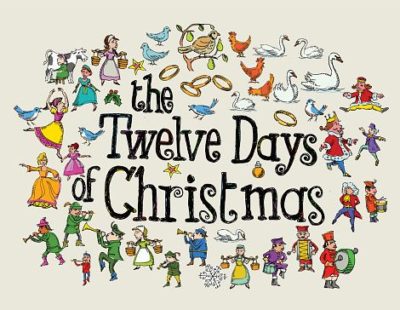
  • The Twelve Days of Christmas! On the Sixth Day, Chanticleer Brings to me…

    Celebrating the Twelve Days of Christmas – One Day at a Time

    “But Jiminy Crickets, it’s after December 25th! Is it not too late for the 12 Days of Christmas?” you say.

    Not to fear, Chanticleerians! The 12 Days of Christmas begins on December 26th! And it continues to the 6th of January – Three Kings Day. The four weeks leading up to Christmas are known as Advent.

    Some say that December 25th is the first day of Christmas, but we are going with the medieval date of the 26th because revelry could not take place on the 25th as it was a holy day. And the Twelve Days of Christmas are about revelry!

    So if you haven’t finished wrapping presents, sending out those cards, and baking cookies—don’t worry—you’ve got an extra 6 days!

    Happy Holidays to You from the Chanticleer Team! 

    On the sixth day of Christmas, my true love sent to me

    Six Geese A-Laying

    Five Golden Rings

    Four Calling Birds

    Three French hens (Chanticleer’s favorite #justsaying)

    Two turtle doves

    And a partridge in a pear tree 

    International Christmas Traditions – The Sixth Day of Christmas is also known as New Year’s Eve!

    Brazil – Everyone in Brazil wears white on Christmas Eve for good luck and peace!

    Japan – Shogatsu or visiting a local temple to exchange last year’s lucky charms for new ones. 

    Denmark – At midnight, Danes will jump off a chair or sofa to literally jump into the new year. It is considered good luck to do so!

    Various countries: Eating lucky foods is tradition on New Year’s Eve

    The French usher in the New Year with a stack of pancakes.

     In the Netherlands, people eat doughnuts and ring-shaped foods.

    In Spain, Portugal, and much of Latin America, for example, it’s 12 grapes or raisins, and in Italy, 12 spoonfuls of lentils—one with each of the 12 chimes of the clock at midnight.

    What are your good luck traditions for New Year’s Eve? 

    On the Sixth Day of Christmas, Chanticleer brings to me…

    Six Beta Readers!

    Beta Readers are crucial to understanding your book better. Like an MOV, Beta Readers are helpful once you have finished your book and are happy with what you’ve written (often two or three drafts in). They will help you spot any plot holes and inconsistencies in your work. The best Beta Readers give you a little feedback on your work that goes beyond “I liked it,” and they are frequently not writers themselves, but test subjects in your target audience.

    Woman in Pink Long Sleeve Shirt Sitting Beside Woman in Green Long Sleeve Shirt

  • NaNoWriMo or Not, here comes November!

    NaNoWriMo or Not, here comes November!

    Time to start your engines because, NaNoWriMo or not, you’re a writer and ideas are key to jump-starting your writing!

    Inspired by Editor and Friend of Chanticleer, Jessica Morrell, let’s dive in!

    The NaNoWriMo logo, a shield crest with a Viking Helm depicting coffee, a computer, pens, and a large stack of blank paper

    For those who may not know, NaNoWriMo is a community effort where people around the world join together, each trying to write 50,000 words of a story in the month of November. For some, 50,000 words is a pittance of what they can normally create in a month; for others, it’s an impossibility.

    No matter where you fall, NaNoWriMo is a great tool to put words on the page and to write with a community rather than all alone.

    Woman in Pink Long Sleeve Shirt Sitting Beside Woman in Green Long Sleeve Shirt
    It’s a myth that writers are solitary creatures

    In the week before you get started, take care of all the basic necessities – i.e. finish your procrastination tasks. Clean your house, stock up on brain food for the upcoming month and write down easy meal ideas. Don’t forget to make sure you have all the coffee and tea you need to fuel you, and then please be sure your laundry is done.

    Ready? Set. WriMo!

    The point of a first draft is to exist. As Stephen King says, the first time you write something down, you’re telling the story to yourself. One of the best ways to motivate your story is to know your characters well. Studying modern characters is a great way to start off.

    Station 11 by Emily St. John Mandel

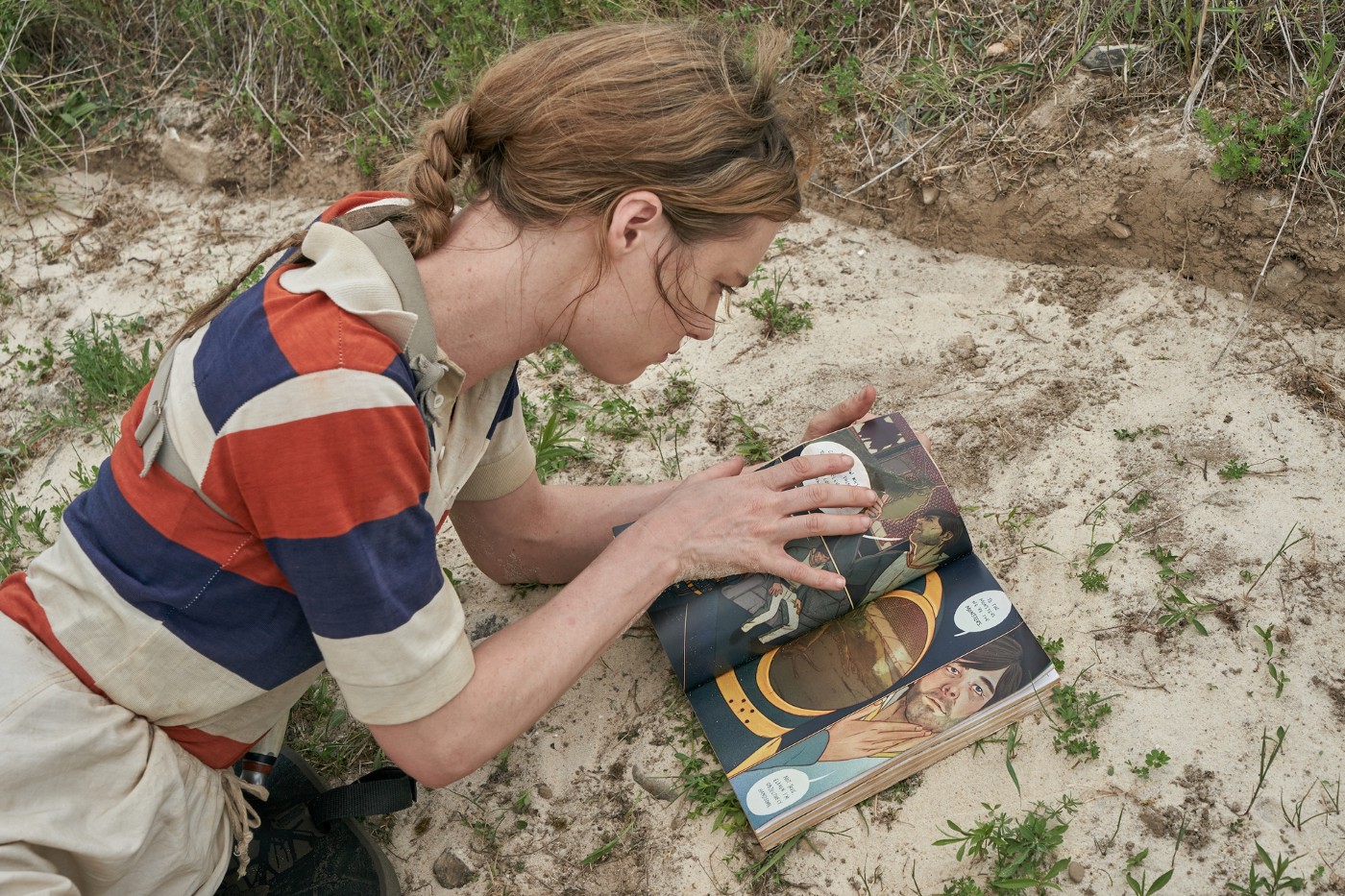
    Kirsten Raymonde reading the titular Station 11 comic book, played by MacKenzie Davis

    Child actor Kirsten Raymonde’s life is forever changed when she witnesses the death of actor Arthur Leander, sending her world into chaos hours before the world is decimated by the Georgia Flu. With the collapse of civilization and the death of her parents and little brother, Kirsten holds on tight to her passion for acting as she grows up, joining the Traveling Symphony and protecting the players and musicians there as if they were her own flesh and blood.

    The Rings of Power on Amazon Prime, based on The Lord of the Rings by J.R.R. Tolkien

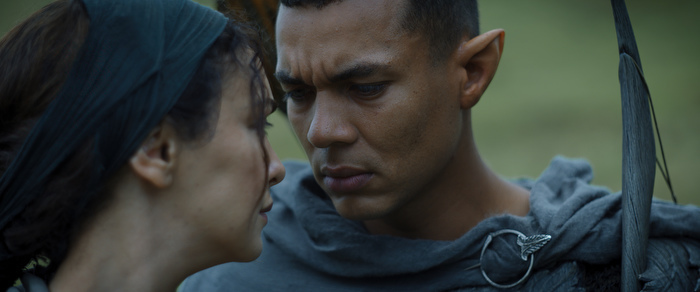
    Arondir (Ismael Cruz Córdova) almost shares a romantic moment with Bronwyn (Nazanin Boniadi)

    Arondir is an elf responsible for the safety of a large swath of human lands in the aftermath of the battles with Morgoth. However, most elves regard the humans with a suspicion that engenders deep distrust between the two races. This prevents him from gathering crucial information about a recent poisoning. On top of that, neither the human inhabitants nor his elven companion approves of the close connection he has with the local healer Bronwyn, who seems quite taken with the handsome Arondir.

    What do we notice?

    Both these characters are firmly set in their backstory, which shows us the goals they have in the status quo at the start. Once the status quo is disrupted, you have the character’s motivation to return to a state of equilibrium, because they are now frustrated in meeting their goals.

    Consider questions from Mastering Suspense Structure & Plot by Jane K. Cleland:

    • What does this character keep secret?
    • What does this character fear?
    • How does this character respond when their secret is in danger of being exposed?
    • How does this character act when afraid?
    Blue cover for Mastering Suspense Structure and Plot by Jane K. Cleland
    The Roost’s Writing Craft Book Group for November

    Understanding these elements of your character under pressure will help create believable and compelling people for your readers to want to watch and study.

    Remember, even for NaNoWriMo, you need an engine to start!

    Conflict is the engine of your story. What is the conflict in yours? For Station 11, it’s the looming threat of the mysterious Prophet who is terrorizing the communities who are the audience and friends of the Traveling Symphony. In Rings of Power, it’s the growing strength of Sauron, Morgoth’s most loyal disciple. How does this conflict put pressure directly on your main characters?

    HANDY REMINDERS

     If you are NOT participating in NaNoWriMo, then we hope that this post will spur you on as write your work-in-progress (w-i-p) or your next work.

    RULE # 1

    WRITE FAST! 

    EDIT SLOW! 

    Don’t edit your first draft as you write it!

    Writing your first draft should be a mad dash to get your story out of your brain. Don’t hinder it by worrying about each little detail. There will be time for that later. NaNoWriMo or not.

    Not taking our word for that piece of advice?

    Chelsea Cain, a bestselling thriller author (with a TV series to her credit),  gives this piece of advice:

    Write the bare-bones version of the scene first using mostly dialogue, and then move on and in the second draft flesh out the scenes with description and action.

    “Action is dialogue. Dialogue is action.” – Robert Dugoni, Amazon Bestselling Author

    What is YOUR STORY?

    Story is essentially a problem that needs solving for the protagonist. – Jessica Morrell

    • What is your protagonist’s problem that must be solved—or else?
    • What is the worst thing that can happen next to your protagonist?
    • Remember that it is not your problem. It is your protagonist’s problem, obstacle, impossible dream.
    • Start at least one subplot. This subplot(s) should also complicate the protagonist’s goals.

    No matter when the problem begins (it’s always in Act One) the problem is weighty and vexing, perhaps insurmountable. If the problem is not immediately personal, it should become so that it will create a bond (connection) between the protagonist and antagonist. Classic examples are the connection between Sherlock Holmes and Jim Moriarty and Harry Potter and Voldemort. 

    What is the inciting event or threat? 

    The inciting incident might lead to the problem. This event will disrupt the status quo, demand response, and set actions in motion. It’s a threat that unbalances the story world and creates dilemmas that must be dealt with.

    To name a few:

    • The tornado incident in the Wizard of OZ
    • Katniss’s little sister selected for the Hunger Games
    • Luke Skywalker ‘seeing’ and hearing Princess Leia calling for help in Star Wars
     These excerpts above are from The Inciting Incident blogpost


    Environment (internal and external)

    These are great tips to get your creativity groove on!

    • Remember you want to send your protagonist into new emotional territory with new challenges and pressures.
    • And at the same time, she will need to deal with new physical territories such as a new school (Footloose) or a different culture (Dances with Wolves) or a different legal society with different norms (Handmaid’s Tale) or a new environment (Deadwood)  or a different time ( Outlander) or galaxy (Farscape).
    • Don’t be afraid to stage danger in benign or lovely settings or conversely gentle scenes in dangerous and gruesome settings.

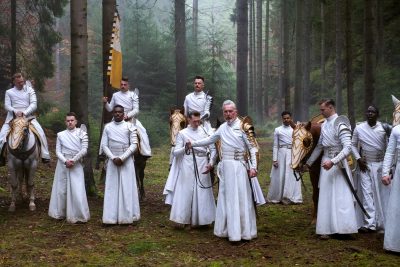
    Kiffer’s Note:  I just saw this bucolic scene while watching The Wheel of Time first episode. All white coats and white tents. And then, bam! We learn that the guys in white are not the “good guys” —at all—even if their name is Children of the Light.

    Bucolic looking camp scene in Wheel of Time inhabited by these characters all in white.

    Atmosphere

    • Allow the overall atmosphere and mood to imbue your writing from the get-go.
    • The atmosphere lends itself to the overall tone and mood of a work. Allow it to permeate your work as you write.

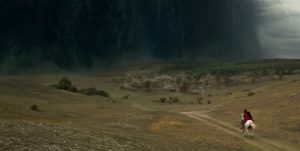
    The atmosphere in Shadow and Bone series by Leigh Bardugo

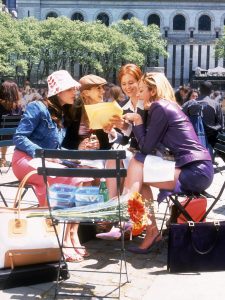
    Or Sex in the City by Carrie Bradshaw

    Why use atmosphere in your first draft? (or during NaNoWriMo)? 

      • Because it will affect your mood and approach to your story.
      • It will make you focus on creating unease–a necessary ingredient not always considered in early drafts.
      • Unease contributes to writing a page-turner.
      • Atmosphere underlines themes–even if you don’t have your themes nailed down yet.

    Here is the link to our Writer’s Toolbox article on Atmosphere

    Emotional Baggage

    • Know your protagonist’s main emotional wound, sometimes called baggage in real life. How is it going to affect his or her ability to solve the story problem? (See the questions below to jumpstart creativity.)

    Remember that Writers (that is you) should carry a notebook everywhere you go. You never know when a brilliant solution is going to appear. Jessica Morrell

      If I could offer a single piece of advice about creating characters it would be this (Jessica Morrell):

      • Take risks with your main characters.
      • Make them stand out from the myriads of fiction published each year.
      • And don’t be afraid to allow eccentricities, quirks, and oddball ways of seeing reality.

      More questions for your protagonist from Jessica Morrell—these are guaranteed to get your creative wheels turning:

      First, ask yourself these questions and then “ask” your protagonist. Have your protagonist go into depth. Find out what your protagonist’s iceberg under the waterline is all about.

      Photo taken in Greenland’s waters.

      Kiffer suggests that you take a walk when you are considering these questions. Be sure to either take notes or record your thoughts on your smartphone while you explore your protagonist’s emotional baggage. Walk a mile in your protagonist’s shoes. 

      • What’s the most embarrassing thing that has ever happened to you?
      • What is your biggest regret?
      • What is your superpower?
      • Who do you cherish most in the world?
      • If you could change one thing about your world, what would it be?
      • What is your average day or schedule?
      • What 5-6 words sum up your values?
      • What do you do after a really bad day?
      • How do you celebrate?
      • The secret you’d never tell your significant other? Your mother? Your sibling?
      • What reminds you of home?
      • What item must you always take along when traveling?
      • Favorite drink?
      • Secret vice?
      • Pizza or tacos? Cookies or tequila?
      • Favorite climate?
      • Reading or television to unwind?
      • Breakfast or coffee only?

      We hope that we helping you, Dear Writer, to arm and prep yourself to get down to the writing of your next work—the reckoning.


      Ernest Hemingway:  There is nothing to writing. All you do is sit down at a typewriter and bleed.


      Chanticleer Editorial Services

      When you’re ready…

      Did you know that Chanticleer offers editorial services? We do and have been doing so since 2011.

      Our professional editors are top-notch and are experts in the Chicago Manual of Style. They have and are working for the top publishing houses (TOR, McMillian, Thomas Mercer, Penguin Random House, Simon Schuster, etc.).

      If you would like more information, we invite you to email Kiffer or David at KBrown@ChantiReviews.com or DBeaumier@ChantiReviews.com for more information, testimonials, and fees.

      We work with a small number of exclusive clients who want to collaborate with our team of top editors on an ongoing basis. Contact us today!

      Chanticleer Editorial Services also offers writing craft sessions and masterclasses. Sign up to find out where, when, and how sessions are being held.

      A great way to get started is with our manuscript evaluation service, a tried and true resource you can learn about here.

    • Film Techniques for Fiction Writers by Jessica Morrell and Other Advanced Writing Class Sessions at CAC 22

      The 2022 Chanticleer Authors Conference is offering Advanced Writing Craft Sessions!

      Learn from the Best!

      CAC22 is offered In Real Life and Virtually, June 23rd – 26, 2022.

      Headlining the sessions is:

      Master Writing Class – Film Techniques for Fiction Writers with Jessica Morrell

      Fiction and memoir need to be cinematic—there’s no getting around that fact.

      Especially in this saturated, reality-dominated, and competitive media landscape. Creating cinematic fiction makes great demands on writers—there’s no gigantic screen, no darkened theater to enchant a reader, no actors prancing around a stage, their body language and costumes signaling meaning and subtext. But many film techniques can be translated onto the page from viewpoint to mastering props and subtext. It begins with making powerful choices and identifying key moments that need emphasis, when to whisper and suggest, and when to stage and let the camera roll.

      Topics we’ll cover:

      • Using viewpoint to establish camera angles and narrative distance, especially bringing your ‘camera’ in close for potency and impact.
      • Borrow method acting techniques to create immersive viewpoints.
      • Using wide angle or establishing shots to nail down scenes and place.
      • Zooming for impact.
      • Factoring in the subliminal with sounds, subtext, color, and texture.
      • Lighting to create mood, atmosphere, resonance, and obstacles.
      • Using props to ground the story and create subtext.
      • Scene cuts and cliffhangers to keep suspense percolating.

      This workshop will available LIVE and VIRTUALLY for those who register

      Jessica Page Morrell

      The inimitable, always-in-demand, Jessica Morrell

      One of the primary contributors to the Chanticleer writing blog, Jessica’s tips and advice are invaluable lessons that benefit all authors. Each year we offer writing craft sessions from the best editors and authors in the publishing industry.

      Don’t Miss Out!

      Jessica will be teaching two classes over the course of three sessions LIVE at CAC22

      Your Brain on Writing: How Neuroscience Research Can Make You a Better Writer (2 Sessions)

      Writing is a complex process and these days information gleaned from cognitive neuroscience can make a powerful difference in how much you accomplish and how your words affect readers. While writing, all regions of your brain are engaged and on the job. That’s why the more you write, the more neural connections you’re growing. The latest science-based information gives insights on how to form connections and develop powerful habits as you train and strengthen your brain. Reading is also a complex act so we’ll delve into what goes on in readers’ minds and how to capture their interest and keep them captivated. Or should we say captive?

      Topics we’ll cover:

       An easy-to-understand overview of brain structures and functions. This includes learning the roles of key neurotransmitters, our billions of neurons, and how to better implement them in writing and life.

      • Neuroplasticity and how you can change your brain’s structure and function by rewiring neural pathways.
      • Understanding the function of the RAS (reticular activating system) and how it helps us achieve goals and leads our future self forward.
      • Put your subconscious and unconscious to work by reprograming generating ideas and breakthroughs.
      • The function of the vagas nerve, the longest cranial nerve running from your brain to your stomach, and how it affects major body functions from breathing to blood pressure to heart rate. Then we’ll discuss simple practices to stimulate it to support overall and emotional health.
      • Practical habits and exercise to put this knowledge into practice.

      AND

      Dangerous Women with Jessica Morrell

      Vampire Juliette and Vampire Hunter Cal — Two Dangerous Women from Netflix’s First Kill

      Dangerous women can occupy so many roles in fiction, film, and television. With their complex moralities and motivations, they defy expectations, and can be strong, fearless, and inspiring. Then there are the ones who scare us. Because one bad woman is worth five bad men, so when women plot and scheme and break bad, the results are often disastrous for whoever she’s got in her crosshairs. Because social norms have taught us that women are the gentler and nurturing sex, when they defy norms, the results are combustible.

      With that in mind, we’ll talk about female anti-heroes in all their fierceness and intriguing capabilities and how to make their stakes personal. We’ll cover unlikable protagonists, villains, and rule breakers who sizzle on the page, reflect the realities of their society or culture, or are deliciously out of sync. We’ll also discuss roles in fiction such as femme fatale, divas, mommy dearest, and power behind the throne. Characters we’ll analyze characters from well-known tales such as Annie Wilkes of Misery, Sula, Nurse Ratchet, Mrs. Danvers, Rebecca DeWinters, and Mrs. Bennet of Pride and Prejudice.

      The workshop will review contemporary women found in TV series and films because in recent years an explosion of strong and norm-defying females are everywhere—including Claire Underwood from House of Cards, Eve Polastari and Villanette from Killing Eve, Cersei Lannister and Daenerys Targaryen from Game of Thrones, Queen Elizabeth in The Crown—disrupters all.

      Other Sessions at In Real Life CAC 22

      • Why Acting Classes Make You a Better Writer – Nicole Evelina – USA Bestselling Author
      • Seven Advanced Techniques for Deeping Characterization – Diane Garland (Continuity Editor) and Jacquie Rogers – multi-award winning author
      • Five Things You Need to Know About POV – Amy Peele, Medical Mystery Author
      • Writing Intimacy Scenes – Betsy Fasbinder, Writing Coach & Author
      • Story Bibles and Continuity – with Diane Garland (World Builder and Continuity Editor)
      • and more!

      Plus, sessions on the business and marketing side of being a writer! 


      Register Today!

      In addition to Morrell’s LIVE Master Class, you can sign up for her other sessions and the full Chanticleer Authors Conference here.

      Reach out to us at info@ChantiReviews.com with any questions!

    • The Myth of the Unlikeable Character – A Chanticleer Toolbox Article By David Beaumier

      The Myth of the Unlikeable Character – A Chanticleer Toolbox Article By David Beaumier

      “No one likes my characters”

      You’re handing your precious book over to a beta reader to see if it’s worthwhile, ready, perhaps, for a Chanticleer Book Review or to be entered into the Chanticleer Int’l Book AwardsThey look at you over the cover that you worked so many long hours on with your designer and say with all the authority of fate: “I just don’t think your main character is very likeable,” they say. “Can’t you make them more likeable? All characters should be likeable.”

      A grumpy older white man
      Are your grumpy readers right?

      Writer, they are wrong

      You can of course have an unlikeable main character! If they were only willing to read for ten minutes though, you may have a more difficult problem on your hands than whether or not your character is someone they want to be friends with. Some of the most compelling characters in literature aren’t someone I’d want to share a hotel room with anytime soon. 

      A creepy character peering into a room
      We can sleep in separate bedrooms. Really, it’s okay.

      The key isn’t to worry about whether or not your protagonist is “likeable” (which is a tricky word to define), but about whether or not they are interesting.

      • Are the actions they take moving the plot forward while engaging the reader at the same time? Those two things must be true of anything that happens in your story. 

      Manuscript Overviews and Editing

      Now, if the majority of your readers are coming back to you and letting you know these early drafts aren’t working, we highly recommend a Manuscript Overview. A manuscript overview (MOV) is a broad overview of your manuscript – what’s working and what isn’t from all aspects of your story: structure, plot, pacing, character development, dialogue, etc. We are here to offer our guidance on what you need next. Save time and money by honing your work before you begin the editorial process.

      Here, we’ll go through a few basic checks to make sure that your character is compelling. 

      A person writing in a journal

      On Writing Compelling Characters

      There are a few questions you’ll want to ask to see if your complex character is someone who will grab your reader’s attention. 

      • What is the Status Quo your character inhabits? 
      • What is your character’s Desire?
      • How does the Conflict impede the character’s Desire?
      • Cats

      If you simply need help developing your character, consider reviewing this article on Secondary Characters here. Otherwise, read on!

      Speaking of Secondary Characters, Severus Snape, Professor of Potions from the Harry Potter series is a prime example of uncompelling compelling character.

      Severus Snape

      Status Quo

      This is the classic way you engage readers with your story. The story is introduced, and something happens to break the status quo. One story where this jumps to mind is Neal Stephenson’s Seveneves. With cannibalism and the end of the world, there’s no lack of unlikeable characters in this book, but all the characters rivet your attention. 

      Seveneves begins with the moon blowing up. Well, more accurately, with it being split into four pieces. Up until the catalyst (the breaking of the status quo), the four chunks of the moon are a point of fascination, friendly enough to have one chunk named “The Bean.” Then the status quo changes when one of the moon chunks hits another and they start to fragment even more. This gives all the characters a goal to work for: Save the Human Race. Having a strong focus for your characters will help readers empathize with them and want to know what’s happening.

      Our favorite editor Jessica Morrell has an excellent article detailing even more ways to stir up trouble for your characters here.

      Character Desire

      Similar to the breaking of the status quo, your characters will all want something different out of the world you’ve written them in. Of course, like the breaking of the status quo, this problem won’t be easy for them to solve. 

      An artful rendition of Tom Ellis as Lucifer with the words "What is it you truly desire?"
      Tom Ellis as Lucifer from Netflix

      There are two common methods of frustrating your character’s ability to achieve their desire. The first is simply to make it difficult to do. Anything that takes a lot of work and will make them struggle. The other excellent choice is to have them try to solve the wrong thing. So often characters misunderstand what will make them happy or they struggle to find the correct solution to their problem. By having them do the wrong thing, the reader will be able to enjoy a much more interesting story than an unlikeable person succeeding at everything they do and never growing or developing. 

      Cats

      Who doesn’t love cats? We love cats at Chanticleer, that’s for sure!

      Two kittens sleeping while spooned together
      The newest additions to the Chanticleer family: Tiefen and Biscuit at 15-weeks-old

      Now the connection between cats and what to do with your unlikeable character might not be immediately clear, and it might sometimes be a metaphor rather than an actual cat. The tried and true advice is you have a character who might be a little rough around the edges save a cat early on in the story. This shows that, despite their flaws, they do care about the world around them, and they will help a creature in need. Of course, this doesn’t have to be a literal cat, but it’s something sweet the character chooses to do without being pressured. 

      For those of you in The Roost, Chanticleer’s online community, you know that we have been reading SAVE THE CAT, WRITES a NOVEL by Jessica Brody (based on the screenwriting books by Blake Snyder) in our Writing Craft Book Group. There is even a reading guide by Chanticleer’s David Beaumier uploaded to the  activity feed.

      The opposite can happen too! In Lower Decks, the irreverent Star Trek cartoon that’s currently playing on Paramount+, Beckett Mariner kills a holographic character to establish herself as the villain in a fantasy program she designed. 

      Mariner dressed as Vindicta dressed as an intergalactic pirate
      Beckett Mariner as Vindicta in “Crisis Point” from Star Trek Lower Decks

      It’s fairly easy to flip through the first pages of your book to see if there’s a cat who your narrator can save in the early pages of your work, and then see if you can find a few beta readers to poll on their feelings. 

      To consider more of the timing and development of plot in relation to your characters, review this article here.

      “There’s no such thing as writer’s block or plotter’s block. There’s only perfectionist’s block.” Jessica Brody

      Go forth and write!


      When you’re ready, did you know that Chanticleer offers editorial services? We do and have been doing so since 2011.

      Our professional editors are top-notch and are experts in the Chicago Manual of Style. They have and are working for the top publishing houses (TOR, McMillian, Thomas Mercer, Penguin Random House, Simon Schuster, etc.).

      If you would like more information, we invite you to email Kiffer or Sharon at KBrown@ChantiReviews.com or SAnderson@ChantiReviews.com for more information, testimonials, and fees.

      We work with a small number of exclusive clients who want to collaborate with our team of top-editors on an on-going basis. Contact us today!

      Chanticleer Editorial Services also offers writing craft sessions and masterclasses. Sign up to find out where, when, and how sessions being held.

      A great way to get started is with our manuscript evaluation service, with more information available here.

      And we do editorial consultations for $75. Learn more here.  

      If you’re confident in your book, consider submitting it for a Editorial Book Review here or to one of our Chanticleer International Awards here.

      Also remember! Our 10th Anniversary Chanticleer Authors Conference (CAC22) will be April 7-10, 2022, where our 2021 CIBA winners will be announced. Space is limited and seats are already filling up, so sign up today!  CAC22 and the CIBA Ceremonies will be hosted at the Hotel Bellwether in Beautiful Bellingham, Wash. Sign up and see the latest updates here!

      Writer’s Toolbox

      Thank you for reading this Chanticleer Writer’s Toolbox article.

      Writers Toolbox Helpful Links: 

      AMPLIFY, MAGNIFY, & STIR UP TROUBLE for Your Main Characters – by Jessica Morrell

      Supporting Cast – Taking Risks with Your Secondary Characters – by Jessica Morrell

      Character Development, Dialogue, and Beats – by David Beaumier

      The traditional publishing tool that indie authors can use to propel their writing careers to new levels?  The Seven Must-Haves for Authors – Unlocking the Secrets of Successful Publishing Series by Kiffer Brown

    • Genre as Glue for Your Story | A Chanticleer Writers Toolbox Article

      Genre as Glue for Your Story | A Chanticleer Writers Toolbox Article

      What’s My Genre?

      or

      A Primer On Genre

      One of the most frequent questions we hear at Chanticleer is “What division should I submit my story to?” All our divisions are divided by genre and sub-genres. Some can be pretty tricky to parse. For example, is your mystery novel a Not-So-Cozy Mystery, a Thriller, or a Global Thriller?

      First a breakdown on our Awards program genres, and then let’s talk about why it’s important for authors to understand their own genre.

      The Chanticleer Int’l Book Awards (CIBAs)

      We currently have 24 different divisions! Six of those are Non-Fiction, and the other 18 are some flavor of Fiction. You can see all of our Awards Divisions here. We’ll start with a focus more on the general sections on our website which are as follows:

      • Speculative Fiction
      • Mystery, Suspense, Thriller
      • Young Adult or Children’s Literature
      • Historical Fiction
      • Literary and Contemporary
      • Romantic Fiction
      • And, of course, Non-Fiction

      Remember we have the Shorts and Series Awards, too, but both of those focus within these genres above. There’s a huge swath of other genres, hence each of the above categories being broken into at least three different genres, but that’s a good place to start.

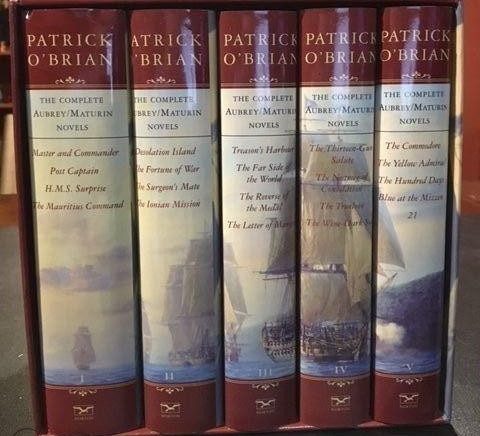
      The Complete Aubrey set of novels that cross genre boundaries
      The Complete Aubrey – Maturin Novels Set – 21 complete novels – Kiffer likes how the covers create a scene. And, yes, she has read the complete series.

      Patrick O’Brien’s Jack Aubrey and Stephen Maturin series crosses many genres: Historical fiction, action/adventure fiction, romance (yes, romance), military fiction, etc.

      The series starts in 1800 with the Napoleonic Wars and carries through to the Battle of Waterloo in late 1815.

      Some say Aubrey and Maturin are the inspiration for “inseparable fictional duos” such as Kirk and Spock of the original Star Trek TV series (79 episodes) by Gene Roddenberry, Holmes and Watson sixty stories by Arthur Conan Doyle, Joe Leaphorn and Jim Chee of the award-winning Navajo Nation mystery series by Tony Hillerman, and Walt Longmire and Henry Standing Bear of the Longmire novel series.

      Understanding Genre:

      When writing in general, it helps to think of your work in terms of different points of view. Often English teachers will refer to this as the Rhetorical Situation of your writing, which comes in the following parts:

      • Audience: Who will be reading it? This is more than people who buy your book, but also your writing group, beta readers, professional editors you pay, agents, publishing editors, bookstore employees, and then the specific people to who your book will appeal.
      • Medium: Quite literally what is it written on and how it is delivered. Paper, ebook, audiobook, graphic novels, hybrid.
      • Message: What it says
      • Genre: The conventions and context regarding how this information is typically presented
      • Purpose: The intention of the writing

      Naturally, we’re going to focus on Genre here.

      Take a moment and consider this question: What is Genre? It may even be worth pausing to write down your thoughts before continuing.

      Two hands, one holding an apple, and one holding an orange
      It’s a little more complicated than “Apples and Oranges”

      In “Dukes, Deaths, and Dragons: Editing Genre Fiction” from What Editors Do, Tor Executive Editor Diana Gill Diana Gill asks the same question, and she provides her own answer:

      “What is genre? Merriam-Webster defines it as ‘a category of artistic, musical, or literary composition characterized by a particular style, form, or content.’ Genres of fiction include mystery, science fiction, romance, fantasy, westerns, erotica, and horror. Genre fiction can be commercial, it can be literary—and it can be both.”

      A quick internet search shows that there are typical standards for most genres when it comes to word count, which can help when plotting or editing your work. Let’s look at that genre list from before, but add in word counts:

      You can read up on some more of the general rules of genre in this older, but still worthwhile blog from Ruth Harris here.

      Standard word counts for different genres are important to keep in mind as knowing how long your novel is affects your storytelling!

      • Speculative Fiction 90,000-120,000
      • Mystery 70,000-90,000
      • Young Adult 50,000-80,000 (much shorter for Early Readers and Middle Grade)
      • History 100,000
      • Literary  100,000
      • Romance, 50,000 + (shorter is usually better for romance)

      Non-Fiction is a little too varied to put a fine point on it. George Saunders tells his reader in A Swim in a Pond in the Rain that he received “the Cornfeld Principle” from movie producer Stuart Cornfeld, which states:

      “[E]very structural unit needs to do two things: (1) be entertaining in its own right and (2) advance the story in a non-trivial way.”

      George Saunders on Politics and the Future | The New Yorker
      George Saunders

      If your story is excessively long, it may be worth it to look at entire chapters and ask yourself that question. At best, you may find out you have two books, or as we have seen here at Chanticleer, three books instead of one, but no matter what happens your story will probably be stronger for it.

      A reminder from Kiffer: Remember each chapter should have its own story arc and should end in such a way that the reader can’t wait to indulge in the next chapter as the story develops its overall arc.

      Each story within a series should contain a portion of the overall arc of the series.

      This works for whatever genre or genre’s you are working in—even those with fractured time-lines.

      What is the point of genre, or, put another way, who uses genre?

      This goes back to the question of Audience when we consider a book. Remember who we said might be reading this with an eye toward genre:

      • Your Writing Circle
      • Beta Readers
      • Professional Editors
      • Agents
      • Publishing Editors
      • Bookstore employees
      • Distributors (the gauntlet of a successful sales strategy)
      • ISBN – & Cataloging
      • Library of Congress
      • Copyright
      • Your Readers!

      While understanding the genre can help you with narrative conventions and writing decisions, writing in a genre also establishes an unspoken contract between you and the reader. If you break the contract, your readers might be a little frustrated with you. That said, common forms of genre blending can be found in Young Adult Fiction, Middle Grade Fiction, and Romance Fiction.
      You might be asking why on earth you would need to even bother with a genre when all you want to do is reach your readers directly. Well, there’s a simple answer…

      Marketing! Marketing! Marketing!

      EXTRA! EXTRA! READ ALL ABOUT IT!
      What will you do to help your book be discovered?

      Knowing your genre not only helps you understand the conventions (like length) for what you are writing, but it also helps readers find your book. Think about when you go into a bookstore. Is there a section you automatically beeline for? Do you look to see if they’ve separated out Horror from SciFi and Fantasy instead of putting it all in Speculative Fiction? Are you a frequent peruser of the Local Author shelves? Having clear sections and genres (even more abstract ones like Local Authors) helps to orient your reader to best find your book!

      Author Platform = Discoverability

      In spite of how having a clear genre can help book sales, we often hear is that someone’s book defies genre, or it can only be described as the most literary fiction around, or it just doesn’t fit one of the 24 Awards divisions we offer. Well, those authors aren’t alone in that feeling.

      An interesting example of this is Kazuo Ishiguro’s book The Buried Giant. Ishiguro seemed to be reluctant to call the book fantasy, and indeed you’ll find it in the general fiction section of most book stores. (The same is true for his book Klara and the Sun, which is narrated by a robot, but somehow not science fiction.) Ursula K. LeGuin, a fervent champion of genre fiction, had this to say:

      “Familiar folktale and legendary ‘surface elements’ in Mr Ishiguro’s novel are too obvious to blink away, but since he is a very famous novelist, I am sure reviewers who share his prejudice will never suggest that he has polluted his authorial gravitas with the childish whims of fantasy.” (Read the full Guardian article detailing this here)

      Ursula K. Le Guin
      The Brilliant Ursula K. Le Guin

      So What Does Genre Do?

      Genre is a form of categorization that helps people sell your books. Ishiguro, as the winner of the Nobel Prize in Literature can sell work on his name alone. And using a genre isn’t so bad! Think about times that you’ve queried for your manuscripts or even when you see people pitching their work on Twitter’s #pitmad event. You see books advertised saying:

      • The next Harry Potter!
      • Jack Reacher fans have found their new series!
      • Friends of Tolkien fantasy will be happy here!
      • Perfect for Star Trek and Star Wars fans alike!

      While these claims may be less original than agents and publishers would like, they get the idea of genre across, and if you’re familiar with those titles you know exactly the kinds of books being described without even reading a summary.

      Then there is the advice of J.D. Barker, Master of Suspense

      CROSSING GENRES and WHY YOU SHOULD DO IT! 

      J.D. Barker asked his attendees at his presentation at a Chanticleer Authors Conference session, “What do you write? Thrillers? Mysteries? Paranormal?”

      Hands were flying up. Then he asked, “Horror?” Sharon Anderson’s hand flew up. He looked at her for a couple of seconds and said, “I guess you’ll be happy with not making much money, then.”

      Say What?

      He went on to explain how authors limit their audiences when they use certain words. Horror, it turns out, is one of those words. Many people read thrillers, quite a few read mystery novels, and who doesn’t like a good paranormal? But when you say “horror,” people tend to shy away. Sure, you’ll get your fans. But, as Barker adroitly pointed out, you may not get those readers who love the other genres – and would most likely love what you have to offer, too.

      This is important because your horror novel may contain elements of a thriller – why wouldn’t it? Likewise, your novel probably has a storyline that needs solving. The point J.D. was making is this – don’t scare away your readers by telling them your novel is only one thing. Think carefully about your marketing and promote your work in such a way as to garner the largest appeal. (Read the full interview with J.D. in our magazine.)

      JD Barker presents at CACs and VCACs.

      Having a flexible genre that fits into a more popular one (consider paranormal and horror or paranormal and romance) has the potential to greatly expand your readership.

      If you’re having trouble identifying your genre and need another pair of eyes on your work, you can always sign up for one of our Manuscript Overviews here.

      Keep an eye out!

      Did you enjoy this article? We’re planning on doing a series breaking down the ins and outs of different genres in a series of Genre Deep Dives to help you know if your work is a police procedural or a cozy mystery – or whatever else you might be writing!

      Thank you for spending part of your writing day with Chanticleer Reviews! 


      Chanticleer Editorial Services – when you are ready

      Did you know that Chanticleer offers editorial services? We do and have been doing so since 2011.

      Tools of the Editing Trade

      Our professional editors are top-notch and are experts in the Chicago Manual of Style. They have and are working for the top publishing houses (TOR, McMillian, Thomas Mercer, Penguin Random House, Simon Schuster, etc.).

      If you would like more information, we invite you to email Kiffer or Sharon at KBrown@ChantiReviews.com or SAnderson@ChantiReviews.com for more information, testimonials, and fees.

      We work with a small number of exclusive clients who want to collaborate with our team of top editors on an ongoing basis. Contact us today!

      Chanticleer Editorial Services also offers writing craft sessions and masterclasses. Sign up to find out where, when, and how sessions being held.

      A great way to get started is with our manuscript evaluation service. Here are some handy links about this tried and true service: https://www.chantireviews.com/manuscript-reviews/

      And we do editorial consultations. for $75.  https://www.chantireviews.com/services/Editorial-Services-p85337185

      Writer’s Toolbox

      Thank you for reading this Chanticleer Writer’s Toolbox article.

      Writers Toolbox Helpful Links: 

      Five Essential Book Cover Elements by Kiffer Brown

      Know Your Genre: Tips and Secrets from the Experts for Writing Bestselling Genre Fiction

      Kazuo Ishiguro thinks his fantasy novel is not a fantasy novel. Are we bothered?

      The traditional publishing tool that indie authors can use to propel their writing careers to new levels?  https://www.chantireviews.com/2016/05/15/the-seven-must-haves-for-authors-unlocking-the-secrets-of-successful-publishing-series-by-kiffer-brown/