Tag: Developmental Editing

  • “It was a Dark and Stormy Night:” How Atmosphere Enhances the Plot and Crafts Immersive Narratives

    Shakespeare knew what he was doing…

    Creating a tangible atmosphere in your storytelling is often a subtle force that plays a critical role in shaping a narrative and enveloping your reader in the story.

    A good atmosphere – created through setting, tone, and sensory details – can transform a simple plot into a rich, immersive experience filled with bright skies, stormy weather, and everything in between. Here we’ll explore how atmosphere enhances the plot and why it’s essential for crafting stories that draws readers into their characters’ world and lets them experience it (nearly) first-hand.

    rocking chair, deserted house, chipped paint, door, window, curtain

    Setting the Scene

    Atmosphere begins with setting. The world in which a story unfolds is more than just a backdrop. it influences mood, behavior, and narrative flow. Imagine a thriller set in a foggy, empty street at night versus one set in a bright, bustling city. The atmosphere created by each setting will evoke different emotional responses and drive the plot in unique ways.

    In Charles Dickens’s Oliver Twist, for example, the dark, oppressive atmosphere of a decaying mansion reflects the internal turmoil of Miss Havisham’s deteriorated mental state. By adding depth to the setting, it actually becomes a character in itself, influencing the actions and decisions of the protagonists. This synergy between setting and plot helps readers immerse themselves more fully in the story.
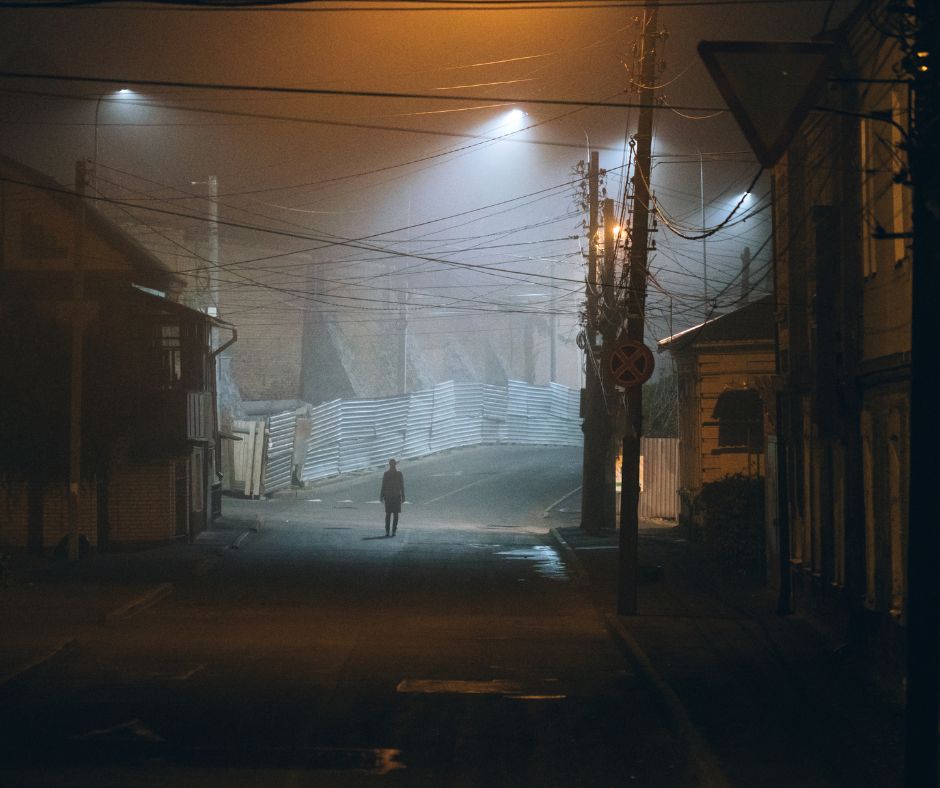
    Foggy, street, lights, person, city, alley

    Enhancing Tension and Suspense

    Atmosphere is crucial in creating tension and suspense. A story’s mood can build anticipation and keep readers on edge. For example, a tense atmosphere can heighten the stakes and make moments of danger feel more immediate and pressing.

    Consider a suspenseful scene set on a foggy, deserted street. The shadows and lack of other people can amplify the sense of danger and unpredictability. The atmosphere makes the plot twists more gripping because it engages the readers’ senses and emotions, making the narrative’s tension more palpable.

    snow, trees, clouds, blue, landscape

    Reflecting Internal States

    Atmosphere can also mirror a character’s internal state, providing insight into their emotions and motivations. For example, in the opening scene of Jack London’s White Fang we find two men traveling alone across the snowy Yukon Territory. Their lives are under constant threat from the world around them. This mirrors the theme of the story and the torment its protagonist experiences as a wolf left to constantly fight for his survival.

    This mirroring helps readers connect more deeply with the characters, as the external atmosphere echoes their internal struggles and triumphs. It adds a layer of emotional resonance to the plot, making characters’ experiences feel more authentic and impactful.

    party, blue, glitter, disco ball, windows, people

    Creating Symbolism and Themes

    Atmosphere can enhance themes and symbolism within a narrative. By weaving certain atmospheric elements into the story, authors can subtly reinforce thematic undertones and symbols. For instance, a recurring motif of decay and deterioration in a story can symbolize the moral or societal decline of the characters or setting.

    In The Great Gatsby, F. Scott Fitzgerald uses the opulent but hollow atmosphere of Gatsby’s parties to highlight themes of disillusionment and the emptiness of the American Dream. The atmosphere becomes a glittery vehicle for thematic exploration, enriching the plot’s complexity.

    Leonardo DiCaprio as Gatsby in The Great Gatsby 2013 film
    Leonardo DiCaprio as Gatsby in The Great Gatsby 2013 film

    Guiding Reader Expectations

    The atmosphere can guide readers’ expectations and shape their interpretation of the plot. A story that opens with a cheerful, light-hearted atmosphere might lead readers to anticipate a light, humorous tale. Conversely, a dark, foreboding atmosphere might set the stage for a more serious or tragic narrative.

    By manipulating atmosphere, authors can subtly influence how readers engage with the plot, leading them to anticipate certain outcomes or questions about the narrative’s direction. This is seen in Suzanne Collin’s The Hunger Games, where the shanty town world her heroine, Katniss Everdeen, is born into is used as a comparison to the opulent wealth of Capitol City. This adds layers of complexity and surprise to the story as she must use the smarts she gained in her original environment to survive in a new and unusual place.
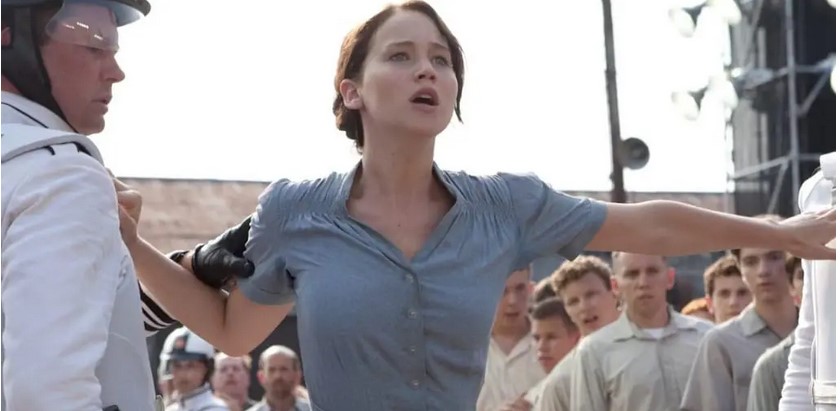
    Jennifer Lawrence as Katniss Everdeen volunteering as tribute in place of her sister at the barbaric Reaping for the Capitol.

    Deepening Immersion

    Finally, atmosphere plays a crucial role in deepening reader immersion. A well-crafted atmosphere can transport readers to another world, making the plot more engaging and compelling. The sensory details, emotional undertones, and overall mood create a rich tapestry that draws readers in and holds their attention.

    Whether it’s the cozy warmth of a small-town bakery or the cold, sterile environment of a high-tech laboratory, the atmosphere creates a sensory experience that enhances the plot and makes the story come alive. It helps readers visualize and feel the world of the story, making the plot more vivid and impactful.

    Brick walls, windows, wood beams, wood floor

    Brick by Brick You Build A World Your Readers Can Feel

    Atmosphere is a powerful tool in storytelling, enhancing the plot in ways that go beyond mere setting. By influencing mood, creating tension, reflecting internal states, and deepening thematic elements, atmosphere enriches the narrative and captivates readers. When done effectively, it turns a simple story into an immersive experience, making every plot twist and character development resonate more deeply.

    So, the next time you’re crafting a story, remember that the atmosphere you create is as integral to the plot as the characters and events. It’s the subtle force that breathes life into your narrative and keeps readers’ attention until the very last clap of thunder!


    Chanticleer Editorial Services – We’re ready when you are ready!

    Did you know that Chanticleer offers editorial services?We do and have been doing so since 2011!

    Tools of the Editing Trade

    Our professional editors are top-notch and are experts in the Chicago Manual of Style. They have and are working for the top publishing houses (TOR, McMillian, Thomas Mercer, Penguin Random House, Simon Schuster, etc.).

    If you would like more information, we invite you to email Kiffer or Sharon at KBrown@ChantiReviews.com or SAnderson@ChantiReviews.com for more information, testimonials, and fees.

    We work with a small number of exclusive clients who want to collaborate with our team of top-editors on an on-going basis.Contact us today!

    Chanticleer Editorial Services also offers writing craft sessions and masterclasses. Sign up to find out where, when, and how sessions being held.

    A great way to get started is with our manuscript evaluation service. Here are some handy links about this tried and true service: https://test.chantireviews.com/manuscript-reviews/

  • Continued – Top Ten Most Popular Writing Craft and Editing Posts for 2021 – Chanticleer’s Writer’s Toolbox Series

    Continued – Top Ten Most Popular Writing Craft and Editing Posts for 2021 – Chanticleer’s Writer’s Toolbox Series

    Top Ten Editing and Writing Craft Articles from Chanticleer’s Writer’s Toolbox Series to Point Your Works into the Right Direction

    Writer’s Toolbox

    Below are the second lot of our most popular writing craft articles in 2021! They are not in order or ranking. 

    5) Putting More Character into Your Characters

    “If you’re going to have a character appear in a story long enough to sell a newspaper, he’d better be real enough that you can smell his breath.” ~ Ford Madox Ford

    She might has well been talking to three empty chairs…

    4)  Component Layers of Successful Fiction

    Elements of successful fiction layer and fold back in on each other to create resonance, nuance, subtext, and undercurrents of great storytelling.

    Causality — the Physics of Writing

    3. Between the Lines: Mastering the Subtle Techniques of Fiction

    You see, it’s impossible to write fiction without understanding its underpinnings such as conflict, scene structure, and character development. Without this understanding , you might write two or three or four hundred pages, but you won’t end up with a story; instead you’ll produce a lot of words on a lot of pages or a haphazard pile of scenes loosely clustered around characters who never quite come to life.

    Causality — the Physics of Writing

    2. Language and Names in Writing Fiction

    The best methods of using language to authenticate your fiction often lies in blending the familiar and new, including fresh word combinations.

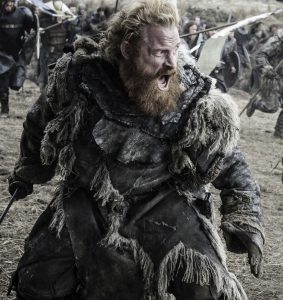
    Tormund Giantsbane of the Free Folk, A Song of Fire and Ice.

    1. Common Fiction Errors – a Checklist    

    The best fiction touches the deep layers in us. A writer achieves this effect by embedding dozens of techniques into his or her story.

    Do your characters sound like this?

    We hope that you have found these encore posts to be useful reminders and prompts for your work-in-progress!

    And in cased you missed it, here is the link to our New Year’s Eve post with the first five articles. Click here. 

    NOW for Kiffer’s Number One Tip for Writers in 2022!

    RULE # 1

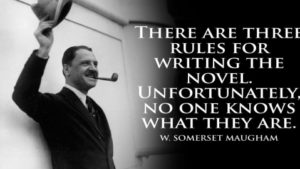
    WRITE FAST!  EDIT SLOW! 

    Don’t edit your first draft as you write it!

    Writing your first draft should be a mad dash to get your story out of your brain. Don’t hinder it by worrying about each little detail. There will be time for that later. 

    Try to unspool the “mind-film” in your brain before reworking every sentence. Get your story out. Let the characters introduce themselves to you. Create the Atmosphere.

    There will be plenty of time to craft and hone sentences later. Meanwhile, fall in love with your story. Experience the rush and the thrill of creativity!

    We wish you joy and peace in the New Year from all of us at Chanticleer! 

    We hope to see you at the 2022 Chanticleer Authors Conference and the 2021 CIBA Banquet and Ceremony 

    Our 10th Anniversary Chanticleer Authors Conference (CAC22) will be April 7-10, 2022, where our 2021 CIBA winners will be announced. Space is limited and seats are already filling up, so sign up today!  CAC22 and the CIBA Ceremonies will be hosted at the Hotel Bellwether in Beautiful Bellingham, Wash. Sign up and see the latest updates here!

    Don’t Delay! Register Today! Seating is Limited.

  • Turning Points and Plot Points in Storytelling from Jessica Morrell’s Editor’s Desk – A Chanticleer Writers Toolbox post

    Turning Points and Plot Points in Storytelling from Jessica Morrell’s Editor’s Desk – A Chanticleer Writers Toolbox post

    Jessica Morrell, Top-tiered Developmental Editor Shares Her Thoughts on Turning Points and Plot Points in Storytelling

    Jessica Page Morrell
    Jessica Page Morrell, Top-Tiered Developmental Editor

    I want to talk about the thresholds and milestones that happen in storytelling, including films. These milestones are given different names by various experts. Most commonly they’re called turning points or plot points.

    Turning Point or Plot Point Development

    Crucial Scenes

    I was recently working on a client’s manuscript and an important scene was taking place in an early chapter creating the first major turning point. It features two main characters about to make love for the first time. It’s a crucial scene because everything in the story will change after this, the stakes will rise, serious repercussions will shape their futures. It’s an especially important scene because it’s the tale of forbidden love and once they’ve crossed this line they’ve admitted censure and danger into their lives. My job is to help the writer make the scene more momentous and intense, making sure the scenes contain enough emotional clout. Because these essential moments need to create major ramifications.

    Turning points are irrevocable changes staged as events or scenes, and are where the story shifts in a new direction. They’re also thresholds so characters pass through into a new situation. These moments, always shown via action, usually have an emotional change that comes with them. –Jessica Morrell

    Before this event, things might return back to normal; afterward, it’s a whole new game.

    One Way Gates

    As I’ve mentioned here before, effective fiction takes your main characters into new physical and emotional territory. Turning points are the thresholds to the other side. They signal the reader that danger and shifting tides lie ahead. I like to think of them as one way gates.

    The new territory can also be new spiritual territory, where principles, beliefs, and hearts are tested. Also, they are often tests and reveal what your protagonist is made of.

    And while turning points shift the direction of the story, keep in mind is that they’re also emotional turning points. I was thinking about them yesterday and how they snatch a protagonist from his or her comfort zone and thrust him or her into a threatening situation.

    Let’s look at The Hunger Games to help identify these crucial moments. It’s the first book in Suzanne Collins dystopian series that takes place in Panem, a country that’s formed after the collapse of North American governments.

    Inciting Incidents

    The inciting incident or catalyst happens on Reaping Day, an annual lottery where each of Panem’s 12 Districts must send two ‘tributes’ to participate in the state-sponsored, fight-to-the-death Hunger Games while the whole country watches the gruesome contest. Because the underlying brutality of the governing regime is an omnipresent threat. The winning district receives food. 

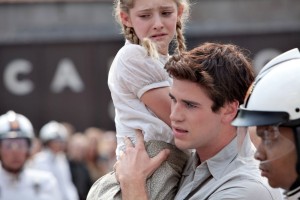
    Reaping Day in The Hunger Games – Gale and Prim (Katniss’ little sister).

    The story reprises the virgin sacrifices that existed in many cultures along with nods to mythical happenings. But then Collins has borrowed liberally from mythology and gory human history including a mashup of Dust Bowl imagery, a Nazi-like regime including the architecture, symbolism, and vicious stormtroopers, along with a hideous disparity between the classes.

    Complications

    At the Reaping, Katniss Everdeen volunteers to replace her 12-year-old sister Primrose in the deadly Games.

    Central Dramatic Question

    This creates the central dramatic question: Will Katniss survive? Then Peeta Mellark is chosen from District 12 too, and wouldn’t you know it, they have some history together because one of the rules of storytelling is Complicate, Complicate, Complicate.

    Katniss and Peeta leave home for the Capital (a threshold) and that’s when readers and movie-goers find out just how twisted and corrupt the Panem leadership is.

    Katniss and Peeta see just how wealthy the governing body is and how poor they are on the deluxe train ride.

    Plot Points Pushing Ahead the Plot’s Trajectory

    It turns out that Peeta is secretly in love with Katniss. Because Katniss needs to win to save her family, this is another complication in an already ghastly competition. Does she care about him too? Will she be forced to turn into a soulless killer to survive? The turning points that follow keep changing and pushing ahead the plot’s trajectory, but all affect her goal to survive.

    Katniss and Peeta decide to become allies and feign love in order to increase their chances of survival. Because the heartless denizens of the Capital love a love story in the midst of their killing field. Back in District 12 Katniss had learned to hunt to feed her family since her father had died in a mining accident. During the exhibition before the Games she gains notice for her archery skills.

    Atmosphere and Landscape

    Another turning point happens when the tributes enter the Arena – a nightmarish landscape where the rules keep changing, monsters and walls of flames appear out of nowhere. And can we just reiterate that these are children and teens operating in this whole blood-soaked nightmare?

    The children and teens from the 12 districts that must fight to the death until there is one survivor. Then, his or her district will receive food. The Hunger Games.

    Secondary Characters: Reflections of the Protagonist and Antagonist 

    The youngest tribute from District 11 is Rue and she represents innocence and all that’s wrong with the government and Games. Though agile and wily, she seems doomed or at least underestimated.

    Once the Games begin in the mad scramble to secure weapons and supplies Peeta and Katniss become separated.

    Katniss has been chased up a tree for safety and that’s when she hears a bird-like call. Rue is nearby in a tree. She warns Katniss of a nearby nest of deadly tracker-jackers (genetically-modified bee monsters). Katniss saws off the branch and the tracker jackers swarm on their adversaries. The girls become allies and readers, and viewers recognize that Rue is surrogate for her sister Prim.

    Rue warning Katniss about the deadly nest of robot yellowjackets.

    As allies they concoct a plan to destroy the Cornucopia, a huge stash of weapons and supplies.

    Reversals and Ramifications

    Returning to Rue after Katniss succeeds, she witnesses her being murdered by another tribute. It is a major turning point in the story.

    The fallout cannot be overstated:

    • Katniss changes from a hunter to a killer, first taking out Rue’s murderer.
    • The story slows down briefly so Katniss can process her grief and feelings.
    • The slave-like conditions the citizens of Pandem live under is emphasized by Rue’s senseless death.
    • It reinforces Katniss’ desire to survive – she will win for Rue.
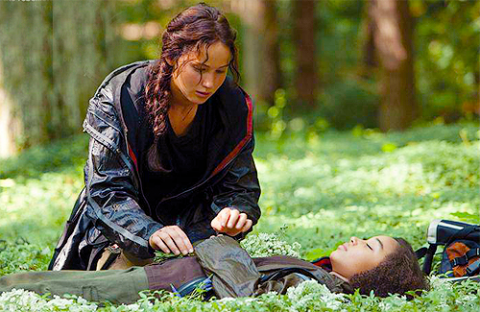
    • Katniss openly defies the Capital when she rings flowers around Rue’s corpse, showing her affection and respect.
    • Katniss uses her weapon for good when cutting flowers to honor Rue.

    The link to this emotional scene is here.

    Then with the Games’ cameras rolling, and honor and respect has been shown to Rue’s corpse, Katniss stands and salutes (as tribute) the other district’s people who are watching via he Games’ cameras, marking her defiance and the beginning of a rebellion. We’re talking major ramifications.

    Katniss’ symbol of defiance and respect is televised to all the districts in the Hunger Games. This simple gesture starts a movement.

    Later, Katniss’ compassion toward Rue saves her own life because Rue’s district sends her food – once again breaking the rules of the Games.

    Before: Rue and Katniss are allies and sisters in the struggle for survival.

    After:  Katniss would rather die than let the government regime win or steal her humanity.

    Question for Writers: What are the before and after statuses in your turning points for your work-in-progress?

    Another excellent example of plot points and turning points is The Toy Story series. It has terrific examples of thresholds that are easily identified because the characters often land in a new setting as they pass through each threshold.

    *Still photos copyright Lion’s Gate Entertainment

    Keep writing, keep dreaming, have heart. Jessica

    Jessica Morrell is a top-tier developmental editor and a contributor to Chanticleer Reviews Media and to the Writer’s Digest magazine. She teaches Master Writing Craft Classes at the Chanticleer Authors Conference that is held annually along with teaching at Chanticleer writing workshops that are held throughout the year. We suggest visiting her website for more articles on writing and the writing life. 


    When you’re ready, did you know that Chanticleer offers editorial services? We do and have been doing so since 2011.

    Our professional editors are top-notch and are experts in the Chicago Manual of Style. They have and are working for the top publishing houses (TOR, McMillian, Thomas Mercer, Penguin Random House, Simon Schuster, etc.).

    If you would like more information, we invite you to email Kiffer or Sharon at KBrown@ChantiReviews.com or SAnderson@ChantiReviews.com for more information, testimonials, and fees.

    We work with a small number of exclusive clients who want to collaborate with our team of top editors on an on-going basis. Contact us today!

    Chanticleer Editorial Services also offers writing craft sessions and masterclasses. Sign up to find out where, when, and how sessions being held.

    A great way to get started is with our manuscript evaluation service, with more information available here.

    And we do editorial consultations for $75. Learn more here.

    If you’re confident in your book, consider submitting it for a Editorial Book Review here or to one of our Chanticleer International Awards here.

    Our 10th Anniversary Chanticleer Authors Conference (CAC22) will be April 7-10, 2022, where our 2021 CIBA winners will be announced. Space is limited and seats are already filling up, so sign up today!  CAC22 and the CIBA Ceremonies will be hosted at the Hotel Bellwether in Beautiful Bellingham, Wash. Sign up and see the latest updates here!


    Robert Dugoni
    Robert Dugoni is one of our most popular speakers at the Chanticleer Author Conference.

    Writer’s Toolbox

    Thank you for reading this Chanticleer Writer’s Toolbox article.

    Writers Toolbox Helpful Links: 

    At Its Core, the ‘Twilight’ Saga Is a Story About ________

    The INCITING INCIDENT: STORY, SETBACKS and SURPRISES for the PROTAGONIST

    BEATS & CONFLICT: The Engine for Your Book