Tag: Descrimination & Racism

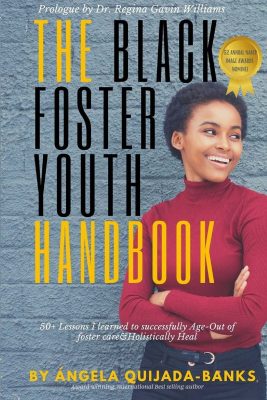
  • THE BLACK FOSTER YOUTH HANDBOOK: 50+ Lessons I Learned to Successfully Age-Out of Foster Care and Holistically Heal by Angela Quijada-Banks – Overcoming Trauma, Inspirational Non-Fiction, Foster Youth


    The I&I Grand Prize Badge for The Black Foster Youth Handbook by Angela Quijada-Banks

    The Black Foster Youth Handbook: 50+ Lessons I Learned to successfully Age-Out of Foster Care and Holistically Heal is a distinguished compilation of award-winning author Ángela Quijada-Banks’ insights, seeking to assist those in foster care to stay optimistic and triumph over traumatic experiences.

    The text features the author’s candid revelations regarding the disarray she encountered in foster care and the overwhelming emotional roller coaster she underwent through family upheavals and a heart-breaking rift between her siblings.

    Foster care had seen her forget her goals and aspirations, as traumas and emotional misfortunes spread their venom in her soul. Banks had found herself misplaced, perplexed, wounded, irate, and unloved. Her background, past wounds, and pessimistic beliefs ruled over her. In a painful recap, she reveals how she became accustomed to constant alarming incidents, creating in her a perpetual state of survival.

    But a deep longing for conquest in life kept burning in her heart.

    Achieving that conquest would prove trickier with time, as she struggled to figure out her path. Readers will find Banks’s R.E.A.L Success Model a gem that will help them understand the basics of foster care, the implications of having healthy relationships, the kind of people one should reach out to in case of a problem, and how to attain a stable life of success.

    This resourceful read has ably uncovered what numerous children experience in unfamiliar foster care settings, such as mistrust and fear of encountering a trauma they have already gone through.

    Banks explains how adopting such cynical sentiments blocked her from certain blessings and people who were willing to help her into a quicker recovery. Her open confessions are bound to leave readers more open-minded, honest, and ready to come out of complicated matters, regardless of their years, gender, ethnicity, or religion. This book meticulously uncovers little-spoken traps that numerous people have fallen into, such as seeking guidance and counsel from relatives or friends who don’t have truthful insight to offer.

    The Black Foster Youth Handbook’s substantial content will inspire readers to check whether their thoughts, actions, and beliefs are being powered by love or by fear. Its lessons will benefit many readers, primarily those who have gone through young childhood traumas and torment. Thought-provoking illustrations from Banks’ life journal deepen the impact of these lessons, highlighting the importance of each personal choice on the road to healing and restoration. This powerful handbook will guide its audience to aim for progression, rather than perfection.


    The Black Foster Youth Handbook by Angela Quijada-Banks won Grand Prize in the 2021 CIBA I&I Awards for Instruction & Insight Non-Fiction.


    5 Star Best Book Chanticleer Reviews round silver sticker

  • HOMEGOING by Toni Ann Johnson – Literary Fiction, Discrimination & Racism, Novella


    Blue and Gold Grand Prize Badge for the Short Novella Homegoing by Toni Ann JohnstonHomegoing by Toni Ann Johnson is an intimate portrait of a middle-aged African-American woman dragging herself hand over hand out of grief and despair.


    This story begins with her aching, echoing pain after the one-two punch of a miscarriage and the dissolution of her marriage. Her journey takes her back to the upper-middle-class white suburb where she grew up, through childhood memories that refuse to be denied and to, of all times and places, a funeral.

    Something and someone is supposed to be buried. Certainly the deceased. But quite possibly the woman who has held on to her losses and her grudges long enough to poison her own future.

    Homegoing explores two literary tropes about the place called “home.” Thomas Wolfe’s posthumous 1940 novel states starkly in its title, You Can’t Go Home Again. But Robert Frost, in his poem The Death of the Hired Man, says, “Home is the place where, when you have to go there, They have to take you in.”

    The home that Madeline Arrington can’t truly go back to represents the past and not the present. She remembers her childhood, as one of the very few black children in a mostly-white suburb, being filled with racist taunts and bullying from children who were never held accountable for making her childhood hell. A hell that seems to be remembered by no one but herself – and she can’t let go of either the original memories or the gaslighting that now surrounds them.

    While Maddie doesn’t want to go home, she can if she must, as she does for the funeral of her former next-door neighbor. And in that return, she learns that the past is dead except in her own memories and that it’s time to let it go – not for anyone else’s sake, but for her own.

    Homegoing offers catharsis.

    While Maddie’s memories of childhood bullying revolve around racism, any adult who was bullied as a child will resonate with Maddie’s experiences. Children are often cruel, and the victims remember their treatment much more harshly and in much more detail than the perpetrators.

    But the past is another country, to quote another classic novel, and they do things differently there – or did. Maddie’s own healing requires her to leave the past behind, and her ability to do so gives the reader hope for a brighter future for the character, and quite possibly for themselves as well.

    Highly Recommended!

    Homegoing by Toni Ann Johnson won Grand Prize in the 2021 CIBA Shorts Awards for Short Stories, Essays, Novelletes, and Novellas.


    Shorts GP gold sticker

    5 Stars! Best Book Chanticleer Book Reviews

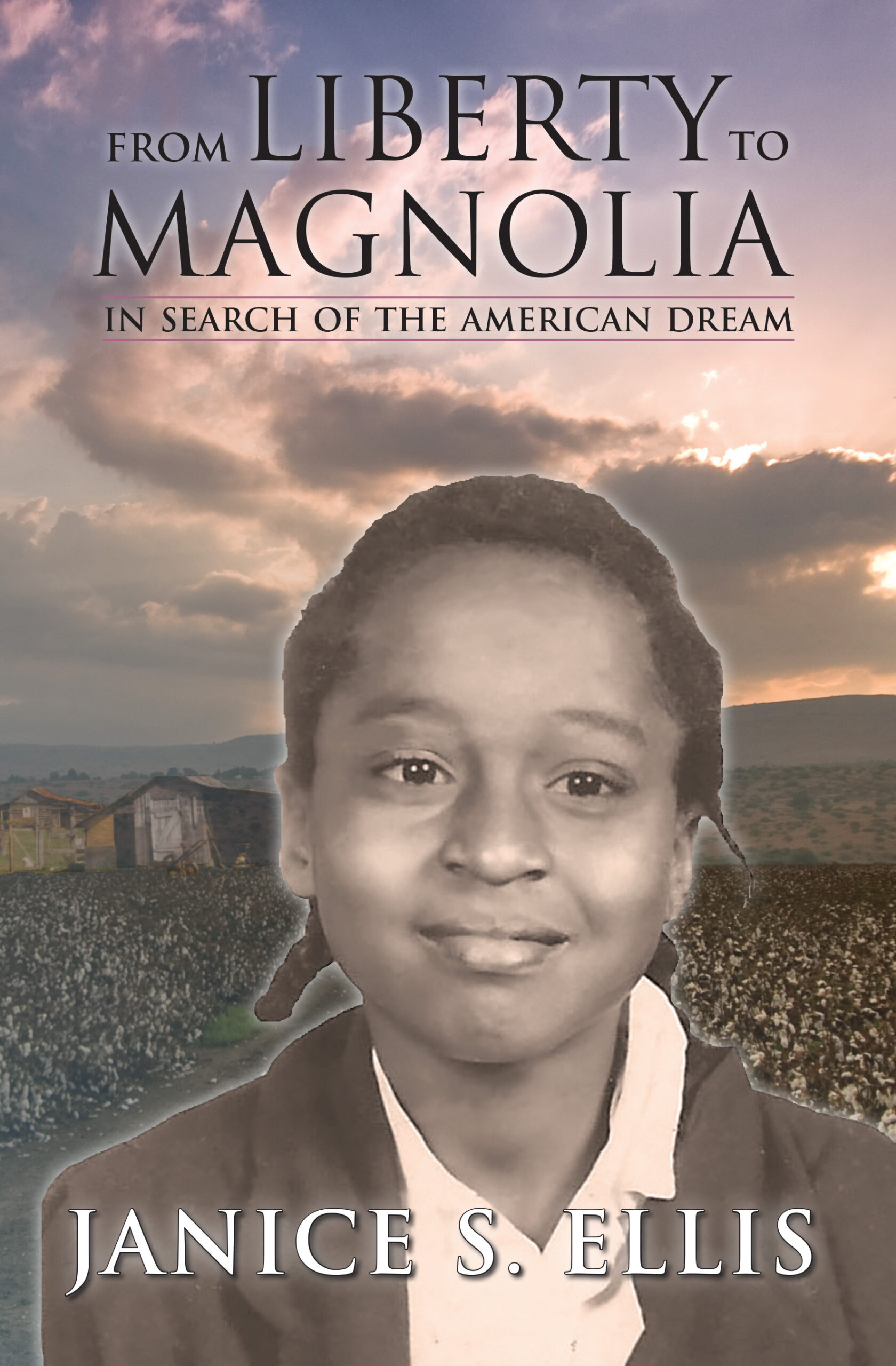
  • FROM LIBERTY to MAGNOLIA: In SEARCH of the AMERICAN DREAM by Janice Ellis, Ph.D. – Memoir, Descrimination & Racism, Women

    FROM LIBERTY to MAGNOLIA: In SEARCH of the AMERICAN DREAM by Janice Ellis, Ph.D. – Memoir, Descrimination & Racism, Women

    From Liberty to Magnolia: In Search of the American Dream, a timely and important book, won GRAND PRIZE in the 2018 CIBAs in the JOURNEY division for Memoir.


    Journey Awards Grand Prize Badge for From Liberty to Magnolia: in Search of the American DreamAs a black woman on a cotton farm in Mississippi in the 1960s, Janice Ellis could have resigned herself to a life full of status quo: never speaking up for herself, never speaking out against injustice or racism. Instead, she never let unsettling times define her or hold her back, even as a witness to some of the ugliest racial violence this country has seen. In her candid and thought-provoking memoir, From Liberty to Magnolia: In Search of the American Dream, Ellis vividly depicts her life in the South during the height of the Civil Rights and Women’s Rights movements.

    Through fluid and skillful writing, Ellis recounts the battles she encountered due to her skin color or due to her gender: an abusive husband, discouragement to further her education, sexual and racial discrimination in the workplace, a lack of support from friends and family when she runs for election. Despite these mounting obstacles, she goes on to earn her Ph.D., lands leadership roles and furthers her career, and even runs for mayor in a major US city. Her faith in God and her unwavering belief that the American Dream should be accessible and attainable to everyone are what lead her.

    The story is hopeful and inspirational, yet there are painful passages for both writer to recount and reader to absorb. One such incident occurs on a Saturday afternoon in Mississippi when two little white boys spit at her parents as they exited a store. Most hurtful about the event for Ellis was seeing her parents flee to their car for safety; for blacks lived in fear as racial violence was targeted and prevalent during the 60s. Of course, there was the added fear of being female. While she lived fully aware of the color of her skin, she often wondered which came first: her race or her gender.

    Ellis is fascinated with the writings of both CBS Newsman Eric Sevareid and political commentator Walter Lippmann, and in Chapter 6, she dives in deep explaining the theories of Lippmann in particular. But she also shares the pivotal moment in her career, and in her life, when she meets Sevareid at his home for an interview. Ellis has gone on to become a political and social commentator and is a prolific columnist to this day, writing about race and gender. Her premise is that race is a modern construct and that we all belong to the human race.

    Interestingly, the title of the book comes from the names of two surrounding towns where she grew up. Liberty and Magnolia are stand-in metaphors for freedom and the American Dream, something that seems unattainable to a portion of the American population.

    Despite her struggles, she believes the country has come a long way in racial and gender relations. Her overarching message is to stay true to oneself and continue to follow your heart, no matter how unpopular or uncomfortable your choices.

    Anyone facing adversity will be moved by this tenacious woman’s account, which serves as a historical record amid one of the most tumultuous yet empowering eras in American history. Complete with a discussion guide in the Appendix, the book can serve as a text for a college course or a community book club exploring themes of race and gender.

    Certainly, From Liberty to Magnolia: In Search of the American Dream is a timely and important book. Highly recommended.