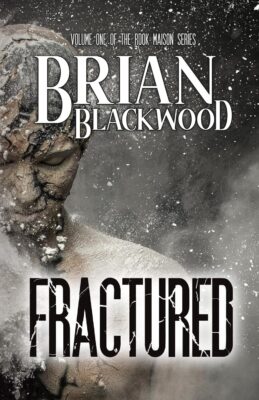
A genre defying debut, Fractured by Brian Blackwood tells the story of Rook Maison, who sustains his life by ripping out peoples’ souls to steal their bodies for himself. This unique ability comes with one cataclysmic side effect. Each time Rook replaces a soul, those souls—and Rook’s own—become increasingly fractured.
The forces of Heaven and Hell rely on a carefully maintained balance, and Rook has pushed that balance to a breaking point.
Originally a Catholic monk during the emergence and upheaval of Lutheranism, Rook has become increasingly disillusioned towards his religion and the purpose of his endless mercurial life. As the centuries passed by, Rook became a shell of who he once was, doing anything and taking whatever bodies necessary to continue his existence.
Rook grew hellbent on finding every scrap of information about his mysterious origins. But now, with a target on his back, Rook must decide if finding the truth is worth destroying the worlds of the living and the dead.
Fractured will entice those who root for the morally grey and antiheroes, as Rook Maison is a deeply interesting example.
Readers experience him in many different forms, from his devout beginnings and guilt-ridden conscience at having to take soul to a villainous disregard for the lives of others in favor of selfish survival. The plot jumps around in time as it reveals Rook’s backstory, building a sense of mystery and foreboding.
Some chapters focus on the perspective of the Angels, a fascinating angle on the story as they join with Hell to stop the fabric of the universe from being destroyed.
Placing Fractured within one genre would not do it justice. Its blend of urban fantasy, historical fiction, horror, and religion creates something unique and exciting for a variety of readers.
Brian Blackwood’s background in theory and screenwriting shines through his cinematic prose.
Illustrations at the beginning of each chapter set the tone for the pages that follow and piques interest in the central mystery that is Rook Maison.
A thought-provoking wild ride, Brian Blackwood’s Fractured is not to be missed. It asks complex questions through a well-developed character while providing the entertainment of a time-traveling adventure. An excellent choice for fans of urban fantasy, historical thrillers, and gothic religious horror. Rook Maison is one hell of a force to be reckoned with.
The horror fiction genre is full of scary and scintillating sub-genres, each offering its own unique flavor of terror and suspense. From the eerie atmosphere of gothic horror to the intense, cerebral tension of psychological horror, there are sub-genres that cater to a wide range of tastes and interests. Like romance, including a little horror can elevate your story and drag the reader kicking and screaming to the next page.
The key to effective horror writing lies in choosing the right sub-genre approach for your story’s needs. Each sub-genre offers unique methods for building suspense, developing atmosphere, and connecting with readers who crave that spine-tingling experience.
Classic Foundations: Where Horror Began
Gothic Horror
Gothic horror combines atmospheric dread with romantic elements, creating stories that feel both timeless and deeply emotional. Think Mary Shelley’s Frankenstein and Bram Stoker’s Dracula—these foundational works established horror tropes that continue to captivate readers today. Gothic horror typically features decaying settings, family secrets, and protagonists caught between love and terror. The underlying themes often explore human nature’s darker impulses, making readers question what we’re truly capable of when pushed to our limits.
Perfect for: Historical fiction writers, romance authors seeking darker themes, or fantasy writers building atmospheric world-building.
Psychological Horror
Rather than relying on jump scares or gore, psychological horror gets under your skin by exploiting fundamental human fears: losing control, being manipulated, or questioning reality itself. This sub-genre creates tension that lingers long after readers close the book because the horror is experienced internally. When done subtly—settling into the subconscious without overt horrifying acts—it’s called “quiet horror.”
Perfect for: Literary fiction, contemporary drama, or any story exploring mental health, family dynamics, or social pressures.
Action-Driven Horror: High Stakes and High Fear
Slasher Horror
When a slasher is on the loose, no one is safe. These antagonists hunt methodically, treating their victims like prey in stories designed to keep readers on edge. The appeal lies in the relentless pursuit and the question of who, if anyone, will survive. A newer variation, “splatter horror,” emphasizes excessive blood and gore as integral story elements—messy, shocking, and viscerally terrifying.
Survival horror places characters in environments where death lurks constantly—whether from supernatural beings, natural disasters, or post-apocalyptic scenarios. The key is creating relatable situations that could theoretically happen to anyone, then amplifying the danger beyond normal human experience. Zombie fiction falls into this category, with its methodical, unstoppable threats that transform familiar environments into deadly landscapes.
This sub-genre ventures beyond known reality into realms of magic, spirits, and otherworldly phenomena. Characters face threats they can’t fully understand or prepare for—extrasensory perception, ghostly encounters, cryptozoology, and unexplained phenomena that leave everyone tenuously off-balance. While similar to gothic horror, paranormal horror often features contemporary settings and modern characters encountering ancient or otherworldly forces.
Perfect for: Fantasy writers, urban fantasy, or contemporary fiction with magical elements.
Science Fiction Horror
Sci-fi horror blends familiar horror elements with scientific complexity, introducing innovative threats that make readers question what’s possible. H.P. Lovecraft mastered this fusion, creating cosmic horror that made humanity feel insignificant against vast, unknowable forces. Modern sci-fi horror might explore AI gone rogue, genetic manipulation, or extraterrestrial threats that view humans as nothing more than obstacles.
Perfect for: Science fiction writers, dystopian fiction, or stories exploring technological advancement’s dark side.
Dark Fantasy
When horror meets fantasy worlds, anything becomes a potential threat. Witches, shapeshifters, dark wizards—these antagonists wield magic that defies conventional solutions. Characters face seemingly insurmountable odds against supernatural powers, creating terror through the unknown capabilities of magical threats. The fantasy setting allows for creative freedom in crafting unique, otherworldly fears.
Perfect for: Fantasy writers seeking darker themes, fairy tale retellings, or urban fantasy with horror elements.
Specialized Horror Approaches
Body Horror
Body horror exploits our fundamental fear of physical transformation and decay. From Oscar Wilde’s The Portrait of Dorian Gray (accelerated aging) to Franz Kafka’s The Metamorphosis (human-to-insect transformation), this sub-genre makes the human body itself the source of terror. Modern body horror might explore medical experimentation, genetic mutation, or loss of physical control.
Occult Horror
Satan, demons, and religious corruption dominate occult horror. Stories like Ira Levin’s Rosemary’s Baby blend supernatural terror with religious themes, creating atmosphere through familiar spiritual concepts turned malevolent. The power of faith—and its potential corruption—provides rich material for exploring good versus evil.
Eco Horror
Environmental catastrophes and nature’s revenge characterize eco horror, serving as metaphors for real-world ecological crises. Samanta Schweblin’s Fever Dream exemplifies this sub-genre, combining maternal anxiety with environmental pollution. Common elements include deadly toxins, mutated creatures, animated plants, and killer viruses—all reflecting our complex relationship with the natural world.
Techno Horror
When technology becomes the enemy, techno horror explores our dependence on systems we don’t fully understand. AI malfunctions, computer viruses, and rogue robots create scenarios where characters must fight threats beyond their technical capabilities. This sub-genre resonates particularly well in our increasingly digital world.
Hybrid and Flexible Approaches
Comedy Horror
Sometimes writers want chuckles instead of screams. Comedy horror takes terrifying elements and places them in absurd situations, creating three distinct approaches: black comedy, parody, and spoof. Washington Irving’s The Legend of Sleepy Hollow demonstrates how humor can actually enhance horror by making readers lower their guard before delivering genuine scares.
Teen Horror
Stephen King’s Carrie perfectly exemplifies teen horror, where adolescent experiences—physical changes, social pressures, identity formation—intersect with supernatural or horrific elements. This sub-genre recognizes that teenage years already feel terrifying to many people, then amplifies those fears through genre elements.
Pulp Horror
Fast-paced and lurid, pulp horror embraces accessibility and entertainment value. Born in the late 19th century and popularized in the 1950s, pulp horror delivers quick thrills through sex, drugs, violence, and supernatural elements. It’s horror designed for pure entertainment rather than deep psychological exploration.
Finding Your Horror Approach
The beauty of horror sub-genres lies in their flexibility. Writers can blend multiple approaches—combining psychological elements with supernatural threats, or mixing sci-fi concepts with body horror. The goal isn’t purity but effectiveness: which horror elements serve your story’s emotional core?
Consider your primary genre first, then identify which horror sub-genre complements your story’s needs. A romance writer might find gothic horror perfect for historical settings, while a contemporary fiction author could use psychological horror to explore family trauma.
With all these fun and frightening horror sub-genres, writers can mix and match them or go heavy one specific theme. With a goal to twist their readers into knots with plots that will keep them up at night, these stories will have you questioning every noise you hear and every shadow that passes your way.
Thanks for reading about these spooky Horror Sub-genres, and don’t be scared of that beast under your bed tonight!
Whether you’re writing pure horror or incorporating horrific elements into other genres, professional recognition celebrates the craft behind effective fear. The Chanticleer International Book Awards recognize outstanding speculative fiction across multiple divisions that welcome horror elements:
The 2025 deadline is June 30th—less than a week away! These awards recognize the skillful blending of genres that creates memorable, impactful fiction.
Horror isn’t about shocking readers—it’s about creating emotional experiences that resonate long after the final page. Whatever your primary genre, the right horror elements can transform good stories into unforgettable ones.
Submit before June 30th and let professional judges recognize your skill in crafting compelling, genre-blending fiction.
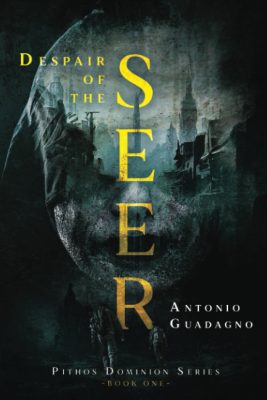
In Despair of the Seer, the first book of Antonio Guadagno’s Pithios Dominion Series, Revenant soldiers mercilessly hound two friends for their vital knowledge as they are pulled away from their everyday lives to a life-or-death fight through a fantastical empire.
This world is filled with life-threatening dangers and horrors that could shake even the most stoic individuals. What weapon could defy these evils? Is determination enough to propel a young man through the Pithios Dominion, defying the deadly, flesh-ravenous Revenant Army? Seeking to reunite with his father, Paxton Roald must race against the powerful forces he blames for this misery. Will he and his best friend, Terrance, be able to find the strength and forge the unity to face their enemy and fight its power?
True to its name, the Pithos Dominion dominates its people so that only the foolhardy and the desperate dare stand up to their threats. The reader is gripped wondering if two young friends can survive when their lives in Miami are turned completely upside-down. Terrance is on the brink of proposing to his girlfriend, and Paxton is caring for his mother and granny when the tentative, uneasy stalemate between governing powers begins to crack.
Laced with endearing humor, Guadagno’s suspenseful and exciting fantasy adventure plunges the reader into a power struggle that threatens to defeat humankind itself.
The ambitious Controller demands military supremacy from the lead scientist of the Revenant Project, Eugene Roald – Paxton’s father.
Instead, Eugene flees to avoid putting his hands on the scales of destiny. But Paxton becomes the Controller’s target, in the hopes he’ll lead them to his father. No one knows if the Controller plays with forces beyond his understanding, or has he found a way to tilt the scales in his favor.
J’Nou, First Brother of the Revenant, is the terror dispatched to pursue Paxton. Torment of the son, or anyone who gets in the way, is simply a means to victory. He shows Paxton the terrible price of power, until Paxton can no longer tolerate this despotism.
The Despair of the Seer may be prophetic as the land of the Dominion is filled with terrible creatures beyond his imagination.
With characters seeking ultimate power, fascinating in their ruthlessness,Despair of a Seer captivates like a horror you can’t force yourself to look away from. The luckless heroes evoke an empathy that will have readers cheering them onward. These two sides clash in a stunning plot that makes this story impossible to put down.
Having escaped unjust imprisonment at the Fort Grant facility for juveniles, Curtis Jefferson is on the run, in Merging Paths, the third installment of Vince Bailey’s gripping, paranormal, Curtis Jefferson Series.
With only a small jug of water and the clothes on his back, Curtis has to cross the Sonoran Desert and find a way back to his mother and grandmother in Jacobs Well. But his trip is plagued by more than thirst, hunger, and fear of animals. A racist sheriff’s deputy, Myron Aycock, is hellbent on finding Curtis not only for the acclaim such an arrest will give him but also for vengeance against the beating he received at the hands of the aspiring boxer.
Trapped and desperate, Curtis is rescued by a mysterious figure and taken to Isabel and Ray Cienfuegos. After hearing Curtis’s unsettling stories about Fort Grant, the two understand that they have all been fighting the same evil forces – under the control of the sadistic Ezra. In a final confrontation, Isabel faces off against the wicked spirit, but just as they believe their problems are over, a new threat arises under the guise of friendship, and Isabel makes a life-changing decision that will mark her forever.
Intuition plays a huge role throughout the series, becoming vital to the central characters in this final book.
Throughout his harrowing experiences at Fort Grant, Curtis has relied upon his innate sixth sense to warn him of impending doom. A gift passed from his mother, this awareness has guided him to carefully choose his friends. Through this sense, he trusts Isabel and Ray, even seeming to know parts of their story before they tell it. He accepts Isabel’s questionable actions because his instincts tell him they were her only choice.
Isabel shares this remarkable perception. In fact, Isabel trusts her intuition so far as to commit acts most would consider insane. While Curtis’s near-clairvoyance is a guide, Isabel’s is a force. This sense helps Isabel to understand the evil of Ezra and tells her how to rid herself of him forever. But her intuition pushes her to one final act of destruction as well – the murder of a former confidante – a choice that will haunt her for the rest of her life.
Isabel and Curtis aren’t the only characters with an advanced awareness of evil. Father Frank Cullen, a priest to whom Isabel goes for confession, shares the gift. He has always doubted Curtis’s guilt, and when his not-so-chance meeting with Isabel brings him back into Curtis’s life, he uses his sense to help bring Curtis home.
But he could never have accomplished the deed without the intervention of Natchez Mendoza, a former judge and the son of the man Ezra was in life.
Natchez is, perhaps, the most “knowing” of the quartet. Natchez first appeared in book one, where he recognized the evil in twelve-year-old Harvey Huish. He also first met Curtis in book one, under extremely unusual circumstances, so when they meet again some eighty years later, Natchez knows Curtis’s story intimately and helps to release him from Fort Grant’s grasp.
Justice becomes central to the final struggles of these characters.
Will Farnsworth is a silent, but important example of this need for justice. Having died via decapitation in a car wreck during book one, Will has served as a knight errant since, responsible for the rescue of both Ray and Curtis. As a lawyer for the corrupt Huish family, he hated his job and his clients and longed to be free of both, but it was only in death that he could become the very thing he tried to be in life, the good guy riding in to save the day.
However, Isabel’s pursuit of justice is more complicated.
Her quest to rid the world of Ezra’s evil is commendable and noble, but her later conflict with Freddie Hightower approaches the slippery slope of vengeance. Freddie’s betrayal angers Isabel to the point of no return. She deems him unforgivable and takes matters into her own hands, perverting justice. Other characters like Sergeant Joe Garcia, Constable Frankie Quintana, Deputy Myron Aycock, and Sheriff Pete Alvarado represent the legal side of justice, both good and bad. Natchez Mendoza, white cane and all, straddles the line between legal and supernatural, determined to keep Curtis safe for his own contribution to justice for his massacred tribe.
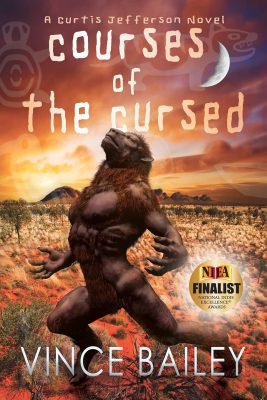
Imprisoned in a boys’ institution for a crime he did not commit, Curtis Jefferson must again face his nemesis, Harvey Huish. In Courses of the Cursed, the second installment of Vince Bailey’s paranormal Curtis Jefferson series, the fight comes with much higher stakes.
Estranged from his constant companion, Randy, Curtis continues his training alone, bewildered as to why Randy believes Harvey to be more than a vicious bully. But as Curtis’s strange visions and dreams increase, he needs Randy more than ever. He begins to question whether Randy has been preparing him for an encounter beyond the violence between boys.
Unbeknownst to Curtis, he isn’t the only one being tortured by the evil of Fort Grant. A local artist, Ray Cienfuegos, has his own date with destiny. As the last male descendant of his family, Ray’s fate is tied to the massacre that occurred near the fort almost one hundred years ago.
Two young men, one a savior and one a sacrifice, will be tested by the wicked power of the sacred land. But who will survive the encounter?
This complex work twists its way through a maze of interconnected storylines and characters who each, in their own way, embody the age-old battle between good and evil.
Ezra, an old Apache shaman, embodies something horrible and ancient. Whether he is Satan or some malicious pagan entity, he facilitates the cruelty done to the characters in the novel. However, upon closer examination, Ezra’s “evil” becomes much more complicated. While he tortures Ray and sometimes takes the form of an enormous would-be rapist were-coyote, he is also the voice of a long-dead, long-forgotten people, innocents slaughtered in a sick game of commerce.
Ezra does unforgivable harm, but he does so in the name of justice, begging the question of whether justice can be achieved through bloody vengeance.
The idea of justice defines many characters, including Lieutenant Roy, the cavalry commander who refused to serve out the original retribution for which Ezra fights. In opposition to Ezra’s malignancy stands Isabel Cienfuegos, Ray’s aunt. She serves as foil to all that Ezra represents and becomes an avenging angel, toting a 12-gauge instead of a fiery sword.
Numerous other characters strive to do good in the world around them.
Vince, the narrator, admits that his faith is the very reason he must tell the story. Leon and Georgy, fellow inmates of Curtis, drag him to church to pray for guidance and courage for what lay ahead, leading the reader to question if Curtis’s actions are divine justice, or if he is merely a pawn in Ezra’s plan.
The symbology of fire frames this story.
If Ezra is – or is in league with – the devil, the use of fire is a pointed reference to the retribution forced upon those who have done wrong in life. However, when Ray receives his blood money from Ezra, Isabel throws it into a fire to rid them of the thing that led to Ray’s abduction and torture. The fort’s original inhabitants were complacent in the massacre of the tribe, so when it partially burns down, the flames cleanse part of that history. Ray uses fire as a healer, to help him rehabilitate after his disfigurement at Ezra’s hands.
But fire takes its most questionable form when a beloved character, a “knight” in search of justice, is set ablaze by Ezra. Fire here is only a punishment, wrought on someone who has done nothing to deserve it. The role of fire, just like that of good and evil, is a complicated one with a multitude of interpretations.
Courses of the Cursed asks what sort of justice can come from vengeance, and what really will bring peace to the past. A thrilling paranormal adventure that we highly recommend!
The Beast watched gleefully on that sad Good Friday, watched with grim satisfaction as the Son of God died.
And so was a little boy who witnessed the grieving mother, her tears and pain beyond description, her sorrow etching deeply on his own soul. He promised himself and God that he would vanquish the evil that killed her son. “I will never let this happen again,” the boy said to the woman, and she touched his face with her hand and said, “And so it shall be.”
The boy gave the Beast the sign of death, the acknowledgment that Roman soldiers gave to an enemy in battle. The Beast accepted the challenge and thus began the struggle between good and evil, the Light and the dark, that would last unto the present day.
This story, or fable, is at the heart of A Prayer of Vengeance by John Stafford.
The first of a four-book series opens in 1976 and takes the epic struggle of good versus evil at face value. It tells the story of a teenage boy in the 20th Century, a linear descendant of that boy. He witnessed Jesus’ crucifixion and inherited vast powers to fight the Darkness in his hometown of Beavercreek, Ohio.
Readers expecting a soft-edged Sunday sermon approach to the eternal battle between good and evil will not find it here. Instead, the book begins with as vile a depiction imaginable of a young girl’s rape, disfigurement, and death by Ray and his buddies, the embodiment of the Darkness living on earth.
Enter Brady, the counterpoint to Ray.
Brady enters the scene as an all-American high school teenager the students and faculty all but worship. Everyone wants him as a friend. The high school coach wants him for his football team. Yet Brady is in training for something else that he dare not tell another living soul.
It takes a while before Brady reveals his unique powers. When he calls the Light, he elevates above the earth with arms spread in a Christ-like manner and protects those who need protecting. Brady heals the sick and the wounded by allowing their injuries to flow into him, onto him.
When his high school friends plan a long-standing prank, painting a nearby train bridge with the school’s colors before a big football game, Brady understands the danger awaiting them from unanticipated trains and assumes the critical role in getting the bridge painted. When a train inevitably shows up, Brady brings forth the Light and protects a classmate from certain death. No one there remembers afterward precisely what happened. Such is Brady’s power to do good and yet defend himself and those he loves from his enormous powers.
Brady learned to call the Light at age five.
At 13, he was additionally schooled by his grandfather, who taught him the prayer of vengeance, recited when the Light was called forth. Once he called on the Light, the Darkness, the Beast’s presence followed. Brady would then absorb the damage done by the Darkness, and the victim’s healing would take place.
Once the reader understands Brady’s unique powers and accepts this more muscular version of Catholicism, the inevitable wars between Darkness and light ramp up; even as more people disappear at the hands of Ray and his predators, more people are attracted to Brady and become part of his circle of guardians. The ultimate goal? To destroy the Darkness once and for all.
Catholic horror describes A Call of Vengeance just right.
Catholic readers are in for a polemic as well as a religious-themed supernatural thriller. The author clearly intends it to be such. Non-Catholic readers will find a large cast of characters, several of which are clearly set up for sequels by the end of the book.
This book is clearly not for everyone. The atrocities in the first chapter alone may keep readers from proceeding further. Yet, those whose reading interests embrace the supernatural in its many forms will find A Prayer of Vengeance a bracing reading adventure.
Content and happy in a village nestled deep within the forest, eighteen-year-old Cecilia never realized a bigger world existed in Cecilia (The Cecilia Series Book 1) by Sandra L. Rostirolla.
After the Great War, Cecilia’s great ancestor led a small group of followers far away from the destruction left behind. For many years, they lived underground away from the poisonous air until it was safe to begin life above ground again. Now, generations later, Cecilia lives an idyllic life with her mother and two older brothers. One day, a group of dark riders decimates her village, killing every female and old person and taking prisoner all of the males old enough to join their ranks or serve as slaves for Vitus, a city Cecilia never knew existed.
After narrowly escaping the riders, Cecilia is visited by Siersha, the Goddess of Light. Cecilia now has a deep drive to save her brothers though she knows nothing of the world beyond her forest. Not long into her journey, Cecilia is attacked by Amalardh, a professional killer sent to find the lone survivor of the village massacre. When Cecilia saves Amalardh from a horrible accident, he can’t bring himself to kill the beautiful, innocent girl. He agrees to take her to Vitus to find her brothers. However, as the two become closer, it is clear Siersha has a purpose for them both unfolding from an ancient prophecy that must be fulfilled by the Flower Princess and the Wolf.
As the Dark Shadow named Eifa moves across the land, Cecilia and Amalardh know they must defeat the darkness before it annihilates the tiny shred of human goodness left in the world. But with an army of dark riders and the sadistic rulers of Vitus, the two will face a greater evil than they know.
A central theme of the novel is resilience.
Cecilia is an untested, completely innocent girl with no knowledge of evil. In fact, her greatest “sin” is her refusal to kiss Leighton, a boy with a hard crush on his former friend. Because Cecilia loves and respects the connection between all living things – and loves to tell stories of the myths and legends of her people, the village girls gather to listen to her stories about the Flower Princess and the Wolf while she braids their hair.
To Cecilia, the stories of the brave warrior princess are just beloved fairy tales until her initial visit from Siersha. At first, she resists Siersha’s urging to take the challenge of returning light to the world of men. However, when she sees the villagers’ bodies and that of her mother’s, she knows she cannot hide. That is when her resilience truly begins.
After burying the dead, Cecilia begins a journey she couldn’t have fathomed before the killings. She often questions her ability to accomplish such an enormous task, but she digs deep within herself to find the strength to go on each time. Even when confronted by Amalardh, the Dark Shadow of the Senators of Vitus, Cecilia refuses to give in to the darkness. When she begins to see the connection between herself, Amalardh, and the fairy tale she loves, she believes in her purpose. Through her resilience, Cecilia convinces Amalardh as well. Each group Cecilia meets questions her belief, but she never gives up and eventually convinces strangers to believe in her purpose as well. Cecilia rises to become the warrior princess, who, without her resilience, her incredible journey, both literal and metaphorical, could never have happened.
The love story between Amalardh and Cecilia is another beautiful facet of this novel.
Cecilia decided long ago never to love a man. but Amalardh’s story goes much deeper. Raised by the Senators for the sole purpose of killing, he has none of the softer emotions connected with love. After his father’s death, Amalardh was imprisoned and beaten for years, then trained as an assassin by the head of the army of Vitus. He has never known kindness from another human. When Cecilia, his next intended victim, saves his life, he cannot process his emotions. The evolution of his feelings in this savage world serves as an interesting juxtaposition with Cecilia.
Seeing the familiar world in this post-apocalyptic landscape will bewitch both lovers of fantasy and dystopian. Cecilia is a dark dystopian fantasy for young adults that promises more adventure to come. Sandra L. Rostirolla won First in Category for Cecilia in the CIBA 2017 Dante Rossetti Awards for Young Adult Fiction novels.
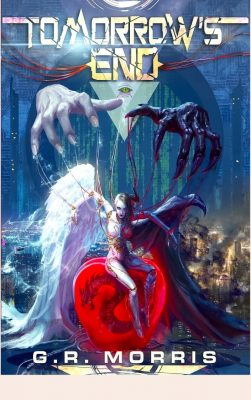
A cosmic force of evil is rising, come to consume whole worlds and plunge them into darkness. Earth is next, and the only chance for humanity to survive is a pair of young, destined heroes who have no idea what dangers lurk in their future.
Kevin Knight is a sixteen-year-old savior, the warrior foretold in an alien prophecy who will combat the Dragon. He’s also afraid of the dark and suffers the routine abuse of his stepdad. Though his mother Sara insists her son will have a bright future, Kevin refuses to believe it until the day his life is shattered. Kevin comes face to face with aliens, monsters, and a staggering truth about humanity. He must follow Robert’s teachings, an alien Changeling who reveals just as much as he keeps hidden. Oh, Kevin must also face down the very forces of Hell.
At the same time, an orphaned Changeling girl named Daren tries to find her place amongst the children who shun her and the adults in her life who have anything but her best interests at heart. As Daren grows and stumbles into the powers of her species, her desires are simple: to protect her only friend, Thomas, and find a mysterious figure whose destiny is bound to hers. But the more powerful she becomes, the more significant her trials, and the danger surrounding her surrounds the orphanage as well. Can she muster her strength fast enough to keep the powers of darkness at bay?
The characters of Tomorrow’s End are vibrant, each one driven by their own desires and philosophies. Kevin and Daren’s stories are focused on their internal struggles, with the fate of the world resting on their shoulders. Kevin must decide who to trust when he’s surrounded by mysterious people and morally dubious mentors. Daren must make do with no teachers at all. In time, both Kevin and Daren fight against bombastic, over-the-top enemies with ties to demonic power.
G.R. Morris fills this story with fantastic descriptions. The aliens and monsters are painted with inventive designs, creating visuals that are wholly unique and distinctive. The creatures, in particular, and the places they come from are visceral depictions of roiling, hellish things, all cast in darkness. The villains of Tomorrow’s End are intensely evil characters who commit graphic violence against nearly everyone around them—even innocent children, which Morris never shies away from showing.
The characters create and break illusory worlds, intricately shown in displays of light and color. These surreal mindscapes help illustrate the thoughts and desires of those meeting within them. Despite all of the otherworldly imagery in this dark science fiction, the regular lives from which Kevin and Daren originate are built with just as much care. Within the settings, expansive action scenes stretch for pages on end, mixing advanced technology with dangerous supernatural power, creating fight scenes larger than life.
Tomorrow’s End sets up its bizarre settings quickly, giving the characters space to breathe and ask questions ─ and their questions abound. This story’s world is full of mysterious societies and convoluted plans that stretch back and forth through time, involving cosmic beings, societal control, and Matrix-like technological constructs. Morris painstakingly develops the storyline, and, at times, the pacing of the novel seems to slow a bit. Things pick back up when the villains make their appearance. Morris shows the turmoil of individual characters as they understand what they should do and who they should choose to be.
Tomorrow’s End centers on a philosophy of free will and choice in every conflict. Evil and good are chosen rather than innate, and situations that appear random are always driven by earlier choices. Kevin must choose truth and have faith in his own purpose if he will have any chance to win the battle against the darkness. Daren learns that she’ll have to fight, to be defiant if she wants to keep those around her safe. And they both will have to understand that belief can change reality, that the choice to suffer could teach them the lessons they need, and that it’s not always so easy to pick light over darkness. All in all, readers will more than likely line up for Book II!
When it comes to fantasy novels, one thing is certain, as was famously said in the venerated musical, The Music Man, “You gotta know the territory.”
Author S.J. Hartland clearly does.
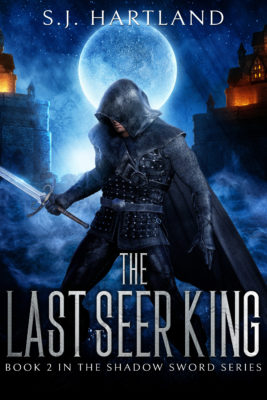
In The Last Seer King, the second volume in her Shadow Sword epic fantasy series, the creates a world with a granular intensity that envelopes the reader from page one. You see this world clearly in all its dark details. You also feel the power, the all-too-human intricacies of its leading characters. This is a world that feels authentic, as though the writer lived there and let us see it as clearly as her own first-person experience. Simply put, it works.
There are well-developed characters here who fight on despite their emotional challenges. Dannon, who, despite his prowess on battlefields, yearns to belong to a people, to someone. Kaell, who dies and whose soul enters into the body of a woman who is coveted by a male warrior. The woman just happens to be the dead sister of the king of the Isles. Can Kaell possibly be a woman to a man when he is still a man and a warrior?
What is less straightforward is summarizing the plot. Hartland helps us with the book’s logline: “It’s the secrets we hide from ourselves that gives others power…” Dark? Yes! Foreboding? Absolutely! It’s everything we love about S. J. Hartland and more.
Readers are gifted a 600-page second in the series novel with dark and twisted plots and characters that would sooner kill you than look at you. There are warring territories, each with their own agendas. The leading characters come into this story with the ancient battles of their people still fresh in mind. Heath, Kaell, Vraymorg (also known as Val Arques) and Dannon, are constantly in some state of flux with each other. There is magic at hand: the power to insert one’s essence into the body of another, the ability to be both a human and a blood-sucking ghoul, the creation of “death riders” who live on and do their evil for centuries.
This is rich and delicious stuff, made more so by a full cast of characters and their interwoven relationships. The glossary of characters at the end of the book, listed by their “tribes,” and a drill-down of their familial relations, is a major Rosetta Stone for readers to better understand what is happening. Trying to understand these relationships without it adds a layer of difficulty in reading this compelling, and oftentimes, complicated book. Besides, you want to know every detail, right?
Another helpful tip: read, The 19th Bladesman, (The Shadow Sword series Book 1) that introduces the major characters in The Last Seer King. And be prepared to pick up the third book in the series due to be released in 2020.
For readers who love fantasy, this novel is clearly a strong contender for a reader’s attention, in much the same way Tolkien’s Lord of the Rings series, or J.R.R. Martin’s Game of Thrones. Simply put, The Last Seer King by S. J. Hartland is an exciting well-crafted, epic-fantasy worthy of your time.
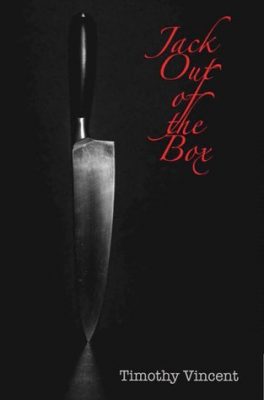
LongPost captain Benjamin Lasak has been making deliveries for over 100 years, an unheard-of feat for his fellow postmen. During his time in pre-programmed space travel on the Pelagius, he usually enjoys the solitude, his outdated paper books, and the cryo-sleep, which keeps him looking twenty years old, but when Lasak wants to distract Mic, his floating game console, from her imminent win at their favorite game, he decides to ignore LongPost protocol and follow the suspicious appearance on his screen.
Suddenly, Lasak finds himself stranded on a planet both familiar and unique. His first contact is with a sadistic alien known on Earth as Jack the Ripper, whom Lasak inadvertently releases from his prison vault. Lasak and Mic must join forces with Michael Carlin, Jack’s original imprisoner, to recapture Jack before he can destroy this world or worse, return to Earth.
Jack Out of the Box is an “Alice in Wonderland” journey down the rabbit hole, a marriage between steampunk, paranormal, dark fantasy, and alternate reality. Jack’s world is a mixture of the old and the new, where Victorian lamplighters and high-tech control panels existent in the same plane. From a village stuck in nineteenth-century England to Elysian Fields where Mother Nature becomes corporeal, every corner presents a new, intriguing environment.
However, the planet entrapping Ben’s ship isn’t all fun and games. It is, in part, a dark prison world, where Jack once reeked more havoc than he ever did on Earth, holding and breeding his human victims. The graphic descriptions of his previous violence darken the beauty of the landscape and its mostly rural residents. At times, the description of violence is disturbing, especially when juxtaposed against the idyllic.
This complex novel includes both metaphorical and concrete imagery in Jack’s world, including representations of Heaven and Hell, demons, and even Lilith. Jack introduces himself as Bell, but he doesn’t “ring true,” and later the reader will see the destruction of the pristine countryside by Jack’s animalistic creations, a fitting metaphor of man’s destruction of the beauty in the world.
Mic’s existential journey to awareness is the real story of the novel. Created by an MIT professor, she is more than just an unbeatable gamer sidekick. The fate-like, “accidental” purchase of Mic seems like a play on destiny, and when she is given her forbidden awareness, Mic steps into that metaphorical area where she begins to question her existence. The exploration of Mic’s consciousness is short-lived but is indeed an interesting discussion; perhaps, it will continue into the sequel.
Dark fantasy and paranormal/alternate reality lovers alike will enjoy the unusual world that Timothy Vincent offers in Jack Out of the Box. It’s a journey from which the reader may never wish to return.
Recommended.
“Timothy Vincent’s out of this world dark fantasy/thriller, Jack Out of the Box takes readers on a fantastically frightening voyage where choices matter – and one wrong choice releases dark and violent chaos back into the world.” – Chanticleer Reviews







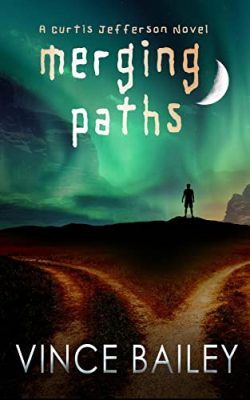
 Having escaped unjust imprisonment at the Fort Grant facility for juveniles, Curtis Jefferson is on the run, in Merging Paths, the third installment of Vince Bailey’s gripping, paranormal, Curtis Jefferson Series.