Tag: Cygnus Awards

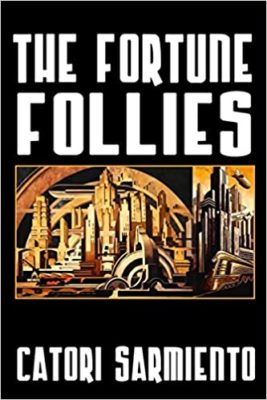
  • The FORTUNE FOLLIES by Catori Sarmiento – Dark Fantasy/Horror, Alternative History – Sci-fi, Romance

    The FORTUNE FOLLIES by Catori Sarmiento – Dark Fantasy/Horror, Alternative History – Sci-fi, Romance

    In a dystopian future, two young women struggle for livelihood, love, and a better future in the very altered city of Seattle.

    Sarah Igarashi came to Seattle out of desperation in 1949. World War II has ended, but not as described in our history books. It was won through the invasion of Japan by American military aided by metal robots known as Iron Boys, an invention of a manufacturing genius, Robert Sinclair. Sarah sees in the lights and new transportation systems of Seattle while she attempts to reunite with her cousin Penelope.

    Both young women survived the internment camps during the war, but Penny, receiving the bulk of the family inheritance, lives in a large house shared by other relatives – a luxury compared to anything Sarah has ever known. She will have to work and pay rent to Penelope, which will mean long, dreary shifts in a Sinclair factory for pennies a day.

    As Sarah begins to see what America has become, she longs for something better. Forced out on her own, she discovers that immigrants like herself are targets of violence and oppression. But a group calling itself the Patriots is quietly initiating a rumble of rebellion, speaking out for equality in a society that has become increasingly stratified. Sarah is gradually drawn to them despite the danger of involvement and the over-reaching power of the Sinclair-dominated system.

    Awarding winning author Sarmiento was raised in the Pacific Northwest and has lived in Japan, so the settings and the diverse cultures of this fascinating fantasy are well within her ken. The most curious and attractive feature of her novel is that the plot is based around family failings and restarts, with the futuristic twists serving more as background and color for the personalities and their clashes and reconciliations. Instead of being “about” the new technologies that have changed the world for better or worse, as is generally the case in future fiction, The Fortune Follies is about people seeking comfort, safety, and some hope of success in an unpromising atmosphere of gloom and overarching avarice.

    Japanese speech, characters, and culture provide a further layer of interest. The reader will see Penny’s search for love, slowly warming her cold, arrogant exterior, while Sarah’s determination to stop the greed machine will overcome her need for personal security. Though their differences are notable and a source of constant tension, both women find solace in music.

    Sarmiento’s broad vision makes this novel work, with careful and smart details as the treatment of immigrants and the poor still rankle in today’s real America. The reader could envision a sequel involving a war between people and machines, but that, of course, if up to the author.

    The Fortune Follies won First Place in the CIBA 2018 CYGNUS Awards for Science Fiction novels.
     

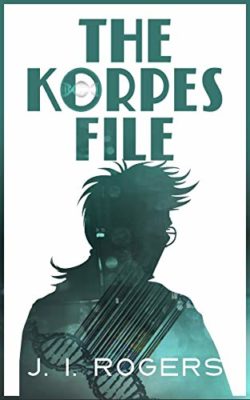
  • The KORPES FILE (The Korpes Files Series Book 1) by J. I. Rogers – CyberPunk Sci-fi, Genetic Engineering Sci-fi, Dystopian, Space Opera

    The KORPES FILE (The Korpes Files Series Book 1) by J. I. Rogers – CyberPunk Sci-fi, Genetic Engineering Sci-fi, Dystopian, Space Opera

    A Blue and Gold Badge that reads Cygnus Science Fiction 2018 Grand Priz The Korpes File J. I. Rogers Set in a world that is ridden with lethal radiation from a cataclysmic event, J. I. Rogers’s debut novel and the first novel of her 942 series is a definitive addition to the science fiction genre.
    Life in The Korpes File is lived almost entirely indoors and relies highly on the advancement of technology to support life on a planet that is no friend to the living. Technician Nash Korpes is a member of the Diasporan people, who face harsh discrimination from the Korlo people of Korlune, where this saga is set. Nash is a genetic anomaly that gives him the appearance of his ancestors long ago. Because of this, he is recruited as an official subject within the government research organization KMR & D.

    Nash has his reasons for signing over his life; his mental state is deteriorating, and his growing medicine regime are becoming too much and even dangerous, he decides he has to find a way out.

    Spanning ten years of rising tensions across Korlune and within Nash’s mind, The Korpes File is packed with a large cast of characters told from numerous points of view. The interlocking plotlines can be hard at times to keep track of, but Rogers kindly includes a handy character index and map for reference, and they’ll need it. Readers are immersed straight into Nash’s world of unquestioned conformity and strict societal expectations. Still, the story itself is unapologetic to readers and rarely takes the time to explain itself, which, in a way, is its defining quality.

    The truth is hidden deep, and J. I. Rogers scatters little details calling back to earlier points that help to unravel the overarching mystery. In a way, there are two mysteries. One within Nash’s mind and the nature of his condition and subsequent treatment, whereas the other is of a resurfacing war of destruction that will change life in Korlune forever. For both these mysteries, Rogers’s narrative style involves abrupt changes throughout the novel that are frankly disruptive. Still, they are useful in creating a sense of chaos one would face in a world of rising tensions and competing realities.

    When presented with a large number of characters, it may seem like a daunting task to achieve necessary amounts of character development, and Rogers does just that, again and again. Just as attachments begin to form, the chaos prevalent in the novel tears them away from the forefront. Nash himself is present throughout the story but becomes a very different person from the beginning of because of all the mental, emotional, and physical trails he goes through spanning the ten-year passage of time. The story is only just beginning, however, and Nash’s story is far from over.

    The Korpes File is a dynamic debut from J. I. Rogers that is sure to delight any die-hard science fiction fan looking for something new. The second novel of the 942 series was published this past March and continues the trials and tribulations of Technician Nash Korpes trying to find his way in a turbulent and dangerous world.

    The Korpes File won Grand Prize in the CIBA 2018 Cygnus Awards for Speculative Science Fiction.


  • The Semi-Finalists for the CYGNUS Book Awards for SCI-FI – a division of the 2019 CIBAs

    Cygnus Award for Science FictionThe Cygnus Book Awards recognize emerging new talent and outstanding works in the genre of Science Fiction, Steampunk, Alternative History, and Speculative Fiction. The Cygnus Awards is a genre division of Chanticleer International Book Awards and Novel Competitions (The CIBAs).

     

    Chanticleer International Book Awards is looking for the best books featuring space, time travel, life on other planets, parallel universes, alternate reality, and all the science, technology, major social or environmental changes of the future that author imaginations can dream up for the CYGNUS Book Awards division. Hard Science Fiction, Soft Science Fiction, Apocalyptic Fiction, Cyberpunk, Time Travel, Genetic Modification, Aliens, Super Humans, Interplanetary Travel, and Settlers on the Galactic Frontier, Dystopian, our judges from across North America and the U.K. will put them to the test and choose the best among them.

    Congratulations to the 2019 CYGNUS Book Awards for Science Fiction Semi-Finalists! All Semi-Finalists will be recognized at the 2020 Chanticleer Authors Conference and the 2019 CIBA banquet and ceremony.

    Presenting the 2019 CYGNUS Book Awards Semi-Finalists:

    • Lawrence Brown – David: Savakerrva, Vol. 1  
    • William X. Adams – Intelligent Things  
    • Erick Mars & Mike Wood – A Legacy of Wrath  
    • Richard Mann – Purpose  
    • Callie Smith and Maura Smith – Fort Snow 
    • Andrew Lucas McIlroy – Earthling  
    • Paul Ian Cross – The Lights of Time   
    • Robert M. Kerns – It Ain’t Over…  
    • J. I. Rogers – The Korpes Agenda  
    • Paul Werner – Mustang Bettie    
    • Mart Sander – The Goddess Of the Devil  
    • Rey Clark – Titan Code: Dawn of Genesis  
    • Trever Bierschbach – Embers of Liberty 
    • Tim Cole – Insynnium  
    • Sandra J. Jackson – Playing in the Rain  
    • Samuel Winburn – Ten Directions
    • Jacques St-Malo – Cognition  
    • Timothy S. Johnston – The War Beneath  
    • Shami Stovall – Star Marque Rising  
    • Terry Persun – BIOMASS Rewind 
    • Darrell Lee – The Apotheosis  
    • David C. Crowther – City of Drowned Angels  
    • Stephen Martino – The Final Reality   
    • K.N. Salustro – Light Runner  

    Good luck to all as your works move on the next rounds of judging for the limited 2019 1st Place Category Positions and the 2019 CYGNUS Book Awards Grand Prize.

    The 2019 CYGNUS Grand Prize Winner and the Five First Place Category Position award winners along with the Semi-Finalists will be recognized at the April 18th, 2020 Chanticleer International Book Awards Annual Awards Gala, which takes place at the Chanticleer Authors Conference,  Bellingham, Wash. 

    Cygnus Award for Science Fiction


    We are now accepting submissions into the 2020 CYGNUS  Awards writing competition. The deadline for submissions is April 30th, 2020. The winners will be announced on April 2021.

    Please click here for more information.  

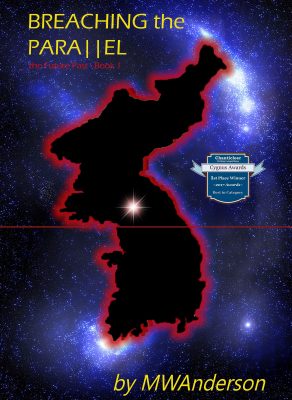
  • BREACHING the PARALLEL by MWAnderson – Military Sci-Fi, Alternate History, Time Travel

    BREACHING the PARALLEL by MWAnderson – Military Sci-Fi, Alternate History, Time Travel

    A one-way trip from the near future to the distant past forces one army unit to adapt to a life they could never have dreamt. Their flight into history will forever change the future that they know. Once there, they discover they are not the first to make the journey, and history as they knew it, has gone far, far off course.

    As the story opens, the U.S. 4th Armored Cavalry Regiment is conducting an incursion into North Korea during the Second Korean War – an event that seems all too plausible based on 21st-century tensions between North Korea and the rest of the world. But their journey is interrupted by an explosion that interacts with time and space, instantly transporting the 500 men and women from the 21st century A.D. to sometime between 1,000 and 500 B.C.E. Their world is gone – and there’s no way back.

    Their initial contact with a nearby village is peaceful until they are forced to decide whether to attempt to preserve the future, a future they are familiar with, or whether they should integrate themselves into their current circumstances and let future history take care of itself.

    A local warlord has been regularly raiding their village and conscripting young men for soldiers. None have ever returned. This time it’s the warlord’s men who don’t make it back to camp. They are wiped out by 21st-century weaponry in a matter of seconds. It comes as no surprise, then, when a more substantial unit arrives on the scene to investigate.

    Just as the soldiers begin to settle in, building homesteads, relationships, and new lives for themselves, they discover that they are not the first people to travel back in time. Those who have come before are enemies – old enemies.

    As the story begins, the circumstances in which the 4th Armored Cavalry finds themselves in are reminiscent of two classic works of alternate history/time travel science fiction, Island in the Sea of Time by S.M. Stirling and 1632 by Eric Flint. In both of those series openers, an unexplained event transports a location, leaving the time travelers to adapt to their changed circumstances and figure out a way to thrive in the past.

    The setup is a good basis for a Sci-fi. What makes Breaching the Parallel stand out from the rest is the interesting approach MWAnderson takes, by revealing that our protagonists are not the first to arrive and that people who traveled to the past before them, have become the dominant power in their brave new/old world. Breaching the Parallel sets the characters up for renewed conflict in a future book in this prospective series – a pretty interesting set of characters at that.

    Breaching the Parallel is a military sci-fi with a clever twist that both thrills and intrigues. MWAnderson shows his knowledge in detailing how an explicitly military mission would conduct itself in a situation where the mission has changed out of all recognition. Those who love a good military sci-fi need look no further – MWAnderson delivers in spades.

    Breaching the Parallel by MWAnderson won 1st Place in the CIBA 2017 Cygnus Awards for Science Fiction.


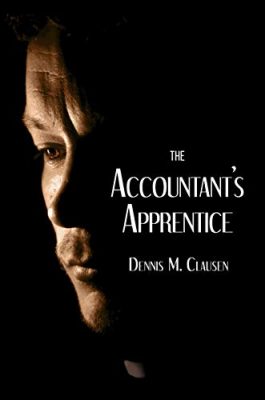
  • The ACCOUNTANT’S APPRENTICE by Dennis M. Clausen – Magic Realism, Mystery, Philosophical/Apocalyptic

    The ACCOUNTANT’S APPRENTICE by Dennis M. Clausen – Magic Realism, Mystery, Philosophical/Apocalyptic

    Philosophically sophisticated, the supernatural mystery of Dennis M Clausen’s The Accountant’s Apprentice is reminiscent of the classic apocalyptic comedy Good Omens while bringing its own unique and serious take on the fight against good and evil.

    Justin Moore is a priest on leave after witnessing a murder in his parish office. He is haunted by the events and struggles with making sense of what happened and why the assailant spared him.

    Living in a small rundown studio apartment, Justin makes ends meet by becoming the driver of a mysterious neighbor who calls himself A.C. and claims he is an accountant. But Justin quickly becomes suspicious of his new employer when he fails to find any information about A.C or his company. To make matters worse, Justin attracts the attention of local police after not one, but two neighbors die while living in the apartment across the hall from him.

    As Justin investigates the strange events he is connected to, he begins to question his state of mind, unable to pinpoint the agenda and motives of his mysterious employer. Whenever Justin finds answers, several more questions appear as more and more people connected to him end up dead. In the end, Justin learns that there are forces at work above his understanding and that he has an important part to play in it all.

    Dennis M Clausen is a masterful writer that creates a full and multi-faceted story in a relatively small package. In what starts out as a mystery with a spiritual backdrop, the plot quickly brings in philosophical questions about the good and evil of our capitalistic society and what effects artistic genius has on the world. There are also touches of the supernatural that come into play as Justin tries to make sense of the mysteries around him.

    Clausen develops Justin Moore with a level of mystery to the character, who can arguably be seen as an unreliable narrator. Not much is known about Justin and his life before the traumatic incident he witnesses, and the details of that event change ever so slightly every time he goes back to those memories. These changes and other events cause Justin to question his reality and make him an interesting narrator. Even less is known about the characters A.C. and Ilsa, but they both undergo their own satisfying character development by the story’s end.

    A compelling novel, The Accountant’s Apprentice, leaves many areas of the story unexplored and underdeveloped in a way, perhaps to maintain a mysterious atmosphere. Certainly, its effect will leave readers longing to know what happens next. Perhaps a sequel? (We hope!)

    Clausen employs multi-genre storytelling here, and this approach makes the book a screaming success. In that complexity, there is a literary feast. It is spiritualistic, philosophical, supernatural, mysterious – and apocalyptic. In other words, this story has a charismatic appeal for everyone.


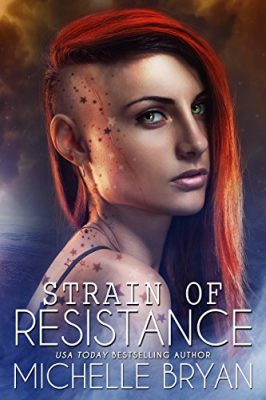
  • STRAIN of RESISTANCE, Book 1 in the Bixby Series by Michelle Bryan – Alien Invasion, Dark Fantasy/Horror, Parasitology

    STRAIN of RESISTANCE, Book 1 in the Bixby Series by Michelle Bryan – Alien Invasion, Dark Fantasy/Horror, Parasitology

    The apocalypse comes to the world one cloudy day in the form of a mist. But it’s no ordinary mist. There are tiny crystals in it, sentient crystals that once inside a victim, practically turn them inside out to birth a large worm which then takes control of the victim like a jockey riding a zombie.

    On that day, twelve-year-old Emma Bixby is in the park taking refuge from the toxic home environment created by her alcoholic father. For some reason, the crystals, after entering Emma’s lungs and dropping her to her knees, reject her as a host. After surviving the initial attack, Emma rushes home to find her parents dead. And her world, imperfect as it was, gone.

    Eight years later, Bix (Emma) is a hunter for a colony of fellow survivors holed up in a dilapidated hotel, The Grand. The world order has come down to three castes: colonists who live in fortified buildings behind barbed wire, guards who send out hunters to forage for food and supplies, and the ravagers. The last are roving gangs who survive through cannibalism and leeches, and in fact, are the alien invaders who ride their human hosts seeking out survivors to feast upon.

    Eight years after the apocalypse, Bix is capable and strong, unwilling to back down from a fight, and fiercely loyal. But she is also impulsive, defensive, a loose cannon almost as dangerous to her friends as she is to her enemies. And though her heart is in the right place, her reactions and brash decisions frequently put her life and the lives of those around her at risk.

    While resting up after a hunt, word comes down that the colony nearest them squatting in St. Joseph’s hospital has gone radio silent after what sounded like an attack of some sort. At the same time, one of The Grand’s hunting parties hasn’t returned. Bix and her group are sent out to discover what’s happened. The action is compelling and nonstop. Readers will find it difficult to put the book down.

    Bryan defines and fleshes out her characters reasonably well. The opening sequence is one of the best we’ve ever read in a dystopian novel, which we’re betting will hook readers immediately. We like Emma right away, feel her pain and worry for her. Eight years later, we find a flawed and almost-impossible-to-recognize-as-the-same-girl Emma, now Bix. Here’s a character that is, at times, hard to sympathize with. Readers will find themselves rooting for her one minute and flummoxed by her brash behavior the next. The juxtaposition is that jarring.

    The writing is crisp and compelling and contains elements of horror, action, as well as science fiction, skillfully mixed together reminiscent of the film, Aliens. Though present, the violence and gore of the horror elements are not over the top. And to add a bit of distraction, there are some steamy romantic scenes contained within. The pacing is fast, at times a little too fast. All in all, Michelle Bryan delivers on a first-in-series romp through a dystopian world with plenty of action and a lot of material for the following novels.

    Strain of Resistance won First Place in the 2017 CIBAs, the Cygnus Book Awards for Science Fiction.


  • The LAST DETECTIVE by Brian Cohn – Dystopian, Alien Invasion, Mystery

    The LAST DETECTIVE by Brian Cohn – Dystopian, Alien Invasion, Mystery

    We’re all part of the same universe… aren’t we?

    Here’s a novel that courageously tries to be a number of things simultaneously: bafflingly murder mystery, apocalyptic science fiction, a polemic on racism/systemic bigotry and historical allegory. It’s all woven into an engaging mix, fuelled by a question for the ages that everyone, from philosopher to fisherman has asked at one time or another, Does God truly exist?

    Brian Cohn’s is a straightforward apocalyptic story that begins with news of an alien invasion. While on a routine murder investigation, Detectives Adrian Grace and Yuri Petrov soon lose interest in the crime scene when the sun is blotted out by an unbelievably huge spacecraft. Two years later, the aliens ¾ known as the slicks for their skin texture and tone ¾ rule the Earth. Food is scarce, electricity non-existent, real booze and prescription (even non-prescription) drugs run out and the less fortunate of the survivors of the alien v. human war are summarily shipped off to labor camps never to be seen again.

    The godless slicks seem to be soulless creatures who are only interested in their conquests, survival, and domination. They believe themselves to be the superior race. It doesn’t take long to get the feeling that either Hitler or Stalin (or both!) were Cohn’s models for these world-controlling invaders.

    Murder, as it turns out, is unknown in the alien race. They simply have no concept of this. So, when the apparent murder of one of the slicks, causes the Authority to call upon Grace, imploring him to use his considerable skills and solve the death of the unlucky “visitor,” the story really gets going. Aside: The Authority is a group of humans who have circumvented the labor camps by offering their services to the aliens.

    From that point on, readers will soon learn to realize that no one tells the truth (even a Roman Catholic priest), that nothing is what it appears to be (imagine “fake terrorists” getting away with murder), and how love in the age of alien invasion plays out.

    Fans of this genre will likely enjoy this fast-paced sci-fi despite some editing bumps in the narrative, and be talking about it for some time after they finish. Most, in fact, may be looking for more from this author.

    The Last Detective won 1st Place in the 2017 Cygnus Awards.


  • The Cygnus Awards 2014 Finalists – Official List

    The Cygnus Awards 2014 Finalists – Official List

    Sci-Fi Fantasy ContestsThe results for the 2014 Cygnus Awards Finalists are in.

    The Cygnus Awards recognizes emerging new talent and outstanding works in the genre of  SciFi & Fantasy Fiction. It is a division of Chanticleer Book Reviews Blue Ribbon Awards Writing Competitions.

    The Cygnus Awards has eight sub-genres which are:  Steampunk, Science Fiction, Time Travel, Fantasy, Paranormal, Mythological, Soft Sci-Fi/Young Adult, and Speculative Fiction.

    Congratulations are in order for the following authors who made it to the Short List, The Cygnus 2014 FINALISTS OFFICIAL LIST:

    • Selah J. Tay-Song for Dreams of a Vast Blue Cavern
    • Robert L. Slater for All is Silence
    • Yuan Jur for Citadel 7, Earth’s Secret: Enemy of Existence
    • Ryan Henry for Betrayal on Triton
    • V. Lakshman for Mythborn:  Rise of the Adepts
    • Sara Stamey for The Ariadne Connection
    • D. C. for Prodigy Genius
    • Michael Simon for Natural Selection
    • H. G. Bleackley for ISO
    • Jane Baskin for The New Earth:  Rhapsody
    • Tom and Nancy Wise for The Borealis Genome
    • Laura Burroughs for The Foxes of Caminus
    • Sherrill Nilson for Karda:  Adalta
    • Jianna Higgins for Filled to Completion
    • Simone Pond for The City Center
    • Robert Carrell for The Pinks and the Kinks
    • Samantha Bryant for Going Through the Change
    • Ryan Henry for Betrayal on Titan
    • James Zerndt for The Cloud Seeders
    • James Musgrave for Jane the Grabber
    • J. M. Salyards for Shadow of the Last Man
    • Michael Suma for Natural Selection
    • Time Vander Meulin for A Humble Heart
    • Christopher Pepper for Outrider Legion
    • Allen W. Johnson for Blood Line Secrets
    • Paul C. Breslin for Observer of the First Order
    • Zachary J. Kitchen for The Unbeliever
    • Alisse Lee Goldenberg for The Strings of a Violin
    • Lorrie Farrelly for Time Lapse
    • Jessica Schaub for Gateways
    • Jamie Smith for Shadow Wars:  The Arcana
    • Richard Pulfer for Godtown
    • Michael Murphey for About Time
    • Terri-Lynn DeFino for Beyond the Gate
    • Robert G. Ferrell for Goblinopolis
    • Michael Wolff for Smoke and Mirrors
    • Joannah Miley for The Immortal Game
    • Brett A. Lawrence for The Shadow Guardians
    • Jesikah Sundin for Legacy:  The Biodome Chronicles
    • Ashland Menshouse for The Last Guardian and Keeper of the Magi

    Finalists will continue on to compete for a first place category win in their sub-genre, and then for the overall grand prize of the 2014 Cygnus Awards. First place category winners will receive an award package including a complimentary book review, digital award badges, shelf talkers, book stickers, and more.

     We are now accepting submissions into the Cygnus Awards 2015. Deadline is January 31, 2015.