Tag: Cultural Heritage Fiction

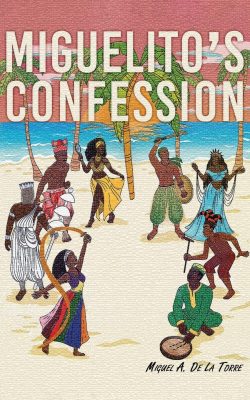
  • MIGUELITO’S CONFESSION by Miguel A. De La Torre – Historical Fiction, Cultural Heritage Fiction, Latin Literature


    Miguelito’s Confession by Miguel A. De La Torre shows the resonate struggle of escaping the generational cycle of poverty and injustice.

    Human nature is a product of circumstance, interwoven with the impact of one generation on the next. Sometimes history teaches people lessons of pain, cruelty, and inhumanity. How can someone rise above the disadvantages they’re raised in, the pressures that hold them hostage from their own goals and wishes? Especially at risk are the innocent children caught in the midst of a maniacal battle within the corrupt powers of society. Can an illegal immigrant find success and happiness despite the brutalities of life? And what is the personal cost of pursuing justice?

    Manuel de la Cruz is dying, and he is alone.

    At the end of his life, he suffers from dementia, a mixed blessing that releases him from the violent slice of history he had fully participated in. It allows him to forget the cruelty and violence he inflicted as part of the police force during the 1959 Cuban Revolution. Even the times that followed are lost to him, all he did to escape from the consequences of his actions by escaping to the U.S.

    Yet suddenly, in his final moments, Manuel is granted the ability to think clearly again, a sign that justice is possible. As Manuel leaves this world, he is haunted by what his life has been, his impact upon others and his family, and especially the psychological inheritance he leaves his son Miguelito.

    Now, this is Miguelito’s story, and he takes a difficult journey.

    As a young boy, his family lived in the slums of New York. It’s a filthy, dangerous place to grow up, and its threats are magnified many times over for an illegal immigrant boy who is despised for being Latino. The author is masterful in his portrayal of this revolting setting.

    Miguelito seeks out ways to survive his painful world. He learns from others who dwell in the corners of humanity, minorities who are punished for not being what the majorities require. Playing the social games forced upon him, Miguelito discovers some peace, persistence, and answers through his secretive worship of African gods. It’s an unexpected friend who introduces him to this path, helping him weather the turmoil that his mere existence incites around him.

    Author and Professor Miguel A. De La Torre lifts conventional history out of a single point of view. Miguelito’s Confession brings to life the complex past settings, and the lessons revealed both sting and inspire.

    This is history shown without glorification. Readers will be engaged by the author’s ability to mold multi-dimensional characters with complex motives. The backdrop slice of life is described artfully within a foundation built by preceding generations. Vivid pictures of human interaction drive the present and shape the future, holding the reader in a thought-provoking trance.

    Empathy for the characters pulls the reader deeper and deeper into the story, in pursuit of hope. Will they uncover the hidden answer to what can make life worth living, and what can finally bring justice?



    5 Stars! Best Book Chanticleer Book Reviews

  • LITTLE TEA by Claire Fullerton – Southern Fiction, Friendship Fiction, Cultural Heritage Fiction

    LITTLE TEA by Claire Fullerton – Southern Fiction, Friendship Fiction, Cultural Heritage Fiction

    Somerset Literary & Satire 1st Place Best in Category CIBA badgeAuthor Claire Fullerton’s skillfully crafted fourth novel, Little Tea, weaves bits and pieces of the human condition into a timely story.  

    Prepare to visit Fullerton’s Deep South, where, like the tropical storms from the Gulf, the southern mystique engulfs the land and its people. Beneath the genteel manners and tradition are whirlpools of passion, unrelenting memories, and behaviors that ebb and flow to and from the edges of conscious thought, leaving behind a sense of anxious anticipation.  

    From when Celia Wakefield agrees to meet her high-school friends, Renny Thornton and Ava Cameron, to spend a long weekend at Renny’s lake cabin in Arkansas, she’s been uneasy. She hasn’t gone “home” for more than ten years—it’s too painful. She first met Renny and Ava before her life inexorably changed. They were thirteen years old – newly-minted adolescents eager to spread their wings and take on the world. Besties ever since, Renny and Ava are a part of Celia’s present and unthinkable history. Celia needs their friendship, but the past floats just below the surface, like a ‘gator waiting for prey.

    But now she must go.  

    Ava, the fey sprite, the dream spinner, needs her help. She’s having a mid-life crisis and has reached out to her and Renny for support. 

    Celia agrees to fly to Memphis, meet Ava at the terminal, travel to Renny’s ranch in Olive Branch, Mississippi. From there, they will proceed to Renny’s lake house over the border in Arkansas for a long weekend of intervention and renewal. It’s all about Ava’s issues—not hers. It’s what good friends do. 

    That weekend, while Ava grapples with her discontent, alcoholism, and re-connects with her first love, Celia finds herself revisiting her own agonies. Her painful past, sublimated for so long, surfaces and demands resolution.   

    Little Tea resonates on many levels. 

    This modern-day drama juxtaposes the traumas of contemporary issues with unresolved traumas from history, where, for so many, the safe, secure, and predictable world of childhood innocence was ripped away, replaced by the unthinkable.

    For the reader who not only enjoys an engaging story but values skilled writing, Little Tea fits the bill. Fullerton’s use of lyrical language, imagery, and authentic dialogue capture the feel of the south. Her characters are believable—everyone knows an “Ava.” Fullerton uses setting as a nuanced character, always nearby, influencing without being intrusive and, her pacing and word choices are exemplary.        

    Like many modern, provocative novels, Little Tea ends not by tidying up anything. Fullerton leaves her readers with an open door, so to speak, that allows readers to venture out onto the porch, sit down on the old wicker rocker, and ponder what the characters might do next. In this trusting the reader, Fullerton gifts us with latitude for interpretation.      

    If you’ve never spent time in the south or wish to revisit, Little Tea will take you there. All in all, Fullerton has given readers a story that engages both the mind and the heart. Little Tea won First in Category in the 2019 Somerset Awards for literary fiction.

    5 Star Best Book Chanticleer Reviews round silver sticker