Only 5 days left to submit your books to these prestigious CIBA Divisions and begin your journey to discovery. The deadline is 8/31/25. Now is the time to make your mark!
The Chaucer, Goethe, Laramie and Hemingway Awards are still open!
Congratulations to the 2024 Winners of the Chaucer Award for Early Historical Fiction!
Dean Cycon –A Quest for God and Spices
Liz Sevchuk Armstrong –To Remain Vigilant
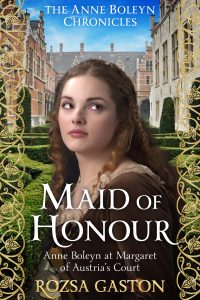
Rozsa Gaston –Anne Boleyn at Margaret of Austria’s Court
C.V. Lee –Betrayal of Trust
Logan D. Irons –Sands of Bone
Jean Gill –Among Sea Wolves
Laura C. Rader –Hatfield 1677
And a round of applause for the 2024 Chaucer Grand Prize Winner!
Maid Of Honour
Anne Boleyn at Margaret of Austria’s Court
By Rozsa Gaston
Congratulations to the 2024 Winners of the Goethe Award for Late Historical Fiction!
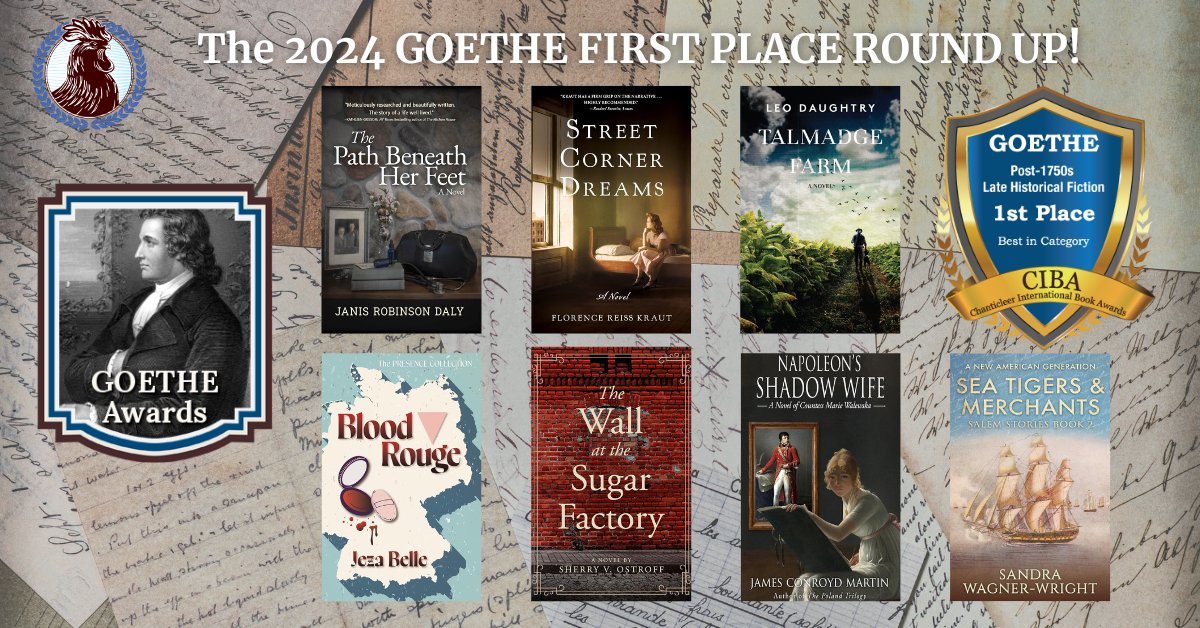
Janis Robinson Daly – The Path Beneath Her Feet
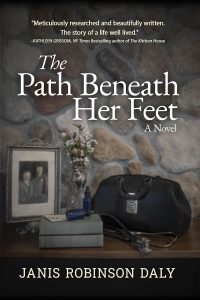
Sandra Wagner-Wright – Sea Tigers & Merchants: A New American Generation
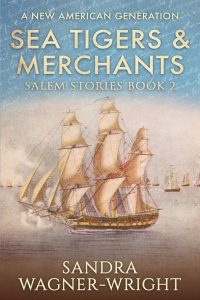
James Conroyd Martin – Napoleon’s Shadow Wife: A Novel of Countess Marie Walewska
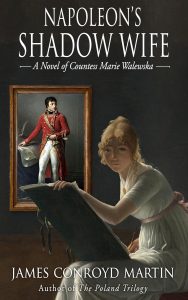
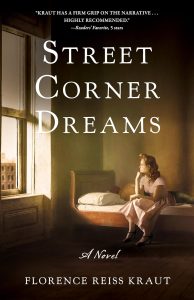
Florence Reiss Kraut – Street Corner Dreams, A Novel
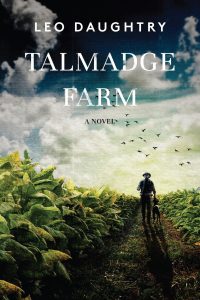
Leo Daughtry – Talmadge Farm
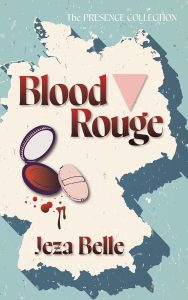
Jeza Belle – Blood Rouge
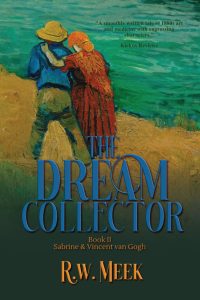
R.W. Meek – The Dream Collector, Book II “Sabrine & Vincent van Gogh”
Sherry V. Ostroff – The Wall at the Sugar Factory
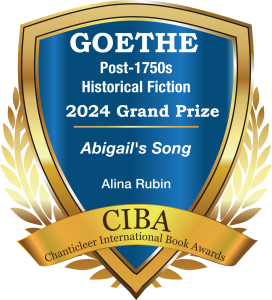
And a round of applause for our 2024 Goethe Grand Prize Winner!
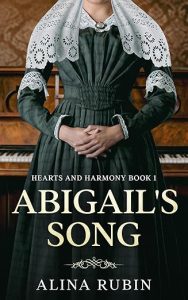
Abigail’s Song
By Alina Rubin
Congratulations to the 2024 Winners of the Laramie Award for Americana Fiction!
David Fitz-Gerald –First Drive
Georgina Hogue –Cloud Cap
Heather Miller –Yellow Bird’s Song
C.M. Huddleston –Esther
Karen Lynne Klink –At What Cost, Silence? Book 1 of The Texian Trilogy
Charlie Steel –Tom Sharp: The Man and the Legend
Daniel Greene –Northern Shadows (Northern Wolf Series Book 5)
And a round of applause for our 2024 Laramie Grand Prize Winner!
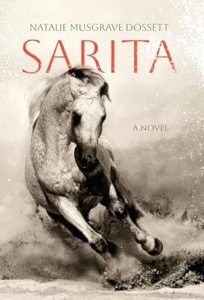
Sarita
By Natalie Musgrave Dossett
Congratulations to the 2024 Winners of the Hemingway Award for 20th and 21st Century Wartime Fiction!
R L Pace –Rising Son
Katherine Koch –The Sower of Black Field: Inspired by the True Story of an American in Nazi Germany
Tim Turner and Moisey Gorbaty –The Reluctant Conductor
Kay Smith-Blum –Tangles
Kathryn Gauci –Midnight in Istanbul
Travis Davis –One of Four: World War One Through the Eyes of an Unknown Soldier
Bharati Sen –My War, My Child
H. W. “Buzz” Bernard –When Heroes Flew
And a round of applause for our 2024 Hemingway Grand Prize Winner!
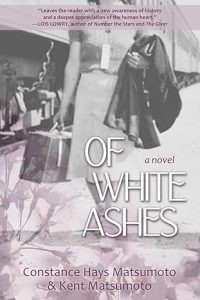
Of White Ashes
By Constance Hays Matsumoto and Kent Matsumoto
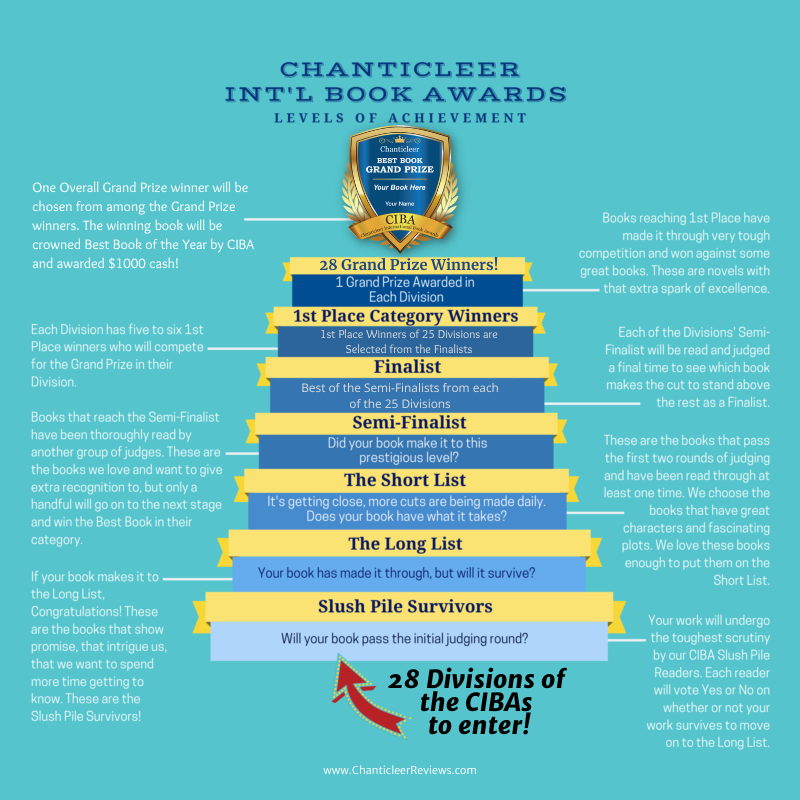
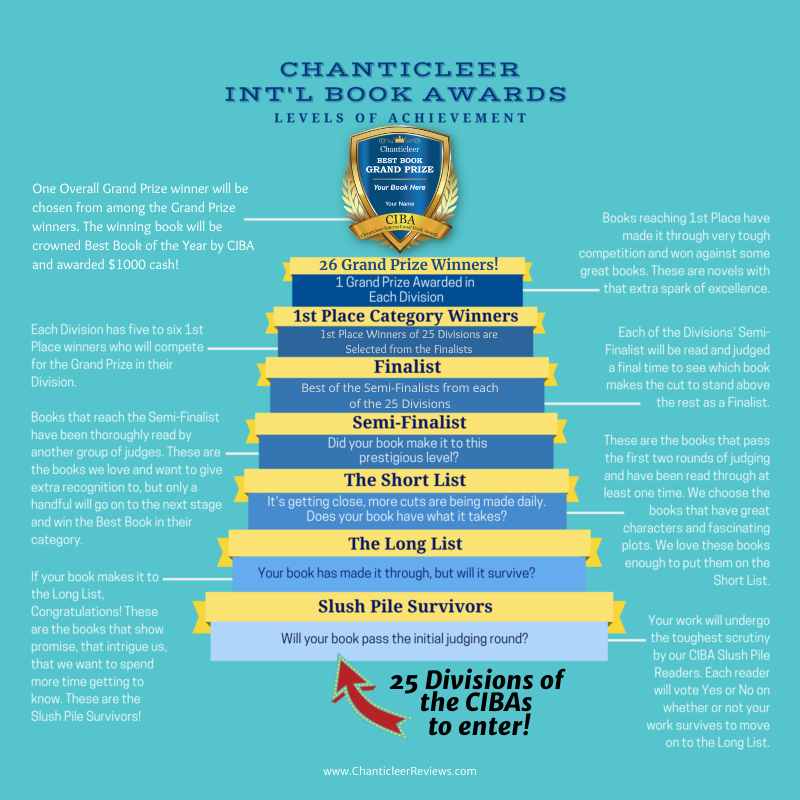
The CIBAs offer a ladder to success with a range of achievement tiers and expert long tail marketing strategies. From the highly anticipated Long List to the prestigious Overall Grand Prize Winner, the CIBA lists energize both authors and readers, maximizing your digital footprint and expanding your fan base.
We are always eager to support the Best Books through the CIBAs. Join the ranks of celebrated authors who have already taken this critical step in their publishing.
Your book deserves to be discovered, celebrated, and shared with the world. Don’t miss the chance to showcase your talent and gain valuable exposure at the Chanticleer Authors Conference (April 17-19, 2026) where Winners from all 28 Book Award Divisions will be announced and honored.
Your story deserves to be heard. Submit now and leave a lasting impression.
One of our many Historical Fiction Categories, Named after German Writer, Scientist and Playwright Johan Wolfgang Van Goethe (1749-1832), Considered to be one of the most Influential and Greatest Writers of the German Language.
This Award Division covers anything after 1750, so there can be anything from The American Revolution, to the 1930s.
Let’s take a look at some of our Grand Prize Winners and Discover your next great read!
Abigail’s Song
By Alina Rubin
Our review for the newest Grand Prize Winner is forthcoming. In the meantime, here is what some GoodReads readers have been saying:
“Abigail’s Song is a powerful novel about Jewish/Gentile relationships set in 1800s England. The novel’s protagonist Abigail is a sixteen-year-old orphan who is taken in by a Jewish family after becoming severely ill on the streets. Abigail is skeptical of Jews at first but soon realizes that her prejudices were wrong and that she has been taken in by a family who genuinely loves and cares for her.
The novel offers great chemistry between Abigail, David, and the rest of David’s family. Rubin has a penchant for writing sharp dialogue and an excellent eye for detail when observing Jewish customs.” -Eric
“ABIGAIL’S SONG is a tender, heart-warming novel about young Abigail, an impoverished Catholic orphan in early 19th century England. Her path to happiness and fulfillment is blocked by death, neglect, prejudice, and ignorance, but in an almost true-Dickensian turn-of-events, she is found and adopted by a devoted, talented, and close-knit Jewish family.
Acceptance, love, music, and even romance, comes Abigail’s way, and through the course of the novel she blossoms from a needy child into a young woman who not only knows how to harness her emotional strength, but can help others do the same.” -Ana
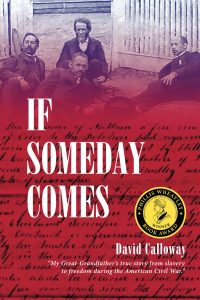
David Calloway’s moving historical fiction,If Someday Comes: A Slave’s Story of Freedom, tells the true story of his great-grandfather George Calloway, born into slavery on January 8, 1829. in Cleveland, Tennessee.
It is a tale of determination, perseverance, and achievement before and during the Civil War.If Someday Comescovers George’s final years in slavery; detailed accounts of the Civil War and its impacts on George and his family, both Black and White.
It is a family saga of survival and endurance.
The story begins in Cleveland, Tennessee, March 6th, 1857. We meet George and his family, his wife Elizabeth, their infant daughter Baby Caroline, and the stratified world of slavery in which they live. Thomas Howard Calloway (Marsa Thom), is their White owner who owns the East Tennessee and Georgia Railroad, the South’s only copper mines, and the local bank. He is one of Cleveland’s prominent town leaders.
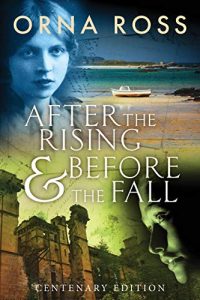
Award-winning Irish author Orna Ross has created a volume comprising the first two novels of The Irish Trilogy, drawing from her Irish birth and upbringing for a special grasp of the country’s history, how its wars and political strivings have affected its people directly, personally, over multiple generations.
Her two books take on a span of time rooted in the early 1920s and delve deeply into the interlocking fate of the extended family and ancestry of Jo Devereux. Jo, the book’s central narrator, leaves Ireland in her twenties, only returning in her forties in 1995 when she learns that her mother is near death.
The journey back will draw her into the family’s complex relationships, and reacquaint her with Rory, her former, and perhaps only, true love.
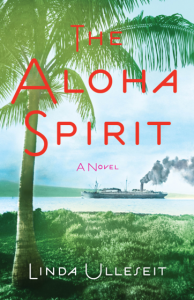
In Linda Ulleseit’s novel The Aloha Spirit, we meet the plucky heroine, Dolores, as her father leaves her.
“Dolores’s father deemed her useless when she was seven. Neither he nor her older brother, Pablo, ever said that, but every detail of their leaving told her so. Papa had tried to explain the Hawaiian custom of hānai to her. All she understood was the giving away, leaving her to live with a family not her own.”
Her story starts in 1922; the place, multi-ethnic, multilingual Hawaii. Papa, a sugar cane cutter from Spain who worked in Hawaii, decides to take his son Pablo with him to seek his fortune in California. His wife died five years earlier. He leaves 7-year-old Dolores with a large family on Oahu in an arrangement called hānai, an informal adoption. Dolores doesn’t know the family well. She feels abandoned, with no idea when or if her father will send for her or return.
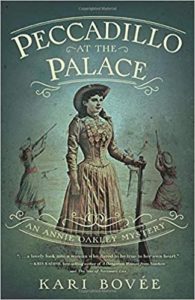
Peccadillo At The Palace: An Annie Oakley Mystery By Kari Bovee
Kari Bovée’s Peccadillo at the Palace, the second book in the Annie Oakley Mystery series, is a historical, mystery thriller extraordinaire. Fans of both genres will thrill at Bovée’s complex plot that keeps us guessing from its action-packed beginning to the satisfying reveal at the end.
The book opens with the Honorable Colonel Buffalo Bill Cody’s Wild West Show to England on a voyage to perform for Queen Victoria. They are not on the high seas long, when Annie’s beloved horse, Buck, jumps overboard. Her husband and the Queen’s loyal servant, Mr. Bhakta, jump in to save the horse, or was Mr. Bhakta already dead before he reached the water? Thus, begins the mystery of who killed Mr. Bhakta, leaving all to wonder, is the Queen safe?
Someone wanted the Queen’s man dead, and he is, but was it a matter of racism, intrigue, or an accident? Annie’s search for clues points her in several directions, but is it the doctor, or the woman dressed in rags with the posh accent, or the crass American businessman and his floozy wife? All have motive. Even Annie’s husband has motive with his Irish background and ties to the Fenians and the Irish Republican Army (IRA).
The Goethe Book Awards recognize emerging new talent and outstanding works in the genre of Late Historical (Post 1750s) Fiction. The Grand Prize Winner, Alina Rubin’s book, Abigail’s Song will be promoted for years to come in our annual Hall of Fame article, as well as be featured on the Goethe contest page year ’round!
The best part about being a Chanticleer Int’l Book Award Winner is the love and attention you get all year ‘round!
Steeped in rich historical detail, Dr. Eliza Edwards, the ingénue student in The Unlocked Path, becomes the mature mentor, steadfast in her calling to effect social change by addressing women’s health issues and guiding others to realize their dreams. In 1936, as the Depression ravages careers, Eliza re-defines her abilities, traveling to Georgia and Tennessee as she reclaims her purpose and rediscovers her ambitions. Returning to Boston, she endures heartbreak with the eruption of World War II, bringing chaos to the world and sending her sons into battle. Will her unyielding pursuit to limit suffering and save lives sustain her amid the tumultuous landscapes of 1930s and 1940s America?
In 1790 the United States has a new Constitution. George Washington presides as the first elected president. Abroad, France and Britain are at war. And by 1795 seafaring Americans are accosted on the high seas by French privateers and British naval ships.
Tensions rise as American merchants continue to trade. Among them, Hasket Derby and Captain George Crowninshield acquire wealth and build maritime empires while their sons and other adventurous young men take risks on the high seas and in the exotic ports at Isle de France, India, and China dodging accidents, disease, British warships and French privateers. A rich cargo, the turn of a card, or an unlucky storm can make or break a young man’s career. But men like Nath Silsbee fight for the chance to make their fortune and become part of America’s promise.
Women are equally determined and adventurous. Orphaned Lizzie Rowell takes a job at Ship Tavern, and meets the dashing Captain George Crowninshield Jr., a man far above her station in life. Torn between duty and desire, Geordie must choose between his family’s expectations and his growing affection for a mere tavern maid.
In this historical page-turner, family bonds are tested and romantic dreams challenged against the backdrop of ambition and adventure on the high seas. Immerse yourself in the captivating world of trade and intrigue in the new United States of America.
From Chanticleer:
Sandra Wagner-Wright’s audible version ofSea Tigers & Merchants: A New American Generation, Salem Stories Book 2continues the sagas of two prominent families that dominate the shipping industry of young Salem. Narrator Christa Lewis fully embodies the unique characters of this swashbuckling historical adventure.
Wagner-Wright takes us back to 1790. In recently independent America, the next generation of the Crowninshield and Derby families try to continue building their fortunes on the treacherous high seas. Threats of pirates, storms, and ever-changing economies drives their fates, their successes, and their failures. Wagner-Wright’s skillful pen brings to life each young person, female and male, as they variously seek out or shun a chance at love on shore.
Captain George Crowninshield and Haskett Derby duke it out for power and control of the Eastern Seaboard, with their families caught up in the contest.
Wagner-Wright shows how these merchants brave great risk through maritime exploits in France, the Netherlands, the West Indies, Africa, and Asia. During their adventures on the sea, these captains fight relentlessly for the vessels—which become as famous as those captains themselves.
Embark on a voyage through unconditional love, power, and betrayal!
How could an emperor like Napoleon Bonaparte be so captivated by the twenty-year-old Polish Countess Marie Walewska—admittedly a rare beauty but of minor nobility—that their affair would last through both his marriages? And if it wasn’t romance that first drew Marie to Napoleon, what was it?
At just eight years old, Marie finds her life forever changed by the death of her father, killed in battle against the Russians. This tragedy sparks a deep, lifelong patriotism in her as Poland is fragmented and divided among Russia, Prussia, and Austria.
A fan of Napoleon since her school days, Marie eagerly seizes the opportunity to meet him when he passes through the former Poland, his intention to secure military support for his campaign to conquer Russia. She seeks only to express Poland’s gratitude and hope he would restore the nation’s independence. She never imagined a romantic entanglement. But Napoleon, taken with her patriotism, youth, and beauty, soon sets his sights on her—and begins a campaign to win her heart.
Though Marie resists, powerful forces pressure her—just as they had in her marriage—to give in to the emperor’s desires.
Expect to be immersed in Marie’s world, where love and loyalty collide amidst a galaxy of powerful aristocrats, politicians, and military leaders. You’ll journey from Marie’s manor house on the plains of Poland to cosmopolitan Warsaw, through grand palaces in Austria, France, and Italy—before sailing to the Island of Elba, where destiny awaits.
A suspenseful family saga, love story, and gangster tale, wrapped into one great book club read . . .
Just before WWI, Golda comes to America yearning for independence, but she tosses aside her dreams of freedom and marries her widowed brother-in-law after her sister dies giving birth to their son, Morty.
In the crowded streets of Brooklyn where Jewish and Italian gangs demand protection money from local storekeepers and entice youngsters with the promise of wealth, Golda, Ben, and Morty thrive as a family. But in the Depression, Ben, faced with financial ruin, makes a dangerous, life-altering choice. Morty tries to save his father by getting help from a gangster friend but the situation only worsens. Forced to desert his family and the woman he loves in order to survive, Morty is desperate to go home. Will he ever find a safe way back? Or has his involvement with the gang sealed his fate?
Another stunning work of historical fiction by Florence Reiss Kraut, Street Corner Dreams is an exploration of a timeless question: how much do we owe the families that have sacrificed for and shaped us—and does that debt outweigh what we owe ourselves and our own hopes and dreams for a better life?
It’s 1957, and tobacco is king. Wealthy landowner Gordon Talmadge enjoys the lavish lifestyle he inherited but doesn’t like getting his hands dirty; he leaves that to the two sharecroppers – one white, one Black – who farm his tobacco but have bigger dreams for their own children. While Gordon takes no interest in the lives of his tenant farmers, a brutal attack between his son and the sharecropper children sets off a chain of events that leaves no one unscathed. Over the span of a decade, Gordon struggles to hold on to his family’s legacy as the old order makes way for a New South.
A sweeping drama that follows three unforgettable families navigating the changing culture of North Carolina at a pivotal moment in history, readers have been raving that Talmadge Farm is one they cannot put down. Perfect for fans of Wiley Cash and Amor Towles.
Josef Dietrick lives with his self-absorbed mother, abusive step-father, and bullying step-brother, Marteen, in 1930s Berlin, Germany. When a brutal sexual attack at the hands of Marteen’s friend, Tielo, sends Josef homeless into the streets, he is taken in by the kind-hearted Lucas and his sister Anke.
Over time, gender-fluid Josef transforms into die blaue blume,the blue flower of Schöneberg, at one of the last underground cabarets for gay men and their entertainers, known as dolls.
A raid on the Rote Schwein leads to the capture of both Josef and Lucas who are violently carted off to Dachau, the notorious death camp. Here Josef is forced to choose between his lover Lucas or his now-Nazi childhood assaulter, Tielo. Forced into a form of slavery, Josef hatches a desperate plan to save both Lucas and himself forever.
Will Josef choose self-preservation or to live authentically? Can he do both?
Sabrine, hospitalized for five years at the infamous Salpêtrière Asylum for Women, gains her release due to the intervention of her sister Julie Forette and a young Sigmund Freud. The reunited sisters are introduced to the dazzling art milieu of 1886 Paris, and soon become close friends to the leading Impressionists. Sabrine attracts a cult following as a poetess, the enigmatic “Haiku Princess.” Seemingly cured by Freud of her Grand Hysteria, Sabrine soon enters into a tumultuous relationship with Vincent van Gogh.
Jule and Sigmund Freud, alarmed by the eerie parallels between the emotionally volatile couple and their self-destructive impulses, begin an urgent search to discover the root causes for Sabrine and Vincent’s growing psychoses. Julie, ‘The Dream Collector’ seeks their most unforgettable dream for Freud’s interpretation and revelations occur.
The Dream Collector is an exploration of the psychological consequences of betrayal, abandonment–and the redemptive power of art.
When Shaindel Pogrebiski’s life is shattered and uprooted by the senseless looting and murder that follow the civil war in Ukraine in 1919, she needs to figure out how to survive. With only her young daughter, Shaindel must flee the turmoil. But where will she go? While the world seems indifferent to the bloodbath upending Shaindel’s homeland, who will take in the refugees fleeing for their lives?
The era of the anti-Jewish riots, the pogroms in Ukraine from 1918-1921, has taken on new scrutiny. Some scholars suggest that this period which resulted in great atrocities against the shtetl Jews, perpetuated by their neighbors, was really the beginning of the Holocaust. The pogroms normalized the slaughter and created ready and willing executioners for the Nazis. Their goal of making Europe Judenrein became easier.
From the elegant ballrooms of the Regency era to the trenches of the Great War, from Victorian drawing rooms to the tumultuous changes of the early 20th century, the Goethe Awards celebrate the rich tapestry of late historical fiction. Named for the great German writer who understood that literature must capture the spirit of its age, these awards honor authors who bring post-1750s history to vivid, authentic life.
Late historical fiction occupies a unique space in literature: close enough to our modern world that we can trace the roots of contemporary society, yet distant enough to feel like stepping into another universe entirely. These are the periods that shaped our current world: the rise of industrial society, the emergence of modern democracy, the birth of contemporary romance, and the social movements that defined human progress.
The Art of Bringing Recent History to Life
Writing compelling late historical fiction requires a delicate balance of thorough research and engaging storytelling. Authors must master not just the major historical events, but the daily details that make a world feel authentic—how people dressed, spoke, courted, worked, and dreamed. The best late historical fiction doesn’t just tell us what happened; it helps us understand how it felt to live through transformative periods of human history.
These stories resonate with modern readers because they explore themes that remain relevant today: social class struggles, religious freedom, women’s rights, immigration, and the eternal human desires for love, family, and belonging. Whether set in Napoleonic England or Jazz Age America, these novels illuminate both how much the world has changed and how much human nature remains constant.
The research required for excellent late historical fiction is extraordinary! Authors often spend years studying everything from period clothing to social customs, from political movements to technological innovations, ensuring that every detail serves both historical accuracy and narrative power.
Celebrating Our 2024 Grand Prize Winner!
We’re delighted to honor Alina Rubin, whose moving novel Abigail’s Song claimed the 2024 Goethe Grand Prize with a beautifully crafted story set in 1809 England. The novel follows orphaned Abigail Jones, who after losing her mother and being cast out on Christmas Eve, finds refuge with medical student Oli Higgins (born David Fridman), who is hiding his Jewish identity to pursue his profession. Through Oli’s devout, loving Jewish family, Abigail discovers both belonging and her musical talents.
Rubin masterfully explores the complex social dynamics of early 19th-century England, particularly the challenges faced by religious minorities and the rigid class structures that determined life opportunities. As Abigail grows up caught between worlds, “not Christian enough for the Gentiles, but as a non-Jew, she has no hope of marrying David.” The novel examines themes of identity, belonging, and the healing power of music that resonate across centuries. In addition to ongoing promotional features, Abigail’s Song will be regularly promoted throughout the year and for the next five years in our upcoming Hall of Fame posts. Alina Rubin will also be invited to participate in a Chanticleer 10-Question Interview, and Abigail’s Song will receive a coveted Chanticleer Editorial Review.
Categories That Span the Modern Historical Era
The Goethe Awards welcome historical fiction across the transformative periods of recent history:
Regency & Georgian – The elegant world of Jane Austen and beyond, featuring social refinement and romantic complexity
Turn of the Century – The pivotal period when the 19th century gave way to the modern world
20th Century – The dynamic decades that shaped contemporary society (excluding wartime, which belongs to Hemingway)
World/International History – Global perspectives on historical events and cultural movements
U.S. History – American stories from the colonial period through modern times
1830s-1900s, Victorian Era & Edwardian – The height of empire, industrial revolution, and social transformation
Each category represents a different window into the forces that created our modern world, from intimate personal stories to sweeping social movements.
Explore All Historical Fiction Divisions
The Goethe Awards are part of Chanticleer’s comprehensive celebration of historical fiction across all time periods:
Laramie Awards for Americana Fiction – First Nation stories, The American frontier, pioneer tales, Civil War narratives, and contemporary westerns
Whether your historical fiction spans ancient civilizations or recent decades, Chanticleer offers a home for every period and perspective.
Looking at Historical Excellence
Check out some of these outstanding late historical fiction works we’ve celebrated recently!
Tsarina’s Jewels
By Jerena Tobiasen
Viscount Simon Nightingale-Temple seeks a life of peace with his beloved Mary after the harrowing years of the Bolshevik Revolution. But in Tsarina’s Jewels, the second book in Jerena Tobiasen’s The Nightingale and Sparrow Chronicles, Simon is dragged back into global conflict through his very family.
While serving in the British Embassy in Petrograd, Simon witnessed firsthand that bloody revolution and the assassination of the Tsar’s family—all but one daughter, Grand Duchess Maria Nikolaevna, the beautiful woman who became his wife.
Maria, “Mary”, hides in plain sight among the British aristocracy, and the couple hope to settle into their lives with Simon’s parents. However, soon after his return, the highest levels of the British government force Simon into service for the newly minted MI6. Under threat of being blamed entirely for the Romanov family’s execution, Simon has no choice but to accept.
Little does Simon know he’ll soon be spying on his own brother.
Two families vie for power in mercantile 18th-century Salem.Sea Tigers and Merchants,the second book in Sandra Wagner-Wright’sSalem Storiesseries, returns to a world of treacherous storms, tantalizing wealth, and the demands of high society on its children.
Elias Hasket Derby, Sr. has kept his promise to his wife Eliza—they rule Salem. Hasket’s merchant ships bring in great fortune, while Eliza holds court as the most influential woman in the city’s social spheres. And their ambitions have grown to meet their station. Hasket launches his riskiest endeavor—theGrand Turk,a ship so massive she’s nearly too heavy to be pulled out of the docks. Meanwhile Eliza, snubbed by George Washington’s stay at another family’s mansion, insists they build a house so grand it will put all others to shame.
Such success, of course, draws the envious eye of Hasket’s competitor.
The Crowninshield family has an uphill battle before them. The patriarch, George, Sr., is unable to employ all his own sons as captains of his small fleet—leaving them to work for their uncle Hasket. But George shares Hasket’s ambition. With the support of his wife, Hasket’s sister Mary, he builds greater ships of his own. If only he could get his eldest sons to follow his wishes, all his goals would fall into place.
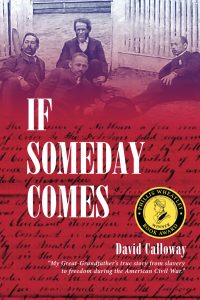
David Calloway’s moving historical fiction,If Someday Comes: A Slave’s Story of Freedom, tells the true story of his great-grandfather George Calloway, born into slavery on January 8, 1829. in Cleveland, Tennessee.
It is a tale of determination, perseverance, and achievement before and during the Civil War.If Someday Comescovers George’s final years in slavery; detailed accounts of the Civil War and its impacts on George and his family, both Black and White.
It is a family saga of survival and endurance.
The story begins in Cleveland, Tennessee, March 6th, 1857. We meet George and his family, his wife Elizabeth, their infant daughter Baby Caroline, and the stratified world of slavery in which they live. Thomas Howard Calloway (Marsa Thom), is their White owner who owns the East Tennessee and Georgia Railroad, the South’s only copper mines, and the local bank. He is one of Cleveland’s prominent town leaders.
The Last Dahomey Warriorby Dr. Amy Holda Gueye is the gripping story of a group of fearless and feared female soldiers of the Dahomey kingdom—and the young girl who withstands grave peril to stand among them.
At age 11, Nanissa becomes the youngest candidate ever chosen to be one of the legendary Dahomey Akodgjie, an all-female elite class of warriors who protect their king and the Kingdom of Dahomey (now Benin).
Left in the sacred forest with no weapons or food, Nanissa must survive ten days to earn her place on the path to becoming a Dahomey warrior. She encounters dangers during her test, but by listening to the voice of her mother she not only survives but is endowed by the spirit of the Leopard, which serves her well in battles to come.
Nanissa learns to listen to more than just the teachings of her mother. The Queen Mother, Ahosi, who trains the Akodgjie warriors also serves as mentor to the young warrior. “Observe carefully, learn quickly, listen more, speak less…If you can learn what one does not say, memorize what one never teaches, and trust your gut, the voice right here in your chest… then you will make an excellent warrior.”
Before Nanissa faces her first battle as a young woman, the Chief of a smaller tribe comes to the Palace with word that the French are coming—prepared for battle with armor and rifles.
These works demonstrate how the best historical fiction combines meticulous research with compelling storytelling to transport readers across time.
See the Chanticleer Difference for Yourself!
We’re excited about all the exceptional historical fiction we receive every year for both the CIBAs and for our Editorial Reviews. The Chanticleer International Book Awards offers an incredible $30,000 in cash, prizes, and promotion across all divisions!
The Goethe Awards recognize the extraordinary research and storytelling skill required to bring recent history to authentic life. Whether you’ve spent years researching Victorian social customs, Georgian political movements, or early 20th-century cultural changes, these awards celebrate both your historical scholarship and narrative artistry.
Your Historical Vision Awaits Recognition
Great late historical fiction doesn’t just recreate the past—it helps us understand how we became who we are today. Whether your story explores the drawing rooms of Regency England, the immigrant experience in turn-of-the-century America, or the social transformations of the early 1900s, the Goethe Awards celebrate the authors who make history feel immediate and alive.
The Goethe Book Awards recognize emerging new talent and outstanding works in post-1750s Historical Fiction. The Goethe Book Awards is a division of the Chanticleer International Book Awards (The CIBAs).
The Goethe Book Awards competition is named for Johann Wolfgang von Goethe who was born at the dawn of the new era of enlightenment on August 28, 1749.
Chanticleer International Book Awards is looking for the best books featuring Late Period Historical Fiction. Regency, Victorian, 18th Century, 19th Century, 20th Century, World and other wars before the 20th century, history of non-western cultures, set after the 1750s, we will put them to the test and choose the best among them.
The other three Historical Fiction Genres are the Laramie Awards for Americana Fiction, the Chaucer Awards for Early Historical Fiction, and the Hemingway Awards for 20th c. Wartime Fiction.
1st Place Category winners and Grand Prize Division Winners were announced at the CIBAs Banquet and Ceremony by Gail Hertzog on Saturday, April 5th, 2025 at the Bellingham Yacht Club in Bellingham, Wash. sponsored by the 2025 Chanticleer Authors Conference.
This is the OFFICIAL 2024 LIST of the GOETHE BOOK AWARDS First Place Category Winners and the GOETHE Grand Prize Winner.
Join us in celebrating the following authors and their works in the 2024 CIBAs.
Janis Robinson Daly – The Path Beneath Her Feet
Sandra Wagner-Wright – Sea Tigers & Merchants: A New American Generation
James Conroyd Martin – Napoleon’s Shadow Wife: A Novel of Countess Marie Walewska
Florence Reiss Kraut – Street Corner Dreams, A Novel
Leo Daughtry – Talmadge Farm
Jeza Belle – Blood Rouge
R.W. Meek – The Dream Collector, Book II “Sabrine & Vincent van Gogh”
Sherry V. Ostroff – The Wall at the Sugar Factory
The Grand Prize Winner for the CIBA 2024 GOETHE Awards is:
Attn CIBA Winners: More goodies and prizes will be coming your way along with promotion in our magazine, website, and advertisements in Chanticleer Int’l Book Awards long-tail marketing strategy. Welcome to the CIBA Hall of Fame for Award Winners!
This post has been posted on the Chanticleer Facebook Page. We try to tag all authors listed here in the Facebook post. However, for Facebook to allow us to tag an author, that author must LIKE our page and Follow Chanticleer Reviews.
A Note to ALL the WINNERS: The coveted CIBA Blue Ribbons will be mailed out starting inMay. We will contact you with an email to verify your mailing address and other items. You will receive an OFFICIAL EMAIL NOTIFICATION with Digital Badges and more information.
NOTE: We will post at least two 2024 CIBA Divisions’ OFFICIAL Winners per business day starting April 14, 2025. We do a final sweep and reconciliation prior to making the Official CIBA Posts for the 2024 First Place and Grand Prize Winners. We thank you in advance for your patience and understanding. There are many moving parts involved with the Chanticleer International Book Awards Program.
Thank you for participating in the 2024 CIBAs! We are looking forward to reading your future entries.
The Goethe Book Awards recognize emerging new talent and outstanding works in the genre of Late Historical (Post 1750s) Fiction. The Grand Prize Winner, David Calloway’s book, If Someday Comes will be promoted for years to come in our annual Hall of Fame article, as well as be featured on the Goethe contest page year ’round!
The best part about being a Chanticleer Int’l Book Award Winner is the love and attention you get all year ‘round!
The Spoon is historical fiction based on the personal anecdotes of survivors of what we now know as the 1956 Hungarian Revolution. At the heart of The Spoon is the true story of two people incongruously brought together during the maelstrom of this historic event; a story that is embodied in one small heirloom and remembered and shared through the generations when the family gathers each year for Christmas.
From Chanticleer:
Lisa Voelker’s historical fiction novel, The Spoon, takes us back to the 1950s in Hungary during the daring student uprising, and attempted revolution,. The author weaves historical facts with fiction in the form of family lore that has been handed down for generations.
We follow scores of people whose lives intersected during this uprising of 1956. The revolution was, at its inception, a time of joyous upheaval, but in less than two weeks became one of devastating dissolution. People fled Hungary by the thousands, but not before giving the Soviet Union a taste of their discontent.
Voelker introduces Rebeka, a member of the Varga family with old ties to the bourgeoisie, who lived a life of privilege on a farm. She is contrasted by Peter, a member of the Turea family who attends Budapest Technical University, where students began demonstrating against the Hungarian Government that was under Soviet control.
Conor Dolan, a young Irishman, travels to Chicago in 1903 to visit his older brother; instead, he finds a mystery. His journey sparks a quest to peel away secrets and rediscover a dead sibling he idolized but never really knew as he strives to learn the true meaning of brotherhood.
His search reveals an Irish Republican plot to assassinate a visiting British royal. In the process, he is drawn into an alliance with two women: a mesmerizing Jewish widow and a struggling young Irishwoman. Each teaches Conor existential truths of life and love in her own way.
But the brother he finds may not be the brother he remembers. A Long Way from Clare is a story of Chicago’s early twentieth century immigrants and one man’s struggle with both bigotry and justice in an unforgiving city where no good deed goes unpunished.
From Chanticleer:
Twenty-four-year-old Conor Dolan had intended to surprise his older brother and catch up after years apart. However, what he finds when he arrives in Chicago will spark a harrowing mystery, in A Long Way from Clare by Robert W. Smith.
Kevin, a beat cop in twentieth-century Chicago’s worst neighborhood, was found six weeks before Conor’s visit, in what the police have dubbed a suicide. However, Conor has his doubts. Each time he asks people about Kevin, he is met with resistance and denial. When Conor speaks with Detective Flynn, the man assigned to Kevin’s case, his suspicions become certainties. Flynn’s bizarre behavior, the minimal effort on the police’s part to investigate, and the men following Conor at every turn convince him to stay in Chicago rather than return to his home in Springfield.
Conor’s determination to find answers to Kevin’s death lead him in a dangerous dance with darkness amidst the shadows of Chicago’s underworld.
The year is 1884. Rolla Alan Jones, an ambitious dreamer fresh out of an East Coast engineering school, is commissioned to design and build the first water system in Spokane Falls, Washington, a booming town of twenty-thousand. He is everyone’s golden boy for five years until the city burns down on August 4, 1889. The once-celebrated engineer is scapegoated for the catastrophe alleging his system yielded inadequate water pressure. Asked to resign, betrayed by his friends, shunned by the community, and abandoned by his pregnant wife and three-year-old son, Rolla must find the strength to reinvent himself or return to New York as an abject failure. Based on a true story, Water Fire Steam is a story of forgiveness and redemption for anyone who has ever had to claw their way back from an unwarranted accusation.
Lillian Lorraine was a naive 15-year-old chorine on Broadway when she attracted the notice of the notorious 41-year-old Florenz Ziegfeld. Accustomed to getting what he wanted, Ziegfeld took Lillian under his wing and into his arms, giving her coveted numbers in the Ziegfeld Follies and taking control of her career. But Lillian’s rebellious spirit chafed against him, refusing to play according to his rules, and nearly destroying her own career in the process. The Adored One follows her through rise and fall after rise and fall as she comes of age in a world where her youthful beauty was an asset-and a liability.
From Chanticleer:
Step into the glittering world of fame and betrayal in Susanne Dunlap’s The Adored One. At just four years old, Leleanne de Jacques, aka Lillian Lorraine, began her acting career. After fleeing an abusive husband in San Francisco, Mary Anne, Lillian’s mother, moves to Philadelphia, seeing her daughter’s talent as their potential meal ticket.
Soon after arriving in Philadelphia and changing her daughter’s name, Mary Anne relocates them both again to New York, where she puts Lillian in front of artists who see her potential for print ads. Lillian soon meets Fred McKay, her first talent agent, and she begins performing in Lee Shubert productions.
When Florenz Ziegfeld sees Lillian onstage, he knows he must have her, both in his productions and his bed. At only sixteen, Lillian signs with Broadway’s biggest producer. She begins to spiral soon after. Drinking and partying become a staple in Lillian’s life, and she is soon keeping more secrets than her young heart can handle. Florenz’s obsession, Mary Anne’s domineering, and Lillian’s own need for approval lead her down a dangerous and lonely path. Losing every friend she ever makes as well as a part of herself, Lillian wonders if the prize of fame is really worth the cost.
Samantha Lockwood, Day Sets, and Harriet Robinson come to Fort Snelling from very different backgrounds. It’s 1835 and the world is changing, fast, and they are all struggling to keep up. After she refuses another suitor he’s chosen for her, Samantha’s father banishes her to live in the territory with her brother. He, too, tries to take over her marriage plans—but she is determined to find her own husband, even when her choices go awry.
Day Sets demands that her white husband create a school to educate their daughter, supporting her father’s belief that his people must learn the ways of the white man in order to ensure the tribe’s future. Until events prove her father wrong. Harriet’s life in the territory is more like that of a free person than anywhere she’s lived. She even falls in love with Dred Scott and dreams of a life with him. But they are both enslaved, and she keeps being reminded of how little control she has over her own fate. As their cultures collide, each of these three women must find a way to direct her own future and leave a legacy for her children.
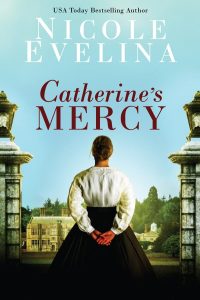
Based on a true story, Catherine’s Mercy brings to life Irish reformer and Sisters of Mercy founder Catherine McAuley.
In 1824, Catherine, a Catholic spinster of 44, unexpectantly inherits millions. However, she doesn’t use it to climb the social ladder or snare a husband; she uses it to fulfill a lifelong dream of building a refuge for the poor and sick of Dublin, Ireland. That an unmarried woman would dare propose such a thing is so scandalous, even her own brother calls it “Kitty’s Folly.” Society turns against her. The Church tries to take over. Catherine must defend her choices or lose not only her inheritance, but her reputation and life’s calling.
One of the first women who seeks Catherine’s help is Margaret, a maid in the house of Lord Montague, the loudest of Catherine’s detractors. Daring to protect herself from his advances and rebel against his maxim of total obedience, Margaret is forced to flee for her life. She desperately approaches Catherine for help, setting off a series of events that haunt Catherine all her days and prompt a rule that holds today, in the real-life Sisters of Mercy.
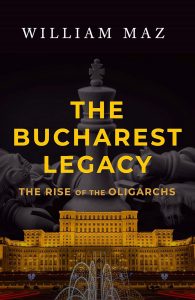
William Maz – The Bucharest Legacy: The Rise of the Oligarchs
The CIA is rocked to its core when a KGB defector divulges that there is a KGB mole inside the Agency. They learn that the mole’s handler is a KGB agent known as Boris. CIA analyst Bill Hefflin recognizes that name—Boris is the code name of Hefflin’s longtime KGB asset. If the defector is correct, Hefflin realizes Boris must be a triple agent, and his supposed mole has been passing false intel to Hefflin and the CIA. What’s more, this makes Hefflin the prime suspect as the KGB mole inside the Agency.
Hefflin is given a chance to prove his innocence by returning to his city of birth, Bucharest, Romania, to find Boris and track down the identity of the mole. It’s been three years since the bloody revolution, and what he finds is a cauldron of spies, crooked politicians, and a country controlled by the underground and the new oligarchs, all of whom want to find Boris. But Hefflin has a secret that no one else knows—Boris has been dead for over a year.
The Ozma and Goethe Awards both close at the end of July! Don’t let your History become a Fantasy!
The Ozma Award for Fantasy Fiction and The Goethe Award for Post-1750 Historical Fiction close submissions on JULY 31st.
You can’t win if you don’t submit!
Submit to the CIBAs Today!
Only 10 days left to submit your books to the prestigious CIBAs and embark on an extraordinary journey to success. With over $30,000 in prizes awarded annually, now is the time to make your mark!
The Ozma Awards for Fantasy and The Goethe Awards for Late Historical Fiction are still open until JULY 31st!
Congratulations to the Winners of the 2023 Ozma Awards!
Lilla Glass – The Unseen
Charles Allen – The Order of the Red God
Jaime Castle & Andy Peloquin – Black Talon
Jonathan Uffelman – Book of Leprechauns: The Lore Gatherers
PJ Devlin – The Chamber
And a huge round of applause to this years Overall Grand Prize, and Division Grand Prize for OZMA
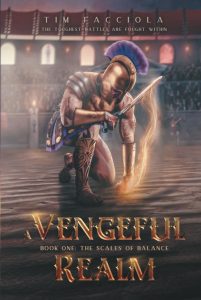
A Vengeful Realm by Tim Facciola!
Congratulations to the Winners of the 2023 Goethe Awards!
William Maz – Bucharest Legacy: The Rise of the Oligarchs
And a huge round of applause to this years 2023 Goethe Grand Prize Winner- If Someday Comes by David Calloway
The CIBAs offer more than just recognition — they provide a ladder to success with a range of achievement tiers and expert long tail marketing strategies. From the highly anticipated Long List to the prestigious Overall Grand Prize Winner, the CIBA lists energize both authors and readers, maximizing your digital footprint and expanding your fan base.
We are always eager to support the Best Books through the CIBAs. Join the ranks of celebrated authors who have already taken this critical step in their publishing.
Your book deserves to be discovered, celebrated, and shared with the world. Don’t miss the chance to showcase your talent and gain valuable exposure at the Chanticleer Authors Conference (April 3-6, 2025) where Winners from all 25 Book Award Divisions will be announced and honored.
In a world hungry for good books, your story deserves to be heard. Submit now and leave a lasting impression.
One of our many Historical Fiction Categories, Named after German Writer, Scientist and Playwright Johan Wolfgang Van Goethe (1749-1832), Considered to be one of the most Influential and Greatest Writers of the German Language.
This Award Division covers anything after 1750, so there can be anything from The American Revolution, to the 1930s.
Let’s take a look at some of our Grand Prize Winners and Discover your next great read!
If Someday Comes By David Calloway
This is the true story of my Great-Grandfather George Calloway, a slave in Cleveland, Tennessee, before and during the Civil War. It is written as historical fiction, based on George’s life, and stories I heard growing up. It is a tale of determination, perseverance, and achievement.
George protected his family through war, famine, and plague; he risked his life repeatedly to protect his owner’s family, and thus his own wife and children.
More fact than fiction, George’s story has also been my journey, grappling with the humiliation of slavery; sorting through the many myths and false modern-day narratives, and discovering a long lost relative, I found that to understand America, you must first understand the Civil War. George was then, and remains, a hero of our family.
Winner, the 2023 Phillis Wheatley Historical Fiction Prize
Grand Prize Winner, 2023 Goethe award for Historical Fiction
Winner, The 2023 Next Generation Indie Book Awards African American Fiction Award
Award-winning Irish author Orna Ross has created a volume comprising the first two novels of The Irish Trilogy, drawing from her Irish birth and upbringing for a special grasp of the country’s history, how its wars and political strivings have affected its people directly, personally, over multiple generations.
Her two books take on a span of time rooted in the early 1920s and delve deeply into the interlocking fate of the extended family and ancestry of Jo Devereux. Jo, the book’s central narrator, leaves Ireland in her twenties, only returning in her forties in 1995 when she learns that her mother is near death.
The journey back will draw her into the family’s complex relationships, and reacquaint her with Rory, her former, and perhaps only, true love.
In Linda Ulleseit’s novel The Aloha Spirit, we meet the plucky heroine, Dolores, as her father leaves her.
“Dolores’s father deemed her useless when she was seven. Neither he nor her older brother, Pablo, ever said that, but every detail of their leaving told her so. Papa had tried to explain the Hawaiian custom of hānai to her. All she understood was the giving away, leaving her to live with a family not her own.”
Her story starts in 1922; the place, multi-ethnic, multilingual Hawaii. Papa, a sugar cane cutter from Spain who worked in Hawaii, decides to take his son Pablo with him to seek his fortune in California. His wife died five years earlier. He leaves 7-year-old Dolores with a large family on Oahu in an arrangement called hānai, an informal adoption. Dolores doesn’t know the family well. She feels abandoned, with no idea when or if her father will send for her or return.
Peccadillo At The Palace: An Annie Oakley Mystery By Kari Bovee
Kari Bovée’s Peccadillo at the Palace, the second book in the Annie Oakley Mystery series, is a historical, mystery thriller extraordinaire. Fans of both genres will thrill at Bovée’s complex plot that keeps us guessing from its action-packed beginning to the satisfying reveal at the end.
The book opens with the Honorable Colonel Buffalo Bill Cody’s Wild West Show to England on a voyage to perform for Queen Victoria. They are not on the high seas long, when Annie’s beloved horse, Buck, jumps overboard. Her husband and the Queen’s loyal servant, Mr. Bhakta, jump in to save the horse, or was Mr. Bhakta already dead before he reached the water? Thus, begins the mystery of who killed Mr. Bhakta, leaving all to wonder, is the Queen safe?
Someone wanted the Queen’s man dead, and he is, but was it a matter of racism, intrigue, or an accident? Annie’s search for clues points her in several directions, but is it the doctor, or the woman dressed in rags with the posh accent, or the crass American businessman and his floozy wife? All have motive. Even Annie’s husband has motive with his Irish background and ties to the Fenians and the Irish Republican Army (IRA).
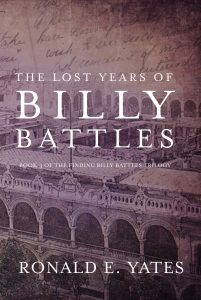
The Lost Years of Billy Battles By Ronald E. Yates
(2018 Overall Grand Prize Winner)
For those not familiar with the series, Yates presents his books as works of “faction,” a story “based in part on fact” but also “augmented by narrative fiction.” The protagonist, William Fitzroy Raglan Battles, born in Kansas in 1860, lives a full 100 years and takes part in some of the most significant events of his time. He encounters key figures of the day (Bat Masterson, Wyatt Earp, President Wilson, Francisco “Pancho” Villa, among others), gives us their backstories, and quietly appraises them.
Yates, a journalist with a keen eye for nuance and subtlety, has created a protagonist with superb critical thinking skills. William, a journalist, and occasional soldier examines people and transactions from every angle. Just as at ease in a Kansas saloon as he is at the captain’s table on a grand ocean liner on the Pacific, Billy Battles is also ruthlessly honest about his shortcomings and feels tremendous guilt when he acts impulsively or inadvertently causes harm to others. Yates has crafted a fully human character who is easy to admire, perhaps because he is admirably cognizant of his own flaws.
I’ve begun few books as eagerly as I did this one. Having read the first two volumes of Ronald E. Yates’ extraordinary trilogy, Finding Billy Battles, I couldn’t wait to continue his story in the final volume, The Lost Years of Billy Battles. The third installment lived up to the exceedingly high standard set in the first two volumes. Billy Battles is as dear and fascinating a literary friend as I have ever encountered. I learned much about American and international history, and you will too if you read any or all of the books. Each is an independent work, but if read in relation to the others, the reader experiences that all too rare sense of complete transport to another world, one fully realized in these pages because the storytelling is so skillful and thoroughly captivating. Trust me; you’ll want to read all three volumes.
Thank you for celebrating our Goethe Hall of Fame Winners with us!
Remember to add your next reads to your StoryGraph or Goodreads account! Now that you’re set on your next five reads, what are you waiting for? The only way to join this amazing list of Journey Winners is to submit today!
Those who submit and advance will have the chance to win the Overall Grand Prize of the CIBAs and $1000!
Are you a Chanticleer Author who has some good news to share? Let us know! We’re always looking for a reason to crow about Chanticleerians! Here are some recent achievements from our authors:
Submissions Deadline for the 2024 Goethe Book Awards for Post-1750s Historical Fiction is July 31st!
Named after Johann Wolfgang Von Goethe (1749-1832), Considered one of the most influential writers in the German Language, The Goethe Award covers Historical Fiction from the Time Period of His lifetime and afterwards, 1750-20th Century.
Why do we like Johann Wolfgang von Goethe so very much? It’s simple! He’s the guy who wrapped up everything we believe in with this simple sentence:
“Whatever you can do or dream, you can begin it. Boldness has genius, power, and magic in it.”– Goethe
In his lifetime, he saw the beginning of the Industrial Revolution in 1750 through Mary Shelley’s publishing of Frankenstein in 1818 – and everything in between! Check out the list of what happened during those nearly seventy decades at the end of this post – you will be A-MAZED!
The CIBAs Levels of Achievements. Books are promoted each time they advance!
As you may have noticed, some of the Goethe Awards categories extend even a little beyond our chosen Time Period. Lets take a look!
The Georgian Era and Regency covers the reigns of four King Georges of Great Britain.
A very handsome King George I
While the period starts in 1714 when the German King George I began his Reign, we don’t get into the 1750s until George III began his reign in 1760. You may have seen a version of his early reign in the recent Netflix show and Bridgerton spinoff Queen Charlotte, or as a character in the award-winning Broadway musical Hamilton.
Corey Mylchreest as Young King George in Bridgerton.
George IVs reign is more often called the Regency, as he was acting as Prince Regent from 1811 until his father’s death in 1820, and he continued as king until his own death in 1830.
At which point we get to the Victorian and Edwardian eras. Queen Victoria took the throne in 1832 until her death in 1901, and the Edwardian covers her sons reign in the early 1900s until WW1.
This award division covers time periods anywhere from the American Revolution, the Industrial Revolution beginning in the late 1700s, and can go all the way to the Dust Bowl of the 1930s. American, European and The Rest of the World are all covered. (See the list of 27 Events that Happened During Goethe’s Lifetime at the end of this post.)
Note: While the Goethe Awards categories have some leeway, the question we often return to when discussing with authors who have work on the edge of this time period is “does it mostly take place here?” and “does it fit with the feel and style of Late Historical genres?”
There are three other historical divisions in addition to the Goethe Awards:
Theater Director of Frankfurt for decades, Playwright, Scientist, Novelist, Politician and more. One of his best works is a posthumously published play named Faust.
Faust is a German legend based on a real man, Renaissance alchemist and astrologer Johann Georg Faust. Supposedly selling his soul to the Devil for power and knowledge, his is a story that has been told many times over. As plays by Goethe, Christopher Marlowe (Although some believe Marlowe’s was actually written by his friend William Shakespeare), and Gertrude Stein.
The legend of Faust continues today as a short story by Washington Irving, in Oscar Wilde’s The Picture of Dorian Grey, one of Terry Pratchett’s Discworld novels, and an inspiration behind Queen’s hit song, Bohemian Rhapsody.
Goethe’s own works inspired many things, musical pieces from Beethoven (who rather admired Goethe), Schubert and Liszt, and multiple films, including one by Nosferatu director FW Murnau.
Goethe in general was a fascinating person. Meeting some of the most famous people of his time, Like a meeting with Napoleon in 1808 where Napoleon revealed one of his favorite books to be Goethe’s Sorrows of Young Werther. And even though he rather disliked the Romanticism movement, Romantic artists and writers are the people he influenced the most.
Fast Forward to more Modern Times: The Grand Prize Winner of the 2023 Goethe Award!
If Someday Comes By David Calloway
While a full review is forthcoming, here’s what early readers are saying:
A book you need right now. Sentence structure, character, and scene development are fully unpacked here. Excellent pacing with a great inclusion of the facts around the civil war, slavery, and presidential figures. The reading is driven forward by the story coupled with the simple rich historical depth.
Some events that occurred during Goethe’s lifetime:
1750 – The Industrial Revolution began in England
1756 – Wolfgang Amadeus Mozart was born in Salzburg Austria
1761 – The problem of calculating longitude while at sea was solved by John Harrison
1765 – James Watts perfects the steam engine
1770 – Ludwig van Beethoven was born in Bonn, Germany
1774 – Goethe’s romantic novel, The Sorrows of Young Werther, propels him into European fame
1774 – Goethe’s play Gotz von Berlichingen, a definitive work of Sturm und Drang premiers in Berlin
1776 – America’s 13 Colonies declare independence from England. Battles ensue.
1776 – Adam Smith publishes the Wealth of Nations (the foundation of the modern theory of economics)
1776 – The Boulton and Watt steam engines were put to use ushering in the Industrial Revolution
1783 – The Hot Air Balloon was invented by the Montgolfier brothers in France.
1786 – Le Nozze di Figaro by Mozart premiered in Vienna
1789 – George Washington is elected the first president of the United States of America
1780 – Antoine Lavoisier discovers the Law of Conservation of Mass
1789 – The French Revolution started in Bastille
1791 – Thomas Paine publishesThe Rights of Man 1792 – Napoleon begins his march to conquer Europe
1799 – Rosetta Stone discovered in Egypt
1802 – Beethoven created and performed The Moonlight Sonata 1802 – A child’s workday is limited to twelve hours per day by the British parliament when they pass their first Factory Act
1804 – Napoleon has himself proclaimed Emperor of France
1808 – Atomic Theory paper published by John Dalton
1811 – Italian chemist Amedeo Avogadro publishes a hypothesis, about the number of molecules in gases, that becomes known as Avogadro’s Law
1811 – Jane Austen’s Sense and Sensibility was published anonymously. It was critically well-received.
1814 – Steam-driven printing press was invented which allowed newspapers to become more common
1818 – Mary Shelley publishes Frankenstein 1832 – Goethe’s Faust, Parts 1 & 2 are published posthumously (March 22, 1832)
The Goethe Book Awards recognize emerging new talent and outstanding works in post-1750s Historical Fiction. The Goethe Book Awards is a division of the Chanticleer International Book Awards (The CIBAs).
The Goethe Book Awards competition is named for Johann Wolfgang von Goethe who was born at the dawn of the new era of enlightenment on August 28, 1749.
Chanticleer International Book Awards is looking for the best books featuring Late Period Historical Fiction. Regency, Victorian, 18th Century, 19th Century, 20th Century, World and other wars before the 20th century, history of non-western cultures, set after the 1750s, we will put them to the test and choose the best among them.
The other three Historical Fiction Genres are the Laramie Awards for Americana Fiction, the Chaucer Awards for Early Historical Fiction, and the Hemingway Awards for 20th c. Wartime Fiction.
1st Place Category winners and Grand Prize Division Winners were announced at the CIBAs Banquet and Ceremony by Hemingway on Saturday, April 20th, 2024 at the Four Seasons By Sheraton in Bellingham, Wash. sponsored by the 2024 Chanticleer Authors Conference.
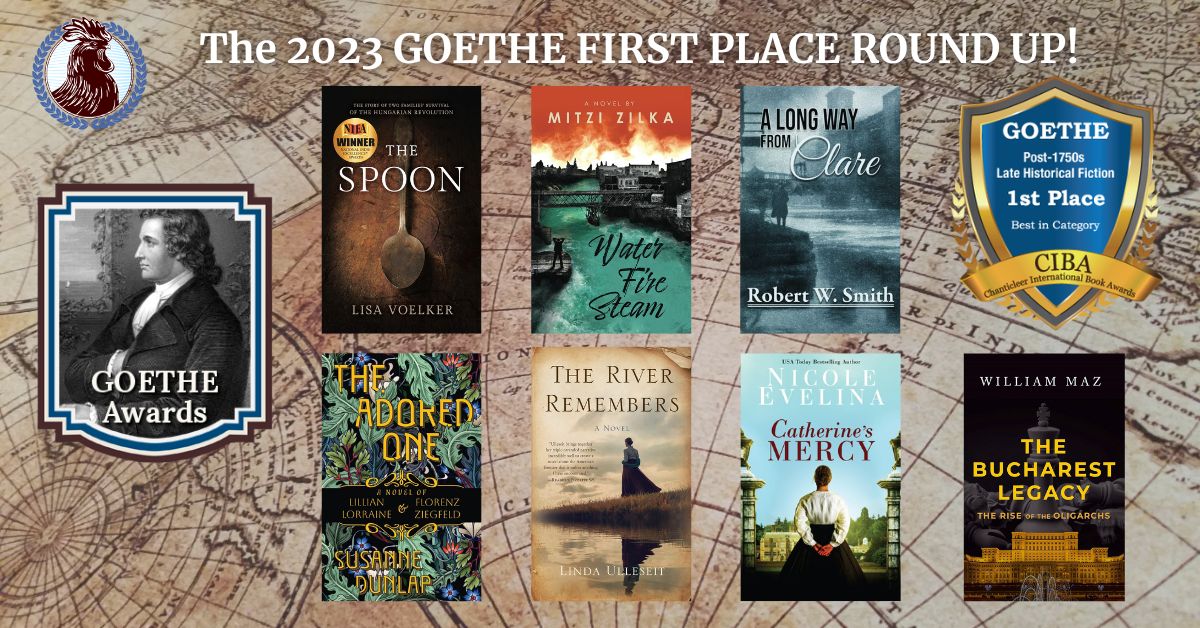
This is the OFFICIAL 2023 LIST of the GOETHE BOOK AWARDS First Place Category Winners and the GOETHE Grand Prize Winner.
Join us in celebrating the following authors and their works in the 2023 CIBAs.
Lisa Voelker – The Spoon
Robert W Smith – A Long Way from Clare
David Calloway – If Someday Comes
Mitzi Zilka – Water Fire Steam
Susanne Dunlap – The Adored One
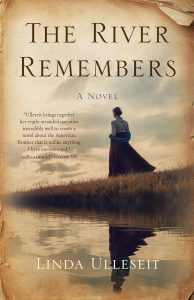
Linda Ulleseit – The River Remembers
Nicole Evelina – Catherine’s Mercy
William Maz – Bucharest Legacy: The Rise of the Oligarchs
The Grand Prize Winner for the CIBA 2023 GOETHE Awards is:
Attn CIBA Winners: More goodies and prizes will be coming your way along with promotion in our magazine, website, and advertisements in Chanticleer Int’l Book Awards long-tail marketing strategy. Welcome to the CIBA Hall of Fame for Award Winners!
This post has been posted on the Chanticleer Facebook Page. We try to tag all authors listed here in the Facebook post. However, for Facebook to allow us to tag an author, that author must LIKE our page and Follow Chanticleer Reviews.
Additionally, we also post on Twitter. Chanticleer Facebook and Twitter handle is @ChantiReviews
Or click here to go directly to Chanticleer’s Twitter feed.
A Note to ALL the WINNERS: The coveted CIBA Blue Ribbons will be mailed out starting inJune. We will contact you with an email to verify your mailing address and other items. You will receive an OFFICIAL EMAIL NOTIFICATION with Digital Badges and more information.
NOTE: We will post at least two 2023 CIBA Divisions’ OFFICIAL Winners per business day starting April 24, 2024. We do a final sweep and reconciliation prior to making the Official CIBA Posts for the 2023 First Place and Grand Prize Winners. We thank you in advance for your patience and understanding. There are many moving parts involved with the Chanticleer International Book Awards Program.
Thank you for participating in the 2023 CIBAs! We are looking forward to reading your future entries.