Tag: Contemporary Social Issues

  • UNFOLLOW ME by Kathryn Caraway – Memoirs, Stalking, Contemporary Social Issues

    When you’re a target of stalking, “Each day is a fight to stay alive. Even while sleeping, you must be ready.” So reveals Kathryn Caraway in Unfollow Me, a spine-tingling true crime novel tracing a life shattered by severe stalking.

    Although the author uses the pseudonym “Kathryn Caraway” throughout this novel to protect her identity, her harrowing tales of being the target of a stalker and fighting for her rights to freedom and safety are a testament to the real danger she was exposed to. Caraway’s experience creates a compelling story of one woman’s brave quest for justice against her torturer.

    Kathryn emotionally, mentally, and physically falls apart at the hands of a violent, ubiquitous presence. Despite the severity of the crimes committed against her, Kathryn’s concerns are routinely dismissed as irrational and hysterical by law enforcement officials, lawyers, and even long-time friends.

    Before a malicious intruder targets her, Kathryn is a beloved mother, a wonderful friend, and a confident employee. But after she is introduced to Todd, he begins to slowly strip her life from her control.

    Todd absorbs Kathryn’s routines and destroys any sense of safety. He starts hurtful rumors that damage her reputation and cause her to doubt herself and others around her. He invades an office space in her home, installs secret security cameras and listening devices, tracks her car, kidnaps her dog, clones her phone, and befriends her abusive ex-husbands, making her life a living nightmare.

    His aggressive actions only increase in extremity and frequency.

    Overtime, Kathryn’s circle of trusted people becomes smaller. Her sleep and mental health degrade as she spends every second aware of her vulnerability and Todd’s proximity. Any sense of normalcy is turned upside down as Kathryn is forced to become a ghost observing the shambles of her previous life.

    An inspiring story of survival, Unfollow Me brings awareness to the horrors of stalking and its devastating effects on the mental health of those targeted.

    Despite the seemingly endless suffering and anxiety, Kathryn remains steadfast in her commitment to defend her safety and punish Todd for his crimes against her and his other targets. Juggling hundreds of pages of documented incidents in a black binder, Kathryn assembles a case against Todd. Her sacrifices and bravery serve as an eye-opening lesson to readers on the lack of resources for those subjected to stalking and how to support those who are in danger.

    Caraway’s true-to-life novel focuses much-needed attention on stalking as a crime, its consistent dismissal by law enforcement, and the suffering of those who have been targeted

    Caraway not only shares her first-hand experience as a person who’s been the target of a sadistic stalker, but also the lack of compassion by those who are supposed to protect her. Left to fend for herself, Kathryn spends three years advocating for her own survival as any semblance of trust for others is demolished, which leads her to distrust her own mind. “My sole focus was on survival,” she writes. “Life, as I knew it, had become unbearable.”

    Caraway’s diligent attention to detail, a practice learned from years of scrupulous incident documentation, allows her to craft a truly captivating story. Readers will find themselves clenching every muscle in anticipation as Unfollow Me unfolds, horrified and enraged, but ultimately inspired.

    Unfollow Me by Kathryn Caraway won Grand Prize in the 2024 CIBA Journey Awards for Overcoming Adversity in Narrative Non-Fiction.


  • NOT THAT KIND Of CALL GIRL by Nova Garcia – Contemporary Fiction, Mexican-American Fiction, Contemporary Social Issues


    Blue and Gold Somerset First Place Winner Badge for Best in CategoryIn Nova Garcia’s novel, Not That Kind of Call Girl, Julia Navarro-Nilsson balances a lot heavy responsibilities on her plate. She’s the supervisor of the Cascade City Chronicle call center, has just had her first child, and is dead set on saving her newest employee from a lifetime of abuse.

    As a Mexican-American, Julia knows first-hand how difficult life can be for a minority woman, so when Carmen Cooper shows up for a job interview, Julia is determined to hire the young college student even though her story and answers to Julia’s question are sketchy. This reluctance to share her personal information intrigues Julia, but Carmen’s life turns out to be much more challenging than Julia would have ever dreamed.

    Sussing out the truth behind the timid young woman’s clearly fictional story, Julia turns detective with the help of her reporter friend, Jerry. The two are dogged in their search and discover a secret so deep that it will rock Hollywood — that is, if she can juggle her new baby, her neglected husband, her sexually harassing boss, and an unending visit from her critical mother.

    Julia’s detailed character makes her easy to empathize with, especially as she faces issues that many women confront in the real world.

    Her biggest personal struggle is with motherhood. After the birth of Trey, Julia expects to be overwhelmed with her love and devotion to this tiny person. However, when she doesn’t feel those things — feeling almost the opposite actually — she is shocked and disappointed in herself. She has no immediate connection, instead suffering from postpartum depression.

    To add to her fears of motherly inadequacy, she endures multiple bouts of mastitis — landing her in the hospital on one occasion— and she finds that maternity leave feels like a prison sentence rather than a chance to bond with Trey. She hates that she is missing work and hates that she hates that! Julia’s muddled feelings leave her frightened and uncertain, far from her sense of self pre-motherhood.

    Like many women, Julia has a hard time accepting her body for what it is.

    She has never been a petite size four, like her still-attractive mother, who always pressures her to conform to a different standard of beauty. Julia is tall and full-figured, a curvy, sensual woman. Post-birth, she feels “fat” and unattractive. Because she has to continue wearing her maternity pants (another very common experience), Julie feels as though she has failed again in some way. Though her adorable, loving husband Charlie still tells her she is beautiful and shows her that he continues to find her desirable, Julia has a hard time engaging in any physical contact. Her mother’s comments don’t help the situation, and with her confidence in tatters, Julia stress eats, continuing an unhealthy cycle.

    Julia takes great pride in her position as call center manager for the local newspaper, but that position comes with near-constant harassment from her boss.

    She cares about her employees, knows their problems, and is fighting for their jobs as the newspaper owners negotiate a sale of the business. In fact, it’s this level of concern that leads to her involvement in Carmen’s tragic life. Julia takes her job seriously and maintains high expectations for herself, but at every turn her boss Carlton Cressey epitomizes a villain to all of womankind. He makes jokes about various body parts and propositions Julia directly for sex. Even though she is a hard-working employee, likely his best, he can only see her body and face, so not only is Julia worried about her employees losing their jobs, she is also worried about losing her own if she reports him to HR.

    Julia is a strong, normal woman. She’s not a superhero or a rich Country Club wife. She’s real, and many readers will identify with the problems she faces.

    Not That Kind of Call Girl by Nova Garcia won First Place in the 2023 CIBA Somerset Awards for Literary and Contemporary Fiction.


    Somerset Literary and Contemporary Chanticleer International Book Awards 1st Place Winner oval Gold Foil sticker

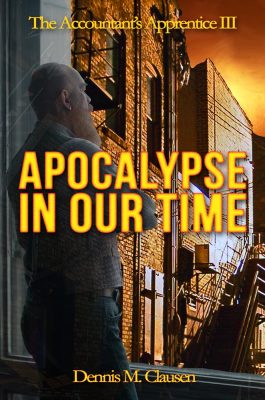
  • APOCALYPSE In OUR TIME: The Accountant’s Apprentice Book 3 by Dennis M. Clausen – Paranormal, Metaphysical Fiction, Contemporary Social Issues


    In The Accountant’s Apprentice III: Apocalypse In Our Time by Dennis M. Clausen, the director of a homeless shelter sees subtle changes in the community around him, changes that are both worrisome and bizarre—portending a change to the world beyond human understanding.

    The story of Justin Moore, director of a homeless shelter in San Diego, continues. In the previous books in the series, he has met individuals who seem to be not quite of this world. A.C., a mysterious man in a wheelchair who played an important role earlier in the trilogy, is gone as of the third book, but his wheelchair is now being used by another man— seemingly catatonic and with no name. This man is known only as “Levi” by the staff at the bus depot where he was found, but Justin finds there is something more to him beneath the surface. Levi seems to have certain things in common with A.C., but with unique abilities. Justin is warned by a woman that the man he knows as Levi may be dangerous, but is he? And who is she, anyway?

    So many questions are raised, and Justin has few if any answers. In the previous book, he saw a demonic army gathering on the horizon. Was that real? A.C. had given Justin a limited ability to see the future, and a horrifying promise of things to come:

    “No one else saw what I saw that day. They only saw the huge, monstrous tsunami wave approaching from the west and engulfing the Mission Beach Pier. They did not see the demonic army forming on the horizon and threatening every living thing on the shore.

    “… A. C. did what he said he would do. He used me as his camera to see present events—but also future possibilities. What I saw on the pier was not only a vision of the tidal wave that was approaching from the west. It was a vision of the future and the demonic forces of pure evil that were aligned against all life on the planet Earth.”

    Apocalypse in Our Time gives us a peek into the future— or perhaps a peek into our own minds. A story of the world coming of age, so to speak, with menace on the horizon and possible salvation, if such a thing can exist.

    As this story continues, the narrative becomes deeply intriguing. The beginning reintroduces readers to the setting and characters, and once this final part of the series begins in earnest it gives us a sense of wonder and mystery, while at the same time the alarming scenario escalates around Justin. The intensifying plot echoes through well-fleshed-out characters like Angelina, a young girl living in the homeless shelter, fascinated by Shakespeare and his works, who explores her own unique abilities—and connection with Levi.

    End of the world, or something more? That is left to the reader to decide. Certainly, after the events that the characters see and experience, the world—and they—will never be the same. Dennis Clausen’s third work in his trilogy is both ephemeral and thoughtful, making the reader wonder about the end of the world well after the end of the book.


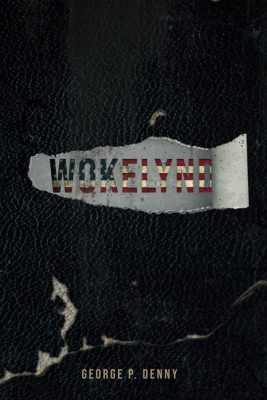
  • WOKELYND by George Denny – Dystopian, Political Fiction, Contemporary Social Issues

    Wokelynd by George Denny transports readers to a futuristic New California, where the government’s benevolent rhetoric of equity and inclusion disguise instead an insidious quest for power and dominance.

    A panoramic view of New California as an independent nation in 2066 sets the scene. The authoritarian JSS (Justice of Social Soldiers) wields absolute control over the population of this nation, where despotic policies stifle human autonomy. The ‘intersectionality score’ of an individual governs their position in the social hierarchy; the higher the score– the higher the chances one has experienced historical oppression– the higher their privileges. The result is chaos: an ideological rift has taken over the nation as the Liberati challenge the status quo with a stance of ‘Anti-Anti-Racist ideology’.

    Distrust and division pervade New California. The story opens on a fierce military operation between the JSS and Nevada at Lake Tahoe over ideological disputes. The ambiguity and perplexity of soldiers are embodied through Quinceton, a teenage sniper with the identity of a straight cisgender boy of African descent. A soldier under the JSS government, Quinceton straddles his commitment to JSS and his dilemma due to a growing awareness of the complexities in the despotic system. Wokelynd ushers Quinceton along a journey of self-discovery and resistance, along with companions Sarah and Bones, as they navigate the treacherous paths of identity politics and societal change.

    The climax throws Quinceton into the throes of uncertainty as he grapples with the JSS’s professed motive of universal equity versus their thirst for power.

    The horrors of warfare with Nevada further disillusion Quinceton, leading him to question his duty and the greater good of all. As Quinton and his companions navigate through the apocalyptic landscape of post-war New California, they encounter the elderly Tinh, living off the grid with his family. Tinh reveals his involvement in the secret network ‘Rooftop Railroad’, aiding refugees out of JSS’s grasp, as well as opening clandestine chapters in the history New California, which were otherwise written only from the regime’s viewpoint.

    The encounter foreshadows a critical juncture for the three soldiers, especially Quinceton, as they turn to the precarious roles of revolt and defiance. The peril of Anti-Anti-Anti Racist (AAA), the muscle of JSS, awaits them. To AAA patrolpersons, dissenters are terrorists who end up in the ‘DIE’ camp– offers either indoctrination or death. With AAA’s manipulation and severe disciplinary measures in place, the trio is headed for a future where equality reigns supreme.

    George Denny makes an intriguing correlation between language and power dynamics.

    The JSS government exercises control by shaping the discourse of citizens. Phrases such as “Anti-Racist” and “Anti-Anti-Anti-Racist” (AAA) reinforce the ideas that the New Californian Society stigmatizes. Likewise, the title “Knowers”, for the top members of society with the highest influence over people and policymaking, reflects the government’s implied justification for their every decision. But this use of language to maintain authority is echoed in the linguistic tactics of the opposing Liberati to mobilize resistance.

    Social and political allegory of frail government policies and the erosion of freedom manifest through Tinh’s family. Tinh disregards the JSS’s programs aimed at promoting equality and welfare. He stresses autonomy and self-reliance, recognizing the inherent limitations of government projects that perpetuate exclusion and dependency despite their professed objective of encouraging fairness.

    “The most potent weapon in the hands of the oppressor is the mind of the oppressed.” This quote by Steve Biko reverberates in the pages of Wokelynd. This piece lays bare an insatiable desire for power and control contrasted with the indomitable spirit of human agency.


  • I AM A PRISONER Of HOPE by Samuel Ole Lotegelauki, PhD – Contemporary Social Issues, Race Relations, Black History


    Author Samuel Ole Lotegeluaki, PhD, states in the very title of this book, I Am a Prisoner of Hope. He goes on to explain why this is the case and why hope is central to our beingness.

    A Maasai originally from Tanzania and one of three boys in a family with eight children, Lotegeluaki has been living in the United States for many years and has seen much good and much bad, in the country and around the world. In defiance of social inequality and bigotry, Lotegelauki maintains a strong belief in human unity, “Day and night I am reminded of the fact that we as human beings, regardless of culture, language, religion, gender, skin color or social economic status, are all under God’s huge canopy, and we are convincingly related.” He reminds us, “You may not look exactly like me, but rest assured, we are not just related, but more importantly, we are siblings.”

    Lotegeluaki tells the reader his experiences, the histories of places he has lived and the people he has met, and observes what each has to teach and offer humanity. He remains dedicated to the pursuit of togetherness within diversity, no matter our differences. In Chapter Four, “Grandmother’s Quilt,” he uses the metaphor of a handmade quilt with emotional overtones and ties to explain human nature and all that it entails.

    Lotegelauki goes on to investigate the history of the worldwide slave trade, how it introduced and transformed African cultures in North America, and how it has affected American society to this day.

    The Civil Rights Movement was a start to heal the wounds inflicted during the slave trade years, but bad blood and racial strife have continued throughout the succeeding decades. In the following chapters, we are reminded that humanity is too complex and multi-faceted for any group of people to hold dominion over all others, “None of us can claim the absolute ownership of this global canopy.”

    Nor can we simply assume that we can “make a home in some other places such as Mars or even the moon,” Lotegelauki states. Perhaps in a few years that may be possible, but until that time, we still have to deal with the world we have now, and the people we have now. “We all belong to one race, and that is the ‘human race.’ Getting along is not and should not be a choice, but rather a necessity.”

    This book points to the work yet to be done towards true unity. Are we there yet? Not on your life. Are we well on our way to being better? It doesn’t hurt to keep working on it, does it? We keep trying. We are only on this earth for a short period of time, Lotegeluaki reminds us, and we need to make the best of it.


    5 Star Best Book Chanticleer Reviews round silver sticker

  • THE DECEMBER ISSUE by J. Shep – Journalistic Fiction, Contemporary Social Issues, Literary Fiction


    In The December Issue by J. Shep, a veteran columnist stands up for his controversial work, despite intense public pressure to disavow it.

    Paul, a retiring columnist, has earned vast applause for his amusing, playful, and inspiring monthly column in The Current Front. However, this renown flips on its head after the November Issue’s release, when masses of readers give a hostile retort to his article. His sentiment regarding ‘loss of class’ in American society angered both older and younger readers, as proved by the huge pile of mail on his desk.

    The firm’s management can’t help but notice the trouble their most reliable writer has caused.

    Dolefully, Paul finds himself pressed to put out a public apology and rewrite the December issue, which he had earlier submitted. But in an unlikely turn, sales of the contentious November publication begin to soar. This sudden success, ensuing shortly after news of Paul suffering a horrifying accident hit the airwaves, sends him into a state of wonder and astonishment.

    The December Issue warms up the soul from its first chapter to the last.

    Paul’s engaging arc pays homage to a thriving career in journalism, revealing its benefits and drawbacks. His distinctive point of view forms the backbone of the story, which relates to the modern writing of op-ed pieces with ingenuity.

    Worthwhile conversations, clarity of thought, defined points of view, and unique characters, all contribute to the stellar whole of this book. Author J. Shep writes with colorful, fast-moving, and provocative style, which evokes fascinating ideas in the reader’s mind.

    As Milton Glaser famously said, “There are three responses to a piece of design – yes, no, and wow!” The December Issue insists that one should always aim for ‘wow.’

    This story will inspire, particularly those readers in the featured vocation of journalism. A worthy read that illustrates how one can recognize, support, and develop the diverse talents in their organizations.

    All things considered, The December Issue is a splendid work of enormous value and imagination.

    Available for pre-order now!

    5 Stars! Best Book Chanticleer Book Reviews

  • MADDIE Q by Allan Havis – Political Fiction, Contemporary Social Issues, Psychological Literary Fiction


    Maddie Q by Allan Havis illustrates one woman’s transformative journey through a web of dangerous beliefs.

    The personality of conservative Maddie Crawford takes center stage as she finds an epiphany in the stormy aftermath of the January 6th Capitol riot. Existing beliefs collide, casting her into a churning sea of contradictory feelings. The author entwines her internal struggle of belief and identity with the contentious QAnon theory. Set against the backdrop of the COVID-19 Pandemic, this fusion gives rise to a storyline that harmoniously links personal introspection with societal upheaval.

    The backdrop of the “Stop the Steal” march and the chaotic events of January 6th propel Maddie into disillusionment. Conspiracy theories and extremist beliefs entice her away from reality, radicalizing her. Maddie becomes convinced that only drastic measures can confront what she perceives as a corrupt establishment, exemplified by her attempt to kidnap a school trustee in the name of her skewed sense of justice.

    Pushed to the brink of despair, she wrestles with the solitude that her beliefs brought her and even contemplates ending her own life. The question lingers as Maddie navigates her never-ending search for meaning: will she be able to conquer the engulfing darkness of past demons and find the way to illumination?

    Havis investigates the complex interplay between personal challenges and the search for larger significance.

    Many of the characters must form undying resilience. Hortense, Maddie’s aunt, faces challenges that go beyond her physical ailments. She dreams vividly of existential concerns and mortality, proving her desire for enlightenment and life beyond the material world. Parallel to these two women’s struggles is Maddie’s sister Heather, a transgender woman who contributes to the story’s exploration of gender dynamics. The author aims to highlight the underlying thread that connects these characters – their defiance, reflection, and search for meaning.

    Maddie Q shifts between different moments in time and points of view, enabling readers to grasp the internal and external battles that lead to each character’s beliefs.

    This story delves into the complexity of political extremism and the individuals who are caught in its wake. Family dynamics, especially between Maddie and her aunt Hortense, underscore the intergenerational sharing and changing of values. Exploration into politics and conspiracy theories highlights the sheer power of extremist beliefs to control individual thought, paired with the tremendous reach of such views in the digital era. Readers are encouraged to challenge their perspectives and to look for common ground in the rich tapestry of varied ideologies.

    Maddie Q navigates a plethora of beliefs and their immutable impacts on the psyche, emphasizing the human desire for understanding even under the heaviest convictions.


    Chanticleer Book Reviews 4 star silver foil book sticker

  • LIES In BONE by Natalie Symons – Psychological Mystery, Contemporary Social Issues, Family Saga


    Blue and Gold Badge or Lies in Bone Grand Prize Winner of the Somerset AwardsFrom the first paragraph of Lies in Bone, Natalie Symons’ debut novel delves into human darkness.

    Lies in Bone, set in a factory town in 1986 Pennsylvania after its industrial boom faded, is told from the point of view of a girl who struggles with more than usual teenage angst. Symons relentlessly reveals the fear, ignorance, and poverty which often suffuse a community left behind.

    The residents of Slippery Elm, Pennsylvania, were bewildered and ill-equipped to deal with their new reality when the steel mill shut down seven years before, leaving many unemployed and discouraged.

    Frances Coolidge, known as Frank, knows the struggle of being left behind.

    This fifteen-year-old has helped her hapless father raise her young sister, Boots. She had to step up after her pregnant mother left their family. No matter that Boots was an infant, no matter that they needed her, she abandoned them.

    Close to Christmas, 1986, thirty-four-year-old Chuck moves Frank and a six-year-old Boots from the only home they’ve ever known in Troy, New York, to his hometown, Slippery Elm. Frank has no idea what to expect. She does know she doesn’t want to move — and she does know fear. Her mother is gone, moved away to Florida to fight her demons, according to Chuck. Their grandmother, Ruth, lives in Slippery Elm, but Ruth has cancer, and their father has decided they need to move in and help care for her.

    After the move, Chuck’s family history begins to surface in bits and pieces, and Frank questions his painful secrets.

    She learns that Chuck had a younger brother, Danny, who mysteriously disappeared. Ruth mourns for Danny, her lost son, seeing Chuck as a monster who should have disappeared instead. She calls Chuck a liar, and prays for God to have mercy on his soul, leaving Frank with the simple question, why?

    Frank is haunted by her own family trauma, the memory of her mother’s departure. Chuck won’t discuss it, nor will he talk about his childhood. He drinks too much and frequently disappears for hours without explanation.

    What ensues is a tightly written, fast-paced tale that reveals a side of humanity driven by madness, lust, zealotry, and more. And just when a metaphoric light glimmers at the end of the tunnel, it suddenly explodes.

    The motley cast of well-developed characters melds into Frank’s past and future, creating a story that stretches readers’ imaginations. The more Frank learns, the more she realizes that things are not always as they seem, that random events have hidden meanings, and that actions from the past exist as long as there is someone left to remember them.

    Lies in Bone, in some ways reminiscent of Dennis Lehane’s work, will likely have a place among classic neo-noir books — and  Natalie Symons seems destined to join Lehane among the ranks of celebrated writers of the genre.

    For readers who appreciate well-written, well-plotted psychological mysteries that dive deep into the human condition, Natalie Symons’ Lies in Bone is a keeper.

    Lies in Bone by Natalie Symons won Grand Prize in the 2021 CIBA Somerset Awards for Literary & Contemporary Fiction.


    5 Stars! Best Book Chanticleer Book Reviews

  • THE KISSING RABBI by Andy Becker – Small Town Fiction, Jewish Community, Contemporary Social Issues


    Blue and Gold Mark Twain First Place Winner Badge for Best in Category

    Based on a true story, Andy Becker’s tale The Kissing Rabbi is a smart, witty, and engaging novel that takes readers into the heart of a Jewish community in the Pacific Northwest.

    Here a young, self-serving rabbi sets a town on edge when his salacious desires and personal financial agenda are brought to light by the people he was brought there to serve.

    Rabbi Mishegas Dreidel, a young orthodox leader, arrives in the quiet town of Destiny, Oregon. His intentions seem noble as he opens up a synagogue in his basement and establishes a flock of dedicated followers.

    Over the next decade, the ever-present counselor builds friendships with his congregants, invites them to dinner, and shows concern for their spiritual well-being. With a wife and nine children to support, he encourages donations from his believers and secures a monster loan to build a beautiful house of worship. He becomes the central cog in a world that he sculpted.

    Unfortunately, this rabbi is not the wholesome spiritual leader he claims to be.

    Dreidel pushes his unwanted advances on several of the women in the community, seeking to explore his sexual proclivities under the guise that he wants to improve his own marital relationship.

    This proverbial wolf in sheep’s clothing also involves himself in several secretive monetary dealings. These reach the point where lawyers and the high Jewish court system must get involved to decide whether this narcissistic religious principal must be ousted from his position.

    Becker’s absorbing and evolving storyline is well-paced, with a central character whose unstable and remorseless responses to these accusations keep readers invested.

    With a colorful cast of characters from rabbis and congregants to attorneys, victims, and investigative reporters, we witness Dreidel’s fall from grace. Comments like “…a half-truth is still a whole lie,” and “You can’t put a black hat on a pig and call him a rabbi!” show the anger of this wronged town.

    In a nod to the recent “Me too” movement, Becker delivers a timely cautionary tale, yet infuses the story with touches of wit and humor.

    The sprinkling of Yiddish words used throughout brings cultural flavor to the narrative. The appearance of a rabbi group that goes by the moniker TUCAS, (Torah, Understanding, Compassion, Atonement, and Solidarity), an acronym reminiscent of the Hebrew word for butt (tuchas), and other humorous touches bring a balance to the dark clouds invading this suburb.

    While the accosted women, both young and old, initially sympathize with the young rabbi’s plight, his phone calls, texts, and unwanted advances force them to recognize the troubled zealot for what he truly is. These shocking revelations divide a community that ultimately hopes for truth and redemption.

    In the tradition of Jewish storytellers, Becker’s narrative voice provides a glimpse into orthodox traditions but also examines the nature of human foibles and frailty.

    Here that duality is clearly showcased in a patriarchal enclave and the man who holds power over it. Greed, hubris, and narcissism appear as the root of his evil undoing.

    Against the backdrop of a warm and welcoming environment, Becker delivers a world turned upside down by their beloved leader, and readers will see that inevitably “the kugel hits the fan!” within this thought-provoking, entertaining story.

    The Kissing Rabbi by Andy Becker won First Place in the 2021 CIBA Mark Twain Book Awards for Humor and Satire Fiction.


    5 Stars! Best Book Chanticleer Book Reviews

  • THE CAMERA’S EYE by Judith Kirscht – Mystery, Family Saga, Pacific Northwest

    THE CAMERA’S EYE by Judith Kirscht – Mystery, Family Saga, Pacific Northwest

    A peaceful home in the San Juan Islands turns perilous when two women are persecuted by residents who have plenty to hide when The Camera’s Eye is turned on them. Master storyteller Judith Kirscht presents a thrilling mystery with heart, ripe for today’s environment and rich for readers.

    Veronica and Charlotte considered themselves unlikely targets of hate crimes, after all, who wouldn’t like two nice white-haired ladies who share a home for economy and company on an island in Washington’s Puget Sound? Both women have tragic family histories which they thought they’d left behind, but trouble never really lies quietly for long.

    Veronica has the gift of capturing the truth with her constant companion, Constance, her beloved Nikon camera. When she captures an uncomfortable truth in their new neighborhood, the eye of persecution turns and focuses on her and Charlotte. In The Camera’s Eye, the reader comes face to face with how perception encourages action, and how action can either heal or destroy.

    From the beginning scene, Veronica and Charlotte are in jeopardy as a rock is thrown through their window in the middle of the night. Who would do such a thing? With pasts that cultivated their own sets of demons, the friends have their own ideas, and the field is rife with possibilities. However, when the local law enforcement shows up and suggests that their lifestyle is to blame for the attack, the women go on the defense and start their own investigation as to who and why they have suddenly become targets.

    This story is not to be confused with a cozy. Kirscht opens the story with violence and forces the reader to examine the many results of hard decisions made with the best intentions, and question philosophies based on the letter of the law rather than on love. It’s a mystery, certainly, but with an unrelenting grip and careful sleuthing that feels more sinister as the plot unfolds.

    Rich with superb dialogue and beautifully penned scenes, The Camera’s Eye is typical of Kirscht’s style and readers will be hard-pressed to set this book down. As one event leads to another escalating event, our characters wits and wills are tested as they struggle to make sense of the violent hatred surrounding them and the blatant disregard for their well-being at the hands of the authorities who are supposed to protect them.

    A Chicago native and multi-award-winning author, Judith Kirscht makes her home on an island in the Puget Sound in Washington state where she spends her time taking her dogs for walks, discussing dinner plans with friends, and penning her next literary masterpiece. The Camera’s Eye is Kirscht’s fifth novel.

    “In a world where too many rocks are thrown at those who represent anything other than the norm in middle-class white America, two friends decide to take matters into their own hands and stand up to the hatred with which they are targeted in order to save their home and ultimately their lives. Hot off the shelf from the literary award-winning author, Judith Kirscht, The Camera’s Eye will challenge the reader to focus on what they believe and how their beliefs inform their actions. A very important book for our times.”

    5 Star Best Book Chanticleer Reviews round silver sticker