Tag: Contemporary literature

  • The CHATELAINE 2014 AWARDS FIRST PLACE Category Winners for Women’s Fiction and Romance Novels

    The CHATELAINE 2014 AWARDS FIRST PLACE Category Winners for Women’s Fiction and Romance Novels

    Chanticleer Book Reviews is honored to announce the First Place Category Winners for the CHATELAINE AWARDS 2014 for Women’s Fiction and Romance Novels, a division of Chanticleer Blue Ribbon Writing Competitions.


    book award for Romance Novels The Chatelaine AwardsThe CHATELAINE  Awards recognize emerging new talent and outstanding works in the genre of Women’s Fiction and Romance Novels. The First Place Category Winners will be recognized at the Chanticleer Authors Conference and Awards Gala held in late September 2015.


    Chanticleer Reviews is proud to be a literary affiliate of the Historical Novel Society.


    Congratulations to the CHATELAINE FIRST PLACE Category 2014 Award Winners:

    • Historical: Catherine A. Wilson and Catherine T. Wilson  for The Order of the Lily  
    • Romance Regency: Kerryn Reid for Learning to Waltz 
    • International Intrigue/World Events: Kristine Cayne for Deadly Betrayal
    • Contemporary: Kim Sanders for The Ex Lottery
    • Mystery/Suspense/Thriller Romance: Donna Barker for Mother Teresa’s Advice for Jilted Lovers
    • Blended Genre:  Janet Shawgo for Find Me Again
    • Inspirational/Restorative: Peggy Patrick for Surrendered II: Pride 
    • Romance & Adventure: Martha Rather for Kismet or Kamasutra
    • Fantasy/Mythological: Danica Winters for Montana Mustangs
    • Jane Austen Inspired: Betty Codd for Eleanor Grace 
    • Debut Novel: Julie LeMense for Once Upon a Wager
    • YA: M.A. Clarke Scott for The Dissimulation of Doves 
    • Women’s Fiction: Kate Vale for Destiny’s Second Chance
    • Women’s Fiction/Humorous: Lisa Souza for  Beauty and the Bridesmaid 
    • First Loves: Jennifer Snow for The Trouble with Mistletoe

    CONGRATULATIONS!

    To view the 2014 Chatelaine Finalists whose works made it to the short list, please click here.

    Good Luck to the Chaucer First Place Category Winners as they compete for the CHATELAINE AWARDS 2014 GRAND PRIZE position!

    The 1st Place Category Winners compete for the CHATELAINE AWARDS 2014 GRAND PRIZE position. The 2014 CHATELAINE category winner was announced at the Chanticleer Authors Conference and Awards Gala in September 2015. See the Grand Prize Winners.

    The deadline for The Chatelaine Awards 2014 was August 31, 2014.
    The deadline for The Chatelaine  Awards 2015 is August 31, 2015.

    GRAND PRIZE Overall Chatelaine Awards Winner from 2013:

    KCHOICESate Vale for Choices

    To view the 2013 Chatelaine Award Winners, please click here.

    To enter the 2015 Chatelaine Awards, please click here. The deadline is August 31, 2015.


    To enter your work into a Chanticleer Writing Competition, please click here. 

    CBR’s rigorous writing competition standards are the reason literary agencies seek out our winning manuscripts and self-published novels. Our high standards are also another reason our reviews are trusted among booksellers and book distributors.Chanticleer Book Reviews & Media, L.L.C. retains the right to not declare “default winners.” Winning works are decided upon merit only. Please visit our Contest Details page for more information about our writing contest guidelines.

    Please do not hesitate to contact Info@ChantiReviews.com with any questions, concerns, or suggestions about CBR writing competitions. Your input and suggestions are important to us.

    Thank you for your interest in Chanticleer Book Reviews international writing competitions.

  • The SOMERSET AWARDS for Literary and Contemporary Fiction 2014 Official Finalist Listing

    The SOMERSET AWARDS for Literary and Contemporary Fiction 2014 Official Finalist Listing

    The Somerset Awards writing competition recognizes emerging new talent and outstanding works in the genre of  Literary and Contemporary Fiction. The Somerset Awards is a division of the Chanticleer Awards International Writing Competitions.

    SomersetWe are pleased to announce the SOMERSET  Awards Official Finalists List for 2014, otherwise known as the “Short List.” The Official Finalists Listing is comprised of entries that have passed the first three rounds of judging from  the entire field of entrants. To pass the first three rounds of judging, more than sixty pages of the works below  have been read and have deemed worthy by the CBR judges of continuing in competition for the SOMERSET Awards FIRST IN CATEGORY positions and their prize packages.

    Congratulations to the SOMERSET AWARDS 2014 FINALISTS:

    • Steve Lundin  for The Manipulator: A Private Life in Public Relations  
    • Emily Ruth Verona for Steady is the Fall
    • Ken Swarner  for Family of the Year 
    • Nancy Adair for Soon Coming 
    • Nathan Smith Hips for The Misfit’s Companion
    • Patrick M. Garry  for Finding Flipper Frank
    • Jim Musgrave for Freak Story: 1967 – 1969
    • Thomas H. McNeely for Ghost Horse
    • Michael A. Smith for Lightening’s Child
    • Kate McKenna  for True Stories of Local Heroes 
    • Ian Bull  for The Picture Kills
    • Jim Henniger for Recording a Kill
    • Laurie Fitzpatrick  for Niello
    • Michael Olin-Hitt for The Homegoing
    • Rian Everest for The Tangerine Trio
    • Michael Hurley  for The Vineyard
    • Jodie Bain for Inside the Walls of Matacalli City Zoo
    • Janet K. Shawgo  for Find Me Again 
    • Thomas Whaley for Leaving Montana
    • Faith McCune for Duffy’s World
    • Angela Brackeen for Lark, in Her Element
    • Rebecca L. Matthews for The Light Within 
    • Judy Kelly for That Ever Dies So Young
    • Tanya Fyfe for Lost and Found in Missing Lake
    • Drew O’Brien for The Sin of Mother Mary
    • Jessica H. Stone for The Last Outrageous Woman on Earth
    • Tom Glenn for No-Accounts
    • Maren Higbee  for Lana Fray and the Grand Plan
    • Jacab Larison for The Ones We Leave Behind
    • E.F. Winters for MEMELOOSE: The Island of the Dead
    • Enid Harlow for Good to Her
    • Kenneth Stokes for His Father’s Eyes, His Father’s Words, & His Father’s Ways 
    • Ginger Cucolo for The Knoll
    • Judith Kirscht  for Home Fires 
    • Roni Teson for Twist
    • Nicki Royall Peet for The Shaman’s Daughter
    • Diane Finfrock Farrar for The Door of the Heart
    • Jim Gillian for The SADM Project

    Good luck to all the Somerset Awards Finalists who made the Short List as they compete for the First In Category Positions!

    More than $30,000 dollars in cash and prizes will be awarded to Chanticleer International Blue Ribbon Awards Winners annually.

    cac3The SOMERSET First Place  Category award winners will compete for the SOMERSET Grand Prize Award for Best Literary  and Contemporary Novel 2014. Grand Prize winners, blue ribbons, and prizes will be announced and awarded on September 29th at the Chanticleer Authors Conference and Awards Gala, Bellingham, Wash.

    The First In Category award winners will receive an award package including a complimentary book review, digital award badges, shelf talkers, book stickers, and more.

    We are now accepting entries into the 2015  SOMERSET Awards. The deadline is November 30, 2015. Click here for more information or to enter.

    More than $30,000 worth of cash and prizes will be awarded to the 2015 Chanticleer Novel Writing Competition winners! Ten genres to enter your novels and compete on an international level.

    Who will take home the $1,000 purse this September at the Chanticleer Awards Gala and Banquet?

    Last year’s Chanticleer Grand Prize winner was Michael Hurley for The Prodigal.

    Last year’s SOMERSET GRAND PRIZE Award winner was Jeremy Bullian  for Individually Wrapped.

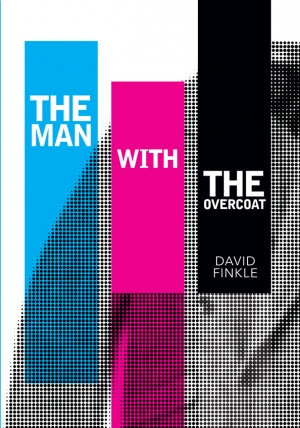
  • The Man With the Overcoat by David Finkle; a contemporary NYC novel

    The Man With the Overcoat by David Finkle; a contemporary NYC novel

    Arts writer David Finkle’s anti-hero, Skip Gerber, has many obligations—lukewarm devotion to his sort-of fiancé, obedience to his smother-mother, loans to his ne’er-do-well brother, and a tedious job at a New York City law firm founded by his father. But in the space of twenty-four hours, all that could change.

    It starts with an overcoat, handed to Skip as he’s leaving work one ordinary late afternoon, shoved into his hands by an anonymous man with these words: “Here you go, and be very careful with it.” Minutes later, Skip realizes he’s stuck with the coat and starts trying to figure out how to get rid of it on his way to a supper date with his fiancé. He begins to examine the coat, tries it on, and finds it to be of unusually good quality and, also remarkably, a perfect fit. Inventorying various items he finds in the pockets, he embarks on a mission to return the coat to its rightful owner.

    He roams the city on foot and by taxi, being tailed in traffic by a mysterious black limo and, on the sidewalk, by two young thugs in hoodies, constantly checking his cell phone for calls from the increasingly peeved fiancé, his nagging mother, and his brother trying to cadge a loan. But Skip gradually gets too wrapped up in the enigma of the coat to care about these distractions.

    Everyone he encounters tells him what a great garment he has acquired. Voice mails remind him to take care of it. Hustling uptown, downtown, and all around the park, following clues seemingly emanating from the coat, he goes from a once grand building that might have offered a hint about the coat’s owner, to the statue of a man holding what looks to be the selfsame coat, to an abandoned tailor’s shop where perhaps the coat was created.

    As the hours pass—compulsively checked on his fake Rolex—his fiancé dumps him by voice mail, his brother divests him of some cash, and he drops his childhood nickname. The coat yields more intriguing clues: a weird stone that might be a Mayan artifact and a shiny Indian-head penny.

    David Finkle is a New York based writer (The New York Times, The New Yorker, The Village Voice) who knows his setting well, describing the city and its denizens vividly. He strews bon mots through the narrative like a man feeding pigeons in the park, and deftly guides the reader through the increasingly complex thought processes of an erudite Everyman with an overcoat that gradually becomes a symbol of quality—quality of cloth and tailoring, quality of life.

    Twenty-four hours after he was the coat was thrust in hands, Edward has followed his instructions to care for it, has chased down his clues, and knows what to do next. The Man With the Overcoat by David Finkle is an entertaining top-shelf work of contemporary fiction that blends mystery, fantasy, and comedy. This is a tightly written story with rich and complex subtext that makes reading it a sublime pleasure.


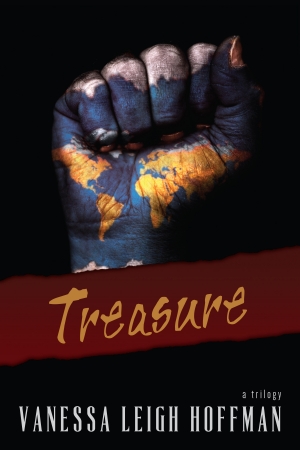
  • TREASURE: A Trilogy by Vanessa Hoffman

    TREASURE: A Trilogy by Vanessa Hoffman

    In the 1930s, a homeless, pregnant teenager dies in a New York shelter after giving birth to twin, golden-haired boys, identical in every respect except for a disfiguring birthmark. One child is adopted into a wealthy family; the other one ends up in an orphanage. Kenneth grows into a handsome, privileged, and self-absorbed man; Francis lives a hardscrabble life, raging against his fate and determined to one day balance the scales.

    Years later, Camille, a forty-something woman who has grown up in a loving family but has received more than her share of hard knocks in life, decides to spend the afternoon drinking in a tavern. There she meets a distinguished gentleman in his 60s, who introduces himself as Kenneth. They chat, and something clicks.

    Kenneth, a retired general from the military, owns a huge ranch and has made a vast fortune off cattle and citrus groves. For seven months, Camille dates the man of her dreams, believing that her luck has finally changed. Or has it? Is Kenneth who he says he is? For that matter, is Camille the woman Kenneth believes her to be?

    Thus begins a trilogy of absorbing stories, interconnected by fascinating characters and united by theme. Long after readers finish the book, they may find themselves reflecting on the questions Vanessa  Hoffman asks about how we lead our lives.

    Are our important life decisions the product of how we were raised by our parents? Or are they more heavily influenced by the instinct to survive? And once we make unethical choices, do we rationalize them and ignore any feelings of guilt? Ultimately, will we pay for our bad decisions, or will we skate through life, able to ignore the damage done to others?

    The people who populate Hoffman’s novel are neither wholly good nor wholly bad; but are merely victims of life’s vagaries. They are ordinary people, innocent, vulnerable victims, the self-absorbed and privileged, Irish Mafia bosses, and criminals in league with Jihadists. They have—in some cases—lucked out by an accident of birth, but in other cases, had to struggle to overcome daunting obstacles. All have made questionable, life-altering choices.

    Time and again, Ms. Hoffman draws a picture of a person who, had circumstances been different, might’ve made different decisions. In each case, Ms. Hoffman asks the question; will they suffer the consequences of their actions? Some readers may find Hoffman’s tone occasionally a tad preachy. However, the intriguing characters and the interwoven stories of suspense and political intrigue will remain with readers long after they finish the book.  Treasure: A Trilogy  raises important questions about the ways in which we live our lives. An engrossing and fascinating novel!

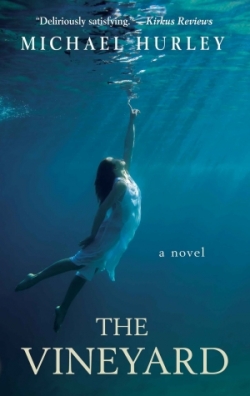
  • The VINEYARD by Michael Hurley

    The VINEYARD by Michael Hurley

    Martha’s Vineyard, an island located south of Cape Cod, Massachusetts, provides the tradition-laden setting for a summer reunion of three long-time girlfriends, who were roommates in college. Dory, Charlotte, and Turner are now in their early thirties, single, sharing their mistakes and their lives’ courses, which find them alternately in heaps of tears and laughter as they get reacquainted.

    For as pleasant a place as a well-appointed island guest-house should be for a reunion, a cloud of ominousness hovers over it. One of the girlfriends, Charlotte, has a darker purpose for attending the gathering. We, the readers, are accompanied onto the island with Charlotte and her well-thought out plan for self-destruction. Charlotte is distraught over a decision by the Catholic Church over her deceased daughter, and would rather be with her little girl than to try to find purpose or happiness in this life. However, the best laid schemes of mice and men (or in this case, women) often go awry.

    Dory, the host with the Vineyard estate, connections, and an overbearing mother, is staying the course of all familial expectations, driven by decades of what was handed down to her. Turner, the last to join the trio, has reason to doubt her course, but is too ashamed to confront Dory with what she knows.

    Mysteries, both major and minor, are introduced in the form of a stealthy blue-eyed fisherman – the only one who can find shrimp in the area; a glowing red light, and unexplained occurrences that have miraculous results for two of the ladies. The story takes unexpected twists and turns, as it meanders into the history of some of the local men and their relationships with the women.

    Surrounded by wealth, deception, opulent parties, and the high life of summer at the Vineyard, the fisherman stands in contrast as a beacon of innocence and light; a moral compass in a world of selfishness, extravagance and greed – an almost Christ-like figure some presume to be a prophet.  That makes him a target of those with lower impulses and motivations, and one of the women will betray him in an effort to save herself.

    Trust is violated in multiple ways as the women seek justice for some of the wrongs inflicted upon them by those with self-serving motives, motives that are in conflict with the trust their posts should elicit. Intimate situations arise, or in some cases, barely arise, and not always to the satisfaction of both parties.  Blackmail, manipulation, and ulterior motives abound. Meanwhile, one of the three is leaking out the miracles and the oddities of their summer via her blog, causing a stir none of them could have anticipated.

    Michael Hurley’s signature style of metaphor and allegory runs delightfully just below the surface of the storyline adding dimension and intrigue.  Scandal and betrayal juxtapose the idyllic and captivating setting of Martha’s Vineyard in this enigmatic work that encompasses tragedy and hope, human frailties and strengths, of contemporary American society.

    The Vineyard is a multi-layered modern tale of women’s self discovery and coming into their own, of men getting their comeuppance, and mysteries begging to be solved. An exposé of marriage and the Catholic Church drive the events and the histories of the characters and place. But where tradition may be lost, hope is not.  As the final pages approach all too quickly, The Vineyard delivers the satisfaction one hopes for, just as the rising tide carries a beached vessel back to safety of the deep.

    Michael Hurley’s The Prodigal won the Chanticleer Grand Prize for Best Book 2013 and the Somerset Grand Prize for Literary Fiction. The Prodigal was optioned for film rights by Diane Isaacs, executive film producer August 2014. His memoir, Once Upon a Gypsy Moon, is published by Hachette. We are looking forward to reviewing his next work, The Passage, that will chronicle his solo Atlantic Ocean crossing on his 30-foot sailboat, The Prodigal.


  • RAGGEDY MAN by Clyde Curley, The CLUE Awards Grand Prize Winner

    RAGGEDY MAN by Clyde Curley, The CLUE Awards Grand Prize Winner

    Detective Matt Toussaint is one of Portland, Oregon’s finest. Experienced and dedicated to the job of solving the violent crimes that plague his beloved city, his case clearance rate is one of the best. Because of his success, Toussaint is regularly asked to partner with and train new homicide detectives.

    As his latest murder investigation begins, he’s been assigned yet another new partner, Detective Missy Owens. Smart and known to be a rising star in the police department, Missy is nonetheless inexperienced at homicide investigations. Toussaint has his hands full, educating Missy about crime scene protocol while puzzling through the crime scene evidence.

    The murder victim, Ben Foeller, presents an intriguing contradiction: he is clean and neatly dressed, though his clothes are old and worn. His backpack contains literary works by some of the world’s famous writers, but Toussaint finds a vial of crack cocaine beneath his body. Is Foeller just a recent addition to Portland’s homeless community? Or was he under the bridge where his body was found for another reason, such as dealing drugs? And given that he’d recently traveled back to Portland from the East Coast, how does that connect with his murder in Toussaint’s fair city?

    Though the case appears at first glance to be a fairly typical crime associated with Portland’s homeless community, it quickly becomes apparent that the murder may have been committed for far more complicated reasons. As Toussaint digs ever deeper into the victim’s life, more contradictions arise. The cast of suspects is equally intriguing and includes members of Foeller’s own family, who are wealthy and influential, as well as a mentally disturbed homeless man whom Ben Foeller befriended. While some story elements reveal themselves logically as the police investigation unfolds, other details seem almost serendipitous, illuminating how simple circumstance can affect the outcome of any murder case.

    Mr. Curley has written an engrossing debut novel that immerses the reader in the lives of the characters and the city they inhabit. His story world is one that you don’t want to leave behind. His characters are fully-realized, living and breathing human beings struggling to make their way through days complicated by the best and worst of the human condition, and his writing is exquisite in its detail. I was disappointed when the book ended, and I am happy to know that Mr. Curley has written a second novel in the Detective Toussaint series titled A Cup of Hemlock. [fusion_builder_container hundred_percent=”yes” overflow=”visible”][fusion_builder_row][fusion_builder_column type=”1_1″ background_position=”left top” background_color=”” border_size=”” border_color=”” border_style=”solid” spacing=”yes” background_image=”” background_repeat=”no-repeat” padding=”” margin_top=”0px” margin_bottom=”0px” class=”” id=”” animation_type=”” animation_speed=”0.3″ animation_direction=”left” hide_on_mobile=”no” center_content=”no” min_height=”none”][Read Chanticleer’s review]

    Raggedy Man by Clyde Curley was awarded the CLUE Awards Grand Prize for Best Suspense/Thriller/Mystery Novel. The CLUE Awards is a division of the Chanticleer Reviews 2013-ClueInternational Novel Writing Competitions.
    [Editor’s Note: Clyde Curley’s  novels are prodigious—yes they come in at more than 500 pages, but you will be wishing it were longer—and are page turners that tackle and explore the big ethical and societal issues of today.  Curley’s deft use of murder mysteries to microscopically explore society’s ethical issues is nothing short of brilliant. Highly recommended.]

     [/fusion_builder_column][/fusion_builder_row][/fusion_builder_container]

  • An Editorial Review of “Ray Ryan” by Aiden Riley

    An Editorial Review of “Ray Ryan” by Aiden Riley

    An engaging contemporary coming of age story, Ray Ryan by Aiden Riley, follows and is narrated by the main character, Ray. The writing style is quite conversational and very British in its syntax. As the novel progresses through Ray’s life from childhood to mid-30s, the reader will learn of Ray’s challenges and fears, hopes and dreams that create the choices he must make to find his own way.

    The reader is first introduced to Ray in the year 1994 when he is still in grade school. Riley drops the reader right into the middle of Ray’s life and loves: his mother, Janet, his best friend, Kevin, and his passion for writing. While the love of writing takes a backseat for most of the story, Ray’s relationships, especially with his mother and best friend become central to the novel.

    Flash forward four years:  Ray is now in secondary school, scared out of his wits because not only is his new school enormous and intimidating, but he is still one of the smallest students around. Ray doesn’t let his size dictate passiveness however, and quickly learns that standing up for himself will not only get him left alone a bit, it also feels imperative. For the first time, Ray is not in class with his best friend Kevin, which takes him out of his comfort zone. The first day in class he meets a new friend, Anna, and makes a new enemy.

    The novel continues through Ray’s life and, as he gets older, life becomes simultaneously more rewarding and more challenging. For every bit of happiness there seems to be a bit of sadness or stress to maintain a balance. Ray falls in love. His father makes a reappearance in his life, and not for the better. His mother gives birth to his little sister. His friends get involved in drugs and face some hard times.

    When tragedy strikes unexpectedly, Ray must learn to cope with his new reality. The suddenness of the events may be a bit jarring for the reader, but do ring true to life and how tragedy occurs in the real world. Ray’s life changes forever and, like all of us who have experienced hardship, he runs through a gamut of emotions and comes out the other end the same, but different.

    Three years later, now in 2008, Ray’s life seems to be taking a new path when old relationships and feelings reappear. Ray must once again navigate tragedy, and in so doing, discovers what is truly meaningful to him. Events toward the end of the novel concerning the reappearance of Ray’s father may take the reader out of the story due to their inconsistency with the flavor of the rest of the novel.

    Readers should be prepared for traumatic and dramatic events of the non-cozy type (psychologically disturbing events).  These jarring events reflect vividly circumstances that some people experience in real life and add to the novel’s overall realistic and true-to-life tone. This is a brief hiccup however, as the conclusion of the novel is both satisfying and returns to the previously established voice and feel of a contemporary literary novel.

    Ray Ryan by Aiden Riley is a contemporary genre blending novel that does not follow a typical plot based structure. Rather each section highlights the important, life changing, and character building moments that the main character experiences. Riley’s characters are relate-able and authentic. There are a few of Ray’s cohorts with whom readers may find themselves desiring to shake some sense into—if only they could. At the same time, they will find themselves urging Ray on to follow his dream.

    Ray Ryan is a solid debut novel by Aiden Riley, an engaging contemporary coming-of-age story.

  • An Editorial Review of “How to Make a Pot in 14 Easy Lessons” by Nicola Pearson

    An Editorial Review of “How to Make a Pot in 14 Easy Lessons” by Nicola Pearson

    How to Make a Pot in 14 Easy Lessons by Nicola Pearson is the story of Joe, a potter, and Lucy, the British actress he has fallen in love with. Needless to say to anyone who has attempted pottery, throwing a pot together from lumps of earth is not easy—and that doesn’t take into inconsideration that the pot will survive the firing process! Hence, Pearson’s insightful basis for this delightful and unique love story.

    Lucy and Joe’s lifestyles could not be more different: Lucy is following a plan she has created for herself so she can experience working in theaters around the world, while Joe lives a simple life in the lush countryside of Western Washington, making his clay pots and expecting the unexpected with each firing of the kiln.

    Each phase of their relationship is based on the metaphor of making pots, a process that is as fluid and unpredictable as life.

    The story begins just as Joe has convinced Lucy to abandon her plan to travel to Australia to work as an actress and instead, move to Seattle. Even as Lucy agrees and boards the plane to fly out of Kennedy Airport in New York, she is troubled. One part of her is thrilled to be moving closer to Joe, while another part is worried that she has abandoned her passionate career plans for a man, something she promised herself that she would never do.

    Thus begins the journey of two people, one certain in the beginning that he wants to marry, the other troubled by emotions and impulsive decisions she doesn’t understand.

    While Lucy becomes more certain as time passes that she has made the right decision, Joe becomes less certain, less convinced that their relationship can work. Unpredictable events outside the couple’s control will force clarity on both, pushing them to confront their feelings and their relationship.

    Pearson has painted in vivid detail the lives of these two characters, as well as the ups and downs of a developing relationship. Her elaborate descriptions of the Pacific Northwest immerse the reader in the beauty of the Skagit Valley countryside where Joe builds his pots. Joe’s five acres, his home, and the minutiae of his daily life are depicted in such picturesque fashion as to bring the setting alive as a character in the novel. Readers will also enjoy the entertaining characters who add color and foils to Pearson’s captivating story.

    Pearson’s skill in describing the art of pottery making as a metaphor for the unpredictable nature of one’s life is unique and urges the reader to think about the lessons learned by the characters long after finishing the book. Fans of women’s fiction will certainly be waiting for more stories from this author.

  • An Editorial Review of “Home Fires” by Judith Kirscht

    An Editorial Review of “Home Fires” by Judith Kirscht

    Home Fires by Judith Kirscht is a deeply emotional and dramatic story that unearths buried secrets kept by a family that spans three generations. The author unflinchingly faces the darker and often concealed sides of families and marriages and the dysfunctions that surface in a myriad of unexpected ways.

    Kirscht takes the reader to sunny Goleta, California, where her protagonist, Myra, takes her morning ritual of a walk by the tide pools. Then, immediately we learn the need for the ritual. Myra is fighting to keep troubled feelings about her marriage at bay.  The story takes off at breakneck speed when Myra can no longer deny her suspicions that her husband, Derek, has recently had an affair. When Myra confronts Derek, their conversation opens a Pandora’s Box of pent up feelings in her. Realizing this is not the first, nor likely will this be the last time he will cheat on her, Myra falls into a depression.

    Myra finds herself on the receiving end of several differing opinions as to what she should do about Derek’s infidelity. Derek’s mother tells Myra that in Derek’s profession, that of college professor, his behavior is to be expected, but more than that, it doesn’t make their relationship less important. She tells Myra that their men will always come back home to them after they become bored with their latest dalliance.

    Despite these reassurances Myra cannot bring herself to forgive Derek for what he has done. Myra decides to stay with Derek for the time being for the sake of their two teenage children, Peter and Susan.

    Late one night though, dark fears arise in Myra’s mind. Accusations and suspicion abound when Myra hears her daughter cry out and catches Derek coming out of her room. He tries to convince Myra that their daughter was merely having one of her many nightmares, but she is unable to believe him.

    Myra divorces Derek and begins a new life for herself. But when Derek makes a sudden reappearance, her world is turned upside down with new doubts, fears, and suspicions.

    Although this novel masterfully renders the emotional hardships and tragedies that are sometimes part of dysfunctional relationships, it is not depressing to read. It is an evocative story that does not force opinions or an agenda.

    Home Fires is an intelligently written, fast-paced family drama that unfolds into a suspenseful page-turner. With spot-on dialog and believable characters, Kirscht explores the complexities of human nature and family bonds that sometimes lurk beneath seemingly idyllic veneers of normalcy.

  • An Editorial Review of “The Falling Sky” by Pippa Goldschmidt

    An Editorial Review of “The Falling Sky” by Pippa Goldschmidt

    What would it be like to discover two connected galaxies that The Big Bang theory says are impossible?

    Not many people have even imagined facing this question, but in The Falling Sky Pippa Goldschmidt takes readers into the mind of an astronomer who not only observes the connected galaxies but can’t find anything wrong with her own work—no matter how hard she tries to refute her findings.

    This conundrum creates a human drama as fraught with turmoil and heartache as any found in the best novels of any genre.

    Only half of Goldschmidt’s novel is about astronomy, however. The chapter titles alternate between “Now,” in which Jeanette is a young scientist, and “Then,” which focus on her early childhood. Reflections on “Then” are also woven into the fabric of chapters on “Now,” so the reader can understand how Jeanette’s tragic and disturbing childhood has shaped her ambivalent present. This, by the way, is not a story of childhood sexual abuse. Nor does it in any obvious way tie her early childhood experiences to her present sexuality, although I’m sure some readers will find connections.

    In an exquisite scene on a Chilean mountaintop in the first “Now” chapter, Jeanette escapes the windowless control room of the telescope to gaze at the night sky the way she did as a child.

    “She quickly gets her sea legs as she navigates her way from the jewels of the Southern Cross to the fragile puff of the Large Magellanic Cloud, and on to the crowded centre of the Milky Way. There is a rhythm involved in moving from star to star that she can match to her breathing, so at the peak of each breath she arrives at a star and then swings herself onto the next one, spanning the darkness.”

    A paleontologist who finds a fossil inconsistent with the theory of evolution and a climate scientist who discovers a declining temperature trend contrary to global warming are in exactly the same predicament. The controversies surrounding “negative results” in science should make serious readers want to experience the thoughts and feelings of a realistic scientist confronted with a discovery that doesn’t fit the explanation accepted by nearly all trained scientists in their field.

    For readers who aren’t scientists, the most important feature of this part of the story, and the most surprising to many, will be the doubt, even disbelief, that follows such a discovery. Back in Edinburgh, Jeanette tackles head on the possible reasons why her observation might have some explanation that is completely consistent with the Big Bang. The average person may even find Jeanette’s tenacious refusal to accept her own painstaking work pathologically perverse. Experienced scientists, however, will empathize completely.

    And when Jeanette finally decides to publish her finding, hoping someone else will figure out what’s wrong, the reader sees from the inside what it is like to defend research that is inconsistent with a major theory. Her personal stakes are high because her reputation is sure to be questioned. Her job and long-term future could be on the line, too. Several nicely described scenes of in-house seminars and conference papers add weight to the readers’ understanding of Jeanette’s skepticism and her ambivalence about publishing the observation.

    There’s a risk that this review will lead some readers to think The Falling Sky is a cautionary tale about how scientists who deviate from orthodoxy are punished by the scientific establishment. Goldschmidt will quickly disabuse them of this popular misconception.

    Jeanette, the protagonist,  is very much part of the scientific establishment and fiercely committed to its standards, goals and theories. She wants exactly what her colleagues want: more evidence and evidence from different lines of investigation. The latter is nicely embodied in a space telescope project going on in Edinburgh, as well as a lovely subplot involving a galaxy survey. In these details, Jeanette perfectly embodies how almost every young scientist would behave.

    In an important scene Jeanette is pushed into a television appearance that quickly turns into a nightmare that will ring true for any scientist interviewed by the media. Two television “celebrities” misunderstand and ridicule her, and then, ignoring all the qualifications of careful science, they insist on the simpleminded conclusion that one negative finding demolishes a theory that explains tens of thousands of equally careful observations.

    The Falling Sky resolves some of Jeanette’s personal conflicts but leaves the scientific mysteries open to further investigation. No other ending could be more appropriate and authentic. To say more about the story would give away the wonderful twists and turns of the plot. Lay readers and scientists alike will find Goldschmidt’s novel entertaining and discover in Jeanette a thoroughly captivating and charming person, one who will resonate in memory long after they have read the last page of the book.