
Tag: contemporary

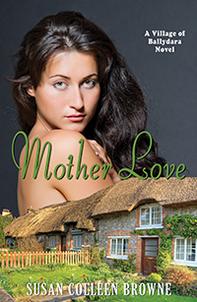
  • An Editorial Review of “Mother Love” by Susan Colleen Browne

    An Editorial Review of “Mother Love” by Susan Colleen Browne

    Mother Love, written by Susan Collen Browne, is a romantic Irish story set in the colorful Village of Ballydara. She vividly portrays a written slice of contemporary life in Ireland with its pubs, puddings, pals and mams. Hers is a story of love, growth, and healing. It has just the right amount of chaos and family conflict, along with a good dose of  Irish humor, to make it a fun and entertaining read.

    Grainne knows exactly what her perfect man is like, down to each little detail—the only problem is her perfect man is getting married just as this book, and Grainne’s story, have begun. Grainne sadly acknowledges and grimly accepts the fact that her perfect man is about to become permanently unavailable. However, her biological clock is ticking and, on the eve of her 30th birthday, she is anything but reasonable.

    A complex and realistic protagonist, Grainne is plagued by her own family conflicts. Grainne’s relationship with her mam is strained to say the least. Having grown up feeling that she was less important than her sisters, Grainne does her best to avoid visiting her family home more than she deems necessary. She can’t even be in the same room as her mam without making the entire situation uncomfortable for everyone around. Yet for a young woman who avoids her mother, Grainne spends more time wishing for her mam’s acceptance and attention than not.

    Despite her tumultuous family life, Grainne is a devoted and doting nanny to three rambunctious kids whose own mother is too busy running a newspaper to pay them much attention. She finds happiness in her work as she dotes on the kids, but her wanting of her own family cannot be ignored.

    Grainne’s mam is keen to turn her home into a B&B and Grainne’s sister has guilted our protagonist into helping out with the venture. Grainne grudgingly helps out, thinking this may be a good way for her to get to spend some time with Rafe—the one that got away. Grainne and Rafe’s story seems destined to end before it ever begins, but sometimes you never know what life has in store.

    Rafe isn’t the only man in Grainne’s life. She’s also got good-guy Joe, a nice man with a decent job and only minor flaws and he has his eyes set on Grainne. And with all the family drama and emotional stress it’s a good thing Grainne has Justine—her best friend and flatmate—who spends her free time cooking and baking delicious food along with obsessing with the blog “Girl Talk.”

    Grainne must navigate her way through this crazy and tumultuous life if she is to find happiness.  Mother Love is a novel that lives up to the lore of Irish tales. If you like an entertaining light romance that is full of Irish humor and family fun, Browne’s story telling will not disappoint.
     

  • NOWHERE ELSE TO GO by Judith Kirscht – Contemporary, Literary Fiction

    NOWHERE ELSE TO GO by Judith Kirscht – Contemporary, Literary Fiction

    It’s the fall of 1968 and America is in the throes of rapid social change and cultural upheaval. Martin Luther King has just been assassinated and body bags filled with 18-year-olds boys are coming back from Vietnam at an alarming rate.  Political unrest and race riots are turning cities into war zones while suburbanites try to buffer themselves against the tumultuous times.

    Nowhere Else to Go by Judith Kirscht masterfully explores these momentous national issues by humanizing them on a personal scale in the small Midwestern college town of Norton Bluffs. The intransigence of the ruling suburbanite whites along with their fears meet head on with the anxieties of the disadvantaged blacks in the halls of education—where the effects of racial polarization are most profoundly felt and magnified in small towns.

    Principal Cassie Daniels, of Red River Junior High School, relentlessly tries to carry on classes, school dances and basketball games even as she encounters the shrapnel from these social upheavals in her beloved school, in her marriage, in her relationship with her two school-aged sons, and within her professional relationships.

    Principal Daniels and the RRJH faculty have already endured the difficulties brought on by racial integration and bussing.  But just when they thought that they had made it past the worst and even came out somewhat ahead with a new wing of classrooms, the Board of Education has more in store for RRJH. It seems that with a bit of “redistricting,”  Red River Junior High, due to its location on the edge of town, can serve as a buffer zone between disadvantaged, mostly black, neighborhoods and those of the affluent white ones.

    The hoped-for, by the town’s politicians, result from this redistricting maneuver is to return a sense of “normalcy” to the town of Norton Bluffs along with the prevention of any violence like last year’s riots at the high school.  And if the redistricting isn’t enough to throw RRJH into a tailspin, The School Board is dictating to use RRJH as a social experiment laboratory for testing some educational “new-think” concepts.  Fresh new teachers have been hired by the School Board for RRJH –and this is where things start to get really interesting.  These new teachers’ tutor in ‘advanced school room theory’ is Principal Cassie Daniels’ husband.  Ben Daniels is an ivory tower burnout hoping to put a new polish on his tarnished idealistic proclivities.  He’s already selected the feisty Louisa Norton as his favorite protégé.

    Principal Daniels can’t help but worry that the escalating racial tensions in her schoolrooms will erupt into violence.  Can she keep her divided faculty members on the same page?  Will those wide-eyed kids from the Flats be able to make “the jump” from the safety of their old elementary school into the open-jawed terrors of junior high?  And just what are Ben and the confrontational Louisa really up to?

    If Cassie Daniels is the strength of the author’s energetic narrative, the teenage students are its pulse, a Greek chorus chanting under the noisy howl of the games adults play.  As expected, a great deal of this novel is devoted to these adolescents’ emotional responses. Particularly endearing are Kirscht’s portrayals of how the kids try to cope with a world that they are too young to understand. Kirscht does an excellent job telling her story from many perspectives.

    No Where Else to Go is a tenacious read that captures the grittiness of the undertow of racism and prejudice.  However, some may find the first several pages a little hard to follow as you are taken instantly into the fray of the battle, but if you hang on, you will find this dense novel to be fast-paced and hard to put down.  I heartily recommend Nowhere Else to Go as a tightly woven and insistently engaging novel about racial prejudice and the blackboard jungle of the 1960s.