Tag: Comparative Politics

  • THINKING ABOUT THINKING: America’s Yeomanry and Cognoscenti by Thomas Christ – Comparative Politics, United States Politics, Social Theory


    Thinking About Thinking is a literary endeavor by Thomas Christ to inform, educate, and bridge the clashing ideological trench in the United States.

    Thomas Christ commits to a theoretical exploration that serves as both a political and social commentary – a mission to untangle the intricate web of ideologies that have driven American politics.

    The twelve comprehensive sections of this work provide explicit responses to ideological polarization. Beginning with an exploration of interweaving technological, social, economic, and political constituents, Thinking About Thinking offers a theory of ideology in early twenty-first-century American politics. Drawing on Karl Marx’s core concepts, Christ offers an in-depth breakdown of how these constituents interact to have a substantial impact on society.

    As the work further ventures into the intricate terrain of ideologies, a profound effort unfolds to discover their elusive origins. Demonstrating technology as a powerful catalyst for change, it explores the concept of “cultural lag” – the challenge cultural norms face in keeping up with technological advancements.

    By disassembling the myriad forces that mold one’s convictions, Christ unveils the processes of belief generation, propagation, and assimilation. This leads to a profound quest into the realm of human psychology, to find the incentives that drive individuals to embrace broader ideas.

    The next discussion focuses on ideologies as symbols of affiliation, examining two opposing worldviews in American culture: the Yeomanry (traditionalists) and the Cognoscenti (intellectuals). Following sections delve into the time of Donald Trump’s administration and its connection to the Yeomanry, revealing a nuanced view of the ideological shift in modern America.

    Presenting a roadmap for overcoming ideological divides and promoting a reasonable, evidence-based approach to sensitive matters, the final section of this work is dedicated to discussing strategies to bridge this ideological rift.

    In its presentation of ideas, Thinking About Thinking displays a graceful unity of coherence and clarity. The concepts it details are succinctly described, easily digestible despite their complexity.

    A thoughtful perspective emerges, drawing from historical context and our own time’s challenges. Thinking About Thinking serves as a comprehensive resource for intellectual and sociopolitical dialogue. It encourages analytical thought and facilitates a thorough understanding of America’s ideological situation.

    This venture into the convoluted realm of American political beliefs encourages empathy and understanding across ideological lines, empowering readers with a profound understanding of contemporary American politics. Thinking About Thinking is a call to action – a road map for a more united and peaceful America.

     

    Chanticleer Book Reviews 4 star silver foil book sticker

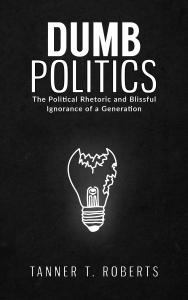
  • Dumb Politics: The Political Rhetoric and Blissful Ignorance of a Generation by Tanner T. Roberts

    Dumb Politics: The Political Rhetoric and Blissful Ignorance of a Generation by Tanner T. Roberts

    In these days of turmoil and bickering in Congress, far too little time is being spent on the job for which citizens elect their senators and representatives—working cooperatively to make sensible laws to guide our country toward reasonable progress. The Capitol Building itself seems to have become a battleground of clashing voices, with violence waiting on its flanks.

    What do Americans think of this? Some are angry, whether at one political party or the other. Others have given up, because of the absolute mess of politics in general, seeing it as nothing but rhetoric, with little concern for the future of the United States or its citizens. Many citizens become apathetic; feeling they have no power to change the situation, they choose to ignore it.

    In Dumb Politics: The Political Rhetoric and Blissful Ignorance of a Generation, Tanner T. Roberts focuses on the people he calls the “blissfully ignorant,” whom he says merely do not understand what is happening. These people—seemingly with little knowledge of our country’s history, the content and meaning of its Constitution, the functions of its government, the workings of its politics, or the practices of its business and financial institutions—respond emotionally to whatever someone, guided by ‘dumb politics’, tells them is the right or wrong way to run things, and then act and vote accordingly.

    The “blissfully ignorant” include people of all ages, races, religious beliefs, cultural backgrounds, and degrees of education. Roberts seeks to show his readers that large numbers among the younger generation dominate this group’s ranks today. From among those now being educated under the precepts of ‘dumb politics,’ he tells us, will emerge many of tomorrow’s leaders. He hopes to turn this situation around.

    Roberts defines ‘dumb politics’ as “the act of promoting policies and ideas that subsidize groups[sic] at the expense of others”; it becomes “hypocritical in equity and equality… uses emotional responses over rational analysis… and uses derogatory vernacular to promote class and social warfare.” In the first chapter, he illustrates his definition by applying it to the Women’s March 2018 founders’ official Twitter contending that the shutdown of “Backpage” classified ads was an “absolute crisis for sex workers.” He points to their apparent ignorance that “some [Backpage] ads included minors as young as 14 and women forced into sex trafficking,” labels their action as “the epitome of what I call ‘dumb politics,’” and pointedly remarks that “recognizing the irony of this situation requires cognitive thinking.” He names many Democrats and liberals as exemplifiers of dumb politics, but also acknowledges that its practice is far from absent among Republicans.

    A primary focus of the book is the comparative examination of the principles of individualism and collectivism. Noting how these reflect conservative vs. liberal ideologies; Roberts then points out that dumb politics prefers the collective approach, and its adherents seek to assimilate groups willing to follow a collective norm.

    Chapters 2-6 examine how the precepts of dumb politics turn up in the practices of Dumb Name Calling (e.g., fascists), Dumb Immigration (loose borders), Dumb Economics (tax strategies), Dumb Education (ideology imposition), and Dumb Culture (media tactics), and spell out the dangers of these practices for our future well-being.

    Roberts is passionate about his subject, which may leave some readers with information overload. Dumb Politics will undoubtedly attract conservatives, and it offers considerable food for thought for liberals with an open mind who might like to (re)consider their understanding of what is tearing our government, and our nation, apart.