Tag: Coming of Age

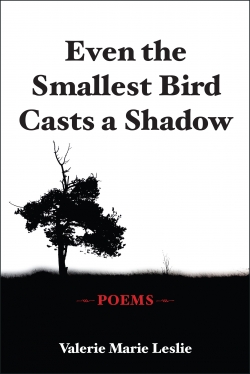
  • EVEN THE SMALLEST BIRD CASTS A SHADOW by Valerie Marie Leslie, a collection of youthful poetry

    EVEN THE SMALLEST BIRD CASTS A SHADOW by Valerie Marie Leslie, a collection of youthful poetry

    Spanning adolescence to the murky adulthood of the early thirties in each thematic chapter, Even the Smallest Bird Casts a Shadow also casts a light on the familiar struggles of maturity, romance, independence, doubt, depression, and further into the experiences of growing at the end of the last century. Altered little from their original creation, preserving the “dysfunctional integrity” of the youthful poems, Leslie varies the breathless experience with free form, rhyme, and lyrical verse.

    While plainly written for privacy and self-revelation, Leslie’s poems in nearly every form capture experience that might be known to any reader. Although each chapter covers roughly the decade and a half, there is a progression through the chapters that resembles the evolution of the narrative persona of Leslie. Back-to-school senses are evoked in the ramble of “During Science,” and there’s an affection to the poem “Hey Teacher,” which surely every high school writer has rendered some way. Heartbreak and romantic hope extend cover to cover but the early poems preserve the innocence of first attempts, culminating in the proud assurance of “The Ave Maria.”

    As the collection advances, the reoccurrence of life’s distresses, financial struggles, social pressures, miscommunication, failed expectations, and romantic disappointments, couple with resilience, ambition, and determination to reveal turmoil that’s as close as scented memory. The fallibility of human intention is confronted in Leslie’s poems at the same time as the loss of certainty in what she, we, seek from a life of surviving.

    The final chapters of supposedly reached adulthood still question the definition of that idea, and are laced with the aspirations and confusion of high school and college. The bitterness appears with simple sharp lines, “I didn’t get my degree for nothing,” and a young adult struggling to settle their purpose in life can find their frustration spoken from beginning to end in Leslie’s collection.

    Many of Leslie’s poems are untitled, and several throughout question, explore, or verify a sense of spirituality, connection, and security in God. These chapters plunge into the despair of doubt, guilt, and depression. In a life seeking love, Leslie expresses from an emotional pain felt in ages beyond the experience of her poems.
    Reading Leslie’s collection invited me to look back at memories and experiences of exactly the same time frame depicted, to question how I would define what I witnessed and learned then. The purpose of Even the Smallest Bird Casts a Shadow is to end a silence of self-doubt and shame, but it may easily motivate readers to delve into their past and youth for strength and inspiration.

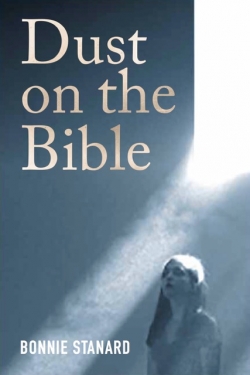
  • DUST ON THE BIBLE by Bonnie Stanard, a moving coming-of-age story

    DUST ON THE BIBLE by Bonnie Stanard, a moving coming-of-age story

    A poignant tale from start to finish, Dust on the Bible by Bonnie Stanard is a vivid and emotionally captivating story about the strife of a family living in rural South Carolina in 1944.

    Lily, a twelve-year-old farm girl, wraps readers around her heart. While struggling to understand the mysteries of death, God, family, and school bullies, she endures poverty and agonizes over her missing father. Lily is hungry for knowledge, but a sixth grade bully turns school attendance into misery. Lily is an easy target; she is quiet, poor, and wears homemade feed sack dresses. This is Lily’s story, one year of her life when she transitions from childhood innocence to the edge of her awakening.

    Readers first see Lily on a cold, October morning, while she warms her backside in front of the cook stove. Stanard does a superb job in crafting imagery that evokes the senses; readers can see the small kitchen and feel the morning chill. The author’s descriptive words and phrases are fresh and easy to relish as readers follow Lily through the seasons, from bitter winter to scorching summer.  

    Lily’s consummate yearning to know what happened to her father moves the plot steadily forward. No one will talk to her about him, but she keeps asking. And every time she does, it causes trouble. Lily is bright, curious, and needs answers. When family members do reply to her questions, they keep comments short and simple; they shirk her questions to try to shield her from something they believe that she doesn’t need to know. But, this creates even more questions and adds fuel to her active imagination. Nonetheless, their answers paint character sketches of each person in the story.

    Grandpa owns the one-thousand-acre cotton farm that he runs without the help of a tractor. He and Grandma have opened their home for four of their five adult children, including Lily’s mother and Lily herself. The overcrowded home is without indoor plumbing, cold on frosty winter mornings, and oppressing with stifling heat in the summer. They all share the endless chores and the long days of hard-scrabble living for a meager living.

    Stanard creates a family with a non-nonsense way of life, but the family also carries a deep abiding love for each other; no matter what. Even when Lily’s youngest uncle, Archie, goes overseas, despite the family’s subdued fear, their love for him shines through in their reaction to the letters he writes to them.

    Stanard has created a strong protagonist in Lily—one  in whom we can feel the relentlessness and restlessness of youth as shown in one of my favorite lines in her work.

    “She daydreamed of sleeping late as she wanted to. Of swimming in Ma George’s pond. Of catching lightening bugs and building forts. Of shooting the .22 rifle.  Most of all she wanted Grandpa to teach her to change gears so she could drive the pickup.”

    A few paragraphs later, Lily’s reality ensues.

    “Don’t matter whether she wants to. Lily’s old enough to know what work means,” said Florence. [fusion_builder_container hundred_percent=”yes” overflow=”visible”][fusion_builder_row][fusion_builder_column type=”1_1″ background_position=”left top” background_color=”” border_size=”” border_color=”” border_style=”solid” spacing=”yes” background_image=”” background_repeat=”no-repeat” padding=”” margin_top=”0px” margin_bottom=”0px” class=”” id=”” animation_type=”” animation_speed=”0.3″ animation_direction=”left” hide_on_mobile=”no” center_content=”no” min_height=”none”][Lily’s mother replied to Grandpa when he told Florence that maybe it was too hot for the twelve-year-old Lily to work in the summer afternoons.]

    Stanard’s writing deftly shapes the narrative and the setting. Her pitch perfect dialogue conveys Lily’s “tween” age while conveying the social strata of her world. Readers are pulled into her thoughts, her reactions, and the family dialogue––walking through her world, seeing it through her eyes, and feeling it through her heart. Lily is a brave individual seeking to find her own place in the world while enduring difficult times on many fronts.

    Dust on the Bible is a moving novel with an honest perspective of what it was like for some who grew up in poverty in the South during the Second World War. The coming-of-age story of Lily is candidly related, drawing on all the senses. Lily’s story and her world will linger with readers long after they’ve finished reading the final pages.

     [/fusion_builder_column][/fusion_builder_row][/fusion_builder_container]

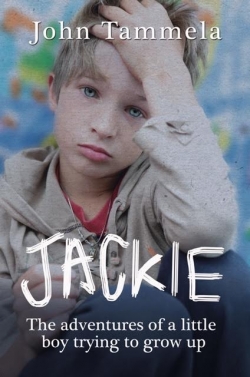
  • JACKIE by John Tammela, a coming-of-age memoir– WWII era

    JACKIE by John Tammela, a coming-of-age memoir– WWII era

    From the first chapter of this delightful coming-of-age memoir, it’s clear that Jackie is a little boy with a big imagination. Whether he’s donning a homemade crown for his mock coronation or building a snow castle to defend the neighborhood, Jackie finds magic in the simplicity of everyday life.

    The author begins his story – Jackie’s story – in the late 1930s in his home town of Niagara Falls, Canada. It’s an era of innocence and promise. And for 6-year-old Jackie, it’s the beginning of an age of life lessons and remarkable discovery. Like most children, some of the adventures and lessons in his path seem big and scary. But, be it facing a trip to the dentist, crossing a bridge for the first time or taking an aero car ride high above the Niagara whirlpool, Jackie learns that reflection, investigation and trust in the people around him can help him overcome his fears.

    Jackie’s new-found knowledge is not limited to how he interprets to the external world. The author also offers a glimpse into Jackie’s emotional and sexual awakenings from his first crush to the touch of a girl’s skin. Jackie’s perceptions of his physical and emotional reactions to each encounter are completely believable for a boy of his age, providing a level of honesty that make them feel innocently real.

    Jackie’s story continues into the early 1940s. The simple games of hide and seek that he and his friends play take on a new dimension with “sides” and “prisoners.” But the World War is always at a safe distance and, although farms are short of manpower with women filling in where they can, the reality of war does not invade or overpower the story.

    In the tradition of “Stand by Me,” “Jackie: the adventures of a little boy trying to grow up” transports the reader to a simpler era in which children are allowed to follow the lead of their imaginations and create their own fun.

    And as we join Jackie in his adventures we gain insight by taking the lessons he learns to take to heart. Targeted at middle graders, John Tammela’s memoir is an enjoyable snapshot into a young boy’s life. And with a well-considered Q&A at the end it’s the perfect vehicle for parent-child sharing and discussion.

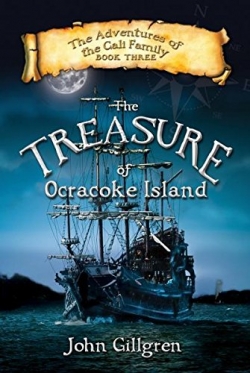
  • THE TREASURE OF OCRACOKE ISLAND by John Gillgren, third book in the Adventure of Cali Family Series

    THE TREASURE OF OCRACOKE ISLAND by John Gillgren, third book in the Adventure of Cali Family Series

    What could be more engaging for children and their families than a featured villain who impersonates the infamous pirate Blackbeard? Gillgren’s third book The Treasure of Ocracoke Island in The Adventures of the Cali Family series brings back old villains, introduces new plot twists, and puts more at stake to find lost treasure.

    It is the early 1700s, and Blackbeard prides himself on wreaking havoc, while also being an intelligent ladies’ man. However, his reign ends when a British ship invades, leading to his beheading at Ocracoke Bay; his treasure’s location is supposedly lost at sea. The year 1942 sails in, depicting the Russian ship Saratov being sunk by two torpedoes, which concealed a footlocker of gold that was going to pay the United States for war supplies.

    The reader is brought back to present day with the Cali family, who are forced to search for the lost treasure of Ocracoke Island. When the women in Carmine’s family are kidnapped by a sinister man resembling Blackbeard, him, Snail, Tommy Osawa, and NCIS Special Agent Moki Loo Tsing must battle against time to save their loved ones.

    Gillgren creates a stunning cast of villains that engage with the Cali family. The Blackbeard offender is both shocking and silly as he uses his faux accent to intimidate the women he kidnaps. Gillgren also brings back the dastardly villain Mr. Chang, who is determined to have his revenge on the Cali family for cheating him of money and opium. It becomes apparent as the novel progresses that Mr. Chang wants more than just wealth.

    This series continues to craft daring heroes and heroines. The women in the Cali family show resistance and strength against Blackbeard’s threat; emulating a sort of Charlie’s Angels attitude against a wannabe pirate with a ridiculous costume. Gillgren also continues to develop characters from his previous books, particularly in regards to Snail. Snail is a youth who shows great maturity when the kidnapping situation becomes intense, and he inspires the older men of the family to follow suit. Such characters are a great inspiration to how families come together in times of adversity.

    The novel contained enough tension and suspense to sink Blackbeard’s ship Adventure. The story contains multiple perspectives of different characters, leaving the reader with many cliff-hangers when the point of view shifted. Each character introduced new waves of anticipation.

    Gillgren’s children’s series The Adventures of the Cali Family offers another treasure travel story that pushes mystery, family, and adventure into new depths of fun.

    This reviewer highly recommends this book for children and their families who are interested in historical stories about adventure and family. Oh, and an ending that twists the tides of a plot.

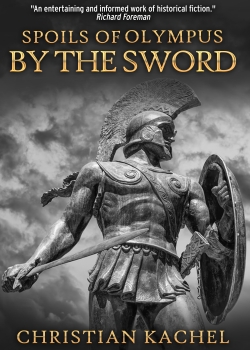
  • BY the SWORD: SPOILS of OLYMPUS by Christian Kachel

    BY the SWORD: SPOILS of OLYMPUS by Christian Kachel

    By the Sword is an atmospheric and character driven coming-of-age story that takes place in the years immediately following the untimely death of Alexander the Great. The news of his death traveled quickly throughout the land. He was born to the King of Macedon and was tutored as a noble and later by Aristotle. When he died, his kingdom was one of the largest the ancient world had known—more than 2 million square miles. His unexpected death left a vacuum of power and chaos. Civil wars and power grabs from Alexander’s generals tore this great empire apart. This is when Kachel’s enthralling Hellenic military epic begins.

    Andrikos grew up during Alexander’s rule. Now everything has changed. The story begins in his village when he is an errant adolescent more interested in his next drink or round of sex. He is in no hurry to have the responsibilities of an adult. Kachel illustrates the ages-old influence that peers may have on young men and how they can affect them and their actions—changing their lives forever—for better or for worse. Young Andrikos hangs out with the wrong crowd and is swept up in their illicit behaviors and actions. He finds that he must flee his family and his home to save himself from an unintentional crime—forever changing him and his life.

    Andrikos has no real plans for his life. Suddenly he finds that the only option he has is to join the armies of Alexander to escape his past. However, he was unprepared for the brutal conditioning and the heartlessness of the recruiters whose job it is to ferret out the weak from the strong. Kachel vividly portrays these horrific and brutal experiences through the eyes and heart of Andrikos as he undergoes the physical and mental conditioning that is forced upon him and his fellow recruits. There is no turning back. The only way out is death or fight to live another day.

    Kachel captures what could happen when trained killers are left to their own devices and their own greed and bloodlust without guidance and a chain of command in this satisfying read. He also brings forward the importance of having a mentor can be to the young and inexperienced. Vettias is a confident and self-reliant warrior with a complicated background in gathering intelligence. He recognizes potential in Andrikos and takes on the mantle of becoming his mentor and teacher. Under Vettias’ guidance, Andrikos develops and matures into more than a foot soldier as he learns of honor and integrity, of treachery and deceit, and of friendship and loyalty.

    By the Sword is a well-researched military historical epic where Christian Kachel, the author, portrays the effect that chaotic, warring times have on women and children, on the weak and infirmed, and the men who are caught up in the violent and ruthless swells of battles, and then the heartrending aftermath that follows even on the heels of victory.

    One cannot help but think of the millions of young people who are going through their own coming of age throes in the heat of battles and skirmishes that are taking place at this very moment. Kachel, who has served three tours of duty in Afghanistan and Iraq, writes with compelling adroitness about what Andrikos experiences as he makes his journey from an oblivious youth to a young man whose eyes have been opened to the cruelty of war but still manages to maintain his empathy for his fellow man and holds on to his humanity.

    Be warned that Kachel does not whitewash the horrors of war, nor the rape and brutish treatment of women and children, nor the screams of pain and the blank eyes of starvation in the telling of his epic.

    Christian Kachel’s By the Sword is a fine debut novel that explores the little known, but fascinating, age of post-Alexandrian Greece. Its intriguing interwoven storylines of a young man’s coming of age, of alliances and espionage, and of harrowing battles scenes will be sure to captivate readers and keep them turning the pages even as they wince and grimace with Kachel’s no-holds- barred descriptions in this well-researched historical narrative. We look forward to reading more from Kachel about what awaits Andrikos in his next adventure.

    Historical Fiction: Military, Classical Age
    Targeted Audience: New Adult, military history buffs, Classical Studies

  • Editorial Review of “Legend of the Wyakin” by David G. Rasmussen

    Editorial Review of “Legend of the Wyakin” by David G. Rasmussen

    A Nez Perce shaman’s chant about a meadowlark in the prologue draws us into this fascinating, thought-provoking historical novel. The shaman is chanting about “animal spirits…of wyakin…” in 1865. Then the author moves us forward into our time, as teacher/historian/writer John Thompson and his 13-year-old son Steve are exploring along the Missouri River Breaks of central Montana.

    Steve strays from his father and encounters a huge silver-tipped grizzly bear. The bear is almost upon him when a strangely dressed boy, about Steve’s age, leads him to safety by taking a zigzag path up the loose shale hill. As they near the top, John hears the boy say, in Spanish, “Es Modrables, El Oso” (That is Modrables, the Bear). John grabs Steve’s hand and pulls him up. When they look around, the boy is gone, and so is the bear! Astonished and confused, they head for their SUV. Steve pauses when he hears a meadowlark and seems to understand its song, “Listen and see. There is more.” But it is John who sees—a group of people, obviously of an earlier time, staring with wonder at the SUV. As Steve catches up, they disappear.

    Their shared supernatural experiences compel father and son to research the locale and its history in old ships’ logbooks and personal diaries, revealing the stories of true, historical personages.  The writer in John lets his imagination fill in the blanks of the dry historical documents, or perhaps he was inspired by the spirits of the characters—both human and animal—who are brought to life in Legend of the Wyakin.

    More than just an enjoyable historical novel, Rasmussen’s respect and curiosity for the teaching and traditions of First Nations Native Americans shine through in his writing. He captivated this reviewer with his insight into their beliefs in a spiritual world not just of people, but of animals, trees, thunder, and much more, including riverboat travel on the Upper Missouri River.

    As chapter one begins, Rasmussen takes us back to June 1865 when the Gold Rush was in full swing, as Captain Phillip La Mar, in the wheelhouse of his stern-wheel riverboat, Jupiter, enters the day’s events in the logbook. His major concern is that three crewmen have cholera—the deadly scourge of the riverboats that ply the Missouri River, carrying freight and passengers destined for Fort Benton (Montana) and the goldfields beyond.

    In addition to impatient gold miners, eager to claim a stake and make a fortune, the passenger list includes two Jesuit priests—the arrogant and intolerant Father Dolores and his younger colleague, the service-oriented Father Otis; a Jewish family from Spain—the knowledgeable and skilled Dr. Modrables, his beautiful and helping wife Rosa, and their intelligent and curious 13-year-old son Cortez; and others, such as Mr. and Mrs. Campbell—who soon become embroiled in the struggle for needed cholera treatment resulting from Father Dolores’ insistence that Catholic passengers not accept what he contends is the sorcerous treatment offered by the Jewish Dr. Modrables’ medicinal herb teas, despite their proven efficacy with the three crewmen and others.

    Legend of the Wyakin vividly portrays the mores of the time: racial and religious bigotry, ignorance blinded by fear and greed, rampant disease, and driving desperation that make so many endure danger as they seek a better life. Small acts of kindness from strangers that stand out like beacons in the night during tumultuous and violent times are also vividly conveyed by the author.

    Soon, young Cortez has to draw on the strength and wisdom bestowed upon him by his loving and nurturing parents as he finds himself alone in a strange land. He settles himself into the safety of a cave just below the crest of the sandstone cliffs of the Missouri River Breaks. While exploring the prairie beyond the crest, he encounters, and incredibly befriends, an aging grizzly bear, whom he names Modrables, El Oso.

    Cortez soon makes another unexpected friend, a Nez Perce Indian boy, Samuel, just his age, who speaks English. The boys share their thoughts on many things, including the Jewish, Christian, and Indian religions. Samuel tells Cortez of the wyakin, the animal spirits that guide and protect the lives of Indians, and says that El Oso is surely Cortez’s wyakin, a very powerful one, even though he is not an Indian.

    When violence erupts again, the young Cortez encounters more challenges that he feels he alone must shoulder. But one morning Cortez sees El Oso’s footprints circling their campsite. His wyakin had been following him, protecting him! In the days to come, Cortez realizes that El Oso will always be with him. And his journey in this new land has just begun. This journey is consistently overshadowed by Cortez’s need for a life-changing decision that he must make—should he accept becoming an adopted Nez Perce with the band’s safety and family or try to return to the white-world with its uncertainty and loneliness.

    “There is [fusion_builder_container hundred_percent=”yes” overflow=”visible”][fusion_builder_row][fusion_builder_column type=”1_1″ background_position=”left top” background_color=”” border_size=”” border_color=”” border_style=”solid” spacing=”yes” background_image=”” background_repeat=”no-repeat” padding=”” margin_top=”0px” margin_bottom=”0px” class=”” id=”” animation_type=”” animation_speed=”0.3″ animation_direction=”left” hide_on_mobile=”no” center_content=”no” min_height=”none”][much] more,” as the meadowlark suggests, for Rasmussen’s readers (young and old) to enjoy and learn in this expertly crafted tale of adventure and coming of age. We are looking forward to reading the next book in the “The Wyakin Trilogy” saga by this award-winning Western author.

     [/fusion_builder_column][/fusion_builder_row][/fusion_builder_container]