Tag: Coming of Age

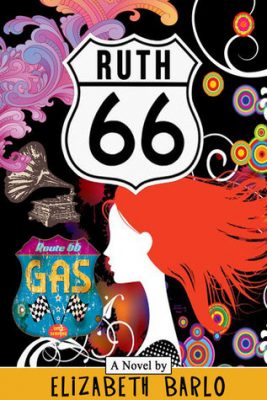
  • RUTH 66 by Elizabeth Barlo – Humorous, YA, Family & Social Issues

    RUTH 66 by Elizabeth Barlo – Humorous, YA, Family & Social Issues

    When a banged-up old bus pulls into his family’s driveway, Charlie has no idea that the rattling junker would be his ride to freedom. For years he’d been suffering under the thumb of a cold-hearted mother and a vindictive twin sister, while his father languished behind bars for tax fraud. The only family member with whom the young man held a loving bond was his grandfather, Opa Bill. Since Bill’s recent death, Charlie has been holding it together by listening to the music he and his grandfather loved. That musical thread weaves its way throughout the story as a sort of narrative jukebox.

    Now Charlie’s respectable Oma Ruth has careened back into his life in a shocking new incarnation: a freewheeling hippie in kaftan and beads, unafraid to swap barbed words with her appalled daughter, nor to insist that Charlie accompany her on her road trip. He’s dead-set against it – he’d just found his dream job at a record store – and is disgusted when his mother dumps him on her mother without hesitation.

    So Charlie sets out with Ruth – and, as it turns out, with Opa Bill, whose urn rests on the dashboard. At first, Ruth’s bizarre behavior and Charlie’s resentment at being dragged along make for a very uncomfortable ride. She insists on traveling without modern technology, but when she relents and allows his iPod and a new stereo system, the thaw begins.

    Although Route 66 is the road they travel as they head west, this is no travelogue about nostalgic remnants of yesterday. This is a journey of discovery: of Charlie’s strength and capacity to love, of Ruth’s ability to be honest with herself, of her secrets and those of her late husband, and of the people who will teach them along the way.

    There’s the comical Count Doobie, and Jonas the Swede, who appreciates Ruth’s beauty and makes her feel truly free. There’s also heartbroken Barry, who, with his daughter Rosie, barely keeps afloat a strip joint in the middle of nowhere, Texas. And there’s even Charlie’s embittered sister Becky, who rediscovers compassion and her affection for her twin away from their mother’s toxic influence.

    Above all, there’s Rosie, the beautiful young woman who pines for her missing mother and valiantly offers to become a stripper to help her father’s business. She sets Charlie’s heart and hormones on fire, turning him into a bumbling puppy before he learns to overcome his insecurities and grow into a hero of sorts. Their relationship becomes entangled in the revelation of Ruth’s secrets, but the resolution is both satisfying and a bit of a relief.

    A word of caution to the straight-laced reader: Ruth has embraced the hippie lifestyle to its fullest, and so you’ll find pot-smoking, swearing, nudity, and sex, as Charlie and Rosie let loose their teenage hormones and Ruth re-engages her lost libido. But far more than that, there is love, forgiveness, and bravery on this journey, not to mention a lot of laughs, some wonderfully wacky moments, and at times exciting and literally explosive revelations.

    5 Star Best Book Chanticleer Reviews round silver sticker

  • HEART-SCARRED by Theo Czuk – Literary Western, Coming of Age

    HEART-SCARRED by Theo Czuk – Literary Western, Coming of Age

    Author Theo Czuk provides a refreshing wave of storytelling in his award-winning literary Western debut novel, Heart-Scarred.

    Rory Casso works as a shotgun freighter with the Pinkerton Detective Agency alongside his partner, Juke Bauque, running capital (i.e., money, furs, gold) up and down the Platte for the Reynolds Savings and Loan payroll. Because bandits lay traps along the way, the partners travel separately. Rory, who lived among the Hunkpapa Indian tribe when he was a boy, uses his skill of trail scouting to keep away from the gang. Juke may be part Native American, but he isn’t familiar with indigenous skills since he was “privately tutored and socially cultured.”

    Enter Bronwyn Mason, a childhood friend of Rory’s who plans to open the first one-room school house in Rawlings. Although she hasn’t seen Rory in years, Bronwyn is relieved to meet Rory’s partner, Juke so that she can hire him to be one of her drivers to transport three wagon loads of school material. Bronwyn’s joy about establishing a school house quickly turns to sorrow when she hears that the Thompson gang murdered her father, the esteemed Marshal Isham Mason. Even though she is grief-stricken, she is determined to fulfill her mission. Bronwyn’s traveling band faces various calamities en route, especially when they get held up by Indian warriors. What she doesn’t expect is that the person who comes to the rescue is none other than Rory. Romance blooms between the childhood friends and all appears to go well until the Thompson gang catches up with them.

    Western enthusiasts in search of a refreshing take on their favorite genre have much to look forward to in Czuk’s award-winning novel. Czuk adds verisimilitude to his story by incorporating a host of realistic characters. Veering away from stereotypes, Czuk presents protagonists that mimic the educational and societal waves taking place during the mid to late 1800s.

    Czuk creates three different people from three different educational backgrounds. Rory is a white man whose comes from a dysfunctional home but finds stability living among Native Americans. Juke, who is half black and half Native American, is brought up in the cultural surroundings of Boston—the antithesis of what would traditionally come out of western tribes. Bronwyn—who learned everything she needed to know about life through her father—in many respects reflects an “Annie Oakley” figure, but much more feminine.

    There is more to the Old West than being chock-full of rough and tough characters. Much of the gruff personas came from merely surviving day to day. Czuk aptly weaves in plenty of historical information that shines a light on the differences of what life was like between the eastern and western territories. While pointing out Native American history (including connections with Ireland during the Great Potato Famine), Czuk gives attention to education, or the lack thereof, especially in the West, and thus Bronwyn’s desire to develop a one-room schoolhouse.

    Czuk offers a well-balanced mix of storytelling, history, engaging dialogue, and thought-provoking themes that go beyond the good, bad and the ugly in his novel, “Heart-Scarred.”

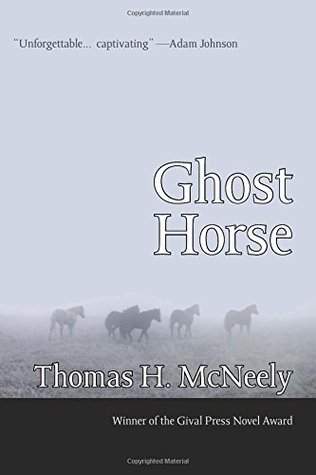
  • Ghost Horse by Thomas McNeely – Literary Fiction

    Ghost Horse by Thomas McNeely – Literary Fiction

    With a firm sense of place and time, Thomas McNeely creates a tableau of class and race segregation juxtaposed with the frailty of youth: One young boy exists in the tormenting forces of his own personal hurricane of a broken family and a broken society that throws him down and swirls him around without regard to their tragic effect on him.

    Eleven-year-old Buddy Turner’s understanding of what it means to be normal hangs in the balance. He’s facing the trials of growing up and a family unit in shambles and his whole world is about to change. It’s the 1970s, Houston, and most kids don’t expect to be thrown into the nasty realities of a broken home. However, this is Buddy’s reality in Thomas McNeely’s debut novel, Ghost Horse.

    Buddy’s mother spends much of her time working in a hospital laboratory while his absentee father comes back to town leaving Buddy with a fresh set of empty promises and his mother with a request for a divorce.

    Buddy’s only escape is working on an animated film with his best friend, Alex Torres. Together, the boys create a film about a ghost horse. Entering into the work helps Buddy avoid the painful realities at home and serves as a buffer for his heartache. Indeed, the movie the boys create is a metaphor for the upheaval Buddy is experiencing in the real world.

    McNeely expertly weaves an intricate and darkly complex story of a boy trying to gain a foothold in a world–a raw, and sometimes, painful coming-of-age story. The book took ten years to pen through the author’s own turbulent waters and his father’s untimely death and at points the reader can see his internal battle emerging in his writing in this heart-rending coming-of-age tale set in the turbulent  1970s.

    In the broader spectrum of the novel, McNeely unleashes his questions about class and racial prejudices, and how adult behavior informs children who are expected to follow suit. Ultimately, however, McNeely’s storytelling is rich with texture and the soulful portrayal of a lost boy, who is un-moored by those whom should care for him the most. Ghost Horse has the weighted emotional cache and heartfelt pertinence that enables the tale to tug at the reader for a very long time.

    5 Star Best Book Chanticleer Reviews round silver sticker

  • Gateways by Jessica Schaub – Y/A Fantasy

    Mind bending is one thing, but when teenager Victoria Nike paints her landscapes – and then falls through them into another dimension – you know you’re in for a treat in this charming and intelligent fantasy, Gateways.

    There are many similarities between Victoria’s story and that of Dorothy Gale: the emerging of special powers, real or imagined; companions both human and beast; an ultimate confrontation with a wicked witch.

    That said, in Gateways, Jessica Schaub has created a wonderful fantasy that takes readers on a journey into parallel worlds, where mages – beings who can invoke the elements and use their energy – coexist with sphinxes and other fantastic beasts. It’s also a tale of self-discovery, of innocence lost and wisdom gained. Schaub succeeds in placing teenagers into a story of mystic powers and magical without her characters losing their modern savvy and their wisecracker-y. This refined skill in storytelling keeps the elements of this story believable.

    When Victoria sees her mother’s growing distress, she notices her world changing in subtle ways as well. She retreats into the art room at school, where she paints. When she abruptly finds herself inside of her painting, she has no idea of how to climb out. Her art teacher, Anna Witherspoon, comes to her rescue. Anna is a Painter of gateways, and so, apparently, is Victoria.

    When she returns home, Victoria and her twin best friends, Tucker and Bobby Martin, are told by their parents to flee. “No matter what,” Mr. Martin tells his boys, “keep her safe.” Victoria takes Tucker to hide with her inside a painting of a forest.

    But that particular painting holds a prisoner, Lucian – a fallen mage accused of murder. Lucian wastes no time in escaping with the painting – the portal leading back to Victoria’s world – and so she, Tucker, Bobby, and Anna have no choice but to set off to recapture him in order to stop him from perpetrating further harm.

    This is a coming-of-age novel, and much like Dorothy in the Wizard of Oz, Victoria learns that things aren’t always as they seem. Bad people turn good, and good turn bad. Family history enlightens and relationships shift. But that is life and Victoria realizes that though her world has suddenly opened into ever-expanding opportunities, there truly is no place like home.

    A great read with a magical – air-bending quality that will draw the reader in and not allow them to leave until the very last page.

    5 Star Best Book Chanticleer Reviews round silver sticker

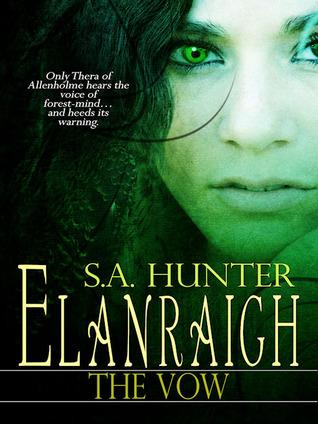
  • ELANRAIGH: The VOW by S. A. Hunter – a high fantasy of a destiny to be fulfilled

    ELANRAIGH: The VOW by S. A. Hunter – a high fantasy of a destiny to be fulfilled

    The great northern forest of Elanraigh is sentient, but only one young noble lady, Thera, can hear its singing and its warning of approaching destruction.

    With dreams of black sails, an old enemy returns to harry the shores of Allenholme and if Thera’s ducal father cannot form an alliance with the Ttmarini who share the love of Elanraigh, the attack will not end in the central forest. The last thing Thera wants is to leave her home in danger, but her parents are determined to send her to Elankeep where she can be safe, away from the fighting.

    Because her aunt is the present Salvai to Elanraigh, Thera will have the opportunity to grow further into her gifts and develop as a woman. Against her desires, she agrees to go, but only after the Ttmarini arrive to confirm the alliance against the sapient Memteth. By this chance, Thera encounters the one who could share her spiritual destiny, should she choose.

    S. A. Hunter plunges the reader into a world and narrative that both encourages them to look through more than human eyes, yet keeps the realities of human limitations in mind while facing overwhelming influences. Animals, trees, and incorporeal elementals become Thera’s allies, while she earns the respect and loyalty of the soldier-guards at Elankeep. Many of these soldiers are women, initially presented as almost common-place, an option for women with the will to fight. As Thera grows in awareness, so does the reader, to the very familiar imbalance of power between male and female.

    Patience, humility and honesty form the core of Thera’s character even as the events and dangers facing her temper her strength. As the complications of adulthood and intrigue peel back Thera’s innocence, she will need that strength to face the challenges set-up for the sequel.

    Although strictly presented as an enemy, S. A. Hunter introduces questions and potential inconsistencies about the Memteth raiders that allow for more than black and white, villains and hero-defenders. There are motivations that are not yet understood and secrets that still must be explored. Vividly depicting nature balanced between sea, mountains and forest, S. A. Hunter gives a story that will draw the reader in and leave them ready for more – for the next step of Thera’s growth into the Salvai of Elanraigh.

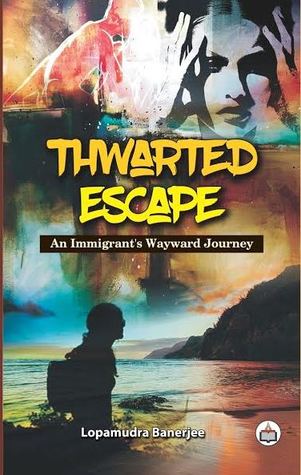
  • THWARTED ESCAPE: An Immigrant’s Wayward Journey by Lopamudra Banerjee – a stirring narrative

    THWARTED ESCAPE: An Immigrant’s Wayward Journey by Lopamudra Banerjee – a stirring narrative

    In her book, “The Art of Memoir,” Mary Karr recalls hearing novelist Don DeLillo once say that a fiction writer starts with meaning and then manufactures events to represent it, whereas a memoirist starts with events, then devises meaning from them.

    Lopamudra Banerjee does just that in her memoir “Thwarted Escape: An Immigrant’s Wayward Journey.” She takes us through a journey of achievements and sorrows while using words to make meaning of her spirituality, her femininity and her literary identity.

    Broken down into four volumes, the book is a collection of essays and articles, many of which were previously published in print, online anthologies and literary journals.

    Depending on which chapter you’re reading, you could say Banerjee is a memoirist, a creative writer, an essayist or a journalist. But no matter what label you choose for her writing, you will see Banerjee has major writing talent – the culmination of a passion that was borne at an early age when she considered words her playmates.

    “I have been in love with these moments of restlessness and release as these clusters have formed a pattern called words. I watched this written world of prose and verse, as with my hands, my body, I absorbed these nuances of creation,” she writes.

    Through the pages, Banerjee transitions from a small town girl in India who makes her way to the United States. She has traveled to many places throughout the US and in one chapter where she derives the book’s title, “Thwarted Escape,” she talks about her departure to Omaha, Nebraska, as in this stirring passage: “I am an ordinary, commonplace refugee in North America, and like many others of my ilk, have embedded myself in a family, far flung from what is called ‘original home.’ Like many others, I am striving to gain the status of the coveted Non-resident Indian, a legitimate work permit to survive in a distant land while my heart continues to ache with the desire to be rocked in the bosom of my mother and to revisit the havens of my childhood.”

    With the power of narrative in her life, Banerjee lives with the secret ambition to “get published” and to let the world read her stories. Thankfully, she has fulfilled her dream of compiling such a book and sharing with us her engaging and well-written stories of grief, death in her family, motherhood, and femininity.

    In a particularly moving section of the book, Banerjee introduces us to Taslima Nasrin, a Bangladeshi novelist and poet who has lived in exile since 1994 amid death threats for her outspoken feminist views and criticism of Islam. With admiration for Nasrin’s voice, Banerjee includes newspaper clippings (scans from the original print versions) of Nasrin and explains some of the abuse and hardship the activist has endured. As a graduate student of English literature, Banerjee harnesses Nasrin’s power and draws parallels to other literary greats.

    “I realize how [fusion_builder_container hundred_percent=”yes” overflow=”visible”][fusion_builder_row][fusion_builder_column type=”1_1″ background_position=”left top” background_color=”” border_size=”” border_color=”” border_style=”solid” spacing=”yes” background_image=”” background_repeat=”no-repeat” padding=”” margin_top=”0px” margin_bottom=”0px” class=”” id=”” animation_type=”” animation_speed=”0.3″ animation_direction=”left” hide_on_mobile=”no” center_content=”no” min_height=”none”][Virginia] Woolf, how Taslima [Nasrin], how Sylvia Plath, trapped and tangled in a women’s bodies, have suffered the heat and passion of their literary selves…”

    Banerjee ends the book with letters she wrote to her family and other people while she was pregnant and during other periods in her life. We readers are grateful Banerjee has found the courage and energy to publish all of these personal stories that are so moving, eloquently written, and significant in both her life and the lives of women.[/fusion_builder_column][/fusion_builder_row][/fusion_builder_container]

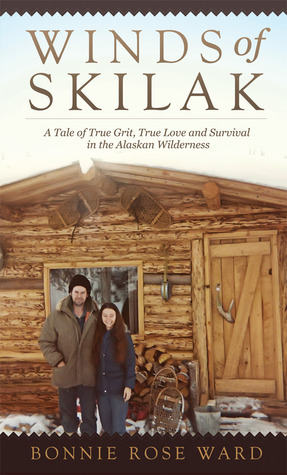
  • WINDS of SKILAK: A Tale of True Grit, True Love and Survival in the Alaskan Wilderness by Bonnie Rose Ward

    WINDS of SKILAK: A Tale of True Grit, True Love and Survival in the Alaskan Wilderness by Bonnie Rose Ward

    In this day and age of omnipresent cell phones and electronics, is it not the quintessential dream to quit one’s day job to seek the peace and quiet of the last frontier and live off the land?

    It wasn’t necessarily Bonnie Rose Ward’s dream, but her husband Sam’s to move to Alaska for a pure existence. However, her deep love and admiration for her mate led her to check out library books on how to live in the wilderness and finally make the difficult decision to leave their home in Ohio for a tiny island on Skilak Lake on the Kenai Peninsula of Alaska.

    In her beautifully written memoir, Winds of Skilak: A Tale of True Grit, True Love and Survival in the Alaskan Wilderness, Bonnie invites us into a routine that began in 1980 when she was 25 and Sam, 36. It’s an engaging and inspiring story ripe for anyone who has merely dreamed of a new life or for those similarly courageous enough to take the leap to remote living.

    Through Bonnie’s intimate excerpts, we learn how the couple, and their friend Bob who tags along, lived on Caribou Island in self-built cabins without running water, electricity or a phone. They deal with isolation and sub-freezing temperatures along with making new wildlife friends like a milk goat named Esther. Bonnie steps out of her comfort zone and learns how to shoot a .375 Holland & Holland Magnum.

    If you are wondering what a grocery list would look like for such an adventure, you’re not alone. The following passage is labeled a ‘Popular Highlight’ in the Kindle edition:

    We bought what we figured to be a year’s supply of dry goods,” Bonnie writes. “These staples included two hundred pounds of flour, a hundred-pound burlap bag of pinto beans, fifty pounds of sugar, thirty pounds of cornmeal, fifty pounds of rice, twenty pounds of noodles, several gallons of cooking oil, honey, powdered milk, salt, pepper, spices, baking powder, yeast, tea, several cases of three-pound cans of coffee, and powdered creamer. Anything else we needed must come from the land—must be what we could hunt, fish or grow.”

    In one episode amid their remote homestead, we learn what most likely influenced the book’s title of “true grit” and “true love,” both of which were prerequisites for the trio to survive the ensuing frost. A devastating logging accident puts Sam in the hospital and sidelines him as he accepts a painful recuperation. Meantime, the misfortune tests Bonnie’s faith in God (and in Sam), as she tells us with heartbreaking honesty:

    A brisk cold wind greeted us as we stepped out of the doctor’s office that day— a stark reminder that summers are short in Alaska,” she writes. “We had forty dollars left. It was all the money we had in the world, with nothing else coming. It couldn’t get worse. We were broke and living in a pup tent with winter on the way.”

    Fortunately, with the determination that got them out there in the first place, the couple sees the sun shine again. Through astute observations and crisp writing, Bonnie takes us on their 15-year wilderness journey treating us along the way to the Alaskan landscapes:

    After that first day, the clouds vanished from the mountains, and all remnants of foul weather fled from a sun-drenched sky. Skilak Lake calmed and grew at peace with itself. I stood at the water’s edge struck by the pristine beauty all around me. The color of the lake changed like a giant mood ring from a milky green to a brilliant peacock blue.”

    According to Bonnie’s website, which she maintains to promote the book, the couple has since moved to West Virginia to live a self-sufficient lifestyle on a farm where they enjoy raising goats and chickens and gardening and canning vegetables. Despite their exodus to the lower 48 to live closer to family and friends, Skilak Lake will always be in their hearts as it “has left its imprint deep within us and no matter where we go or what we do, neither time nor distance will ever change that.”

  • The UNEVEN ROAD: Book Two of First Light by Linda Cardillo —  a coming of age novel

    The UNEVEN ROAD: Book Two of First Light by Linda Cardillo — a coming of age novel

    Ringing with the changes from the deceptively placid 1950s to the turbulent 1960s, from the picturesque New England island of Martha’s Vineyard to the bloody jungles of Viet Nam, The Uneven Road is a sophisticated coming-of-age novel that intersects with historical events of this period.

    The second book of Linda Cardillo’s award-winning series, First Light, is written with verve and intelligence. Cardillo carefully constructs The Uneven Road with rich characterizations, diverging and interlocking plot elements, and fine attention to detail that explores family dynamics and the search for individual identity.

    This gripping saga continues when Izzy, Mae and Tobias’ seven-year-old daughter, contracts polio. Their twelve-year-old boy, Josiah, feels responsible not only for his sister’s pain, but all the troubles in his small world. Jo’s conflicted feelings escalate when he realizes that Mae’s island property, Innisfree, will be sold to pay for Izzy’s surgery. Even though he loves Izzy and wants her to walk without crutches, his parent’s cold-blooded willingness to part with Innisfree drives Jo to smash an important symbol of his past, the ceremonial Wampanoag drum bestowed on him by Tobias, and then runs away to Boston, where he stays with his Irish uncle, a policeman. Finally he enlists in the army, winding up as a medic on the killing fields of Viet Nam.

    Cardillo’s precise writing adds credibility to the vivid scenes that take place in Viet Nam where Jo struggles with the necessity to kill the enemy while charged with saving lives. Later, the author, again, deftly describes Jo’s very different experiences when he returns to the US, where he hangs out in a commune. No matter, Jo maintains his family contact mostly through Izzy, now in college on the mainland. Back on Chappy, Mae, going through her own changes, longs to see her son again. His journey home with Izzy and her friend Grace will re-connect him with his people, both Irish and Native American, and reveals to him that he and his mother are more alike than they ever thought possible.

    Captivatingly infused with often raw emotions and haunting memories of race, heritage, culture, and family dynamics, The Uneven Road, scatters its characters over time and place and draws them back together again with enduring values of family love and respect for heritage.

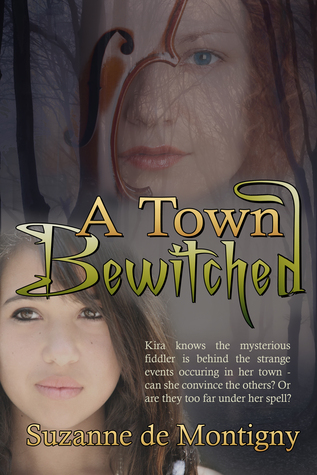
  • A TOWN BEWITCHED by Suzanne de Montigny — Middle Grade Urban Mystery

    A TOWN BEWITCHED by Suzanne de Montigny — Middle Grade Urban Mystery

    When vivacious, red-haired fiddler Kate McDonough suddenly appears in the tiny Canadian town of Hope, it brings disturbing changes for Kira Montgomery and her friends.

    Kira already has problems. She plays the classical violin, and “Kids make fun of me enough as it is because I’m a child prodigy—AKA a nerd.” The IGs (In-girls) at school also mock her best friend, Charlotte, because she is adopted, and Chinese. Kira’s beloved father died recently. He had promised to buy her a special violin, but now it’s just too expensive. And after she plays “Danny Boy” at his funeral, that tune starts haunting her.

    Now, to Kira’s disgust, everyone in Hope is enchanted by the magnetic Kate’s Celtic tunes, even Kira’s own family. Kira believes she’ s being stalked—could it be Kate? Worst of all, Hope is in turmoil because someone is killing birds and leaving ugly graffiti everywhere, even painting “Liar” on Kira’s father’s gravestone. Trying to make everything right, Kira lands in serious peril.

    Author de Montigny sets her plot in motion with action from the first page. Kira is regular enough for teen readers to identify with, yet possessed of some extra perception and grit that make her a fitting heroine. Suzanne de Montigny adds extra layering to this supernatural YA yarn with special musical details, from Beethoven to the Celtic strains produced by the mysterious Kate.

    A Town Bewitched offers a magic formula for the young adult audience: a high school full of competing cliques; a beautiful, mysterious stranger; a dark, malevolent presence; and a bold young woman who rises above her personal woes to set things right.

    ​ ​

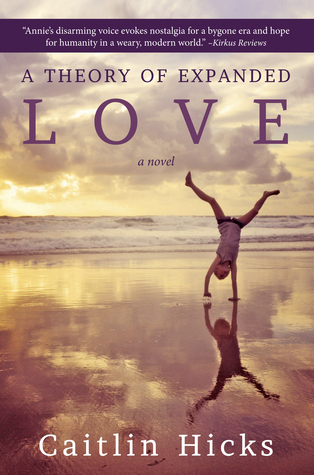
  • A THEORY OF EXPANDED LOVE by Caitlin Hicks, a bold, coming-of-age novel

    A THEORY OF EXPANDED LOVE by Caitlin Hicks, a bold, coming-of-age novel

    Confused by conflicting messages from family and church, a young girl takes big issues of life, love, and trust into her own hands.

    It is 1963, and American Catholics are stirred. First, by the death of the pope, and later, the assassination of the first Catholic president. Preteen Annie Shea, one of eleven children in a devout Catholic family, is the narrator. Because her father, a soon-to-retire Naval officer, once had a chance encounter with a priest who is now a cardinal, Annie sees her parents shamelessly promoting themselves in the community and church as friends of the possible next pope.

    As we begin to live among the Sheas, we see a passive, harried mother who suffers in secret from the early loss of a baby and a well-meaning father who is tyrannical in pursuit of prestige, trying to control his unruly brood with strict moral injunctions backed up by a belt. But his rules can’t stop Annie from wondering: why is it a sin to lie, except about the family’s supposed connection to the papacy? Why can’t she talk to someone about a family member creeping into her bedroom and feeling her up?

    Worst of all, in a religious culture where babies are so wanted and life so precious, why is her older sister consigned to a convent to “repent” and, Annie learns, have a baby that will be taken away for adoption before anyone in the family even looks at it? Annie’s sudden bold rebellion may tear the family apart—or bring it together in ways never envisioned.

    Canadian author Caitlin Hicks is a playwright and actress who has crafted this coming-of-age novel like a series of episodes in a fast-developing family television drama. Annie is a likable, gutsy girl stuck in the contrast between what she knows in her heart to be right and what she is being told by various patriarchs—dad, priest, and pope.

    Authentic, amusing, wise beyond her years, Hicks’ heroine marches forth like a modern Maid of Orleans to remind others of their true moral duty. Hicks composes with confidence and competence, deftly manipulating the modalities of the fateful events of 1963 to reveal the Sheas as a sort of “every family,” with strong bonds of caring and some notable fault lines.

    A Theory of Expanded Love is a teen’s-eye view of what happens when doctrine threatens to outweigh compassion, and how balance can be restored with a few bold moves.