In Fast Backward, David Patneaude’s most recent YA novel, fifteen-year-old Bobby sets out on his morning newspaper route, but what happens next blows his shorts off, literally. First, he witnesses a blinding light that grows into a mushroom cloud, but no one on the military base where he delivers papers will talk about it. Then, on his ride home, a dot in the distance takes on the shape of a girl, a naked girl in the middle of the desert at the side of the road. Thus begins Patneaude’s novel that brings WWII to life through the eyes of a young man torn by his father’s anti-war sentiments, and his uncle’s military patriotism.
Bobby realizes that this girl, Cocoa, is somehow tied to the blinding explosion. What does Bobby do? He offers the girl his carrier bag, his shorts, and a ride home. After some preliminary conversation, Cocoa realizes where she is, and what she must do.
She has knowledge she must deliver a message to those in charge in the hope of stopping nuclear bombs that decimated her world.
Are we concerned yet? Bobby is. He can hardly believe Cocoa’s crazy story, but Cocoa’s knowledge of dates, towns, and ship names make him a believer. They convince his parents and, with some effort, Bobby’s Uncle Pete. Cocoa has enough knowledge to capture the attention of some high-ranking military officials, but she also receives serious skepticism. When a bombing that she’d predicted actually happens, the Generals start listening.
Cocoa’s premonitions are a torment to her, and when she remembers something that involves Robert’s dad, a journalist and pacifist and conscientious objector, Robert’s world is turned upside down. His ideas of the world are forever changed by Cocoa, Future Girl, the girl who will save the world.
Award-winning YA author, David Patneaude effectively suspends our disbelief as he deftly crafts a world where nuclear bombs, Nazi submarines, the bombing of US cities, with two kids coming of age stuck in the middle, becomes a reality. Patneaude’s world explodes on the page in this post-apocalyptic war story that is plausible, terrifying, and quite satisfying to the spectacular end.
Fast Backward is highly recommended for young and old alike – and won First in Category in the CIBA 2019 Dante Rossetti Awards for Young Adult fiction.
Since his father’s death, seventeen-year-old Antonius Sardi has become the man of the house, keeping up the spirits and providing for his mother, younger sister, and younger brother. When he takes a job in the household of Conte Leonardo Valperga, he works hard to prove useful in hopes of raising his status above that of a lowly servant. Occasionally, Antonius glimpses Savinus di Benevento, a seer of great renown in the medieval town of Pesaro, and a member of the Conte’s household as well. When Savinus advertises for a new apprentice, Antonius knows this is the opportunity for which he has been waiting, a chance to show his abilities to a man who can appreciate rather than fear them.
Antonius can read minds, and as soon as Savinus, also skilled in mind-reading and prophecy, learns of this, he immediately agrees to take on Antonius. However, Antonius isn’t the only young man who wants the position. Nichola, the son of Savinus’s very wealthy and powerful patron, believes himself fit for the job. Savinus has no choice but to take on Nichola, who proves himself treacherous and shallow. Moreover, Nichola is annoyed that Antonius is given the role of the primary apprentice while he is relegated to mundane tasks. To make matters worse, Guilia, Savinus’s daughter, seems interested in Antonius. Nichola takes his jealousy to unbelievable lengths, which ultimately threatens Savinus, Antonius, and Giulia’s lives.
Antonius’s desire to defy the expectations of his class is the most important theme within the novel. He often thinks of his father, a fisherman, who came home exhausted nightly many times after the rest of the family had fallen asleep. On the days he could, he insisted on teaching his children how to read and write even though in their current social status, such skills would be unnecessary. Antonius knows that he has no other option than to fight for the assistant apprenticeship if for no other reason than the memory of his father’s hard work. Less than his best would be a betrayal of his values.
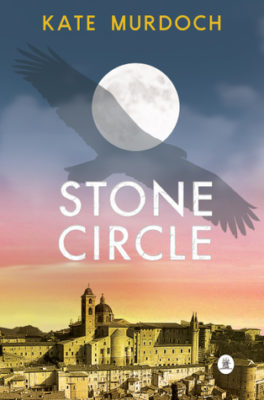
Kate Murdoch weaves a compelling tale of Medieval Italian life in her coming of age historical fantasy. Here’s a novel that will hook readers from the very first page.
Stone Circle won a well-deserved First in Category in the 2018 Chaucer Awards for Early Historical Fiction novels.
In this stirring, coming of age saga by J. R. Collins, an old man shares his recollections of a time when the good old life was turning bad in his home region of the Tennessee mountains.
Jebediah, known as Jeb, Collins was born in 1815 in a place known to the local Cherokee Indians as Cho-E-Sto-E, “Land of the Dancing Rabbits.” Owing to their closeness and their many shared needs, the family is, in a sense, adopted by the Cherokees. Jeb’s brother marries a Cherokee girl, and he himself is blessed by a sort of spiritual brotherhood with a Cherokee boy named Wolf who was born the same night as he. The story, a sequel to Collins’ earlier work, The Boy Who Danced with Rabbits, opens in 1827 as Jeb and Wolf, just on the brink of adolescence and able to act in manly ways, go on a hunting expedition. They slaughter a huge wild boar and are enjoying their conquest when renegade Indians enter their camp, demanding to know the whereabouts of a female slave who has run away into the woods. The intrepid lads manage to turn their intruders away and set out on their own to find the woman, after being alerted to her possible location by a panther, known in that part of the world as a “painter” cat. They find her nearly dead. Wolf sets her in a cave known to his people for its healing powers, where a huge bear will remarkably take part in her care before Jeb’s sister Anne can arrive with herbs and other remedies she has learned from her Cherokee relations.
But lurking in the hills at that time are many, even greater dangers, as Jeb and Wolf learn when they encounter two surveyors for the United States Army, even now planning what will someday be called the “Trail of Tears,” driving the indigenous people abruptly, violently, from their spiritual and physical homeland. The reminiscences of Jeb as an old man give hints of that shameful time to come, while he sees his younger self resting rather easily after having helped to save the dying woman who, it evolves, has reason to rejoice at being found by members of Wolf’s tribe.
Collins was raised in the area about which he writes so knowledgeably. He has an ear for the local dialect that runs throughout the narrative, and sensitive awareness of local lore with its powerful undertones of Native American culture and history. His sense of the tight connection between humans – both Irish and Cherokee – and the land they occupy is a dominant theme, along with the deep distrust both have for government men and the miners that have come to strip the area of its store of gold. Many supernatural events also demarcate the story, like the bear’s healing attention on the wounded escapee, and the many etheric visions experienced by Jeb as he realizes he is growing into manhood through his perils and victories.
Those with a love of the old ways – both the real, factual events of America’s early development and the mystical imponderables that infuse the natural world of its native peoples – will savor Collins’ dramatic Choestoe series as thus far conceived, and wait excitedly for the next episode.
Living Where the Rabbits Dance (Choestoe Series, Book 2) won First in Category in the CIBA 2018 LARAMIE Awards for American Literature.
Do you have a Y/A Fiction manuscript or recently published novel?
Enter it today in the CIBA 2020 DANTE ROSSETTI Awards! Let us decipher the best of the best.
If you know anything about Chanticleer International Book Awards, you know that we never stop sharing the good news and accomplishments of our authors! Never!
What that means is we believe in book promotion, highlighting our winners, standing on our platforms, and telling the known world all about YOUR BOOK!
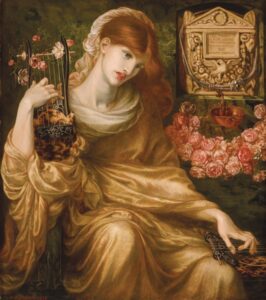
The Dante Rossetti Awards for Young Adult Fiction are named for the British painter and poet,
Dante Gabriel Rossetti
Chanticleer has chosen Dante Rossetti as the namesake of our young adult fiction awards, because of Rossetti’s strong connection to works of beauty and emotions as swift as the changing seasons. Both aspects embody what it means to be young. We feel that the sentiment expressed by the Pre-Raphaelite movement exemplifies what inspires many authors to pick up their proverbial pens to express their emotions and their observations of the visceral dynamics of living.
Besides, he was a rock star. He founded the Pre-Raphaelite Brotherhood, an exclusive group in the mid-nineteenth century which garnered as much fame and attention as equatable to the Game of Thrones cast today.
The Love Song by Sir Burne-Jones who was mentored and influenced by Dante Gabriel Rossetti
You won’t regret it – Just ask the following authors who did enter, and won!
The 2018 DANTE ROSSETTI Book Awards GRAND PRIZE:
Whispers by Yvonne Moon
WHISPERSbyLynn Yvonne Moon
2018 Dante Rossetti Book Awards for Young Adult Fiction First in Category Winners
Here’s a little more about our Dante Rossetti … (can we claim him as our own?)
Rossetti’s paintings, in particular, were characterized by the long and wavy hair of young women. It is this youthful beauty that has been immortalized in his work and captures the immovable spirit of adolescence which is so fraught with changing emotions. These women he painted are often quite romantic. His wife would often model for the paintings or the wives of his friends in the Brotherhood. It was rumored that Rossetti had several lovers…
Visitors today can view Rossetti’s work at the Louvre or the Met. In addition to painting, he was also a writer. Several of his poems address emotions and feelings in all of their complexity, similar to his painted works.
La Viuda Romana, 1874 by our fav guy, Dante Gabriel Rossetti
Leon Martin and the Fantasy Girl by Andre Swartley
Want to be a winner next year? The deadline to submit your book for the Dante Rossetti Awards is June 30, 2020. Enter here!
Do your works have what it takes to make it through the CIBA judging rounds? Submit manuscripts and published works into the Chanticleer International Book Awards – Click here for more information about The CIBAs!
The last day to submit your work is June 30, 2020. We invite you to join us, to tell us your stories, and to find out who will take home the 2019 CIBA prizes at CAC20 in September.
The deadline for 2020 YA submissions is June 30, 2020.Grand Prize and First Place Winners for 2020 will be announced on April 18, 2021.
Any entries received after June 30, 2020, will be entered into the 2021 Dante Rossetti Book Awards Young Adult Fiction. The Grand Prize and First Place for 2021 CIBA winners will be held on April 2022.
As our deadline draws near, don’t miss this opportunity to earn the distinction your work deserves! Enter today!
The DANTE ROSSETTI Book Awards is a division of the Chanticleer International Book Awards – the CIBAs.
The winners will be announced at the 2019 CIBA Awards Ceremony in September 2020, which will take place during the 2020 Chanticleer Authors Conference. All Semi-Finalists and First Place category winners will be recognized, the first-place winners will be whisked up on stage to receive their custom ribbon and wait to see who among them will take home the Grand Prize. It’s an exciting evening of celebrations!
Full of fun and quirky characters, author Aric Cushing invites readers to join him in a world where Halloween never ends. The tale begins with the prophesied birth of the white-haired Alex Vambarey, who draws the attention of a darkling vampire named The Deleter.
After being saved by all the citizens of Hillock Green, the plot then shoots forward to the eve of Alex’s departure to school. He is an adventurous boy who takes this new chapter in his life in stride, and after saying goodbye to his parents, Alex begins the rather long journey to school. There he meets a whole cast of absurd characters and makes fast friends who help him solve the school riddle.
Creative influences such as any of the Tim Burton films show up strongly in the book’s visual imagery, most notably when Alex travels through a tree and descends a terrifying staircase. Even though the inspiration of Tim Burton is strong, Cushing still creates a unique land of Halloween.
Cushing’s Vampire Boy is also fairly unapologetic about how heavily it is inspired by Harry Potter. Whether that is done on purpose to draw in children who enjoyed that series, or as a way to poke fun at itself is hard to tell. It is good to note that the areas of the story where it diverts from the tropes of Harry Potter are some of its strongest moments.
The narrator of Vampire Boy is somewhat unreliable because they repeatedly interject into the story to hint at a future event, which most of the time does not play out by the end of the book. When thinking about the art of storytelling, this narrative strategy does not necessarily make sense, but it keeps readers on their toes.
It has to be noted that this story ends on a cliffhanger. A lot of the book is spent on Alex getting to school and ends right around the cusp of the story’s climactic moment, and some may find that to be an unsatisfactory ending. Overall there is a lot of humor throughout and this humor is the best quality of Vampire Boy, especially the comedic moments of Alex and his classmates learning about the human world.
Kids who love Halloween, and have active imaginations, will have fun reading Vampire Boy and will laugh as Alex and his friends misunderstand the human world during their quest to crack their school’s riddle.
Vampire Boy won First Place in the 2018 CIBAs, GERTRUDE WARNER Awards for Middle-Grade Fiction.
The Dante Rossetti Book Awards recognize emerging new talent and outstanding works in Young Adult Fiction. The Dante Rossetti Book Awards is a genre division of the Chanticleer International Book Awards (#CIBAs).
Named in honor of the British poet & painter Dante Gabriel Rossetti who founded the Pre-Ralphaelite Brotherhood in 1848.
Chanticleer International Book Awards is looking for the best books featuring stories of all shapes and sizes written to an audience between the ages of about twelve to eighteen (imaginary or real). Science Fiction, Fantasy, Dystopian, Mystery, Paranormal, Historical, Romance, Literary, we will put them to the test to discover the best.
These titles have moved forward in the judging rounds from SLUSH pile to the 2019 Dante Rossetti Book Awards LONG LIST and now have progressed to the 2019 SHORTLIST.
Congratulations to the 2019 Dante Rossetti Shortlisters!
Navya Sarikonda – The Enchanters’ Child
J.A. Roth – When The Bee Stings
Veronica Myers – Winter’s Progeny
Zachary Ryan – High School Queens
Julieanne Lynch – Beneath the Lighthouse
Jacinta Jade – Change of Darkness
Kelly Watt – The India Diaries: Book One Tiger’s Rock
J. Taylor Baker – The Cardorian Complex
Glen Sobey – No Fences in Alaska
Jan Von Schleh – But Not Forever
Michelle Rene – Manufactured Witches
Nancy Thorne – Victorian Town
Ted Neill – Jamhuri, Njambi & Fighting Zombies
A. Cort Sinnes – Quicksilver
Leslea Wahl – Where You Lead
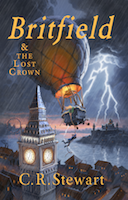
C.R. Stewart – Britfield and the Lost Crown
Susan Brown – Twelve
J.T. Blossom – The Tunes of Lenore
James M Roberts – The Crossroads of Logan Michaels
Sandra L Rostirolla – Cecilia Futuris
Kristina Bak – Nowever
Zachry Wheeler – Max and the Multiverse
V. A. Givens – Sealed with a Twist
Tom Edwards – The Honourable Catherine
Michael Bialys – The Chronicles of the Virago: Book I The Novus
David Patneaude – Fast Backward
John Middleton – Dillion & The Curse of Arminius
Good luck to all!
Which of these works will move forward in the judging rounds for the 2019 Dante Rossetti Book Awards for Young Adult Fiction?
These entries are now in competition for 2019 Dante Rossetti Semi-Finalists positions. Semi-Finalists will be announced and recognized at the CAC20 banquet and ceremony. The First Place Category Winners, along with the CIBA Division Grand Prize winners, will be selected from the 16 CIBA divisions Semi-Finalists. We will announce the 1st Place Category winners and Grand Prize Division Winners at the CIBAs Banquet and Ceremony on Saturday, April 18th, 2020 at the luxurious Hotel Bellwether in Bellingham, Wash.
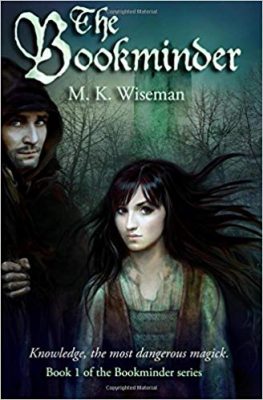
More than anything, Liara just wants to belong. As an orphan “fey” child in the seventeenth century, Liara has been a ward of the Church for ten of her sixteen years. Grateful to be taken in and cared for by Father Phenlick, she knows most of the villagers want her gone.
The product of a rape by a magical creature, Liara is imbued with magic and in many ways is magic itself. The powerful wizard who created the creatures responsible for the attack during the attack on the valley, knows nothing of her existence. Father Phenlick enlisted the help of Nagareth, the wizard of the woods, to shield Liara and the village from further assaults all while outlawing the very power he is secretly trusting.
At St. Sophia, Liara is safe until she steals from the village busybody. When Liara’s extensive hidden stash is discovered in a “magicked” hollow tree, the Venetian soldiers who protect the valley force Father Phenlick to ostracize Liara. Abandoned by even her friends, Liara is taken in by Nagareth, who promises Phenlick that he will not teacher Liara his craft. Liara begs Nagareth for magical instruction, but he only allows her to care for his extensive magical library. Gradually, Nagareth sees great potential in his new ward, but when everyone in Dvigard is killed by a mysterious plague, he begins to fear that he can’t protect her from her powerful creator who will want her powers for his own if she is discovered.
Liara cannot see the danger around her, and as her own magical knowledge grows through her maintenance of Nagareth’s books, her only goal is to exact revenge against her father. As her abilities grow so does her anger and confusion at the only person standing between her and her destruction.
Liara is a complex, dynamic character. Her history gives her more than normal teenage problems. Liara’s mother was driven crazy by the rape and was never able to truly care for or love Liara, leaving Liara to the cruelty of the villagers. Without Father Phenlick, Liara would never have survived, and though he tries to give her a home, he isn’t able to fill the emptiness deep within her. Liara desperately needs something and somewhere of her own, which is why she steals–to fill her life with things that are her own. In creating her hollow-tree hiding place, she creates that place where she isn’t afraid to be herself. Though she is unaware of her own magic, it is as much a part of her as her history.
In the beginning, all Liara wants is to grow that power. She desires the very thing others accuse her of having to give her what she has never had, but it’s a double-edged sword. She is hated for her supposed abilities even before she shows evidence of magic, but when she finds the magic she wants so badly, it will define her. She wants others to see she has feelings and dreams, but in the very thing she wants most, this undeniable power, people will see only that. She limits herself to this magical creature, and that drive quickly becomes an obsession. Only too late does she see Nagarath’s minimal use of magic isn’t a waste. She almost allows her prejudiced idea that magic should be grandiose to cloud the important lesson she learns about living simply, living for love and not power. As she grows through her relationship with Nagareth, she learns what magic should truly be.
The evolving bond between Liara and Nagareth is a beautiful story. Only nine years Liara’s senior, Nagareth sees Liara as a child in the beginning, but over the novel’s development, he begins to see Liara as a true companion. The joy she brings to his life, the peace she makes him feel, even though she annoyingly begs him to teach her magic, becomes invaluable to the lonely wizard.
He wants to make sure she has a life of stability, not fear. As he opens himself up more and more, he becomes her friend. He realizes she has given him more than he has returned and relents in his promise not to teach her. Nagareth grows as much as his precious ward.
The Bookminder won 1st Place in the CIBA 2017 OZMA Awards for Fantasy Fiction.
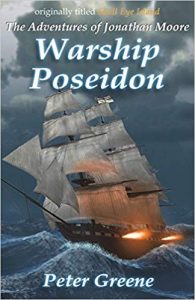
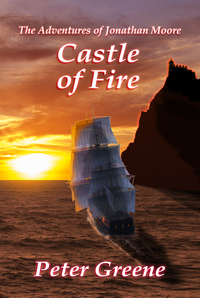
Meet Peter Greene, CIBA Award-Winning author of High-Seas Action Adventure novels that appeals to all ages!
If you’ve ever been to a CAC (Chanticleer Authors Conference), you might recognize author Peter Greene. He’s the one that sits on the outside aisle, quiet and unassuming. Well kids, don’t be fooled! Peter has one of the best imaginations I know of—and there is a reason for his works are award-winning! You’ll just have to read on to discover it yourself!
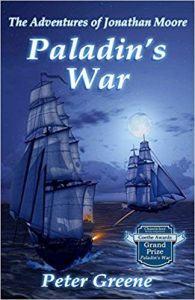
Peter Greene took home the Goethe Book Awards Grand Prize in the 2017 CIBAs for Historical Fiction for Paladin’s War.
CIBA 2017 Goethe Book Awards Winners Joe Vitovic & Peter Greene
Chanticleer: Tell us a little about yourself: How did you start writing?
Greene: My parents were both prolific storytellers, and they were amazingly descriptive, especially my Father. He would act out the voices and mannerisms of all the people. I learned a lot from trying to outdo them. Then in high school, when I took a creative writing class, my teacher, Mrs. Beem, would just yell out something like “a story with lots of movement” or “use the words ‘freedom’ and ‘cheesecake’ in a short story” and I would just go. The other kids sat and struggled, but I already had a plot, characters, and all that in seconds. She gave me A’s all the way through.
Structure: Pantzer or Plotter?
Chanti: That sounds like a great way to be introduced to storytelling!
So just how structured are you in your writing work?
Greene: Very structured, but only in the process, not in the structure of the piece.
I first list “essentials” – just the essential things I want in the story, in no order, and some may make it in there, some may not. This way I get ideas out of my head before they are lost in the ether!
Then comes some basic research, which is ongoing through the process of course, but I just want to make sure I’m building my fiction on a solid, believable foundation.
I then outline like a madman, very detailed at times, sometimes with partial chapters written out, sometimes with crude drawings! These outlines are dozens of pages long, and I print them and literally wallpaper my office with them! The outline for Paladin’s War covered three walls in my office!
Finally, I start the actual writing, usually in chronological order, but that is a rule I break depending on my mood.
When I’m done, I have my wife read the book out loud to me so I can hear the rough spots-that is critical— I find so much that makes me cringe: from unnatural dialogue to foggy descriptions to just clunky passages. I judge a competition and this is the advice that I tell almost every beginning author who enters the contest.
Then, I send to the editor for evaluation. But all of these steps are ‘writing’ to me. And I love all of it.
Authors Who Have Influenced Your Work
Chanti: That’s a good way to approach your writing! I like the Madman Outliner… sounds like the title of your next book! Name five of your favorite authors and describe how they influence your work.
1) Kurt Vonnegut, mostly his later stuff, like Breakfast of Champions because he became so irreverent after his ‘mainstream’ success. He taught me that style can change, and be ANYTHING as long as it has something valuable to say.
2) Erma Bombeck, again showing that style, if it is true, can let you do anything. I would read her columns, and even though I was about twenty-two years old and a single man in Los Angeles when I discovered her, I identified with her message and I laughed. Her writing seems so effortless! I miss her.
4) David McCullough. This is cliché, but he makes history come alive, and his writing voice (as well as his speaking voice), is so crystal clear. No extra stuff, just the best, most important things are covered in a wonderful manner that intrigues us. He never put his opinion in his works, because he doesn’t have to. History is history, and it is interesting enough.
5) J.R.R. Tolkien because he is the best at everything: plot, character, situation, excitement, humanity, emotion, poetry, prose and adventure. I have read the Silmarillion at least ten times and Lord of Rings each year since I was fourteen. I am always amazed at the scope of his stories, and the languages – truly amazing. I have learned from him that no matter how good I think I can be at times, I am no master. He is the true master. I would never try epic fantasy because the bar has been raised so high.
About Dialogue
Chanti: Great insights – and choices! You’ve given us something to chew on. What areas in your writing are you most confident in? What advice would you give someone who is struggling in that area?
Greene: Dialogue is pretty easy and natural for me, maybe because of my theatre training. As far as advice for others who struggle with dialogue, I’d say this: if you are always looking for a witty, snappy, clever, smart ways for your characters to speak, STOP! It will all come out cliché, and no one talks in clichés. It will read like an episode of some seventies, low-budget television series. J.D. Barker said at the last CAC19 that he sits in a Starbucks, has a cup of coffee and listens to what the people around him say, and he types it into his laptop! That is brilliant. It’s natural. I tried it. It was a blast!
JD Barker presented at CAC19!
Expanding Readership and Promoting Literacy
Chanti: Ah, that’s my favorite thing to do! What do you do in your community to improve/promote literacy?
Greene: For the Adventures of Jonathan Moore series, I specifically targeted YA readers. I consciously write each book to graduate the reader from the fourth-fifth grade reading level with Warship Poseidon, to the sixth-seventh grade level with Castle of Fire, then Paladin’s War finishes on the ninth-tenth grade level. If a youngster reads all three, he jumps several reading levels! I also donate books to schools and libraries in the area and have done a few talks to writing classes.
Honestly, my book reviews from Chanticleer after my winning the Goethe award in 2018 and the (Chanticleer) review of Paladin’s War exploded my sales. I increased my sales by over 400%, so that worked for me! – Peter Greene
Marketing and Sales Tips
Chanti: That’s awesome! So, you give away books and present writing classes, what else do you do to market your books? What’s worked to sell more books, gain notoriety, and expand your literary footprint?
Greene: I don’t do enough, but when I learn something, I do it. I enter contests that are legit. Advertising can work, it just depends on finding what works for you. Honestly, my book reviews from Chanticleer after my winning the Goethe award in 2018 and the (Chanticleer) review of Paladin’s War exploded my sales. I increased my sales by over 400%, so that worked for me! You just have to try everything, meet people, and spread the word – without saying “Hey, I wrote this great book, you should read it.” Let others speak for you, and most of all, let your writing speak for you.
Let others speak for you, and most of all, let your writing speak for you. – Peter Greene
How do you separate your books in a crowded marketplace?
Chanti: That is incredible! I love that – especially how Chanticleer Reviews helped to boost your book sales by 400%! I think we need that on a t-shirt…
What is different about your series from other YA books out there?
Greene: Two things: I avoided all magic, superpowers and paranormal material. That’s all fun – but there is too much of it out there already. None of us will ever discover we have wizards or Olympians for parents or have a mystical ability. For this series, I wanted to point out that real heroes do exist, and they have throughout history.
I also decided to take it easy on the terminology and more unsavory aspects of life at sea. I’ve always loved the classic sea stories in Stevenson’s Treasure Island, Forester’s Horatio Hornblower, and O’Brian’sJack Aubrey series, but I couldn’t help thinking that for most of us, unless one had supporting texts and companion guides to get through all the jargon and technicalities, one could easily become lost-and maybe surrender to something easier to read. That would be too bad. And the things you do really need to know, well, wouldn’t it be best to learn that along with the characters? The ones that started out as land-lubbers just like you and your kids?
The Adventures of Jonathan Moore books are about one would-be hero and his friends who try to succeed using only their courage, their wits and industry alone – no magic necessary. And though I will never fill the shoes of Stevenson, Forester or O’Brian, I can attempt to follow in their footsteps.
Chanticleer: That’s great! But you never know…you may be the one to fill their shoes if “Adventures of Jonathan Moore” are any indication!
Now we would really do need to know a little bit more about when did you realize you that you were an author?
Greene: I got my degree in Theatre from Illinois State, and a playwriting professor said I had a “knack for dialogue and physical humor.” That made me continue writing. I wrote screenplays after college, and a studio exec at 20th Century Fox pulled me aside and said “you really can write, keep it up” – then years later, my first novel, Warship Poseidon won the Adventure Writers Competition’s Grandmaster award, and Clive and Dirk Cussler chose the winner. When Clive announced my name, he said “I read your book, you know. Beautifully written.” THAT made me think that maybe I have a little writing ability. So when I write, I always think “maybe Clive and Dirk will read this so it better be my best effort.”
Editor’s Note: Clive Cussler’s books have been published in more than 40 languages in more than 100 countries. They are New York Timesand international bestsellers. He has written 17 books in a row that reached the New York Times’ fiction best selling list. He is of a select group of authors to achieve this status. Cussler has also published more than 50 novels—quite the back list that keeps him on the list of richest authors in the world.
Chanticleer: Holy Moley, man! That’s Clive & Dirk Cussler! I can’t… I just need a moment… Okay then, what led you to write what you write?
Greene: I write a lot of different stuff in different genres, because, why not? The Adventures of Jonathan Moore series is YA historical fiction, and it all happened by accident. One night, as I was putting my children to bed, I realized that I was tired of reading the books available on our bookshelf. Knowing they were crazy about the Pirates of the Caribbean movie, I just said, “Tonight I’m going to tell you a story about twelve-year-old Jonathan Moore who lived in a dark and filthy alley, and how he ended up a hero on a tall sailing ship.” I kept telling a little bit each night, making it up as I went. My wife, who was listening to the stories each night, suggested that I write it as a novel. Ten years later I have three books in the series!
Chanti: And so the magic began… How do you come up with your ideas for a story?
Greene: Good question! Usually, something just clicks that I observe or realize, and off I go. For example, I was thinking about hidden social casts in America and I thought “Wow. People don’t see it, do they?” So BAM! This Sci-Fi idea hits me for a novel, the characters came quickly and then a plot and now the outline is almost finished. I’m starting it now. It’s a strong female character who uses history and propaganda to, well, you will have to read it!
Chanti: A SciFi novel! We can’t wait to read it! Are you going to enter it into the Cynus Book Awards?
Greene: Definitely!
Chanti: Thank you, Peter Greene with an “e,” and we look forward to seeing you at CAC20!
When 17-year-old high school student, Stevie Wales, suddenly blossoms, she and her best friend, the ever-popular Winter, have some adjusting to do. Sometimes, however, adjusting to new information between friends isn’t possible.
In their case, Stevie winds up alienated from Winter and the group in her Puget Sound Island community. She decides to become what she believes they all see – the weird girl. As her oddity status rises, so does her anger. When she takes a job at an equine therapy ranch, tending the horses used in the program, she discovers her unusual ability to take away pain in both animals and humans.
As she begins to feel needed, she lets go of some of that anger, but then, an accident with one of the horses leaves Stevie seriously injured. Her life becomes a twisted version of an already blurry existence as she struggles to find “normal” again.
Stevie embarks on a journey to find her father, a man the world believes dead. She convinces her mother and therapist that she needs to go to Australia, the place where the wreckage of her father’s boat washed ashore. Her search takes her to a strange continent, and though this exploration becomes much, much more, she may find a truth she isn’t ready to accept.
Despite being set in a not-so-distant future, Stevie’s teenage world isn’t so different from now. Mean girls are still mean girls, and the smart, shy students often feel like they don’t belong. So many teenagers, both male and female, may find Stevie’s (partially self-imposed) alienation relatable. Her artistic talents and her empathy for others are endearing traits that help bring Stevie to a culminating awareness. Both of these carry Stevie full-circle to find her version of normal, her definition – not the world’s. Seeing Stevie evolve into a confident young woman through her efforts is nothing short of inspirational.
While Stevie can take away the pain of others, she struggles to keep her gift and the consequences of using it a secret. However, it is only when she stops trying to keep it under wraps, is she able to heal herself as well as those around her.
One of the most engaging parts of the novel is Stevie’s time in Australia. This exotic, culturally diverse continent becomes a character unto itself, drawing Stevie into the adventure of a lifetime while giving her the closure she desperately needs. Pulled into the mysterious murder of a boy she meets, Stevie encounters others who inspire and help her find her father. She learns true contentment by assisting the family of the dead boy all while searching for her own history. Ironically, amid death, she finds life as she navigates a land as wild as her emotions.
Tom and Sarah are best friends who reside in a dilapidated English orphanage housed in a 16th-century castle. Only this castle isn’t the kind that inspires romance or chivalry; Weatherly orphanage is run like a maximum-security prison where children are forced to work, creating goods that are sold in the local village.
Many orphans have tried to get beyond Weatherly’s gates and have failed. Mr. Speckle, a scurrilous caretaker, prowls the grounds, keeping constant surveillance, ensuring the children are working and staying in their place. But Tom is a daring lad, often going on “raids” to steal books from the private library of Weatherly’s owners for his friends to read. Mr. and Mrs. Grievous, a dreadful pair who frown upon any sort of learning, run the orphanage.
One day, Tom and Sarah resolve to get out of Weatherly – forever. Ahead of them, the path is long, twisting, and dangerous, filled with a whirlwind tour through the English countryside. Here, author Stewart sharpens his focus and showcases the beauty and mystery of Great Britain. Readers will discover the places that are dear to the author’s heart as Tom and Sarah travel far and wide, including places such as the Midlands, Canterbury, Windsor Castle London and many more. But trouble is always nipping at Tom and Sarah’s heels, and when the renowned Detective Gowerstone takes up the case, the pair are nearly captured. They only escape by commandeering a hot-air balloon!
As we follow them on their clandestine route, we begin to learn more about who Tom might be—and why some highly placed operatives would like to see him eliminated altogether. It all goes back 150 years to the disappearance of the mysterious Britfield dynasty and the ascendancy of Queen Victoria, leaving one to wonder, Did the wrong person get the crown?
Britfield and the Lost Crown delivers as a detailed and intriguing first-in-series read that is sure to capture the attention of the middle grade and young adult crowd and those who love the Y/A action and adventure genre. Readers journey through the English cities and countryside beautifully rendered in the narrative. The book also includes maps and intelligent background information about the setting and history with access to online illustrations and commentaries on castles, villages, and towns where our heroes visit. Overall, Britfield weaves plot, texture, storytelling, and fascinating characters into a winning combination and enriching experience for adventure fans.

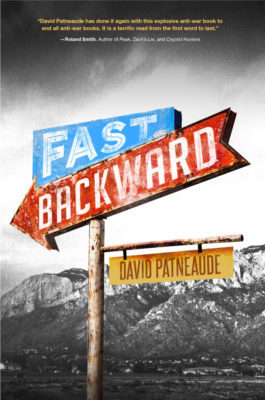
 In Fast Backward, David Patneaude’s most recent YA novel, fifteen-year-old Bobby sets out on his morning newspaper route, but what happens next blows his shorts off, literally. First, he witnesses a blinding light that grows into a mushroom cloud, but no one on the military base where he delivers papers will talk about it. Then, on his ride home, a dot in the distance takes on the shape of a girl, a naked girl in the middle of the desert at the side of the road. Thus begins Patneaude’s novel that brings WWII to life through the eyes of a young man torn by his father’s anti-war sentiments, and his uncle’s military patriotism.
 Since his father’s death, seventeen-year-old Antonius Sardi has become the man of the house, keeping up the spirits and providing for his mother, younger sister, and younger brother. When he takes a job in the household of Conte Leonardo Valperga, he works hard to prove useful in hopes of raising his status above that of a lowly servant. Occasionally, Antonius glimpses Savinus di Benevento, a seer of great renown in the medieval town of Pesaro, and a member of the Conte’s household as well. When Savinus advertises for a new apprentice, Antonius knows this is the opportunity for which he has been waiting, a chance to show his abilities to a man who can appreciate rather than fear them.

 In this stirring, coming of age saga by J. R. Collins, an old man shares his recollections of a time when the good old life was turning bad in his home region of the Tennessee mountains.







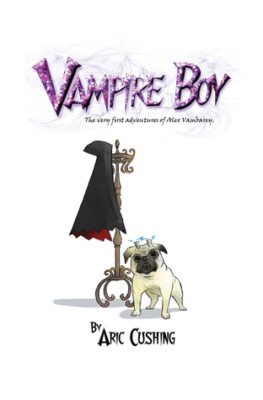
 Full of fun and quirky characters, author Aric Cushing invites readers to join him in a world where Halloween never ends. The tale begins with the prophesied birth of the white-haired Alex Vambarey, who draws the attention of a darkling vampire named The Deleter.