Tag: Cold War

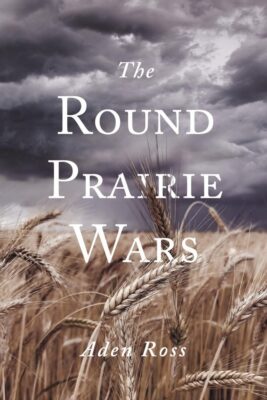
  • THE ROUND PRAIRIE WARS by Aden Ross – Historical Fiction, Cold War, Social & Family Issues


    On the wind-swept plains of 1950s Nebraska, nine-year-old Jeb Wilder wages a campaign against the boredom that stretches longer than summer days, fends off local bullies, and navigates the uneasy terrain of a family coming apart at the seams. In The Round Prairie Wars, Aden Ross turns these small, familiar struggles into something much larger—a portrait of a childhood shaped by the echoes of distant conflicts.

    As Jeb makes sense of her own “wars” at home, the shadow of World War II and the Cold War’s anxious hum linger in the background.

    Jeb and Sam, her older brother, play games pretending to be pilots in a crippled WWII dive bomber in an imaginary unit they call “back-to-back.” This metaphor exemplifies their reliance on one another whenever they escape their confined, impoverished life in their small trailer house called Prairie Schooner.

    Stories of war grip the parents as much as their children. When the family attends an outdoor showing of The Day the Earth Stood Still, the film acts as a litmus test for the parents’ fears, revealing deep ideological fissures running through their home.

    The family’s first Sunday at a Methodist church leaves young Jeb confused and heartbroken at the perversion of the pulpit.

    This institution that Jeb had trusted to spearhead faith and hope unmasks itself as a platform for political fear-mongering and hypocrisy. The Reverend’s sermon is less a theological lesson than a diatribe against “godless communists.” Jeb can only seek moral and intellectual guidance elsewhere.

    Jeb’s new sanctuary is a place of freedom and acceptance, where books provide truth beyond any sermon.

    One such book carries a familiar smell. It reminds Jeb of her brother’s paranoid warning about a key figure in their life who can build far more than just bicycles. Sam’s words cease to be a childish theory and now become a chilling possibility that leaves Jeb unable to trust the assumptions of her small, fragile world. She begins to wonder if the real enemies aren’t out there among the communists, or even the local bullies, but are instead much closer to home.

    Ross builds this vivid, complex world upon a deep foundation of metaphor.

    The characters are well-hewn individuals, embodying nuanced themes around the ideological civil war of 1950s America. They not only experience their own immediate struggles but are vessels of pain inherited from history, family, and societal trauma—often without being fully understood. The world of the novel is anything but simple, and these characters help chart the complex, universal forces every child must decipher along the path to adulthood.

    Ross’s exploration of the Cold War era through the lens of a young child makes the sprawling anxieties of the time into something intimate, tangible, and terrifyingly powerful.

    She grounds the story in a confined space with barely any escape from family tensions. This domestic stage plays out the nation’s conflict, where ideological battles and personal trauma clash in whispered arguments.

    The Round Prairie Wars by Aden Ross speaks with a voice burdened by echoes from the past. A testament to childhood caught in the gears of history, Jeb’s story honors conflict lived not in headlines but in the hushed, terrified, and wonderfully resilient hearts that endure it. The perfect read for those who cherish history from the ground up, as well as those who seek to capture the true sense of a time of personal and societal uncertainty.

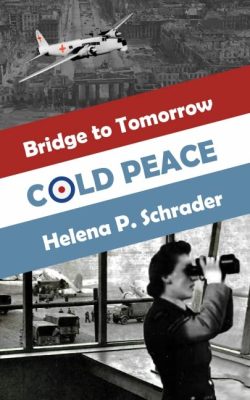
     

  • COLD PEACE: A Novel of the Berlin Airlift, Part 1 by Helena P. Schrader – Historical Fiction, Post-WWII, Military Aviation Fiction


    Amidst the ruins of Post-WWII, Berlin struggles to rebuild from the ashes, torn apart and facing down the promise of another bloody dictator. A myriad cast, all shaped by that same war, become entwined with the broken city as its hour of need approaches.

    Just as Germany is divided between the Americans, British, French, and Soviets, Berlin has been cut into pieces. But the balance of the occupation powers tips eastward as the Soviet Zone surrounds the city, giving them control of all ways into and out of Berlin – save for the air. The occupation currency is worthless thanks to Soviet over-printing, leaving Berlin on a barter system of cigarettes and black-market trading. In order for Germany to recover, the Western Allies plan to introduce a new currency, even if it angers the Soviet bear.

    To fight over the city with tanks and planes would mean a third world war and a battle for Berlin that the overwhelming Soviet military force would win without question. This fight must be one of resources and diplomacy. But the Soviets have little interest in rebuilding Germany, preferring to loot from, starve, and rape the defeated Berliners as their means of taking ‘reparations.’

    Amidst gridlock in the Allied Control Council and a populace that largely refuses to elect Soviet sympathizers, SMAD (Soviet Military Administration in Germany) tries to push the Western powers out through intimidation and ever-harsher strangling of transit along the streets and railways.

    Berliners and occupation forces alike try to build their own future, while bearing the weight of the city’s future.

    Robert “Robin” Priestman takes a position as Wing Commander in Gatow, a former Luftwaffe airfield now used by the RAF – located in the British Sector of Berlin – that is, deep inside the Soviet Zone of Occupation, which surrounds Berlin. Memories of his time as a POW haunt him, and he doesn’t understand what the purpose of RAF Gatow even is. However, when a Soviet pilot crashes into a British civilian plane, and as SMAD makes greater plays for unilateral power over Berlin, Robin prepares to use his planes and runway to keep Western opposition alive, for the sake of the Berliners.

    David Goldman’s disapproving father weighs him down with a massive inheritance, forcing him out of the RAF and into a business of his own. But heavier on his shoulders are the old properties owned by his aunt and uncle in Germany – before they were murdered by the Nazi regime. David faces a former Nazi officer in the home that holds so many of his childhood memories and resolves to bring the man to justice.

    Charles “Kiwi” Murray, David’s closest living friend, helps him to build an air ambulance business, AAI (Air Ambulance International). Berlin needs such a service desperately, its hospitals hopelessly overwhelmed, and Robin gladly offers them use of Gatow’s runway. Kiwi’s struggle with alcoholism nearly tears this dream – and his friendship with David – apart. But he won’t lay down and let that happen, pushing himself to get their ambulance off the ground, even as David’s own struggles wear him thin.

    Emily Priestman hopes to reconnect with Robin in Gatow as she helps him with his duties. But she’s even less versed in the diplomacy of the rich and powerful than he is, and knows that she needs to find another purpose, for her own sake as much as that of the ruined city around her. That opportunity presents itself through old friends and new, as she joins AAI to fly their ambulance, saving those who had no chance of survival in Berlin.

    Fear and despair hound the people left in WWII’s wake, kept at bay by the hope for a better life tomorrow.

    Charlotte Walmsdorf lost much of her family, and lives in Berlin’s desperation, refusing to even try crossing the Soviet Zone. But her cousin Christian arrives, and though his hope seems naïve to her, she feels a flicker of her own as she teaches Emily Priestman German, joins AAI, and finds herself drawn to David.

    WAAF Galyna Borisenko, whose father was taken from her by the Soviet Union, makes an unlikely connection with Hero of the Soviet Union, Mila Levchenkova. Both Ukrainian women take the considerable risk of meeting with each other, for the chance to speak honestly with someone who understands the pain of life beneath the USSR. Mila’s strength and courage inspire Galyna, as they form a deep and emotionally impactful friendship.

    The City Council of Berlin refuses to back down to the minority Soviet-controlled Socialist Unity Party (SED). Jakob Liebherr, an ardent councilman, holds firm against Soviet misinformation, arguments with his son, and his own terror. He suffered in a concentration camp for his resistance to Nazi power and knows of the tens of thousands kidnapped by the Soviet Union, doomed to a similar fate. His commitment to democracy contrasts the grim state of Berlin with a gripping sense of integrity and determination.

    As Soviet control tightens, each character will have to act with courage and clarity to withstand their grip.

    Helena P. Schrader blends her character’s internal struggles and desires with the traumas of Berlin, creating a powerful and cohesive read.

    WWII left its mark on each of these people, through the ghosts of dead loved ones, injuries that will never leave them, and responsibilities greater than they ever imagined. Some, like Robin and Emily, reckon with the destruction of Berlin as its former enemies. Blackened shells remain where once there were homes, entire stories are missing from those buildings that still stand.

    And yet, restaurants open with only one floor, people make dinner in their kitchens and keep warm beside the stove. Neighbors lend clothes to one another, and even black-market smugglers can be convinced to give away that which they can’t use. Just as Berlin must make life from its ruins, so must all the people within this story.

    Schrader’s attention to detail illuminates a fascinating place and time in history. Her engaging characters and the tense history offers a gripping blend of fiction and reality that makes the complex political/military situation in post-WWII Berlin approachable and clear for readers, regardless of familiarity with it.

    Helena P. Schrader weaves a tapestry of human resilience and courage against the backdrop of post-WWII Berlin. Cold Peace promises to be a captivating journey that will leave readers yearning for the next installment in this important historical-fiction series.


    5 Star Best Book Chanticleer Reviews round silver sticker

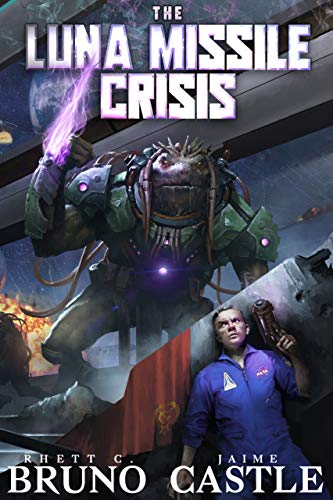
  • The LUNA MISSILE CRISIS by Rhett C. Bruno and Jaime Castle – Alternate History Sci-fi, Action & Adventure, Alien Technology

    Blue and gold Grand Prize Winner Badge for Cygnus Science Fiction The Luna Missile Crisis by Rhett C. Bruno & Jaime Castle

    Authors Rhett C. Bruno and Jaime Castle come together to tell the tale of alien first contact gone awry in their epic science fiction release, The Luna Missile Crisis.

    The year is 1961, and cosmonaut Yuri Gagarin is set to become the first man in space. But when Yuri, snug inside the Vostok 1, is launched from the cosmodrome and into the coming night, he’s met with a collision that changes the course of history. The Vostok 1 crashes into an oncoming alien starship. Assuming the collision was actually a missile fired from Russia’s space race opponent, the United States, the soviet nation quickly launches an arsenal of nuclear warheads in response. But those warheads never make it to their target. Instead, they detonate against the hidden starship, sending a wave of nuclear destruction over eastern Europe.

    In the coming weeks after contact day, military troops from both sides of the cold war are sent into the ruins of eastern Europe – into an area now called the Dead Curtain – to search for useful alien technology. During a skirmish between the Russians, the Americans, and the Vulbathi (the toad-like alien race aboard the damaged starship), a combat medic name Kyle McCoy stumbles into the chaos and sparks a ceasefire. His actions create a domino effect, bringing about relative peace between all three parties. Three years pass, and in exchange for aid in repairing their damaged ship, the Vulbathi agree to offer some of their exceptional technology to mankind. And Kyle McCoy, once foot soldier turned head of the Department of Alien Relations, is given a desk job with a title that suits his place in history.

    But not everything is going as planned.

    Kyle’s twin brother, Conner McCoy, is a dead-beat with a past steeped in drugs and crime. His latest venture is selling knockoff alien weaponry to mob bosses and gangsters. Conner and his crew work the circuit, living under the radar as they travel from city to city, peddling their fake Vulbathi tech with enthusiasm to boot. And it’s all fun and games and a little extra cash until one of the knock offs isn’t a knock off at all and the gun in Connor’s hand turns a man into a pile of dust and goo. Kyle is called in to investigate the case, and when the two estranged brothers reunite, the stakes become higher than either of them could have ever foreseen. Stolen identity, sabotage, explosive battles, and a myriad of historical figures all spill across the pages as the story of humans and Vulbathi unravels.

    Bruno and Castle have expertly crafted an alternate history 1960’s that feels real enough to touch.

    The use of historical figures as supporting cast adds to the detailed world building, and even the Vulbathi tech, which is everywhere in The Luna Missile Crisis, is most believable when the reader sees it integrated into the everyday lives of working people. A prime example is Kyle’s holotube that he regards as a “faulty prototype” taking the place of his real television. All of these stunning details are brought to life by writing that is engaging, active, and perfectly descriptive. The dialogue is witty and sharp, well fitted to the cast and their gamut of personalities, and as the chapters alternate between the two McCoy brothers, the syntax shifts ever so slightly, giving the subtle notion of a true perspective change.

    Not only is the writing engaging, but Bruno and Castle have taken a well-worn Sci-fi plot – the pulpy notion of the Cold War era interrupted by an alien invasion – and breathed fresh life into it.

    The narrative is strong, propelling the reader forward through an increasingly wild ride. Many will recognize familiar character archetypes of the do-good FBI agent; the grifter counterfeiter; the over-the-top gangster; the misunderstood monster and will be pleasantly surprised to find themselves growing more and more entrenched in a plot that is everything but familiar.

    The Luna Missile Crisis is filled with action, adventure, and enough laser blasts to satisfy any science fiction fan, but its true strength lies in the cohesive world building and rock-solid storytelling that only two authors like Rhett C. Bruno and Jaime Castle can provide. In other words, here’s one sci-fi we can happily recommend!

    The Luna Missile Crisis by Rhett C. Bruno and Jaime Castle won Grand Prize in the 2020 CIBA Cygnus Awards for Science & Speculative Fiction.


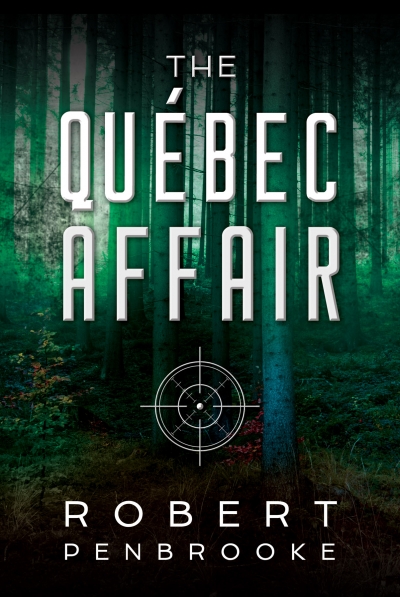
  • The QUEBEC AFFAIR by Robert Penbrooke, a Spy Thriller

    The QUEBEC AFFAIR by Robert Penbrooke, a Spy Thriller

    Robert Penbrooke’s The Quebec Affair represents a promising entry into the thriller field for the debut author, whose well-researched plotting propels the work to a satisfying conclusion.

    John Thurmond is a former Canadian citizen who decides to join the US Army when he disagrees with Canada’s foreign policy related to China. Because of his Canadian citizenship, he is recruited into the CIA from the army in 1971. John’s first mission takes him to China, where he poses as a Canadian journalist in order to acquire Russian and Chinese nuclear information. Stealing photo negatives related to important developments in nuclear physics from a Russian scientist, his identity is compromised, and John is forced to flee to Cambodia with the negatives.

    The Khmer Rouge are just beginning to terrorize the country and John must escape a country that is falling apart. He befriends a French Colonel who has a better chance of getting the negatives safely out of the country and hands them off before attempting to make his way out on foot through the jungle. John is captured and tortured by the Russians, but he eventually escapes and manages to make it back to his family in Canada. When he calls to check in with his CIA contact, however, he discovers that his department has been closed for 10 months.

    Twelve years after he was first recruited, John is a lawyer with a wife and child, but his failed mission still haunts him. When he finally reaches the officer who recruited him into the CIA, he is determined to see it through. Penbrooke sets up a fascinating plot with compelling motivation, but occasionally gets lost in unnecessary detail. While dialogue occasionally veers toward the cartoonish, Penbrooke does a great job of sustaining tension and keeping things unpredictable.

    Several emotion heavy subplots add to characterization: for instance, through the course of the mission, John is reunited with the son of his family’s tenant farmers whom he grew up alongside, only to have a brutal falling out with. These elements add depth, but fail to coalesce into more than mere diversions from the main action. Penbrooke’s novel suffers from the sheer number of central characters and the introduction of too many new characters, so there just isn’t enough room to develop them all sufficiently. However, it is nevertheless a compelling read. Overall, Penbrooke’s intricately plotted first thriller is a page-turner and shows promise, despite a lack of character focus. Readers looking for a fresh thriller will enjoy the novel’s unique settings and research.