Tag: CIBA Grand Prize Winner

  • Chanticleer 10 Question Author Interview Series with Tim Facciola – Overall Grand Prize and Series Grand Prize Award-winning Author of The Scales of Balance Series

    CHANTICLEER 10 QUESTION AUTHOR INTERVIEW SERIES

    with Award-Winning Author, Tim Facciola

    Hello friends, we have another fabulous interview for you today. Author Tim Facciola took home the Chanticleer 2023 Overall Grand Prize for A Vengeful Realm, and the 2024 Grand Prize in the Series division for the first book in his The Scales of Balance Trilogy. We recently spoke with Tim to discuss his writing journey, his research methods, and the great success his series is seeing! Take a minute or two and get familiar with Tim—you won’t be sorry!
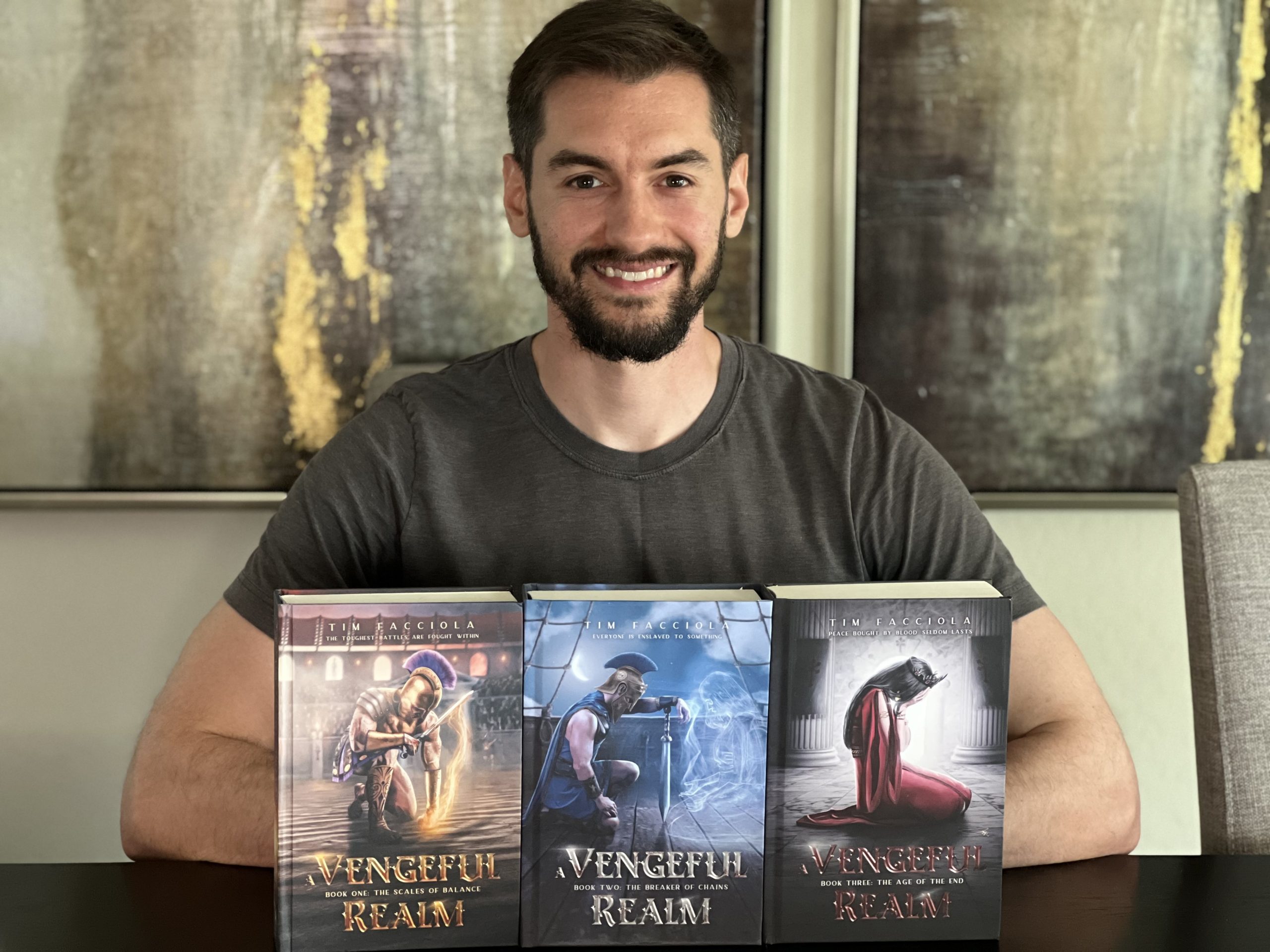
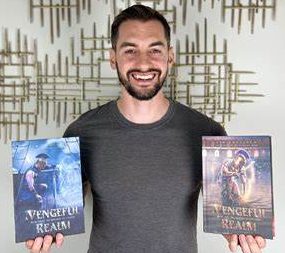
    Tim Facciola, A Vengeful Realm, books, smiling, beard

    Chanti: Your A Vengeful Realm series creates this fascinating blend of fantasy and historical elements. I’m curious—what originally drew you to fantasy as a genre, and what made you decide to weave those historical themes throughout your story?

    Facciola: Fantasy has always been my go-to. More specifically, sword and sorcery fantasy with a bend towards political intrigue that explores real-life social issues, interpersonal relationships, and the depth and nuance of the human condition. There is something special about the speculative genre that lowers a reader’s inhibitions and allows them to leave their preconceived notions, prejudices, biases, and sense of self outside the covers of the book. Divorced of the real-world for a time, they’re more likely to formulate new ideas, opinions, and understandings that aren’t swayed by our real-life culture. My hope is that my stories don’t necessarily provide answers, but rather they invite readers to ask better questions of themselves and how they see the world. I don’t think there is a better medium than fantasy to accomplish just that.

    Chanti: Fantasy does give writers incredible freedom to create their own rules and style. When you’re crafting your stories, do you find yourself sticking to traditional fantasy conventions, or are you more of a rule-breaker?

    Facciola: I spent a lot of time learning the rules, studying story structure and the psychology associated with story and how it impacts us. There’s an infinite amount of rules out there, and I do believe the people that came up with them are onto something; but as much as it’s important to know the rules, my favorite rule is the last rule at the bottom of all the best “rules of writing”: Do what serves your story best. I think you have to know the rules to break the rules, and even in breaking the rules, it’s important to know which rules and why. But I wouldn’t say I make up my own rules.
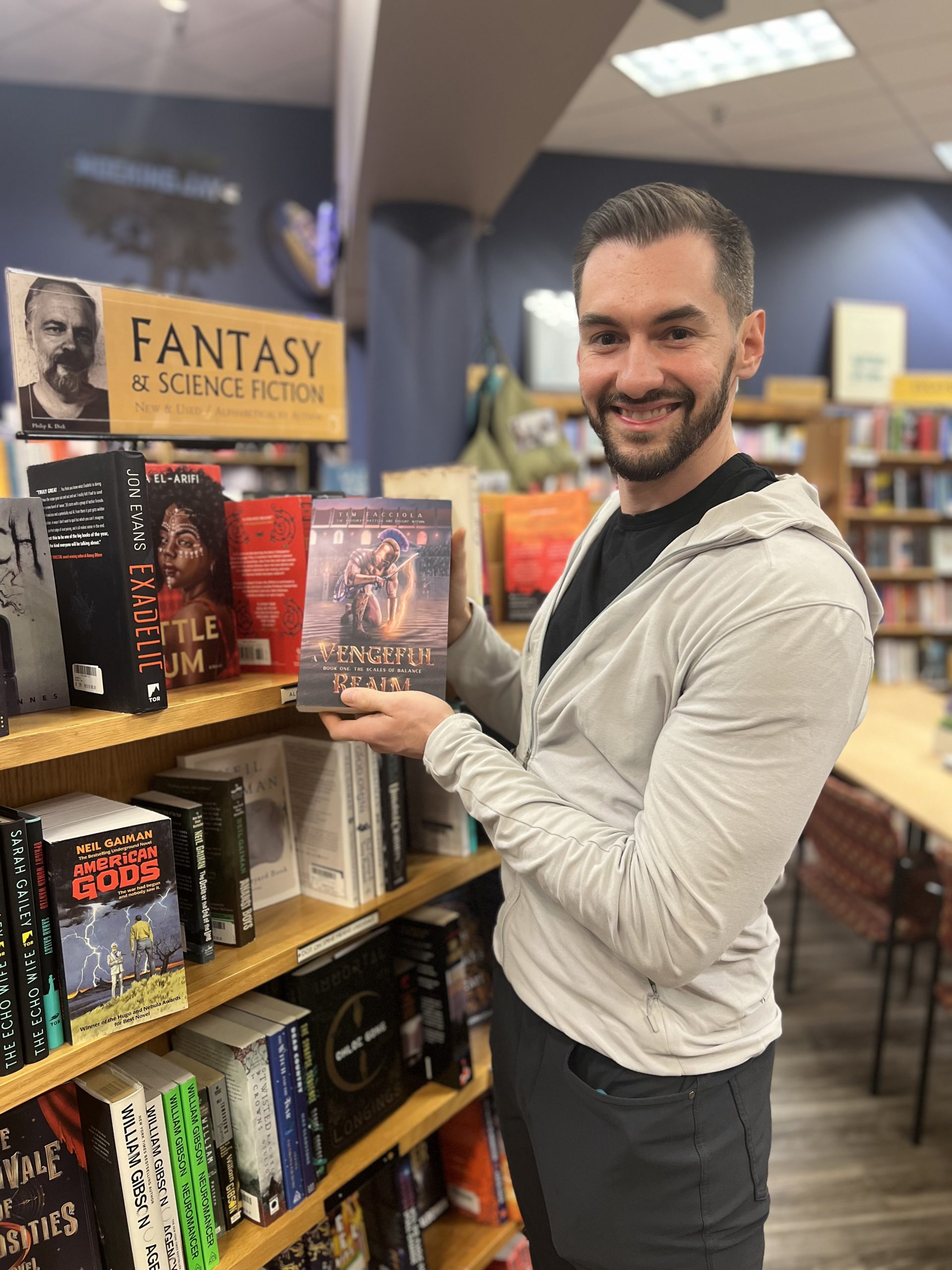
    bookstore, books, bookshelves, tim facciola, beard, hoodie

    Chanti: I love that philosophy! Speaking of your process, you sound like someone who puts a lot of thought into structure. How organized are you when it comes to your actual writing routine?

    Facciola: I am what people might call a plotter or an architect. I spend a lot of time in the pre-drafting phase building out my world, the history, cultures, religions, myths & legends, how accurate the perceptions of those things actually are, how the magic system works, etc. Then once I feel like I’ve established a world that could possibly feel lived in, I build out my cast of characters and the role functions they’ll serve within the story. Depending on how fleshed out my initial concept is, I might go into their internal arcs or the thematic development I want their arc to convey. Sometimes that is something learned along the drafting/revision journey. Once I have my characters and the world they’ll be challenging the status quo of, I start plotting. For plotting, I start out with a two to three sentence elevator pitch, then expand it into a 7-10 sentence synopsis, then a chapter by chapter outline. And if all goes well, then I might actually start writing the story!

    Chanti: That’s incredibly thorough! With all that detailed planning, I have to ask—do you ever hit those dreaded writer’s block moments? And if so, what’s your strategy for getting past them?

    Facciola: A complicated answer, but I don’t believe in it. Sure, there might be times in which a particular scene isn’t going the way you want, or you’re not quite sold on how the blocking is set up or how a particular plot point lines up. But just like any puzzle, there’s an answer. Whenever I feel stuck, I go through a series of questions to find out how I got to this point of “stuckness.” The writers I work with know me as the “Why-guy” because I ask them “Why?” about a dozen times. You have all the answers, you just need to ask yourself the right question, so Who, What, When, Where, Why, and How are my favorite places to start. I think that writer’s block only comes from an unwillingness to adapt, make changes, kill darlings, etc. So, when in doubt, get up, stretch, go for a walk, make sure you’ve drunk plenty of water, had a healthy snack—all those things can help too.

    Chanti: That’s a very practical approach. Pivoting a little bit, every writer has their influences, and I’m curious about yours. Can you share five authors who’ve really shaped your work and tell us a little about how they’ve impacted your writing?

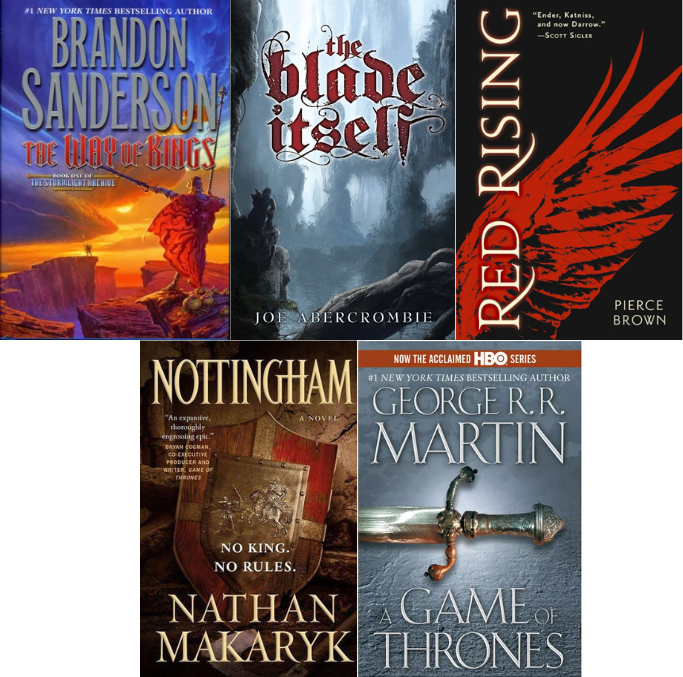
    Facciola: George RR Martin got me back into reading with A Song of Ice and Fire. He also convinced me to finish my series before releasing it which was why I wrote all three books of the A Vengeful Realm trilogy before I published the first book. I never wanted to leave readers hung out to dry waiting from 14+ years for the next book to come. But in all seriousness, I am fascinated by his worldbuilding and how Martin incorporated history into fantasy.

    Some of my favorite books of the last decade were by Brandon Sanderson. I love the interconnected world he has built and all the easter eggs he’s laid for his most devoted readers, but simultaneously, I love how accessible a lot of his stories are. As a businessman, I’m awestruck by the way he has built his author brand on stories that always point to hope.
    Books, Game of Thrones, Brand Sanderson

    Joe Abercrombie’s character work is extremely well done. While I share a completely different stance on how I view humanity, there is no denying the man knows how to craft characters.

    I didn’t fully understand a character’s “voice” until I read Pierce Brown’s Red Rising series. That “you know it when you see it,” type of command that brings words on the page to life—I try to channel that element from him to find my own narrative voice.

    Theme is the point with Nathan Makaryk’s work. For me it’s the be all, end all, and proving that theme through the main characters’ journey throughout the plot—that’s where the magic happens. Makaryk’s Nottingham, did exactly that with supreme depth and from so many different angles. Truly a masterpiece that I try to emulate.

    Chanti: It’s clear you’ve dived in and truly studied this craft and genre. What would you say are your strongest areas as a writer? And if someone is struggling in those same areas, what advice would you offer them?

    Facciola: I run a Discord writing group through my Patreon, coaching writers on all sorts of areas. One area I particularly excel at is my combat scenes, but that’s not part of all stories. But what is part of all stories (at least the readers of those stories) is humans. So if we’re writing for humans, we as authors better be able to relate to those humans. Having a foundational understanding of psychology, moral reasoning, and relationships is imperative. I use psychologist Lawrence Kohlberg’s theories of moral development to better understand how my characters see themselves, each other, and the world. Understanding and communicating the “whys” behind the “whats” that our characters do is something I often see missing from most new writers’ work.
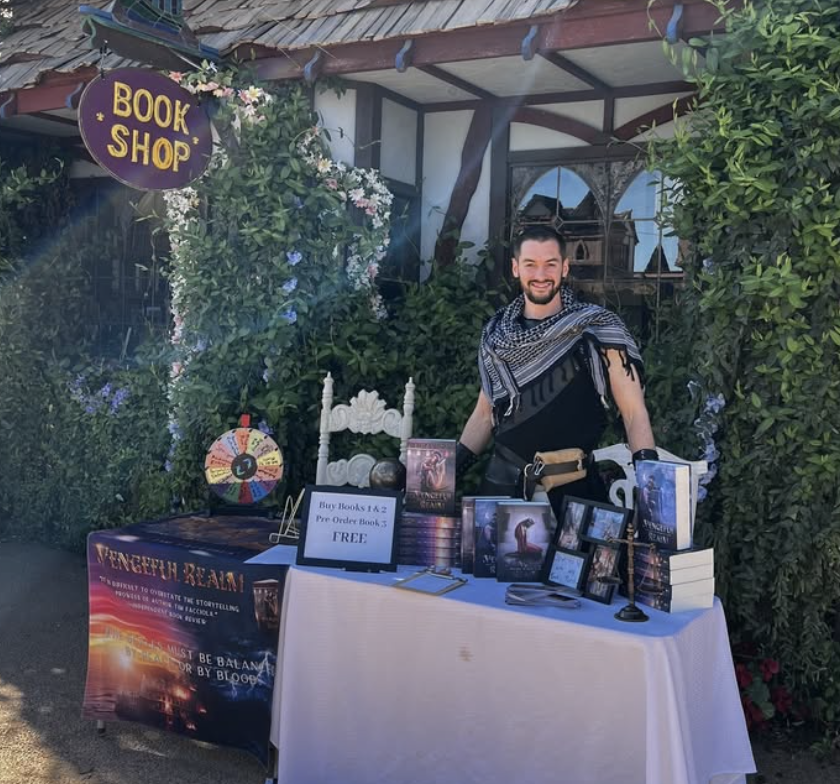
    book fair, table, bushes, books, covers, man

    Chanti: Using psychology to inform your character development is brilliant! We often ask about promoting a community of literacy and supporting other writers, and you mentioned your Discord group. Can you tell us more about that?

    Facciola: On my Discord server, I help fantasy writers through a combination of community building, education, and networking. It’s difficult being an indie author, and it’s so easy to suffer in silence all by your lonesome. Having struggled with this myself, I’ve made it my mission to create a place for fantasy writers to develop their craft, build their community, and connect with industry professionals through guest lectures and workshops.

    Chanti: That work in community building is essential! As we start to wrap up, I’m curious about what’s coming next. With the trilogy complete, what exciting projects are you working on? What can your fans look forward to?

    Facciola: With the A Vengeful Realm trilogy complete and the prequel novel released back on January 21st, 2025, I’m currently writing a new series within the same world. I’m pitching it as Mulan enters the Hunger Games to solve the murder of her betrothed. The working title is Boon Blessed in which aspirants compete in a series of trials to appeal to the gods and receive their favor in the form of magical abilities, but for every boon comes a bane, and not everyone is entitled to receive it.

    Tim Facciola, wife, costumes, beard

    Chanti: I’m already adding it to my TBR. When you think about your ideal reader for A Vengeful Realm or this upcoming Boon Blessed what kind of person comes to mind?

    Facciola: Not to give a complicated answer, but here is my complicated answer: I believe there are a few tiers to what fantasy readers want out of a story. Some readers just want distraction—escapism from their day to day. It’s a pretty low bar, but for some, that’s all they ask for in a story. For some, it is entertainment they are looking for—not only do they want to be distracted, but they want to be entertained! A third group of readers want connection—they want to feel something beyond simple distraction and entertainment. And lastly, some readers want to be challenged—mentally and/or emotionally.

    My perfect reader is in that third to fourth category. Yes, there is certainly escapism, and undoubtedly my goal is to entertain, but if that’s all you’re after, there are probably more accessible reads that you’ll enjoy more. But for readers who are looking to feel something or they’re open to being challenged about how they think or feel about particular topics—I write for readers like you.

    Chanti: That thoughtful consideration of audience is so important to connecting with readers. Here’s my final question, and it’s one I think every author should hear: What’s the most important thing a reader can do to support an author they love?

    Facciola: Word of mouth is always the best form of advertising. If you read a book and you love it, tell someone about it. Better yet, gift them a copy. Then, write a review on Amazon or Goodreads, or post about it on social media—whatever you’re into. But most importantly, reach out to the author and tell them that their creation meant something to you. Art was meant to be shared, so spread the love.

    Chanti: Yes! Authors and readers walk hand-in-hand, and their support for their favorite authors is very much appreciated! Thank you, Tim, for this peek into the world of Tim Facciola and his Vengeful Realm!


    beard, man, brows, glare

    Tim Facciola is an author, virtual fitness professional, and former punk rock musician based in Arizona. His debut novel, The Scales of Balance from the series A Vengeful Realm, combines his love for epic fantasy with insights from his fitness training. Alongside his writing, Tim offers Gladiator Training and author coaching.

    You can read more about Tim Facciola and his A Vengeful Realm series here.
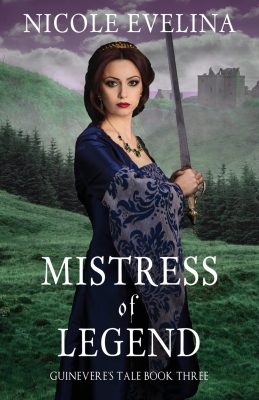
  • MISTRESS Of LEGEND: Guinevere’s Tale Book 3 by Nicole Evelina – Arthurian Legend, Historical Fantasy, Myths & Legends


    In Mistress of Legend, the enticing finale of Nicole Evelina’s Guinevere’s Tale trilogy, matters are life-and-death by the second sentence, pulling readers deep into Guinevere’s fate in this retelling of Arthurian legend.
    We come upon heroine Guinevere in the midst of an ill-fated romance with Lancelot. It’s far from her first troubled entanglement, but the stakes rise as she’s severely injured and faces even more threats, pursued by possible enemies. The novel’s beginning is woven with backstory, which adds suspense to the drama unfolding in Guinevere’s present. This summarizing might be slow for readers familiar with the series, but makes the story accessible for those who haven’t picked up the first two books.

    Many more characters appear, waving the web of intrigue Guinevere finds herself caught in.

    Evelina builds this setting through well-researched cultural details, like the holidays and rites of Guinevere’s pagan world, and the symbolism and ideology of the Christianity that threatens to blot her world out.

    Though it’s a work of fantasy, Mistress of Legend has the feel of magical realism. Paranormal abilities like Guinevere’s “sight” fit subtly within Evelina’s carefully constructed foundation. Details down to ritualistic makeup and intoxicants are based on fascinating historical truths, many of which are explained in the author’s notes at the end.

    Evelina avoids foreshadowing to ensure her characters’ futures long remain inscrutable. Unpredictable shifts in individuals and relationships seem to arrive at every turn, making for a thrilling, if at times mystifying, read. Guinevere’s relationship with Morgan, Arthur’s second wife, feels uncertain until the end, as the two vacillate from enemies to friends and back again. Meanwhile, Mordred, son of Morgan and Arthur, undergoes surprising development that makes perfect sense only in retrospect.

    The use of “the sight” by characters like Guinevere and Morgan provides windows into other places, even the future, as the women experience highly realistic visions.

    This allows Evelina to show two places at once without using multiple points of view (though some characters are so fascinating that readers may wish they could see things through their eyes). Instead, only Guinevere’s perspective is given, and readers feel her claustrophobic sense of being trapped in the mechanisms of fate.

    Along with the characters involved in it, this tale of political intrigue only grows more complex with time.

    The story begins to feel like a tapestry whose threads disappear and reappear in the weave. Some characters – even main ones – vanish and are nearly forgotten, only to return when they’re least expected. Guinevere’s life-threatening injuries, so crucial to the first pages, are soon eclipsed by even more pressing problems. Yet they return to the narrative from time to time, the marks left behind to remind the aging Guinevere of how much she’s lived – and how much is still in store.

    Mistress of Legend fits well within the literary tradition of retelling classics from a strong woman’s point of view.

    It’s a great pick for readers of magical realism, historical fiction, and new twists on old classics. It takes things a refreshing step further, too, with a strong female character who remains formidable, agile, and the subject of much male attention as she ages past 40. Youth is no threat to Guinevere. The foolish grabs for power that surround her are.

    The pace of the novel shifts wildly: speeding through seasons, only to suddenly slow and zoom in on the intense details of a moment. At times, it feels a bit like whiplash – but surely that’s how Guinevere felt, as the life she built crumbled time and time again. Readers remain close within her viewpoint, feeling everything she feels, in a world whose only constant is change. Ambitious though she is, her true quest is simply for peace.

    Mistress of Legend by Nicole Evelina won First Place in the 2018 CIBA Chaucer Book Awards for Pre-1750s Historical Fiction.

    The Guinevere’s Tale series by Nicole Evelina won Grand Prize in the 2021 CIBA Book Series Awards for Fiction Series.


    5 Star Best Book Chanticleer Reviews round silver sticker


  • HAVE YOU SEEN ME by Alexandrea Weis – YA Mystery, Serial Killer Thriller, Amateur Sleuths


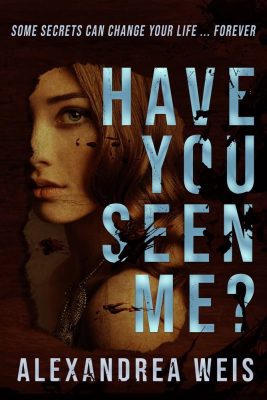
    In Alexandrea Weis’s YA mystery thriller, Have You Seen Me? something is wrong at Louisiana’s Waverly School. Deadly wrong.
    This private educational institute for the state’s wealthiest has an unsettling record of young women disappearing. Three, from decades ago, were never found. In the last few years, a girl by the name of Margaret vanished, and now her sister Lindsey has followed suit. Despite numerous investigations, no clues have surfaced. Moreover, the steely head of the school, Sara Probst, uses intimidation and fear to keep the school operating at any cost.

    Were these disappearances just high-spirited women who left on their own accord, or was there something more sinister at play? And now, after Lindsey’s disappearance, it seems a serial killer has returned after all these years.

    Into this morass steps Aubrey LeRoux, a recent Waverly graduate, hired by Sara to teach history.

    The job offer is both temporary and precarious. Sara makes it clear that Aubrey must conduct herself in the precise manner that Sara dictates, using the same unsettling intimidating methods Aubrey experienced as a student.

    Aubrey feels the impact of the school’s issues. As a scholarship attendee and a young Black woman, she understands fully the dynamic at Waverly. Harassment was part of her life there, often instigated by Margaret. When Margaret went missing, Aubrey was even briefly interrogated as a possible suspect.

    With Lindsey having recently disappeared, Aubrey finds herself experiencing many of the same feelings she had as a student. But now, she’s in a position to deal with it all: Sara, the disappearing women, and now, her students.

    What she doesn’t know is that Lindsey had gathered a crew of six misfits, creating a circle of friends who are devastated by her disappearance. They discover Aubrey’s problems with Margaret when they were both students, and so develop a devious plan.

    These students will pretend to like Aubrey as a teacher, but meanwhile use every trick at their disposal to prove that Aubrey is connected to the fate of both missing sisters.

    They conspire to push Aubrey into helping them become investigators into Lindsey’s disappearance, hoping to force Aubrey into making a misstep, dropping clues as to her knowledge of the disappearances.

    Their investigation takes them to parts of the school grounds rarely frequented: founded on a Confederate-era plantation which was itself built upon burial grounds for a Native American tribe. Their unauthorized excursions draw Sara Probst’s wrath on Aubrey but also strengthen Aubrey’s resolve to discover the fate of the missing students.

    When it appears their investigation is in full swing, a serial killer begins targeting Lindsey’s student crew, one by one.

    Despite Aubrey’s desperate efforts to keep them safe, even with the help of a hunky local sheriff, it’s clear that no one can be fully protected, not when each of them thinks they can solve the mystery of Lindsay’s vanishing on their own. Each of the students is found murdered, with clues that make it clear that this is the work of a serial killer. But who would want them dead? And why?

    Have You Seen Me? is a taut, well-written novel, a page-turner with enough plot twists and turns to keep the story moving on multiple fronts. Aubrey’s ethnicity is woven seamlessly into her character and the history that defines her relationship with Waverly. Overall, an immensely enjoyable read.

    Have You Seen Me by Alexandrea Weis won Grand Prize in the 2022 CIBA Clue Awards for Suspense and Thriller Mysteries.


    Gold Oval that reads Clue Awards, Chanticleer Writing Competition, Grand Prize

    5 Stars! Best Book Chanticleer Book Reviews

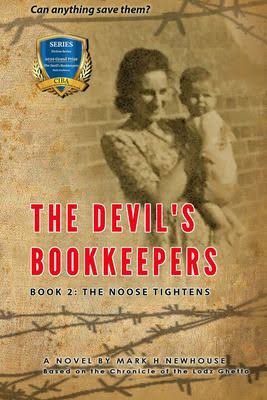
  • The DEVIL’s BOOKKEEPERS: The Noose Tightens, Book 2 by Mark H. Newhouse – Jewish Literature, Jewish Historical Fiction, WWII Historical Fiction

    Blue and Gold Badge for the 2020 Series Grand Prize for Genre Fiction The Devil's Bookkeepers by Mark Newhouse

    Mark H. Newhouse, son of German Holocaust survivors, includes the very personal and poignant first-hand sourced materials made available to him by the Yale University Press in his important historical fiction series, The Devil’s Bookkeepers. This inclusion lends a ribbon of humanity and compassion that raise the series to premiere status – a study, if you will, of the immutable human spirit. Newhouses’ series should encourage all who read it that hope is a gift and kindness and understanding is the answer to hate. It is a gripping story of love and survival that will haunt you until it’s shocking climax.

    From the first day of 1942, the conditions in the Jewish ghetto of Lodz, Poland, deteriorate. In Mark H. Newhouse’s historical fiction novel, The Devil’s Bookkeepers: Book 2, The Noose Tightens, those who thought their situation would get better now wish to survive and save their loved ones, But can they?

    The narrator Bernard Ostrowski, an engineer, should have enjoyed the prime of his life. He married a beautiful young wife, Miriam, who gave birth to their newborn daughter Regina. Ostrowski landed a lucky position in the records office of the ghetto’s leader, Chaim Rumkowski (an actual historical figure drawn by the author in dark, realistic detail). Rumkowki uses brutal force to forge the ghetto prisoners into a manufacturing hub for the Nazis in a still hotly debated effort to save its residents as the Nazi noose inexorably tightens.

    Ostrowski’s team includes a young man named Singer. And as the war continues to escalate, Singer urges Ostrowski to escape with his wife and child. Singer even promises to help them do so. However, Singer disappears, leaving an astonishing letter declaring his love for Miriam behind. The letter torments him as he tries to survive and save Miriam and his daughter.

    In the meantime, the Nazis begin deporting Jews from Poland – to where, no one knows.

    Rumkowski receives news that will shatter the bookkeepers’ faith in his leader’s basic decency. As the Nazis ramp up the expulsion of Jews from the city. Ostrowski, finally realizes that the noose is closing on everyone in the ghetto. Starving and weakened, he and Miriam must attempt to escape.

    Newhouse opens each chapter with brief vignettes from the primary sourced materials that will chill the reader.

    This book offers truth enmeshed with a well-crafted, imaginative, and credible story that will change and challenge readers. Newhouse wishes that in absorbing it, we may all say, “Never again to anyone.”

    The Devil’s Bookkeepers series by Mark H. Newhouse is highly recommended and won the Grand Prize in the 2020 CIBA Fiction Series Awards.

    Read our review of the first book in The Devil’s Bookkeepers series, The Noosehere.


    5 Stars! Best Book Chanticleer Book Reviews


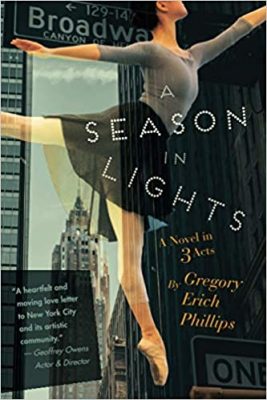
  • A SEASON in LIGHTS: A Novel in Three Acts by Gregory Erich Phillips – Contemporary Literature

    A blue and gold badge for the 2020 Grand Prize Winner for Somerset Literary and Contemporary Fiction A Season in Lights By Gregory Erich PhillipsGregory Erich Phillips’ A Season in Lights is a well-crafted, engaging exploration of creatives, each following their heart and trying to reach their dream.

    Against backdrops of the 1980s AIDS crisis and the more recent COVID-19 pandemic, the story entwines the lives of a 30-something dancer and an older musician as they strive to make their artistic mark in the cultural capital of New York City.

    Here in a two-fold unveiling, the story comes to life from the first-person perspective of Cammie, a starry-eyed aspiring dancer from Lancaster, PA, and the third-person reveal of Tom, a more seasoned black pianist. He longs for a classical career but is too often labeled a jazz musician. Cammie first encounters Tom in a studio dance class where he’s taken a job as the musical accompanist. Befriended by the gay dance instructor, Tom heeds the worldly advice offered about surviving in the Big Apple. “All you’ve got to do is convince people that you belong. You’ve got to tell them who you are before they tell you.”

    Phillips’ masterful narrative is layered with a backstory for each character, with details revealing multi-dimensional individuals.

    Small town Cammie is close to her ailing father; she has a troubled yet artistically talented sister; and a mother who seems to carry everyone’s burdens. Cammie harbors guilt for leaving behind family obligations to follow her own path. Tom has tried to leave behind his own familial ties. Unfortunately, with an absent father who landed in prison for dealing drugs, and an older brother who seems headed in a similar direction, Tom is hesitant about the consequential outcome of such connections. Within their May/December style romance, these primary characters find solace and understanding with relatable family concerns and the need to venture beyond expectations and comfort zones.

    As a dancer and musician himself, Phillips clearly draws on his own knowledge and experience to render authentic, believable characters in his writing. Here, personal experience from the NY stage easily translates to the page. Capturing the lighted spectrum of Broadway, the back alley theaters, and side-street clubs, the city becomes a character unto itself. The city seems alive as a place for second chances with its vibrant electric pulse.

    In a nod to Broadway, Phillips presents his novel in three acts.

    While the overall narrative effortlessly alternates between earlier times and the present day, the trio of segments maintains an appropriate momentum to propel events forward. Whether considering the classic themes of sibling rivalry, racism, and interracial romance, or the more contemporary struggles of theatrical LGBT community prejudice, drug addiction, or the new need for social distancing, the topics are well incorporated throughout the story line.

    From the worry and fear showcased in HIV testing and AIDS-related complications ignited in the ’80s to the stress and anxiety of shutdowns, casualties, and the unknowns of the more recent COVID19 virus, Phillips highlights the extraordinary opportunities for friendship and healing. Even though the city and its inhabitants are scarred, the hope remains that New York will rebound. A surprise twist in the book’s final moments sheds a brighter light on the central characters, the NYC community, and the world at large in recognizing that we’re all in this together.

    A Season in Lights is a modern-day tale featuring artists, dancers, and musicians and their efforts to honor the famous NY song adage, “If you can make it here, you can make it anywhere.” Through passion, grit, and determination against the odds, the final reveal is a lesson about making the most of the moment. Phillips has done an outstanding job with this creative, literary presentation that will indeed have readers looking for an encore.

    A Season in Lights: A Novel in Three Acts by Gregory Erich Phillips won Grand Prize in the CIBA 2020 Somerset Book Awards for Contemporary Literature – and is a novel that comes with high recommendations.


    5 Stars! Best Book Chanticleer Book Reviews


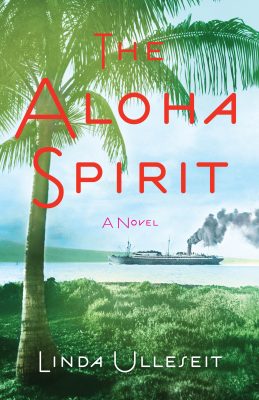
  • THE ALOHA SPIRIT by Linda Ulleseit – Hawaiian Cultural Fiction, World War II Historical Fiction, Women’s Divorce Fiction

    THE ALOHA SPIRIT by Linda Ulleseit – Hawaiian Cultural Fiction, World War II Historical Fiction, Women’s Divorce Fiction


    A blue and gold badge for the 2020 Grand Prize Winner for Goethe Post-1750s The Aloha Spirit by Linda Ulleseit

    In Linda Ulleseit’s novel The Aloha Spirit, we meet the plucky heroine, Dolores, as her father leaves her.

    “Dolores’s father deemed her useless when she was seven. Neither he nor her older brother, Pablo, ever said that, but every detail of their leaving told her so. Papa had tried to explain the Hawaiian custom of hānai to her. All she understood was the giving away, leaving her to live with a family not her own.”

    Her story starts in 1922; the place, multiethnic, multilingual Hawaii. Papa, a sugar cane cutter from Spain who worked in Hawaii, decides to take his son Pablo with him to seek his fortune in California. His wife died five years earlier. He leaves 7-year-old Dolores with a large family on Oahu in an arrangement called hānai, an informal adoption. Dolores doesn’t know the family well. She feels abandoned, with no idea when or if her father will send for her or return.

    There follow years of drudgery in which she works as an adult, laundering clothes for many people at least six days a week as part of her hānai arrangement. The hard-working couple she lives with struggles to survive. Befriended by Maria, an older hānai girl, Dolores escapes her situation when Maria leaves to marry Peter. Dolores goes to live with them, to help Maria through her pregnancy, and for a while, she gets to share their happy family and have some things of her own.

    At age 16, Dolores marries Manolo Medeiros, a boy she met on the beach and barely knows.

    She becomes part of his large, extended Portuguese family, which includes Alberto, a nephew four years younger than Dolores. She hopes the Medeiroses will be the family she always wished for. When she met him on the beach, Manolo gave his interpretation of the aloha spirit: “Aloha begins with love.”… “Love yourself first.”… “Love the land.”… “Love the people.”… “Aloha is the joyous sharing of life’s energy.”

    Dolores has her first child at age 17. But Manolo’s serious drinking problem, anger, and physical abuse of Dolores estranges him from her and the family, forcing her to take more control of her own life and protect her daughters. As Manolo’s behavior worsens, Alberto steps up to support Dolores, and they fall in love. But as part of a devout Catholic family, Dolores can’t possibly divorce Manolo.

    Novelist Ulleseit gives us a vivid picture of the life of a hard-working Hawaiian woman and her community in the early decades of the 20th century.

    Anyone interested in the history of Hawaii or in women’s history will enjoy this book. This book centers on abuse, overwork, and alcoholism as major themes, described in a matter-of-fact way. Dolores lives through interesting times, including the bombing of Pearl Harbor and the United States’ entry into the war, rationing, and the removal of Japanese Americans from Hawaii. Dolores goes to California and visits the World’s Fair, so we get to see the fair through her eyes. A glossary at the end of the book provides translations and a pronunciation guide for the many Hawaiian and Spanish words.

    Linda Ulleseit was born and raised in Saratoga, California, and taught elementary school in San José. In addition to The Aloha Spirit, she wrote Under the Almond Trees, another historical novel, which takes place in California starting in 1896. She has also written a series of Flying Horse books, young adult fantasy books set in medieval Wales. She has an MFA in writing from Lindenwood University, serves as marketing chair of Women Writing the West, and is a founding member of Paper Lantern Writers.

    Linda Ulleseit’s The Aloha Spirit won Grand Prize in the 2020 CIBA Goethe Book Awards for post-1750s Historical Novels.

    5 Star Best Book Chanticleer Reviews round silver sticker

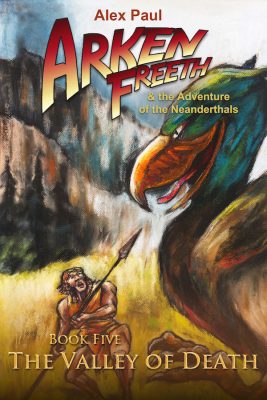
  • The VALLEY of DEATH, Arken Freeth & the Neanderthals, Book Five by Alex Paul – Children’s Fantasy & Magic Adventure, Children’s Action & Adventure, Children’s Sword & Sorcery Fantasy Books

    The VALLEY of DEATH, Arken Freeth & the Neanderthals, Book Five by Alex Paul – Children’s Fantasy & Magic Adventure, Children’s Action & Adventure, Children’s Sword & Sorcery Fantasy Books

    The Valley of Death, Book Five in the Arken Freeth Middle-Grade series, continues the story of a heroic young man in a land before time.

    The book is the latest chapter in the swashbuckling saga of Arken Freeth, a hero who will eventually become the central figure of his era, 11,000 years before the Roman era, as powerful and wise as Alexander the Great would be to his time. The many readers of the award-winning series know his adventures as a teenager in the land of the Neanderthals, or Nanders as they are called, along with his royal friend Asher, heir to the throne of Tolaria, and the young woman Talya. They know his Nander blood brother Ord, the evil pirate Yolanta, king of the Tookans, and the vile Gart whose life he saves despite their difficulties.

    These familiar figures return in the latest thrilling installment. A war between the leading factions of the time, the Amarrats, the Lanthians, and the Tolarians is on the brink. The central prize that all desire: ownership of the necklace of Tol, which possesses enormous powers such as foretelling the future to those who own it. The quest to own the necklace is such that war is being threatened by the Amarrats against the Lanthians in order to possess it. Arken, who placed the necklace in the hands of the Nanders, is now the one person who can successfully stop the bloodshed by retrieving the necklace.

    The dramatic story of freeing Ord, who has been captured and enslaved by Gart’s family, backed by the King of Tolaria, becomes one of Arken’s biggest challenges. He who owns Ord will enable the recovery of the necklace and all of its powers since Ord is related to the Nander family who now possess the necklace. Those who would free Ord, the families, and their extended families, face death for their treasonous actions. It takes all of Arken’s cunning and leadership to forge a plan allowing he and his family, facing death, to free Ord and escape with him, return him back to his people, repossess the necklace and place it in safe hands away from those who would abuse its powers.

    We get to know the families of Arken, Asher, and Talya as they explore their individual futures as well as their intertwined fates. A soothsayer tells of Arken’s fate as the savior of their world, even though he is only 14 at the time of this volume. Arken plans to marry Talya when they turn 16, a relationship that began in a previous volume in the series. Asher, a prince, is destined to become a ruler in his world. His sister, Sharmayne, is set to marry another prince to cement their family’s alliance with the power structure but is resisting with all her might.

    The discovery by Arken, Asher, and Talya of the major invasion secretly planned by the Amarrats to conquer Lanth is is a huge new development. Can Arken and his friends, fleeing the wrath of the king of Tolaria, warn the people of his country about the attack, plan a sneak attack that will thwart the massive Amarrat forces, and arm friendly Nanders with weapons in order to fight the Amarrat forces? Stay tuned.

    The continuing story of Arken and his friends, details that make this book a delight for fans of the series, almost like participating in a members-only club. Hopefully, the colorful exploits of these daunting youthful heroes portrayed in The Valley of Death might just encourage readers experiencing the world of Arken Freeth for the first time to go back and read the whole series.

    Alex Paul’s Valley of Death won the Grand Prize in the CIBA 2019 Gertrude Warner Awards for Middle-grade fiction.


  • The 2019 Overall Chanticleer International Book Awards Grand Prize Winner – 2019 CIBAs

    The 2019 Overall Chanticleer International Book Awards Grand Prize Winner – 2019 CIBAs

    We are honored and excited to announce the Best Book Overall Grand Prize Winner of the 2019 Chanticleer International Book Awards – the 2019 CIBAs

    Chanticleer Reviews Grand Prize Ribbons!

    Who took home the coveted Overall Grand Prize Best Book Blue Ribbon? 

    There are 17 Grand Prize Blue Ribbons, but only one will Overall Grand Prize Blue Ribbon for Best Book. The competition is fierce and competitive. We love each one, but only one can win.

    Who will be able to display and promote the gorgeous Grand Prize Badge in all book promotions for the winning title?

    17 authors made it to the exclusive CIBA Grand Prize Levels

    Which title will receive the Chanticleer Reviews Package and be featured in the  Chanticleer Reviews magazine winter quarter’s edition? 

    There were 17 CIBA Grand Prize Division Winners!

    Who will be interviewed and featured in our well-trafficked website?  

    All of the CIBA Grand Prize Division Award Winners will be featured!

    Who will receive the Overall Best Book Grand Prize Book Award Winner’s $1,000 USD? 

    There is only one $1,000 USD check at this time for the one CIBA OVERALL BEST BOOK.

    CONGRATULATIONS to

    James Conroyd Martin,

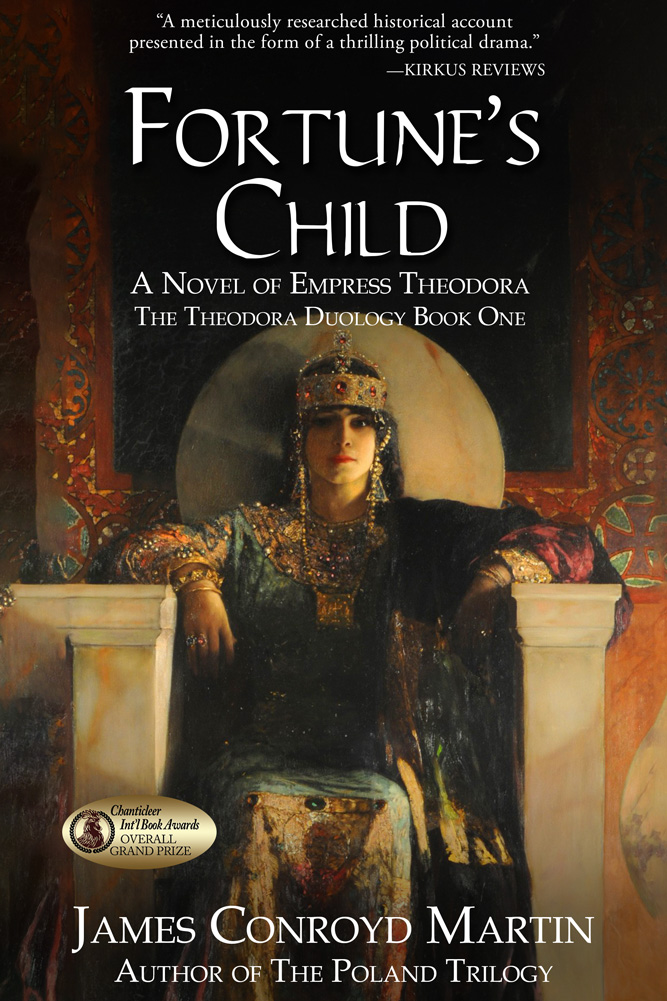
    author of the 2019 CIBA Overall Best Book Fortune’s Child: A Novel of Empress Theodora 

    The journey of  Fortune’s Child: A Novel of Empress Theodora by James Conroyd Martin in the 2019 Chanticleer International Book Awards. 

    James Conroyd Martin, author of the Overall Best Book of the Chanticleer International Book Awards selection: FORTUNE’S CHILD: a novel of Empress Theodora


    Fortune’s Child: a Novel of Empress Theodora authored by James Conroyd Martin advanced from the entry level of all submissions into the 2019 Chaucer Book Awards for Pre-1750s Historical Fiction to the division’s Long List. From there, it advanced to the Chaucer Book Award’s Shortlist. Then it advanced in the next rounds to the Semi-Finals. More than half of all the 2019 Chaucer entries have fallen off the list and did not advance to the Semi-Final rounds. For works to advance to the Premier FINALIST rounds in each division, they must have been entirely read, rated, and then ranked by the CIBA judges for an overall average score of at least 8 out 10. From that point, the competition becomes fierce. Each judge evaluates the works competing for the limited first place category positions for each division. And then the judging continues as the selections are made for the CIBA Grand Prize Winners.

    Each year, we find the quality of the entries and the competitiveness of the division competitions increasing exponentially. We added a new level to the judging rounds in 2019—the premier Level of FINALIST per each CIBA Division. The CIBA judges wanted to add the Finalist Level of Achievement as a way to recognize and validate the entries that had outstanding merit but were not selected for the very few First Place Award positions within each genre division.

    We want to thank each and every one of the 2019 CIBA judges.

    Without your passion and labor of love for books, the Chanticleer International Book Awards would not exist and we could not fulfill our mandate:  Discovering Today’s Best Books!

    THANK YOU JUDGES!

    The Chanticleer International Book Awards Discovers Today’s Best Books!

    We want to thank all who have entered and participated in the prestigious CIBAs.

    We invite you to click on the links below that honor and recognize all 17 Divisions of the CIBAs First Place Award Winners and Division Grand Prize Winners. 

    PART ONE – The 2019 Chanticleer International Book Awards Division Winners

    PART TWO – The 2019 Chanticleer International Book Awards Division Winners

    PART THREE – The 2019 Chanticleer International Book Awards Division Winners

    Additionally, there are links on the Chanticleer Reviews website recognizing and announcing the works that advanced to the Premier Finalist Level of the 2019 CIBAs.

    The winners were recognized at the Virtual Chanticleer Authors Conference and Awards Ceremonies that were held on during VCAC September 8 – 13, 2020 by ZOOM webinars based at the luxurious Hotel Bellwether, Bellingham, Wash.

    You know you want a coveted Chanticleer Reviews Blue Ribbon! 

    Submit your works (manuscripts or novels published after or on January 1, 2018, are accepted) to the prestigious Chanticleer International Book Awards today! Entries are being accepted into the 2020 and now 2021 CIBAs in all 17 fiction divisions and five non-fiction divisions. 

    Be sure to register early for the 2021 Chanticleer Authors Conference that will start on April 16th, 2021 with the 2020 CIBA banquet and ceremony scheduled to take place on Saturday, April 17th, 2021 at the luxurious Hotel Bellwether in Bellingham, Wash. If we cannot move forward with CAC21 due to the coronavirus, we will host another LIVE and HYBRID Chanticleer Authors Conference and 2020 Chanticleer Int’l Book Awards ceremony.

    Pivot and Oscillate are the Words for Today’s Challenging Times as We All Learn Together! 

    An email will go out to all 2019 CIBA award winners prior to October 31, 2020, with instructions, links, and more information about the awards packages. We appreciate your patience. As stated many times before “One does not need to be present at the CIBA ceremony and banquet to win. But it sure is a lot more fun!” –even if it is virtual!

    As always, please contact us at Chanticleer@ChantiReviews.com with any questions, concerns, or suggestions!

    Be well. Stay Healthy. Take Care!

    The Chanticleer Reviews Team

  • 10 QUESTION INTERVIEW WITH MULTI-AWARD WINNING AUTHOR JANET OAKLEY – Author Interview, Historical Fiction, Award-Winner

    10 QUESTION INTERVIEW WITH MULTI-AWARD WINNING AUTHOR JANET OAKLEY – Author Interview, Historical Fiction, Award-Winner

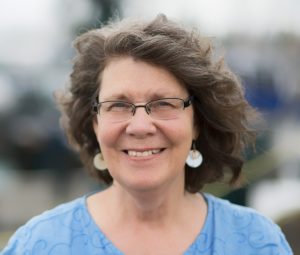
    Janet Oakley is one of those authors who seems to show up everywhere – all at once! She’s won multiple awards and rightly so. Her novels and short stories are compelling, rich, and historically precise. She is a generous author and committed to her work. She knows what it takes to succeed in this business.

    Ladies and gentlemen, I give you multi-award winning author, Janet Oakley.

    Chanticleer: Tell us a little about yourself: How did you start writing?
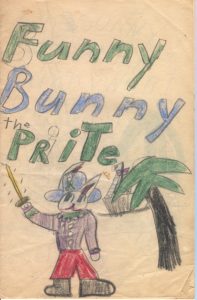
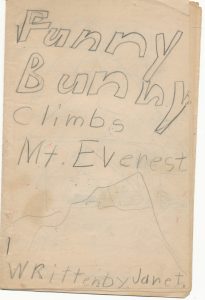
    Oakley: I was born in D.C. and grew up Pittsburgh. It was a creative house with my mother a pianist, my dad a physicist. There was no TV in the house, so we pretty much used our imaginations. My parents both loved books and read to my brothers and I every night. The original Carnegie Library in downtown Pittsburgh was my haunt.

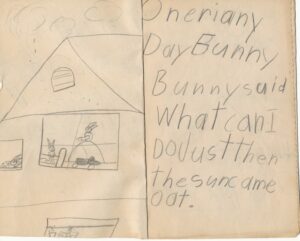
    Like many published authors, I started writing early—in second grade. My oeuvre was a series, illustrated by myself, called Funny Bunny.


    In fifth grade, I wrote my first historical fiction, with questionable historical facts. In college when I majored in history, my writing became more serious as I learned to do research and write essays and articles. In my sophomore year, I got an internship at the Smithsonian Institute. I was given an office in the annex of the Library of Congress and spent a whole quarter going through early 19th century magazines and newspapers looking for images of Native Americans. I returned to D.C. my senior year to research my thesis on the Comanche Indians as Prisoners of War and after graduation, I was awarded a stipend to work in the Smithsonian’s Anthropology Archives. I worked there until I left for Hawaii the following year. This experience of doing research and writing in my early years led to writing my first novel, The Jossing Affair. I haven’t looked back.

    Chanticleer: That’s quite a rich growing up there, Janet.  When did you realize you that you were an author and not only a historian?

    Oakley: I spent nearly ten years pitching and query Jøssing and the other novels I was developing with little success but it wasn’t until I took a writing intensive class in 1999 at UW that I found a different way to publish and expressed myself– the personal essay. Though not one of my assignments at UW, the first thing I ever had published, other than some letters to the editor at my local newspaper, was an essay in Rugby Magazine, entitled, “On Being Rugby Mom.” I had started the essay on lunch break at UW. That success led to sending in essays to the Cup of Comfort series (part of the Writer’s Digest publishing house) I had five essays published in anthologies with titles like A Cup of Comfort for Women, A Cup of Comfort for Mothers and Sons and others. In 2006, I won first place at Surrey International Writers for my essay, “Drywall in the Time of Grief.”  I realized then that I could write material acceptable for publication and get edited by a great editor. (We’re still friends) Then I could say I was an author. When indie publishing came into being, I was ready to publish my novels.


    Chanticleer What genre best describes your work?

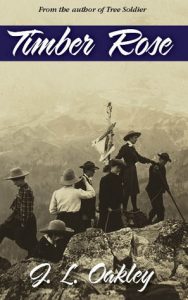
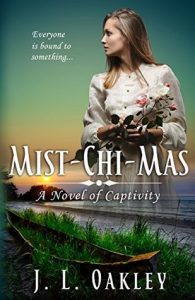
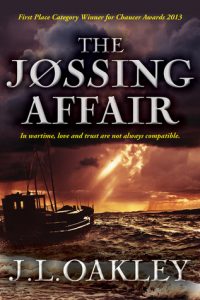
    Oakley: Historical fiction, for sure. I love history and those little known, often forgotten events in both local and international history. Like Hawaiians in the Pacific Northwest in the 19th century (Oakley’s novel Mist-Chi-Mas: A Novel of Captivity is a timeless and important story that addresses what life was like for Pacific Islanders in the PNW). Women climbing mountains in skirts in 1907 (Timber Rose is Oakley’s novel about the first women’s hiking club). These historical tidbits have become the background for several of my historical novels. Historical fiction, however, has many aspects to it and can fit into thrillers and mysteries.  My WWII novel, The Jøssing Affair, has been called a historical thriller and for the past three years, I have been writing mysteries set in Hawaii—a place I love—with some history in them. The Jøssing Affair was awarded the Goethe Book Awards Grand Prize  for Historical Fiction, a division of the Chanticleer Int’l Book Awards.

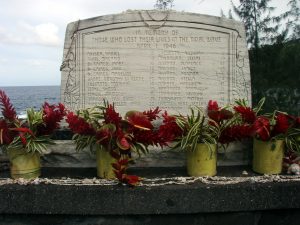
    Coconut Island for one. Its historical background rests on the 1946 April Fools Day tsunami that wiped out Hilo. I got an inkling of its destruction and loss of life while teaching at Hilo Adult School—one of my students, a 4th-grade teacher, was a survivor. It wasn’t until I researched the tsunami for Coconut Island, did I learn its full impact: 96 people lost, homes and businesses destroyed. The tsunami arrived from the Aleutian Islands in under 5 hours. History has its own compelling storyline which I love to set my characters in and see how they do. Even in a mystery. I can’t seem to get history out of anything I write!

    Chanticleer:  So even your mysteries have a strong vein of historical running through them. Can you tell us a little more about that? 

    Oakley: Curiosity and family stories of homesteading in Kansas, Indian Territory and the NW in the late 1800s got me hooked on history. I grew up on stories of one great-grandfather who was a Union surgeon at the Battle of Gettysburg, another great-grandfather in the 1870s Hayden expedition to Yellowstone. My great-grandmother saw Lincoln on his way to his inauguration, then later went out to Kansas where her parents taught at Shawnee Mission. I’ve always wondered about people who lived in different times. What type of technology did they have available? How did they manage with their technology? What their lives were like without our modern conveniences. What made them succeed, be happy in life? My mom also influenced me as she loved history and love historical fiction herself.

    Chanticleer: How does being an author affect your involvement in your community?

    Oakley: Writing historical fiction has opened opportunities to talk about the history behind my novels. The Jøssing Affair, set in Norway during WWII, has been a popular book club choice as we have a large community of Scandinavians in the state, but I think my first published novel, Tree Soldier, has a more important impact.

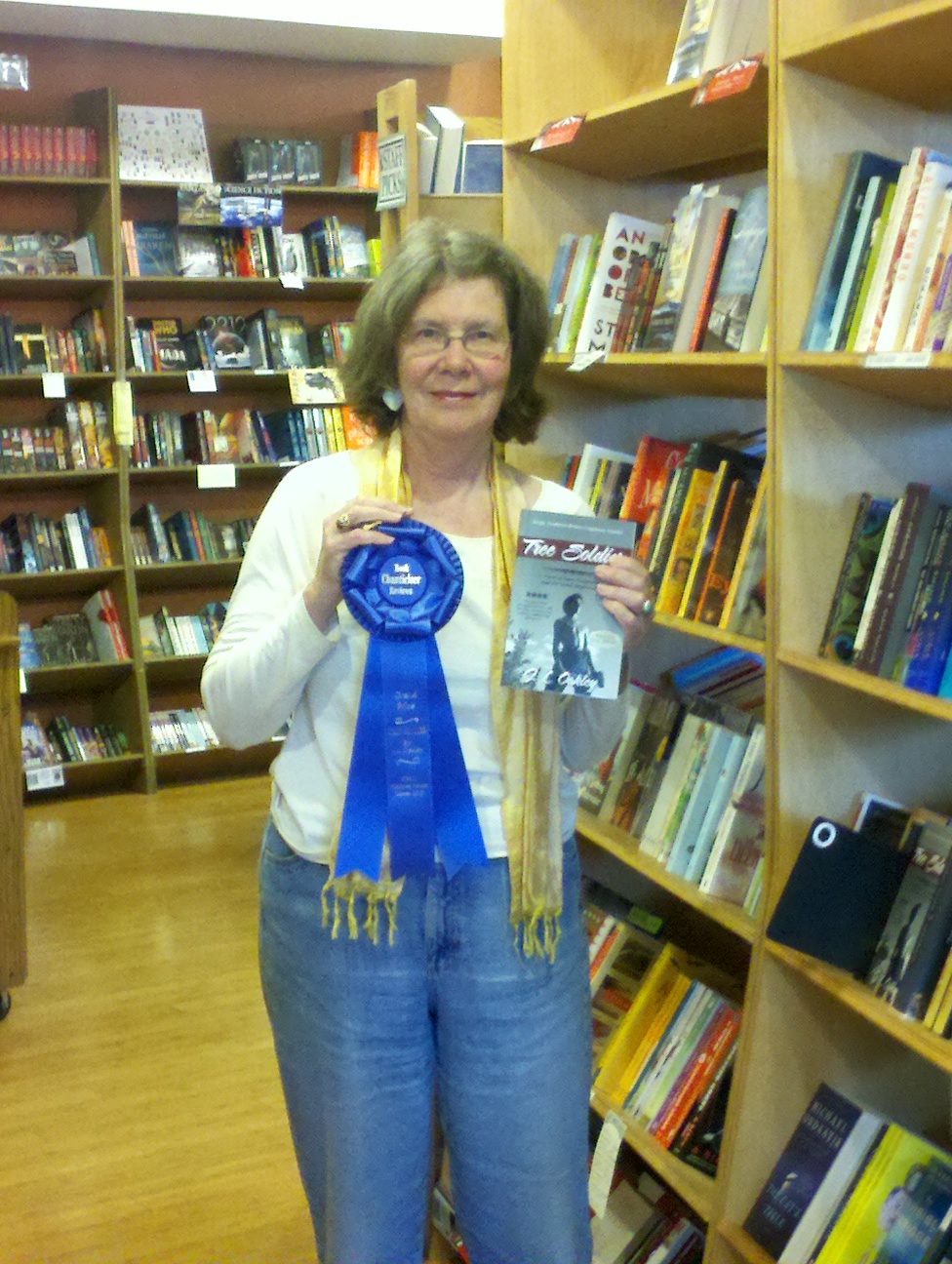
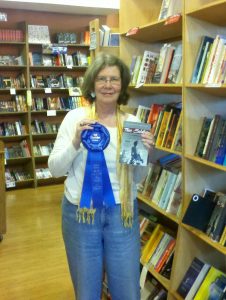
    Janet Oakley at Village Books with her Chanticleer Grand Prize Ribbon

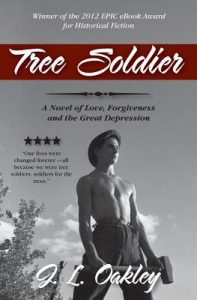
    I grew up listening to my mother’s stories of the Civilian Conservation Corps boys from New Jersey who showed up at Lowman, ID in 1933. Part of the New Deal was to put young men back to work in environmental projects, these young men had been lifted out of their block in Jersey City and sent West. Tree Soldier came as a result of my need for a history paper for my Master’s in Elementary Education. I interviewed five gentlemen who had been in the CCC. I began to present talks on the CCC and in 2013 was accepted into the Washington Humanities program. For two years, I went around Washington State talking about the CCC in Washington State (1933-1941) each time before I went to a new community, I researched the camps in their area and added the findings to my talk. Then Tree Soldier was awarded the Chanticleer Grand Prize for Best Book. A presentation in Clarkston, WA led to an invitation to have Tree Soldier be selected as an Everybody Read for the Palouse area in both Washington and Idaho. What an honor! And a learning experience on how to present and engage with readers in the libraries. Not much later, Tree Soldier was again a book read for four libraries on the Olympic Peninsula.

    I think the thing I am most proud of is being behind the installation of a CCC worker statue at Glacier Washington ranger station. As an educator, for me, this statue from a national CCC program, helps visitors to the Mount Baker National Forest learn and appreciate the work of out-of-work boys from long ago. When we dedicated the statue on June 16th, a 98-year-old CCC boy from Camp Glacier came. It was so wonderful to see the attention he received. Since then a 96-year-old CCC boy has contacted me through his granddaughter. I hope to meet him soon.
    Chanticleer: Good work, Janet! What are you working on now? What can we look forward to seeing next from you?

    Oakley: I’m working on the sequel to The Jøssing Affair, set in Norway a year after WWII. Rewriting my Kindle World mystery novellas and publishing them as Hilo Bay Mysteries. Once the third book is complete, I plan to do a boxset both in ebook and paperback.

    Chanticleer: Can’t wait to see where this book takes you. It’s important to work on your craft. What do you do to grow your author chops?

    Oakley: I write every day, usually in the morning starting at 8:00 AM. I belong to several writers groups, including a critique (going for 16 years now) and I am a member of the Independent Writers Studio where I work on WIPs with a wonderful editor and other members.

    Chanticleer: That seems to be more than a simple commitment – it’s a way of life! Good for you. What craft books have helped you the most?

    Oakley: Better than craft books, I have been taking classes from the authors and well-writing teachers such as Donald Maas on and off for over 25 years, Diana Gabaldon, Robert Dugoni and many other fine writers and teachers. Usually at conferences.

    Chanticleer: What is the most important thing a reader can do for an author?

    Oakley: Write a review on Amazon. It carries more weight than any other review site. Books need reviews in this crowded publishing world.

    Chanticleer: Good point. What do you do when you’re not writing? Tells us a little about your hobbies.

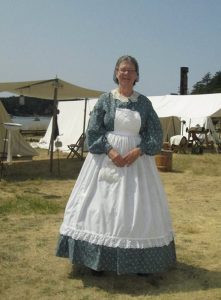
    Oakley: For the past 35 years, I have researched and then taught hands-on history workshops to at schools children through Allied Arts and on my own and at a county museum. I wrote several social studies curriculum for Whatcom County schools and a national park. Following the publication of the curriculum for the San Juan Island National Historical Park in 1995, I began to give demonstrations on 19th-century foodways there. Soon I joined English Encampment, an annual gathering of reenactors at the national park as Miss Libby, an 1860 schoolmarm. Great fun! I also garden. Like words, the flowers and veggies need nurturing.

    Chanticleer: Thank you for being with us, Janet Oakley. You are an inspiration and your passion is contagious!


    Now, it’s your turn to show your support! Please find and follow Janet as she shares her writing, life, and insight into living a successful author-life.

    You can find her here:

    Facebook:  https://www.facebook.com/janet.oakley.12

    Website: https://www.jloakleyauthor.com/ 

    If you would like to read Oakley’s books, here is a list of her titles can be found at Village Books, Barnes Nobles, or by clicking on the Amazon links below:

    Timber Rose

    Tree Soldier

    Mist-chi-mas: A Novel of Captivity

    The Jossing Affair

    The Hilo Bay Mysteries:

    Coconut Island

    Hilina Pali

    Volcano House