Tag: Christian Historical Fiction

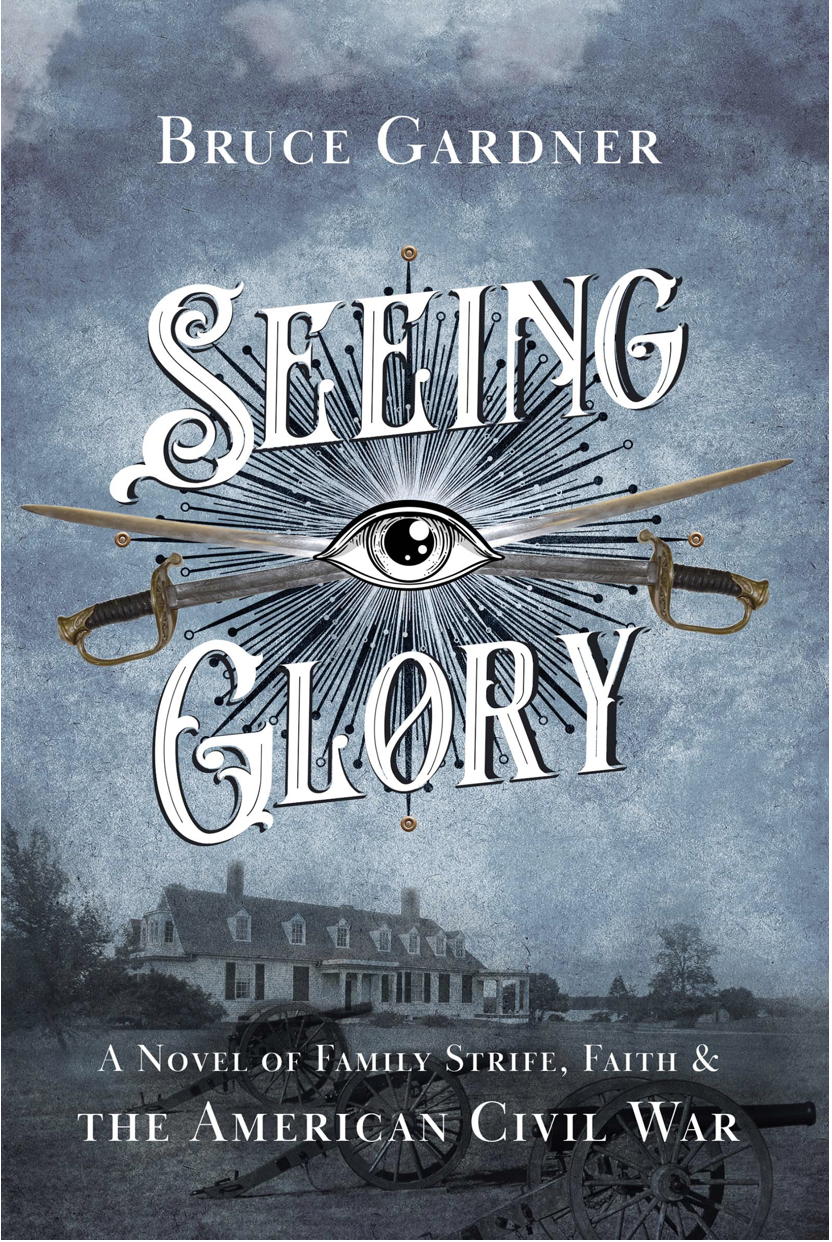
  • SEEING GLORY: A Novel of Family Strife, Faith & the American Civil War by Bruce Gardner- Christian Historical Fiction, Civil War, American Slavery

    Seeing Glory by Bruce Gardner is a sweeping, thought-provoking Christian historical novel of the American Civil War. The novel portrays the critical roles of family ties and religious faith in shaping personal attitudes and actions towards the horrors of slavery and the war itself.

    Spanning the era from the famous abolitionist John Brown’s Pottawatomie Massacre in 1856 through the end of the war nine years later, Seeing Glory focuses on the gut-wrenching conflicts over slavery and the southern way of life faced by David, Emma, and Catherine Hodge, fictional siblings, raised on a wealthy plantation in Virginia.

    David returns home from a prestigious northern college filled with radical new perspectives. He challenges his father’s and his southern church’s assurances that the Bible says slavery is approved by God. When David calls out the truth as he now sees it, he ignites a firestorm that tears him away from his family at the beginning of the Civil War, sparking huge changes in their individual destinies. Soon after meeting Abel Bowman—an ardent abolitionist and follower of John Brown—David moves north to Ohio and becomes an embedded war reporter with Abel’s Union army regiment. Mutual zeal for the abolitionist cause abounds, but will it help or hinder the two men’s endurance of horrific battlefield violence and scandalous personal accusation?

    Devastated by David’s departure from the plantation, his younger sister Emma is torn between the realities of slavery and her Christian faith. Unable to bear the cruelty that she sees her family’s slaves being subjected to, Emma flees north with her maidservant Sallie, one seeking freedom, the other seeking purpose.

    Meanwhile, the elder Hodge daughter, Catherine, strives to be the perfect southern plantation mistress after her mother’s death.  After marrying a Confederate officer, she is forced to manage both her ailing father’s and her 0wn plantation once her husband is off to war. The pressure of her siblings’ abandonment weighs on her as the war creeps closer, threatening to destroy everything she’s worked for.

    Christian beliefs were a big part of the historical abolitionist movement. In Seeing Glory, each of the Hodge siblings and Abel Bowman face their own personal issues of faith, privilege, and forgiveness. It is through the lens of faith that these engaging characters discover their unique paths for surviving the war and supporting the abolition of slavery in the United States. On their journeys, they become involved in many historical events, interacting with famous people like Frederick Douglass, Abraham Lincoln, and Angelina Grimké—a former plantation daughter from South Carolina who eventually became a nationally known abolitionist, journalist, teacher, and women’s rights advocate.

    Although Seeing Glory falls within the Christian Historical fiction genre, Gardner doesn’t shy away from describing how the Bible was too often used by southern politicians, pastors, and churches to justify slavery—but on the other hand how ardent commitment to a “glorious cause” like abolition could at times be taken too far. Likewise, Gardner doesn’t downplay the brutality of slavery nor the destruction and devastation of the Civil War, though his novel is not excessively gruesome or overly explicit in its descriptions.

    Fans of historical fiction will appreciate the compelling mix of fictional and historical characters woven through the emotion-packed saga of Seeing Glory, eager to discover what will happen next. Highly recommended!

     

    5 Stars! Best Book Chanticleer Book Reviews

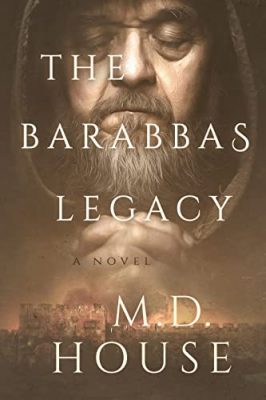
  • The BARABBAS LEGACY by M.D. House – Christian Historical Fiction, Historical Fiction, Ancient World Historical Fiction

    The Roman Empire rules much of the world but faces unrest in its leadership and opposition from the growing movement of Christianity, in this conclusion to the Barabbas Trilogy, M.D. House’s historical fiction novel, The Barabbas Legacy.

    God has a plan for the Barabbas family, and their travels have only just begun. The tense conflict between Roman forces and the Jewish community in Jerusalem comes to a head. Leaders of Christianity rush to help their Jewish brothers and sisters.

    Cornelius, a once-celebrated centurion of the Roman army, stands on trial for believing in God over the Roman Empire. Emperor Nero shows uncharacteristic leniency and exiles Cornelius from the Empire. Cornelius flees before any senators have him assassinated. Once out of Rome’s reach, Cornelius feels called to help grow the Christian community.

    In the introduction to the novel, M.D. House recounts his writing journey.

    He explains how he came to write about a biblical figure we know very little about. Initially wanting to write science fiction and fantasy, House shifted to Historical Christian Fiction after reading a particular bible story. House wondered about the life of Barabbas. He imagined what had led the man to become a prisoner and how his life changed after being freed.

    Very little knowledge of Barabbas has survived, which opens the opportunity for House to create Barabbas, the character. House builds a whole life by using his few brief mentions in the gospels as a jumping point. He developed his protagonist so well that an entire trilogy was needed to tell the complete story.

    The Barabbas Legacy sees Barabbas as an older man with his children grown. Some start families of their own, while others help the evangelical efforts of Christianity in its infancy.

    M.D. House’s The Barabbas Legacy, as well as the first two books in the series, I Was Called Barabbas and Pillars of Barabbas, will appeal to readers of historical fiction and general readers of Christian fiction. The Barabbas Legacy could also be a good book for a Christian book club or Bible study. It features themes about the relationship between people of different faiths and the importance of bravery in one’s beliefs.

    The Barabbas Legacy concludes Barabbas’ tale that started with curiosity and grew into a complete series. M.D. House succeeds in telling the story of Barabbas, a rebel and murderer turned strong follower of Jesus.

    Chanticleer Book Reviews 4 star silver foil book sticker


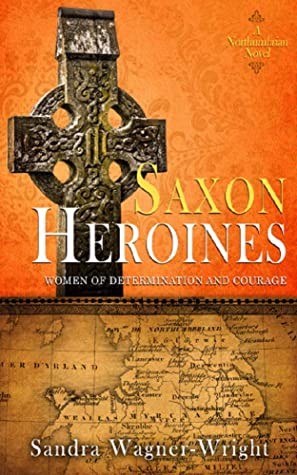
  • SAXON HEROINES: A Northumbrian Novel (Women of Determination and Courage) by Sandra Wagner-Wright – British and Irish Biographical Literature, Historical Biographical Fiction, Women in Irish History

    SAXON HEROINES: A Northumbrian Novel (Women of Determination and Courage) by Sandra Wagner-Wright – British and Irish Biographical Literature, Historical Biographical Fiction, Women in Irish History

    Sandra Wagner-Wright’s Saxon Heroines: A Northumbrian Novel is a rich history of four women many centuries ago. 

    During a time of constant shifts in power across Northumbria and what would later become England, Christianity begins taking over as the religion of choice in the region. Kings from the area renounce Woden and embrace the new faith, which gives them the divine right to rule.

    Part of a series that tells of lesser-known women in history, Saxon Heroines concerns itself with the stories of four women in seventh century Northumbria. The novel splits into three parts, each part focusing on a different woman (women) of early Saxon history. First is Ethelberga of Kent, who becomes the new Queen of Northumbria in 624 and must convert the king to Christianity. The story shifts to Ethelberga’s daughter, Enfleda, in the second part; Enfleda’s daughter, Elfleda, in the third. Throughout the book, we witness Hildeburg’s role in King Edwin’s court to her holy life as the Abbess of Streoneshalh. Each of these women lived and died long ago, but they arguably changed the world. 

    Wagner-Wright transports her readers to a much more challenging way of life. 

    With few detailed historical records of seventh-century Northumbria, Wagner-Wright does the impossible task of fleshing out the little-known stories contained in the historical record. She takes what the ancient historians have recorded about these four women and tells their stories as accurately as possible. The women were, as Wagner-Wright writes, “present but not visible,” thus, the only things recorded about them were their titles, who they married, and who their children were. With these few facts, Ethelberga, Enfleda, Elfleda, and Hildeburg have unique voices – ones that have been silent for far too many years. 

    In her author’s note, Wagner-Wright adds historical context to the story’s events and reveals what happens in the years following the last chapter. Readers will do themselves a favor by reading through the front and back matter before digging into the meat. Just as important as the story itself, these portions will aid in the overall understanding of the text. A tale like Saxon Heroines based in history needs added material for readers to reference. 

    For lovers of historical and Christian fiction (and non-fiction), Saxon Heroines: A Northumbrian Novel could be the perfect book. Set in a time in which Christianity was taking hold across the region, the women of Saxon Heroines each play a pivotal role in the making of history.