Tag: Chaucer Awards

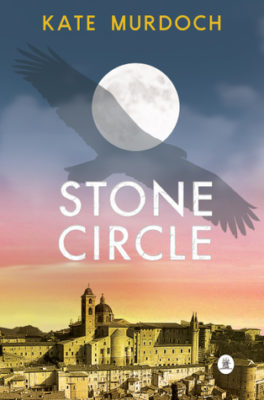
  • STONE CIRCLE by Kate Murdoch – Medieval Italian Fantasy, Coming of Age Fantasy, Romantic Fantasy

    STONE CIRCLE by Kate Murdoch – Medieval Italian Fantasy, Coming of Age Fantasy, Romantic Fantasy

    Since his father’s death, seventeen-year-old Antonius Sardi has become the man of the house, keeping up the spirits and providing for his mother, younger sister, and younger brother. When he takes a job in the household of Conte Leonardo Valperga, he works hard to prove useful in hopes of raising his status above that of a lowly servant. Occasionally, Antonius glimpses Savinus di Benevento, a seer of great renown in the medieval town of Pesaro, and a member of the Conte’s household as well. When Savinus advertises for a new apprentice, Antonius knows this is the opportunity for which he has been waiting, a chance to show his abilities to a man who can appreciate rather than fear them.

    Antonius can read minds, and as soon as Savinus, also skilled in mind-reading and prophecy, learns of this, he immediately agrees to take on Antonius. However, Antonius isn’t the only young man who wants the position. Nichola, the son of Savinus’s very wealthy and powerful patron, believes himself fit for the job. Savinus has no choice but to take on Nichola, who proves himself treacherous and shallow. Moreover, Nichola is annoyed that Antonius is given the role of the primary apprentice while he is relegated to mundane tasks. To make matters worse, Guilia, Savinus’s daughter, seems interested in Antonius. Nichola takes his jealousy to unbelievable lengths, which ultimately threatens Savinus, Antonius, and Giulia’s lives.

    Antonius’s desire to defy the expectations of his class is the most important theme within the novel. He often thinks of his father, a fisherman, who came home exhausted nightly many times after the rest of the family had fallen asleep. On the days he could, he insisted on teaching his children how to read and write even though in their current social status, such skills would be unnecessary. Antonius knows that he has no other option than to fight for the assistant apprenticeship if for no other reason than the memory of his father’s hard work. Less than his best would be a betrayal of his values.

    Kate Murdoch weaves a compelling tale of Medieval Italian life in her coming of age historical fantasy. Here’s a novel that will hook readers from the very first page.

    Stone Circle won a well-deserved First in Category in the 2018 Chaucer Awards for Early Historical Fiction novels.

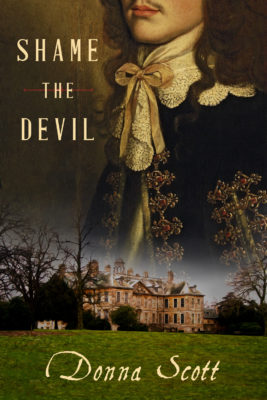
  • SHAME the DEVIL by Donna Scott – Historical Romance, Historical British & Irish Literature, Scottish Historical Fiction

    SHAME the DEVIL by Donna Scott – Historical Romance, Historical British & Irish Literature, Scottish Historical Fiction

    Colin and Roddy Blackburne are sent into indentured servitude in England in 1643 with their father. Gavan Blackburne supported the divine right of King Charles I. Still, after the tragic death of his wife that both Colin and Roddy witnessed, he relinquishes his efforts to protect the remainder of his family.

    The Blackburnes become stable hands at Appleton Hall, where the viscount’s daughter Emma quickly catches the eye of young Colin. Emma is curious about the young Scots in the stable and drags along Alston, the son of Lord Stillingfleet. The four children start a friendship that intertwines their lives forever.

    By 1648 the King is being tried for treason. Emma and Alston are facing pressure to find suitable matches for marriage, and both have secrets to hide. Emma and Colin have professed their love for each other, while Alston has fallen for Stephen Kitts, a man who has a dark past and devious intentions for the future. Colin is forced to flee the day before his family’s servitude ends, leaving only a letter behind. Tragedy strikes when Roddy’s jealousy causes him to betray the young lovers ending in unforeseen consequences.

    Scott’s writing is magnificent. One of the first signs of her skill is how quickly the real-world melts away when reading. History buffs will enjoy the way Shame the Devil effortlessly interlaces the complex historical backdrop into the narrative, while those reading for the romance will not be overwhelmed with historical exposition. While the history of the setting is a crucial element of the story, it mainly shows up in character dialog. The way characters talk about and react to the political tensions of mid-seventeenth-century England fuels the conflicts of the novel and demonstrate how character-driven a story can be.

    The English Civil War takes a back seat to the book’s real action, secrets, and lies. Naturally, in a story of forbidden romances, there is plenty of betrayals, but there is just as much steadfast love. A well-written book like Shame the Devil makes readers invested in the likable characters and the unlikable ones. All of the main characters are complex and feel real within each page. Scott manages to make the character’s flaws and motivations believable and make sense within the narrative to make each character’s story feel complete.

    The intricately woven secrets and lies against the backdrop of an unprecedented dethroning of the monarchy make Shame the Devil a page-turning experience. Historical fiction and romance fans should not miss out on this book. Highly recommended.

    Shame the Devil won First Place in the CIBA 2014 Chaucer Awards for Early Historical Fiction novels.
     

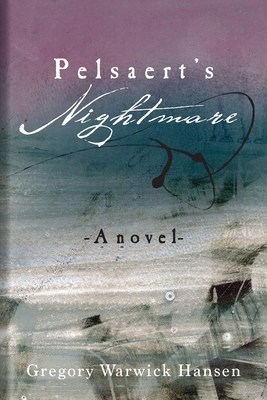
  • PELSAERT’S NIGHTMARE by Gregory Warwick Hansen – Maritime Historical Fiction, Mutiny & Shipwrecks, Biographical Historical Fiction

    PELSAERT’S NIGHTMARE by Gregory Warwick Hansen – Maritime Historical Fiction, Mutiny & Shipwrecks, Biographical Historical Fiction

    To fully understand this rich immersive novel about a 17th Century mutiny and its murderous aftermath – a prime candidate for a “crime-of-the-century” label – it’s best to understand the true story of what happened in 1629 off the coast of what is now Indonesia.

    The Batavia was a treasure-laden fleet ship of the powerful Dutch East India Company, the global Amazon of its time, with more than 300 men, women, and children on board. But the Batavia’s fate was sealed by a greedy captain and a mysterious pharmacist who hijacked the ship for its booty and crashed it on a speck of an island off the Australian coast.

    When survivors of the shipwreck landed, Jeronimus Cornelisz the pharmacist, and his followers were said to have murdered upward of 100 of them. Historians believe that some were brainwashed to kill one another, take women survivors as sex slaves, and slaughter several children. Some individuals place Cornelisz in the same evil company as serial killers Charles Manson, Ted Bundy, and Jeffrey Dahmer.

    The most complete historical record of the massacre came from Francisco Pelsaert, the Company’s senior representative on board the wrecked ship. His diary, written shortly after the Batavia tragedy occurred, is the basis for this novel.

    We are taken deep into Pelsaert’s story who is dying as the book opens. We get to know him as a Company man, no less dedicated to commerce than any globe-traveling corporate soldier of our own times. But as the story of the Batavia unfolds, we also see the politics of the era, an understanding of the competing political forces in the 1600s ransacking the world for treasure and spices – the Dutch, Spanish, and English – entities no less complicated but far more vicious and venal than today’s international trade warriors. The truth be told, these times were hellish. Deaths, almost unimaginable tortures, and barbarism were rampant in this era, and the novel spares the reader few details of them.

    Even as Pelsaert provides us with a detailed accounting of the Batavia disaster, written in graphic and often profane language, he also stares deeply into his own complex past, jumping in time from past to present and back again. We see how a road warrior of those times thought and acted, as unsparing of himself as he is of his contemporaries. You may not ultimately like the Company man, but he will treat you to a reading experience of a world both far removed from our own and yet sadly familiar.

    Pelsaert’s Nightmare won First-Place in the CIBAs 2018 Chaucer Book Award for pre-1750s historical fiction.

  • UNDER the APPROACHING DARK: The King’s Greatest Enemy by Anna Belfrage – Historical/Biographical Fiction, Medieval Fiction, Medieval Romance

    UNDER the APPROACHING DARK: The King’s Greatest Enemy by Anna Belfrage – Historical/Biographical Fiction, Medieval Fiction, Medieval Romance

    Christopher Marlowe’s The Tragedy of Edward the Second (1592) and Derek Jarman’s film (Edward II, 1991) fans will want to sit up and take notice of how Anna Belfrage navigates her way through this installment of the Under the Approaching Dark, the third book in The King’s Greatest Enemy series. With a vast cast and two kings from the same family to deal with, the challenges were immense. And she’s succeeded.

    The narrative is built around two males – decades apart – who may or may not be alive or dead. Four-year-old Tom arrives at the home of his mother, Kit, and father, Adam – a knight of the realm – in a recently exhumed coffin. No one wants to believe the lad is dead, and William (a vicar; Adam’s brother) recommends not opening the lid to view the rotting remains but assures one and all that the corpse is most certainly the couple’s eldest boy. But Kit never gives up hope.

    The second male, King Edward II, also has difficulty staying alive or dead. Deposed for outlandish behavior in the bedroom and at court, his long-suffering wife Isabella teams up with Roger Mortimer to rule the country and place Edward III on the throne while yet a teenager. To add further twists to the plot, Edward of Carnarvon – after reportedly being killed while under arrest – is provided a resurrection and exile to France.

    Enemies to both Edwards abound. Henry of Lancaster is afraid of losing a considerable amount of land if peace is reached with the Scots and Godfrey of Broseley delights in inflicting pain and torture on anyone who would dare stand in his way to power and riches – man or woman. Kit’s half-sister Alicia is deft at playing both sides to her advantage. But her sibling is not fooled.

    History buffs and devotees of political intrigue will enjoy this generously written account of the royals struggling to stay on the throne even as some of those in their court change allegiances whenever they see an opportunity for personal gain. Belfrage’s sense of pace, in-depth characterization of the principals – coupled with a few surprises along the treacherous journey to safety and security with the minimum of bloodshed – is a remarkable achievement. Her ability to convincingly weave together so many people and narrative threads will keep readers’ interest high and encourage them to snap up the next volume in the series.

    Under the Approaching Dark won first place in the CIBA 2018 CHAUCER Awards for Early Historical Fiction.


  • DAVID and AVSHALOM: Life and Death in the Forest of Angels by Bernard Mann – Ancient History, Augmented Historical Accounts, Jewish Literature and Fiction

    DAVID and AVSHALOM: Life and Death in the Forest of Angels by Bernard Mann – Ancient History, Augmented Historical Accounts, Jewish Literature and Fiction

    Debut novelist Bernard Mann has diligently researched a wide-ranging saga centered on the life, loves, songs, and struggles of King David, a central figure in the Old Testament and author of the Book of Psalms.

    The tale begins at a crucial stage of David’s life as he is escaping the wrath of King Saul. Once a father-figure to the former shepherd boy, Saul’s view of David sours when the majority of his subjects begin to revere David over him. David flees with a small band of loyal stalwarts. He is still a fast friend to Saul’s son and likely successor, Jonathan, and is married to Saul’s daughter Maacah. Moreover, he still holds fast to his faith in God and continues to compose poems and songs in praise of Him. When both Saul and Jonathan perish in battle, David takes up the struggle, amasses an army, receives the crown, and seizes the city of Jerusalem, making it the seat of Israelite power.

    The title, David and Avshalom, is reflective of the King’s sin of infidelity and murder. David lusts after his general’s wife. He sends the soldier to the front line of battle with a cryptic deadly message so he can take Batsheva as his lover and wife. David loses two precious sons, one of them his beloved Avshalom (often spelled “Absalom”) whom he had hoped to crown as his successor.

    The details of King David’s life, as told in the Bible, are generally accepted. Mann includes augmented material in this lengthy portrait of one of history’s most significant players, whose actions in the restoration of the city of Jerusalem impact the region today. Portions of psalms (poetry/songs) speckle the narrative, put in place as the inspiration to critical junctures in the King’s life, such as the death of Samuel or the conquest of Goliath.

    One aspect of David’s personality that Mann stresses is his respect for women. Calling together numerous scribes to begin recording his people’s history, David is introduced to the works of Judith and includes them and the writings of other women in the endeavor. Here is a king who contradicts the standard practices of the day and honors his daughters equally with his sons.

    An international architecture expert, Mann pieced David’s exploits together by drawing on several books of the Bible – Samuel I and II, Joshua, Kings I, Chronicles I, and Psalms. He describes his book as “presented in fictional fabric” while assuring the reader of its scholarly sources and attributions. He has included some lesser-known facts about his main character – alliances, weaponry, and, again, the belief in the equality of women. Mann proclaims, “… David…was cast by the Lord in a different mold than that of any other man.”

    The result? Mann delivers smart text, worthy of study, as well as a lively plot capable of engaging thoughtful readers. His prose is rich and his imagination equally so, as he brings King David back to life in a fresh way sure to invite attention and appreciation.

    David and Avshalom:  Life and Death in the Forest of Angels won First Place in the 2018 CIBAs, Chaucer Awards for Early Historical Fiction.


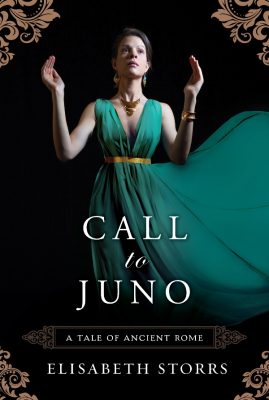
  • CALL to JUNO (A Tale of Ancient Rome, Book 3) by Elisabeth Storrs – Historical Fiction/Ancient World, Historical Fiction Romance, Mythology

    CALL to JUNO (A Tale of Ancient Rome, Book 3) by Elisabeth Storrs – Historical Fiction/Ancient World, Historical Fiction Romance, Mythology

    Elisabeth Storr delivers an extraordinary tale of “Peasant and patrician; concubine and master” where man seeking woman, man seeking man (mostly unrequited) and man seeking boy, erupts into a generous narrative of the quest for power between a reluctant Etruscan king, Vel Mastarna (situated in Veii—mere miles from his oppressor) and Marcus Furius Camillus—he who would be Rome’s dictator in her stunning Historical Fiction novel, Call to Juno: A Tale of Ancient Rome.

    Veii has been under a 10-year siege; Rome biding its time at the unsurmountable gates, waiting to starve its conquest into submission (and thereby looting the bounty and putting Rome’s finances back into the black).

    But there is danger afoot: almost entirely fueled by relationships strong or soured. Along with the “human” battlements, the gods must also be looked after—not a few of them “serving” both sides of the battle.

    At the center of it all is Artile Mastarna an Etruscan soothsayer who would rather corrupt boys than provide life-advancing advice. His brother, Vel (albeit reluctantly) is readily betrayed by his all-knowing sibling who prefers to work with the Romans and topple his own countrymen. A further link to Rome comes in the beguiling and astute shape of Caecilia. Years ago, her Roman relatives used her as the glue for peace in a forced marriage between the warring countries. Their eldest, adopted son, Tarchon, also prefers the company of men and makes no bones about showing his inclination. Four other children have blessed this political union which, nonetheless, has become a truly loving relationship.

    In Rome, the action centers around the highly ambitious Marcus Furius Camillus, unashamed patrician and consular general. His love interest is a former prostitute (kept a secret from her lover, but others within the circle are aware), who faithfully serves her master in the role of concubine. The gay blade on this side of the divide is Marcus Aemilius Mamercus, whose unrequited love for Appius Claudius Drusus is further complicated Drusus’ infatuation with Caecilia—all the better to kill the Etruscan king!

    Watching, of course, are the gods. How curious that both sides worship the same deities, albeit with different names (e.g., Uni/Juno, Tina/Jupiter, Aplu/Apollo, Fufluns/Dionysus). When simultaneously beseeched for assistance from the disparate factions, what’s a god to do? Beware the thunderbolt!

    As with all good historical fiction, Storrs takes us on a long-ago journey that has much relevance for the present day, proving once again the old adage that there is nothing new under the sun (and in this case, son). Savor the past, then fill in your own cast of 21st-century characters and see them through the lens of time.

    Call to Juno won 1st Place in the 2017 Chaucer Awards for Early Historical Fiction.


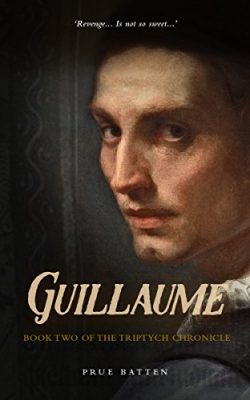
  • GUILLAUME (The Triptych Chronicle, Book Two) by Prue Batten – Biographical Fiction, Medieval France Geopolitics, Literary

    GUILLAUME (The Triptych Chronicle, Book Two) by Prue Batten – Biographical Fiction, Medieval France Geopolitics, Literary


    Welcome to Lyon, France, circa 1193. Battle-hardened veterans, returned from the Third Crusade, serve as loyal guards and spies for wealthy merchants. Some have crossed into the world of the bourgeoisie.

    Across Europe, monarchs are restless, the Church is ruthless, and trade is flourishing, bringing in rare, sought-after commodities from faraway markets, and fueling cutthroat competition in the burgeoning economy.

    In Guillaume: Book Two of The Triptych Chronicle, Prue Batten reimagines the life of one such upwardly mobile trader/merchant who lives in this socio-political chrysalis and is unwittingly caught up in issues and events that will change the future.

    Guillaume de Gisborne is an archer recently returned from the Third Crusade. He helps manage de Clochard, a small textile house struggling to survive after the death of its founder. When an arson fire threatens the property and merchandise of this already struggling business, Guillaume keeps watch over the premises and the prized, purple-dyed, velvet and fine wool fabric from Al-Andalus that is slated to go to the Holy Roman Emperor. During the night, he is attacked by strangers who are searching for something on the property.

    Subsequently, Guillaume learns that a copy of the heretical Vaudès Bible, which the Church wants to destroy, may very well be hidden somewhere on the de Clochard premises. This is, perhaps, what the assailants were seeking.

    Guillaume, assisted by Ariella Ben Simon, the beautiful Jewish daughter of a textile merchant in Venezia, and several of Sir Guy of Gisborne’s most trusted guards, seeks to find the book hoping to save it and return it to its rightful owners, the Poor Men of Lyon, proponents of the Vaudès’ dogma.

    While working together, Guillaume and Ariella learn to understand, rely upon, and eventually love one another. They begin to plan their future—but Destiny has something else in mind.

    After getting through the prologue and a long, (9,293 word) first chapter, the pace never slows. The amount and complexity of information included in chapter one may seem overwhelming, but the reward of gaining powerful knowledge that will enable the reader to relate to and understand Guillaume’s world is simply indispensable.

    Overall, Batten’s rich sensory imagery, engaging characters, and authentic voice, combined with meticulous research and attention to detail add depth and dimension to a cleverly crafted, multi-layered plot. The writing is both gritty and lyrical, creating a moving, memorable story.

    But wait! There’s more! Batten’s research notes at the end of the book are an absolute gift for history buffs and historical fiction fans.

    Guillaume (The Triptych Chronicle, Book Two) by Prue Batten won 1st Place in the CIBA 2017 Chaucer Awards for Early Historical Fiction.


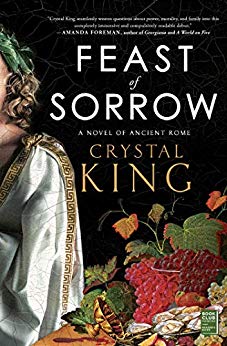
  • FEAST of SORROW by Crystal King – Ancient Rome, Biographical, Family Saga

    FEAST of SORROW by Crystal King – Ancient Rome, Biographical, Family Saga


    In the twenty-sixth year of Augustus Caesar’s reign, Marcus Gavius Apicius purchased nineteen-year-old Thrasius for twenty thousand denarii, enough money to buy more than sixty normal slaves, but Thrasius is more than the typical slave. Born to a slave woman who died in childbirth and whose name he never knew, Thrasius has trained for seven years as a cook in the kitchens of Flavius Maximus, a man known for his unforgettable dinners, and Apicius hopes the young coquus will lead him to the ultimate culinary fame, gastronomic advisor to Caesar himself.

    Grateful to be saved from the cruelty of the slave trader, Thrasius throws himself headlong into the new role and proves tremendously successful, but an ominous prophecy given to Apicius on the day he purchased Thrasius looms over every achievement. As Apicius climbs higher and higher in the Roman political world, Thrasius becomes an ever-growing asset eventually becoming more advisor than cook and feels the pressure of helping Apicius accomplish his fame at any cost, even his family and friends. His chase for fame becomes both consuming and destructive. Though Apicius refuses to see the price of his obsession, Thrasius knows a reckoning is coming and prays the gods can save him from the man who controls his life.

    This masterful thirty-year tale rejuvenates life in ancient Rome, a place where favors become life-changing, where people are bought and sold, and where death could reside in a glass of wine or in a snake-filled box. The complex, rich storyline, entwines real Romans with endearing fictional characters. Readers will recognize historical figures like Pliny and Ovid, who burst to life on the pages of this novel. Though perhaps not as well-known as some of the other characters, Marcus Gavius Apicius, an overly ambitious man who bankrupted his vast fortunes with his sumptuous cenas and expensive gifts, is credited with the first cookbook and a cooking school. Readers will see the rise and fall of this man who desired fame over everything. His single-minded ambition is contrasted with Thrasius, his fictional foil in many respects. Where Apicius wants his recipes in every Roman kitchen and his name spoken in jealous whispers, Thrasius seeks only to create good food and safe life for his love, Passia.

    Fate plays a major role in the lives of the characters and poses important philosophical questions throughout the novel. From the opening pages, the importance Romans placed on omens, fortunes, and premonitions is evident. Apicius, a man who refuses to acknowledge the undesirable part of his sinister fortune, often with acts with dire consequences, begging the question is fate fixed, or do men create their own? In taking charge of his destiny, does he, in essence, destroy himself?

    Even when he is told that he will have “as much sadness as there is success,” he continues to connive and conspire until he loses everything. He finally gains his coveted position but at the expense of a man’s life and a debt which will take everyone he loves.

    In his blindness to everything but fame, he turns this prophecy into truth, bringing about the “greater failures [clustered] to the sides” of each success. Even the wholesome Thrasius isn’t immune to the question of fate versus free will when he curses Sejanus, a cruel, unscrupulous man. Though his curse takes twenty-five years to come to fruition, Thrasius wonders how much blood is on his hands when the culmination of the curse also results in the death of people Thrasius loves. Has he doomed himself by fiddling with fate? In taking fate into their own hands, both Apicius and Thrasius pay enormous costs.

    Obscene wealth and devastating poverty. The height of fame and the desolation of obscurity. On the backs of many, one man builds his legacy while another prays for freedom. Feast of Sorrow creates a world where curses are feared, blessings hinge on blood sacrifice, and history becomes real.

    Feast of Sorrow by Crystal King won 1st Place in the CIBA 2017 Chaucer Awards for Early Historical Fiction.


  • SLAVE to FORTUNE by D.J. Munro – YA Historical Fiction, Sea Adventures Fiction, Thriller & Suspense

    SLAVE to FORTUNE by D.J. Munro – YA Historical Fiction, Sea Adventures Fiction, Thriller & Suspense

    Dante Rossetti Grand Prize Badge for Slave to FortuneAt the tender age fourteen, Thomas Cheke is kidnapped in the dead of night by Barbary pirates from his home on the Isle of Wight. His widowed mother and sister are left behind, but Tom doesn’t know if they survive the surprise attack. During the next six years, his life will take more twists and turns than he could ever have imagined, and the resulting story is one of the most fascinating ever put to page.


    Tom addresses the reader directly, and this lends a heightened sense of immediacy and excitement to an already gripping tale. He is the most sympathetic of characters, one with the deck stacked against him, though he uses his innate intelligence and wits most effectively. After the initial night when he fell “into the hands of the Turk,” an event English schoolchildren had been taught to fear, Tom is imprisoned on a corsair ship bound for Algiers where he knows he will be sold as a slave.

    Keenly observant and eager to make the best of his situation, Tom helps another lad on the boat who works in the kitchen, and along the way learns much about the running of the ship, the men aboard, prisoners and crew alike, and does what he can to comfort two other children who were also kidnapped from the Isle of Wight. Why these three youngsters were targeted by the pirates is at the heart of an intricate mystery that builds throughout the book.  Meanwhile, day to day life on the boat, seen through Tom’s eyes, is fascinating, especially when the crew chases a Spanish galleon laden with silver bullion and battle ensues.

    Once in Algiers, Tom maintains his composure while his ankle is chained and manacled and he is sold to Ibrahim Ali, the Grand Treasurer of the city. Many surprises await Tom as he joins the household, including his growing admiration for his Master, a kind and erudite man who arranges for his servant’s learning Arabic and intense study of the Koran. As a trusted servant, Tom runs errands for Ibrahim in cosmopolitan Algiers, the sights and sounds of which are fully brought to life through Munro’s sumptuous and masterful prose.  Tom’s time on the corsair ship provided him with information that will prove very useful in his master’s solving a dire financial issue that involves the weakening value of coinage in Algiers.

    Key events upend his existence once more, and he finds himself on a ship headed to Malta with a new mentor in Sir Edward Hamilton, a Christian brother and knight of the Order of St. John. With his ankle chain newly removed, Tom adjusts to life as a free man and assists Edward in solving an elaborate cipher, a lengthy message coded with the suits of playing cards. This introduces a riveting subplot concerning Cardinal Richelieu and the attempted assassinations of the Duke of Mantua and the Duke of Buckingham.  Computer programmers, as well as anyone interested in code breaking, will find this section of the book enthralling. Warning the intended victims that their lives are in danger requires further travels, including a trip to Venice.

    You won’t be able to turn the pages fast enough! Do Tom and Edward prevent the assassinations? Does Tom ever set foot on English soil again? What will become of the young man, twenty years of age at the book’s conclusion, who has lived in Ottoman and Christian worlds as a slave and a free man? Adults and sophisticated young adult readers will find this book exquisitely captivating.

    Anyone who’s read and loved Robert Louis Stevenson’s historic adventure, Kidnapped, will no doubt also love Slave to Fortune. The basis of D.J. Munro’s thrilling adventure, Slave to Fortune, is purportedly based on an original memoir by Thomas Cheke, an Englishman who lived during the seventeenth century. In the Endnote, D.J. Munro shares the research he undertook to confirm the events in Tom’s memoir and notes, “I hope that I have done it justice.”  The answer, of course, is a resounding, “YES!”

    Slave to Fortune won the 2017 CIBA Grand Prize in the Dante Rossetti Awards and took First Place in the 2017 CIBA Chaucer Awards for Early Historical Fiction.

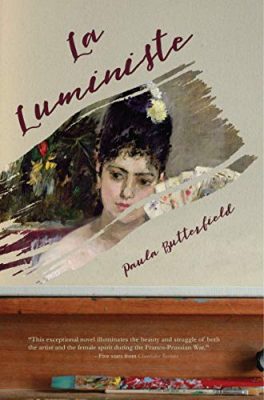
  • La LUMINISTE by Paula Butterfield – Women Impressionists, European Historical Fiction, Franco-Prussian War

    La LUMINISTE by Paula Butterfield – Women Impressionists, European Historical Fiction, Franco-Prussian War

    Berthe Morisot knows from a young age that she is destined to be an artist but living in nineteenth-century France severely limits her path. As a girl, she longs for the education any male artist would receive, and though her parents support her dream at first, Berthe isn’t even allowed to view some of the great works deemed unsuitable for females.

    Before long, she realizes she is uninterested in being any man’s student, wanting instead to explore her own style, painting the world of a modern woman–a real, intimate representation, not the perfection shown by most male artists. When her sister Edma, who originally paints with Berthe, marries and becomes the picture of femininity, Berthe feels the societal pressure to give up her painting and choose a husband. The one man she feels any connection to, fellow artist Edouard Manet, is a controversial rogue, and although she knows he feels for her, too, he marries another.

    However, the two cannot break free of their would-be love, and when Berthe decides to model for Edouard, she is more tantalized than ever. As her fascination turns to obsession, Berthe will be forced to choose between her desire to be a respected artist or the fallen lover of a scoundrel. It will take a revolution for Berthe to have either.

    This first-person fictionalized autobiography littered with famous Impressionists is the story of a woman’s love affair of both art and a man. In discovering her style, she finds a love she didn’t want and often questions the sanity (and more importantly) the healthiness of that love. As though her struggle to be an independent artist in a world of oppression isn’t already enough, Berthe knows she should dislike, maybe even despise, Edouard but is drawn to the proverbial flame. Unable to have him but unwilling to give him up creates clashing needs: becoming an independent woman but still tangled in what is proper and expected.

    On top of her obsession for him, she is torn between admiration and envy of this man who often feels as much repression as Berthe and wonders which she’ll lose first, her determination to paint or her societal constraints.

    A modern woman trapped in the nineteenth century, Berthe embodies the female struggle. Limited in infinite ways by societal views on women, she navigates a world of male domination in life as well as art, evolving much more quickly than her beloved Paris. If she marries, she wrestles with whether she is giving in or growing up, but as she matures in both art and life, she becomes angry with herself for her single-minded obsession of Manet and decides he is “not worthy of the woman [she would] become,” a woman (like so many modern women) who will find a way to have both a ground-breaking career and a family. As the list of prohibitions rises, so does her determination, and though her fight is for the individual woman (herself), it transcends that.

    Just like Berthe Morisot’s paintings, La Luministe shows a real woman, a woman with hopes and dreams that outreach her environment. Just as Paris was thrust into the turmoil and deprivations of war with Germany, Berthe set herself free in a bloody battle of change. This novel will show readers the beauty and struggle of both the artist and the female spirit.

    Paula Butterfield won 1st Place in the 2015 Chaucer Awards for La Luministe. (Because we have split the Historical Fiction Awards into two categories, La Luministe is considered a Goethe Award Winner!)