The Chaucer Book Awards recognize emerging new talent and outstanding works in the genre of Early Historical (Pre- 1750) Fiction. The Chaucer Awards is a genre division of Chanticleer International Book Awards and Novel Competitions (The CIBAs).
The Chaucer Book Awards competition is named for Geoffrey Chaucer the author of the legendary Canterbury Tales. The work is considered to be one of the greatest works in the English language. It was among the first non-secular books written in Middle English to be printed in 1483.
Chanticleer International Book Awards is seeking the best books featuring Pre-1750s Historical Fiction, including pre-history, ancient history, Classical, world history (non-western culture), Dark Ages and Medieval Europe, Renaissance, Elizabethan, Tudor, 1600s, we will put them to the test and choose the best among them.
These titles have moved forward from the 2024 CHAUCER Long List entries to the 2024 Chaucer Book Awards SHORT LIST. These entries are now in competition for the 2024 Chaucer Semi-Finalists. FINALISTS will be chosen from the Semi-Finalists and recognized at the Chanticleer Authors Conference, CAC25.
We will announce the 1st Place Category winners and Grand Prize Division Winners at the CIBAs Banquet and Ceremony on Saturday, April 5th, 2025 in beautiful Bellingham, WA at the Bellingham Yacht Club, hosted by the 2025Chanticleer Authors Conference.
These titles are in the running for the SEMI-FINALISTS of the 2024 Chaucer Book Awards novel competition for Early Historical Fiction!
Join us in cheering on the following authors and their works!
Laura Gwendolyn Hill – The Saxon Sword the Song of Artemis Book One
Mark Kraver – The Willow
Dean Cycon – A Quest for God and Spices
Liz Sevchuk Armstrong – To Remain Vigilant
Ursula Werner – Magda Revealed
Julie L. Brown – No One Will Save Us: A novel
Patrice Hapke – Summer of the Bear
Jessica Russell – Hot Winter Sun
J.C. Corry – The Storyteller’s War
Rozsa Gaston – Anne Boleyn at Margaret of Austria’s Court
Jessica Tvordi – The Schoolmaster
Malcolm David Logan – The Wind in the Embers – A Story of the Fall of Rome
C.V. Lee – Betrayal of Trust
Roxana Arama – The Exiled Queen: A Roman Era Historical Fantasy
Chuck Locklear – A Storm Coming
Logan D. Irons – Sands of Bone
Johnny Teague – The Lost Diary of Mary Magdalene
Jean Gill – Among Sea Wolves
Peggy Joque Williams – Courting the Sun: A Novel of Versailles
M.N. Stroh – Rise of Betrayal
John D. Cressler – Merchants of Iniquity
Laura C. Rader – Hatfield 1677
Catherine Hughes – In Silence Cries the Heart
Lisa Llamrei – Feather of Ma’at
PROMOTING OUR AUTHORS!
This post has been posted on the Chanticleer Facebook Page. We try to tag all authors listed here in the Facebook post. However, it is easier for us to tag authors when they have Liked and Followed us on Facebook.
Seating is Limited. The esteemed WRITER Magazine (founded in 1887) has repeatedly recognized the Chanticleer Authors Conference as one of the best conferences to attend and participate in for North America.
The Chaucer Book Awards recognize emerging new talent and outstanding works in the genre of Early Historical (Pre- 1750) Fiction. The Chaucer Awards is a genre division of Chanticleer International Book Awards and Novel Competitions (The CIBAs).
The Chaucer Book Awards competition is named for Geoffrey Chaucer the author of the legendary Canterbury Tales. The work is considered to be one of the greatest works in the English language. It was among the first non-secular books written in Middle English to be printed in 1483.
Chanticleer International Book Awards is seeking the best books featuring Pre-1750s Historical Fiction, including pre-history, ancient history, Classical, world history (non-western culture), Dark Ages and Medieval Europe, Renaissance, Elizabethan, Tudor, 1600s, we will put them to the test and choose the best among them.
These titles have moved forward in the first look rounds from all 2024 CHAUCER entries to the 2024 Chaucer Book Awards LONG LIST. These entries are now in competition for the 2024 Chaucer Short List. The Short Listers will compete for the Semi-Finalists positions. FINALISTS will be chosen from the Semi-Finalists and recognized at the Chanticleer Authors Conference, CAC25.
We will announce the 1st Place Category winners and Grand Prize Division Winners at the CIBAs Banquet and Ceremony on Saturday, April 5th, 2025 in beautiful Bellingham, WA at the Four Points by Sheraton sponsored by the 2025Chanticleer Authors Conference.
These titles are in the running for the SHORT LIST of the 2024 Chaucer Book Awards novel competition for Early Historical Fiction!
Join us in cheering on the following authors and their works!
Laura Gwendolyn Hill – The Saxon Sword the Song of Artemis Book One
Mark Kraver – The Willow
Dean Cycon – A Quest for God and Spices
Liz Sevchuk Armstrong – To Remain Vigilant
Ursula Werner – Magda Revealed
Julie L. Brown – No One Will Save Us: A novel
Patrice Hapke – Summer of the Bear
Jessica Russell – Hot Winter Sun
Eric C. Miller – No Sympathy For The Devil
J.C. Corry – The Storyteller’s War
Rozsa Gaston – Anne Boleyn at Margaret of Austria’s Court
Stefan Scheuermann & Paul Alexander – King of the Gulls
Jessica Tvordi – The Schoolmaster
Malcolm David Logan – The Wind in the Embers – A Story of the Fall of Rome
C.V. Lee – Betrayal of Trust
Roxana Arama – The Exiled Queen: A Roman Era Historical Fantasy
Chuck Locklear – A Storm Coming
Logan D. Irons – Sands of Bone
Johnny Teague – The Lost Diary of Mary Magdalene
Sheri Graubert – Molly Shipton, Secret Actress
Jean Gill – Among Sea Wolves
Peggy Joque Williams – Courting the Sun: A Novel of Versailles
M.N. Stroh – Rise of Betrayal
John D. Cressler – Merchants of Iniquity
Laura C. Rader – Hatfield 1677
Catherine Hughes – In Silence Cries the Heart
Lisa Llamrei – Feather of Ma’at
PROMOTING OUR AUTHORS!
This post has been posted on the Chanticleer Facebook Page. We try to tag all authors listed here in the Facebook post. However, it is easier for us to tag authors when they have Liked and Followed us on Facebook.
Seating is Limited. The esteemed WRITER Magazine (founded in 1887) has repeatedly recognized the Chanticleer Authors Conference as one of the best conferences to attend and participate in for North America.
The Chaucer Book Awards recognize emerging new talent and outstanding works in the genre of Early Historical Fiction. The Grand Prize Winner, James Hutson-Wiley’s book, The Merchant from Sepharad will be promoted for years to come in our annual Hall of Fame article, as well as be featured on the Chaucer contest page year ’round!
The best part about being a Chanticleer Int’l Book Award Winner is the love and attention you get all year ‘round!
Marie de France was a 12th Century poet, considered to be the earliest known female poet writing in French. Her work is still read and was also an influence on the genre of Chivalric Romance. One of her works is a series of 102 fables, some translated from Aesop, the ones in the series she wrote have a focus on Female characters. Fable 51 is considered an early version of the Raynard the Fox tale, which was an inspiration for Chaucer while writing the Canterbury Tales, specifically the Nun’s Priest’s Tale, the tale also starring a certain rooster named Chanticleer.
Venice in 1509 is on the brink of war. The displeasure of Pope Julius II is a continuing threat to the republic, as is the barely contained fighting in the countryside. Amid this turmoil, noblewoman Justina Soranzo, just sixteen, hopes to make a rare love marriage with her sweetheart, Luca Cicogna. Her hopes are dashed when her father decides her younger sister, Rosa, will marry in a strategic alliance and Justina will be sent to the San Zaccaria convent, in the tradition of aristocratic daughters. Lord Soranzo is not acting only to protect his family. It’s well known that he is in debt to both his trading partners and the most infamous courtesan in the city, La Diamante, and the pressure is closing in.
After arriving at the convent, Justina takes solace in her aunt Livia, one of the nuns, and in the growing knowledge that all is not strictly devout at San Zaccaria. Justina is shocked to discover how the women of the convent find their own freedom in what seems to her like a prison. But secrets and scandals breach the convent walls, and Justina learns there may be even worse fates for her than the veil, if La Diamante makes good on her threats.
Desperate to protect herself and the ones she loves, Justina turns to Luca for help. She finds she must trust her own heart to make the impossible decisions that may save or ruin them all.
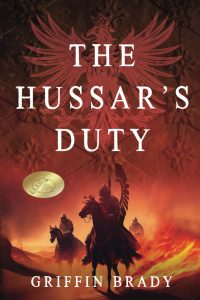
A duty he believes in. A general he idolizes. But when doubts surface, will he stay true to honor or the chance to return to the woman he loves?
Poland, 1620. Jacek Dąbrowski scents war in the air. Away from the battlefield for five years, the renowned fighter yields to a growing itch and answers the general’s request to help lead the army against the Ottomans. But he’s torn between duty and family when the perils of combat force him to leave his defenseless wife behind.
Attending war councils and taking command of problematic noblemen, Jacek starts to doubt the mission and the sacrifice of being far from his loved ones. But his loyalty to his commander could put him on an irreversible path to disaster…
Will Jacek’s call to arms prove to be his death song?
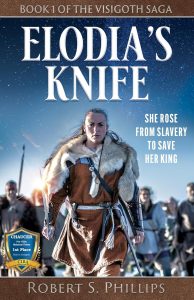
Set in the late 4th century CE, Elodia’s Knife tells the gripping tale of a young Gothic girl who kills her abusive husband and flees his family’s retribution by rafting across the Danube River into Roman territory. Against the backdrop of a crumbling empire and the looming threat of Gothic invasion, Elodia must use her wits and her strength to rise to power in a world that seeks to crush her. With unforgettable characters, pulse-pounding action, and a vivid sense of historical detail, this is a must-read for anyone who loves adventure, romance, and history.
From Chanticleer:
Elodia is a young woman driven by dreadful circumstances to act with deadly force in the Robert S. Phillips novel Elodia’s Knife.
What Elodia hoped would be her leap away from danger instead left her surrounded by perilous threats that now threaten to consume her. Armed with her courage, determination, instincts, and a trusty knife, Elodia faces a hostile world in foreign territory.
Not all are against her though. Allies– even a friend– can be found, if Elodia can summon the bravery to listen to her feelings and own deep wishes.
Young Elodia is unhappily married to an abusive husband. But when he tries to attack her again, she strikes back and kills him.
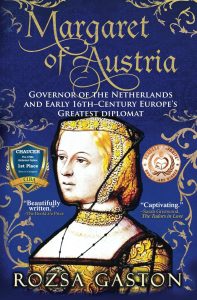
Margaret of Austria was the most significant political negotiator of early 16th-century Europe. About as Austrian as French fries are French, she was born in Brussels in 1480, raised in France, married and widowed in Spain, then married and widowed again in Savoy by age twenty-four.
In 1506 Margaret’s life turned upside down when her brother Philip of Burgundy unexpectedly died in Spain. With their mother Juana of Castile insane, four children, heirs to the Habsburg empire, were left behind in the Burgundian-Habsburg Netherlands.
Margaret stepped in and took the reins.
Appointed by her father, Maximilian I, Margaret became governor of the Netherlands, then widened her role to broker the 1508 Treaty of Cambrai where Europe’s princes united against Venice.
Ferdinand of Spain, Henry Tudor then Henry VIII of England, Louis XII of France, and Louise of Savoy for Francis I all came to Margaret’s negotiation table. Under her deft diplomacy princes saw reason and wars were averted.
Enjoying political power, Margaret avoided remarriage. Then Henry VIII’s right-hand man Charles Brandon turned her world upside down.
Margaret’s court attracted Europe’s brightest, including the young Anne Boleyn. Yet halfway through her rule Margaret was ousted by enemies. She won back her position with a comeback strategy as astute today as it was in 1517.
Journey to the Renaissance with Margaret of Austria, who shot the fortunes of the House of Habsburg to the stars while setting a winning precedent for female rule in the Netherlands.
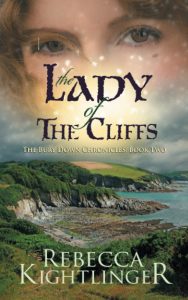
Now nearly seventeen, Megge and Brighida must endure another brutal loss.
As they perform the rites of transition that precede a burial, Megge accepts a daunting new charge that carries consequences not even her cousin the seer can predict. It brings visions. Dreams. And voices that come to her as she goes about her work.
A silken voice beckons her back to the cliffs of Kernow, which she has seen only in dreams.
A commanding voice orders her back.
And the menacing voice she’s heard since she was a girl is now ever at her ear, bringing a haunting new meaning to her grandmother’s words, “You’re never alone.”
But only when the tales of an old woman, a stranger to Bury Down, echo those voices and conjure those cliffs does Megge embark on a journey that leads to a secluded cove they call The Sorrows and a destiny none of the women of Bury Down could have foreseen.
From Chanticleer:
In The Lady of the Cliffs, an ambitious sequel in the Bury Down Chronicles by Rebecca Kightlinger, a teenager embarks on a journey that will bring her face to face with unexpected destiny.
The year is 1286 CE in Cornwall, England. At the turn of her seventeenth year, Megge and her cousin Brighida find themselves dealing with a new loss, one that breaks both their hearts. As heirs to the Book of Seasons and Book of Times respectively, they have to protect the books from sinister hands as they hold knowledge and wisdom that must one day be united. The power of these two books calls for a duty that is far greater than any woman of Bury Down has ever borne.
As they take part in a final right of passage that the women of Bury Down perform for their dead, Megge, an apprentice weaver, takes on new challenges that Brighida, an apprentice seer, cannot foretell. Megge begins having dreams and visions. In one of her dreams, she sees a rolling sea drive itself into a cove at the foot of a cliff, and a silken voice asking her to return to the cliffs of Kernow, a place that she has only seen in her slumber.
1461, Isle of Jersey. Disillusioned by war, Sir Philippe de Carteret returns home to hang up his sword and embrace his duties as seigneur of the island’s most powerful manor. Desiring to raise his son in peace and safety, he is dismayed when news arrives that the impregnable fortress of Mont Orgueil Castle has been breached.
He seeks assistance from England to expel the invaders. But amid the chaos of the Wars of the Roses, his pleas go unheeded. To safeguard his son and preserve the family legacy, de Carteret pledges fealty to the new lord. Hopeful that the French will rule benevolently, his illusions are quickly shattered when their tactics turn brutal.
With spies everywhere and unsure of whom to trust, can de Carteret build a rebel force and lead them on a quest to liberate the homeland he loves?
You have until September 30th to submit your story and enter the 2024 CIBAs!
Named for Geoffrey Chaucer, author of the Canterbury Tales (and Name giver of a certain rooster named Chanticleer), This Division was our first Historical Fiction category.
Not much belonging to the author in question still survives. Although in 2023, a document in the British National Archive was determined to be written in his own hand. The document dates from Chaucer’s 12-year stint as the controller of the London Wool Quay, and is a note asking King Richard II for time off of work. Read more about that in this article from the Guardian
The note, written by Geoffrey Chaucer, spelled Geffray Chaucer in the text, rediscovered in the British National Archives
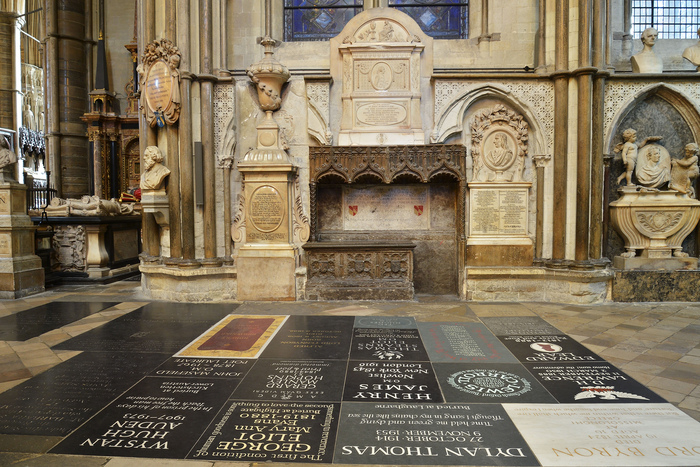
The Most famous thing associated with him though, has to be Poets Corner of Westminster Abbey. The corner dedicates memorials to some of the best of British writers. Poets corner is centered around the Tomb of Geoffrey Chaucer himself, which was erected in 1559, as his actual burial is known to be somewhere in the area, but is unmarked. Writers such as Charles Dickens, Rudyard Kipling, Alfred Lord Tennyson, and more are buried or have memorials surrounding Chaucer’s.
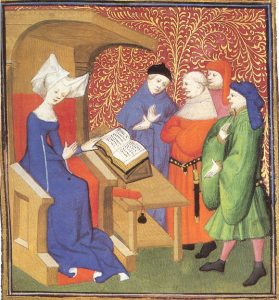
In this years Chaucer Award posts, we are also highlighting some of the often overlooked female writers of the past. This time, Christine De Pisan. Writing in the early 1400s, she was rather prolific in her work. Poetry, Novels, Biographies and more, including the only French-language work about Joan of Arc written in her lifetime. Christine is the first known women to actually make a living on her own writing.
Christine De Pisan from Harley MS 4431, held in the British Library.
The fact she was able to support herself and her children off of her writing in this era is remarkable. Her most well known work, The Book of the City of Ladies and its sequel The Treasure of the City of Ladies, written in about 1405, collecting biblical, mythological and historical female figures together, and using them as the ‘building blocks’ for a theoretical idealized city as a commentary on the world she lived in. Her book argues that women actually had a valued place and meaning in society and should be educated the same as men were. Her biography of Joan of Arc in 1429, is her last known piece of writing, as she disappears from written history after that.
And with that, Lets Take a look back in more recent history at the Grand Prize Winners of the Chaucer Award!
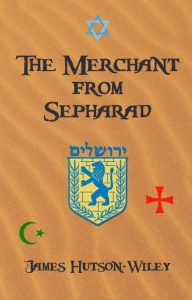
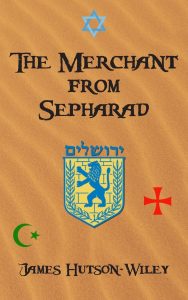
The Merchant From Sepharad By James Hutson-Wiley
Joshua Ibn Elazar, the eager son of a Jewish merchant, travels to al-Andalus (the Iberian Peninsula under Muslim rule) to prove himself in his father’s business. But he finds an unwelcoming, degrading society waiting for him, and begins a journey of misfortune and anger in James Hutson-Wiley’s historical fiction novel, The Merchant from Sepharad.
Shortly after arriving in the city of Lishbunah, al-Andalus, Joshua is tricked out of the gold for his living expenses. Worse yet, he learns that Jews in Lishbunah suffer under oppressive laws, holding far less status than Muslim citizens. He can only find help in Lishbuna’s Jewish community, meeting Rabbi Hiyya al-Daudi and his son Yaish, who house and feed him.
They tell him that his father’s colleague, Essua, who was to help Joshua manage a shipment of flax and sugar, has been arrested. Though Essua is eventually released, Joshua fails to secure storage for his goods, as the makhzan (warehouse) he rented is given to a Muslim merchant instead. In his fury at the city’s prejudice, he sets fire to the makhzan, and is forced to flee.
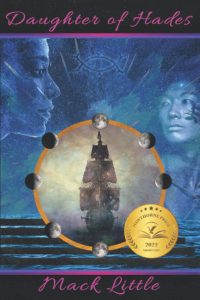
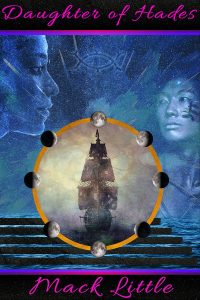
Mack Little’s historical fiction novel Daughter of Hades explores the lives of slaves during the age of pirates.
Little’s research shines in her thoughtful presentation of the Caribbean islands, the escaped slaves who found freedom amongst them, the lives of buccaneers and maroons, and their daring and dangerous exploits.
On the first page, Little introduces us to Geraldine, or “Dinny”, running for her life from her owner, Owen Craig, who has just raped her.
Dinny’s father had arranged for her to be removed from the plantation before Craig molested her, but he’d miscalculated Craig’s lust. Dinny is rescued by her twin brother, Jimmie, and Leixiang, and taken to the Hades, a pirate ship captained by the buccaneer Duff.
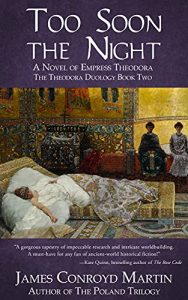
Too Soon the Night by James Conroyd Martin shows the thrilling heights to which Empress Theodora rose and the crushing depths to which she fell, in the latter half of her life. This story picks up from Fortune’s Child, the first volume of this epic duology.
This half of Theodora’s incredible journey opens at its close – as she succumbs to the cancer that drove her to dictate the record of her life. She left the task of recording her meteoric rise from actress to empress in the hands of the scribe and historian Stephen, even though she imprisoned him for several years out of fear that he would reveal her greatest secrets.
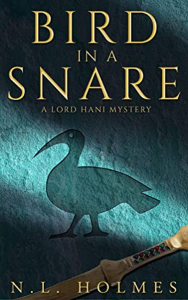
Politics is a deadly game in the days of Kings and their competing 14th-century B.C. Egyptian factions. Official diplomat, Lord Hani, is on a royal assignment when he discovers even the king’s motives are suspect. Hani begins to fear for the welfare of his family and himself, as he gets a sinking feeling that the hunter has become the hunted. He’s the live bait, the Bird In A Snare.
Can Lord Hani find out who is responsible for the mysterious assassinations and the shifting armies’ alliances before becoming the one they target next?
Fortunes Child By James Conroyd Martin
2019 Overall Grand Prize Winner
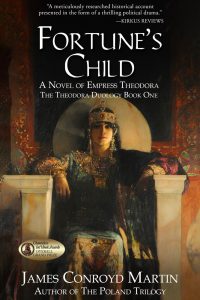
James Conroyd Martin brings to life one woman we should all know better in his multi-award-winning, epic novel, Fortune’s Child: A Novel of Empress Theodora.
Like Cleopatra, Empress Theodora was a legend in her own time. And also, like Queen Cleopatra before her, Empress Theodora’s life and accomplishments were distorted and maligned by the male historians of her own time. Even after death, men who couldn’t bear or couldn’t believe that a woman, particularly a woman of the lower classes as Theodora was, could possibly have accomplished the things she did or wield the power she had.
Fortune’s Child, the first book of a projected duology, Theodora, near death, determines to leave behind an accurate chronicle of her life and work. She’s desperate to get a step ahead of the official biography already being written by a man who hates her, everything she came from, and everything she stands for.
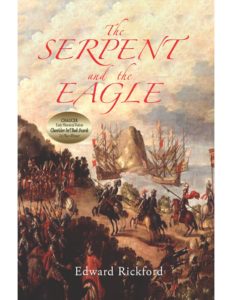
In The Serpent and the Eagle, Edward Rickford details Hernan Cortes’ 1519 expedition to explore and secure the interior of Mexico for colonization, fleshing out known facts with the human factor—it is, to the typical depiction of Cortes’ exploration of the Yucatán peninsula, what a chorus is to a solo or a tulip to a bulb. Primarily narrated by individuals who were actual members, or may have been members, of this expedition, Rickford has crafted a fascinating tale of intrigue, love, lust, greed—essentially all seven of the deadly sins—within two diametrically opposed political and cultural systems.
Now that you’re set on your next reads, what are you waiting for? The only way to join this amazing list of Chaucer Winners is to submit today!
Those who submit and advance will have the chance to win the Overall Grand Prize of the CIBAs and $1000!
Are you a Chanticleer Author who has some good news to share? Let us know! We’re always looking for a reason to crow about Chanticleerians! Reach out with your news to info@ChantiReviews.com
The Chaucer Awards are named after Geoffrey Chaucer, the author of The Canterbury Tales. But Chaucer was hardly the only writer of past ages. Female writers of the past are often overlooked, so during this Award cycle, we’re going to highlight some of them in Chaucer posts.
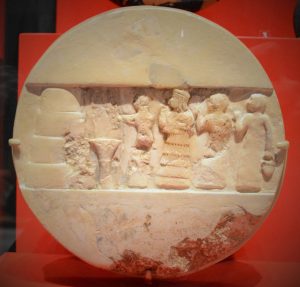
The Disk of Enheduanna, discovered in 1927 by Leonard Wooley, now in the Penn Museum
The oldest known writer in history is Enheduanna
She was High Priestess of the Sumerian Moon Goddess Nanna, and Daughter of Sargon the Great, the first King of the Akkadian empire. Living in approximately 2300 BCE, she composed 42 temple hymns and 3 stand-alone poems. While her Father was uniting Mesopotamia and creating one of the worlds first empires, she was uniting their religions, her hymns being used to combine the worship of Inanna and Ishtar. One of her poems, Inanna and Ebih, even has the distinction of being the first text to have illustrations.
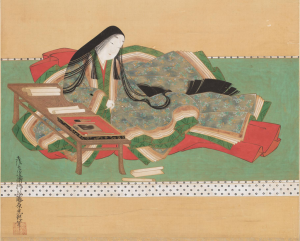
Another female writer, Murasaki Shikibu, wrote Genji Monogatari, also known as The Tale of Genji in about 1000- 1012 CE in Japan.
The Tale of Genji is considered to be one of the worlds first Novels, directly inspired by her life as a Lady-in-waiting in the Royal court. What’s interesting about her novel is how much of it centers on the female perspective, of the women in Genji’s life and how they shaped his fate. While the book is an amazing example and look into Japanese Culture at that time, it also still has points that are still able to be seen in Modern Japanese society. It is however thought that the last 10 chapters may have been written by her daughter, poet Daini no Sanmi.
However, the Chaucer Awards focus on work written in the last 3 years.
Pre-Historical Fiction- Anything before written history. Neolithic and Neanderthal type stories. The Clan of The Cave Bear by Jean Auel or The Lost World by Arthur Conan Doyle are good examples.
Ancient Historical Fiction- Greek, Roman, Egyptian; Classical History
Dark Ages, Medieval, Renaissance
Elizabethan/Tudor
1600s
World/International History Pre-1750s
Americas- Historical Fiction Pre-1750s
Legend Based Pre-1750s Historical Fiction (Arthurian, Beowulf, Chaucer)
Rebecca Kightlinger – The Lady of the Cliffs: The Bury Down Chronicles, Book Two
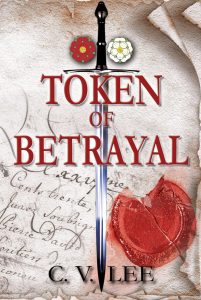
C.V. Lee – Token of Betrayal
The Grand Prize Winner for the CIBA 2023 CHAUCER Awards is:
The Merchant from Sepharad
By James Hutson-Wiley
Now it is our pleasure to celebrate some of the Early Historical Fiction that’s come to us lately!
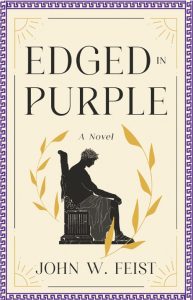
EDGED In PURPLE
By John W. Feist
Edged in Purple by John W. Feist welcomes readers to a place outside of time and space, a liminal space where characters of myth wait to return to their fated stories.
The Fold is a beautiful land, a near-utopia shepherded– literally– by Thetis and Peleus of Greek mythology. They raise the heroine of Shakespeare’s The Winter’s Tale, Perdita, after her father had accused her mother of betraying him with another, the whole sad story a product of his own paranoia.
Perdita’s story is proceeding as it was written. She has already met Florizel, the man who should be the hero of her romance– when her story is intersected by another. Just as The Winter’s Tale features royal courts, doomed relationships, mistaken identities, and family murder, so too does an ancient Greek drama: the Oresteia of Aeschylus, the story of Agamemnon after the Trojan War.
Mack Little’s historical fiction novel Daughter of Hades explores the lives of slaves during the age of pirates.
Little’s research shines in her thoughtful presentation of the Caribbean islands, the escaped slaves who found freedom amongst them, the lives of buccaneers and maroons, and their daring and dangerous exploits.
On the first page, Little introduces us to Geraldine, or “Dinny”, running for her life from her owner, Owen Craig, who has just raped her.
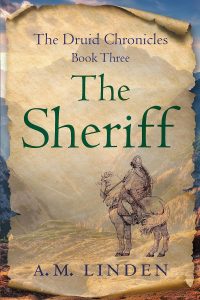
THE SHERIFF: Book Three of The Druid Chronicles
By A.M. Linden
The Sheriff, the third installment of A.M. Linden’s Druid Chronicles series about 9th-century life in Anglo-Saxon England, fully immerses readers in that distant era with all of its joys, conflicts, and hardships.
Trained from his youngest years in the military, Stefan has learned both battle skills and leadership, with the ability to approach a situation without causing it to get out of hand. He is fiercely loyal, but continually denied a larger role in the kingdom’s army. His latest indignity came with the king assigning him as sheriff of Codswallow, a paltry village. With a retinue of less than 10 people including his slave, he has to collect taxes and keep the peace.
The novel shows two major episodes. The first follows his Codswallow days, including his relationship with Jonathan, owner of the Three Dragons Inn. Stefan learns that Jonathan is paying protection money to keep bandits away from the inn, and carries out a series of plans to discover who is, what we could call, the crime boss.
Elodia is a young woman driven by dreadful circumstances to act with deadly force in the Robert S. Phillips novel Elodia’s Knife.
What Elodia hoped would be her leap away from danger instead left her surrounded by perilous threats that now threaten to consume her. Armed with her courage, determination, instincts, and a trusty knife, Elodia faces a hostile world in foreign territory.
Not all are against her though. Allies– even a friend– can be found, if Elodia can summon the bravery to listen to her feelings and own deep wishes.
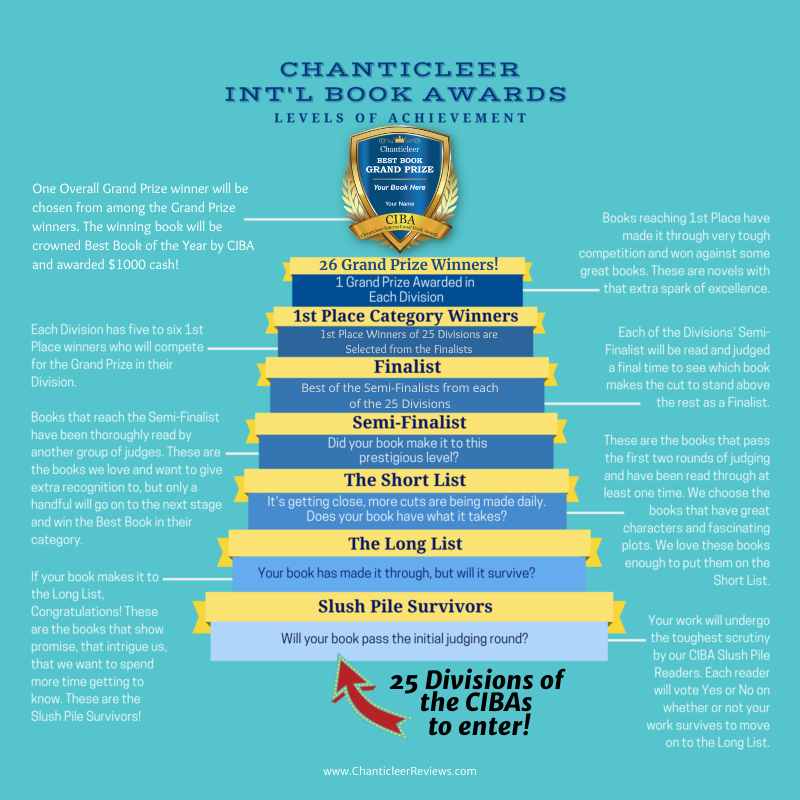
This is the journey from beginning to end for the CIBAs Levels of Achievement is so worthwhile! Every list you make means more promotion for you and your work as each list is posted right here on our website, on our social media, and also out in our newsletter!
Only 8 days left to submit your books to these prestigious CIBA Divisions and embark on an extraordinary journey to success. With over $30,000 in prizes awarded annually, now is the time to make your mark!
The Chaucer Awards for Early Historical Fiction, The Goethe Awards for Late Historical Fiction, and the Laramie Awards for Western and Americana Fiction are still open!
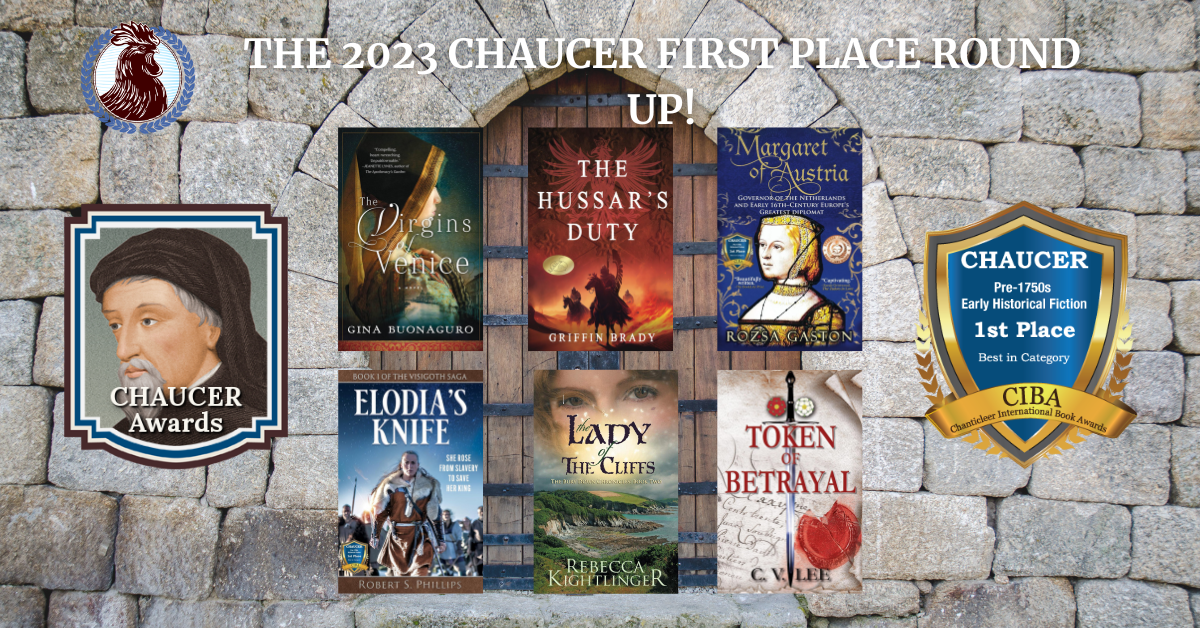
Congratulations to the Winners of the 2023 Chaucer Award for Historical Fiction!
Gina Buonaguro – The Virgins of Venice
Griffin Brady – The Hussar’s Duty
Robert S Phillips – Elodia’s Knife
Rozsa Gaston – Margaret of Austria
Rebecca Kightlinger – The Lady of the Cliffs: The Bury Down Chronicles, Book Two
C.V. Lee – Token of Betrayal
And a huge round of applause for the 2023 Chaucer Grand Prize Winner:
The Merchant from Sepharad by James Hutson-Wiley
Congratulations to the Winners of the 2023 Goethe Awards!
Lisa Voelker – The Spoon
Robert W Smith – A Long Way from Clare
Mitzi Zilka – Water Fire Steam
Susanne Dunlap – The Adored One
Linda Ulleseit – The River Remembers
Nicole Evelina – Catherine’s Mercy
William Maz – Bucharest Legacy: The Rise of the Oligarchs
And a huge round of applause for the 2023 Goethe Awards Grand Prize Winner:
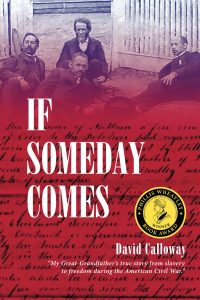
If Someday Comes by David Calloway
Congratulations to the 2023 Winners of the Laramie Awards!
Barbara Salvatore – The Trail to Niobrara
T.K. Conklin – Promise of Spring
Elizabeth Woolsey – The Travels of Dr. Rebecca Harper A Matter of Time
Daniel Greene – Northern Dawn (Northern Wolf Series Book 4)
K.S. Jones – Tastefully Texas
And a huge round of applause for the 2023 Laramie Grand Prize Winner:
The Last Man: A Novel of the 1927 Santa Claus Bank Robbery by Thomas Goodman
The CIBAs offer more than just recognition — they provide a ladder to success with a range of achievement tiers and expert long tail marketing strategies. From the highly anticipated Long List to the prestigious Overall Grand Prize Winner, the CIBA lists energize both authors and readers, maximizing your digital footprint and expanding your fan base.
We are always eager to support the Best Books through the CIBAs. Join the ranks of celebrated authors who have already taken this critical step in their publishing.
Your book deserves to be discovered, celebrated, and shared with the world. Don’t miss the chance to showcase your talent and gain valuable exposure at the Chanticleer Authors Conference (April 3-6, 2025) where Winners from all 25 Book Award Divisions will be announced and honored.
In a world hungry for good books, your story deserves to be heard. Submit now and leave a lasting impression.
The Chaucer Book Awards recognize emerging new talent and outstanding works in pre-1750s Historical Fiction. The Chaucer Book Awards is a division of the Chanticleer International Book Awards (The CIBAs).
The Chaucer Book Awards competition is named for Geoffrey Chaucer the author of the legendary Canterbury Tales. The work is considered to be one of the greatest works in the English language. It was among the first non-secular books written in Middle English to be printed in 1483.
Chanticleer International Book Awards is seeking for the best books featuring Pre-1750s Historical Fiction, including pre-history, ancient history, Classical, world history (non-western culture), Dark Ages and Medieval Europe, Renaissance, Elizabethan, Tudor, 1600s, we will put them to the test and choose the best among them.
The other three Historical Fiction Genres are the Laramie Awards for Americana Fiction, the Goethe Awards for Late Historical Fiction, and the Hemingway Awards for 20th c. Wartime Fiction.
1st Place Category winners and Grand Prize Division Winners were announced at the CIBAs Banquet and Ceremony by Anya Mueller on Saturday, April 20th, 2024 at the Four Seasons By Sheraton in Bellingham, Wash. sponsored by the 2024 Chanticleer Authors Conference.
This is the OFFICIAL 2023 LIST of the CHAUCER BOOK AWARDS First Place Category Winners and the CHAUCER Grand Prize Winner.
Congratulations to the FIRST PLACE CATEGORY WINNERS of the CHAUCER BOOK AWARDS for Pre-1750s Historical Fiction, a division of the 2023 CIBAs.
Gina Buonaguro – The Virgins of Venice
Griffin Brady – The Hussar’s Duty
James Hutson-Wiley – The Merchant from Sepharad
Robert S Phillips – Elodia’s Knife
Rozsa Gaston – Margaret of Austria
Rebecca Kightlinger – The Lady of the Cliffs: The Bury Down Chronicles, Book Two
C.V. Lee – Token of Betrayal
The Grand Prize Winner for the CIBA 2023 CHAUCER Awards is:
Attn CIBA Winners & Finalists: More goodies and prizes will be coming your way along with promotion in our magazine, website, and advertisements in Chanticleer Int’l Book Awards long-tail marketing strategy. Welcome to the CIBA Hall of Fame for Award Winners!
This post has been posted on the Chanticleer Facebook Page. We try to tag all authors listed here in the Facebook post. However, for Facebook to allow us to tag an author, that author must LIKE our page and Follow Chanticleer Reviews.
Additionally, we also post on Twitter. Chanticleer Facebook and Twitter handle is @ChantiReviews
Or click here to go directly to Chanticleer’s Twitter feed.
A Note to ALL the WINNERS: The coveted CIBA Blue Ribbons will be mailed out starting in June. We will contact you with an email to verify your mailing address and other items.
ALL the WINNERS: You will receive an OFFICIAL EMAIL NOTIFICATION with Digital Badges and more information.
NOTE: We will post at least two 2023 CIBA Divisions’ OFFICIAL Winners per business day starting April 24, 2024. We do a final sweep and reconciliation prior to making the Official CIBA Posts for the 2023 First Place and Grand Prize Winners. We thank you in advance for your patience and understanding. There are many moving parts involved with the Chanticleer International Book Awards Program.
Thank you for participating in the 2023 CIBAs! We are looking forward to reading your future entries.
In Mistress of Legend, the enticing finale of Nicole Evelina’s Guinevere’s Tale trilogy, matters are life-and-death by the second sentence, pulling readers deep into Guinevere’s fate in this retelling of Arthurian legend.
We come upon heroine Guinevere in the midst of an ill-fated romance with Lancelot. It’s far from her first troubled entanglement, but the stakes rise as she’s severely injured and faces even more threats, pursued by possible enemies. The novel’s beginning is woven with backstory, which adds suspense to the drama unfolding in Guinevere’s present. This summarizing might be slow for readers familiar with the series, but makes the story accessible for those who haven’t picked up the first two books.
Many more characters appear, waving the web of intrigue Guinevere finds herself caught in.
Evelina builds this setting through well-researched cultural details, like the holidays and rites of Guinevere’s pagan world, and the symbolism and ideology of the Christianity that threatens to blot her world out.
Though it’s a work of fantasy, Mistress of Legend has the feel of magical realism. Paranormal abilities like Guinevere’s “sight” fit subtly within Evelina’s carefully constructed foundation. Details down to ritualistic makeup and intoxicants are based on fascinating historical truths, many of which are explained in the author’s notes at the end.
Evelina avoids foreshadowing to ensure her characters’ futures long remain inscrutable. Unpredictable shifts in individuals and relationships seem to arrive at every turn, making for a thrilling, if at times mystifying, read. Guinevere’s relationship with Morgan, Arthur’s second wife, feels uncertain until the end, as the two vacillate from enemies to friends and back again. Meanwhile, Mordred, son of Morgan and Arthur, undergoes surprising development that makes perfect sense only in retrospect.
The use of “the sight” by characters like Guinevere and Morgan provides windows into other places, even the future, as the women experience highly realistic visions.
This allows Evelina to show two places at once without using multiple points of view (though some characters are so fascinating that readers may wish they could see things through their eyes). Instead, only Guinevere’s perspective is given, and readers feel her claustrophobic sense of being trapped in the mechanisms of fate.
Along with the characters involved in it, this tale of political intrigue only grows more complex with time.
The story begins to feel like a tapestry whose threads disappear and reappear in the weave. Some characters – even main ones – vanish and are nearly forgotten, only to return when they’re least expected. Guinevere’s life-threatening injuries, so crucial to the first pages, are soon eclipsed by even more pressing problems. Yet they return to the narrative from time to time, the marks left behind to remind the aging Guinevere of how much she’s lived – and how much is still in store.
Mistress of Legend fits well within the literary tradition of retelling classics from a strong woman’s point of view.
It’s a great pick for readers of magical realism, historical fiction, and new twists on old classics. It takes things a refreshing step further, too, with a strong female character who remains formidable, agile, and the subject of much male attention as she ages past 40. Youth is no threat to Guinevere. The foolish grabs for power that surround her are.
The pace of the novel shifts wildly: speeding through seasons, only to suddenly slow and zoom in on the intense details of a moment. At times, it feels a bit like whiplash – but surely that’s how Guinevere felt, as the life she built crumbled time and time again. Readers remain close within her viewpoint, feeling everything she feels, in a world whose only constant is change. Ambitious though she is, her true quest is simply for peace.
The Chaucer Book Awards recognize emerging new talent and outstanding works in pre-1750s Historical Fiction. The Chaucer Book Awards is a division of the Chanticleer International Book Awards (The CIBAs).
The Chaucer Book Awards competition is named for Geoffrey Chaucer the author of the legendary Canterbury Tales. The work is considered to be one of the greatest works in the English language. It was among the first non-secular books written in Middle English to be printed in 1483.
Chanticleer International Book Awards is seeking the best books featuring Pre-1750s Historical Fiction, including pre-history, ancient history, Classical, world history (non-western culture), Dark Ages and Medieval Europe, Renaissance, Elizabethan, Tudor, 1600s, we will put them to the test and choose the best among them.
These titles have moved forward in the judging rounds from the 2023 Chaucer Early Historical Fiction Semi-Finalists to the 2023 Chaucer Book Awards FINALISTS. Winners will be announced and recognized at the Chanticleer Authors Conference (CAC24).
We will announce the 1st Place Category winners and Grand Prize Division Winners at the CIBAs Banquet and Ceremony on Saturday, April 20th, 2024 at the Four Points by Sheraton in beautiful Bellingham, Wash. sponsored by the 2024Chanticleer Authors Conference.
These titles are in the running for the FIRST PLACE and GRAND PRIZE WINNERS of the 2023 Chaucer Book Awards novel competition for Pre-1750s Early Historical Fiction!
Join us in cheering on the following authors and their works in the 2023 CIBAs.
Gail Avery Halverson – A Sea of Glass
Gina Buonaguro – The Virgins of Venice
Griffin Brady – The Hussar’s Duty
James Hutson-Wiley – The Merchant from Sepharad
Regan Walker – The Strongest Heart
Juliette Godot – From the Drop of Heaven
Yvonne Korshak – Pericles and Aspasia: A Story of Ancient Greece
Robert S Phillips – Elodia’s Knife
C.V. Lee – Token of Betrayal
Rebecca D’Harlingue – The Map Colorist: A Novel
Rozsa Gaston – Margaret of Austria
Mary Pat Ferron Canes with JR Foley – Dark Queen of Donegal
Kerry Chaput – Daughter of the Shadows
Rebecca Kightlinger – The Lady of the Cliffs: The Bury Down Chronicles, Book Two
Adrienne Dillard – Keeper of the Queen’s Jewels: a novel of Jane Seymour
Adam Alexander Haviaras – Sincerity is a Goddess: A Dramatic and Romantic Comedy of Ancient Rome
Margaret Porter – The Myrtle Wand
K.M. Butler – House Aretoli
PROMOTING OUR AUTHORS!
This post has been posted on the Chanticleer Facebook Page. We try to tag all authors listed here in the FB post. However, for FB to allow us to tag an author, that author must LIKE our page and Follow Chanticleer Reviews.
We are now accepting submissions for the 2024 Chaucer Book Awards for Pre-1750s Early Historical Fiction. The 2024 CIBA winners will be announced at CAC 2025.
Featuring authors like D.D. Black, Kim Hornsby, book doctor Christine Fairchild, and Mark Berridge, our twelfth annual conference is shaping up to be excellent! You won’t want to miss out on the best tips around the business of being an author!
Seating is Limited. The esteemed WRITER Magazine (founded in 1887) has repeatedly recognized the Chanticleer Authors Conference as one of the best conferences to attend and participate in for North America.
Mack Little’s historical fiction novel Daughter of Hades explores the lives of slaves during the age of pirates.
Little’s research shines in her thoughtful presentation of the Caribbean islands, the escaped slaves who found freedom amongst them, the lives of buccaneers and maroons, and their daring and dangerous exploits.
On the first page, Little introduces us to Geraldine, or “Dinny”, running for her life from her owner, Owen Craig, who has just raped her.
Dinny’s father had arranged for her to be removed from the plantation before Craig molested her, but he’d miscalculated Craig’s lust. Dinny is rescued by her twin brother, Jimmie, and Leixiang, and taken to the Hades, a pirate ship captained by the buccaneer Duff.
Lei is drawn to Dinny, and when he finds out Craig raped her, he tells Duff against Dinny’s wishes. Duff organizes a retaliatory raid.
Their revenge sets in motion a series of events that Duff and Company must overcome, namely the wrath of the Craig family.
Little exposes the harsh cruelty and treatment of slaves during the 17th century, revealing a life in the Caribbean that was sometimes beautiful for the Maroons, but was also fraught with danger and the constant fear of being recaptured and punished to near death.
Expertly building this world, Little fills it with characters that readers will love and hate, especially as they root for Dinny, Lei, and Duff.
Dinny’s future looks bleak, and she gains knowledge of Owen Craig’s father that shrivels her heart against the Admiral and his housekeeper Jane.
With the whole island aware of Admiral Craig’s deviant ways, and Jane’s assistance in finding him young boys to satisfy his lust, the clock is ticking before the island erupts in violence. Little’s plot twists and turns to keep readers on the edge of their seats as she slowly reveals the resolution to Craig’s revenge.
Author Little’s research into the history of buccaneers and the lives they led– right down to the democratic approach some captains took in including their crew in the decision-making process– creates a rich setting for this tale. Her skill in developing such a varied cast of characters will delight readers, and the love story that ties the novel together will draw readers in until the very last page.
Daughter of Hades will provide hours of entertainment and satisfy history buffs and romance readers alike. Little enthralls us with Dinny’s compassion, courage, determination, and strength, as this intelligent woman pursues a life of conviction and honesty.

 The Chaucer Book Awards recognize emerging new talent and outstanding works in the genre of Early Historical (Pre- 1750) Fiction. The Chaucer Awards is a genre division of Chanticleer International Book Awards and Novel Competitions (The CIBAs).

















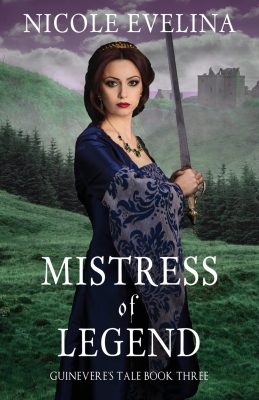
 In Mistress of Legend, the enticing finale of Nicole Evelina’s Guinevere’s Tale trilogy, matters are life-and-death by the second sentence, pulling readers deep into Guinevere’s fate in this retelling of Arthurian legend.

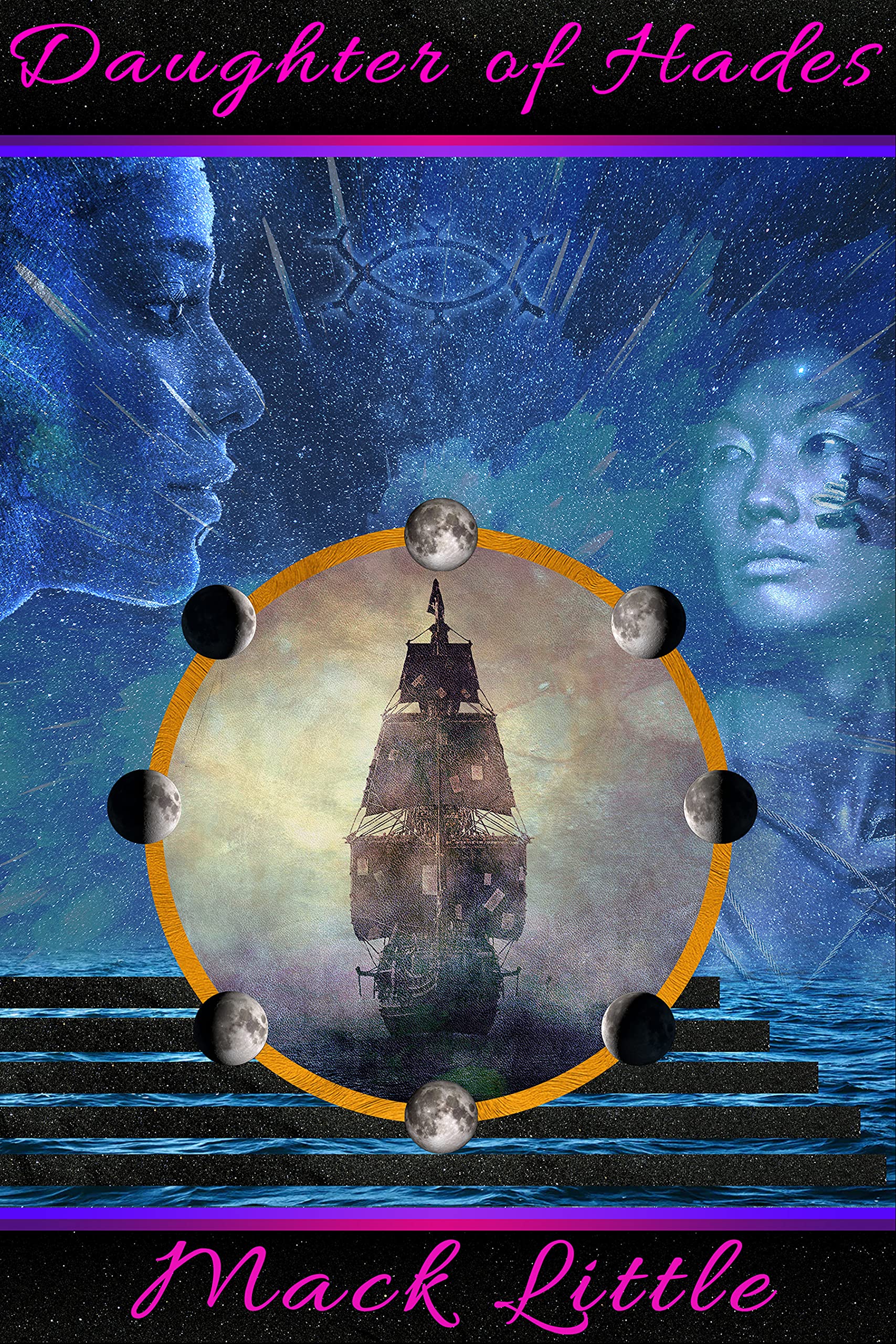


 Mack Little’s historical fiction novel Daughter of Hades explores the lives of slaves during the age of pirates.