The Chaucer Book Awards recognize emerging new talent and outstanding works in the genre of Early Historical (Pre- 1750) Fiction. The Chaucer Awards is a genre division of Chanticleer International Book Awards and Novel Competitions (The CIBAs).
The Chaucer Book Awards competition is named for Geoffrey Chaucer the author of the legendary Canterbury Tales. The work is considered to be one of the greatest works in the English language. It was among the first non-secular books written in Middle English to be printed in 1483.
Chanticleer International Book Awards is seeking the best books featuring Pre-1750s Historical Fiction, including pre-history, ancient history, Classical, world history (non-western culture), Dark Ages and Medieval Europe, Renaissance, Elizabethan, Tudor, 1600s, we will put them to the test and choose the best among them.
These titles have moved forward from the 2025 Chaucer Long List to the 2025 Chaucer Awards SHORT LIST. These entries are now in competition for the 2025 Chaucer Award Semi-Finalists. FINALISTS will be chosen from the Semi-Finalists and recognized at the Chanticleer Authors Conference, CAC26.
We will announce the 1st Place Category winners and Grand Prize Division Winners at the CIBAs Banquet and Ceremony on Saturday, April 18th, 2026 in beautiful Bellingham, WA at the 2026Chanticleer Authors Conference.
These titles are in the running for the SEMI-FINALISTS of the 2025 Chaucer Book Awards novel competition for Pre-1750s Historical Fiction!
Join us in cheering on the following authors and their works!
Adam Alexander Haviaras – A Dragon Among the Eagles: a Novel of the Roman Empire
Anne M. Beggs – By Arrow and Sword: Book Two Dahlquin Series
Barbara Stark-Nemon – Isabela’s Way: a Novel
Bryce Gibby – Esta
Chuck Locklear – The Pines Know
Elizabeth Clifford Murphy – The Faithful Harlot
Erryn Lee – What Remains
Fawn Brokaw Doyle – Salt People of the Cloud Houses: the Story of Sarah Rapalje and Dutch Manhattan
Gregory Michael Nixon – Diomedes in Kyprios
Gregory Michael Nixon – The Diomedeia: Diomedes, the Peoples of the Sea, and the Fall of the Hittite Empire
Helena P. Schrader – The Tale of the English Templar
J. M. Elliott – Of Wind and Wolves
J. Susanne Wilson – The Death and Life of Iphigenia
J.C. Corry – The Storyteller’s Reputation: Geoffrey Chaucer, Reluctant Spy
Janet Wertman – Nothing Proved
Jean K. Dudek – The Scent of Bright Light
K.M. Butler – The Raven and the Dove
Keira Morgan – The Importance of Wives
Kim Gottlieb-Walker – Caterina by Moonlight
Lisa Llamrei – Quest for Ma’at
Liz Sevchuk Armstrong – To Be Worthy in Honor: Book II of the Epic of Hotspur
Logan D. Irons – City of Wolves
Marcia Maxwell – I, Christine: a Novel
Michael J. Cooper – The Rabbi’s Knight
Michaela Riley – Labyrinth of Shadows: the Witch’s Rebirth Part I
Nina Wachsman – The Courtesan’s Pirate
Rachel Elwiss Joyce – Lady of Lincoln
Richard G Nixon – The Legend of Fingerless Will Nixon: the Scottish Borderlands 1508-1509
Sarah V. Barnes – She Who Rides Horses: A Saga of the Ancient Steppe Book One
Sarah V. Barnes – A Clan Chief’s Daughter: She Who Rides Horses Book Two
Sonya Van De Graaff – The Painter From Seville
Congratulations once more to the 2024 Chaucer Grand Prize Winner for Historical Fiction
Seating is Limited. The esteemed WRITER Magazine (founded in 1887) has repeatedly recognized the Chanticleer Authors Conference as one of the best conferences to attend and participate in for North America.
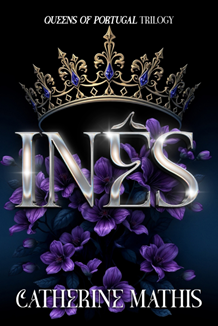
Inspired by a true story, Catherine Mathis’s incredible novel, Inês: The Queens of Portugal Trilogy, follows the forbidden love of Ines de Castro and Infante Pedro, and their indelible connection to one another even after a most tragic death.
Alfonso, the rightful heir to the Portuguese throne in Chao da Feira Palace in Santarem, nearly loses his crown to his stepbrother. Goncalves, a courtier, rescues the situation, earning him the king’s undying loyalty. Alfonso puts his son Pedro under Goncalve’s care to learn the moral code and values of the royal court. As the heir to the Portuguese throne and an only child, his father arranges a royal union for him with Infanta Constanza, a Castilian noblewoman.
Love, however, does not conform to alliances or compromise. The arrival of 15-year-old Ines de Castro of Castile in 1339, a lady-in-waiting to Infanta Constanza, creates a precarious rift between a father and his son. Pedro falls madly in love with Ines despite being already married to Constanza. He begins an affair that displeases the king and fuels palace gossip among the nobles. Fearing for the independence of his nation and possible revolts, King Alfonso is forced to take drastic measures that fan power struggles, betrayal, dishonor, and even death.
Catherine Mathis takes a blazingly smart and deep dive into an era of history that still resonates today.
With rich, robust, and evenly matched characters, she offers a historically accurate plot that is voyeuristic in all the right ways. Being fictionalized, in part, there is a lot to relish in the author’s creative craft, such as the introduction of minor characters who propel the plot into a sweeping conclusion. Plunging readers into the royal heart of a love story that has shaped history, Inês: The Queens of Portugal Trilogy is sublimely sensual with a captivating sense of charm.
Although it has a well-trodden conflict alongside it, this romance between a royal heir and a lady-in-waiting will gratify readers. Mathis excels through an abundance of tense and evocative dialogue, balancing it with the right amount of lively banter. The result is a tour de force that is surefooted and rich in human emotion.
The book’s details are brilliant and perceptible, whether they are used to describe the culture, sounds, attitudes, or smells of 14th-century Portugal.
The text’s most imperative scenes, within the palace walls, exude the intrigues of an institution that influences every sphere of society.
Inês: The Queens of Portugal Trilogyis a compact tale of love, loss, vengeance, and justice, delivering a swift kick to the heart. Exquisitely researched and told at a rapid pace, Mathis’s debut offering is a sweep of grace and virtuosity in its genre.
The Chaucer Book Awards recognize emerging new talent and outstanding works in the genre of Early Historical (Pre- 1750) Fiction. The Chaucer Awards is a genre division of Chanticleer International Book Awards and Novel Competitions (The CIBAs).
The Chaucer Book Awards competition is named for Geoffrey Chaucer the author of the legendary Canterbury Tales. The work is considered to be one of the greatest works in the English language. It was among the first non-secular books written in Middle English to be printed in 1483.
Chanticleer International Book Awards is seeking the best books featuring Pre-1750s Historical Fiction, including pre-history, ancient history, Classical, world history (non-western culture), Dark Ages and Medieval Europe, Renaissance, Elizabethan, Tudor, 1600s, we will put them to the test and choose the best among them.
These titles have moved forward from all of the 2025 Chaucer entries to the 2025 Chaucer Awards LONG LIST. These entries are now in competition for the 2025 Chaucer Award Short List. Short listers compete for the Semi-Finalist positions. FINALISTS will be chosen from the Semi-Finalists and recognized at the Chanticleer Authors Conference, CAC26.
We will announce the 1st Place Category winners and Grand Prize Division Winners at the CIBAs Banquet and Ceremony on Saturday, April 18th, 2026 in beautiful Bellingham, WA at the 2026Chanticleer Authors Conference.
These titles are in the running for the SHORT LIST of the 2025 Chaucer Book Awards novel competition for Pre-1750s Historical Fiction!
Join us in cheering on the following authors and their works!
Adam Alexander Haviaras – A Dragon Among the Eagles a Novel of the Roman Empire
Albert A. Bell Jr. – Archippos the Trembler a Novel of Ancient Sparta
Anne M. Beggs – By Arrow and Sword Book Two Dahlquin Series
Barbara Stark-Nemon – Isabela’s Way a Novel
Bryce Gibby – Esta
Chuck Locklear – The Pines Know
Elizabeth Clifford Murphy – The Faithful Harlot
Erryn Lee – What Remains
Fawn Brokaw Doyle – Salt People of the Cloud Houses the Story of Sarah Rapalje and Dutch Manhattan
Gregory Michael Nixon – Diomedes in Kyprios
Gregory Michael Nixon – The Diomedeia: Diomedes, The Peoples of the Sea, and the Fall of the Hittite Empire
Helena P. Schrader – The Tale of the English Templar
J. M. Elliott – Of Wind and Wolves
J. Susanne Wilson – The Death and Life of Iphigenia
J.C. Corry – The Storyteller’s Reputation: Geoffrey Chaucer Reluctant Spy
Jane Bitomsky – A Foundling’s Lot
Janet Wertman – Nothing Proved
Jay A. Cornils – A Litany of Angels
Jean K. Dudek – The Scent of Bright Light
K.M. Butler – The Raven and the Dove
Keira Morgan – The Importance of Wives
Kim Gottlieb-Walker – Caterina by Moonlight
Lisa Llamrei – Quest for Ma’at
Liz Sevchuk Armstrong – To Be Worthy in Honor Book II of the Epic of Hotspur
Lizzie Jenks – Devil in Our Hearts
Logan D. Irons – City of Wolves
Marc Ladewig – The King of the Wood
Marcia Maxwell – I, Christine a Novel
Michael J. Cooper – The Rabbi’s Knight
Michaela Riley – Labyrinth of Shadows the Witch’s Rebirth Part I
Nina Wachsman – The Courtesan’s Pirate
Rachel Elwiss Joyce – Lady of Lincoln
Richard G Nixon – The Legend of Fingerless Will Nixon the Scottish Borderlands 1508-1509
Sarah V. Barnes – She Who Rides Horses: A Saga of the Ancient Steppe Book One
Sarah V. Barnes – A Clan Chief’s Daughter: She Who Rides Horses Book Two
Sonya Van De Graaff – The Painter From Seville
Congratulations once more to the 2024 Chaucer Grand Prize Winner for Historical Fiction
Seating is Limited. The esteemed WRITER Magazine (founded in 1887) has repeatedly recognized the Chanticleer Authors Conference as one of the best conferences to attend and participate in for North America.
Only 5 days left to submit your books to these prestigious CIBA Divisions and begin your journey to discovery. The deadline is 8/31/25. Now is the time to make your mark!
The Chaucer, Goethe, Laramie and Hemingway Awards are still open!
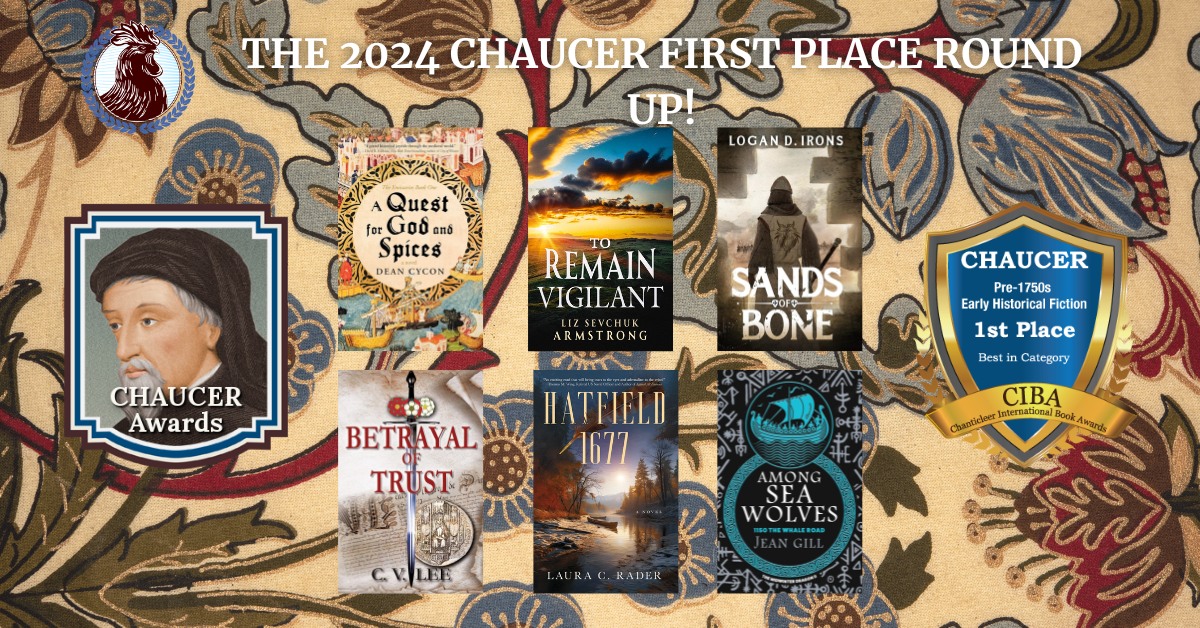
Congratulations to the 2024 Winners of the Chaucer Award for Early Historical Fiction!
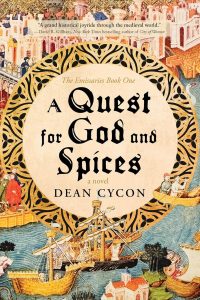
Dean Cycon –A Quest for God and Spices
Liz Sevchuk Armstrong –To Remain Vigilant
Rozsa Gaston –Anne Boleyn at Margaret of Austria’s Court
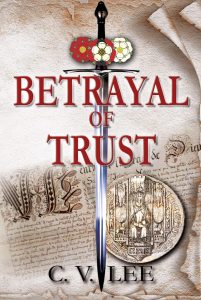
C.V. Lee –Betrayal of Trust
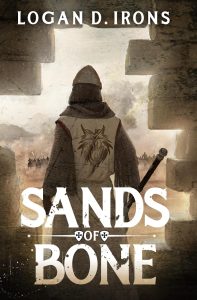
Logan D. Irons –Sands of Bone
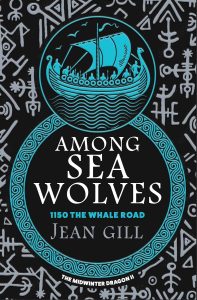
Jean Gill –Among Sea Wolves
Laura C. Rader –Hatfield 1677
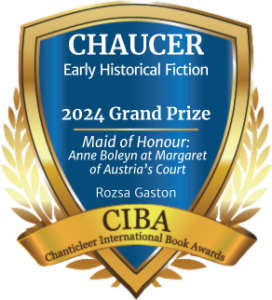
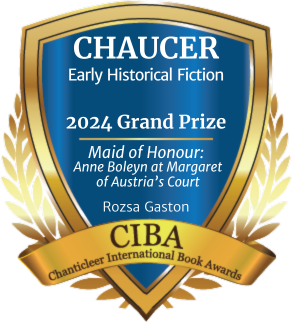
And a round of applause for the 2024 Chaucer Grand Prize Winner!
Maid Of Honour
Anne Boleyn at Margaret of Austria’s Court
By Rozsa Gaston
Congratulations to the 2024 Winners of the Goethe Award for Late Historical Fiction!
Janis Robinson Daly – The Path Beneath Her Feet
Sandra Wagner-Wright – Sea Tigers & Merchants: A New American Generation
James Conroyd Martin – Napoleon’s Shadow Wife: A Novel of Countess Marie Walewska
Florence Reiss Kraut – Street Corner Dreams, A Novel
Leo Daughtry – Talmadge Farm
Jeza Belle – Blood Rouge
R.W. Meek – The Dream Collector, Book II “Sabrine & Vincent van Gogh”
Sherry V. Ostroff – The Wall at the Sugar Factory
And a round of applause for our 2024 Goethe Grand Prize Winner!
Abigail’s Song
By Alina Rubin
Congratulations to the 2024 Winners of the Laramie Award for Americana Fiction!
David Fitz-Gerald –First Drive
Georgina Hogue –Cloud Cap
Heather Miller –Yellow Bird’s Song
C.M. Huddleston –Esther
Karen Lynne Klink –At What Cost, Silence? Book 1 of The Texian Trilogy
Charlie Steel –Tom Sharp: The Man and the Legend
Daniel Greene –Northern Shadows (Northern Wolf Series Book 5)
And a round of applause for our 2024 Laramie Grand Prize Winner!
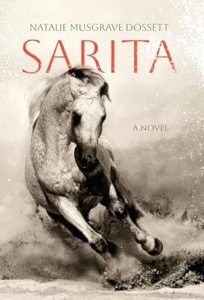
Sarita
By Natalie Musgrave Dossett
Congratulations to the 2024 Winners of the Hemingway Award for 20th and 21st Century Wartime Fiction!
R L Pace –Rising Son
Katherine Koch –The Sower of Black Field: Inspired by the True Story of an American in Nazi Germany
Tim Turner and Moisey Gorbaty –The Reluctant Conductor
Kay Smith-Blum –Tangles
Kathryn Gauci –Midnight in Istanbul
Travis Davis –One of Four: World War One Through the Eyes of an Unknown Soldier
Bharati Sen –My War, My Child
H. W. “Buzz” Bernard –When Heroes Flew
And a round of applause for our 2024 Hemingway Grand Prize Winner!
Of White Ashes
By Constance Hays Matsumoto and Kent Matsumoto
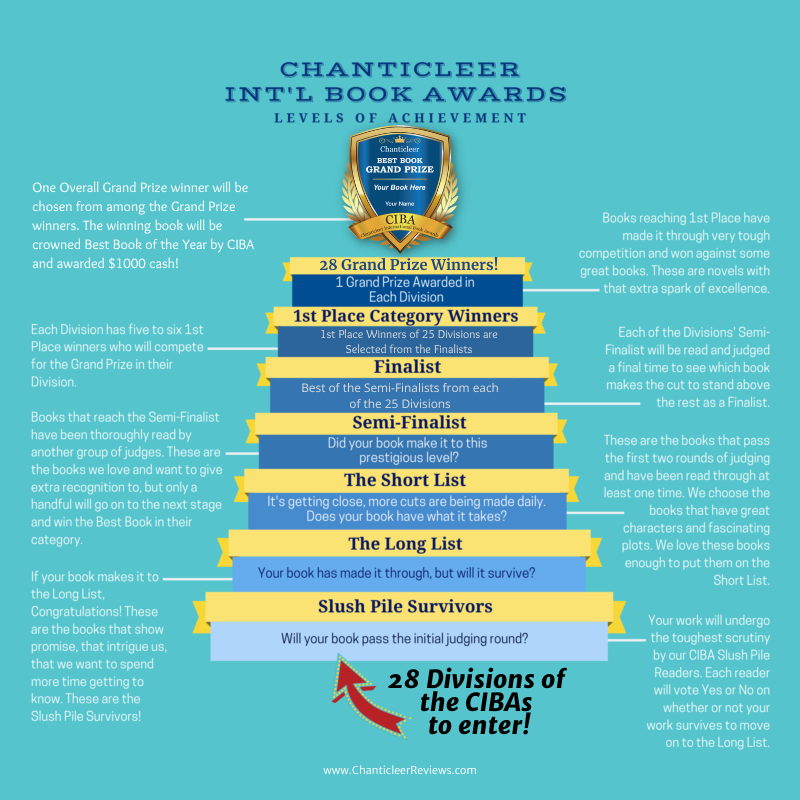
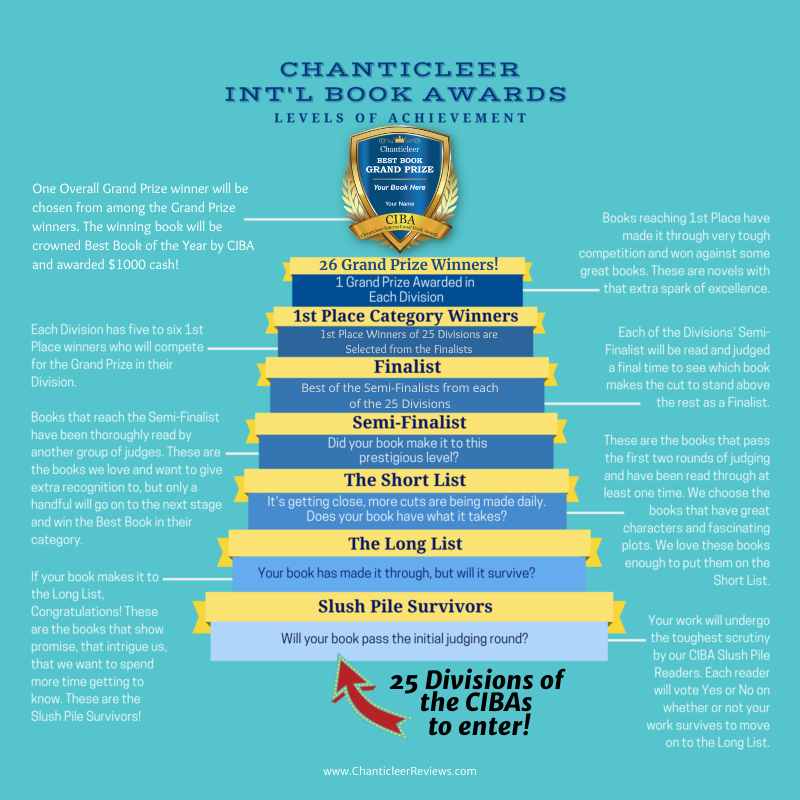
The CIBAs offer a ladder to success with a range of achievement tiers and expert long tail marketing strategies. From the highly anticipated Long List to the prestigious Overall Grand Prize Winner, the CIBA lists energize both authors and readers, maximizing your digital footprint and expanding your fan base.
We are always eager to support the Best Books through the CIBAs. Join the ranks of celebrated authors who have already taken this critical step in their publishing.
Your book deserves to be discovered, celebrated, and shared with the world. Don’t miss the chance to showcase your talent and gain valuable exposure at the Chanticleer Authors Conference (April 17-19, 2026) where Winners from all 28 Book Award Divisions will be announced and honored.
Your story deserves to be heard. Submit now and leave a lasting impression.
You have until August 31st to submit your story and enter the 2025 CIBAs!
Named for Geoffrey Chaucer, author of the Canterbury Tales (and Name giver of a certain rooster named Chanticleer), This Division was our first Historical Fiction category. Due to us receiving so many amazing Historical Fiction submissions, we had to split it into a few more Divisions. For Post 1750 History, see The Goethe Awards. For 20th and 21st Century Wartime History, see The Hemingway Awards. For Western and Americana History, see The Laramie Awards.
Let’s Take a look back in more recent history at the Grand Prize Winners of the Chaucer Award!
Maid of Honour: Anne Boleyn at Margaret of Austria’s Court Book 1 of the Anne Boleyn Chronicles
By Rozsa Gaston
Our newest Grand Prize Winner has a release date for Early August, and we are very excited to see it come out!
Anne Boleyn’s path to Henry VIII’s heart—and the throne—begins not in France, but at the court of Europe’s most powerful woman, Margaret of Austria.
Anne enters the world of the Burgundian-Habsburg Netherlands as one of Margaret’s eighteen maids of honour, who thrive under the guidance of their highly intelligent ruler.
Anne struggles with cliques and jealousies at court, and when Erasmus of Rotterdam arrives with ideas of reform, Anne starts to question tradition and sets her sights high, determined to leave her mark on the world.
But political machinations intervene, cutting short Anne’s time at Margaret’s court, and launching her to France.
Armed with the skills learned under the Netherlands’ brilliant ruler, Anne inches closer to her destiny…
Can she achieve her ambitious desires? Will Margaret’s formidable example influence Anne’s future?
Or will this young maid struggle to blossom in a man’s world…?
Joshua Ibn Elazar, the eager son of a Jewish merchant, travels to al-Andalus (the Iberian Peninsula under Muslim rule) to prove himself in his father’s business. But he finds an unwelcoming, degrading society waiting for him, and begins a journey of misfortune and anger in James Hutson-Wiley’s historical fiction novel, The Merchant from Sepharad.
Shortly after arriving in the city of Lishbunah, al-Andalus, Joshua is tricked out of the gold for his living expenses. Worse yet, he learns that Jews in Lishbunah suffer under oppressive laws, holding far less status than Muslim citizens. He can only find help in Lishbuna’s Jewish community, meeting Rabbi Hiyya al-Daudi and his son Yaish, who house and feed him.
They tell him that his father’s colleague, Essua, who was to help Joshua manage a shipment of flax and sugar, has been arrested. Though Essua is eventually released, Joshua fails to secure storage for his goods, as the makhzan (warehouse) he rented is given to a Muslim merchant instead. In his fury at the city’s prejudice, he sets fire to the makhzan, and is forced to flee.
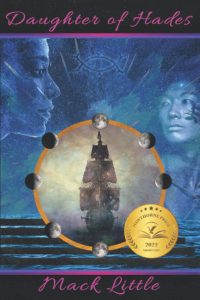
Mack Little’s historical fiction novel Daughter of Hades explores the lives of slaves during the age of pirates.
Little’s research shines in her thoughtful presentation of the Caribbean islands, the escaped slaves who found freedom amongst them, the lives of buccaneers and maroons, and their daring and dangerous exploits.
On the first page, Little introduces us to Geraldine, or “Dinny”, running for her life from her owner, Owen Craig, who has just raped her.
Dinny’s father had arranged for her to be removed from the plantation before Craig molested her, but he’d miscalculated Craig’s lust. Dinny is rescued by her twin brother, Jimmie, and Leixiang, and taken to the Hades, a pirate ship captained by the buccaneer Duff.
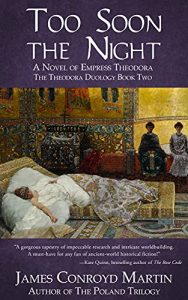
Too Soon the Night by James Conroyd Martin shows the thrilling heights to which Empress Theodora rose and the crushing depths to which she fell, in the latter half of her life. This story picks up from Fortune’s Child, the first volume of this epic duology.
This half of Theodora’s incredible journey opens at its close – as she succumbs to the cancer that drove her to dictate the record of her life. She left the task of recording her meteoric rise from actress to empress in the hands of the scribe and historian Stephen, even though she imprisoned him for several years out of fear that he would reveal her greatest secrets.
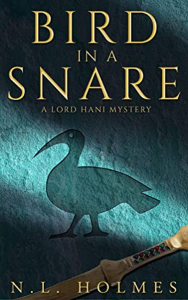
Politics is a deadly game in the days of Kings and their competing 14th-century B.C. Egyptian factions. Official diplomat, Lord Hani, is on a royal assignment when he discovers even the king’s motives are suspect. Hani begins to fear for the welfare of his family and himself, as he gets a sinking feeling that the hunter has become the hunted. He’s the live bait, the Bird In A Snare.
Can Lord Hani find out who is responsible for the mysterious assassinations and the shifting armies’ alliances before becoming the one they target next?
The Chaucer Book Awards recognize emerging new talent and outstanding works in the genre of Early Historical Fiction. The Grand Prize Winner, Rozsa Gaston’s book, Maid of Honour will be promoted for years to come in our annual Hall of Fame article, as well as be featured on the Chaucer contest page year ’round!
The best part about being a Chanticleer Int’l Book Award Winner is the love and attention you get all year ‘round!
A Quest for God and Spices begins an epic journey across the ancient world. In the year AD 1200, a new pope agitates for a renewed crusade to reconquer Muslim-controlled Jerusalem. European monarchs largely ignore his call, too involved with squabbles among themselves. The pope chooses two men-Brother Mauro, an older monk, and Nicolo, a young, striving merchant-to traverse the treacherous political, religious, and mercantile terrain of medieval Europe and the Byzantine Empire to seek out the powerful Presbyter John, a mysterious king in the Far East who has promised to put his wealth and vast armies to the service of the pope’s crusade. Nicolo’s task is to guide Mauro, but a corrupt cardinal has secretly charged the young man with finding the source of the precious spices that ensure the Venetian and Arab trade monopoly. Nicolo’s youthful exuberance, carelessness, and desire to be important jeopardize their mission, while Mauro’s knowledge of scripture and pagan works has not prepared him for the schemes of doges and emirs, clergymen and kings.
As Sir Harry Percy patrols England’s rugged North, even the Scots, his frequent adversaries, admire his audacity and courage. Claiming his ceaseless vigilance means his spurs never cool, they call him Hotspur.Yet when Harry questions royal corruption, Richard II bestows another name: traitor.
Escaping death, Harry joins Duke Henry Bolingbroke, whose fortune Richard stole and who leads a campaign to improve Richard’s governance. Soon, though, Henry, too, acts despotic, ordering executions without fair trials and plotting to seize power directly. Alarmed, Harry exacts a vow from him to notoust Richard. But Henry violates his oath, inciting a mob to force Parliament to make him King Henry IV. Harry boycotts Henry’s coronation but, realizing he serves the nation regardless of who wears the crown, later returns to duty, with Henry’s backing.
Will their reconciliation last? And can Harry’s newfound love with an ex-abbess protect him not only from threats on the borders but those in dark palace corners? Never has his motto, Esperance—Hope—mattered more!
With his ancestral manor in ruins, Philippe strives to forge a new family legacy. But a relentless knave is determined to cause his downfall.
1470, Isle of Jersey. Heart-broken by his father’s death, Philippe returns home to shoulder the hereditary mantle of seigneur. Coming of age during an oppressive occupation, he aspires to reconstruct the fiefdom based on values of prosperity and compassion.
Despite his misgivings, he acquiesces to the arranged marriage with the new governor’s daughter, Margaret. She brings with her a substantial dowry that will help him achieve his objectives. As love blossoms between them, life seems perfect.
However, a longtime rival lurks, determined to thwart Philippe at every turn. As Philippe’s power and influence on the island grows, their quarrel escalates to new levels of treachery. When the feud turns deadly, can Philippe survive the ordeals that await and safeguard the future for his family?
Betrayal of Trust is the riveting second novel in The de Carteret Chronicles: Legacy of Rebels historical fiction series and tells the story of Margaret Harleston, one of the island’s heroines. If you like political intrigue, treachery, and formidable adversaries, prepare to be captivated by this true tale of bravery.
Ninety years have passed since the Christians wrested control of Jerusalem from their foes, and the Kingdom of Jerusalem’s army is a pile of corpses strewn about the Horns of Hattin. The few survivors stumble back for the only place of refuge spared of Saladin’s wrath, Jerusalem.
Robert Cutnose reluctantly joins with the Lord Balian de Ibelin in an attempt to defend a city of refugees from Saladin’s army. Both men have drawn the ire of old enemies within the Order who secretly wish to bring them down. And hidden within Saladin’s ranks, assassins lurk, cultivating their own end to the conflict. Even while the city teeters on the brink of annihilation, a princess seeks to assert her birthright over the crown. The fate of Cutnose and the Kingdom of Jerusalem hangs by a thread, and there is no guarantee of survival of anyone involved.
Continue the gritty war-torn journey through the crusades and the Noctis Bellum, a shadow war spanning centuries between the Order and the Hunted.
1150: The Whale Road. An epic medieval adventure, set in the Viking world of 12th century Orkney. To change their doom, Skarfr and Hlif must pay the price.
Warrior-poet Skarfr embarks on a death-defying pilgrimage with his ruler, Jarl Rognvald, from the wind-whipped shores of Orkney to the Holy Land. He is one of the few men trusted by the Jarl, whether facing sea-monsters or murder.
Fifteen ships sail on the ‘whale road’ in the pilgrims’ fleet. The only woman among the ‘sea wolves’, Hlif is respected as much for her practical skills as for her mystical gifts. Yet beneath her indomitable façade lies a secret – she is handfasted to Skarfr, their love forbidden by the Jarl’s decree.
As tensions rise, Skarfr is torn between fealty to his Jarl and devotion to Hlif. One oath must be broken but which one? How can he steer a course between loyalty and love without losing his honour?
Also a 2024 Chanticleer Cover Design Award First Place Winner!
Colonist Benjamin Waite, a devoted husband, father, and skilled military scout in King Philip’s War, reluctantly obeys orders to guide a brutal attack against a camp of Algonquian Natives.
After the catastrophic event, Benjamin is burdened with guilt and longs for peace. But the Algonquians, led by the revered sachem Ashpelon, retaliate with vengeance upon Ben’s Massachusetts town of Hatfield, capturing over a dozen colonists, including his pregnant wife Martha and their three young daughters.
Hatfield 1677 is a tale of three interwoven yet diverging journeys of strength and survival. Benjamin is driven by love and remorse to rescue his family; Martha is forced into captivity and desperately striving to protect her children; and Ashpelon is willing to risk everything to ensure the safety and freedom of his people.
Based on the lives of the author’s ancestors, this riveting and unforgettable novel gives voice to three vastly different experiences in North America during a time before the creation of the Declaration of Independence. Then, the land was but a wilderness and a battleground; equality was not yet perceived as self-evident; and liberty and happiness were nothing more than dangerous pursuits.
In an age when stories spread by firelight and traveling minstrels, when legends were born from whispered tales and historical truth blended seamlessly with mythic storytelling, Geoffrey Chaucer understood the power of narrative to capture both the spirit of an age and the eternal human condition. The Chaucer Awards, inspired by the great poet whose “Prior’s Tale” gave Chanticleer its very name, celebrate this same tradition and honoring authors who bring the distant past to vivid life through masterful storytelling.
As Chanticleer’s first historical fiction division, the Chaucer Awards represent our foundational commitment to discovering exceptional historical narratives. From the mists of pre-history through the grandeur of the Renaissance, these awards recognize the unique artistry required to transform ancient civilizations, legendary figures, and distant eras into compelling contemporary fiction.
The Art of Ancient Storytelling
Writing early historical fiction demands extraordinary imagination and research skills. Authors must recreate worlds where written records are scarce, daily life was vastly different from our own, and the very foundations of modern society were still being formed. These storytellers serve as literary archaeologists, piecing together fragments of history, legend, and human nature to create authentic worlds that feel both historically grounded and emotionally true.
The best early historical fiction doesn’t just transport readers to distant times—it reveals the timeless aspects of human experience that connect us across millennia. Whether exploring the political intrigue of Tudor courts, the epic journeys of Celtic heroes, or the daily struggles of medieval peasants, these stories illuminate how courage, love, ambition, and family loyalty have remained constant throughout human history.
The challenge of early historical fiction lies in making ancient worlds accessible to modern readers while respecting the fundamental differences in how people thought, believed, and lived in earlier eras. The most successful works achieve this delicate balance, creating stories that feel authentically historical yet emotionally immediate.
Celebrating Our 2024 Grand Prize Winner!
We’re delighted to honor Rozsa Gaston, whose meticulously researched novel Maid of Honour: Anne Boleyn at Margaret of Austria’s Court claimed the 2024 Chaucer Grand Prize with a fresh perspective on one of history’s most infamous queens. Set in 1513 Europe, the novel follows young Anne Boleyn during her formative time as one of eighteen maids of honor at the court of Margaret of Austria, Europe’s most powerful woman, before her fateful journey to France and eventually to Henry VIII’s court.
Gaston’s work exemplifies the scholarly depth and narrative skill that defines exceptional early historical fiction, exploring how Anne’s ambitious character was shaped by her early experiences with political intrigue, intellectual reform, and the complex dynamics of European court life. As one reviewer noted, this is “a young Anne in whom I absolutely believe, and who does much to explain the woman she’d become.” In addition to ongoing promotional features, Maid of Honour will be regularly promoted throughout the year and for the next five years in our upcoming Hall of Fame posts. Rozsa Gaston will also be invited to participate in a Chanticleer 10-Question Interview, and Maid of Honour will receive a coveted Chanticleer Editorial Review.
Categories That Span the Ancient World
The Chaucer Awards welcome early historical fiction across the full spectrum of pre-1750s history:
Pre-Historical Fiction – Stories from before recorded history, exploring humanity’s earliest experiences
Ancient Historical Fiction – Classical civilizations of Greece, Rome, Egypt, and other ancient empires
Dark Ages, Medieval, Renaissance – The transformative periods that bridged ancient and modern worlds
Elizabethan/Tudor – The golden age of English history and literature
1600s – The century of exploration, scientific revolution, and political upheaval
World/International History Pre-1750s – Global perspectives on early historical periods
Americas – Historical Fiction Pre-1750s – Stories from the indigenous and colonial Americas
Legend Based pre-1750s Historical Fiction – Arthurian tales, Beowulf, and other mythic narratives
Norse/Celtic – Stories from the rich traditions of northern European cultures
Each category represents a different window into humanity’s distant past, from intimate personal stories to epic tales of kingdoms and empires.
Explore All of Our Historical Fiction Divisions
The Chaucer Awards anchor Chanticleer’s comprehensive celebration of historical fiction across all time periods:
Whether your historical fiction explores recent decades or the distant past, Chanticleer offers recognition for every period and perspective.
Looking at Early Historical Excellence
Check out some of these outstanding early historical fiction works we’ve celebrated recently!
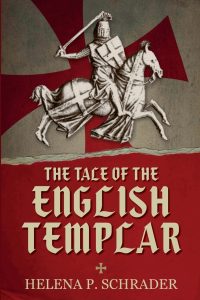
The Tale of the English Templar
By Helena P. Schrader
Far from the romantic legends of King Arthur and the Knights of the Round Table, Helena P. Schrader’sThe Tale of the English Templarfaithfully captures the harsh decimation of the Knights Templar. Schrader offers a sobering, immersive look at one of history’s darkest betrayals. This is historical fiction worthy of legend with its feet planted firmly in research—not myth.
Set in the early 14th century, the novel captures the downfall of the Knights Templar at the hands of French King Philip IV. With the Pope’s reluctant cooperation, the Templars are accused of heresy and tortured until they confess to crimes they didn’t commit. The king’s true motive? Their immense wealth.
Among those captured is Sir Percy de Lacy, an English Templar who is swept up in a raid by local French soldiers and caught in a mass arrest on Friday, October 13th, 1307. What follows is a harrowing account of imprisonment, torture, and unlikely survival.
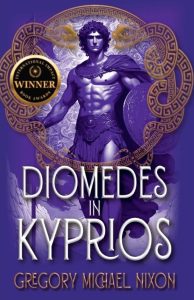
Gregory Michael Nixon’sDiomedes in Kyprios, book 2 in the DiomedeiaSeries,continues the adventures of the godlike yet all too human hero, Diomedes of Tiryns, as he seeks to discover a meaningful destiny in the chaos of the Bronze Age Collapse.
We begin after the fall of the Hittite Empire, four years after the destruction of Troy. He emerges from the dark river that runs through the underworld where the sacrifice of the Hittite Great King has just occurred, and he has rescued the Hittite Queen from certain death. Nearly drowned but still alive, he recalls only that he had vowed to reunite with the former Queen of the Hittites, the woman he loves named Lieia, at Paphos on the island of Kyprios (ancient Cyprus).
Lieia must undergo her own “odyssey” to get to Paphos to meet Diomedes. She depends on her band of protectors, but they pay for fare aboard a ship with evil men who cannot be trusted.
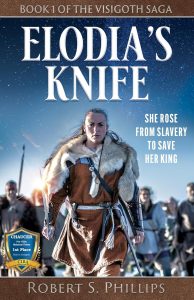
Elodia is a young woman driven by dreadful circumstances to act with deadly force in the Robert S. Phillips novelElodia’s Knife.
What Elodia hoped would be her leap away from danger instead left her surrounded by perilous threats that now threaten to consume her. Armed with her courage, determination, instincts, and a trusty knife, Elodia faces a hostile world in foreign territory.
Not all are against her though. Allies– even a friend– can be found, if Elodia can summon the bravery to listen to her feelings and own deep wishes.
Young Elodia is unhappily married to an abusive husband. But when he tries to attack her again, she strikes back and kills him.
Shelter in a Hostile World, second installment in Mack Little’s Love and Peace series, is an epic tale of resistance, desire, and tragedy, saturating readers in the complexity of Igbo culture.
Little paints a character-rich portrait of the horrors of enslavement and the unthinkable violence against women in the Caribbean, locking people together in relationships molded by adversity.
Set in 17th century Igboland—the invaded region of Nigeria — and on the island of Barbados, Shelter in a Hostile World is a searingly brief novel packed with mesmerizing prose. It blends genres to create a literary language entirely its own.
Throughout Little’s story, readers follow the life and loves of Badu Obosi, a haunted revolutionary escaping enslavement to protect his daughter from sexual violence.
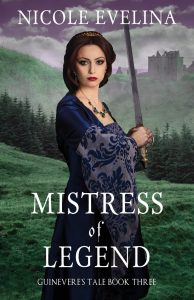
InMistress of Legend, the enticing finale of Nicole Evelina’sGuinevere’s Taletrilogy, matters are life-and-death by the second sentence, pulling readers deep into Guinevere’s fate in this retelling of Arthurian legend.
We come upon heroine Guinevere in the midst of an ill-fated romance with Lancelot. It’s far from her first troubled entanglement, but the stakes rise as she’s severely injured and faces even more threats, pursued by possible enemies. The novel’s beginning is woven with backstory, which adds suspense to the drama unfolding in Guinevere’s present. This summarizing might be slow for readers familiar with the series, but makes the story accessible for those who haven’t picked up the first two books.
Many more characters appear, waving the web of intrigue Guinevere finds herself caught in.
These works demonstrate how the best early historical fiction combines rigorous research with compelling storytelling to bring ancient worlds to vivid life.
See the Chanticleer Difference for Yourself!
We’re excited about all the exceptional early historical fiction we receive every year for both the CIBAs and for our Editorial Reviews. The Chanticleer International Book Awards offers an incredible $30,000 in cash, prizes, and promotion across all divisions!
The Chaucer Awards recognize the extraordinary scholarship and imagination required to recreate distant worlds and ancient civilizations. Whether you’ve spent years researching medieval manuscripts, exploring archaeological evidence, or reimagining legendary tales, these awards celebrate both your historical dedication and narrative artistry.
Your Ancient Tale Awaits
Great early historical fiction serves as a bridge between past and present, helping modern readers understand both how much the world has changed and how much human nature remains constant. Whether your story unfolds in a medieval castle, an ancient marketplace, or the legendary courts of Arthurian Britain, the Chaucer Awards celebrate the authors who keep the distant past alive through the power of exceptional storytelling.
The Chaucer Book Awards recognize emerging new talent and outstanding works in pre-1750s Historical Fiction. The Chaucer Book Awards is a division of the Chanticleer International Book Awards (The CIBAs).
The Chaucer Book Awards competition is named for Geoffrey Chaucer the author of the legendary Canterbury Tales. The work is considered to be one of the greatest works in the English language. It was among the first non-secular books written in Middle English to be printed in 1483.
Chanticleer International Book Awards is seeking for the best books featuring Pre-1750s Historical Fiction, including pre-history, ancient history, Classical, world history (non-western culture), Dark Ages and Medieval Europe, Renaissance, Elizabethan, Tudor, 1600s, we will put them to the test and choose the best among them.
The other three Historical Fiction Genres are the Laramie Awards for Americana Fiction, the Goethe Awards for Late Historical Fiction, and the Hemingway Awards for 20th c. Wartime Fiction.
1st Place Category winners and Grand Prize Division Winners were announced at the CIBAs Banquet and Ceremony by James Conroyd Martin on Saturday, April 5th, 2025 at the Bellingham Yacht Club in Bellingham, Wash. sponsored by the 2025 Chanticleer Authors Conference.
This is the OFFICIAL 2024 LIST of
the CHAUCER BOOK AWARDS First Place Category Winners
and the CHAUCER Grand Prize Winner.
Congratulations to the FIRST PLACE CATEGORY WINNERS of the CHAUCER BOOK AWARDS for Pre-1750s Historical Fiction, a division of the 2024 CIBAs.
Dean Cycon – A Quest for God and Spices
Liz Sevchuk Armstrong – To Remain Vigilant
Rozsa Gaston – Anne Boleyn at Margaret of Austria’s Court
C.V. Lee – Betrayal of Trust
Logan D. Irons – Sands of Bone
Jean Gill – Among Sea Wolves
Laura C. Rader – Hatfield 1677
The Grand Prize Winner for the CIBA 2024 CHAUCER Awards is:
Attn CIBA Winners & Finalists: More goodies and prizes will be coming your way along with promotion in our magazine, website, and advertisements in Chanticleer Int’l Book Awards long-tail marketing strategy. Welcome to the CIBA Hall of Fame for Award Winners!
This post has been posted on the Chanticleer Facebook Page. We try to tag all authors listed here in the Facebook post. However, for Facebook to allow us to tag an author, that author must LIKE our page and Follow Chanticleer Reviews.
A Note to ALL the WINNERS: The coveted CIBA Blue Ribbons will be mailed out starting in June. We will contact you with an email to verify your mailing address and other items.
ALL the WINNERS: You will receive an OFFICIAL EMAIL NOTIFICATION with Digital Badges and more information.
NOTE: We will post at least two 2024 CIBA Divisions’ OFFICIAL Winners per business day starting April 14, 2025. We do a final sweep and reconciliation prior to making the Official CIBA Posts for the 2024 First Place and Grand Prize Winners. We thank you in advance for your patience and understanding. There are many moving parts involved with the Chanticleer International Book Awards Program.
Thank you for participating in the 2024 CIBAs! We are looking forward to reading your future entries.
Team Chanticleer
Any questions? Please email us at info@ChantiReviews.com We will try our best to reply within 3 business days Pacific Standard Time.
The Chaucer Book Awards recognize emerging new talent and outstanding works in the genre of Early Historical (Pre- 1750) Fiction. The Chaucer Awards is a genre division of Chanticleer International Book Awards and Novel Competitions (The CIBAs).
The Chaucer Book Awards competition is named for Geoffrey Chaucer the author of the legendary Canterbury Tales. The work is considered to be one of the greatest works in the English language. It was among the first non-secular books written in Middle English to be printed in 1483.
Chanticleer International Book Awards is seeking the best books featuring Pre-1750s Historical Fiction, including pre-history, ancient history, Classical, world history (non-western culture), Dark Ages and Medieval Europe, Renaissance, Elizabethan, Tudor, 1600s, we will put them to the test and choose the best among them.
These titles have moved forward from the 2024 CHAUCER Semi-Finalists to the 2024 Chaucer Book Awards FINALISTS. FINALISTS will be recognized at the Chanticleer Authors Conference, CAC25.
We will announce the 1st Place Category winners and Grand Prize Division Winners at the CIBAs Banquet and Ceremony on Saturday, April 5th, 2025 in beautiful Bellingham, WA at the Bellingham Yacht Club, hosted by the 2025Chanticleer Authors Conference.
These titles are in the running for the FIRST PLACE AND GRAND PRIZE WINNERS of the 2024 Chaucer Book Awards novel competition for Early Historical Fiction!
Join us in cheering on the following authors and their works!
Laura Gwendolyn Hill – The Saxon Sword the Song of Artemis Book One
Dean Cycon – A Quest for God and Spices
Liz Sevchuk Armstrong – To Remain Vigilant
Julie L. Brown – No One Will Save Us: A novel
Patrice Hapke – Summer of the Bear
Rozsa Gaston – Anne Boleyn at Margaret of Austria’s Court
Jessica Tvordi – The Schoolmaster
Malcolm David Logan – The Wind in the Embers – A Story of the Fall of Rome
C.V. Lee – Betrayal of Trust
Roxana Arama – The Exiled Queen: A Roman Era Historical Fantasy
Chuck Locklear – A Storm Coming
Logan D. Irons – Sands of Bone
Jean Gill – Among Sea Wolves
Peggy Joque Williams – Courting the Sun: A Novel of Versailles
M.N. Stroh – Rise of Betrayal
John D. Cressler – Merchants of Iniquity
Laura C. Rader – Hatfield 1677
Lisa Llamrei – Feather of Ma’at
PROMOTING OUR AUTHORS!
This post has been posted on the Chanticleer Facebook Page. We try to tag all authors listed here in the Facebook post. However, it is easier for us to tag authors when they have Liked and Followed us on Facebook.
Seating is Limited. The esteemed WRITER Magazine (founded in 1887) has repeatedly recognized the Chanticleer Authors Conference as one of the best conferences to attend and participate in for North America.
The Chaucer Book Awards recognize emerging new talent and outstanding works in the genre of Early Historical (Pre- 1750) Fiction. The Chaucer Awards is a genre division of Chanticleer International Book Awards and Novel Competitions (The CIBAs).
The Chaucer Book Awards competition is named for Geoffrey Chaucer the author of the legendary Canterbury Tales. The work is considered to be one of the greatest works in the English language. It was among the first non-secular books written in Middle English to be printed in 1483.
Chanticleer International Book Awards is seeking the best books featuring Pre-1750s Historical Fiction, including pre-history, ancient history, Classical, world history (non-western culture), Dark Ages and Medieval Europe, Renaissance, Elizabethan, Tudor, 1600s, we will put them to the test and choose the best among them.
These titles have moved forward from the 2024 CHAUCER Short List to the 2024 Chaucer Book Awards SEMI-FINALISTS. FINALISTS will be recognized at the Chanticleer Authors Conference, CAC25.
We will announce the 1st Place Category winners and Grand Prize Division Winners at the CIBAs Banquet and Ceremony on Saturday, April 5th, 2025 in beautiful Bellingham, WA at the Bellingham Yacht Club, hosted by the 2025Chanticleer Authors Conference.
These titles are in the running for the FINALISTS of the 2024 Chaucer Book Awards novel competition for Early Historical Fiction!
Join us in cheering on the following authors and their works!
Laura Gwendolyn Hill – The Saxon Sword the Song of Artemis Book One
Dean Cycon – A Quest for God and Spices
Liz Sevchuk Armstrong – To Remain Vigilant
Julie L. Brown – No One Will Save Us: A novel
Patrice Hapke – Summer of the Bear
Jessica Russell – Hot Winter Sun
J.C. Corry – The Storyteller’s War
Rozsa Gaston – Anne Boleyn at Margaret of Austria’s Court
Jessica Tvordi – The Schoolmaster
Malcolm David Logan – The Wind in the Embers – A Story of the Fall of Rome
C.V. Lee – Betrayal of Trust
Roxana Arama – The Exiled Queen: A Roman Era Historical Fantasy
Chuck Locklear – A Storm Coming
Logan D. Irons – Sands of Bone
Johnny Teague – The Lost Diary of Mary Magdalene
Jean Gill – Among Sea Wolves
Peggy Joque Williams – Courting the Sun: A Novel of Versailles
M.N. Stroh – Rise of Betrayal
John D. Cressler – Merchants of Iniquity
Laura C. Rader – Hatfield 1677
Lisa Llamrei – Feather of Ma’at
PROMOTING OUR AUTHORS!
This post has been posted on the Chanticleer Facebook Page. We try to tag all authors listed here in the Facebook post. However, it is easier for us to tag authors when they have Liked and Followed us on Facebook.
Seating is Limited. The esteemed WRITER Magazine (founded in 1887) has repeatedly recognized the Chanticleer Authors Conference as one of the best conferences to attend and participate in for North America.

 The Chaucer Book Awards recognize emerging new talent and outstanding works in the genre of Early Historical (Pre- 1750) Fiction. The Chaucer Awards is a genre division of Chanticleer International Book Awards and Novel Competitions (The CIBAs).

 Inspired by a true story, Catherine Mathis’s incredible novel,