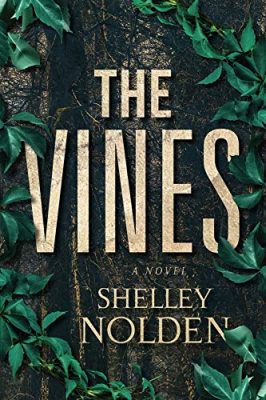
Shelley Nolden’s debut novel, The Vines, embraces multiple genres as it chills, fascinates, and horrifies, from historical and magical realism to fantasy and horror.
Nolden has melded fanaticism, medical anomalies, and the frailties of human behavior together with a historic setting, creating a narrative Kudzu vine that grows rapidly and spares nothing in its path. This particular vine consists of two main branches that intertwine, bridging time and linking parallel realities, one past, one present.
The Gettler men of Long Island, New York have shepherded a secret medical research project for generations, with the exception of Finn, the youngest man in the family.
Beginning with Otto, Finn’s great-grandfather, who worked at the Riverside Hospital on North Brother Island at the turn of the 20th century, this family has been consumed by unanswered medical questions about universal conditions that impact the human race.
Years after Otto’s death, the Riverside Hospital was ultimately closed, leaving North Brother abandoned, subject to the ravages of rats, birds, and vines. However, Finn’s father and grandfather secretly continued Otto’s research at the now crumbling, empty medical facility.
Although aware of their secret research, Finn had always been excluded from the details, despite his curiosity. What exactly were they doing? And why?
In 2007, the 28-year-old Finn clandestinely crosses the East River to North Brother. Instead of learning about his family’s secret research, he encounters an unfriendly, mysterious woman, her body scarred from previous physical abuse, yet fit and strong, bathing in one of the abandoned buildings.
More than a century ago in February 1903, Coraline McSorley, Cora to most, is infected with typhus and quarantined at Riverside Hospital, New York City’s most notorious pesthouse.
The ensuing story skips back and forth in time, slowly revealing itself through flashbacks, real-time, and places in between. As it grows, The Vines becomes more engaging. Nolden utilizes historical people, places, and events associated with North Brother Island to create a story in which Cora, along with the island itself, are sympathetic characters irrevocably tied to a family whose fanatical, convoluted curiosities dominate every aspect of their lives.
Several chapters into the book, the hook is set deep, pulling the reader in close and holding them there.
The Vines offers readers a mystery to be unraveled, connecting dots back and forth in time as the pace and action increase. Rather than ending with a conclusive resolution, The Vines leaves questions for the reader to ponder, matching the curiosity of the story’s characters.
Readers pulled into this mystery will be glad to find another baited hook dangling just beyond the gateway to the future, as Nolden suggests a sequel is in the works.
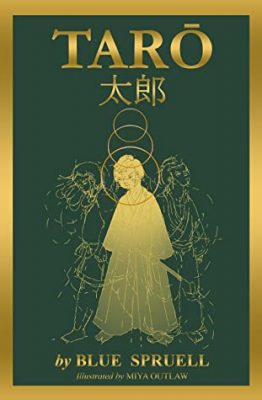
Adventure, classic tales, fantasy, and exciting action combine in TARO: Legendary Boy Hero of Japan, a well-poised debut novel by award-winning author Blue Spruell.
In the turbulent final decades of the sixteenth century, feudal Japan reeled in mayhem as the central hereditary dictatorship collapsed, and tyrannical powers fought to control the empire. TARO: The Legendary Boy Hero of Japan is the story of how one man revolutionized a nation by taking its reigns and forging a new destiny through his depths of compassion and determination.
The story begins with Taro as a young boy. As an heir to the Takeda family, Taro enjoyed reading, much to his father’s disapproval, as he wanted him to follow in his footsteps as a skilled Samurai. Tragedy changes Taro’s presumed destiny when his parents are murdered in a fierce power struggle, leaving him an orphan. Shortly after, a witch saves him from drowning and begins Taro’s new life of adventure, introducing him to a world of mythical creatures. On this new journey, Taro discovers shocking secrets about his lineage, and with them, his ultimate purpose in medieval Japan.
Author Spruell has written an enrapturing novel that brews literary art and imperial Japanese culture with the complexities of human life.
Imbued with historical elements, this novel is tightly plotted to recreate three famous Japanese folktales that will hold your attention to the last sentence. The graceful and precise prose careens readers through a unique period and place in history, with universal appeal.
Clearly, Spruell did thorough research before writing this novel. His enthusiasm and attention to intricate historical detail shape the plot, shedding a light on this period of Japanese lifestyle, society, and, tradition. Allowing the characters’ warmth, frustration, and hope to speak, TARO: The Legendary Boy Hero of Japan becomes a collective attestation to the fortitude of a people and a reflection on the initial stages of a nation’s history.
The feather in the cap of this novel is Miya Outlaw’s grand and enlightening illustrations, which bring out the spirited and energetic life of the Samurai, a world that is uncommon and unknown to many.
The atmospheric representation of disillusionment and yearning that pervades the novel makes this story emotionally resonant. Further, its crystalline writing and flow are cinematic, resulting in a narrative that defies the limitations of any targeted genre.
Indeed, TARO: The Legendary Boy Hero of Japan is a remarkable literary feat. Themes such as betrayal, deceit, zeal, and self-sacrifice are vividly evoked and provide a panoramic view of what it took to restore balance in power in a country that was almost torn apart by years of war and ruthless ruling families. Brutal and intense, this work is an excellent addition to its genre.
Author Spotlight Series focuses on M.A. Clarke Scott, an Award-Winning Women’s Lit Author
Mary Ann Clarke Scott took home the Grand Prize ribbon for the Chatelaine Book Awards in 2016. She not only writes women’s fiction – but sci-fi and fantasy, too! Who knew? I had a chance to catch up with Mary Ann recently to chat about writing and reading and life. Here’s what she had to say. Enjoy!
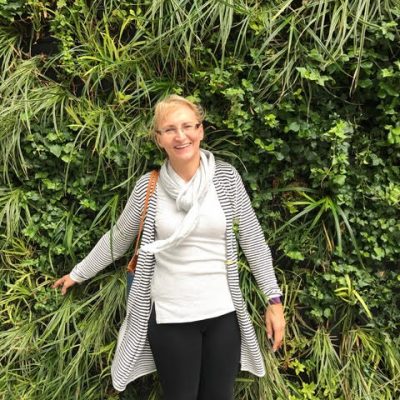
Mary Ann Clarke Scott
Chanticleer: Tell us a little about yourself: How did you start writing?
Clarke Scott: I was always an avid reader and a daydreamer. There were voices in my head, alternate realities playing out in my imagination, and I’ve always loved words. I tried to write my first novel at the age of nine, but abandoned it for other pursuits until 2005, once my son was in preschool and I’d pretty thoroughly given up on architecture as a career. Then I started seriously to learn to write, with purpose and discipline.
Chanticleer: Oh, that sounds so familiar! You either talk to yourself or talk to your characters… it makes more sense to talk to your characters! So, Mary, what do you do when you’re not putting words on the page?
Clarke Scott: I like to hike on mountain trails and I do Pilates and yoga. These things keep me limber and healthy, but also centered. I read a great deal. As I’ve got older I’ve become a bit indifferent to things I used to love, like gardening and cooking, but that may be because my focus is on writing. I still enjoy those things. I love to travel, and I love art and history and metaphysics. Recently we were in Europe for the summer, so I had my fill of museums for a while, but I never really tire of that. I aspire to be a visual artist, but never prioritize it with regard to time. It’s for ‘someday’.
Chanti: How do you come up with your ideas for a story?
Clarke Scott: Stories come to me primarily via character, but also through place and, what I guess I’d call ‘situation’ as a starting point. I put these elements together and the story grows up out of them, out of necessity, logically, as a response to what the character needs to grow.
Chanti: Do you find yourself following the rules or do you like to make up your own?
Clarke Scott: Both, I guess, but mostly I’m a rebel. I’m an Aquarian, and we tend to be rule-breakers. I’ve never been a conformist with regard to story or genre, but at the same time, I’m quite passionate about universal story structure. But I don’t see that as rules so much as patterns, and I love patterns. I think they have meaning.
Chanti: I totally agree with you! How structured are you in your writing work?
Clarke Scott: The stories are structured; my workflow is not. I work organically, which is to say, often
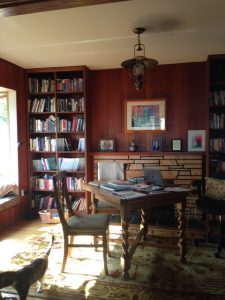
Mary Ann’s writing room.
chaotically and in an undisciplined, random way. I procrastinate. I binge. I don’t recommend it!
Chanti: I’m so glad to hear you say that – as I am the same way…. So, how do you approach your writing day?
Clarke Scott: I don’t have writing days, per se. I have a writing life. I know coffee is involved, though. I’m trying to incorporate meditation and visualizations into my process, to get a bit of control and rhythm. I’m also experimenting with dictation. It might not work because I rather enjoy touching my keyboard. But we’ll see.
Chanti: Name five of your favorite authors and describe how they have influenced your work.
Clarke Scott: Only five! I’m a great fan of Barbara O’Neal. I love the way she builds and paces a story gradually, and layers in so many strands of character and relationship, history and mystery. Nothing is wasted or gratuitous. She makes excellent use of the objective correlative. I admire her use of colour as symbol and leitmotif and the way she weaves vaguely spiritual and mystical elements into her stories, as an element of psychology almost, more than ideology, or anything overtly paranormal. For similar reasons, I’m a huge fan of Canadian author Susanna Kearsley, although the magical elements are often more explicit in her work. I love Georgette Heyer, and Mary Balogh, for their rich and well-researched Regency romances, populated by very believable characters. Classically, I adore Jane Austen, for the same reasons. The way they all paint a universal picture of humanity in a very singular social, political and economic context. I admire British authors Freya North and JoJo Moyes I think because they both take vulnerable, flawed protagonists and build them up through adversity, but make it all very ordinary and relatable (Oh, you poor thing…. Uh oh, don’t do that… Fight back, damn you!) and yet extraordinary in terms of character growth, pushing the readers’ emotional boundaries.
Chanti: I can see that. Good choices, M.A.! How does being an author influence your
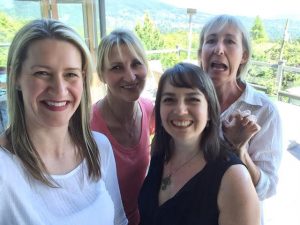
Mary Ann with her critique group.
involvement in your community?
Clark Scott: I think a lot of writers are introverts. But publishing means you must build a platform and build an author presence, both online and in the physical, local community. It’s forced me to embrace who I am, what I create and be willing to advocate for that. Becoming more comfortable online has also made me less shy in person. I’m also able to share my knowledge with other writers and support them because I know how hard it is, and that we need each other. Writers are an incredibly warm, generous and supportive community, so it’s easy to feel a sense of belonging. It’s hard to find that anywhere else.
Chanti: I agree, it’s so important to find your tribe! What areas in your writing are you most confident in? What advice would you give someone who is struggling in that area?
Clarke Scott: I suppose my strengths would be story structure, character arc and description of setting. It’s hard to give advice. Those are just things that come more naturally to me. I struggle with other things. About description I’d say, use your senses. Creative visualization helps. It also helps to keep the description filtered through the point of view character and limit what you describe to what is important to them and to the story. I’ve had to learn to do this, to limit my description from ‘everything.’ I think my training and work as an architect made me very observant, but perhaps too much so. So filter it. Story structure is something that comes through study and analysis, reading, but also interest and desire. And about character arc, I’d say, study archetypes, and use the structure of stories to make sure your characters go where they need to go, but that you challenge them enough to change them.
Chanti: Give us your best marketing tips, what’s worked to sell more books, gain notoriety, and expand your literary footprint.
Clarke Scott: Well I’m pretty active on social media, and continue to build a community and an online brand that way. I’ve entered and won a few contests (like the Chanticleer Chatelaine!), and I think that helps build familiarity and credibility with readers as well as a presence in the writer’s community. I’ve taken a two-pronged approach to marketing my books: the first is to follow all the advisors and use loss leaders (freebies, giveaways, etc.) to build my email list – although my efforts in this area are in their infancy – and as yet I’m not very good at newsletters and blogging; and secondly, creating an author profile and posting samples of work on reader sites such as Bublish, iAuthor and Goodreads. I think my approach so far has been: try everything! At the moment I believe publishing more books to build my backlist is pretty important to build my credibility as an author, and leverage what marketing I do, so that’s what I’m focused on.
Chanti: Backlist is so important. Thank you for mentioning that. #tryeverything I think we can make that a thing! Speaking of building a backlist, what are you working on now? What’s next?
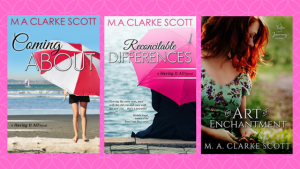
Clarke Scott: The WIP I’m focused on right now is called Coming About (although I’m still searching for a better title), and it’s Book 2 in my Having it All series. It’s been 75-80% complete for several years, so I’ve been working on finishing and releasing it in 2017. After that, I have two virtually complete books in the Life is a Journey series that need a little attention before they’re ready to publish. One thing at a time. Life interferes a fair bit.
Chanti: Life does interfere!Who’s the perfect reader for your book?
Clarke Scott: I think I write primarily for women, though men who’ve read my books say they enjoy them a lot. My audience ranges from quite young women to older women. Readers who are looking for experiences that are a little deeper and more thoughtful, rather than glossy, glamourous or action-packed dangerous fictional situations. There are no murderers or spies in my stories (not yet, anyway) and I’m not drawn to psychological thrillers. I write about real life, real people, and real relationships and hope that my stories are engaging at an emotional, psychological and maybe even a philosophical level. My stories are romantic and entertaining but also hopefully channel healing and personal growth. I believe the human heart is really the last frontier. Fiction is a powerful tool that enables learning and empathy, and therefore can help people reexamine their lives, and the lives of people they know, and hopefully understand that everyone suffers in their own way, and that human beings can always change, grow and move toward enlightenment, contentment, fulfillment and love no matter what lies they were told, what pain they’ve suffered, no matter their handicaps. I’m not writing self-help or how-to books. But I’ve always processed life through narrative and I believe others do, too. It’s in our DNA. So I think I’m looking for readers who aren’t afraid of this conversation.
Chanti: What is the most important thing a reader can do for an author?
Clarke Scott: Review and rate their books on Amazon and Goodreads and other sites. Such a tiny percentage of readers actually leave reviews, something like 1%, it’s extremely difficult for authors, even with excellent books, to build up social proof. And yet this is a significant part of what book buyers use to make their choices. And of course, if you admire an author’s work, tell other people about her! Obscurity is the curse of most authors in today’s overcrowded marketplace.

 Adventure, classic tales, fantasy, and exciting action combine in TARO: Legendary Boy Hero of Japan, a well-poised debut novel by award-winning author Blue Spruell.