
Tag: Characters

  • “It was a Dark and Stormy Night:” How Atmosphere Enhances the Plot and Crafts Immersive Narratives

    Shakespeare knew what he was doing…

    Creating a tangible atmosphere in your storytelling is often a subtle force that plays a critical role in shaping a narrative and enveloping your reader in the story.

    A good atmosphere – created through setting, tone, and sensory details – can transform a simple plot into a rich, immersive experience filled with bright skies, stormy weather, and everything in between. Here we’ll explore how atmosphere enhances the plot and why it’s essential for crafting stories that draws readers into their characters’ world and lets them experience it (nearly) first-hand.

    rocking chair, deserted house, chipped paint, door, window, curtain

    Setting the Scene

    Atmosphere begins with setting. The world in which a story unfolds is more than just a backdrop. it influences mood, behavior, and narrative flow. Imagine a thriller set in a foggy, empty street at night versus one set in a bright, bustling city. The atmosphere created by each setting will evoke different emotional responses and drive the plot in unique ways.

    In Charles Dickens’s Oliver Twist, for example, the dark, oppressive atmosphere of a decaying mansion reflects the internal turmoil of Miss Havisham’s deteriorated mental state. By adding depth to the setting, it actually becomes a character in itself, influencing the actions and decisions of the protagonists. This synergy between setting and plot helps readers immerse themselves more fully in the story.
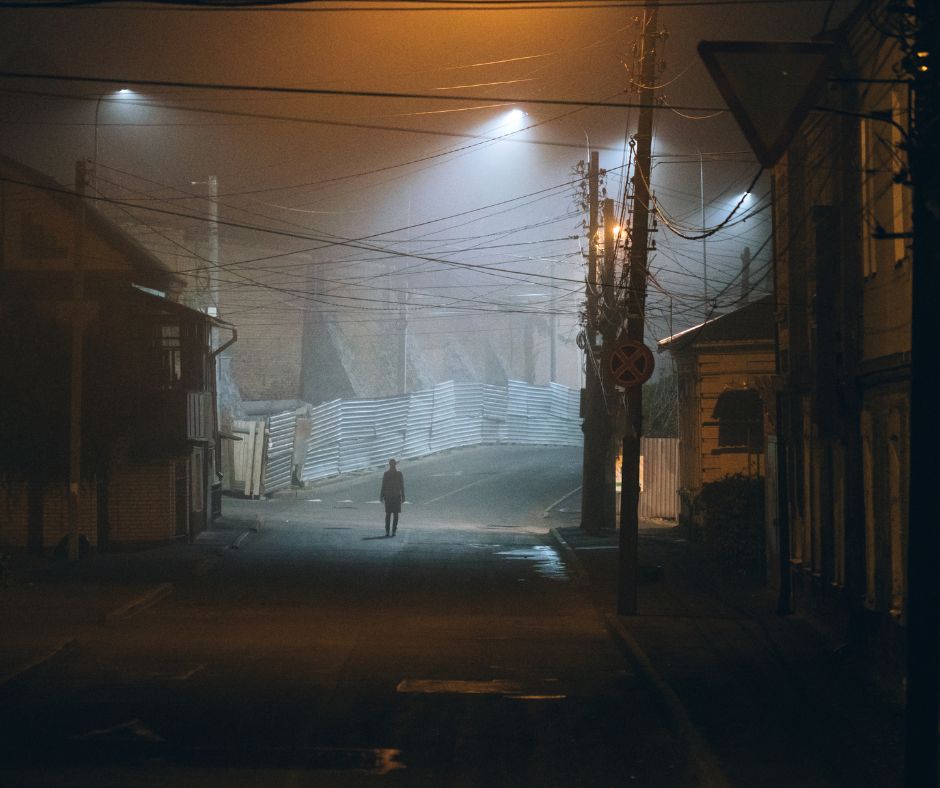
    Foggy, street, lights, person, city, alley

    Enhancing Tension and Suspense

    Atmosphere is crucial in creating tension and suspense. A story’s mood can build anticipation and keep readers on edge. For example, a tense atmosphere can heighten the stakes and make moments of danger feel more immediate and pressing.

    Consider a suspenseful scene set on a foggy, deserted street. The shadows and lack of other people can amplify the sense of danger and unpredictability. The atmosphere makes the plot twists more gripping because it engages the readers’ senses and emotions, making the narrative’s tension more palpable.
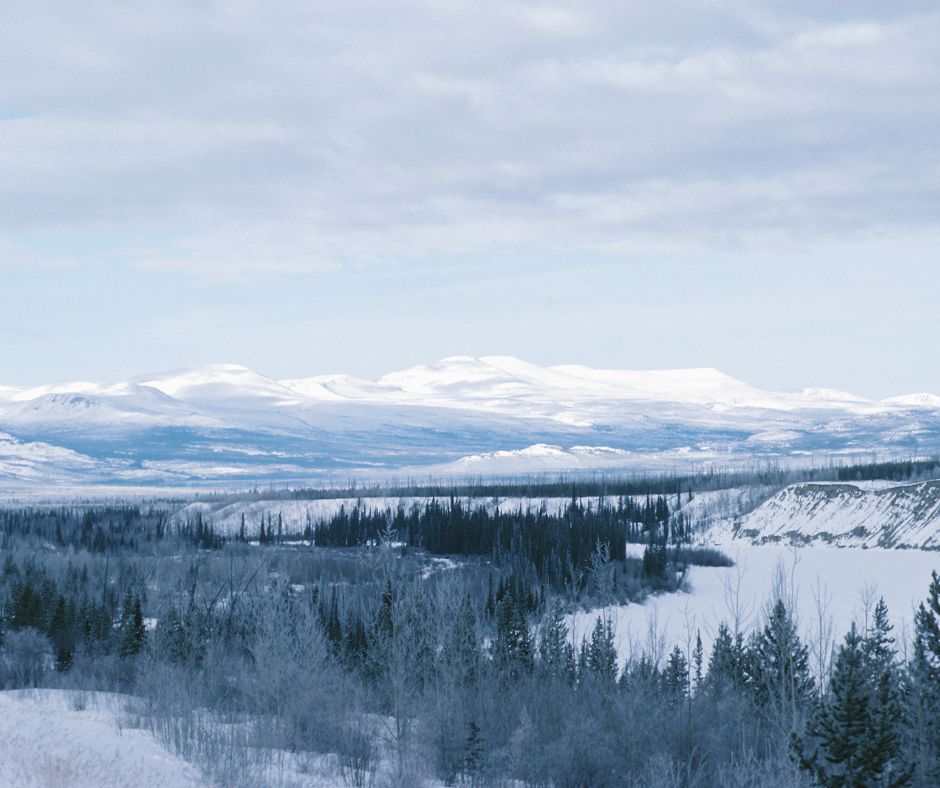
    snow, trees, clouds, blue, landscape

    Reflecting Internal States

    Atmosphere can also mirror a character’s internal state, providing insight into their emotions and motivations. For example, in the opening scene of Jack London’s White Fang we find two men traveling alone across the snowy Yukon Territory. Their lives are under constant threat from the world around them. This mirrors the theme of the story and the torment its protagonist experiences as a wolf left to constantly fight for his survival.

    This mirroring helps readers connect more deeply with the characters, as the external atmosphere echoes their internal struggles and triumphs. It adds a layer of emotional resonance to the plot, making characters’ experiences feel more authentic and impactful.

    party, blue, glitter, disco ball, windows, people

    Creating Symbolism and Themes

    Atmosphere can enhance themes and symbolism within a narrative. By weaving certain atmospheric elements into the story, authors can subtly reinforce thematic undertones and symbols. For instance, a recurring motif of decay and deterioration in a story can symbolize the moral or societal decline of the characters or setting.

    In The Great Gatsby, F. Scott Fitzgerald uses the opulent but hollow atmosphere of Gatsby’s parties to highlight themes of disillusionment and the emptiness of the American Dream. The atmosphere becomes a glittery vehicle for thematic exploration, enriching the plot’s complexity.

    Leonardo DiCaprio as Gatsby in The Great Gatsby 2013 film
    Leonardo DiCaprio as Gatsby in The Great Gatsby 2013 film

    Guiding Reader Expectations

    The atmosphere can guide readers’ expectations and shape their interpretation of the plot. A story that opens with a cheerful, light-hearted atmosphere might lead readers to anticipate a light, humorous tale. Conversely, a dark, foreboding atmosphere might set the stage for a more serious or tragic narrative.

    By manipulating atmosphere, authors can subtly influence how readers engage with the plot, leading them to anticipate certain outcomes or questions about the narrative’s direction. This is seen in Suzanne Collin’s The Hunger Games, where the shanty town world her heroine, Katniss Everdeen, is born into is used as a comparison to the opulent wealth of Capitol City. This adds layers of complexity and surprise to the story as she must use the smarts she gained in her original environment to survive in a new and unusual place.
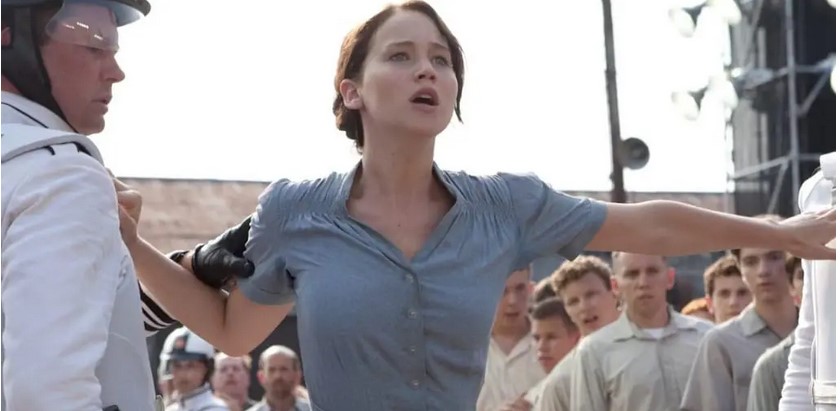
    Jennifer Lawrence as Katniss Everdeen volunteering as tribute in place of her sister at the barbaric Reaping for the Capitol.

    Deepening Immersion

    Finally, atmosphere plays a crucial role in deepening reader immersion. A well-crafted atmosphere can transport readers to another world, making the plot more engaging and compelling. The sensory details, emotional undertones, and overall mood create a rich tapestry that draws readers in and holds their attention.

    Whether it’s the cozy warmth of a small-town bakery or the cold, sterile environment of a high-tech laboratory, the atmosphere creates a sensory experience that enhances the plot and makes the story come alive. It helps readers visualize and feel the world of the story, making the plot more vivid and impactful.

    Brick walls, windows, wood beams, wood floor

    Brick by Brick You Build A World Your Readers Can Feel

    Atmosphere is a powerful tool in storytelling, enhancing the plot in ways that go beyond mere setting. By influencing mood, creating tension, reflecting internal states, and deepening thematic elements, atmosphere enriches the narrative and captivates readers. When done effectively, it turns a simple story into an immersive experience, making every plot twist and character development resonate more deeply.

    So, the next time you’re crafting a story, remember that the atmosphere you create is as integral to the plot as the characters and events. It’s the subtle force that breathes life into your narrative and keeps readers’ attention until the very last clap of thunder!


    Chanticleer Editorial Services – We’re ready when you are ready!

    Did you know that Chanticleer offers editorial services?We do and have been doing so since 2011!

    Tools of the Editing Trade

    Our professional editors are top-notch and are experts in the Chicago Manual of Style. They have and are working for the top publishing houses (TOR, McMillian, Thomas Mercer, Penguin Random House, Simon Schuster, etc.).

    If you would like more information, we invite you to email Kiffer or Sharon at KBrown@ChantiReviews.com or SAnderson@ChantiReviews.com for more information, testimonials, and fees.

    We work with a small number of exclusive clients who want to collaborate with our team of top-editors on an on-going basis.Contact us today!

    Chanticleer Editorial Services also offers writing craft sessions and masterclasses. Sign up to find out where, when, and how sessions being held.

    A great way to get started is with our manuscript evaluation service. Here are some handy links about this tried and true service: https://test.chantireviews.com/manuscript-reviews/

  • NaNoWriMo or Not, here comes November!

    NaNoWriMo or Not, here comes November!

    Time to start your engines because, NaNoWriMo or not, you’re a writer and ideas are key to jump-starting your writing!

    Inspired by Editor and Friend of Chanticleer, Jessica Morrell, let’s dive in!

    The NaNoWriMo logo, a shield crest with a Viking Helm depicting coffee, a computer, pens, and a large stack of blank paper

    For those who may not know, NaNoWriMo is a community effort where people around the world join together, each trying to write 50,000 words of a story in the month of November. For some, 50,000 words is a pittance of what they can normally create in a month; for others, it’s an impossibility.

    No matter where you fall, NaNoWriMo is a great tool to put words on the page and to write with a community rather than all alone.

    Woman in Pink Long Sleeve Shirt Sitting Beside Woman in Green Long Sleeve Shirt
    It’s a myth that writers are solitary creatures

    In the week before you get started, take care of all the basic necessities – i.e. finish your procrastination tasks. Clean your house, stock up on brain food for the upcoming month and write down easy meal ideas. Don’t forget to make sure you have all the coffee and tea you need to fuel you, and then please be sure your laundry is done.

    Ready? Set. WriMo!

    The point of a first draft is to exist. As Stephen King says, the first time you write something down, you’re telling the story to yourself. One of the best ways to motivate your story is to know your characters well. Studying modern characters is a great way to start off.

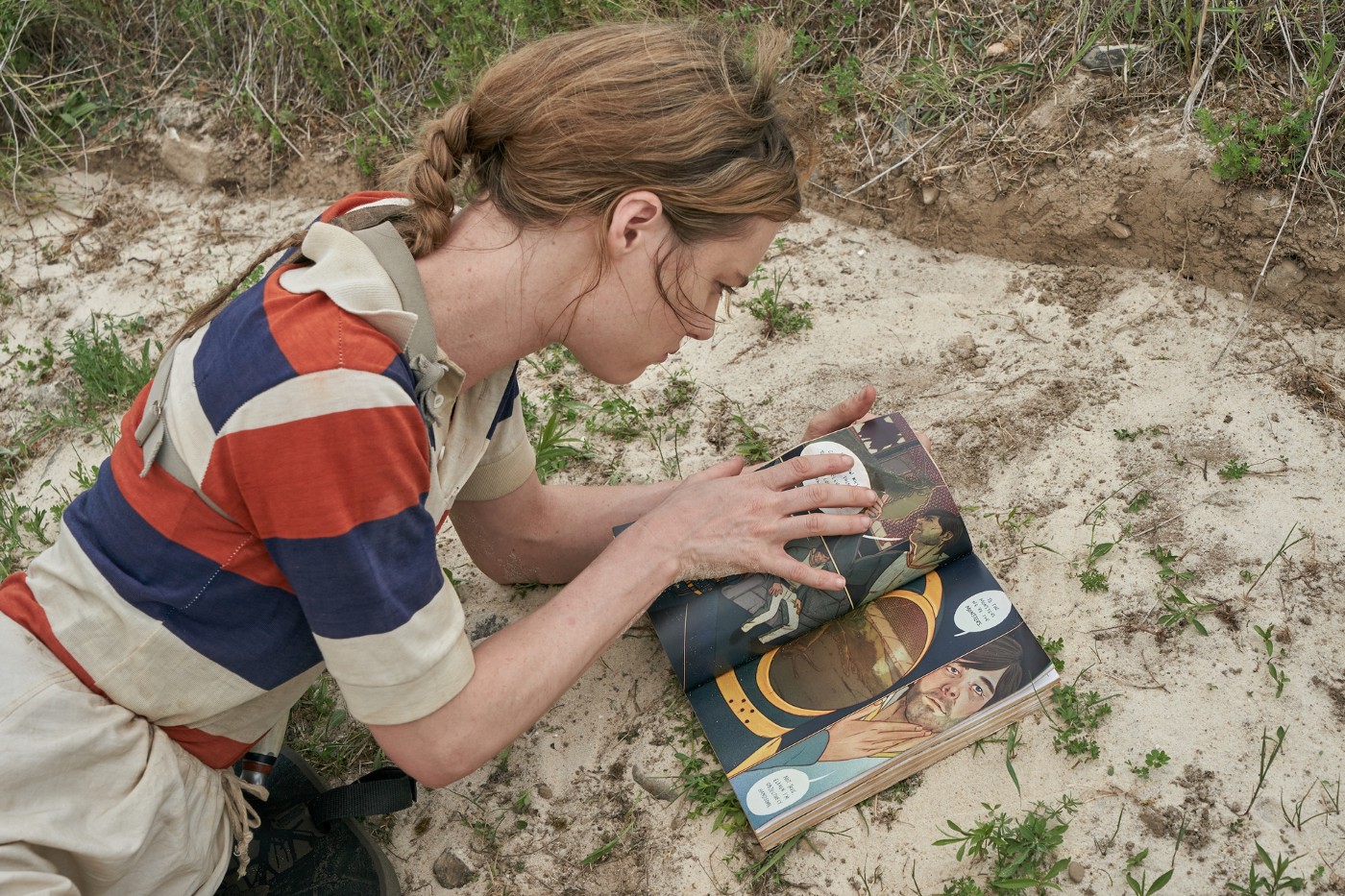
    Station 11 by Emily St. John Mandel

    Kirsten Raymonde reading the titular Station 11 comic book, played by MacKenzie Davis

    Child actor Kirsten Raymonde’s life is forever changed when she witnesses the death of actor Arthur Leander, sending her world into chaos hours before the world is decimated by the Georgia Flu. With the collapse of civilization and the death of her parents and little brother, Kirsten holds on tight to her passion for acting as she grows up, joining the Traveling Symphony and protecting the players and musicians there as if they were her own flesh and blood.

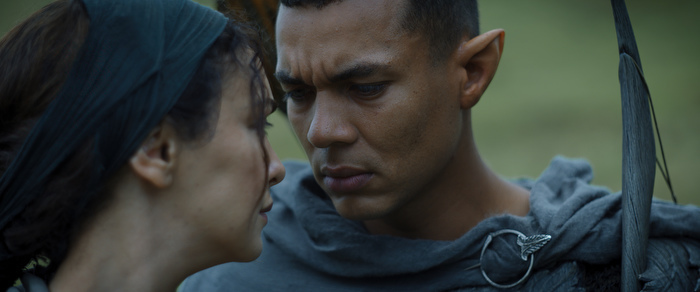
    The Rings of Power on Amazon Prime, based on The Lord of the Rings by J.R.R. Tolkien

    Arondir (Ismael Cruz Córdova) almost shares a romantic moment with Bronwyn (Nazanin Boniadi)

    Arondir is an elf responsible for the safety of a large swath of human lands in the aftermath of the battles with Morgoth. However, most elves regard the humans with a suspicion that engenders deep distrust between the two races. This prevents him from gathering crucial information about a recent poisoning. On top of that, neither the human inhabitants nor his elven companion approves of the close connection he has with the local healer Bronwyn, who seems quite taken with the handsome Arondir.

    What do we notice?

    Both these characters are firmly set in their backstory, which shows us the goals they have in the status quo at the start. Once the status quo is disrupted, you have the character’s motivation to return to a state of equilibrium, because they are now frustrated in meeting their goals.

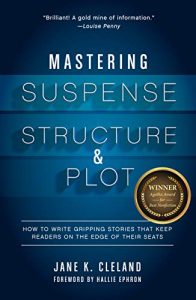
    Consider questions from Mastering Suspense Structure & Plot by Jane K. Cleland:

    • What does this character keep secret?
    • What does this character fear?
    • How does this character respond when their secret is in danger of being exposed?
    • How does this character act when afraid?
    Blue cover for Mastering Suspense Structure and Plot by Jane K. Cleland
    The Roost’s Writing Craft Book Group for November

    Understanding these elements of your character under pressure will help create believable and compelling people for your readers to want to watch and study.

    Remember, even for NaNoWriMo, you need an engine to start!

    Conflict is the engine of your story. What is the conflict in yours? For Station 11, it’s the looming threat of the mysterious Prophet who is terrorizing the communities who are the audience and friends of the Traveling Symphony. In Rings of Power, it’s the growing strength of Sauron, Morgoth’s most loyal disciple. How does this conflict put pressure directly on your main characters?

    HANDY REMINDERS

     If you are NOT participating in NaNoWriMo, then we hope that this post will spur you on as write your work-in-progress (w-i-p) or your next work.

    RULE # 1

    WRITE FAST! 

    EDIT SLOW! 

    Don’t edit your first draft as you write it!

    Writing your first draft should be a mad dash to get your story out of your brain. Don’t hinder it by worrying about each little detail. There will be time for that later. NaNoWriMo or not.

    Not taking our word for that piece of advice?

    Chelsea Cain, a bestselling thriller author (with a TV series to her credit),  gives this piece of advice:

    Write the bare-bones version of the scene first using mostly dialogue, and then move on and in the second draft flesh out the scenes with description and action.

    “Action is dialogue. Dialogue is action.” – Robert Dugoni, Amazon Bestselling Author

    What is YOUR STORY?

    Story is essentially a problem that needs solving for the protagonist. – Jessica Morrell

    • What is your protagonist’s problem that must be solved—or else?
    • What is the worst thing that can happen next to your protagonist?
    • Remember that it is not your problem. It is your protagonist’s problem, obstacle, impossible dream.
    • Start at least one subplot. This subplot(s) should also complicate the protagonist’s goals.

    No matter when the problem begins (it’s always in Act One) the problem is weighty and vexing, perhaps insurmountable. If the problem is not immediately personal, it should become so that it will create a bond (connection) between the protagonist and antagonist. Classic examples are the connection between Sherlock Holmes and Jim Moriarty and Harry Potter and Voldemort. 

    What is the inciting event or threat? 

    The inciting incident might lead to the problem. This event will disrupt the status quo, demand response, and set actions in motion. It’s a threat that unbalances the story world and creates dilemmas that must be dealt with.

    To name a few:

    • The tornado incident in the Wizard of OZ
    • Katniss’s little sister selected for the Hunger Games
    • Luke Skywalker ‘seeing’ and hearing Princess Leia calling for help in Star Wars
     These excerpts above are from The Inciting Incident blogpost


    Environment (internal and external)

    These are great tips to get your creativity groove on!

    • Remember you want to send your protagonist into new emotional territory with new challenges and pressures.
    • And at the same time, she will need to deal with new physical territories such as a new school (Footloose) or a different culture (Dances with Wolves) or a different legal society with different norms (Handmaid’s Tale) or a new environment (Deadwood)  or a different time ( Outlander) or galaxy (Farscape).
    • Don’t be afraid to stage danger in benign or lovely settings or conversely gentle scenes in dangerous and gruesome settings.

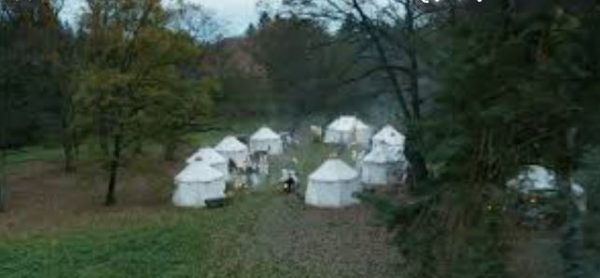
    Kiffer’s Note:  I just saw this bucolic scene while watching The Wheel of Time first episode. All white coats and white tents. And then, bam! We learn that the guys in white are not the “good guys” —at all—even if their name is Children of the Light.

    Bucolic looking camp scene in Wheel of Time inhabited by these characters all in white.

    Atmosphere

    • Allow the overall atmosphere and mood to imbue your writing from the get-go.
    • The atmosphere lends itself to the overall tone and mood of a work. Allow it to permeate your work as you write.

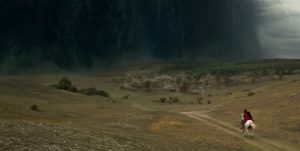
    The atmosphere in Shadow and Bone series by Leigh Bardugo

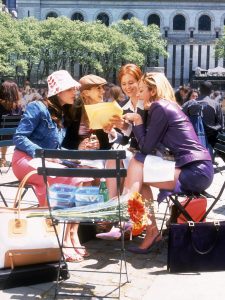
    Or Sex in the City by Carrie Bradshaw

    Why use atmosphere in your first draft? (or during NaNoWriMo)? 

      • Because it will affect your mood and approach to your story.
      • It will make you focus on creating unease–a necessary ingredient not always considered in early drafts.
      • Unease contributes to writing a page-turner.
      • Atmosphere underlines themes–even if you don’t have your themes nailed down yet.

    Here is the link to our Writer’s Toolbox article on Atmosphere

    Emotional Baggage

    • Know your protagonist’s main emotional wound, sometimes called baggage in real life. How is it going to affect his or her ability to solve the story problem? (See the questions below to jumpstart creativity.)

    Remember that Writers (that is you) should carry a notebook everywhere you go. You never know when a brilliant solution is going to appear. Jessica Morrell

      If I could offer a single piece of advice about creating characters it would be this (Jessica Morrell):

      • Take risks with your main characters.
      • Make them stand out from the myriads of fiction published each year.
      • And don’t be afraid to allow eccentricities, quirks, and oddball ways of seeing reality.

      More questions for your protagonist from Jessica Morrell—these are guaranteed to get your creative wheels turning:

      First, ask yourself these questions and then “ask” your protagonist. Have your protagonist go into depth. Find out what your protagonist’s iceberg under the waterline is all about.

      Photo taken in Greenland’s waters.

      Kiffer suggests that you take a walk when you are considering these questions. Be sure to either take notes or record your thoughts on your smartphone while you explore your protagonist’s emotional baggage. Walk a mile in your protagonist’s shoes. 

      • What’s the most embarrassing thing that has ever happened to you?
      • What is your biggest regret?
      • What is your superpower?
      • Who do you cherish most in the world?
      • If you could change one thing about your world, what would it be?
      • What is your average day or schedule?
      • What 5-6 words sum up your values?
      • What do you do after a really bad day?
      • How do you celebrate?
      • The secret you’d never tell your significant other? Your mother? Your sibling?
      • What reminds you of home?
      • What item must you always take along when traveling?
      • Favorite drink?
      • Secret vice?
      • Pizza or tacos? Cookies or tequila?
      • Favorite climate?
      • Reading or television to unwind?
      • Breakfast or coffee only?

      We hope that we helping you, Dear Writer, to arm and prep yourself to get down to the writing of your next work—the reckoning.


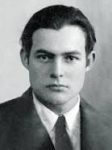
      Ernest Hemingway:  There is nothing to writing. All you do is sit down at a typewriter and bleed.


      Chanticleer Editorial Services

      When you’re ready…

      Did you know that Chanticleer offers editorial services? We do and have been doing so since 2011.

      Our professional editors are top-notch and are experts in the Chicago Manual of Style. They have and are working for the top publishing houses (TOR, McMillian, Thomas Mercer, Penguin Random House, Simon Schuster, etc.).

      If you would like more information, we invite you to email Kiffer or David at KBrown@ChantiReviews.com or DBeaumier@ChantiReviews.com for more information, testimonials, and fees.

      We work with a small number of exclusive clients who want to collaborate with our team of top editors on an ongoing basis. Contact us today!

      Chanticleer Editorial Services also offers writing craft sessions and masterclasses. Sign up to find out where, when, and how sessions are being held.

      A great way to get started is with our manuscript evaluation service, a tried and true resource you can learn about here.