Tag: Chanticleer Writers Toolbox Series

  • Creating Your Marketing and Promotion Calendar for 2020 and Beyond – Part Two

    Creating Your Marketing and Promotion Calendar for 2020 and Beyond – Part Two

    Number Two of Twelve Must-Do’s for Authors – Unlocking the Secrets of Successful Publishing

    We discussed in Point Number One of Twelve — Pay Attention to Your Computer 

    Our second post (No. 2 of 12 – Part A) discussed developing the Big Picture for your marketing and promotion strategy. Ten Points to Consider and Implement were given.

    If you have not completed the work for the Ten Points, I invite you to go do so now before proceeding.

    Point One: Identify 10 best-selling author in your genre that you would like to ask for an author blurb? 

    Tips on How to Obtain a Notable Author’s Blurb for Your Book 

    First WHY should you do this?

    There have been a number of studies done using A/B testing. These tests show that book descriptions that include book blurbs by Notable Authors receive at least a 30% higher click through rate on selling platforms. BookBub is one of the companies that conducted the A/B testing.

    [Note: *I am using Notable Author in place of names of real notable authors and sometimes abbreviating to NA. ]

    Task #1   Begin following and interacting with your selected Notable Authors in Social Media. Search for them in social media and then make a friend request, follow, LIKE, SHARE their posts.

    Facebook, Twitter, Instagram, Linked In, —wherever you can.

    Schedule to interact in social media platform at least twice a month for each notable author on your list and M&P calendar  (Marketing and Promotions Calendar).

    If you have time, you start with two Notable Authors and keep adding to the list on a monthly basis.

    Schedule these events on your calendar. Social media — twice a month, maybe three times if there is a major event such as a book release or an appearance. You don’t want to flood their comments with your stuff or appear “creepy.”  But you do want to be on the notable author’s radar just enough to be recognized but not nagging or stalking. Or worse yet, not be like that super chatty person who corners you at a cocktail party.

    Task#2    Purchase and read at least one book a year by the Notable Author. Then LEAVE a REVIEW on Amazon. The review can be short and sweet, but make sure that it is well worded and sincere. Showing off your writing prowess is a good thing. Make sure that the review can be traced back to you –-if it is positive. If it in not, then don’t post it and maybe reconsider your selection of Notable Authors. If you have a different name for reviews, then use that. But, then submit the review to the Notable Author using “contact info” on the Notable Author’s web-page with your writing/as name.

    Interesting factoid: Amazon’s share of ALL new book unit purchases was 41%  and 67% of the e-book market. Amazon controls 64% of printed books that are purchased online. Source:  The Atlantic.  Note: These percentages continue to increase from the time this article was published.

    If the  Notable Author has a back-list, then leave another review for another book in three months.

    Objective:

    When you are ready to ask the Notable Author if you may send your ARC  (advance reader’s copy) to her, hopefully, she will be familiar with you and your writing-as name (pen name). You may be able to ask for “the favor” in Messenger or Direct Message. Or at the very least complete the contact form on the Notable Author’s website for your request.

    The reason to identify 10 Notable Authors? It is because you will have about a 20 percent (2 authors) chance of having a NA  respond to you (as opposed to zero by not doing tasks). Of these 2 authors, you may only end up with one blurb from your original 10 authors selected. Everyone is busy and that is especially true in the publishing industry. There are always deadlines to be met.

    Each year, determine which Notable Authors that you are going to continue trying to connect with. Then replace the ones that you have decided to move on from. But always work on connecting to NA’s long as you are serious about your writing career.

    And start doing this way before you are ready to publish. You don’t want to put a time limit on the Notable Author to get you your cover quote. You can  state the publication date and they can take if from there. A six-to-three month lead time should be just about right. And don’t worry about the manuscript being absolutely perfect. NA’s understand the publishing process. Just make sure that the work is a compelling read.

    Cover Art – 

    Also, send along the cover art concepts. You have been working on that haven’t you.

    Make sure that your cover is a winner! Something that will make your Notable Author proud to be associated with. The cover doesn’t have to be ready for print, but it should show that you are being careful and strategic in the design of it.

    A compelling cover design will get you a YES more quickly. The NA understands how important cover art is to the success of any book.

    Consistency, Persistence, and Sincerity 

    Please note that you can’t just do a review and a few social media posts to get the Notable Author’s attention. You will have to be consistent and persistent and sincere. That is why this needs to be on your To-Do M & P calendar. It will be very easy to just not do it this month. That, my dear aspiring author, is a slippery slope that is too easy to go down.

    How do I know this strategy works? It because I have seen it in action.

    I’ve been in the “faculty break rooms or green rooms” with many a Notable Author and have overheard or been told directly something to the effect of this:

    “Can you imagine, this person thrusted  a copy of his/her book into my hands and then asked me I would give her/him a blurb…? I don’t know this person from Adam or Eve.  I’ve never seen the person on my social media. I don’t have time to read every book given to me me for an author blurb. And why bother anyway–the book has already been published….And just look at this cover…

    The blurb attempt is SHOT DOWN with the copy of  said book (probably) left in break room. The above scenario goes on far more often than one would think. #justsaying

    But imagine, if the aspiring author could say to the Notable Author, “I find your Facebook posts so interesting. I’ve even shared a few of them.  And your last book, (give the title –music to any author’s ears), was the best–especially the part about (fill in the blank). I left my review for it on Amazon (name the platform).”

    Can you see how one might then be able to ask for permission to send the Notable Author an ARC or a digital file (many prefer digital PDFs)? IF not then, you could mention that you met at ??? and that you were so excited to meet one of your favorite authors.

    It is just good manners. And make it easy for the Notable Author to get you the review/author blurb. And always send a thank you note (preferable hand written and in an email) before for taking the time (and a great gentle reminder) and after.

    USES of the Notable Author Blurb

    Then use the blurb!

    • On the book cover
    • in the front matter of the book’s interior
    • on your website
    • on shelf-talkers as a point-of-sale tool
    • on book marks and promotional tools
    •  in the Editorial Reviews section of your Amazon page
    • in your social media branding elements
    • in your social media posts
    • in your contests and giveaway promotions
    • in your launch banners

    Always be sure to tag the Notable Author whenever possible, every always giving credit to the author and the book that the Notable Author would like for you to promote. Or if the Notable Author is “royalty” in the publishing world there is no need to list a book title, but do list the “royalty” title. Notable Authors do book blurbs because it promotes their name and author brand.

    Examples

    “What a truly wonderful story! I’ve read it three times, and with each reading I find myself caring about the fabulous characters and their lives even more.”—P.J. Alderman, New York Times Bestselling Author of A Killing Tide

    “J.D. Barker is a one-of-a-kind writer and that’s a rare and special thing. Stephen King comes to mind and Lee Child, John Sandford. All one-of-a-kinds. Don’t miss anything J.D. writes.”James Patterson, #1 International Bestselling Author

    In conclusion – a Notable Author’s endorsement or blurb for your book will enhance your competence and credibility factors as well as gaining the attention of the Notable Author’s readers and fans. And may just enlarge your readership.

    Sure it is a lot of work, but it will be worth the time when you are ready to launch your book.

    And remember one day, you too will be a Notable Author. How will you decide whose books to blurb…probably the ones who have helped you generate that ethereal book buzz.

    12 Must-Dos for Authors and Publishers for 2020! Unlocking the Secrets of Successful Publishing

    My next post  will continue with the 10 Steps be the next post will be Point TwoIdentify any seasons or holidays that are associated with your titles — no matter how unknown (even better) or mundane. 

    Dear Chanticleerians, I have decide to write and publish this series in shorter blog-posts so I can get them out more quickly.  This post is already more than 1,000 words and we have nine more points.

    And I already posted one post today. I invite you to read the blog post that I wrote earlier today about the exciting Breaking News.

    I will write and publish Point Two in then few days and then Point Three. Target Book Clubs – Online and Groups that Meet in Person after Sharon and I are attend the Pulpwood Queen Book Club — Annual meeting in Jefferson, Texas.

     

    Thank you for reading our blog posts. I do hope that you find these Chanticleer’s Writer’s Toolbox Tips and Tools informative and helpful reminders.

    As always, we would love to hear from you — especially if you suggestions about what to add to the blog posts.

    Please check out our 2020 Chanticleer Authors Conference where we Unlock the Secrets of Successful Publishing 

  • 12 Must-Do’s for AUTHORS for a Successful and Productive 2020 – Number One of Twelve -a Chanticleer Writer’s Toolbox Series by Kiffer Brown and Sharon Anderson

    12 Must-Do’s for AUTHORS for a Successful and Productive 2020 – Number One of Twelve -a Chanticleer Writer’s Toolbox Series by Kiffer Brown and Sharon Anderson

    Most of us are familiar with the old carol, Twelve Days of Christmas. It goes on and on, sung by school students at holiday concerts and revelers at holiday parties. It is, after all, a catchy tune and folks have changed the wording for their own special interests. 

    “But Jiminy Crickets, it is the 26th of December! Is it not too late for the 12 Days of Christmas?” you say.

    However, dear Chanticleerian, did you know that the 12 Days of Christmas begins on December 26th? It does! And it continues to the 6th of January – Three Kings Day on January 6th. The four weeks leading up to Christmas is known as the Advent. #justsaying

    So if you haven’t finished wrapping presents, sending out those cards, and baking cookies—don’t worry—you’ve got an extra 12 days!

    Happy Holidays to You from the Chanticleer Team! 

    Happy Holidays from Chanticleer Reviews

    Now back to the

    12 Must-Dos for Authors and Publishers for 2020!

    At Chanticleer, as many of you know (especially if you have attended a Chanticleer Authors Conference), we do things a little differently. Adapting the theme of “12 Days,” we are bringing you an author checklist, things for your author development and business. That’s why we’re here!

    Please enjoy Chanticleer’s 12 Must-Dos for a Happy and Productive 2020~

    Well…maybe not “enjoy”… There is a lot of work to be done to complete this list that will help you have a successful and productive 2020 year for your author career.

    We suggest tackling one Must-Do a month in any order that you chose except for the first three. Also, we will have a handy checklist to print out at the end of the series for your author lair to help keep you on track.

    We were going to post one every two-to-three days on the Chanticleer blog. But after experiencing how time it takes to go into the depth for each Must-Do, we are changing that to one Must-Do every few weeks—especially until after the Chanticleer Authors Conference and the awards night for the Chanticleer International Book Awards (April 18, 2020). There just isn’t enough time to get everything done and write these in-depth articles.  But please look for these blog posts in your email inbox. These will be in addition to the CIBA announcements, review posts, and announcements. We have several exciting announcements coming your way!

    [This is update was made on 1/11/2020. -kb After the following new posts have been added to the 12 Must-Dos for Authors and Publishers

    The first Must-Do is below. The second one may found at this link. https://www.chantireviews.com/2020/01/03/12-must-dos-for-authors-for-a-successful-and-productive-2020-and-beyond-number-two-of-twelve-a-chanticleer-writers-toolbox-series-by-kiffer-brown-and-sharon-anderson/  The third installment has been posted on 1/11/2020 ]


    Must Do #1:  Pay Attention to Your Computer! 

    What type of transportation do you use? Auto, bike, on foot, or by pony? Whatever means you use to get around, you will need to maintain that mode regularly. You will need to put gas in the tank, oil the breaks, purchase new shoes, feed the pony. You will have to do something to ensure your transportation requirements are in the best shape possible. After all, who wants to be stuck on the side of the road with faulty equipment – or a sick pony?

    Jiminy Crickets!

    The principle is the same when we think about taking care of your computer. The very tool that stores your intellectual property, that aids in the creation and shaping of that property, and enables you to make a living doing what you love most, deserves your time and attention.

    Have you ever been in the middle of a story and suddenly your computer dies? Not the simple death that can be remedied by plugging it back into the outlet. But the ultimate death of the Blue-Screen sort?

    This means you’ve probably lost everything since your last “save” — you have been saving your work frequently?

    But worst than the Blue Screen of Death is the GREEN SCREEN of DEATH

    Short of a MIRACLE and some awesome WIZARDING, your computer has gone bye-bye. The forever bye-bye… There is no hope… Despair and gnashing of teeth bye-bye.

    Do we have your attention now?  Yeah, not pretty.

    Okay, here is a kitty photo to help you chill before we move on.

    Maintenance that you can do at home or in your writing lair can help prevent these horrific events.

    Regular systems checkups can alert you to future problems, like, dude, you have way too many cookies… Or, dude, if you type three more sentences, your computer will ex-xxxxxxxxxxxxxxxxxxxxxxxxxxxxxxxxxxxxxxxxxxx

    You get the idea. Consider this a “get in shape” program for your ‘vital to your author career’ computer.

    Be proactive!

    Computer Maintenance Checklist  

    We advised doing these “Must-Do’s” for your computer in order.

    #1  First Clean Your Keyboard

    Have you noticed what’s stuck in there between the keys? Five types of plague, parts of your sandwich from last week, and the sloshed coffee. It’s disgusting! (Well, at least our keyboards can be). Keys sticking, the space bar refusing to space, the letters repeating across the screeeeeeennnnn…

    This one is easy — Vacuum your keyboard or even better get one of those compressed air canisters designed to clean keyboards will do the trick!

    Put it on your to-do list to clean your keyboard at least once a month.

    And while you are at it, clean that screen. #justsaying

    #2 Password Management and Protection

    If you have a password protection management app and you USE IT, then you may proceed to GO and collect $200 dollars in Monopoly money.

    If not, you should go to “Jail” and stay there until you do and you are using a password management program. This will be instrumental so that you can proceed to #3 on the list.


    Below are some password managers that you can checkout or search in your browser or do your own research for  “password managers.” Some are free or even at $50 a year for families, they are a bargain for the security provided. There is no excuse. 

    With today’s rampant internet piracy, having a vital password manager is a must for authors and publishers to protect their works, their royalties, banking info, and their distribution platforms just to mention a few. And your old school passwords will not cut it in today’s piracy ridden seas of the internet ocean. You need passwords that are impossible to remember and even harder for hackers to break.

    List of Some Highly Rated Password Managers and Generators

    • Keypass
    • Lastpass.com
    • 1Password
    • Bitwarden
    • Myki
    • Dashlane

    For more information, here are two links to articles about password managers from reliable sources:

    CNET’s best Password Managers for 2020 Article

    PC Mag’s roundup of the best password managers

    If you ever do encounter the Blue or Green Screen of Death, you will be able to access your programs and apps, book distribution channels, WORD documents, etc. when you set up your new system or do a system wide reboot.

    And, yes, Sharon and I have both learned these lessons the hard way.

    #3  Clear your Browser’s CACHE periodically

    This called “Browser Hygiene.” Really.

    Browsers tend to hold onto information and like a clogged drain, after a while, it will slow down the speed and performance of your computer. Where your browser holds onto this information is in its “cache.”

    A computer’s cache (pronounced ‘cash’) is also where websites that you visit implement their “cookies” —that bread crumb trail that rambles through the internet linking your computer to the websites that you visit. Each and every website uses cookies —even yours is guilty of it. It is the nature of the internet…

    And have you ever had this happen to you?

    “I don’t see the change, you said you updated on your web page.”

    That is because your computer is storing and showing you the previous cache of the website it stored in its cache. You are not seeing the latest and greatest of the website that you are re-visiting, but a “shadow” of it.

    To see the latest version of a website or web-post, you will probably have to clear your computer’s cache which will delete cookies.

    Each computer and browser has a different system, so we advise you to search on your browser (i.e. google it) on how to do clear the cache for your particular system.

    Also, you can decide how much of the cache that you want to clear. All of it? Only the cookies? Save the passwords? Clear the passwords? (the reason to do #2 Password Management first). It is probably a good idea to clean the password cache at least once a year. But remember that you will need to do a fresh login for each website that you visit. See #2 Password Management.

    We clear our caches here at Chanticleer at least every three months or as needed to access new data from websites that we visit.

    More info

    Remember all that fuss about Data Privacy back in May 2018? Cache and Cookies are what that was and is all about. Here is a handy link to Chanticleer’s blog post about it. Are you ready for the GDPR? 

    #4 VIRUS Protection

    If you haven’t installed a highly recommended anti-virus and anti-malware program developed specifically for your computer then Just Do It!

    And if you have, make sure that you have updated it to the latest and greatest version. And make sure that it is still the best version for your computer system and browser.

    Any highly rated anti-virus and anti-malware program will update itself on a daily basis for latest hacking techniques, Trojan horses, phishing methods, ransomware, adware, spyware, and worms (I shudder to think about this one), and other malicious activity. This is different than updating the program itself. Is your antivirus program a couple of years old? If so, time to do some research.

    The threats of computer viruses and other forms of malware are always present. Not only is there a never-ending stream of cyber-criminals who are looking to cause damage, steal identities or commit other cyber crimes, but also with most computers attached to the Internet 24-7 via broadband connections, the ease in which cyber-criminals can perpetrate their crimes has gotten easier.

    However, there are two proactive steps that computer users can do that can help make sure they prevent the latest attacks that these cyber-criminals can dream of. By keeping operating system and antivirus software up to date, people can make sure their computers are as secure as possible. Norton 360

    Now for some potentially bad news. If malware has made it into your computer, you will need to have it professionally removed or contact the family and friends computer geek to save your computer and your sanity. If you are computer handy, then you have probably already taken steps to rid your computer of it.

    The scary thing about malware is that once it has infiltrated your computer, it may be hard to detect even by anti-virus protection. That is how sneaky and under handed malware can be.

    Some symptoms that your computer may be infected with malware:

    1. Your computer is slowing down
    2. Your computer crashes more often or “locks up”
    3. Your friends and contacts receive strange messages from you
    4. Suddenly you do not have any storage space available
    5. Your homepage changed itself without you changing it.
    6. PUPs show up. These are Potentially Unwanted Programs that have infiltrated your system when you give your consent to install additional tools on your computer. We think “barnacles” would be a better name.
    7. Unusual Error Messages

    Here is an article from Heimdal Security (based in Copenhagen) with more information about malware. (June 2019) https://heimdalsecurity.com/blog/warning-signs-operating-system-infected-malware/

    For more expert advice see CNET’s best Windows antivirus Protection

    The Best Protection is Prevention!

    Make sure that your computer (and smart phone) has the latest anti-virus and anti-malware programs protecting it.

    Now for some definite good news! Highly rated by independent and professional reviewers of Anti-Virus and Anti-Malware programs are available from free to $59 a year. A small price for piece of mind.

    Moriaty – Sherlock — BBC TV series

    Don’t think that it can’t happen to your computer. Computer viruses and malware are prevalent and widespread. Once they find a home, they tend to go systemic in a very sly and under-the-radar kind of way. Your screen will not flash or start posting pictures of Moriarty when your computer has been invaded. Today’s hacks tend to be silent but deadly.

    That’s what we want to see!

    We hope these were handy reminders. We all get busy and can easily procrastinate about taking care of these mundane but vital tasks. Sharon and I certainly do!

    If there is something we should add to this blog-post or you have an experience that you would like to share or a question that you would like to ask about this blog post, please contact us at Chanticleer@ChantiReviews.com

    We’d love to hear from you! 

    Thank you for joining us and please stay tuned for the next article!

    The Secret to Successful Publishing

    WHAT’S NEXT in the 12 Must-Do Series?

    Our next Must-Do article will address creating Your Marketing and Promotion Calendar. This will come in handy for those with works-in-progress, books ready to launch, and those who need to revamp (and increase sales) of those books in the back list.


    A Chanticleer Writer’s Toolbox  blog-post 


  • Prepping to Write – Plotting, Inciting Incidents, Atmosphere, Characters – Brainstorming Tips for the NaNoWriMo Season – Chanticleer’s Writer’s Toolbox Series

    Prepping to Write – Plotting, Inciting Incidents, Atmosphere, Characters – Brainstorming Tips for the NaNoWriMo Season – Chanticleer’s Writer’s Toolbox Series

    The FIRST RULE of Writing Your Next Book

    (From top editor Jessica Morrell and Chanticleer’s own Kiffer Brown along with advice from Stephen King, Chelsea Cain, Ernest Hemingway, Robert Dugoni, and many more bestselling authors).

    Don’t edit your first draft as you write it!

    Writing your first draft should be a mad dash to get your story out of your brain. Don’t hinder it by worrying about each little detail. There will be time for that later. NaNoWriMo or not.

    Not taking our word for that piece of advice?

    Chelsea Cain, a bestselling thriller author (with a TV series to her credit),  gives this piece of advice:

    Write the bare-bones version of the scene first using mostly dialogue, and then move on and in the second draft flesh out the scenes with description and action.

    Action is dialogue. Dialogue is action. – Robert Dugoni, Amazon Bestselling Author

    What is YOUR STORY?

    Story is essentially a problem that needs solving for the protagonist. – Jessica Morrell

    • What is your protagonist’s problem that must be solved—or else?
    • What is the worst thing that can happen next to your protagonist?
    • Remember that it is not your problem. It is your protagonist’s problem, obstacle, impossible dream.
    • Start at least one subplot. This subplot(s) should also complicate the protagonist’s goals.

    No matter when the problem begins (it’s always in Act One) the problem is weighty and vexing, perhaps insurmountable. If the problem is not immediately personal, it should become so that it will create a bond (connection) between the protagonist and antagonist. (A classic example is the connection between Sherlock Holmes and Jim Moriarty).

    Sherlock Holmes and Jim Moriarty

    What is the inciting event or threat? 

    The inciting incident might lead to the problem. This event will disrupt the status quo, demand response, and set actions in motion. It’s a threat that unbalances the story world and creates dilemmas that must be dealt with.

     These excerpts above are from The Inciting Incident blogpost


    Environment (internal and external)

    • Remember you want to send your protagonist into new emotional territory with new challenges and pressures.
    • And at the same time, she will need to deal with new physical territories such as a new school (Footloose) or a different culture (Dances with Wolves) or a different legal society with different norms (Handmaid’s Tale) or a new environment (Deadwood)  or a different time ( Outlander) or galaxy (Farscape).
    • Don’t be afraid to stage danger in benign or lovely settings or conversely gentle scenes in dangerous and gruesome settings.

    Atmosphere

    • Allow the overall atmosphere and mood to imbue your writing from the get-go.
    • The atmosphere lends itself to the overall tone and mood of a work. Allow it to permeate your work as you write.

    Why use atmosphere in your first draft? (or during NaNoWriMo)? 

      • Because it will affect your mood and approach to your story.
      • It will make you focus on creating unease–a necessary ingredient not always considered in early drafts.
      • Unease contributes to writing a page-turner.
      • Atmosphere underlines themes–even if you don’t have your themes nailed down yet.

    Here is the link to our Writer’s Toolbox article on Atmosphere

    Emotional Baggage

    • Know your protagonist’s main emotional wound, sometimes called baggage in real life. How is it going to affect his or her ability to solve the story problem? (See the questions below to jumpstart creativity.)

    Remember that Writers (that is you) should carry a notebook everywhere you go. You never know when a brilliant solution is going to appear. Jessica Morrell

      If I could offer a single piece of advice about creating characters it would be this (Jessica Morrell):

      • Take risks with your main characters.
      • Make them stand out from the myriads of fiction published each year.
      • And don’t be afraid to allow eccentricities, quirks, and oddball ways of seeing reality.

      More questions for your protagonist from Jessica Morrell—these are guaranteed to get your creative wheels turning:

      First, ask yourself these questions and then “ask” your protagonist. Have your protagonist go into depth. Find out what your protagonist’s iceberg under the waterline is all about.

      Photo taken in Greenland’s waters.

      Kiffer suggests that you take a walk when you are considering these questions. Be sure to either take notes or record your thoughts on your smartphone while you explore your protagonist’s emotional baggage. Walk a mile in your protagonist’s shoes. 

      • What’s the most embarrassing thing that has ever happened to you?
      • What is your biggest regret?
      • What is your superpower?
      • Who do you cherish most in the world?
      • If you could change one thing about your world, what would it be?
      • What is your average day or schedule?
      • What 5-6 words sum up your values?
      • What do you do after a really bad day?
      • How do you celebrate?
      • The secret you’d never tell your significant other? Your mother? Your sibling?
      • What reminds you of home?
      • What item must you always take along when traveling?
      • Favorite drink?
      • Secret vice?
      • Pizza or tacos? Cookies or tequila?
      • Favorite climate?
      • Reading or television to unwind?
      • Breakfast or coffee only?

      We hope that we helping you, Dear Writer, to arm and prep yourself to get down to the writing of your next work—the reckoning.


      Ernest Hemingway:  There is nothing to writing. All you do is sit down at a typewriter and bleed.

      Stay tuned for more NaNoWriMo Tips // Jump Start Your Novel Tips


      Chanticleer Editorial Services – when you are ready

      Did you know that Chanticleer offers editorial services? We do and have been doing so since 2011.

      Tools of the Editing Trade

      Our professional editors are top-notch and are experts in the Chicago Manual of Style. They have and are working for the top publishing houses (TOR, McMillian, Thomas Mercer, Penguin Random House, Simon Schuster, etc.).

      If you would like more information, we invite you to email Kiffer or Sharon at KBrown@ChantiReviews.com or SAnderson@ChantiReviews.com for more information, testimonials, and fees.

      We work with a small number of exclusive clients who want to collaborate with our team of top-editors on an on-going basis. Contact us today!

      Chanticleer Editorial Services also offers writing craft sessions and masterclasses. Sign up to find out where, when, and how sessions being held.

      A great way to get started is with our manuscript evaluation service. Here are some handy links about this tried and true service: https://www.chantireviews.com/manuscript-reviews/

      Writer’s Toolbox

      Thank you for reading this Chanticleer Writer’s Toolbox article.

      Writers Toolbox Helpful Links: 

      The INCITING INCIDENT: STORY, SETBACKS and SURPRISES for the PROTAGONIST – A Writer’s Toolbox Series from Jessica Morrell’s Editor’s Desk

      ESSENCE of CHARACTERS – Part One – From the Jessica Morrell’s Editor’s Desk – Writer’s Toolbox Series  

      Keep writing, keep dreaming, have heart. Jessica

      Jessica Morrell is a top-tier developmental editor and a contributor to Chanticleer Reviews Media and to the Writer’s Digest magazine. She teaches Master Writing Craft Classes at the Chanticleer Authors Conference that is held annually along with teaching at Chanticleer writing workshops that are held throughout the year. 


      Keep creating magic! Kiffer 

      Kathryn (Kiffer) Brown is CEO and co-founder of Chanticleer Reviews and Chanticleer Int’l Book Awards (The CIBAs) that Discover Today’s Best Books. She founded Chanticleer Reviews in 2010 to help authors to unlock the secrets of successful publishing and to enhance book discoverability. She is also a scout for select literary agencies, publishing houses, and entertainment producers.


      The Secret to Successful Publishing

    • Jump Start Your Novel – Brainstorming Tips for NaNoWriMo Season from the Editor’s Desk of Jessica Morrell – Chanticleer Writer’s Toolbox Series

      Jump Start Your Novel – Brainstorming Tips for NaNoWriMo Season from the Editor’s Desk of Jessica Morrell – Chanticleer Writer’s Toolbox Series

      To NaNoWriMo or Not NaNoWriMo – These Tips will help to Jump Start Your Novel

      Here are brainstorming tips from the desk of Jessica Morrell that will help to JUMP START Your Novel whether or not you are one of the thousands of writers participating in NaNoWriMo.

      For the uninitiated, NaNoWriMo is an annual mad sprint, penning 50,000 words of a story at a frenzied speed while part of a writing community. Writers are divided about the effectiveness of NaNoWriMo. Some swear by it. Others swear that it is a distraction.

      But whatever your take on NaNoWriMo is, I believe that you will find Jessica’s brainstorming tips useful additions to your writer’s toolbox. Kiffer Brown

      Prepping for NaNoWriMo–start with character…oh and food.

      If you’re making plans to take part in NaNoWriMo you will be wise to prepare. I recommend a deep house or apartment cleaning and stocking the pantry and freezer. Stock plenty of protein-rich dishes ready for the days ahead. The kind you can simply thaw or nuke. What else keeps you going? Perhaps chocolate, apples, snacks, coffee, tea, bottled water, and rewards like decent wine for milestones achieved.

      Buckle Up

      But with the end of October here, I also recommend that you get acquainted with your protagonist before you plunge into writing a new novel.

      It’s simple really; if you get acquainted with him or her beforehand, the story will unspool with more ease and speed. Because what the protagonist wants/desires and fears the most (the dreaded alternative) will be at stake in the story.

      Now, it’s likely that the protagonist’s needs and goals will shift and grow throughout the story, but you need a starting point of need and imbalance. If you begin with basic dynamics of storytelling now, then by the time the conflict heats up and things are really hairy, you’ll understand your protag’s reactions and next steps.

      In fiction, needs and motivations create goals.

      The protagonist’s goals will meet with opposition from the antagonist or another force. The protagonist will struggle to overcome the obstacles. These struggles create conflict and conflict fuels the whole shebang.

      Goals matter. Goals define fictional characters from Woody from Toy Story to Dorothy Gale in the Wizard of Oz to Atticus Finch in To Kill a Mockingbird.

      Goals are tied to dramatic structure and prevent your characters from being merely reactive.

      Fictional characters don’t give up even though goals are hard to achieve.

      Goals provide action, drive stories.

      CHARACTERS

      HUNGER GAMES by Susanne Collins

      Katniss Everdeen: Her path to greatness began the day of the Reaping when she steps in to save/protect her sister Primrose from taking part in the annual and deadly Hunger Games. Leaving home with Peeta, the other Tribute from District 12, she plans to somehow stay alive because if she dies her mother and sister will not be able to survive without her. Along the way, she trains, forms an alliance with Peeta, collects allies and enemies, and ultimately fights to protect Peeta’s life too. By story’s end, their examples show how remaining true to your principles is most important of all.

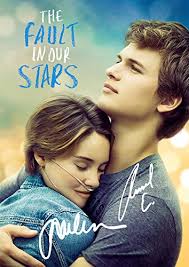
      The Fault in Our Stars by John Green

      Hazel Lancaster in The Fault in Our Stars: Teenaged Hazel has been dealt a lousy hand, thyroid cancer that has metastasized into lung cancer. Her first goal, to please her mother, is accomplished when she attends a support group for kids with cancer. At this meeting, she makes friends with Augustus Waters who becomes her first love. She introduces Augustus to her favorite novel about a girl with terminal cancer and explains she wants to meet the author and understand what really happened to his family. You see, the motivation that drives Hazel is that she needs to believe her parents will be okay after she dies. (spoiler alert) Along the way Hazel and Augustus travel to Amsterdam and meet the author, lose their virginity, and Hazel realizes how much she wants to live. But Augustus has been hiding a horrible truth: his cancer has returned and he has little time left. Quite a plot twist, isn’t it? Now Hazel needs to somehow support him, cherish their last days together, then handle her grief all the while coping with her own terminal diagnosis. She comes to understand what being a survivor means and that life has meaning no matter what stage you’re at. And she comes to feel more peace about her parents, especially after she learns her mother has been getting a degree in social work.

      Star Wars by George Lucas

      Luke Skywalker: Skywalker is a freedom fighter from humble beginnings. His path (and character arc) begins with a restless need to escape his dead-end existence on his uncle’s barren farm. He learns that Princess Leia is leading a rebellion against the Empire and wants to join. He longs to become a Jedi Knight, or fighter pilot especially after Obi-Wan Ben Kenobi, a desert hermit, informs him that his father was a Jedi fighter and he has the ability to harness the Force. Still reluctant to leave his family, his mind is made up for him when Imperial stormtroopers savagely murder his aunt and uncle. He’s all in now. Skywalker begins training with Hans Solo, then learns the princess has been captured. His next goal is to rescue the princess, which he accomplishes with more than a few swashbuckling moves. This sets up his final, seemingly hopeless goal of taking out the Death Star and ultimately saving the Rebel alliance.

      TAKEAWAYS

      Notice how the protagonists’ goals powered the story?

      Getting to know you….getting to know all about you…

      So how are you going to get acquainted with your protagonist? There are lots of questionnaires available online to create a physical presence and backstory. My Character Cheat Sheet link is at the end of this article.

      Walk a mile in their shoes…

      However, it seems to me that walking along or imagining characters as if they’re with you, their creator, can be one of these best methods of getting to know someone. Especially if you want to learn what makes them tick. Or in fiction speak, their motivations. Motivations stem from a character’s past, basic nature and personality, and compelling circumstances.

      Let’s repeat: Motivations create needs which create goals which fuel conflict = story.

      Just try it. Step outdoors and plan to walk for at least a mile with your invisible pal at your side.

      • What would your character notice or remark on?
      • How does he/she hold his/her body?
      • Fast walker? Ambler? Quiet?
      • Hates exercise? Feels most alive when moving?
      • What’s on his or her mind? Distracted? Preoccupied? Impatient?

      Do you remember those moments in life when you’re walking along with a friend and a profound truth slips into the conversation? Maybe it’s a tidbit or a bombshell or sharing a long-ago memory. We all have wounds and they’re often twined to a character’s internal goals and secrets. Those are the moments, the gold you’re searching for.

      And although time is short with November looming, how about a short road trip with your character riding shotgun? Or can he or she tag along when you’re running errands or chauffeuring the kids? Have you ever noticed how some people are a delight to travel with and some people are a nightmare? Which one is your protagonist? A nervous, watchful traveler? Open to adventure? Afraid of the unknown? Chatty? Reticent?

      Shaping your protagonist’s goals

      What’s wrong or not working in his/her current situation?

      What about emotional needs from the past? In other words, what’s screwing up your character?

      What first, clear-cut action step can the protagonist take toward his/her goal?

      Remember, a protagonist’s goals work best if they’re relatable, visible, and barely achievable. Side note: some of a character’s goals will remain ‘invisible’ since they are inner, emotional, personal growth goals.

      INCITING INCIDENTS

      What is the impetus to push your protagonist toward that goal?

      The inciting incident such as Prim begin chosen to participate in the Hunger Games? The first plot point when Hazel meets Augustus at the support group? Dorothy’s inciting incident? Luke Skywalkers’ inciting incident?

      What is your protagonist’s inciting incident? 

      Stay tuned for more NaNoWriMo Tips // Jump Start Your Novel Tips

      Jessica Page Morrell

      Keep writing, keep dreaming, have heart. Jessica

      Jessica Morrell is a top-tier developmental editor and a contributor to Chanticleer Reviews Media and to the Writer’s Digest magazine. She teaches Master Writing Craft Classes at the Chanticleer Authors Conference that is held annually along with teaching at Chanticleer writing workshops that are held throughout the year. 


      Chanticleer Editorial Services

      Did you know that Chanticleer offers editorial services? We do and have been doing so since 2011.

      Our professional editors are top-notch and are experts in the Chicago Manual of Style. They have and are working for the top publishing houses (TOR, McMillian, Thomas Mercer, Penguin Random House, Simon Schuster, etc.).

      If you would like more information, we invite you to email Kiffer or Sharon at KBrown@ChantiReviews.com or SAnderson@ChantiReviews.com for more information, testimonials, and fees.

      We work with a small number of exclusive clients who want to collaborate with our team of top-editors on an on-going basis. Contact us today!

      Chanticleer Editorial Services also offers writing craft sessions and masterclasses. Sign up to find out where, when, and how sessions being held.

      A great way to get started is with our manuscript evaluation service. Here are some handy links about this tried and true service:

      https://www.chantireviews.com/manuscript-reviews/

      Writer’s Toolbox

      Thank you for reading this Chanticleer Writer’s Toolbox article.

      Writers Toolbox Helpful Links: 

      The INCITING INCIDENT: STORY, SETBACKS and SURPRISES for the PROTAGONIST – A Writer’s Toolbox Series from Jessica Morrell’s Editor’s Desk

      ESSENCE of CHARACTERS – Part One – From the Jessica Morrell’s Editor’s Desk – Writer’s Toolbox Series  

      http://jessicamorrell.com/?page_id=174

    • The INCITING INCIDENT:  STORY, SETBACKS and SURPRISES for the PROTAGONIST – A Writer’s Toolbox Series from Jessica Morrell’s Editor’s Desk

      The INCITING INCIDENT: STORY, SETBACKS and SURPRISES for the PROTAGONIST – A Writer’s Toolbox Series from Jessica Morrell’s Editor’s Desk

      Fiction features a problem that needs solving and only the protagonist can solve it.

      In short stories, the problem is often introduced by the inciting incident–an event that triggers or launches what follows.

      In longer fiction, the inciting incident might lead to the problem. This event will disrupt the status quo, demand response, and set actions in motion. It’s a threat that unbalances the story world and creates dilemmas that must be dealt with.

      The Wizard of Oz – Inciting Incident

      A simple plot structure is a protagonist struggling to solve an intolerable problem and re-establish order. Jessica Morrell

      No matter when the problem begins (it’s always in Act One) the problem is weighty and vexing, perhaps insurmountable. If the problem is not immediately personal, it should become so that it will create a bond (connection) between the protagonist and antagonist. (A classic example is the connection between Sherlock Holmes and Jim Moriarty).

      Sherlock Holmes and Jim Moriarty

      As you know, in real-life problems are sometimes unsolvable and don’t fit neatly into a satisfying narrative arc. Across the globe, there are ‘forever’ problems of climate change, financial inequities, immigrants who need homes, corporate greed, and fascism. No shallow fixes will work, though incremental changes can chip away at underlying issues.

      Closer to home, you might be dealing with a job that drives you crazy, but you cannot leave; family members who refuse to reconcile; health or mental health issues that can only be coped with, not cured; or agonizing decisions about caring for elderly family members. In fact, studies have shown that depression can be linked to seemingly unsolvable problems.

      This is why some people turn to fiction. Where love wins in the end, crimes are solved and justice is served, and friends or families reconcile. But in well-told tales, success never comes easy and it always exacts a toll. Often success comes from the protagonist tapping into inner resources he or she hadn’t accessed before.

      Frodo and the Ring – LOTR

      A FEW STORY  TIPS and HANDY REMINDERS from Jessica Morrell

      • As the story progresses the protagonist forms a plan. Now the plan can be shaky, untested, or desperate, but readers need a  strategy at work.
      • Force your character to solve smaller problems along the way to resolving the major story problem. A detective can dig up a much-needed witness or help a vulnerable street kid.
      • Endow your protagonist with specific, interesting skills and personality attributes that won’t waver and make him or her suited to the task.
      • Create a protagonist who is somehow lacking in something he or she needs for happiness or fulfillment.
      • Burden him or her with emotional baggage and needs, personal demons or addictions, then toss in cast members and subplots that distract, undermine, or hinder.
      • Understand how the problem makes the protagonist feel in each scene: hesitant, unaware, outgunned, overwhelmed, weak, unqualified, terrified.
      • Setbacks and surprises should be baked into the plot.

      Oh, and the protagonist should fail, fall on his face at least a few times along the way to the climax. Because your job as the master manipulator (aka author) is to blindside, torment, and thwart your characters. Again and again, so the outcome is in question and your readers are compelled to keep turning the pages.

      Jessica Page Morrell
      Jessica Page Morrell


      Keep writing, keep dreaming, have heart.  – Jessica 

      Jessica Morrell is a top-tier developmental editor and a contributor to Chanticleer Reviews Media and to the Writer’s Digest magazine. She teaches Master Writing Craft Classes at the Chanticleer Authors Conference that is held annually along with teaching at Chanticleer writing workshops that are held throughout the year. 


      Chanticleer Editorial Services

      Did you know that Chanticleer offers editorial services? We do and have been doing so since 2011.

      Our professional editors are top-notch and are experts in the Chicago Manual of Style. They have and are working for the top publishing houses (TOR, Macmillan, Thomas Mercer, Penguin Random House, Simon Schuster, etc.).

      If you would like more information, we invite you to email Kiffer or Sharon at KBrown@ChantiReviews.com or SAnderson@ChantiReviews.com for more information, testimonials, and fees.

      We work with a small number of exclusive clients who want to collaborate with our team of top-editors on an on-going basis. Contact us today!

      Chanticleer Editorial Services also offers writing craft sessions and masterclasses. Sign up to find out where, when, and how sessions being held.

      A great way to get started is with our manuscript evaluation service. Here are some handy links about this tried and true service:

      https://www.chantireviews.com/manuscript-reviews/

      Writer’s Toolbox

      Thank you for reading this Chanticleer Writer’s Toolbox article.

    • What Literary Agencies and Acquisition Editors are Seeking in Manuscripts – Refreshing your Writer’s Toolbox from Jessica Morrell’s Editor’s Desk

      What Literary Agencies and Acquisition Editors are Seeking in Manuscripts – Refreshing your Writer’s Toolbox from Jessica Morrell’s Editor’s Desk

      What is it about a particular manuscript that makes it interesting to a literary agent (or the agent’s slush pile reader), acquisition editor, or professional reviewer?

      While it may take more than a crystal ball to figure out exactly what lit agents and publishing houses acquisition departments want and let alone reviewers, guidance can be had.  Line editors do understand what these gatekeepers want to see and, perhaps more importantly, what they do not want to see in a manuscript.
      Advice from line editors can be an author’s first line of defense in climbing out of the slush pile to gaining a gatekeeper’s interest. No crystal ball required.

      Jessica Morrell, a top-tier developmental editor for major authors and publishing houses, knows what these gatekeepers are seeking along with what makes them cringe.

      Editors, agents, and reviewers are word people, most were English or journalism majors in college and have a great love and respect for the written word. They will notice your level of craft within the first sentences, so your efforts must be polished, vivid and exceptional.

      Craft Tips & Techniques by Jessica Morrell, Editor

      (with Added Comments, from Kiffer Brown, publisher of Chanticleer Reviews magazine)

      • Your manuscript lives or dies on your opening sentences and each word must be perfect, precise, and weighted with meaning. 
        • (Most slushers (who work for agents and acquisition departments) do not read past the few pages of a manuscript. Don’t blame them for not reading more of your manuscript. Slushers have more works than they can possibly read in a month but have to slush in a given day. It is the writer’s job, neigh duty, to keep the slusher engaged. Slushers are professional readers who are panning for “gold and gems in the raw.”  This system is by design, btw.) 
      • Editors notice and are turned off by passive voice and wimpy verbs.
        • (Enough said.) 
      • Editors notice when the viewpoint jumps or shifts within a scene.
        • (This is a pet peeve of professional reviewers—an indication of lack of writing craft and skills.)
      • Editors notice too much telling (reporting or summary) and not enough showing in all types of writing including essays and memoir.
        • (A line editor can help with too much telling with comments and questions.) 
      • Editors notice when emotions are announced instead of dramatized.
        • (Reviewers call this “lazy writing.”)
      • Editors notice the frequent use of names in dialogue. Generally, leave out names.
        • (Multiple names, especially names that are similar, are irritating to reviewers. When the reviewer has to make notes about who is whom it had better be for furthering the plot significantly.) 
      • An editor notices sloppy punctuation such as excessive use of exclamation points, quote marks around inner thoughts, improper use of semicolons and ellipsis.
        • (Reviewers see this as the author not being professional about the work  (or his or her writing career) to have it professionally proofed – the most basic type of editing.) 
      • Editors notice protagonists who are not proactive, heroic in some way, and bigger than life. (
        • Reviewer’s Mantra – Novels are depictions of life without the boring bits.) 
      • Editors notice characters with a limited emotional range and expression.
        • (One-dimensional character and cardboard characters are uninteresting.) 
      • Editors notice large and small inaccuracies and inconsistencies—when the character has blue eyes on page 23 and green eyes on page 57; when a character drives an old, beat-up, pick-up truck that is inexplicably equipped with airbags; when an animal, plant, or species of any sort is misnamed or shows up in the wrong region of the country.
        • (Did the author care enough to do the background research for the work? These technical details’ correctness can make or break the construct of a story.)
      • Editors notice when technical details don’t ring true—such as in a mystery when police don’t follow standard arrest procedure; or when a yacht sinks from a single bullet hole; or explosive materials are used haphazardly.                  (See comment above.)
      • Editors notice vague descriptions (plant instead of ivy, a tree instead of oak) and generalities instead of details that bring the reader into a specific time and place.
        • (Vague descriptions are perceived as lazy writing which is not a reputation that an author would want to be known for.) 
      • Editors notice when writers don’t write for all the senses, especially leaving out smells.
        • (This is called the white room syndrome and it makes a manuscript about as boring to read as an old school telephone book.)
      • Editors notice small confusions such as misusing it’s and its, that and which, affect and effect, compliment and complement, lay and lie.
        • (With tools (apps) such as Grammarly and Grammar Girl, there is no reason for these misuses to occur. Additionally, these basics are covered thoroughly in The Elements of Style, a slim tome that is indispensable writers.) 
      • Editors notice overly long paragraphs and a general lack of white space. Generally, paragraphs are five or six sentences long and as taught in grade school introduce a topic, develop a topic, then conclude or lead on to the next paragraph.
        • (Edit, delete, cut your word count—as Stephen King says, “Kill your darlings.” The rule of thumb is that most manuscripts can be cut by 20 percent.)
      • Editors notice a lack of transitions—the words and phrases that announce a change in mood or emotion, time, and place so the reader can easily follow. They also know excess transitions as when you follow your characters across every room and along every sidewalk.
        • (Use transitions as you would salt and pepper—just enough but not too much. The correct amount of transitional phrases are the hallmark of solid writing.)  
      • Editors notice excess modifiers, purple prose, and too much description. The best writing is lean and economical and every word in every sentence has a job to do.
        • (Yes! Every word must move the story forward.) 
      • Editors notice a voice that is flat, inappropriate, or boring. Voice, whether it is the writer’s voice in an essay or the viewpoint character or narrator in fiction, must breathe life into the piece and hint at the person behind the words.
        • (Writing styles can mimick the guests at a cocktail party. There is always the bore who goes on and on and usually in too much detail also. The bore is the one guest who is the least tolerated even more so than the boisterous, the chatty, the tipsy, and even the know-it-all. But everyone loves the one who can tell a good story, or the who has a bit a mystery, and the one who is interested in others and respects others is always invited back. Respect your readers with your writing and your writing will earn respect.)


      Chanticleer Editorial Services

      Did you know that Chanticleer offers editorial services? We do and have been doing so since 2011.

      Our professional editors are top-notch and are experts in the Chicago Manual of Style. They have and are working for the top publishing houses (TOR, McMillian, Thomas Mercer, Penguin Random House, etc.). If you would like more information, we invite you to email Kiffer or Sharon at KBrown@ChantiReviews.com or SAnderson@ChantiReviews.com for more information, testimonials, and fees.

      We work with a small number of exclusive clients who want to collaborate with our team of top-editors on an on-going basis. Contact us today!

      Chanticleer Editorial Services also offers writing craft sessions and masterclasses. Sign up to find out where, when, and how sessions being held.

      Writer’s Toolbox


      Thank you for reading this Chanticleer Writer’s Toolbox article.

      Keep writing, keep dreaming, have heart. Jessica

      Keep on creating magic! Kiffer