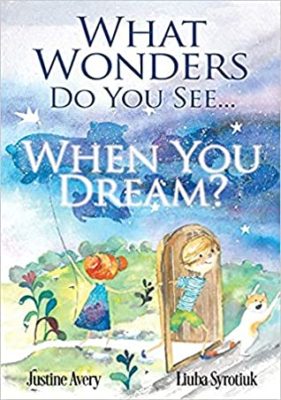
 As a calming invitation to a new bedtime ritual, What Wonders Do You See … When You Dream? is a lyrically narrated and masterfully illustrated children’s book well intended to help youngsters wind down and prepare for the magical adventure of sleep. Here the graceful style and delicate rhythm of Justine Avery’s writing comes alive with artist Liuba Syrotiuk’s dreamy watercolor visions. The beautiful collaborative effort provides inspiration for young readers to set aside their day’s excitement and drift into an imaginative landscape of shut-eye.
Against an airy backdrop that moves from rolling green hills and the face of a smiling sleepy sun to swirling blue-mauve skies and a sprinkling of stars, the narrative follows a whimsical boy and girl getting ready for bed. They put their toys away, brush their teeth, get into their PJs, and then take a moment to stretch and relax. Ultimately, deep meditative breaths help calm their active minds in a mindful moment, and soon they can drift quietly into a blissful encounter with their dreams.
Avery writes with a wispy hand and a soothing, creative voice. While the rhyming verses and words may diverge from the traditional, such free-form stylings are pleasantly suited to the relaxing nature of the story. Additionally, she broadens the audience’s vocabulary with fun words like “niggles” and “sniggle” that are sure to entice.
While youngsters often struggle at bedtime with concerns about the dark or worried about monsters in the closet, Avery’s smart emphasis is on bedtime as “magical … wondrous” and “best when you’re feeling slumberous.” Here, funny bug-eyes beneath the bed and small furry mop-like creatures running about elicit a figment of charm and humor rather than fear. The story’s final question of What wonders do you see? reveals a moment for youngsters to point out images on the page, as well as igniting an opportunity for them to talk about their own personal dreams.
Syrotiuk’s gossamer watercolors awash with gentle hues and soft-edged lines provide a perfect accompaniment to Avery’s narrative. This fresh, straightforward design ideally punctuates the soothing, balm-like feel of the story. Skillfully rendered brushwork draws readers into a dreamscape enveloped in ribbons of color. It showcases an imagined world filled with flora and fauna, floating sea life and planets, balls of yarn, and a frisky calico cat that lends its playful presence throughout the book’s pages.
Mini watercolor portraits and bios of both the author and illustrator, along with a message about freely sharing this work, appear at the book’s end. This small detail adds a glowing touch to the book’s overall design.
In a truly artful and harmonious combination of words and imagery, the sometimes mundane or, more often, chaotic time of getting ready for bed aptly turns into a surprise adventure. Here’s the perfect story to lull antsy youngsters into imaginative sweet slumber and help them discover some remarkable secrets when they close their eyes and dream.
What Wonders Do You See … When You Dream? Won First Place in the CIBA 2019 Little Peeps Book Awards for Children’s Literature.



 Since his father’s death, seventeen-year-old Antonius Sardi has become the man of the house, keeping up the spirits and providing for his mother, younger sister, and younger brother. When he takes a job in the household of Conte Leonardo Valperga, he works hard to prove useful in hopes of raising his status above that of a lowly servant. Occasionally, Antonius glimpses Savinus di Benevento, a seer of great renown in the medieval town of Pesaro, and a member of the Conte’s household as well. When Savinus advertises for a new apprentice, Antonius knows this is the opportunity for which he has been waiting, a chance to show his abilities to a man who can appreciate rather than fear them.

 Like most fifteen-year-olds, Sonnet McKay loves a good adventure. Still, when she, her siblings, and cousins discover a deserted Victorian mansion in the middle of the woods outside a ghost town near Seattle, they get much more than they bargained for. In an upstairs bedroom, Sonnet inadvertently steps inside a time travel portal and is whisked away to 1895. In her place stands Emma Sweetwine, an identical doppelganger for Sonnet.

 Something really nasty is afoot in the world as the Russians attempt to build a super quantum computer so powerful that it will be able to hack into America’s computer capabilities, bypassing even our most advanced protection and control or shut down every computer in the U.S.

 In the first several pages of Chasing Demons, a novel of the Old West not long after the American Civil War, the following happens to U.S. Army Private Gus O’Grady: he kills two Apache Indians, saves the lives of a troop of U.S. soldiers, kills two more Indians, kills a bad guy, winds up being mistaken for a man who may have robbed a bank of $20,000 in gold, and gets arrested for possibly being the man who raped a lass in an Arizona town populated by Mormons, and meets a woman he thinks is far too good for him. Oh yes, and he deserts the Army after 13 years.


 Whispers by Lynn Yvonne Moon explores the issue of incest through the life of twelve-year-old Musetta, whose father has just died. We meet Musetta at her father’s funeral and realize that this girl is dealing with serious issues. Still, more than grief, she’s filled with rage – and relief. And we cannot blame her. Whispers is filled with enough intrigue and family secrets to glue readers’ eyeballs to the page and hug their parents when they reach the end of the tale.
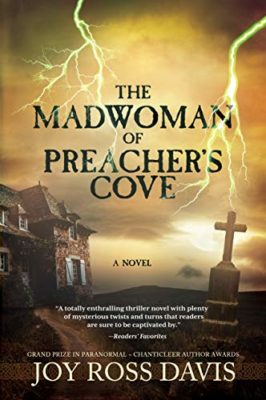
 Award-winning author, Joy Ross Davis’ latest work, The Madwoman of Preacher’s Cove, ventures beyond the paranormal into the surreal. Like Medusa on a bad hair day, the lives of characters are intertwined and twisted in a snaky snarl of conflicting human desires, terrifying inexplicable events, and the lingering afterlives of ancient, supernatural beings.
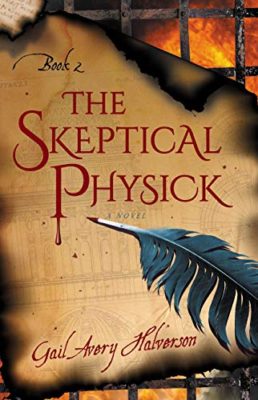
 In the second in a series by author Halverson, an aristocratic, intellectually curious young woman has fallen in love with a young physician, a commoner whose radical experimentations have jeopardized his reputation. The couple is just recovering from the professional and personal rigors of dealing with London’s plague victims when the city is overwhelmed by fire. Their services are needed now more than ever.

 Renowned author and mother of a son with autism, Ellen Notbohm here writes from both a personal and a studied viewpoint.