Tag: Chanticleer Grand Prize

  • Chanticleer 10 Question Interview Series with Science Fiction Author Jayson Adams – Grand Prize Award-winning Author of Ares

    CHANTICLEER 10 QUESTION AUTHOR INTERVIEW SERIES

    with Award-Winning Author, Jayson Adams

    Author of the 2024 Cygnus Grand Prize Winner Ares
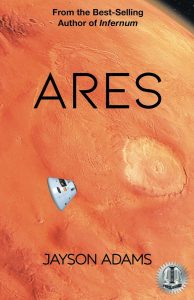
    Ares Cover

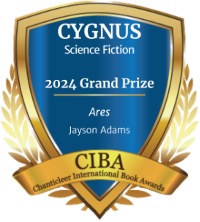
    Blue, Gold, Badge, CIBA

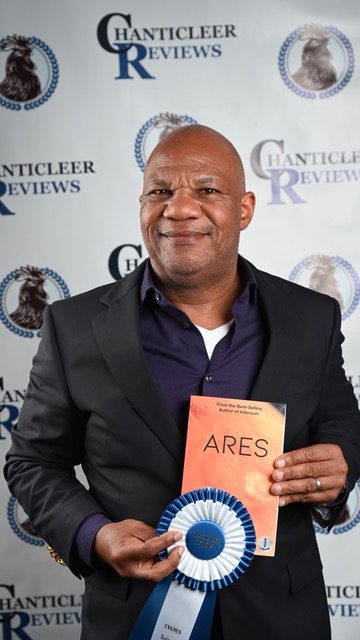
    Hello friends! We have another wonderful interview for you today, with author Jayson Adams! His book Ares took home the Chanticleer 2024 CIBA Grand Prize Award in the Cygnus Division, and we are excited to share with you the steps he took to becoming an award-winning author and what he’s planning next.

    Take a minute or two and get familiar with Jayson and his incredible journey to becoming award-winning author!
     

    man, ribbon, bald, blazer, book, ares, ciba, award

    Chanti: Jayson, let’s start with your background. Tell us a little about yourself—have you always dreamed of being a novelist, or did writing come into your life in a different way?

    Adams: I’ve been a science fiction fan since I was kid, but I had never really imagined myself writing novels. My passion leaned more toward computers. Even though they’re deeply technical, I saw the computer screen as a blank canvas—it was my creative outlet. I started several software companies and had the freedom to build whatever I could imagine.

    About ten years ago, I joined Google as an engineer on the Chrome browser. Over time, I grew frustrated with the division of labor in that space: product marketers decided what the product should do, designers decided how it would look and feel, and engineers were expected to bring it all to life—no questions asked. A few years in, I realized I needed a new creative outlet and turned to writing. I figured that with enough practice and a relentless drive to learn the craft, I could eventually become a decent writer.

    Chanti: We’ve definitely seen the shift from tech to writing frequently. That need for a creative outlet is undeniable. When it comes to the strengths you brought from your previous jobs to your new skills as a writer, can you talk about where you feel most confident and maybe offer some advice to anyone who struggles with that?

    Adams: Coming up with interesting plot twists. My advice to anyone who struggles in that area is the same lesson I find myself relearning from time to time: just write. When I get stuck wondering what should happen next, if I force myself to sit down and write what I do know, the ideas start to flow. And more often than not, they’re ideas I never would’ve discovered if I hadn’t put something on the page.

    Chanti: That’s such practical advice about pushing through the uncertainty! Your novel Ares has received incredible recognition. When did it really hit you that you’d become an author—not just someone who writes, but truly an author?

    Adams: It really sank in after I published my second novel, Ares. My first novel, Infernum, was well received, but who could say if that was just a fluke. With Ares earning similar acclaim, I can’t deny it anymore: I’m a writer.
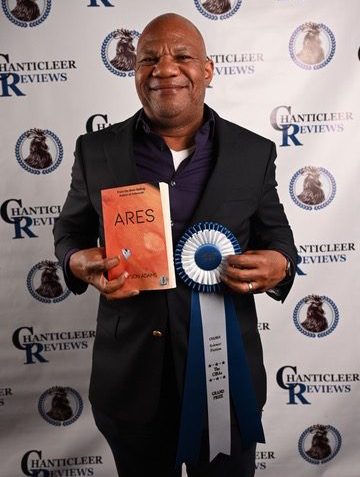
    Man, blazer, bald, book

    Chanti: Two successful novels definitely prove it wasn’t beginner’s luck! You’ve established yourself firmly in science fiction. Is that where you plan to stay, or do you explore other genres as well?

    Adams: Broadly speaking, I write science fiction, but after publishing my second novel, I realized I’m straddling two sub-genres. Infernum is a space opera set a few hundred years in the future, while Ares is grounded sci-fi rooted in the near future. The tricky part is that fans of one don’t always enjoy the other. The novels I’m working on now lean toward grounded sci-fi, but I’ll likely return to space opera before long.

    Chanti: Managing reader expectations across subgenres is a challenge! When it comes to your writing approach, are you someone who follows established storytelling conventions, or do you prefer to break the rules and forge your own path?

    Adams: I follow the rules. They’re an unspoken set of agreements between author and reader that allow the reader to relax into a story. They signal what kind of world they’re entering, what matters, and what to expect. If I hand them something I’m calling a novel, they know it won’t fizzle out at 30,000 words. If I say it’s a mystery, they know there’ll be resolution. Following the rules doesn’t make you predicable, it makes you trustworthy.

    I once read The Hollow Man by Dan Simmons. The bulk of the book was the main character drifting from one random situation to the next. I kept waiting for a through line—some deeper meaning or connection to emerge. But all those events turned out to be filler, just killing time until the ending, which was probably the whole reason Simmons wrote the book. He broke the rule that says everything in the story should matter. When events don’t connect or build toward something, the reader feels tricked. I was so frustrated, I actually threw the book away.

    Chanti: That’s a compelling argument for honoring the reader contract! When you’re not crafting these intricate sci-fi worlds, how do you spend your time? What are your hobbies and interests outside of writing?

    Adams: Outside of reading, most of my time goes into writing software. I’m currently building out an app idea, though my long-term goal is to leave the tech world behind and focus entirely on writing. I’m also an artist and plan to return to life drawing, something I’ve missed.
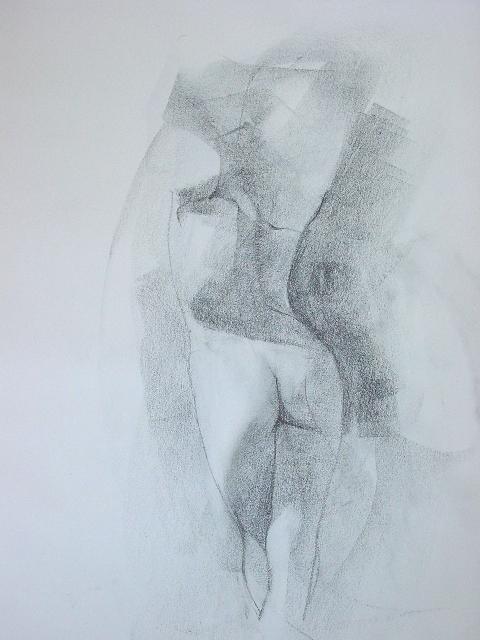
    Jayson Adams, figure drawing, pencil sketch
    Copyright © 2000 Jayson Adams. All rights reserved.

    Chanti: It sounds like creativity flows through everything you do! Writing is definitely a craft that requires constant learning. Which books on the craft of writing have been most helpful to you?

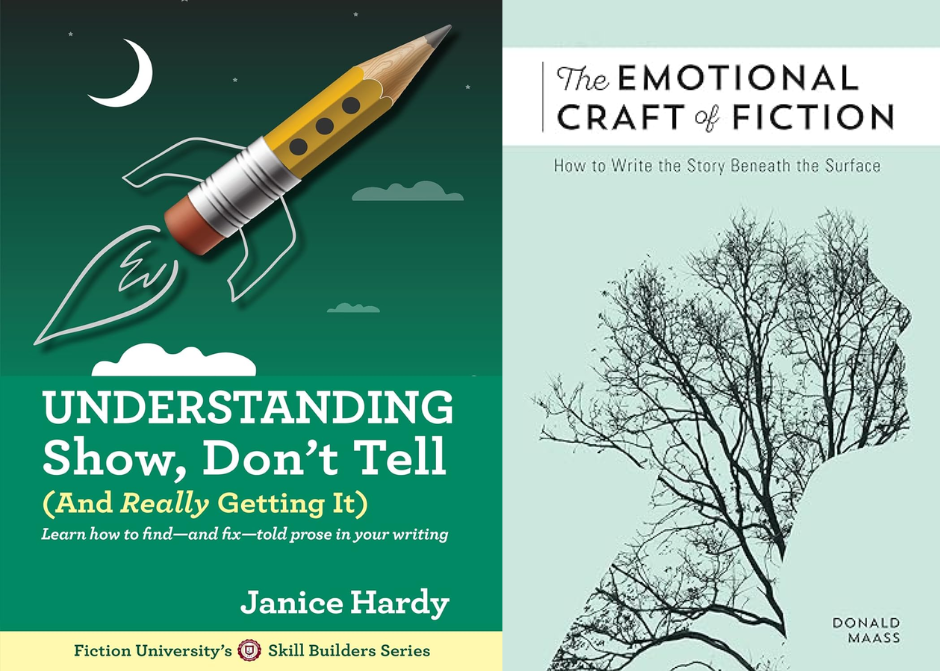
    Adams: Understanding Show, Don’t Tell, by Janice Hardy. Before I read this book, I had a general understanding of show vs. tell. This book was fantastic as far as explaining all the different ways telling can creep into a section of prose.

    I also love The Emotional Craft of Fiction by Donald Maass. Maass says that readers may not remember every plot point, but they’ll remember how a story made them feel. This is the power of emotionally resonant fiction. He does a great job of explaining how to tap into it on the page.
    Show don't tell, book, green, pencil

    Chanti: Both of those sound incredibly valuable! Marketing can be one of the trickiest aspects of being an author. What strategies have you found most effective for selling books and building your readership?

    Adams: A well-performing BookBub ad is incredibly valuable, but can be tricky to build. Ares has been out for awhile now, so Amazon lists about 100 other titles that readers also bought. I used ChatGPT to turn that list into a spreadsheet, with info like author, summary, and more, and then fed it back into ChatGPT to identify recurring themes and tropes that define an Ares reader.

    From there, I built ad copy around four tropes that resonated the most. I also had ChatGPT identify authors from that list whose work aligned with each trope. Then I created BookBub ads for each trope that targeted fans of the corresponding authors. That approach was far more effective than my earlier “try this headline” style of experimentation.

    Another thing I’ve explored is using negative reviews as a marketing tool—not to win over critics, but to help misaligned readers recognize the book may not be for them. I took screenshots of all my 1-, 2-, and 3-star reviews and fed them into ChatGPT, then asked it to gently distill the criticisms. (Screenshots let me avoid even glancing at what might be painful feedback, while still giving the AI everything it needed.) My goal was to add a line to the book description that would help readers who probably wouldn’t like the book self-select out.

    From that effort, I learned that many of Ares’s low-star reviews came from people who expected hard sci-fi and were disappointed to get something that leaned more toward mystery/thriller instead. ChatGPT crafted a short blurb that lets potential readers know that if they’re looking for hard sci-fi, Ares may not be the book for them.
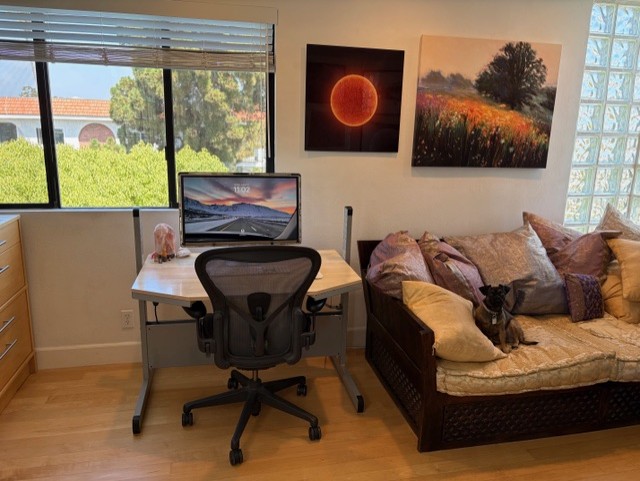
    Jayson Adams, office chair, office, desk, window, computer, couch

    Chanti: That’s a genius use of AI for market research! I’m going to have to try that out! Looking ahead, what projects are you working on now? What can your readers look forward to next?

    Adams: I started working on a sequel to Ares, called King of the Moon. It follows Commander Praviraj Anand and Lieutenant Jack Bremmer from the moonbase featured in that story. But along the way, I found myself pulled into a new, unrelated novel called The Quantum Mirror, which centers on a rescue mission to a decrepit Russian space station. I plan to finish both, though The Quantum Mirror will likely arrive first.
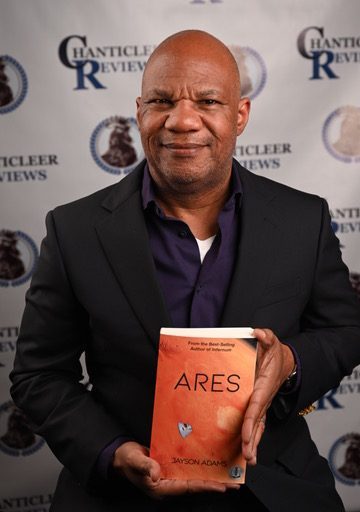
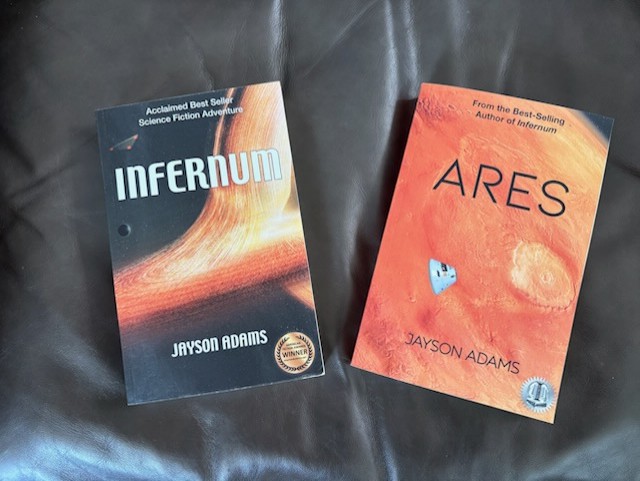
    jayson Adams, Ares, book, Chanticleer

    Chanti: We can’t wait for either of them! Ares was such a treat, and we can’t wait to read more! As we wrap this up, we’d love to end with some advice for readers: What’s the single most important thing a reader can do to support an author they enjoy?

    Adams: If they enjoy a book, please, please, PLEASE leave a rating for it wherever they bought it. As a reader, I always look at the average rating, the number of star ratings, and the release date (how long it took to earn those star ratings). That alone tells you so much about a book’s appeal. Ratings may seem like a small thing, but they make a huge difference.

    Thank you, Jayson, for sharing your writing journey with us and for creating thought-provoking, thrilling science fiction! 


    blazer, blue, shirt, bald, man


    Jayson Adams began his career as a tech entrepreneur, achieving his dream of starting a software company, which he did at the age of 24, and retiring by the age of 30. He has worked for notable figures like Steve Jobs and has founded several successful startups, including one sold to Netscape. After a successful career in technology, he transitioned to writing science fiction around 2018, finding a new creative outlet in storytelling.

    After traveling through Europe and taking up music, he returned to computers with another start-up. He is currently working on a sequel to his award-winning novel, Ares.

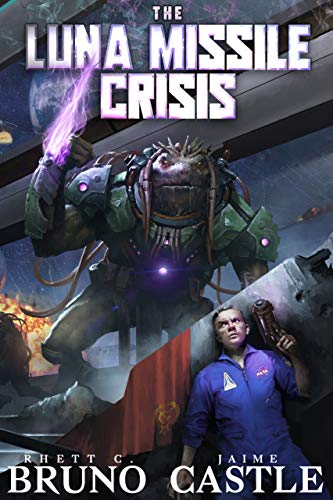
  • The LUNA MISSILE CRISIS by Rhett C. Bruno and Jaime Castle – Alternate History Sci-fi, Action & Adventure, Alien Technology

    Blue and gold Grand Prize Winner Badge for Cygnus Science Fiction The Luna Missile Crisis by Rhett C. Bruno & Jaime Castle

    Authors Rhett C. Bruno and Jaime Castle come together to tell the tale of alien first contact gone awry in their epic science fiction release, The Luna Missile Crisis.

    The year is 1961, and cosmonaut Yuri Gagarin is set to become the first man in space. But when Yuri, snug inside the Vostok 1, is launched from the cosmodrome and into the coming night, he’s met with a collision that changes the course of history. The Vostok 1 crashes into an oncoming alien starship. Assuming the collision was actually a missile fired from Russia’s space race opponent, the United States, the soviet nation quickly launches an arsenal of nuclear warheads in response. But those warheads never make it to their target. Instead, they detonate against the hidden starship, sending a wave of nuclear destruction over eastern Europe.

    In the coming weeks after contact day, military troops from both sides of the cold war are sent into the ruins of eastern Europe – into an area now called the Dead Curtain – to search for useful alien technology. During a skirmish between the Russians, the Americans, and the Vulbathi (the toad-like alien race aboard the damaged starship), a combat medic name Kyle McCoy stumbles into the chaos and sparks a ceasefire. His actions create a domino effect, bringing about relative peace between all three parties. Three years pass, and in exchange for aid in repairing their damaged ship, the Vulbathi agree to offer some of their exceptional technology to mankind. And Kyle McCoy, once foot soldier turned head of the Department of Alien Relations, is given a desk job with a title that suits his place in history.

    But not everything is going as planned.

    Kyle’s twin brother, Conner McCoy, is a dead-beat with a past steeped in drugs and crime. His latest venture is selling knockoff alien weaponry to mob bosses and gangsters. Conner and his crew work the circuit, living under the radar as they travel from city to city, peddling their fake Vulbathi tech with enthusiasm to boot. And it’s all fun and games and a little extra cash until one of the knock offs isn’t a knock off at all and the gun in Connor’s hand turns a man into a pile of dust and goo. Kyle is called in to investigate the case, and when the two estranged brothers reunite, the stakes become higher than either of them could have ever foreseen. Stolen identity, sabotage, explosive battles, and a myriad of historical figures all spill across the pages as the story of humans and Vulbathi unravels.

    Bruno and Castle have expertly crafted an alternate history 1960’s that feels real enough to touch.

    The use of historical figures as supporting cast adds to the detailed world building, and even the Vulbathi tech, which is everywhere in The Luna Missile Crisis, is most believable when the reader sees it integrated into the everyday lives of working people. A prime example is Kyle’s holotube that he regards as a “faulty prototype” taking the place of his real television. All of these stunning details are brought to life by writing that is engaging, active, and perfectly descriptive. The dialogue is witty and sharp, well fitted to the cast and their gamut of personalities, and as the chapters alternate between the two McCoy brothers, the syntax shifts ever so slightly, giving the subtle notion of a true perspective change.

    Not only is the writing engaging, but Bruno and Castle have taken a well-worn Sci-fi plot – the pulpy notion of the Cold War era interrupted by an alien invasion – and breathed fresh life into it.

    The narrative is strong, propelling the reader forward through an increasingly wild ride. Many will recognize familiar character archetypes of the do-good FBI agent; the grifter counterfeiter; the over-the-top gangster; the misunderstood monster and will be pleasantly surprised to find themselves growing more and more entrenched in a plot that is everything but familiar.

    The Luna Missile Crisis is filled with action, adventure, and enough laser blasts to satisfy any science fiction fan, but its true strength lies in the cohesive world building and rock-solid storytelling that only two authors like Rhett C. Bruno and Jaime Castle can provide. In other words, here’s one sci-fi we can happily recommend!

    The Luna Missile Crisis by Rhett C. Bruno and Jaime Castle won Grand Prize in the 2020 CIBA Cygnus Awards for Science & Speculative Fiction.


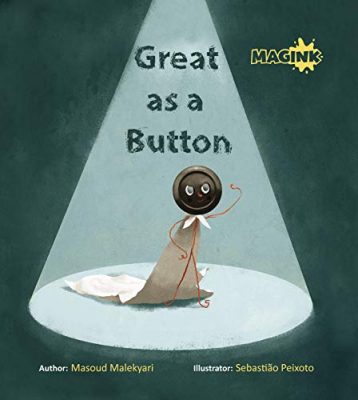
  • GREAT AS a BUTTON by Masoud Malekyari – Children’s Books, Children’s Self-Worth Books, Children’s Picture Books

    A blue and gold badge for the 2020 Grand Prize Winner for Little Peeps Children’s Books Great as a Button by Masoud Malekyari

    Masoud Malekyari’s Great As a Button is a delightful children’s book that places a soulful little plastic adornment at center stage in a thought-provoking story that offers up a positive lesson about self-worth.

    This tale unfolds from a first person POV as a lonely, black plastic button falls off a shirt. The button ruminates over its plight of feeling too plain to be noticed, and wishes perhaps to be a sock, a key, or a pair of glasses, i.e., a more important item that the button surmises someone would go out of their way to look for.

    Amidst encounters with an inquisitive dog and some playful ants, the button has longings to reside in a big castle while adorning a king’s coat, or to sail across the ocean while attached to a boat captain’s slicker. Fate suggests that the button might be in trouble if snatched up by birds; lucky if used by a seamstress; or forlorn when not chosen like the more ornate accessories in a tailor’s shop. When given to a young boy, surprising opportunities send the button in an unexpected direction where ultimately, he discovers newfound importance on a sunny winter’s day.

    Illustrations by Sebastião Peixoto prove glowingly complimentary and are a key component of the story.

    The natural color shadings render quiet, yet well-defined drawings. Quirky and whimsical features lend true personality to the bevy of characters. From the intense facial details of a battling buttons army to the sad expression of the central plastic disc pondering his plainness, this simple character with its curlicued thread body is artfully brought to life.

    Peixoto also smartly visualizes enlightening options between the little button’s desire to live in a royal palace, contrasted with an outdoor tent-like open book structure, where a smokestack chimney provides warmth on a snowy day. Likewise, the thought of adventure on the high seas is pitted against the simplicity of a paper vessel floating down a curbside stream.

    Great As a Button is a charming take on learning to be happy with who you are.

    Like the little button, it may take some of us a bit longer than others, but finding our particular niche is key. Our own unique traits and talents will lead us to where we belong, and satisfaction will come with contentment. Comparisons with others is unnecessary, as we come to realize we are each an individual with our special place in this world.

    Like the simple button who comes to understand his self-worth, this quaint, imaginative read is an important work with a vital message for both young readers and the confident adults they aspire to be.

    Great As a Button by Masoud Malekyari won Grand Prize in the 2020 CIBA Little Peeps Book Awards for Early Readers Fiction.


    5 Stars! Best Book Chanticleer Book Reviews

    Little Peeps Grand Prize gold foil book sticker

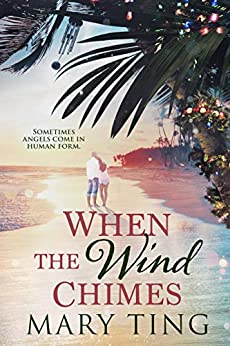
  • WHEN the WIND CHIMES by Mary Ting – Sisters Fiction, Kauai Hawaii Travel Books, Single Women Fiction

    A blue and gold badge for the 2020 Grand Prize Winner for Chatelaine Romantic Fiction When the Wind Chimes by Mary TingIn When the Wind Chimes by international best-selling author Mary Ting, Kate Summers wants to make this Christmas extra-special for her older sister, Abby, and four-year-old nephew.
    A year ago, she’d given up Christmas with her family to spend the holiday with her boyfriend, Jayden, whom she had caught cheating on her the next day. Not only is she hoping to erase that memory, but she also has another even more important reason to make this Christmas special.  A few months after her disastrous break-up with Jayden, her brother-in-law, Steve, passed away from cancer, so Abby and Tyler will be spending their first Christmas alone.

    After taking a leave from her job as a graphic designer in LA, Kate flies to Poipu, Kauai, determined to make this an amazing holiday, but on her way to her sister’s house, she meets a mysterious man, who gives up his cab for her. Kate can’t get the handsome stranger out of her head, and when she sees him again in her sister’s art gallery–and destroys his expensive shirt with paint–she is both mortified and excited.

    Billionaire Leonardo Medici, the heir and CEO of Medici Real Estate Holdings, is the most sought-after bachelor on the island and the most elusive. Lee just wants privacy and a temporary nanny for his four-year-old daughter, Bridget. When Kate applies for the job, neither is aware of their previous connection to each other until they meet in Lee’s mansion after Kate is hired by his permanent nanny, Mona. Bridget quickly bonds with Kate, and as they grow closer so do Lee and Kate. Kate’s rocky relationship past, however, keeps her on edge, and she must find a way to overcome the damage done by her cheating ex before she can ever learn to love again.

    The unpredictability of life and fate’s subsequent role in a person’s future is a major theme within this novel.

    Abby, Kate’s sister, never expected to be a widow in her twenties. Steve, her husband, died suddenly from cancer. The disease progressed more quickly than doctors predicted, and she is left to fend for herself and Tyler. Moving to Kauai, the place where she and Steve honeymooned, is an attempt to escape her sadness and find peace in the place where their life together began. Starting her own gallery in such a small community was another uncertainty, and while the gallery struggles at times, destiny brings Lee into her small business, and he becomes her best customer.  Lee purchases art to stage his more expensive listings, which is how he encounters Kate a second time after a quick-passing rainstorm brings them together the first time. Had Kate not jumped into his cab, slinging water all over his suit, they would not have met. Kate would have never seen the ad for a nanny had Abby not come down with a cold and needed Kate to drop Tyler off at preschool, and she would not have gotten the job had Mona not needed a replacement nanny for two weeks. The kismet that brings Lee and Kate together is an interesting and humorous part of the novel. This fate-filled string of coincidences adds a hint of the supernatural to their love’s beginning.

    Vulnerability is another great theme found in the award-winning, When the Wind Chimes.

    Abby is most definitely a strong woman. She not only begins her own business but also must be both mother and father to her son. However, Abby can’t do everything on her own. With her struggling business and the demands of her private life, she welcomes the help Kate brings and hopes she will stay on the island rather than going back to Los Angeles. The close relationship between the sisters is touching, and Kate’s job search shows how much she loves Abby and Tyler. Even though she fails to find a job as a graphic designer and has no experience as a nanny, she takes the job, planning to give the money to Abby to help her support Tyler.

    However, Kate’s willingness to try something new despite her uncertainty extends to her own artistic ability. Since her horrible experience with Jayden, she has lost her confidence and desire to paint even though Abby has successfully sold Kate’s pieces in the past. It takes courage and a release of her own fear to get her in front of a canvas, but her regained confidence brings her into contact with Lee again–albeit accidental. Lee has his own vulnerability issues. Opening up and bringing Kate into his life is a risk. He cannot allow just any woman into his life. Most of the women who approach him are only interested in his money or looks, and he must protect both his privacy and Bridget. His own past causes him trepidation because he harbors a deep hurt that is known only to those within his immediate circle. Both he and Kate learn to face their deep-seated emotions rather than burying them beneath fear and uncertainty, but to do that, they must give vulnerability free reign.

    When the Wind Chimes is more than a romance novel. It’s a heart-warming, feel-good read that will leave readers wanting more.

    Mary Ting won the Grand Prize in the 2020 CIBAs in the Chatelaine division for Romance and Romantic Fiction novels for her spell-binding novel.


    5 Stars! Best Book Chanticleer Book Reviews

  • The 2019 Overall Chanticleer International Book Awards Grand Prize Winner – 2019 CIBAs

    The 2019 Overall Chanticleer International Book Awards Grand Prize Winner – 2019 CIBAs

    We are honored and excited to announce the Best Book Overall Grand Prize Winner of the 2019 Chanticleer International Book Awards – the 2019 CIBAs

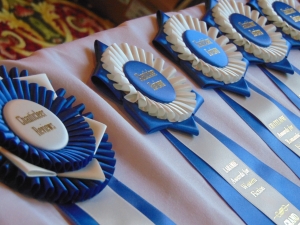
    Chanticleer Reviews Grand Prize Ribbons!

    Who took home the coveted Overall Grand Prize Best Book Blue Ribbon? 

    There are 17 Grand Prize Blue Ribbons, but only one will Overall Grand Prize Blue Ribbon for Best Book. The competition is fierce and competitive. We love each one, but only one can win.

    Who will be able to display and promote the gorgeous Grand Prize Badge in all book promotions for the winning title?

    17 authors made it to the exclusive CIBA Grand Prize Levels

    Which title will receive the Chanticleer Reviews Package and be featured in the  Chanticleer Reviews magazine winter quarter’s edition? 

    There were 17 CIBA Grand Prize Division Winners!

    Who will be interviewed and featured in our well-trafficked website?  

    All of the CIBA Grand Prize Division Award Winners will be featured!

    Who will receive the Overall Best Book Grand Prize Book Award Winner’s $1,000 USD? 

    There is only one $1,000 USD check at this time for the one CIBA OVERALL BEST BOOK.

    CONGRATULATIONS to

    James Conroyd Martin,

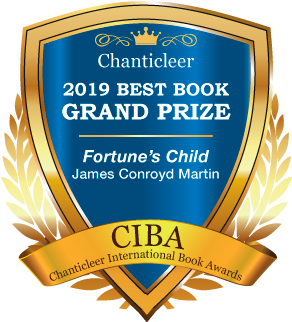
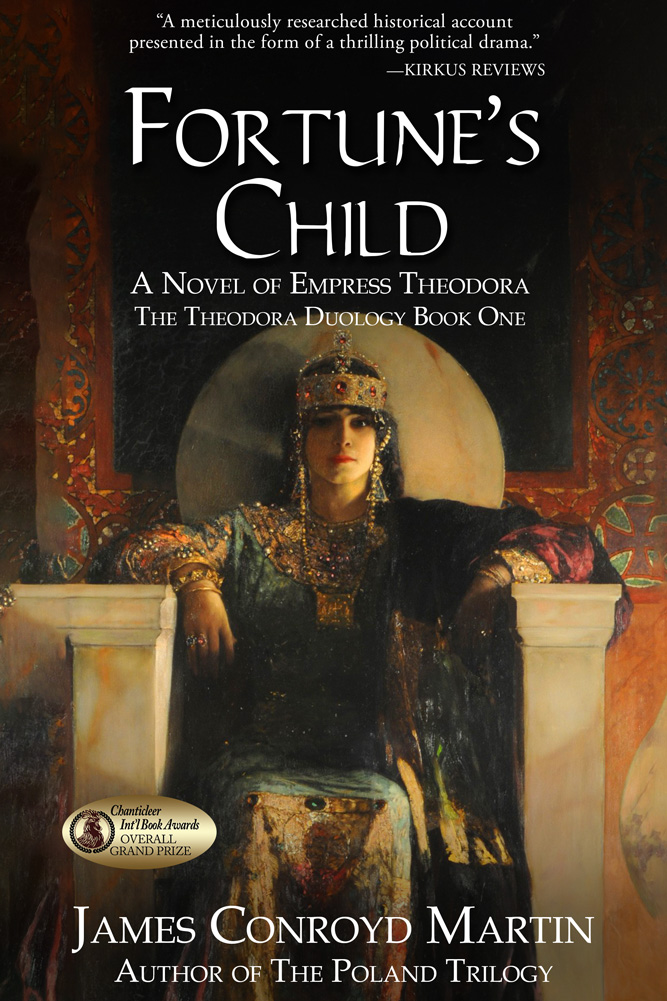
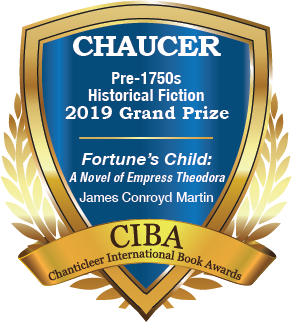
    author of the 2019 CIBA Overall Best Book Fortune’s Child: A Novel of Empress Theodora 

    The journey of  Fortune’s Child: A Novel of Empress Theodora by James Conroyd Martin in the 2019 Chanticleer International Book Awards. 

    James Conroyd Martin, author of the Overall Best Book of the Chanticleer International Book Awards selection: FORTUNE’S CHILD: a novel of Empress Theodora


    Fortune’s Child: a Novel of Empress Theodora authored by James Conroyd Martin advanced from the entry level of all submissions into the 2019 Chaucer Book Awards for Pre-1750s Historical Fiction to the division’s Long List. From there, it advanced to the Chaucer Book Award’s Shortlist. Then it advanced in the next rounds to the Semi-Finals. More than half of all the 2019 Chaucer entries have fallen off the list and did not advance to the Semi-Final rounds. For works to advance to the Premier FINALIST rounds in each division, they must have been entirely read, rated, and then ranked by the CIBA judges for an overall average score of at least 8 out 10. From that point, the competition becomes fierce. Each judge evaluates the works competing for the limited first place category positions for each division. And then the judging continues as the selections are made for the CIBA Grand Prize Winners.

    Each year, we find the quality of the entries and the competitiveness of the division competitions increasing exponentially. We added a new level to the judging rounds in 2019—the premier Level of FINALIST per each CIBA Division. The CIBA judges wanted to add the Finalist Level of Achievement as a way to recognize and validate the entries that had outstanding merit but were not selected for the very few First Place Award positions within each genre division.

    We want to thank each and every one of the 2019 CIBA judges.

    Without your passion and labor of love for books, the Chanticleer International Book Awards would not exist and we could not fulfill our mandate:  Discovering Today’s Best Books!

    THANK YOU JUDGES!

    The Chanticleer International Book Awards Discovers Today’s Best Books!

    We want to thank all who have entered and participated in the prestigious CIBAs.

    We invite you to click on the links below that honor and recognize all 17 Divisions of the CIBAs First Place Award Winners and Division Grand Prize Winners. 

    PART ONE – The 2019 Chanticleer International Book Awards Division Winners

    PART TWO – The 2019 Chanticleer International Book Awards Division Winners

    PART THREE – The 2019 Chanticleer International Book Awards Division Winners

    Additionally, there are links on the Chanticleer Reviews website recognizing and announcing the works that advanced to the Premier Finalist Level of the 2019 CIBAs.

    The winners were recognized at the Virtual Chanticleer Authors Conference and Awards Ceremonies that were held on during VCAC September 8 – 13, 2020 by ZOOM webinars based at the luxurious Hotel Bellwether, Bellingham, Wash.

    You know you want a coveted Chanticleer Reviews Blue Ribbon! 

    Submit your works (manuscripts or novels published after or on January 1, 2018, are accepted) to the prestigious Chanticleer International Book Awards today! Entries are being accepted into the 2020 and now 2021 CIBAs in all 17 fiction divisions and five non-fiction divisions. 

    Be sure to register early for the 2021 Chanticleer Authors Conference that will start on April 16th, 2021 with the 2020 CIBA banquet and ceremony scheduled to take place on Saturday, April 17th, 2021 at the luxurious Hotel Bellwether in Bellingham, Wash. If we cannot move forward with CAC21 due to the coronavirus, we will host another LIVE and HYBRID Chanticleer Authors Conference and 2020 Chanticleer Int’l Book Awards ceremony.

    Pivot and Oscillate are the Words for Today’s Challenging Times as We All Learn Together! 

    An email will go out to all 2019 CIBA award winners prior to October 31, 2020, with instructions, links, and more information about the awards packages. We appreciate your patience. As stated many times before “One does not need to be present at the CIBA ceremony and banquet to win. But it sure is a lot more fun!” –even if it is virtual!

    As always, please contact us at Chanticleer@ChantiReviews.com with any questions, concerns, or suggestions!

    Be well. Stay Healthy. Take Care!

    The Chanticleer Reviews Team