Tag: Chanticleer Editorial Services

  • What Literary Agencies and Acquisition Editors are Seeking in Manuscripts – Refreshing your Writer’s Toolbox from Jessica Morrell’s Editor’s Desk

    What Literary Agencies and Acquisition Editors are Seeking in Manuscripts – Refreshing your Writer’s Toolbox from Jessica Morrell’s Editor’s Desk

    What is it about a particular manuscript that makes it interesting to a literary agent (or the agent’s slush pile reader), acquisition editor, or professional reviewer?

    While it may take more than a crystal ball to figure out exactly what lit agents and publishing houses acquisition departments want and let alone reviewers, guidance can be had.  Line editors do understand what these gatekeepers want to see and, perhaps more importantly, what they do not want to see in a manuscript.

    Advice from line editors can be an author’s first line of defense in climbing out of the slush pile to gaining a gatekeeper’s interest. No crystal ball required.

    Jessica Morrell, a top-tier developmental editor for major authors and publishing houses, knows what these gatekeepers are seeking along with what makes them cringe.

    Editors, agents, and reviewers are word people, most were English or journalism majors in college and have a great love and respect for the written word. They will notice your level of craft within the first sentences, so your efforts must be polished, vivid and exceptional.

    Craft Tips & Techniques by Jessica Morrell, Editor

    (with Added Comments, from Kiffer Brown, publisher of Chanticleer Reviews magazine)

    • Your manuscript lives or dies on your opening sentences and each word must be perfect, precise, and weighted with meaning. 
      • (Most slushers (who work for agents and acquisition departments) do not read past the few pages of a manuscript. Don’t blame them for not reading more of your manuscript. Slushers have more works than they can possibly read in a month but have to slush in a given day. It is the writer’s job, neigh duty, to keep the slusher engaged. Slushers are professional readers who are panning for “gold and gems in the raw.”  This system is by design, btw.) 
    • Editors notice and are turned off by passive voice and wimpy verbs.
      • (Enough said.) 
    • Editors notice when the viewpoint jumps or shifts within a scene.
      • (This is a pet peeve of professional reviewers—an indication of lack of writing craft and skills.)
    • Editors notice too much telling (reporting or summary) and not enough showing in all types of writing including essays and memoir.
      • (A line editor can help with too much telling with comments and questions.) 
    • Editors notice when emotions are announced instead of dramatized.
      • (Reviewers call this “lazy writing.”)
    • Editors notice the frequent use of names in dialogue. Generally, leave out names.
      • (Multiple names, especially names that are similar, are irritating to reviewers. When the reviewer has to make notes about who is whom it had better be for furthering the plot significantly.) 
    • An editor notices sloppy punctuation such as excessive use of exclamation points, quote marks around inner thoughts, improper use of semicolons and ellipsis.
      • (Reviewers see this as the author not being professional about the work  (or his or her writing career) to have it professionally proofed – the most basic type of editing.) 
    • Editors notice protagonists who are not proactive, heroic in some way, and bigger than life. (
      • Reviewer’s Mantra – Novels are depictions of life without the boring bits.) 
    • Editors notice characters with a limited emotional range and expression.
      • (One-dimensional character and cardboard characters are uninteresting.) 
    • Editors notice large and small inaccuracies and inconsistencies—when the character has blue eyes on page 23 and green eyes on page 57; when a character drives an old, beat-up, pick-up truck that is inexplicably equipped with airbags; when an animal, plant, or species of any sort is misnamed or shows up in the wrong region of the country.
      • (Did the author care enough to do the background research for the work? These technical details’ correctness can make or break the construct of a story.)
    • Editors notice when technical details don’t ring true—such as in a mystery when police don’t follow standard arrest procedure; or when a yacht sinks from a single bullet hole; or explosive materials are used haphazardly.                  (See comment above.)
    • Editors notice vague descriptions (plant instead of ivy, a tree instead of oak) and generalities instead of details that bring the reader into a specific time and place.
      • (Vague descriptions are perceived as lazy writing which is not a reputation that an author would want to be known for.) 
    • Editors notice when writers don’t write for all the senses, especially leaving out smells.
      • (This is called the white room syndrome and it makes a manuscript about as boring to read as an old school telephone book.)
    • Editors notice small confusions such as misusing it’s and its, that and which, affect and effect, compliment and complement, lay and lie.
      • (With tools (apps) such as Grammarly and Grammar Girl, there is no reason for these misuses to occur. Additionally, these basics are covered thoroughly in The Elements of Style, a slim tome that is indispensable writers.) 
    • Editors notice overly long paragraphs and a general lack of white space. Generally, paragraphs are five or six sentences long and as taught in grade school introduce a topic, develop a topic, then conclude or lead on to the next paragraph.
      • (Edit, delete, cut your word count—as Stephen King says, “Kill your darlings.” The rule of thumb is that most manuscripts can be cut by 20 percent.)
    • Editors notice a lack of transitions—the words and phrases that announce a change in mood or emotion, time, and place so the reader can easily follow. They also know excess transitions as when you follow your characters across every room and along every sidewalk.
      • (Use transitions as you would salt and pepper—just enough but not too much. The correct amount of transitional phrases are the hallmark of solid writing.)  
    • Editors notice excess modifiers, purple prose, and too much description. The best writing is lean and economical and every word in every sentence has a job to do.
      • (Yes! Every word must move the story forward.) 
    • Editors notice a voice that is flat, inappropriate, or boring. Voice, whether it is the writer’s voice in an essay or the viewpoint character or narrator in fiction, must breathe life into the piece and hint at the person behind the words.
      • (Writing styles can mimick the guests at a cocktail party. There is always the bore who goes on and on and usually in too much detail also. The bore is the one guest who is the least tolerated even more so than the boisterous, the chatty, the tipsy, and even the know-it-all. But everyone loves the one who can tell a good story, or the who has a bit a mystery, and the one who is interested in others and respects others is always invited back. Respect your readers with your writing and your writing will earn respect.)

     

    Chanticleer Editorial Services

    Did you know that Chanticleer offers editorial services? We do and have been doing so since 2011.

    Our professional editors are top-notch and are experts in the Chicago Manual of Style. They have and are working for the top publishing houses (TOR, McMillian, Thomas Mercer, Penguin Random House, etc.). If you would like more information, we invite you to email Kiffer or Sharon at KBrown@ChantiReviews.com or SAnderson@ChantiReviews.com for more information, testimonials, and fees.

    We work with a small number of exclusive clients who want to collaborate with our team of top-editors on an on-going basis. Contact us today!

    Chanticleer Editorial Services also offers writing craft sessions and masterclasses. Sign up to find out where, when, and how sessions being held.

    Writer’s Toolbox


    Thank you for reading this Chanticleer Writer’s Toolbox article.

    Keep writing, keep dreaming, have heart. Jessica

    Keep on creating magic! Kiffer

  • MINOR CHARACTERS – the SPICE of FICTION – Part One – From Jessica Morrell’s Editor’s Desk – Writers’ Toolbox Series

    MINOR CHARACTERS – the SPICE of FICTION – Part One – From Jessica Morrell’s Editor’s Desk – Writers’ Toolbox Series

    In fiction there’s a hierarchy when it comes to characters: the protagonist, antagonist, secondary characters, minor, walk-on, and stock characters. Let’s focus more on minor characters, shall we? Writers who neglect minor characters are neglecting essential ingredients to their works. It would be like omitting garlic or oregano from pasta sauce or cumin from a pot of chili.

    Minor characters, like secondary characters, operate in a strictly supporting role.

    • They are rarely viewpoint characters.
    • Don’t take up a lot of ‘stage time’ and readers generally don’t care about them a lot.
    • Do not have a subplot.
    • This means they’re usually ‘flat’ that is, they won’t change over the course of the story and they’re not fully dimensional. (There are exceptions to this.)
    Just a pinch makes all the difference!

    HOWEVER: Minor characters add color, verve, spice, eccentricity.

    • Make things happen, help advance the plot.
    • Establish the setting.
    • Provide insights or information about major characters. Without secondary and minor characters the protagonist would be isolated.
    • Prove that the protagonist has grown or changed.
    • Support the mood or atmosphere in a scene.
    • Breathe life into the story.
    • Disprove stereotypes.
    • Support themes.

    Examples:

    To Kill a Mockingbird: Heck Tate, Calpurnia, Judge John Taylor, Miss Maudie Atkinson, Dolphus Raymond

    A Christmas Carol: Tiny Tim, Belle, Scrooge’s former fiance, Fred, Scrooge’s nephew, Fezziwig

    Harry Potter series: Colin Creevey, Katie Bell, Pansy Parkinson,  Padmil & Parvati Patil, Neville Longbottom, Cho Chang (to name but a few)

    Hunger Games series: Madge Undersee, Katniss’ friend who gave her the mockingjay pin, Caesar Flickerman the television host, Effie Trinket, the District 12 escort, other tributes–Cato, Thresh, Clove, Foxface, Glimmer, Marvel,  (Rue is a secondary character)

    A few more tips:

    • While a minor character can be quirky or sexy, he or she shouldn’t distract readers from the main events and characters. Generally, the more you tell your reader about a minor character, the more you elevate his or her importance.
    • Use minor characters for humor or breathers in the story.
    • Minor characters should complete the story, create verisimilitude.
    • Give them a ‘job’ to do, such as a witness in a crime novel. In The Hunger Games,  Marvel, the tribute from District 1 kills Rue with a spear through her stomach. Later Katniss kills him. Although she’s already taken out several competitors, she is now a hunter, not the hunted, a significant shift in the story.
    • Emulate J.K. Rowling and Charles Dickens and grant your minor characters silly, memorable, or suggestive names. As in Martin Chuzzlewit and  Sophronia Akershem, and Uncle Pumblechook.
    • Use minor characters to reveal class, ethnicity, culture, and the milieu of the story world.

    A poignant example from Shawshank Redemption

    Don’t be afraid to give them a poignant role or to motivate another character as Brooks does in Shawshank Redemption. Poor Brook is elderly when he’s paroled from Shawshank. Problem was, he didn’t have the youth or skills to cope on the outside and ends up hanging himself. He serves as Red’s ‘anti-mentor’ in the story. Later, when Red the narrator is also paroled after spending years in prison, readers and movie viewers are reminded of Brooks’ fate. Will Red follow him? 

    Tolkien reveals volumes about his Middle Earth with the different minor characters and their kind in Lord of the Rings. 

    Examples of Lord of the Rings’ Minor Characters that come to mind are:

    • Barliman Butterbur, a man of Bree and a forgetful innkeeper where Gandalf frequented
    • Shagrat, an Uruk orc (role of villain)
    • Haldir, Elf of Lothlorien – He spoke the Common Tongue fluently so he was able to communicate with the Fellowship and to learn of their loss of Gandalf.
    • Rosie Cotton, a hobbit who patiently awaited Samwise Gamgee’s return to the Shire
    • Ugluk, a villain who was a leader of the Uruk-hai scouts and trusted servant of the evil wizard Saruman
    • Theodred, Prince of Rohan – a nobleman of birth and bravery
    • Goldberry, a female who embodied the spirit of Nature

    Notice that I didn’t need to use images for LOTR minor characters; their names practically describes them and their roles.

    If you are a fan of George R.R. Martin’s The Song of Fire and Ice series, you are well aware of his use of minor characters to move his series forward.


    Stop back by for Part Two — Minor Characters – The Spice of Fiction from the Writers’ Toolbox Series

    Writer’s Toolbox Series


    Keep writing, keep dreaming, have heart. Jessica

    Jessica Morrell is a top-tier developmental editor and a contributor to Chanticleer Reviews Media and to the Writer’s Digest magazine. She teaches Master Writing Craft Classes at the Chanticleer Authors Conference that is held annually along with teaching at Chanticleer writing workshops that are held throughout the year. 


    Did you know that Chanticleer offers editorial services? We do and have been doing so since 2011.

    And our professional editors are top-notch and are experts in the Chicago Manual of Style. They have and are working for the top publishing houses (TOR, McMillian, Thomas Mercer, Penguin Random House, etc.) and elite indie presses.

    We work with a small number of exclusive clients who want to collaborate with top-editors on an on-going basis.

    Contact us today! If you would like more information, we invite you to email Kiffer or Sharon at KBrown@ChantiReviews.com or SAnderson@ChantiReviews.com


  • Immersive Fiction – a Different Perspective by Jessica Morrell and Kiffer Brown – Writing Toolbox

    Immersive Fiction – a Different Perspective by Jessica Morrell and Kiffer Brown – Writing Toolbox

    One day when Jessica was driving during the holidays she heard a show on NPR discussing how Americans play virtual reality games. It was reported that almost 70% of our fellow citizens play every day.

    We were both shocked by the number.

    United States Census Bureau (great source of information) states that as of July 1, 2018 the population estimate is 327,167,434 people. So according to the NPR report, the amount of the US population that play “video games” daily would be approximately 229 million people (who are gaming and not reading, by the way).

    Now back to Jessica…

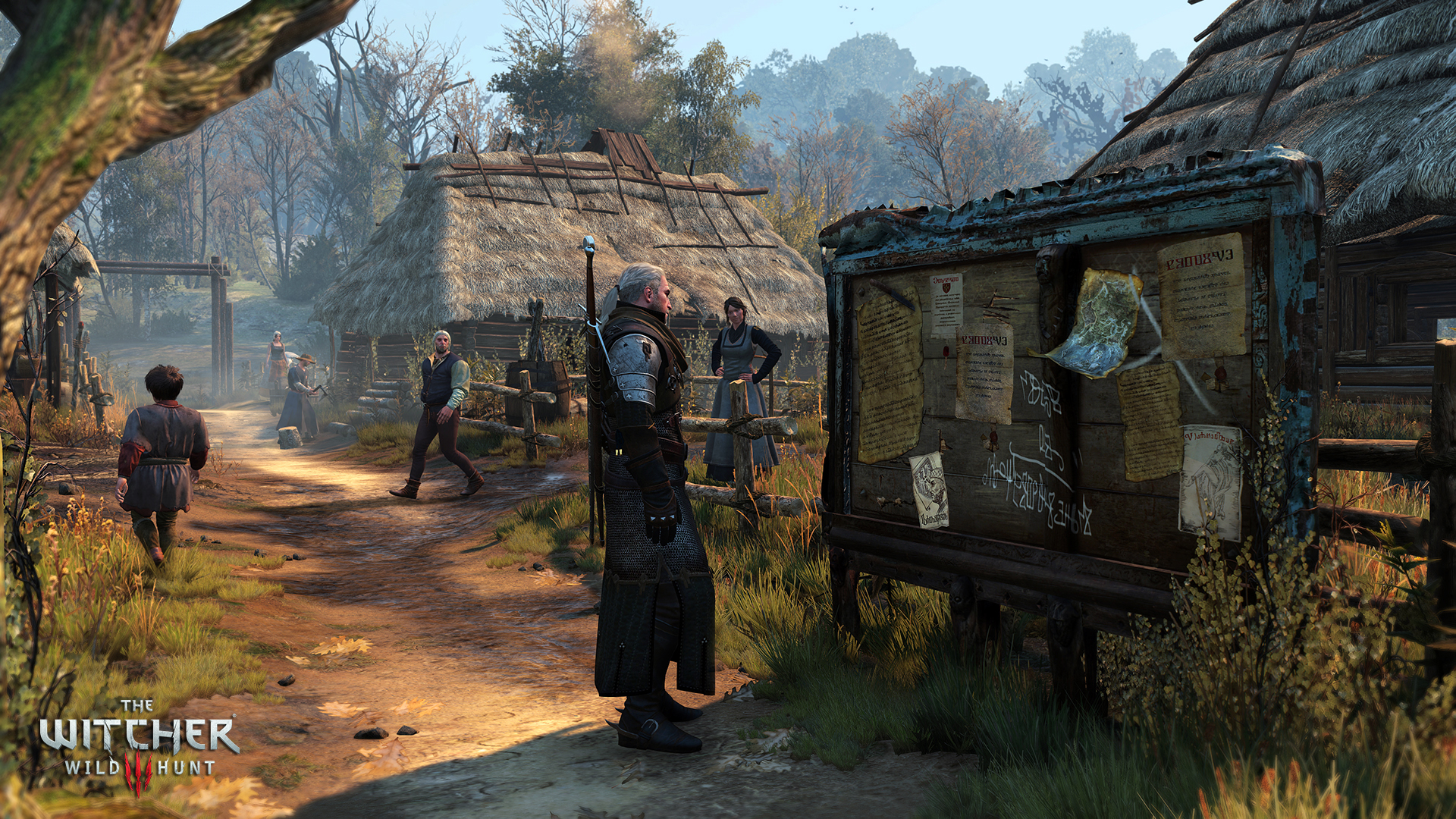
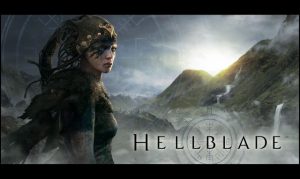
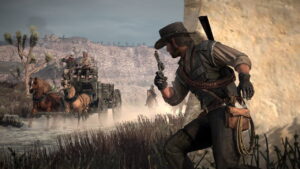
    The people calling into the show to join the discussion were game developers, writers, and gamers. And the term ‘immersive’ kept coming up in the conversation, as in players felt like they were living amid the game universe that they were gaming in. One could experience Mars (Doom), The Old West (Red Dead Redemption). A World War II battlefield (Call of Duty), Sword & Sorcery (Witcher), automobile racing (Forza Horizon), Ancient Nordic/ Norse Times (Hellblade: Senua’s Sacrifice), and other imaginary worlds.

    Witcher 

    In a distracting world, your stories need to feel similarly immersive. Your story settings must be nuanced, intricate, and alive with significant details, intriguing characters, and most of all, trouble. Bad trouble. Soul-sucking problems that need solving. In fact, a large portion of games is about survival, the rawer and scarier the better.

    Think about it: millions of people are spending millions of hours in other permeable realities.

    Readers also want to feel as if they’re part of a world as if they’re navigating layers of complexity as they interact via viewpoint characters.

    So we thought it would advantageous to do a little research about how game developers create the “immersive experience.” This article, of course, just scratches the surface, but it is a starting point.

    Point of View Guidelines Apply to Video Games Also and Help to Create What is Known as “Gameplay.”

    According to Altug Isigan’s classic article Three Types of Point-of-View in Video Games, there are: (Isigan goes into more detail in his post. We will have a link to it at the end of these excerpts.)

    Perceptual Point of View (what our mind’s eye sees, thinks, hears, and desires equates to feeling) = First Person

    “The efforts of the designer and artist (think – you the writer) in the visual constrution of this rendering must achieve that we think of this image as if it were the moment-to-moment perceptions of a perceiver. This is in particular important if the designers and artists (writers) want us to assume this perceptual construct as our own view.”   

    Ideological Point of View (World or Ideological View)

    “The second definition of POV takes seeing rather in the metaphorical sense and implies not only a view, but a worldview.Hence the term ideological. Here, a second lense is applied to the lense that sees: thoughts, beliefs, and feelings. What we call point-of-view has gained another dimension and is no longer only the perceived sense-data… Not only are we presented a view of, but also a view on the event that is presented. It’s not only perception anymore, but also cognition; not mere sight, but vision.”

    Point-of-View of Interest (when our actual interests conflict with what we believe our interests are or should be).

    “In other words, we may not be aware of our actual interests, or blinded by our beliefs to a degree at which we can’t perceive them thorougly. Interest, is  therefore not about perception or ideology, but rather about an awareness in regard to the consequences of events.” 

    “This can create interesting situations. For example a character may be aware of the negative consequences of a particular choice, but he may still chose to face that consequence due to his beliefs (ideology) as is the case in situations that involve sacrifice. Or sometimes a character may find himself in a dilemma: He may not be able to decide whether to follow his belief or his interests.”

    In conclusion

    For more information and to read the complete article by Insigan, click here to visit The Ludosphere where the article was published.

    His conclusion states, “…An interesting point to consider here is that what we usually call “the gameplay” has a lot to do with these intertwinings of different POV-types. It could be a good idea to make use of these concepts in order to refine our notion of gameplay, and also realize how close it is related to storytelling methods.  I believe that an awareness of the existence of various POV-types can only improve a narrative designer’s ability to create compelling and immersive gameplay experiences.” (Altug Isigan)


    The Wall – Game of Thrones from George RR Martin’s A Song of Ice and Fire

    So how do you coax readers to have similar experiences?

    By placing them in the action, with a stake in shaping outcomes. By creating circumstances that require decision-making and problem-solving as characters tackle moral dilemmas and a stacked deck. By setting up difficult-to-obtain outcomes. By tossing in bad luck, screw-ups, and sometimes poor judgment. By making the outcome really matter to characters we come to understand and care about.

    Hellblade: Senua’s Sacrifice

    This means writers build a fictional world detail by detail, from a complex social matrix to a government and history. Harry Potter’s wizarding world is a good example as is George R. R. Martin’s The Known World from his A Song of Ice and Fire series.

    Red Dead Redemption

    Maybe your story world is a ravaged, lawless hellhole. Intriguing concept, but readers need to understand how the lawlessness came about. This means you’ll be establishing the ‘rules’ for your universe. And keep the pressure coming by creating a breathing, weather-plagued, climate-influenced place. Well, I guess that weather could be balmy and calm, but what’s the fun in that?

    Keep writing, keep dreaming, have heart. – Jessica


    Chanticleer Editorial Services  Writer’s Toolbox Series

    Jessica is focusing on immersive writing throughout this year, so keep checking back here for more information and writing tips and tools for your writer’s toolbox and consider registering for her Master Class at CAC19 and Summer Workshops with Chanticleer.


    Jessica Page MorrellJessica Morrell is a top-tier developmental editor and a contributor to Writer’s Digest magazine, and she teaches Master Writing Craft Classes at the Chanticleer Authors Conference that is held annually along with teaching at Chanticleer writing workshops.

    Jessica will teach a Master Class and advanced writing craft sessions at CAC19

    Jessica understands both sides of the editorial desk–as a highly-sought after content development editor and an author. Her work also appears in multiple anthologies and The Writer and Writer’s Digest magazines. She is known for explaining the hows and whys of what makes for excellent writing and for sharing very clear examples that examines the technical aspects of writing that emphases layering and subtext. Her books on writing craft are considered “a must have” for any serious writer’s toolkit. For links for her writing craft books, please click on here.

    Chanticleer Reviews and OnWord Talks will interview Jessica for more of her writing tips and advice. Stay tuned! ~ Chanticleer (who hails from Chaucer’s Canterbury Tales).

    Please contact Sharon or Kiffer if you would like more information about Chanticleer’s Editorial Services at KBrown@ChantiReviews.com or SAnderson@ChantiReviews.com.

  • An Editor’s Checklist for Manuscript Evaluations of Fiction by Jessica Page Morrell Part Two of the Writing Fiction Guidelines by Jessica Page Morrell

    Writer’s Toolbox

    Fiction Checklist for Deep Editing

    A Chanticleer Editorial Services Writing Toolbox Series

    While rules and techniques are not written in stone, most of the basic guidelines of fiction stem from logic and an understanding of dramatic structure. Don’t break the rules until you know them, or better yet, until your first novels have sold. – Jessica Morrell


    The Developemental Editing  Checklist by Jessica Morrell

    VOICE

    From the opening paragraphs, is there a clear, distinct and engaging voice? The writer’s voice should have authenticity, individuality, or originality. 

    Log-Line aka Elevator Pitch

    Is there a single, simple conflict that drives the action? Can your plot be summed up in a single sentence? (Log-line aka The Elevator Pitch). Keep your log-line visible and in plain sight whenever you are editing your work-in-progress to remind you of your story’s focus. 

    Opening – is it grabbing? 

    Does the story begin with a change or threat in the protagonist’s life? Or the loss of something important? Or an action happening that should be prevented. 

    The opening should contain a hook or inciting incident that creates stress, unease, questions, or opens a can of worms. The story needs to start in the first sentence. 

    Is the story driven? 

    Does each scene provide a sense of momentum, or narrative drive pushing the story forward? Does each description? Or are the words there for the writer? 

    Is the story immersive? 

    Is the story highly visual? Can your reader imagine “seeing it” while reading or listening to it? 

    Ticking Clock? 

    Is there a sense of time running out or another driving factor that creates tension? Even light-hearted or humorous stories should have tension. 

    Weather or Atmosphere

    Does the story contain weather? What is the environment or the atmosphere like? Make sure that your story doesn’t have the “empty room” syndrome. 

    Is Backstory on a need to know basis? 

    Have you worked at weaving data, description and backstory into the narrative so that it doesn’t interrupt the forward movement of the story?

    Did You SHOW and TELL? 

    Have you dramatized the action in scenes or have you summarized?

    “Show, don’t tell” is a useful guideline for writers, but fiction is actually ‘told’ and ‘shown.’ A combination of both techniques creates the most effective fiction.

    Scenes are most effective when you’re revealing complicated interactions between characters and emotions change via the scene.

    Exposition is most effective when you’re filling in background information or moving quickly between two scenes. Too much showing or too many scenes make the story too drawn out just as too much exposition makes it static.

    Setting

    Are the settings interesting, unique, memorable?

    Does the setting have the potential to teach readers about a place, a profession, a way of life?

    Or does it overshadow the story?

    Conflict

    Is the conflict weak or boring or not enough to sustain a manuscript of a particular length?

    Or does the conflict seems contrived?

    Or begins too far into the story? This happens far too often.

    Pacing

    Often writers apply the same level of speed or word count to everything in the story from a major heartbreak or ride across town. Sagging middle is another pacing problem so that the reader feels like it takes too long to reach the end.

    Other times, the story plods along only to barrel past the most interesting moments in the story.

    Do the chapter endings make your reader want to keep reading? 

    Have you ended scenes (chapters) with thrusters, surprises or cliffhangers?

    Readers need a reason to keep turning the page and all stories need growing intensity until the climax or resolution. 

    Flashbacks

    Have you relied on flashbacks to relate to the protagonist’s backstory? If so, is the information necessary and do the flashbacks disrupt the momentum of the story?

    Are your characters recognizable? 

    Have you repeated some physical characteristics, descriptions of the characters throughout the story so the reader is reminded of their physical attributes and personality?

    Is each character consistent? Are his or her dominant traits in evidence throughout the story?

    Transitions

    Are your transitions brisk and do they serve to keep the reader moving through time,  space and mood?

    Do you quickly slip in and out of scenes?

    Story Arc

    Are there a series of setbacks, mini-crisis, and complications along the way?

    Does the protagonist have a goal in each scene? Or something that will affect the protagonist is taking place?

    Have you added unexpected events midway in the story?

    Have you deftly handled your theme and premise, or are you on a soapbox preaching or shouting at the reader with an overreaching message pushing an agenda? This happens more often than one would think.

    Dialogue

    When you read the dialogue out loud, does it sound natural?

    Do you trip over words when you read the dialogue out loud?

    Does the dialogue contain tension?

    Does each character sound distinctive?

    Be aware of these problems: overly long exchanges; characters giving speeches, or the dialogue contains no tension or conflict. 

    Does each character sound distinct?

    The Ending

    Is the protagonist the person in the story most involved in the action, most likely to be changed by events in the story?

    Does the ending provide the most emotional and dramatic scenes?

    Does the ending tie up most of the subplots?

    Does the ending deliver? Does it satisfy?

     The best endings are not contrived or convenient. They are the logical and highly dramatic culmination of the proceeding events. The climax is the highest emotional pitch of your story, a decision, a collision of forces, and settling of scores.  Also in this category are too many loose ends and subplots dangling, and questions unanswered.

    The ending is what makes your work “go viral.” Take special care with the ending. –Kiffer

    RULE #1 from Jessica 

    While rules and techniques are not written in stone, most of the basic guidelines of fiction stem from logic and an understanding of dramatic structure. Don’t break the rules until you know them, or better yet, until your first novels have sold.


    Editor’s Note: Often it is hard for the author to objectively read her or his work for the above issues. Authors often “hear and see” their story in their minds’ eyes. The trick is to have someone else hear and see the story from words on the page from outside of the author’s mind. This is where the author’s agent or the publisher’s editor comes into play by doing a close read of the work for these top-level issues before editing begins.

    We, at Chanticleer Reviews Editorial Services, see that it is at the point where authors make the mistake to start copyediting their works when they should have their manuscript evaluated by an editor, agent, or publisher.

    The power of a manuscript overview makes it one of the best tools that traditional publishing houses and literary agents make available to their authors.

    Best-selling authors receive great editing and feedback from agents and senior editors on early drafts, which most self-publishing authors never receive. When feedback comes early in a work’s progress it allows the author to not only create a more polished final product, but also publish more works.

    It can be very difficult for the author  to discern the above issues because it takes fresh eyes and perspective to evaluate the manuscript aka work-in-progress. The entire manuscript should be read and then commented on and evaluated. To learn more about Chanticleer’s Manuscript Overview and Evaluation Service can save you time and money, please click here.


    Click here to download the handy WORD file that you can print out of the above points on Developmental Editing.


    Jessica Page Morrell
    Jessica Page Morrell

    Jessica Morrell is a top-tier developmental editor and a contributor to Writer’s Digest magazine, and she teaches Master Writing Craft Classes at the Chanticleer Authors Conference that is held annually along with teaching at Chanticleer writing workshops.

    Jessica will teach a Master Class and advanced writing craft sessions at CAC19.

    Jessica understands both sides of the editorial desk–as a highly-sought after content development editor and an author. Her work also appears in multiple anthologies and The Writer and Writer’s Digest magazines. She is known for explaining the hows and whys of what makes for excellent writing and for sharing very clear examples that examines the technical aspects of writing that emphases layering and subtext. Her books on writing craft are considered “a must have” for any serious writer’s toolkit. For links for her writing craft books, please click on here.

    Chanticleer Reviews and OnWord Talks will interview Jessica for more of her writing tips and advice. Stay tuned! ~ Chanticleer (who hails from Chaucer’s Canterbury Tales).

    Click here for more information about the 2019 Chanticleer Authors Conference!

  • Part One WRITING FICTION GUIDELINES — by Jessica Page Morrell – Writers Toolbox Series

    Part One WRITING FICTION GUIDELINES — by Jessica Page Morrell – Writers Toolbox Series

    Rule #1 for Developmental Writing Tips Guidelines by Jessica Page Morrell

    While rules and techniques are not written in stone, most of the basic guidelines of fiction stem from logic and an understanding of dramatic structure. Don’t break the rules until you know them, or better yet, until your first novels have sold.

    Editor’s Note: Often it is hard for the author to objectively read her or his work for the following issues. This is where the author’s agent or the publisher’s editor comes into play by doing a close read of the work for these top-level issues. We, at Chanticleer Reviews Editorial Services, see that it is at the point where authors make the mistake to start copyediting their works when they should have their manuscript evaluated by an editor, agent, or publisher.

    The power of a manuscript overview makes it one of the best tools that traditional publishing houses and literary agents make available to their authors. Best-selling authors receive great editing and feedback from agents and senior editors on early drafts, which most self-publishing authors never receive. When feedback comes early in a work’s progress it allows the author to, not only create a more polished final product but also publish more works.

    It is very difficult for the author  to discern the following because it takes fresh eyes and perspective to evaluate the manuscript aka work-in-progress. The entire manuscript should be read and then commented on and evaluated. To learn more about Chanticleer’s Manuscript Overview and Evaluation Service can save you time and money, please click here.

    Writer's Toolbox
    Writer’s Toolbox

    Now for the DEVELOPMENTAL FICTION TIPS and GUIDELINES by Jessica Page Morrell

    Chanticleer Reviews Editorial Services  WRITER’S TOOLBOX SERIES


    1. While rules and techniques are not written in stone, most of the basic guidelines of fiction stem from logic and an understanding of dramatic structure. Don’t break the rules until you know them instinctfully.
    2.  Nothing should happen at random and all fiction is causal.
    3.  Plot stems from adversity.
    4.  Each major character has an agenda.
    5.  Foreshadow all important elements.
    6.  The protagonist is proactive, taking charge of events, formulating goals and plans.
    7.  Plot dramatizes character.
    8.  Avoid gimmicky openings—whatever happens in the opening scene needs to provide a big payoff.
    9.  Don’t create an ordinary problem for your protagonist to face or overcome. If this problem is not solved, it should destroy something important in his life.
    10. Although a protagonist’s problems are the basis for fiction, don’t throw in a pile of unrelated or extraneous problems simply to complicate the plot.
    11. Avoid problems being solved by another character, a rescuer, or a force of nature.
    12. Remember that major fictional characters always evolve, including antagonists and villains.
    13. Minimize or eliminate transitions between scenes and chapters when you can. Contemporary readers are able to jump locations and time zones in the story with little direction.
    14. Make certain that details and descriptions are included for a reason, to contribute to the overall plot and create a vivid, brimming world. Details are chosen chiefly to stir the reader’s emotions, characterize and push the story forward.
    15. Do not use last-minute rescues, the cavalry arriving to save the protagonist or coincidences to end a story.
    16. Avoid needless flashbacks. Flashbacks are vital to the overall plot, vivid and brief if possible. Because they stop the forward momentum of a story, the writer needs a good reason to leave the straight-ahead chronology.
    17. Do not include characters without names.
    18. Each scene and chapter should somehow ratchet up the tension.
    19. Write about the most important or interesting segment in a protagonist’s life, not birth to death biography.
    20. Do not depict the villain screwing up in order for the protagonist to win. The protagonist needs to be more desperate or have a stronger will or desire to win.
    21. Watch out for car chases, earthquakes and other acts of nature, bombs, explosions and other incendiary devices to end the story.
    22. If the story contains a victim, such as a murder victim in a mystery, make certain that the reader can feel loss and empathy for him or her.
    23. Remember that major fictional characters evolve.
    24. A plot is designed to reveal the protagonist taking on goals and overcoming opposition.
    25. Nothing in fiction happens at random; everything is causally related.
    26. Beware of digressions that follow your interests or research, not the story. Rein yourself in.
    27. Write an ending that the reader cannot see coming.
    28. Allow readers to understand why villains do what they do by providing some backstory and motivation.
    29. Make certain that all your characters do not sound the same.
    30. Write about the most important or interesting segment in your character’s lives—not a birth to death biography.
    31. Structure scenes around scene goals.
    32. Beware of digressions that follow your interests rather than the plot.
    33. Write an ending that the reader cannot see coming.
    34. Allow readers to understand why villains do what they do by providing some backstory and motivation.
    35. Make certain that all your characters do not sound the same.
    36. Write about the most important or interesting segment in your character’s lives—not a birth to death biography.
    37. Structure scenes around scene goals.
    38. Beware of digressions that follow your interests rather than the plot.

    And, finally, Rule Number 1 again:

    While rules and techniques are not written in stone, most of the basic guidelines of fiction stem from logic and an understanding of dramatic structure. Don’t break the rules until you know them, or better yet, until your first novels have sold.

    Click here to download the handy WORD file for Jessica Page Morrell’s 

    DEVELOPMENTAL FICTION TIPS that you can print out.


    Jessica Page Morrell
    Jessica Page Morrell

    Jessica Morrell is a top-tier developmental editor and a contributor to Writer’s Digest magazine, and she teaches Master Writing Craft Classes at the Chanticleer Authors Conference that is held annually along with teaching at Chanticleer writing workshops.

    Jessica will teach a Master Class and advanced writing craft sessions at CAC19.

    Jessica understands both sides of the editorial desk–as a highly-sought after content development editor and an author. Her work also appears in multiple anthologies and The Writer and Writer’s Digest magazines. She is known for explaining the hows and whys of what makes for excellent writing and for sharing very clear examples that examines the technical aspects of writing that emphases layering and subtext. Her books on writing craft are considered “a must have” for any serious writer’s toolkit. For links for her writing craft books, please click on here.

    Chanticleer Reviews and OnWord Talks will interview Jessica for more of her writing tips and advice. Stay tuned! ~ Chanticleer (who hails from Chaucer’s Canterbury Tales).

    https://www.chantireviews.com/chanticleer-conference/