Tag: Chanticleer Book Reviews

  • SOUL SACRIFICE: Book Three of Spirit Shield Saga by Susan Faw – Teen & YA Greek & Roman Myths and Legends, YA Epic Fantasy Novels, YA Wizards & Witches Novels

    SOUL SACRIFICE: Book Three of Spirit Shield Saga by Susan Faw – Teen & YA Greek & Roman Myths and Legends, YA Epic Fantasy Novels, YA Wizards & Witches Novels

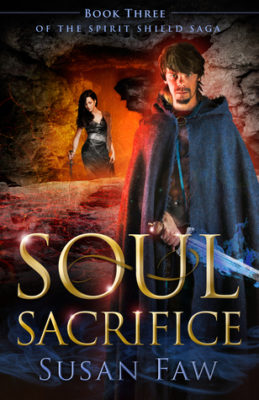
    Evil has taken hold of Cathair and the surrounding lands, and only the Spirit Shields can save both the living and the dead. Cayden and Avery, human twins housing the spirits of the godling children of Morpheus, have been tasked with stopping their sister Helga. She is hellbent on wiping out humanity and controlling the spirits of both man and beast.

    Separated by missions unique to their abilities, Avery and Cayden are frantically searching for a way to defeat Helga. Cayden, the keeper of the Well of Souls, is connected to all spirit life. He can feel the life literally draining from the land but is nearly powerless to stop it because he is Soul Fetched, his mind imprisoned by Helga. He knows he must fight her insidious commands but is weakening mentally and physically. Avery must find a way to commune with their father and beg his help in defeating Helga since only a god’s power can destroy her minion army of Charun, souls of former warriors returned to ethereal bodies. She is also fighting against the Daimon, creatures born of hatred and fire who consume the souls of men before they can return to the river of souls awaiting reincarnation.

    Their sister, Artio, recently reborn as a half-bear, half-human woman, joins Avery in her quest. Her motives, though, are personal because Helga stole the body and soul of Artio’s lover in a past life. The three siblings must find a way to unite the clans, defeat Helga, and save the souls of man.

    Duty is more than a job. It is a soulful need to fulfill a purpose, either sworn to another or intrinsic.  Many characters within this novel are driven by that intense, all-consuming duty. Both the major and minor characters are consumed by it to the point they are willing to make the ultimate sacrifice to it. Ryder, commander of the Kingsmen and close friend of Cayden, is a prime example. A fixture in the Saga, Ryder and his men have previously been tasked with defending the Well of Souls. Having been taken captive by Helga, he refuses to swear allegiance to her. Even when his own loyalty is used to imprison him, Ryder cannot give up his oath to protect his king, still feeling the swell of pride at knowing his friend has ascended to his rightful place in Cathair. He is willing to befriend a Charun formerly known as Captain Brennan and even endure Helga’s unwanted physical attention to find a way to defeat her and help Cayden from the Underworld.

    As a commander of the Kingsmen in his former service, Captain Brennan cannot deny his duty, though refusing at first to give in. Perhaps the ultimate example of his oath is Cayden’s need to protect the Well of Souls.

    Connected to the well by a mental bond that becomes physical, Cayden must guard the souls awaiting new bodies. As the river that flows into the well diminishes, so does Cayden. His soul drains as surely and swiftly as the river. He knows his human life is the only thing that can heal the rift. If he fails in his duty, all of humanity will suffer for eternity. His birthright is to remain faithful in his charge even though he knows he will have to make the ultimate sacrifice.

    Another theme of the novel is that of sacrifice. Nearly every character is forced to sacrifice some part of themselves. Morpheus begins the cycle when, centuries earlier, he was forced to give up his family or leave them to the other gods’ fury. The sacrifices continue for his children, all of whom sacrifice, whether willingly or not. Artio surrenders her lover to a fate worse than death while Avery and Cayden, the twins, must offer their closeness, their twin bond, nearly severed by distance and strife. Even Helga, in all her evil glory, has made sacrifices, being forced long ago to the darkness of the Underworld. Those connected to the siblings endure hardships as well. Ziona, sworn protector of Cayden and his truelove, must give him up. She is also willing to do whatever it takes to protect the Well of Souls, even if that means taking his life. Denzik, Nelson, and Fabian, Kingsmen, try to protect Cayden, and all make sacrifices to bring their men back to Cathair. Lovers of the series will experience a shocking, jaw-dropping twist that only a master-storyteller like Susan Faw could pull off. And we are so ever delighted she did!

    Soul Sacrifice won First Place in the CIBA 2018 Dante Rossetti Awards for Young Adult fiction.  Click on the links to read our reviews of books one, Seer of Souls, and two, Soul Sanctuary.
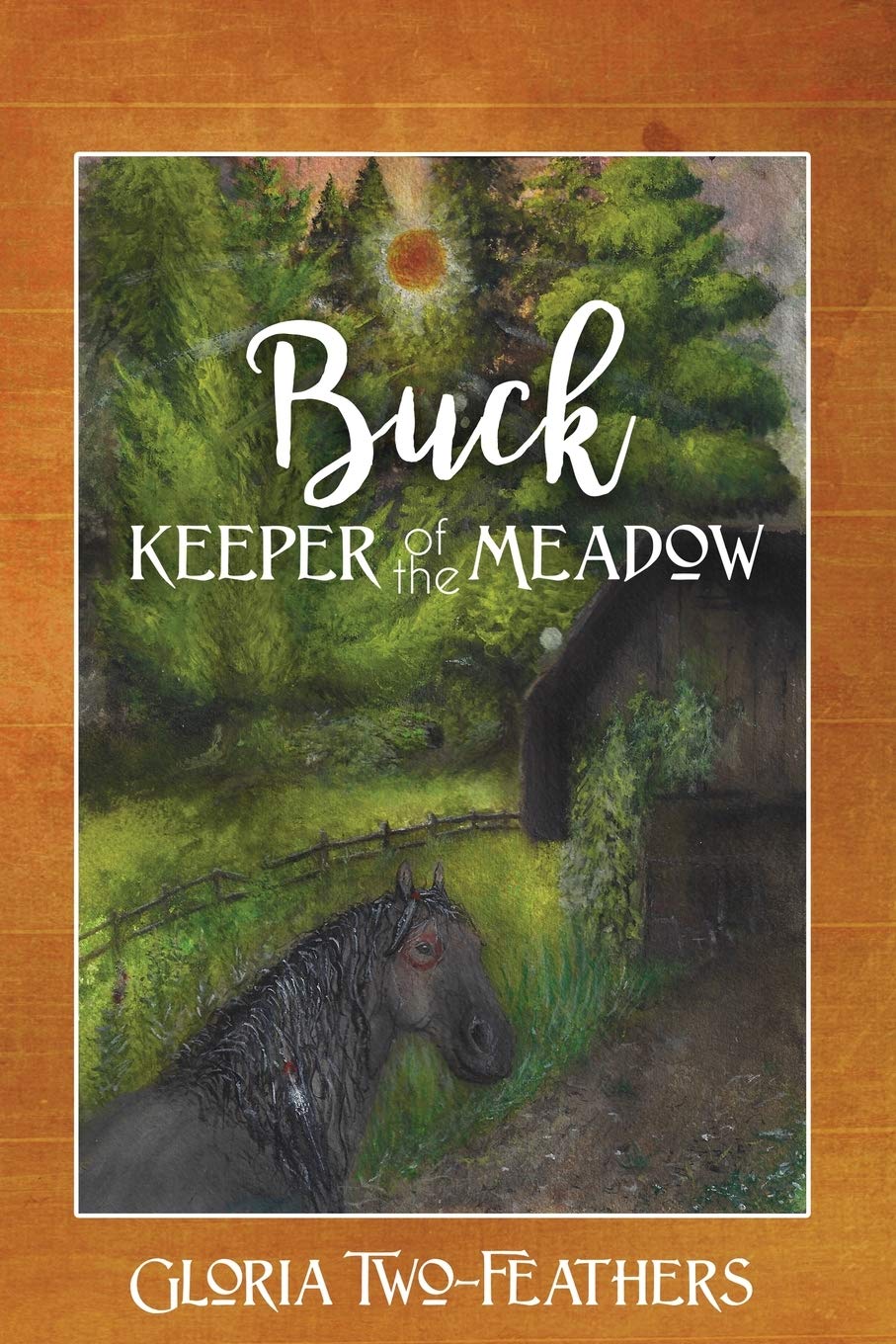
  • BUCK: Keeper of the Meadow by Gloria Two-Feathers – Children’s Books, Animal Books, Native American Tales Children’s Books

    BUCK: Keeper of the Meadow by Gloria Two-Feathers – Children’s Books, Animal Books, Native American Tales Children’s Books

    In this engaging children’s tale by author Gloria Two-Feathers, a young colt named Buck will learn how to obey, how to defend, and how to strike out on his own.

    The scene is set in the Great Plains, where a river named Minisose divides a sea of tall green prairie grass. Many animals call that grassland their home, and the most magnificent is the herd of wild horses led by a dark stallion named Plenty Coups and his chosen mate, the lovely cream-colored mare, Cloud. By tradition and instinct, Plenty Coups protects the herd from attackers, while Cloud leads them to safety.

    Cloud knows how to find watering holes when the sun, Wi, is at its hottest and how to locate grass when Winter Man covers the ground with snow. One day in early spring, she realizes she must find a safe place to deliver a foal. In a secluded spot near a little pool, surrounded by the fresh grass, she delivers Buck, the young colt who soon accompanies her to find the herd again. But the winter has brought out a pack of hungry wolves led by the fierce Yellow Eyes, determined to bring Cloud down and feast on her son. This is the first great danger Buck will face, and he shows himself to be smart, plucky, and independent. One day these qualities will come to the fore as he takes on his destined role: to search for and rule over a magic meadow.

    This mystical story is intertwined with the ancient lore of the Lakota people. This is the second book for children with a traditional framework, the first being the award-winning and delightful, Tallulah’s Flying Adventure. In this book, Two-Feathers identifies many natural presences with traditional names that play a role in the story’s drama and poetic nature. Buck’s youthful spunk will resonate with children and adults who will admire his spirit and growing strength. As much as readers admire Buck, they will fall in love with Cloud, the gentle mother who is not afraid to fend off a gang of bloodthirsty wolves. Buck – Keeper of the Meadow contains beautiful, expressive illustrations by fourteen-year-old artist Lucy Roe, and concludes with an urgent plea to all children, “to save the wilderness areas for future of all creatures,” as Buck will do as he guards the ancient meadows.

    Buck: Keeper of the Meadow will be a strong read-to for younger children and a very appropriate exploration for older children and young teens, with many thought- and question-provoking themes for family talks and lively classroom discussions.


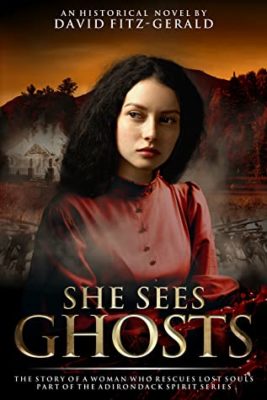
  • SHE SEES GHOSTS – Part of the Adirondack Spirit Series by David Fitz-Gerald – Historical Fiction, Paranormal Fiction, Civil War Fiction

    SHE SEES GHOSTS – Part of the Adirondack Spirit Series by David Fitz-Gerald – Historical Fiction, Paranormal Fiction, Civil War Fiction

    Laramie Western Fiction 1st Place Best in Category CIBA Blue and Gold BadgeA gentle and patient story, She Sees Ghosts is a unique addition to the historical fiction genre. Take a break from the hectic modern world and get transported to a simpler time where the full effect of the industrial revolution has yet to change America’s face forever.

    Mehitable lives with her large loving family in a small town in New England and has been hiding a secret her whole life. She sees the spirits of the departed and wishes they would leave her alone. The town is busy getting ready for the upcoming New Year celebration, which will not only mark the start of a new century but also happens to be Mehitable’s sixteenth birthday. On the cusp of adulthood, all around Mehitable, there is talk of love and marriages, but she does not feel ready and wants to keep enjoying her current life.

    After Mehitable rejects the troublesome Anson Smudge, tragedy strikes.  Anson accidentally starts a fatal fire that claims Mehitable’s family’s lives, leaving her to face the turn of the century alone. Years pass, and she slowly learns to live with her grief but is still visited by the ghost of Anson every night. After moving with her friend Polly and her husband Reuben to rural upstate New York, Mehitable begins to see countless souls of soldiers from past wars, and there she finds her calling. By helping these lost souls, will Mehitable find a way to move on?

    She Sees Ghost is a perfect choice for readers who like multifaceted stories with paranormal elements, historical fiction, and Christian influences. Fans of coming-of-age stories will especially like She Sees Ghosts as the story centers around Mehitable’s struggles and her journey to help lost souls. Some books are driven by action, while others allow the characters to unveil the truth behind their pain. This is a story more akin to the latter. Fitz-Gerald weaves characters that will live in readers’ hearts long after putting the book down.

    David Fitz-Gerald has a knack for writing historical fiction with supernatural influences. She Sees Ghosts is the second in the ongoing Adirondack Spirit Series. In this installment, time is a big theme. Mehitable’s story begins at the turn-of-a-century, where she grows up hearing stories of the fight for independence. She experiences a cultural tradition for storytelling where people look into the past for lessons to bring into the future.

    A story about love, loss, and the various forms grief can take over the yearsFitz-Gerald’s She Sees Ghosts is a compassionate tale about a woman using her unique gifts to help those around her, living or long passed.


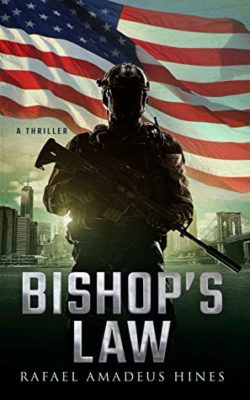
  • BISHOP’S LAW by Rafael Amadeus Hines – African American Urban Fiction, War Fiction, Thriller/Suspense

    BISHOP’S LAW by Rafael Amadeus Hines – African American Urban Fiction, War Fiction, Thriller/Suspense

    GLOBAL THRILLERS HIGH STAKES THRILLERS 1ST PLACE Best in Category CIBA Gold and Blue BadgeSlow is smooth. Smooth is fast. This is the code that John Bishop, one of America’s most decorated military heroes, teaches his men to follow whether they’re on a mission in the heat of the Middle East or in the jungle that is New York’s Lower East Side in Rafael Amadeus Hines’ novel, Bishop’s Law.

    To say his life is complicated is putting it mildly. In this second volume of the John Bishop series, several high-level assassins are hell-bent on killing him for his actions as a soldier. At the same time, he’s deep in his crime family’s military-style battles against various opponents’ groups. All these forces are closing in on him simultaneously, even as the United States government had hired him and his family to protect the country from bad guys using whatever means necessary.

    Complicated? You bet. But if you crave non-stop action, ultra-violence, and high body counts in your novel-reading this fall, this is a great place to start.

    Part Panamanian, part Jamaican with amber eyes, his face forever scarred in an assassin’s attack that killed his parents when he was nine, Bishop is related by blood to the powerful Valdez crime family. He learned from them—the ability to act, lead, protect his men at all costs—served him well as a Special Forces soldier who fought in the Middle East against a host of bad actors. By the time the story begins, Bishop has returned from overseas, living with Maria, his childhood sweetheart, and about to become a father. He dreams of leaving his military life behind but instead finds himself helping the Valdez family in a significant military-style action against Russians on New York’s Lower East Side.

    The complications are only starting.

    While setting up the military engagement with the Russians, he also finds out that his previous actions in the Middle East have earned him the wrath of some of the world’s most dedicated killers from Russia, Pakistan, ISIS, and even a corrupt U.S. billionaire. Not great if you want to stay alive.

    While this book is clearly an action thriller, with deep roots in military-style combat, detailed weaponry descriptions, and sustained action scenes, the human story comes front and center even as the mayhem continues. Bishop is no superhero. His emotions are of a man who experiences sizeable loss and yet must keep his feelings bottled up as the beloved leader of his band of brothers. While he is wounded several times throughout the book, we feel his determination to continue doing his duty under the circumstances, few of us could sustain.

    In other hands, a story of this complexity could have been cartoonish, a video game. But the book maintains a careful balance between the go-go action and the humanity of its characters.

    Bishop’s Law is the second in a series on John Bishop. A third book is in development as of this writing. Readers may want to consider reading the first volume, Bishop’s War, before reading Bishop’s Law. While the book stands on its own, a richer reading experience might be had by reading the two books in sequence.


    5 Stars! Best Book Chanticleer Book Reviews Round Silver Foil Sticker

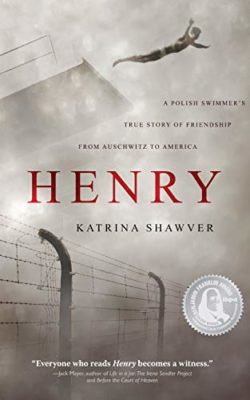
  • HENRY: A Polish Swimmer’s True Story of Friendship from Auschwitz to America by Katrina Shawver – Jewish Holocaust History, Historical German Biographies, Jewish History

    HENRY: A Polish Swimmer’s True Story of Friendship from Auschwitz to America by Katrina Shawver – Jewish Holocaust History, Historical German Biographies, Jewish History

    Katrina Shawver, a journalist for a Phoenix newspaper, was seeking a story for her weekly column. She had heard from a friend that a Holocaust survivor named Henry Zguda and his American wife, Nancy, lived in Phoenix. She called Zguda and was invited to come to his home, only a few blocks from her own. Shawver quickly bonded with both Henry and Nancy. Then she and Henry decided to have a series of weekly interviews, which she would draw on for her column and, later, for a book—this biography.
    The horror story of Henry Zguda, a Catholic Pole born and raised in Krakow, Poland, begins with Henry walking down the street toward the YMCA for swim practice in 1942. A Gestapo car screeches to a stop beside him. Two men leap out, arrest Henry on the spot, throw him into the car, and take him to prison. After several days of torture, a practice used by the Gestapo to obtain information (of which Henry had little), he is taken to the train station and shoved into a cattle car so filled with people that it is impossible to do anything but stand, shoulder to shoulder. The door is slammed shut, and the train pulls out of the station. Henry has no idea what fate awaits him.

    Most of his fellow passengers were Jews, which Henry was not, but under these circumstances, it made no difference. They did what they could to accommodate each other over days of travel, until they reached their final destination, Auschwitz. Many of the Jews would find themselves in the gas chamber in short order. Only those strong enough to work were allowed to live—at least long enough to finish building the camp.

    His story covers more than two years in Auschwitz and Buchenwald. As a young man, he is characterized by his courage and tenacity to live under the most horrendous circumstances and his valor and compassion in helping his fellow prisoners—most of whom he met there, and some who had been childhood friends in Krakow. Somehow, Henry never lost hope, which would have been a death knell…as it was for many prisoners. He characterizes himself as lucky, very lucky.

    Henry tells Shawver about his youth in Krakow. Most of all, his love for swimming. Henry was a member of the swim team at the YMCA founded and built by Americans. Despite the German presence, he had fun with his family and friends.

    It is with some reluctance that he begins to give her details of his years in the concentration camps, but that is what she needs to know. Supporting his memories are photographs obtained after the war as well as official cards recording his Auschwitz registration, train passenger lists, personal effects inventories, and records of money sent to him by his family. These offer interesting details of life in the camps, as do some of Henry’s more pleasant memories. Prisoners participated in theater performances and concerts for the prison staff and their families as audiences.

    As the interviews proceed, Henry intuits when it is time for him to tell Shawver what transpired as the camps’ main objective—killing Jews—was fulfilled. He explains how Jewish prisoners met their fate through such horrible means as being left, still alive, hanging from hooks in dark basements; being lined up in rows and shot to death in view of other prisoners, including family members; being told they must remove their clothing to have showers, only to be herded naked into the gas chambers (their clothing left behind as booty for the guards who led them to their fate); or being tortured to death by nonchalant Germans.

    But in 1944, WWII finally drew to a close. As American forces approached the concentration camps, the Germans fled. The prisoners were free! Some prisoners left on their own, while others awaited the Americans bringing food, clothes, medical care, and the means to go home. Henry returned to Krakow, to spend time with his mother and earn money for her to continue living there and for him to emigrate to America.

    It was difficult for Henry to relate his story, and it is difficult for us to read it. Still, both Henry and Shawver saw in this effort a purpose—to warn all people that they must do everything possible to ensure that the atrocities of WWII never occur again.

    Henry: A Polish Swimmer’s True Story of Friendship from Auschwitz to America won First Place in the CIBA 2018 Journey Awards for Memoir.


  • A FEMALE DOCTOR in the CIVIL WAR by Richard Alan – US Historical Fiction, Civil War Fiction, Female Doctors Civil War

    A FEMALE DOCTOR in the CIVIL WAR by Richard Alan – US Historical Fiction, Civil War Fiction, Female Doctors Civil War


    Imagine a fearless, hard-as-nails contract surgeon hired by the Union Army who often works 48-hour shifts in battlefield medical tents amputating limbs, healing previously inoperable gut wounds, sewing up children’s hare lips, and diagnosing what we now call PTSD as critical in military patient care as patching physically wounded bodies.

    Meet Dr. Abby Kaplan. And yes, she’s a woman.

    A native of the Pacific Northwest, Dr. Abby stands six feet tall and exchanges her dresses for breeches, totes a gun on her hip, engages in military defensive maneuvers, and is wounded multiple times for her efforts. Dr. Kaplan takes no guff from anyone and uses the language of soldiers appropriate to the situation. In a time when men are in charge and women are not, she wins the respect of her male colleagues in the most gruesome medical cases, winning over even those who could not fathom a woman examining a man’s most private parts.

    Even more remarkable, despite the prejudices of her times, she finds ways to celebrate her Jewish heritage and even finds a man unafraid of her enough to become her occasional lover, but virtually only at her request.

    A woman as strong, complex, and dedicated to medicine probably existed somewhere during that time. A small number of women doctors did work on soldiers during the Civil War. Richard Alan develops his lead with guts and gumption, so much so, that readers will likely fall in love with Dr. Kaplan.

    A Female Doctor in the Civil War pays little attention to romance or sentimentality. Dr. Kaplan’s issues in pre-suffrage America are more about stopping male prejudice from interfering with her work than self-conscious screeds about being a female in a man’s world. We learn little about her past. Her more reflective moments are about the medical debacle she sees as she stitches and saws and mends the broken bodies that fill her medical tents, as well as her reflections on how much more the minds of these soldiers need to be treated during the war.

    When she does find a lover, he is a momentary respite from the battlefield, not a “rescuer.” Their discussions about the differences between men and women are by two adults who respect each other. Others in that period of our history may see Dr. Kaplan’s sex and religion as problems. She sees them at worst as inconveniences that sometimes prevent her from doing her job as well as she thinks she can. Her one weakness, the nightmares that keep plaguing her after her work is done, are those any adult would suffer after working in the carnage she witnesses that is her life.

    In other words, Dr. Abby Kaplan is a strong, capable, and uniquely modern physician working within the social and medical limitations of her time. She is there to do a job only a handful of doctors have the stomach to undertake.

    A Female Doctor in the Civil War won First Place in the CIBAs 2018 Laramie Awards for American Fiction.


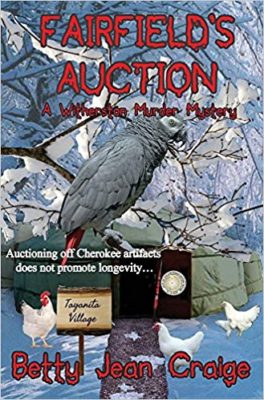
  • FAIRFIELD’S AUCTION: A Witherston Mystery by Betty Jean Craige – Animal Cozies, Women Sleuths, Cozy Mystery novels

    FAIRFIELD’S AUCTION: A Witherston Mystery by Betty Jean Craige – Animal Cozies, Women Sleuths, Cozy Mystery novels

    There is a point in time when what is done cannot be undone. That’s a tough lesson to learn for the attendees at Fairfield’s Auction. Most of them are residents of Witherston, a rural town in Georgia. The items up for auction represent the history of a divided community. After all, what is the community? Is it property to be bought and sold and owned, as the white settlers viewed it? Or is it land not to be divided but shared as the original Cherokees believed? And the historic items that are on display to be auctioned, is it right that the tomahawks and Cherokee blowguns stolen from the tribes be sold at high prices by the settlers’ descendants? Who really owns the history that is on sale? And is ownership worth killing for? Disagreement can lead to murder.

    Mr. Hempton Fairfield is an antique dealer of Cherokee artifacts. His auction is enthusiastically attended. As the character, Neel points out, “ ’Lots of people like history . . . We want to know our ethnic and cultural roots.’” But not everyone supports this sale of historic items. There are protestors with signs saying the Cherokees were robbed. Tension is high as the bidding proceeds. The final surprise for sale is an African Grey parrot. Outrage ignites again. Residents are appalled to see for sale an apparently abused, talking, living animal being. Charlotte Byrd is herself determined to save this bird named Doolittle, and take the saucy animal home with her.

    After the auction, the police are kept busy as threats are made and then bodies begin to turn up in the town. Who could be the killer in their midst? There are ominous text messages to investigate a suspenseful hunt to match specific Cherokee artifacts to descendants’ families, and what follows is one wild. It seems that no one knows anything, and no one is talking, except the African Grey Parrot. With the abuse that bird has seen, those comments are certainly alarming. Charlotte’s family and friends are tenderly training Doolittle to see a bright future for himself. And then there are the chickens. Lots of chickens. Everywhere. This mystery is filled with humor and passion, and an urgency to bring the killer to justice before another person, or animal, is murdered.

    Craige challenges her readers to track physical clues, to follow tech clues through texts and blogs, and also to re-examine preconceptions and perspectives. It’s a soulful glimpse into a time and history of rural Georgia, and how the deeds of yesteryear impact the populations of today. History cannot be undone. It’s what you do with today that will create tomorrow’s history. How will you affect your descendants? That is the question that Witherston will face.

    Fairfield’s Auction: A Witherston Mystery won First Place in the CIBA 2017 M&M Awards for Mystery novels.


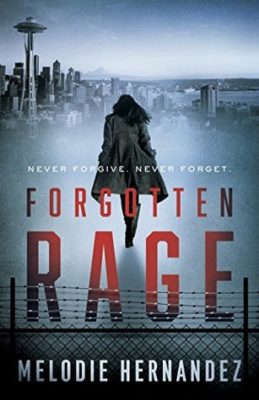
  • FORGOTTEN RAGE: Never Forgive. Never Forget (Book One in the Forgotten Series) by Melodie Hernandez – Serial Killers, Detective, Mystery/Thrillers, Pacific Northwest

    FORGOTTEN RAGE: Never Forgive. Never Forget (Book One in the Forgotten Series) by Melodie Hernandez – Serial Killers, Detective, Mystery/Thrillers, Pacific Northwest

    In Forgotten Rage: Never Forgive. Never Forget, Melodie Hernandez introduces Detective Luz Santos. Young, attractive, and smart, Santos works in Seattle, Washington, a city known for dark, rainy days. Hernandez sets the stage for a serial killer whose victims are not the rich and famous, but the homeless.
    Detective Santos rushes to the first murder scene, and soon, we are embroiled in the professional and personal life of one tough cop. Santos’ heart belongs to Cheech, her Chihuahua, but Santos holds out hope, after several failed relationships, of finding the elusive partnership she’s always hoped for.

    Ms. Hernandez filters the story through the lens of savvy Latina cop, Detective Santos, who is hell-bent on finding this killer before the killer finds her. As she works to exhaustion, she also struggles with her own demons and nightmares.

    But Santos is relentless, and when she arrives at the scene of the second murder victim, the potential killer is found asleep nearby with the murder weapon on him. But Santos isn’t convinced.

    Meet Nick Mason, a former attorney turned homeless guy. After his arrest for the murder of victim number two, he knows enough about the law to keep his mouth shut. Once Santos discovers his pre-homeless-identity and the reason he’s on the streets, the two become embroiled in a race to find a ruthless killer who is spiraling out of control. Luz stays ahead of the killer by a hair. As the bodies pile up, the clues come in too few and too almost too late.

    Hernandez weaves lines from her original poem through the book to introduce chapters. The lines are from the killers POV, and they are chilling, to say the least. Another stroke of genius comes when Hernandez inserts chapters written in the first person from the killer’s POV, which brings us up close and personal with a deranged killer. But Santos is far from understanding the basics, for example, is the killer male or female? Hernandez keeps us guessing to the end when they find the last clue.

    Hernandez presents a protagonist both human and relatable with a satisfying ending that ties up all the loose ends just enough for her fans to beg for book two.  This fast-paced mystery will have you reading into the night to find out what happens next. A page-turner extraordinaire, one that we highly recommend diving into.

    Forgotten Rage won First in Category in the CIBA 2018 CLUE Awards for thriller novels.


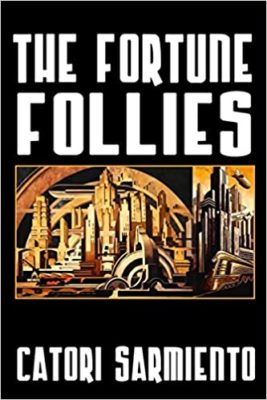
  • The FORTUNE FOLLIES by Catori Sarmiento – Dark Fantasy/Horror, Alternative History – Sci-fi, Romance

    The FORTUNE FOLLIES by Catori Sarmiento – Dark Fantasy/Horror, Alternative History – Sci-fi, Romance

    In a dystopian future, two young women struggle for livelihood, love, and a better future in the very altered city of Seattle.

    Sarah Igarashi came to Seattle out of desperation in 1949. World War II has ended, but not as described in our history books. It was won through the invasion of Japan by American military aided by metal robots known as Iron Boys, an invention of a manufacturing genius, Robert Sinclair. Sarah sees in the lights and new transportation systems of Seattle while she attempts to reunite with her cousin Penelope.

    Both young women survived the internment camps during the war, but Penny, receiving the bulk of the family inheritance, lives in a large house shared by other relatives – a luxury compared to anything Sarah has ever known. She will have to work and pay rent to Penelope, which will mean long, dreary shifts in a Sinclair factory for pennies a day.

    As Sarah begins to see what America has become, she longs for something better. Forced out on her own, she discovers that immigrants like herself are targets of violence and oppression. But a group calling itself the Patriots is quietly initiating a rumble of rebellion, speaking out for equality in a society that has become increasingly stratified. Sarah is gradually drawn to them despite the danger of involvement and the over-reaching power of the Sinclair-dominated system.

    Awarding winning author Sarmiento was raised in the Pacific Northwest and has lived in Japan, so the settings and the diverse cultures of this fascinating fantasy are well within her ken. The most curious and attractive feature of her novel is that the plot is based around family failings and restarts, with the futuristic twists serving more as background and color for the personalities and their clashes and reconciliations. Instead of being “about” the new technologies that have changed the world for better or worse, as is generally the case in future fiction, The Fortune Follies is about people seeking comfort, safety, and some hope of success in an unpromising atmosphere of gloom and overarching avarice.

    Japanese speech, characters, and culture provide a further layer of interest. The reader will see Penny’s search for love, slowly warming her cold, arrogant exterior, while Sarah’s determination to stop the greed machine will overcome her need for personal security. Though their differences are notable and a source of constant tension, both women find solace in music.

    Sarmiento’s broad vision makes this novel work, with careful and smart details as the treatment of immigrants and the poor still rankle in today’s real America. The reader could envision a sequel involving a war between people and machines, but that, of course, if up to the author.

    The Fortune Follies won First Place in the CIBA 2018 CYGNUS Awards for Science Fiction novels.


  • The SUBURBAN MICRO-FARM: Modern Solutions for Busy People by Amy Stross – Fruit Gardening, Sustainable Gardening, Garden Design, Gardening & Horticulture Reference

    The SUBURBAN MICRO-FARM: Modern Solutions for Busy People by Amy Stross – Fruit Gardening, Sustainable Gardening, Garden Design, Gardening & Horticulture Reference

    Author, educator, and urban farmer Amy Stross offers a comprehensive look at how to repurpose a small yard in the city for basic sustenance and so much more.
    Award-winning writer Stross has composed a thoroughly practical guide to everything a reader would need to know to do what she did: transform a yard into a farm. Acknowledging that the ground surrounding a town dwelling is hardly what one thinks of when one thinks farmland, Stross draws from her personal experience to show precisely how the transformation can take shape. Her colorfully illustrated manual gives the basics for managing an ample garden space, or micro-farm, almost down to the minute (in fact, seven minutes twice a day).

    Stross was caught between jobs and challenged to make the best use of time and space. Growing the kinds of foods her family liked to eat on a tenth of an acre, preparing and preserving them and, at times offering produce for sale became her grand quest. She shares the wisdom she gained as she gradually moved from beginner to experienced farmhand, to teacher of others. She tells readers what, why, and how to grow sustainable crops from the depths of the soil on up.

    One bias Stross invites us to overcome is that gardens are ugly and should be hidden. She blasted that notion by using the “parking strip” – that piece of land between the sidewalk and the street – for cherry trees, providing not only the beauty of the spring blooms but, after a few years, an abundance of cherries for jams and preserves. She makes useful suggestions about how to explain one’s project to perhaps skeptical or critical neighbors. She recounts our American history of Victory Gardens as a success story supporting the home garden venture. If we can, why should we not provide a good portion of our edibles by our own labor? Later, the author became involved in community gardening, learning from, and helping others in a socially responsible setting.

    Stross’s book combines memoir and good humor with an encyclopedic knowledge of the subject. She starts with soil with composting readily available substances like coffee grounds and eggshells, then covers annual plantings and planning with a micro-farm calendar. Instead of seeing hills, rocks, and other barriers as problems, Stross shows how these can be utilized in the overall strategy of garden planning. Stross goes on to recommend specific plants for specific purposes such as hedgerows, shady areas, and saleable products like cut flowers and homemade soaps. Following her example, readers can become writers, teachers, and sharers of the vast body of information she presents. The Suburban Micro-Farm projects Stross’s personal win-win-win-win: readers will learn, learners will do, doers will share, and all will be the better for it.

    The Suburban Micro-Farm: Modern Solutions for Busy People won First Place in the 2018 CIBAs for Instruction and Insight.