Tag: Chanticleer Book Reviews

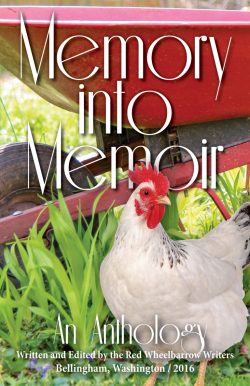
  • MEMORY into MEMOIR: An Anthology by The Red Wheelbarrow Writers – NonFiction, Memoir, Anthology

    MEMORY into MEMOIR: An Anthology by The Red Wheelbarrow Writers – NonFiction, Memoir, Anthology

    This curated anthology shows the collective creative effort that the Red Wheelbarrow Writers have dedicated to “Memory into Memoir,” each one a nugget of remembrance cloaked in the wisdom of time’s perspective and expressed in well-chosen words and memorable well-crafted story telling that will capture your heart and expand your soul.

    Below are a few samples of the superb writing in this anthology.

    The collections start with author (Beyond the Scope – Truth Turns Deadly in the Congo) and former US Embassy staffer Nancy Adair, who recounts, in “Just Say No,” being called upon to provide “community control” for a planned visit from Nancy Reagan to her post in Malaysia. Disaster follows disaster as plans fall through, the weather refuses to cooperate, and Reagan’s anticipated speech is four words long. Adair learns that far from being “one of those introverts who doesn’t like to disappoint people” as she initially imagined herself to be, she is secretly feisty, feisty enough to say “no” to the First Lady when the situation requires it.

    Blogger Sky Hedman’s “The Chosen Day” examines a distraught family trying to reconnect on a mountain picnic. The narrator, her Alzheimers-ridden mother and silently suffering sister Martha barely dodge tragedy on that outing, only to face it days later, along with an acknowledgment of fractured relationships: “The time to know Martha better had passed.”

    In “Thank You, Grace Paley,” aspiring Novelist Barbara Clarke recalls her remarkable personal meeting with the feminist icon over a late-evening cup of tea. Discouraged with her attempts at writing, she asks for and gets en-heartening advice from the famous author: “Just keep going.”

    University instructor Kate Miller’s “Elemental” is the memory of her eleven-year-old self, happily receiving a much-desired chemistry set, then balking at using it when she discovers the many vials containing poisonous substances: “What if I spilled two chemicals that weren’t supposed to mix?” Her escalating concern sparked by an active imagination causes her to stow the set away; later in life she is diagnosed with panic disorder, but still sometimes dreams of the chemistry set and its many messages.

    In “Leaving the Roman Lands,” world-wanderer Kenneth W. Meyer recreates his adventures overseas when in 1976 he and a traveling buddy agree to drive four wealthy students from Istanbul to Pakistan. In those days, foreign travel, the author states, “was like walking in space: you detached from the capsule, fed out your line, and enjoyed the spectacular view.”

    The final piece in Memory into Memoir, “The Great Moratorium,” is the fascinating story of a young woman “busting out of the beige life” at age 18, only to find herself in a highly abusive relationship. Escaping that, she later becomes a therapist for victims of domestic violence and embarks on a one-month experiment in “relationship moratorium” that stretches out to eighteen elucidating years.

    Superb writing styles blend with ease in The Red Wheelbarrow Writers’ first anthology of thirty-two non-fiction works that are a pleasure to read. Offering something for most everyone to appreciate makes this anthology a wonderful gift and a welcome addition to any writer’s library as an inspirational read. A consortium of writers has produced this engaging collection of life’s vicissitudes remembered.

    The Red Wheel Barrel Writers

    According to members Cami Ostman and Laura Kalpakian, the Red Wheelbarrow Writers in Bellingham, Washington, call themselves a “loose collective of working writers” who have “monthly Bored meetings (yes, that’s the correct spelling)” and eschew formal designation as a club or non-profit (“when we need money we pass a hat”). The writers have conspired to inspire with this array of 32 short memoirs.

    The group takes its name from a poetic work, XXII, by William Carlos Williams:

    So much depends
    upon
    a red wheelbarrow
    glazed with rain
    water
    beside the white
    chickens.

    Underscoring this theme, each memoir begins with a quotation from Williams chosen by the individual writer.

    5 Star Best Book Chanticleer Reviews round silver sticker

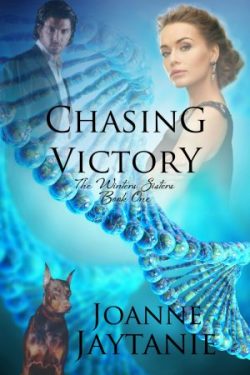
  • CHASING VICTORY: The Winter Sisters, Book One by Joanne Jaytanie – Romance, Thriller, Sci-Fi, Psychics

    CHASING VICTORY: The Winter Sisters, Book One by Joanne Jaytanie – Romance, Thriller, Sci-Fi, Psychics

    Greed, power, and genetics combine with a steamy love story to stir up an action-packed, hot read in Joanne Jaytanie’s Chasing Victory: The Winters Sisters, Book One.

    Responding to a cryptic phone call from an old college classmate, Victory Winters, veterinarian and geneticist, makes her way through the foothills of the Olympic Mountains to the agreed upon meeting point. Spotting him from a distance, Victory’s excitement quickly turns to dread when shots ring out.

    To make matters worse, Victory observes a local police detective at the scene – and not in a law-enforcement capacity, either. She can’t go to the cops, and she’s terrified the killers know she witnessed the murder. Needing a safe space to retreat to, Victory flees to her sister, Payton, who is residing in a motorhome at the San Francisco Fairground for a dog show.

    Author Joanne Jaytanie is off and running with a tension-driven novel, opening with a gripping scene. Jaytanie sets the stage for her story by featuring Victory—a vet who combines telepathy with acupuncture to heal dogs. Victory is also close to finding “a genetic link between the canine world and the human world,” an endeavor that has promising potential to cure diseases in humans. This work of hers makes her a hot commodity – so hot, in fact, others will go to great lengths to gain control of her and her work.

    Two entities are indeed keeping track of our heroine. One, Tristan Farraday, a special ops hunk from the U.S. military sent to protect Victory. And second, a nefarious group headed by the malicious Lawrence Braxton, a genetics corporation. Of course, our gal doesn’t know about Braxton’s intentions when he sends her a rather flattering job offer which is where the proverbial screws tighten, and the story takes flight.

    Jaytanie shifts character POVs which increases tension gives her the opportunity to develop her characters and drives the story forward. There are some proofreading errors, but on the whole, this book is a good start for the first in the series. Jaytanie adds chapter cliffhangers, sprinkles in romance and everything sinister, and proves her worth through rich descriptions and excellent dialogue all to produce a flurry of narrative twists to make a fast, fun read.

    5 Star Best Book Chanticleer Reviews round silver sticker

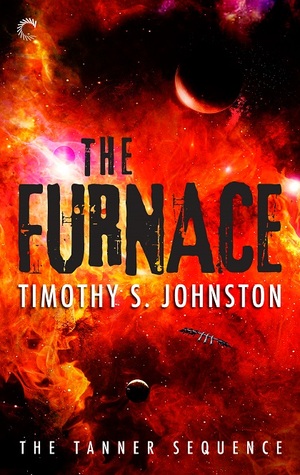
  • The FURNACE: The Tanner Sequence, Book 1 by Timothy S. Johnston – SciFi/Thriller/Suspense

    The FURNACE: The Tanner Sequence, Book 1 by Timothy S. Johnston – SciFi/Thriller/Suspense

    Accidents happen on a space station. But when a body’s head and hands go missing, that’s when top investigator, Kyle Tanner rushes in to solve the heinous crime before more of the crew lose their heads. More detective mystery than sci-fi, Timothy S. Johnston’s hero is the only one who can stop the villain before he or it destroys everything in The Furnace.

    The year is 2401. Homicide investigator Kyle Tanner has seen his fair share of the galaxy’s obscenities. Most notably he’s responsible for the capture of its most infamous rogue, popularly dubbed the “Torcher,” in a manhunt that propelled him into the cultural consciousness, though he couldn’t care less. In fact, he’s never felt more alone in the universe after his oversight led to the death of a fellow investigator, and the closest thing to a friend he has ever had.

    But it’s his former exploit that will forever mark his career, and ultimately what has him assigned to investigate SOLEX One, a space station collecting solar energy on the warmer side of Mercury. The case: Jimmy Chin, a crewman aboard SOLEX, killed outside the station when his vac-suit is mysteriously lacerated and decompression finishes the job. Not the grisliest of murders, but when the head and hands are removed from the body twelve hours later, the case falls within the realm of complication Tanner is known for untangling.

    Now Tanner has fourteen remaining suspects aboard the station, any of whom could potentially be guilty of the crime. And though the rest of the crew widely consider Jimmy’s death an accident and the tampering of the body a prank, albeit an odd one, Tanner doesn’t share their sense of humor. He also knows something else: if there is indeed a murderer on the station, he’ll have to work fast to find them as their surroundings are far too claustrophobic and perilous for the potential victims, including himself, to rest easy.

    Sure enough, the bodies begin piling up, and Tanner’s life is directly threatened. Were it the work of another maniac like the Torcher, Tanner might be able to get his head around the situation. Only there’s a secret that makes this case different than anything he’s ever experienced, and with implications that reach far beyond an isolated space station. It soon becomes clear that any one of them would count themselves lucky to make it out alive.

    With a premise that’s virtually Agatha Christie’s And Then There Were None meets John Carpenter’s The Thing meets Danny Boyle’s Sunshine, there’s some cross-pollination that could appeal to enthusiasts of multiple genres. This is not a straight Sci-fi, and it isn’t a straight mystery.

    The author does face a challenge of blending a meaningful and entertaining story. Though there is plenty of intrigue piled into the first half of the book, the unwinding during the second half does take on a different pace. Some readers may find the technical aspects of the plot that point to plausibility a bit over complicated, lessening the tension and strength of the work. However, for those who crave Sci-fi/Thriller/Romance with the dial turned up to violent, this is your perfect read.

    Don’t lose your head – even if someone or something tries to take it! Timothy S. Johnston’s The Furnace will have you checking your spacesuit for lacerations and keep you looking over your shoulder for what goes bump in outer space.


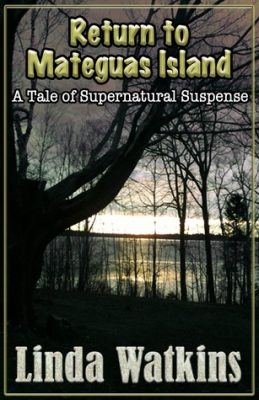
  • RETURN to MATEGUAS ISLAND by Linda Watkins – Literary Thriller/Paranormal/Occult

    RETURN to MATEGUAS ISLAND by Linda Watkins – Literary Thriller/Paranormal/Occult

    Return to Mateguas Island picks right up with the same intrigue, suspense, drama and mystery that Mateguas Island contained. A page turner from the beginning, this is a tale you will not want to walk away from. The story begins years later with, Karen Anderson along with her new husband Dex and her two teenage daughters returning to the island. Karen goes quite reluctantly, but daughters, Sophie and Terri, are on a mission to find out the truth about their father who went missing and subsequently declared dead.

    Return to Mateguas Island would fit nicely in the supernatural genre but has enough suspense throughout to lean toward this genre as well. This mixture of the two genres makes the story more complex and holds the reader’s interest throughout.

    In this second novel, author Linda Watkins has already established and developed her characters and yet goes deeper into development within these pages. The books do stand alone, but to get a full picture, it is advised to start at the beginning with Mateguas Island to fill in backstory and ascertain each character’s story arch as the tale continues.

    This story answers many of the questions from the first book. By the end of Return to Mateguas Island, however, you are left with just as many new questions and just as hungry for a third installment.

    Upon their return, Karen and the girls find the island relatively unchanged from the day they had left it behind. A day Karen hoped would have been the last they would see of this mysterious venue. The memories were too painful and too jarring for Karen and this quickly bubbled to the surface. As with the previous book, there is something just beneath the surface of things that happen on the island, subsequently, as readers dig into the second book, they will find themselves in a familiar environment.

    The story unfolds rather quickly as Karen once again displays odd behavior as the family returns to their old home. The intense story continues as a well-paced read with many twists and turns. The book holds its own next to the first novel and carries the tale, skillfully and smartly weaving in events that serve to whet readers appetites for the third book.

    High suspense and flashes of horror beckon American Gothic readers to Return to Mateguas Island, the second book in Linda Watkins trilogy –a stunning success leaving readers posed in anticipation for the next installment.

    5 Star Best Book Chanticleer Reviews round silver sticker

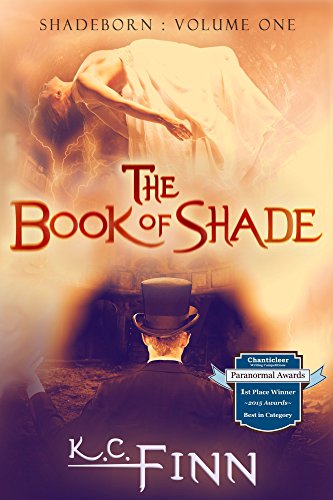
  • The BOOK of SHADE by K.C. Finn – Paranormal/Fantasy/New Adult/Contemporary Gothic/Literature

    The BOOK of SHADE by K.C. Finn – Paranormal/Fantasy/New Adult/Contemporary Gothic/Literature

    A world of intrigue, magic, and danger awaits Lily Coltrane in K.C. Finn’s The Book of Shade.

    On her very first day at university, Lily and her roommate enlist in the IMLS (Illustrious Minds Literary Society) at the student fair and, despite warnings from her history professor, take one step further and visit the Theatre Imaginique.

    The show seems too real – the lightning, levitation, and the fact that Lemarick Novel, the theater’s top showman and proprietor, keeps locking eyes with her. She tries to put it out of her mind, but a month later, Lily and her roommate return to the show, and this is where author K.C. Finn puts her character in delicious jeopardy.

    Lily learns she’s a shade – a being with the ability to generate and control the natural elements (earth, air, fire, and water). This revelation sets her off down a rabbit hole of mystique and magic. Novel is also a shade, one who is fairly accomplished in his abilities, and he decides to train Lily in her newfound abilities. What follows is an adventure woven with trials, romance, danger, and a whole world of the unknown.

    K.C. Finn does an excellent job of weaving the paranormal and magic in with the modern-day world. She introduces concepts that we’re all familiar with, such as voodoo, vampires, werewolves, but does it in a way that doesn’t feel overly stereotypical.

    Finn takes her time with world building in The Book of Shade, and the reader’s patience is rewarded. Finn develops her characters very well, even foreshadowing here and there. The characters and the story itself are slightly more important to the author than the setting.

    Once the author reveals the world of shade, any reader will find it virtually impossible to put the book down. The book does contain some grammatical errors which could and should be corrected, but the writing, on the whole, is good, which is appreciated. From featuring “playbills” for Theatre Imaginique inserted at the beginning of each chapter to the care Finn takes in creating this imaginative world, this title remains a good read.

    Magic and intrigue throw Lily Coltrane’s world all kinds of upside-down when she discovers she isn’t who she thought she was in K.C. Finn’s The Book of Shade.

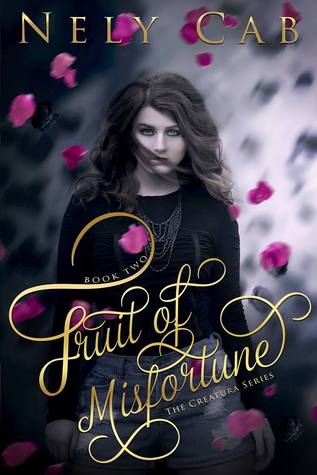
  • FRUIT of MISFORTUNE (Creatura #2) by Nely Cab – Science Fiction & Fantasy/Myth & Legends/Paranormal & Urban/Folklore

    FRUIT of MISFORTUNE (Creatura #2) by Nely Cab – Science Fiction & Fantasy/Myth & Legends/Paranormal & Urban/Folklore

    Fans of YA and supernatural fiction will not be disappointed with Fruit of Misfortune, Nely Cab’s second book in her Creatura series.  It’s an adventurous romp through the paranormal with our heroine, Isis, a young woman whose destiny is intertwined with that of all humankind’s.

    Isis is in a seemingly lovely place at the start of Fruit of Misfortune, flying with her adored and adoring boyfriend, David, to Greece to spend time with his family.  Of course, all is not as it seems to be and therein lies the fun and the adventure.  Eighteen-year-old Isis is only days away from transforming into a monstrous beast, the Creatura, and needs the help of David’s family, all of them Greek deities, to halt the mutation.  They rise to the challenge by seeking out a doctor with cutting edge therapies and locating Isis’s long-lost father who knew how “special” his daughter was when she was born.  While encountering demons and monsters, Isis will wonder repeatedly if she shouldn’t make life easier, and safer, for everyone by just calling it a day and ending her life.

    While there’s plenty of intrigue and suspense, what makes this book positively hum with energy is Cab’s genius for characterization. Sure, Isis is on a quest to save herself and, by extension, the world, but she’s also a young woman, eighteen-years-old, who loves her boyfriend but can’t help being attracted to his friend, Eros (and with a name like that, who could blame her?).  She has moments of insecurity about her looks, rails at her father for having been a dead-beat dad, makes friends with the splendidly blunt and spunky Galilea, and, oh, yeah, really misses her mom.

    The dialogue is often humorous, full of quick-witted banter.  There are references to The Exorcist, The Hulk, The Fantastic Four and Wednesday Adams. It’s easy to imagine ‘Buffy the Vampire Slayer’ telling her friends, “I just read the coolest book about this chick named Isis.” While Isis will be very relate-able for young adult readers, she faces enough maturity issues in Book 2 to engage adult readers as well.

    What also sets this book apart from the typical paranormal adventure is the impressive detail.  Cab describes scenes in Greece with the expertise of a cultural anthropologist.  Her writing is experiential; she makes the reader see, taste, and feel.  When Isis undergoes the most bizarre of pregnancy tests, Cab manages to instill the scene with appropriately convincing details of the biological impact of the metamorphoses taking place in Isis’ body.  Likewise, the author astutely chronicles a medical doctor’s reaction to patients with the most baffling symptoms.  Such careful writing makes the pieces of her fiction fit together like an exquisite puzzle.

    The book concludes at just the right moment.  Some dire problems have been resolved while others are just beginning.  That’s fine because we don’t want to say goodbye to Isis or her boyfriend and his divine family.  We’ve come to love the whole gang and long to spend more time with them. You can do just that by starting the third book in the entertaining Creatura series.

    Being eighteen-years-old can suck. Take heart readers, it’s not as if you’re eighteen and destined to turn into a monstrous beast!  Nely Cab’s Fruit of Misfortune, Creatura #2 delivers everything you love about book one – and more. A must read for YA fans!”

    5 Star Best Book Chanticleer Reviews round silver sticker

  • The GRAVITATIONAL LEAP by Darrell Lee – Post-Apocalyptic, Time-Travel, Action Adventure

    The GRAVITATIONAL LEAP by Darrell Lee – Post-Apocalyptic, Time-Travel, Action Adventure

    In a grim, cold future world, a small elite group guards a treasure from another time in hopes they can somehow rewrite the past, even at the cost of their own lives.

    Timo is a sharpshooter who, with his wife Alyd, guards the Tower, a bizarre ancient building in the center of their small realm where rulers live and ancient secrets are kept.

    When Timo shoots down a nomadic intruder trying to penetrate the fortress, he finds an unusually beautiful knife among the dead man’s possessions and chooses to steal it for himself. When the knife’s true owner is revealed, Timo is not in danger as he and Alyd feared, but instead will be invited into the Tower’s elite circle.

    Timo, Alyd and her mother Wen move into the Tower where he will work for the chief government official, Maldor. He is assigned to transcribe books from a time more than 500 years before, when their planet was not desolate and desperate—1963. This work, and what Maldor reveals to him privately, will shatter Timo and Alyd’s illusions; “the Great Plague” that they were taught about in school was something far more cataclysmic and sinister, bringing widespread death to a once-thriving planet.

    Meanwhile, the nomadic tribes tired of being without electricity amass outside the Tower’s fortress, led by Maldor’s estranged son who rules by visions, signs and the immediacy of weather-related food shortages, to plan a surprise attack. They will storm and possibly destroy the Tower, little knowing its potential for the preservation of mankind. The masses blame Maldor’s crack-pot scientific theories for their plight and are insistent on battle. Only the sudden bursting of a distant star and the skills of Timo’s marksmanship can save the world…but to save it, everything Timo has ever known must disappear.

    A debut novel by author Darrell Lee whose experience in the International Space Station informs the science behind this action-packed story, The Gravitational Leap is a bold but rational foray into the worlds of science and pseudoscience, a mix of nuclear weaponry, Einstein’s theories, and the always intriguing notion of time travel.

    It is important to note that this is a post-apocalyptic story and not a dystopian. With believable characters and a mind-tickling premise: What if history could be reversed to avert a worldwide apocalypse?

    Lee’s book also encompasses a touching romance, and the question of personal religious belief and its place in a society that longs for salvation. The characters recite Bible verses throughout the work. More could have been done to delineate presumed ethnic differences in the future world, quicken the pacing of the battle scenes, and there are long passages from a twentieth century submarine’s log that would have been better presented as dialog or broken up in another manner. There are instances where characters are introduced to further the plot, then disappear again. Yet, this is an intriguing work with logical concepts balanced by plenty of excitement and a surprise ending.

    In a gripping tale that blends historical fact and scientific speculation, the hero of The Gravitational Leap must risk all to end the desperation of a failing civilization and spark the chance for a global reawakening.

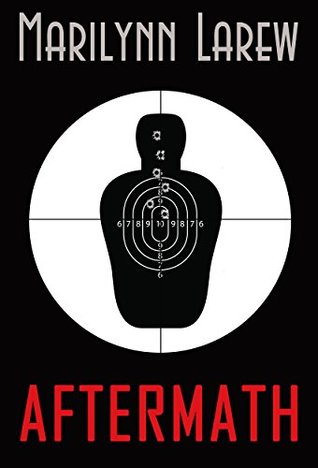
  • AFTERMATH by Marilynn Larew – Mystery Suspense/Thriller/Female Sleuth

    AFTERMATH by Marilynn Larew – Mystery Suspense/Thriller/Female Sleuth

    Mystery maven Marilynn Larew has devised a can’t-put-down thriller with a female lead who can handle everything from flying bullets, dead cats, and snakes in the jungle, with only the occasional meltdown in Aftermath.

    It’s a normal day for private investigator Annie Carter when handsome, Irish, and possibly crazy “Don’t call me Charlie” Magee shows up at her townhouse/office/home claiming someone is trying to kill him. For one thing, a body fell out of a window and landed near him. But even more convincing, someone shoots a hole through Annie’s front window just as Magee arrives on her doorstep – and not long after that, they find a dead cat on the stoop.

    But can Magee be for real? His stories are garbled, and sometimes he seems to be dodging the truth, but when she lets him move in (for his own protection) it turns out he’s a decent cook and, well, let’s say his interest in her is hard to resist.

    Meanwhile, Annie’s lawyer daughter Elizabeth is bugging her because her boyfriend wants to get married, which is against Elizabeth’s feminist principles, and for some reason, it’s all Annie’s fault. Added to this chaotic, action-crammed and often witty mix is Annie’s newest client, Vivian Rowlandson, whose husband has disappeared without a trace. A complex inheritance means the client must find her spouse or lose all financial support for her over-sized mansion and ten horses. And just as all these mysteries build, Elizabeth is kidnapped.

    Threading her way through other people’s bizarre problems is what Annie signed on for when she became a private investigator. It was the job best suited for a single parent. But now her mothering skills are questioned and her own life is in danger.

    Eventually, the hunt for Vivian’s errant husband will take Annie to the shadowy, steaming jungles of Southeast Asia where human and reptile killers lurk around every tree—and where the charming Magee will prove a stalwart bodyguard—in more ways than one.

    Practiced mystery novelist Larew (Dead in Dubai, The Spider Catchers) presents a plot that brings her expertise to the fore. With teaching and publishing credits in American and Vietnamese military history, she has also visited Hanoi and other far-flung places. Her Annie is a heroine for the mid-life generation: a gritty divorcee with a penchant for adventure and a secret passion for unruly older men. Larew sculpts Annie with just the right proportions of savoir-faire, guts, and a few moments of unabashed girly-ness.

    Sure to please Larew’s fans and attract new ones, Aftermath is a welcome addition to the female detective mystery/thriller genre steeped in exotic locales, alluring hints of romance, bullets flying, people disappearing, and just enough humor to wrap it all together for the perfect read.

    5 Star Best Book Chanticleer Reviews round silver sticker

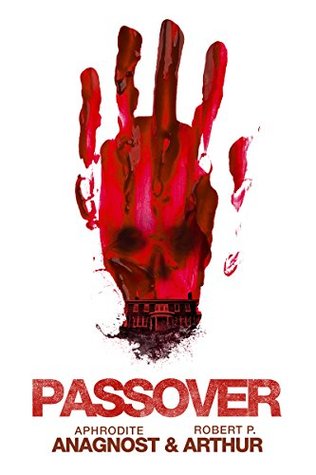
  • PASSOVER by Aphrodite Anagnost and Robert P. Arthur – Horror/Psychological Thriller/Ghost Story

    PASSOVER by Aphrodite Anagnost and Robert P. Arthur – Horror/Psychological Thriller/Ghost Story

    This novel is a multi-dimensional excursion into the paranormal. Its twists and turns take the reader on a circuitous route, where the impossible is ordinary, and there is no safe place.

    Authors Aphrodite Anagnost and Robert P. Arthur have created a fast-paced, well-written read to challenge even the most hard-core fans of mystery and the supernatural. The writers use a mosaic of imaginative ideas, sensory detail, and historic events to move the reader through a morass of implausible events, to a chilling conclusion.

    For the residents of Zebulon, a tiny, historic Virginia town on the Delmarva Peninsula, the world has become surreal. For the last three months, a serial murderer has been at work. On the night of the full moon, moving from house-to-house on Burnt Chestnut Road, this creature has committed atrocious acts.

    Inexplicable smells, sights, and quirks of weather impinge upon the police investigation of these, driving most of Zebulon’s residents to flee in fear.

    If the killer remains consistent, the next house in line is the home of Dr. Rachel Shelton and her family. One, or all of them, is destined to be the next victim, and tonight is the night. Rachel and her husband, Dave, try to prepare for the onslaught. Little do they know that sharp knives and loaded rifles cannot protect them.

    Sheriff Phil Wise revisits the murder sites and struggles to make sense of the mayhem that occur at each, when “…all explanations seemed stranger than the crime scene itself…” Beatricia, Rachel’s mother, senses the truth, and her revelations help keep the reader engaged.

    The frequency of multiple motifs, e.g., the unexplained smell of burnt wood, levitation of furniture, dis- and re-appearance of objects, random cold spots, and intermittent cessation of normal sound can work to distract the reader. Inconsistencies within the narrative, such as a kitchen floor that is described as linoleum, then tile, and then linoleum in the span of two pages, a discordant timeline of the murders, and a geographic site for one of the serial murders that contradicts the described pattern, detract from the storyline. However, Passover’s plot has “good bones,” and those who enjoy the genre will devour this work. The well-developed character of Beatricia, Rachel’s mother, goes a long way in helping maintain reader engagement.

    Beatricia is not only a learned scholar but also a gifted medium, who views the horrendous events through the lens of spirituality. It is only after she enters the investigation with Lev, a Jewish apostate, that those old truths begin to reveal themselves, and the pieces begin to coalesce. Rachel must acknowledge and utilize her innate psychic abilities if they are to defeat the evil supernatural forces that surround and threaten them.

    “Passover” by Aphrodite Anagnost and Robert P. Arthur takes the reader to a universe where the mundane meets the mystical. Here, the power of “animal magnetism” enables the dead to reanimate and materialize, and a charming teen-aged ghost attempts to seduce Rachel’s adolescent son.

    In this altered reality, symbolism, echoes of ancient religions and myth, memories of age-old bondage, savage twentieth-century anti-Semitism, and ghosts and apparitions collide with everyday family conflict and strife. “Passover” is a paranormal mystery on steroids!

  • The Other La Bohème by Yorker Keith – Contemporary, Literary, Opera

    The Other La Bohème by Yorker Keith – Contemporary, Literary, Opera

    Life is as complicated as an opera performance in Yorker Keith’s new literary work, The Other La Bohème. The setting is modern-day Manhattan, complete with a café that showcases singing wait staff and doubles as an art gallery, studio apartments full of painters and poets, and surprise performances are sung in Italian.

    The Dolci Quattro, a group of four friends intent on making it in the challenging world of professional opera, is determined to stage a different version of this well-known work, doing everything they can to support each other when motivation is hardest to find. Luckily for them, wealthy patrons and loving family are always closer than they imagine.

    Keith takes his novel into the realm of opera itself in many ways. The most obvious how the book is formatted – and the reader will notice this quickly, with each chapter heading listed as a “scene” and the book itself divided into “Acts.” And like any good opening scene, we meet the major characters immediately.

    Four singers have been friends since college days and have dubbed themselves The Dolci Quattro, the sweet four. It’s through their singing, often in Italian and always translated, that readers who have no familiarity with this art form will be able to see its enduring legacy and relevance to modern life. Whatever personal situation arises, at least one of the four has an aria to help express the emotion.

    By Keith using this technique opera, itself, takes center stage. Dialogue often swirls around what it means to sing or be a singer, becoming technical at times, yet exploring the emotional and physical demands of the profession, while descriptive passages can encompass many of the main characters at once, mimicking the most enlightening program notes.

    Similarly, the main story line of The Dolci Quattro’s attempt to successfully stage a lesser version of the most famous opera performed in America, Puccini’s La Bohème, by performing the work of the same name composed by the lesser known Leoncavallo, echoes their frustrations as individual vocal artists. They are starting from near obscurity, each working in poverty–what was once referred to as Bohemia– but with passionate and undeniable talent.

    Their gamble of performing a nearly unknown variation of the opera mirrors the often-difficult choices and explanations each character faces about their futures and their professional careers. Like many an opera production as well, the reader is asked to accept life for the Dolci Quattro in all of its most broad and painted strokes.

    Tragedies are short-lived, triumphs universal, offering us all a glimpse into the unique world of lead singers and understudies and what it takes to make it to the top in a competitive field.  In the repeated refrain of The Dolci Quattro, Keith’s work urges all of us to “Sing On!”

    5 Star Best Book Chanticleer Reviews round silver sticker