Tag: Chanticleer Book Reviews

  • RETIRE SECURELY: Insights on Money Management from an Award-Winning Financial Columnist by Julie Jason – Personal Financial Management, Retirement Planning, Budgeting & Money Management

    RETIRE SECURELY: Insights on Money Management from an Award-Winning Financial Columnist by Julie Jason – Personal Financial Management, Retirement Planning, Budgeting & Money Management

    If you’re wondering what the difference is between a Roth IRA and a traditional IRA, then you’ll want to pick up Julie Jason’s Retire Securely: Insights on Money Management from an Award-Winning Financial Columnist. You will be treated to a crash course on financial terms like these and get inside information on saving and investing thanks to scores of conversations she’s had with her readers over the years.

    Plenty of titles on financial planning and investing exist on bookstore shelves, but what makes Jason’s compilation different is that hers is culled from more than 1,000 columns she has written over the years for the Connecticut newspapers, Greenwich Time and the Stamford Advocate. In 2013, King Features syndicated her “Retirement Planning and Investment” column, where she explores topics like 401(k) investing, choosing a financial adviser and how to determine if sending your kid to college is a good value. Jason, who worked as a Wall Street lawyer, money manager, and investment counselor, really knows her stuff: whether it’s unraveling the complicated world of market trends or explaining estate planning, her columns are worth reading and applying to your financial life. Her column has recently moved from King Features to Andrews McMeel Syndicate [Chanticleer Reviews was notified about this change on April 3, 2020].

    “Through my dialogue with readers, I want to share a message of both promise and watchfulness,” she writes in the Introduction. With an easy to follow and conversational tone, Jason invites readers to get financially literate–understanding how to read a mutual fund prospectus, for example. (A prospectus is not literature that you read from start to finish. Instead, it’s designed to protect you, so read it like a warning label on a medicine bottle, she advises.)

    Recognizing that some investors are overwhelmed by financial jargon and the pressure to keep up with the Joneses, she assures her readers that attaining financial security is “a work in progress,” with room for improvement. “I’ve interacted with hundreds of people who wrote to or visited with me to discuss their challenges, concerns, and questions,” she says.

    Our culture’s most significant challenge today, she says, seems to be the pressure Millennials face as they swim in debt. On top of it, Jason points out, this younger generation is in the dark about financial matters. So much so that in 2013, President Obama helped create the President’s Advisory Council on Financial Capability for Young Americans*, designed to educate young people on how to “successfully handle their personal and household finances as they grow into adulthood.”

    Citing statistics, Jason tells us at least half of 18-to 24-year-old adults stated they would have benefited from a high school course on managing their money. Unfortunately, financial literacy isn’t a mandatory class, so the on us falls on parents to approach kids early with guidelines for saving and even borrowing money.

    Because the book idea came from dialogue she had with readers via her column, many of the issues have to do with feeling secure in retirement, as evidenced in chapters like, “It’s Never Too Early for Retirement Planning” and “Understanding the Relationship Between Your W-2 and Your 401(k).”

    We all could take a cue on how to improve our financial know-how, and a number of the columns are especially useful for parents and their children to review at various stages of their financial planning life cycles.

    Lastly, if you’re wondering how republished articles, some from a decade ago, could be relevant today, Jason has taken the time to update some of the columns to keep pace with changes in the market.

    Retire Securely: Insights on Money Management from an Award-Winning Financial Columnist by Julie Jason won First in Category in the CIBAs 2018 I&I Awards for Instructive Non-Fiction.

     

    *The Council officially ended on January 29, 2013: https://www.treasury.gov/resource-center/financial-education/Documents/PACFCYA%20Final%20Report%20June%202015.pdf
     

  • FULL CIRCLE: A Refugee’s Tale by Joe Vitovec – WWII Historical Fiction, Literary Fiction, European WWII Refugee Historical Fiction

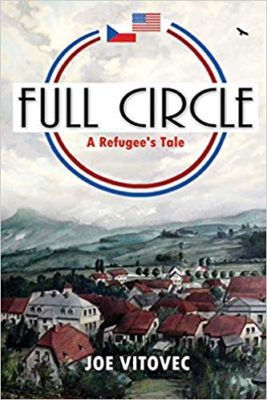
    FULL CIRCLE: A Refugee’s Tale by Joe Vitovec – WWII Historical Fiction, Literary Fiction, European WWII Refugee Historical Fiction

    In the prologue of this lucid and gripping novel, Joe Vitovec notes that although Full Circle: A Refugee’s Tale is fiction, he “attempts to acquaint the reader with some of the locales and events that made this period so memorable, and leave a record for those who may one day wish to revisit the past.” He has done an extraordinary job with this literary recreation of the experiences of the “displaced persons” following World War II.


    Vitovec takes the reader on a journey that begins with a boy in 1938 in a small town in Czechoslovakia and ends some fifty years later with that boy, now a middle-aged man, returning to his childhood home. What transpires in the intervening years is the heart of this politically and emotionally complex story, one with which many will be able to relate, while others will learn from and perhaps consider the current global refugee crisis with fresh insights and compassion. It is not a tale any reader will likely forget.

    Jan Neuman is only eight when the men of his village leave for a military encampment and prepare to fight the Nazis who have invaded their lands. They never get the chance. As decreed by the Munich Conference, this area of Czechoslovakia is handed over to Hitler and made a German protectorate. The townspeople feel demoralized and live in constant terror that the Germans will arrest them for showing the slightest loyalty to their ousted leader or native culture. They endure degradations, subsisting on soup bones and potatoes, and Jan’s father, the town’s tailor, is made to sew Nazi uniforms.

    Years pass, and finally, the Allied invasion buoys their spirits and hopes. One miraculous day, there are American soldiers in town, happy to share cigarettes and peanut butter, and make friends with the locals. Jan, a teenager, views the Americans as “bordering on godlike,” as does everyone in the village. This euphoric time is short-lived, however, with the departure of the liberating soldiers and arrival of the Russians, followed by a communist coup. The communists are eager to make arrests, and the townspeople become fearful and distrustful of one another.

    As a student who works on a political newspaper, Jan is brought to the communists’ attention and will likely be arrested. When he hears of a resistance army being formed elsewhere, he stealthily leaves town with his friends. However, just as their fathers were denied the chance to fight, Jan and his friends discover that the resistance military base is in fact a refugee camp in Regensburg. Although it’s technically an American camp, it is run by Germans. He and his friends are told, “As refugees, you have no citizenship status, no rights.” Conditions are harsh, the camp overcrowded with Poles, Russians, Ukrainians, and Czechs. Morale is exceedingly low as people wait to see where they’ll be sent next. Although everyone wants to go to America, there are no fast or direct routes. Indeed, Jan’s refugee life has just begun.

    Like so many others, Jan must attempt to rebuild his life again and again. Over the next two years, he will travel from camp to camp, make an ill attempt to join the French Foreign Legion, experience a devastating low outside the sewers of Paris, fall in love, and finally sail to America where his troubles are far from over.

    Vitovec delivers a riveting story in beautiful and poignant prose, reminding us that the impact of war can be total, even for those who never set foot on a battlefield. Political losses hurt people deeply, but the loss of sense of self is endlessly tragic. Displacement is not just a geographic issue, but a psychological one. How much of our identity is built on where we are from? Who are we if we belong to no country? Imagine, if you can, owning nothing but memories, memories of a time and place, of a people who used to belong to a country and spoke its language. Imagine every identifying detail scrubbed from you, the only thing that motivates you is the instinct to stay alive. For years, the existence of the displaced boiled down to just that – a place to lay their heads at night, bread to keep their stomachs from aching, and perhaps the tiniest glimmer of hope that they were y headed somewhere that wasn’t yet another refugee camp, a place they would one day call home.

    A book for political leaders, teachers, students, and anyone with a desire to not repeat the past. It’s a book that serves to remind us of what we have and what can be taken from us at a moment’s notice.

    Full Circle, A Refugee’s Tale by Joseph Vitovec won First in Category in the CIBAs 2018 Goethe Awards for Late Historical Fiction.


  • The HOUSE at LADYWELL by Nicola Slade – Clean & Wholesome Romance, Romantic Comedy, Romantic Suspense

    The HOUSE at LADYWELL by Nicola Slade – Clean & Wholesome Romance, Romantic Comedy, Romantic Suspense

    Badge for Grand Prize Chatelaine Awards for The House at LadywellA surprise bequest, a cryptic benediction, and a box of long-lost letters thrust Freya Gibson in the middle of a life-changing mystery. As the personal assistant to successful novelist Patrick Underwood, Freya never takes a vacation. She believes herself content to be surrounded by the hustle and bustle of London, keeping Patrick on track and reigning in her newly discovered and completely uncertain feelings for her boss.
    When Freya inherits a house from a heretofore unknown relative, she isn’t sure what to do. What’s more, the house comes with a clause preventing the immediate selling off of the relic. Freya has no choice but to visit the estate, still reasonably sure she will rid herself of the property; until, of course, she sets foot in the ancient home in Ramalley.

    With Patrick gone on a business trip to the US, Freya decides to spend a week getting to know her new home and the village nearby. She quickly decides she wants to keep the enigmatic house with the enormous stone mantle, former church windows, and hand-carved hares. Still, as she falls in love with the house, she uncovers evidence that Violet, her cousin, and the former owner, knew a great deal more about Freya than Freya knows about herself. With each step closer to the truth, the house seems to draw her closer in a protective grip, perhaps giving her a chance at a new future.

    Slade elegantly weaves the stories of all those who benefited from the waters of Ladywell’s actual well into the rich narrative. Lovers of history will relish the retelling of so many stories from various periods that shaped and were shaped by the area. From an adolescent Roman deserter to a broken-hearted WWI soldier, the stories not only show the residents of the area but also the tapestry of England at each telling. Ladywell drew the sick, the needy, and those looking to begin again, just as our modern protagonist does.

    Freya’s story interweaves with the historical tales that serve to explain some aspect of the house or village. Through the historical details and period dialogue, the short excerpts rendered are just as rich as the main plot.

    Reinvention and rebuilding are significant themes in Freya’s story as well as the house’s story. Damaged by an abusive relationship and the death of both parents, Freya discovers much about herself as she does about Ladywell through the investigation of her new home. While searching through her cousin’s belongings, she finds more questions than answers, and she must search deep within herself to find the strength to pursue the truth of her parentage as well as how her birth was arranged.

    As she learns to lean more on Patrick, she discovers that he needs her as much as she needs him. Just like her new relationship with Ladywell, the love she and Patrick share both new and comfortably worn.

    The House at Ladywell by Nicola Slade won Grand Prize in the CIBA 2018 Chatelaine Awards for Romantic Fiction.


  • DESTINY’S WAR (Saladin’s Secret #1) by Pyram King – Alternative History, Alternative History Science Fiction, Historical Fantasy

    DESTINY’S WAR (Saladin’s Secret #1) by Pyram King – Alternative History, Alternative History Science Fiction, Historical Fantasy

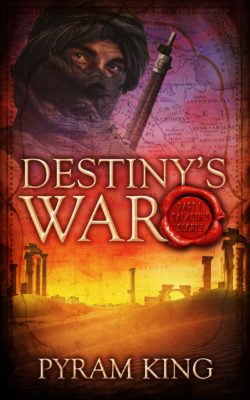
    Destiny’s War is the first in a series of novellas that fictionalize the experiences of a war correspondent, occasional amateur archeologist and sometimes caravan guard Francis Marion Jager during the Desert Campaign of the Great War; the war that was supposed to have been the end of all wars, later known as World War I.

    Jager, a young American far from home scraping together a living at the edge of an unsung campaign of a brutal war, left behind a diary of his exploits – a journal that the author has turned into compelling prose wrapped around meticulous research.

    Jager is a character caught between multiple sides and perspectives while carefully observing them all. As an American, his observations of the British units with whom he serves, including their attitudes towards their Bedouin allies as well as their German and Turkish enemies, is often sly and cutting. At the same time, he exhibits empathy with the common soldier.

    It is 1917, and the war has been going on for three years. Everyone seems to have lost track of its purpose, morale is low, and some have lost their moral centers.

    Although still a very young man, Jager has already seen too much; he is as war-weary as any of the soldiers he reports on, and is afraid to befriend anyone out of the very reasonable fear that they will not survive. He is a man who has taken too many losses to sign himself up for more. And yet he becomes involved again anyway.

    As a speaker of not merely English but also his grandfather’s native German and the Arabic language of the Bedouin tribes, Jager can see into all the sides of this conflict. Having learned his Arabic while traveling with those tribes, he respects their position considerably more than the British who are allied with them by policy but disparaging of them in practice.

    He is the quintessential outsider, able to see all sides of the conflict while being part of none.

    Destiny’s War is just the tip of the iceberg of Jager’s experiences. As the story opens, the young man is attached to the Camel Corps, spying for the famous Gertrude Bell. Quite suddenly, he has a historical artifact that entirely too many factions will kill to obtain.

    This is only the beginning of his story. Readers who love the epic sweep of Lawrence of Arabia will find themselves immersed in that bygone era, as seen through the eyes of a man who met everyone and experienced it all.

    In the end, Destiny’s War feels like the opening chapter of an absolutely fantastic story. It’s a small sampling, the merest taste of a tale that feels like it will be epic. Indeed, the only criticism that most readers are likely to have is that the story feels too short. It’s a tease and a treat.

    Readers will be left salivating for the next chapter. This one is highly recommended for readers who love the sweep of history and want to feel as if they are there.


  • The PARROT’S PERCH: A Memoir of Torture and Corruption in Brazil by Karen Keilt – Memoir, Dysfunctional Families, True Crime Biographies

    The PARROT’S PERCH: A Memoir of Torture and Corruption in Brazil by Karen Keilt – Memoir, Dysfunctional Families, True Crime Biographies

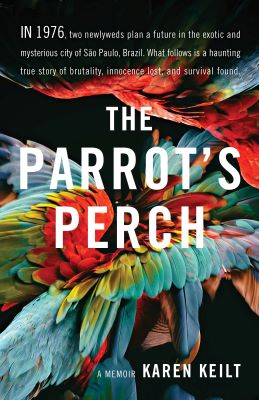
    A blue and gold badge for the 2020 Grand Prize Winner for Journey Narrative Non Fiction The Parrot’s Perch by Karen KeitKaren Keilt led a life of privilege, a life that most of us only dream of, but she turns the dream upside down in her memoir The Parrot’s Perch: A Memoir of Torture and Corruption in Brazil, where she exposes the seamy underside of that life and the corrupt government under which she lived. Keilt takes us from her childhood filled with the horses she loved, to her marriage to a man she adored, to the fatal incident that destroyed the world she knew.

    The memoir moves between New York and Sao Paulo as Keilt sets the stage for an incident that occurs shortly after her marriage. Keilt places no blame, but tells her story with an objective eye, while expressing the confusion she held of her experiences: the kidnapping, torture, rape, and interrogation by the police for “…forty-five days of hell. Three million, eight hundred and eighty-eight seconds.”

    Karen Keilt presents a memoir that is tough and unapologetic. She sandwiches her story within an interview at the UN, which is smart because some of the events are so intense and violent, they call for a breathing space where readers can decompress.

    The sign of a good memoir, like any other piece of literature, is readers cannot put the work down. Here, Keilt has crafted her story in a plot that flows, and characters who are sympathetic and despicable. We follow her through her vivid, active setting in beautiful Brazil, to the prison, to New York, and California. Her struggles are heartfelt right up to the satisfying ending.

    When she receives the call from the Truth Commission, she is willing to help her beloved Brazil in any way she can, even if it means resurrecting her past and the recurring nightmares. She’s interviewed by a political scientist and investigator who is building a case against the Brazilian government for crimes against human rights that had been perpetrated for decades by its savage police force and military dictatorship. These interviews, held at the UN in New York City, envelope the story she relates.

    Keilt’s page-turning memoir takes readers on a journey we might be reluctant to travel, but compelling and essential, nonetheless. We must see how she gained her freedom from the oppression and how she lived the nightmare of those forty-five days. Her story is too real, too raw, too vital to simply set aside.

    This action-packed memoir exposes international affairs, historical events, and human rights abuses. For some, Keilt’s story will hit a rather delicate nerve and serve to remind us why it is crucial to protect our democracy, to be vigilant and aware of those forces that seek to unravel our freedom of speech and freedom of the press. Indeed, we must all work towards a democracy that puts the lives of its citizens before those of a few powerful politicians who may have their own agendas.

    In corresponding with the author, she reflects, “The truth is, I was sooo very lucky. I was, by the grace of God, a dual citizen. I was welcomed to the US when I made my escape. I had with me the only precious thing I could never have left behind. My son. Also a dual citizen. Today, when I hear the echo of those words, ‘Welcome home, Mrs. Sage,’ uttered by the passport control agent, I truly understand how blessed I was. My experience gives me more empathy for the agonizing fear of today’s immigrants who flee terror, starvation and tyranny often journeying through untold dangers for weeks or months only to finally arrive in the US and be turned away or worse, imprisoned and separated from their children. If that had happened to me, I would not have survived.”

    Keilt shines a bright light on the horrors of what happens when corruption infiltrates the highest levels of a governing body, something we should all pay attention to and be outraged by. The Parrot’s Perch won Grand Prize in the 2020 CIBAs for Overcoming Adversity Non-Fiction works. 

    Journey Grand Prize Gold Foil Book Sticker Image

  • The SUNKEN FOREST by R. Barber Anderson – Thriller & Suspense Action Fiction, Literary Fiction, Military Thrillers

    The SUNKEN FOREST by R. Barber Anderson – Thriller & Suspense Action Fiction, Literary Fiction, Military Thrillers

    American timber company, NTI, flies over a remote area of the Congo with sophisticated instrumentation. Data shows an immense, deep depression in the jungle floor, a giant caldera from an extinct volcano. Despite the depth of the crater, the canopy level above remains constant and gives no clue of what lies below. To NTI, this could be an indication of tropical hardwoods beneath, potentially the size of mature redwoods. To the indigenous tribes, the sunken forest is a forbidden zone guarded by a legendary black devil who brings sure death to trespassers.

    NTI sends a group in to explore and determine if their data is correct, that what lies beneath is an untapped bonanza of timber. The group persuades a few local tribe members to guide them. They make it to the edge of the caldera and are never heard from again. When the tribal guides return home, they suffer banishment for showing strangers the way to the forbidden zone.

    Zora de Rycken, an outdoor adventurer with exceptional jungle survival skills and Special Forces training, is enlisted to guide NTI scientist Carver Hayden to discover the fate of the first group and to complete their unfinished mission.

    Once in their expedition staging area in Brazzaville, Congo, the second NTI team encounters an unscrupulous Russian billionaire, Oleg Levkov, with a timber company of his own. Though it would seem they are in competition, Oleg assures them his only interest is in the legendary black devil. Oleg is a big game hunter with a fascination for big cats. He is sure through his own research that the black devil is a giant black lion no one has seen before, and he wants to be the first to kill one.

    When the NTI team arrives at their basecamp, the nearest open ground in the vicinity of the caldera big enough to land a helicopter, and the starting point for the previous NTI team, Oleg is already there. Oleg’s team has secured a native guide, Ngiome. Oleg’s helicopter departs just as the NTI team arrives, and Zora is sure she sees members of Ngiome’s tribe aboard. Has Oleg kidnapped these people to secure Ngiome’s services?

    One thing is certain, no matter which company wins the timber rights to The Sunken Forest, the result will be the same. Pristine jungle unlike any in the world will be laid waste leaving nothing but an empty muddy scar on the Congo.

    Barber Anderson weaves a captivating tale that lays out the consequences of Industrial greed and conservation set against a thrilling backdrop of jungle, violence, and sex.


  • The LAST SEER KING (The Shadow Sword series Book 2) by S.J. Hartland – Dark Fantasy, Sword & Sorcery, Dark Fantasy Horror

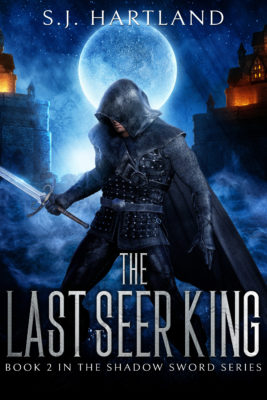
    The LAST SEER KING (The Shadow Sword series Book 2) by S.J. Hartland – Dark Fantasy, Sword & Sorcery, Dark Fantasy Horror

    When it comes to fantasy novels, one thing is certain, as was famously said in the venerated musical, The Music Man, “You gotta know the territory.”

    Author S.J. Hartland clearly does.

    In The Last Seer King, the second volume in her Shadow Sword epic fantasy series, the creates a world with a granular intensity that envelopes the reader from page one. You see this world clearly in all its dark details. You also feel the power, the all-too-human intricacies of its leading characters. This is a world that feels authentic, as though the writer lived there and let us see it as clearly as her own first-person experience. Simply put, it works.

    There are well-developed characters here who fight on despite their emotional challenges. Dannon, who, despite his prowess on battlefields, yearns to belong to a people, to someone. Kaell, who dies and whose soul enters into the body of a woman who is coveted by a male warrior. The woman just happens to be the dead sister of the king of the Isles. Can Kaell possibly be a woman to a man when he is still a man and a warrior?

    What is less straightforward is summarizing the plot. Hartland helps us with the book’s logline: “It’s the secrets we hide from ourselves that gives others power…” Dark? Yes! Foreboding? Absolutely! It’s everything we love about S. J. Hartland and more.

    Readers are gifted a 600-page second in the series novel with dark and twisted plots and characters that would sooner kill you than look at you. There are warring territories, each with their own agendas. The leading characters come into this story with the ancient battles of their people still fresh in mind. Heath, Kaell, Vraymorg (also known as Val Arques) and Dannon, are constantly in some state of flux with each other. There is magic at hand: the power to insert one’s essence into the body of another, the ability to be both a human and a blood-sucking ghoul, the creation of “death riders” who live on and do their evil for centuries.

    This is rich and delicious stuff, made more so by a full cast of characters and their interwoven relationships. The glossary of characters at the end of the book, listed by their “tribes,” and a drill-down of their familial relations, is a major Rosetta Stone for readers to better understand what is happening. Trying to understand these relationships without it adds a layer of difficulty in reading this compelling, and oftentimes, complicated book. Besides, you want to know every detail, right?

    Another helpful tip: read, The 19th Bladesman, (The Shadow Sword series Book 1) that introduces the major characters in The Last Seer King. And be prepared to pick up the third book in the series due to be released in 2020.

    For readers who love fantasy, this novel is clearly a strong contender for a reader’s attention, in much the same way Tolkien’s Lord of the Rings series, or J.R.R. Martin’s Game of Thrones. Simply put, The Last Seer King by S. J. Hartland is an exciting well-crafted, epic-fantasy worthy of your time.


  • VANOPS: The LOST POWER by Avanti Centrae – Crime Mystery, High-Stakes Thriller, International Thriller & Suspense

    VANOPS: The LOST POWER by Avanti Centrae – Crime Mystery, High-Stakes Thriller, International Thriller & Suspense

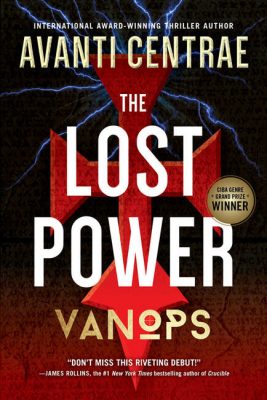
    Paranormal Grand Prize Award Badge for VanOps The Lost PowerAvanti Centrae takes readers on an action-packed gallop around the globe in her debut award-winning novel, VanOps: The Lost Power.


    Maddy Marshall, 31-year-old app designer and aikido instructor, and her twin brother, Will, have been summoned to their father’s Napa Valley winery. He has something important he needs to tell them.

    The estranged twins haven’t seen each other in a while. Will, now in Brazil and newly married, has brought his wife Maria with him. As Will and Maddy catch up in the driveway, a shot rings out. They rush into the house to find their father and Maria have been shot. Maria is dead. Their father clings to life long enough to pass along a family secret. They witness a blond man racing away from the winery in a black BMW.

    Will and Maddy are descendants of the Argones bloodline and related to the current king of Spain, and now they must seek out a woman, a lawyer whom their father trusted, to receive the first clue in a quest to fulfill their birthright.

    On their way to the lawyer’s office, Will and Maddy are ambushed by the same blond man they’re sure murdered their father and Maria. After a short chase, they evade him when his car crashes through a guardrail, plummets to the bottom of a ravine and bursts into flame. Will and Maddy waste no time hightailing it to the lawyer’s office, relieved to have the killer off their trail.

    The lawyer has a package for each of them, filled with gold, diamonds, cash, and a letter. The letter tells them they are to use the money to fund their quest, which begins in Spain, where their great uncle, the king, will give them their first clue. They are to find an ancient relic of great power that has been safeguarded by their family for centuries. They must not only unravel the clues as to its location but must also pass a series of tests along the way designed to show they are worthy of possessing so much power.

    As Maddy glances out the window, she is shocked to see the blond sniper charging the stairs of the lawyer’s office. They hastily escape out the back door. How did he get a car? How did he track them? Is his interest in them somehow linked to the relic? And how would he even know of its existence?

    Will and Maddy need a place to hide out, someplace safe where they can rest and think. They destroy their cell phones just in case that’s how they’ve been tracked and decide to head to Lake Tahoe and their old childhood home. While in Tahoe, they bump into an old friend from high school, Bear Thorenson. Bear used to have a crush on Maddy back in the day, though she never encouraged his affection. He is now a Marine and filled out quite a bit. They soon find out he’s also a history buff. Will and Maddy confide in him about the mysterious man on their tail. Bear agrees to accompany them to offer protection. And the trio is soon off for Spain.

    Avanti Centrae has a knack for keeping the action moving and keeping her characters in peril. The stakes are high, and there’s no telling what’s around the next corner. If you fall in love with the characters, this is the first in a series so you will be able to get your next fix in the near future.

    Van Ops: The Lost Power won Grand Prize in the 2017 CIBAs for Paranormal novels.


  • A HOME on the SOUTH FORK – An Early History of ACME – A Northwest Washington Community by Margaret A. Hellyer – Pacific Northwest History, Narrative Non-Fiction, Small Town Histories

    A HOME on the SOUTH FORK – An Early History of ACME – A Northwest Washington Community by Margaret A. Hellyer – Pacific Northwest History, Narrative Non-Fiction, Small Town Histories

    For untold millennia, the region that would come to be known as Whatcom was occupied by the indigenous conglomerate of tribes known as the Salish, who were peaceful and civilized. The Nooksack, who are a part of the Coast Salish, spent their time fishing, building canoes, weaving, and farming. In the 1850s, that began to change as the native peoples had to learn to co-exist with a new incursion of settlers—hardy people from the Eastern states and as far away as Europe.

    They came to the region with the lure of inexpensive land ownership that had been made possible by the Homestead Act. A few had drifted in earlier when false rumors of gold were sounded, those early explorations revealing arable land and an abundance of natural resources.

    Early homesteaders found the resources both sustaining and at times, daunting. For example, the trees themselves were so enormous that felling them was perilous, and logjams were frequent, cutting off the river’s flow. The winters were harsh and the summers, bug-infested. But families like the Galbraiths (the author’s ancestors) were hardy and determined. By the early 1900s, a thriving town had been established.

    Readers who think of the early 20th century as ancient times will be surprised by Hellyer’s lively account of how an organized and industrious outpost developed out of a nearly uninhabited wilderness. Not long after the first settlers arrived, cabins and then houses soon bloomed into handsome estates, some of which still stand today in Acme and elsewhere. Along with the settlers came schools and school districts. Roads changed from dirt trails to cement highways, while railroads transported logs and shingles out and new visitors in. Modern conveniences such as a town water system, churches, electricity, and the postal service arrived to make life easier. Readers will be amused by the telephones, with party lines that allowed everyone in the community to know everyone else’s business.

    People of Acme had to travel to a dentist, and, for a while, the town had a doctor who dealt with a variety of contagious diseases, delivered babies, and reattached severed fingers. At one time, citizens also had access to a local pharmacy to help with their aches and pains. Acme’s General Merchandise store sold everything from dry goods to salt meats, run by the Zobrist family, original settlers of the South Fork region. Recreation for the fully established town included hiking trips, concerts, and dances open to “woodmen and the general public.”

    Hellyer was born in Whatcom County and has remained, pursuing a career in graphic design while enjoying a personal interest in photography and writing about local history. Her family photos and recollections are a small but significant part of this story. Illustrated with black and white images on nearly every page, Hellyer’s historical account of the settling of the South Fork will enthrall both a regional audience and those curious about American pioneering in the Great Pacific Northwest.


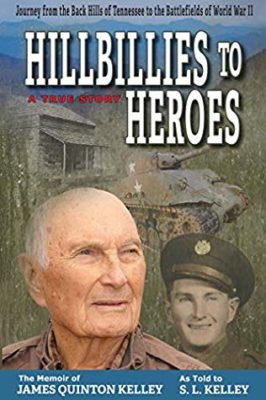
  • HILLBILLIES to HEROES: Journey from the Back Hills of Tennessee to the Battlefields of World War II – The Memoir of James Quinton Kelley by S.L. Kelley – World War II Biography, American Heroes, World War II History

    HILLBILLIES to HEROES: Journey from the Back Hills of Tennessee to the Battlefields of World War II – The Memoir of James Quinton Kelley by S.L. Kelley – World War II Biography, American Heroes, World War II History

    World War II veteran Quinton Kelley recounted his life story to an avid biographer – his daughter, S. L. Kelley, a documentarian and award-winning video producer.

    Kelley’s tale begins in Coker Creek, Tennessee, where he was raised on an 80-acre farm, in a log cabin that he described as rough, but “brightened” with flowers. Taught to be honest and hardworking by his parents, he grew up with kerosene lamps for light, a fireplace for warmth and a wood stove for cooking. His recollections are colorful, with language that recalls his roots.

    As a boy, he wore shoes only to church or to town and attended a church that doubled as a one-room schoolhouse. Everyone in the region knew someone who made moonshine, “a scruffy bunch,” Kelley called them; the local country store had bullet holes in the walls from fights between that bunch and the storekeeper. In his teens, he began work away from the farm, first for a local gold prospector, then for the TVA. Then in 1940 he heard about World War II and knew he’d be drafted.

    The second part of the book shows Kelley leaving Coker Creek for Camp Beale, California, where he became the company carpenter. Assigned to an armored division, the former farm boy showed his worth as the only member of his group who did not need the training to drive a tank. He met fellow recruits from all over America, and despite the manly joshing and rough language among them, the boys in his platoon once generously gave him money to get home when his sister was dangerously ill.

    He drove into combat, first in France, then in Germany, as part of an initiative that ultimately saw the end of Hitler’s Third Reich. Kelley (who passed away before the publication of his memoir) did not glorify himself in recounting his war exploits, but vividly described what it’s like to sit in a tank, looking at the action through a tiny window, always in danger of being killed while trapped inside the metal box. There’s not much room, he opined, for mistakes in battle.

    In his Tennessee argot, he states that combat “made me a bit jubrous.” Still a homeboy at heart, courting a girl by mail, Kelley noted that French and German people were good farmers, though still using horses, and very orderly in their houses and fields. Camped near Berchtesgaden after victory, he refused to go see Hitler’s former hangout: “I didn’t want to waste a minute on that sorry ol’ scudder.” Once back in the US, marriage to his sweetheart soon followed.

    Two books in one, this substantial memoir can be read equally avidly by nostalgic southern and mountain folk as a wide-ranging recreation of simpler times, or by anyone who is drawn to tales of war – both the battles and the long days and hours waiting and watching for the next conflict – as seen up close and personal. Using her writer’s instinct and flair, S.L. Kelley has done a remarkable job of combining her father’s spoken words, his accent, and slant, with those of fellow combatants, and others. Her book would make a splendid gift for old-timers, and a wholesome educational read for younger generations who would do well to remember and revere the sacrifices of America’s soldiers, and a heartfelt recollection that those who make history can be kindhearted and good!

    Kiffer’s favorite quote from this book: “…it took all of our personal sacrifices to go from war to peace.”  Quinton Kelley