Tag: Chanticleer 5 Star Book Review

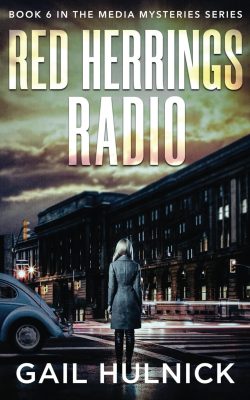
  • RED HERRINGS RADIO: The Media Mysteries Series Book 6 by Gail Hulnick – Murder Mystery, 1960s, Amateur Sleuths

    From its very first page, Red Herrings Radio, from Gail Hulnick’s Media Mysteries series, evokes the classic mystery novels of days gone by. We meet protagonist Lillian on September 7, 1964, in the pre-dawn hours as she heads to work. The early shift at a bustling radio station may seem like excitement enough, but soon Lillian’s faced with unexpected and unpleasant thrills: there’s a dead body at work, and it’s one of her best friends.

    Red Herrings Radio uses many elements of classic mystery, even down to the noir lighting of the early-morning streets. Yet it also diverges from mystery-novel tradition in interesting ways.

    Unlike many older mystery books, it has not only a female sleuth, but a focus on the challenges and barriers faced by a woman in the 1960s. The book is studded with authentic period details, from Beatles mania and folk music to the Royal Tour and the World’s Fair. It also doesn’t shy away from the weightier topics of the era. As Lillian investigates Susan’s death, she finds herself grappling with looming issues like abortion and gender equality. Author Gail Hulnick gives these issues their due complexity, painting a realistic picture of the 1960s as an era of global change and growing pains.

    Red Herrings Radio also breaks from mystery tradition by featuring a reluctant and inexperienced sleuth. Lillian’s no cop, though she’s certainly willing to work with the police if it’ll help her get answers about Susan’s untimely end. She doesn’t like being mixed up in the drama of investigating what’s starting to look like a murder. Still, her sense of duty to Susan’s memory overcomes her reluctance. When everyone else seems to be giving up on finding the answer, Lillian never quite lets go of hope.

    The search takes Lillian to unexpected places and introduces her to unusual suspects. The doctor is hiding something, and the professor and ex-boyfriend too. Now her coworker is suddenly acting suspicious. Red Herrings Radio lives up to its name as it introduces a growing list of suspects, each with complex motivations. The more Lillian learns about Susan’s life, the stranger things get. As it turns out, her close friend wasn’t really that close after all. Did Susan’s own secrets lead to her murder?

    Alongside the mystery, this is also a tale of female friendship.

    Lillian starts enlisting her and Susan’s mutual friends in the investigation but starts to feel resentful as she learns she’s been left out of Susan’s major life events. Susan even had a mysterious new boyfriend who Lillian didn’t know about. As she navigates both betrayal and loss, Lillian must grow through these challenges. For her, forgiving the friends who’ve apparently shut her out is almost as big a challenge as the unofficial murder investigation.

    Along the way, Lillian’s career grows too. She deftly navigates barriers at work, beginning to outshine her more-experienced colleagues and landing choice reporting assignments. Readers get a fascinating inside look at the 1960s media industry.

    As the radio station sends Lillian to exciting places like the New York World’s Fair, she sneaks in opportunities to continue sleuthing. Cold War tensions are running high, and the appearance of several stern and mysterious Russians further complicates Lillian’s investigation. She has countless leads, but no certainty. Though she finds a helpful police officer who’s willing to listen, she has little to offer him. In the end, Lillian must face the fact that she cares more about the investigation than anyone else, even the professionals.

    Maybe it’s because she saw Susan’s lifeless body that morning at work. Maybe it’s a desire to redeem her place in a circle of friends who have grown apart. Whatever it is, Lillian can’t quite bring herself to let go.

    This book moves fast. While there are points where it would have been nice to slow the action and delve deeper into Lillian’s complex life, Red Herrings Radio rewards its readers well in the end. When things look most hopeless for her investigation, the novel takes an unexpected leap.

    Lillian’s answers don’t come when she wants them to, but through patience, attention, and a willingness to forgive, she at last has a chance to put the pieces together. What she discovers is shocking, yet strangely inspiring: solving the mystery also reveals something crucial about Susan’s character. Red Herrings Radio by Gail Hulnick is an excellent read for anyone looking for approachable thrills, unexpected twists, and an intelligent lens on history and human connection.


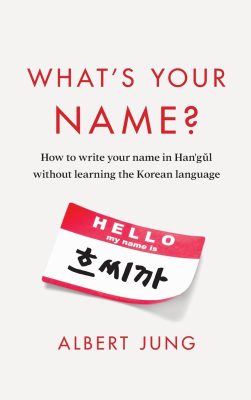
  • WHAT’S YOUR NAME?: How to Write Your Name in Han’gŭl Without Learning the Korean Language by Albert Jung – Linguistics Reference, Instructional, History


    Albert Jung’s What’s Your Name?, subtitled How to Write Your Name in Han’gŭl Without Learning the Korean Language, is more than a primer for learning how to write in the Han’gŭl script — it’s a study of the evolution of the Korean writing system and, through it, the history of Korea itself.

    What’s Your Name? offers a crash course in how to write your name in Han’gŭl for anyone who attends international conferences, hosts Korean exchange students, or simply has Korean speakers in their social sphere. Although the reader quickly plunges into the components of the Han’gŭl alphabet, Jung suggests a light read for the basics, and a comprehensive read for those seeking a deeper understanding of Han’gŭl and its evolution.

    From absolute beginners to linguistics scholars and students, readers will find valuable reference material and guidance for practice in this extensive text.

    Roughly half the book is made up of alphabetical diagrams, charts, examples, and comparisons, along with illustrations of the five main vocal organs used to pronounce the sounds and how to position them. Tables list common names and Han’gŭl characters side by side with their counterparts in English, French, German, Spanish, and Russian.

    At the end of each section, Jung includes a handy pop quiz. These will help readers to cement the information for each letter of the Han’gŭl alphabet and build the confidence to forge ahead.

    Here’s a brief look at the fundamentals: The vocal organs — molar, tongue, lip, tooth, throat — create top, middle, and bottom sounds, each of which are represented by symbols. Where the top sound symbol represents the shape and movement of the vocal part used, the middle sound symbol describes the sound’s quality: deep, flat, or shallow. Bottom sounds serve to stop the middle sound, either abruptly or slowly. Put together, the three sound symbols create a single character. Repeating this process for each letter in your name, you can transcribe it into Han’gŭl.

    After mastering the top, middle, and bottom sounds, the reader moves into an intermediate stage to learn sounds that are more difficult to convey, such as r, l, th, v, f, sh, j, ch, and z, as well as pair letters which combine to make a single bottom sound.

    Once readers get the hang of the modern script, they can move on – and back in time – to the earliest form of Han’gŭl, created in the 15th century by King Sejong the Great.

    This version incorporated more sound letters, many of which don’t appear in the modern script, and differences with those letters that did survive the centuries are nuanced and subtle. Readers who want to delve deeper into the subject will find tables that show comparisons of names using the 15th-century script with those in modern Han’gŭl. Jung charts the fascinating development between these two forms.

    Responding to the intricacies of both the original and the modern writing system, Jung presents the concept of a potential third form: Multiverse Han’gŭl, in which the best of both old and new are combined with global and cultural influences.

    The last section of the book expands beyond a focus on linguistics, as Jung contextualizes the founding of Han’gŭl by sharing beautiful woodblock prints of correspondence and other texts, with translations provided.

    This section could easily feature in an art history or anthropology class, or a course on the history of Korean literature. Within this section, the footnotes reveal the timeline of the script’s evolution through peeks into the country’s past, including politics, diplomacy, trade, and evangelism, each of which added its own influence to the Korean writing system.

    What’s Your Name? by Albert Jung is a comprehensive guide for novices and intermediaries to not only learn how to write their name in Han’gŭl, but to also gain an appreciation for the evolution of a language and a culture that has withstood the test of time.


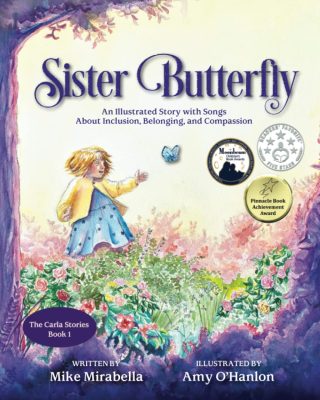
  • SISTER BUTTERFLY A Children’s Book: An Illustrated Story With Songs About Inclusion, Belonging, and Compassion by Mike Mirabella, illustrated by Amy O’Hanlon – Picture Books, Animal Stories, Inclusion & Friendship


    Sister Butterfly from Mike Mirabella’s Carla Stories shares the crucial message that communication comes in many forms. Even for those who struggle to be understood, connection is always possible.

    Told through song lyrics and charming illustrations, a young girl with Down Syndrome on a walk through a verdant garden. Eventually, they encounter a group of other kids, who come to see the flightless blue butterfly she has found.

    True to its title, this book creates a lyrical parallel between the little girl and the butterfly.

    Both the girl and the butterfly use unique ways to interact with the world that make them easy to be overlooked. The butterfly must walk on the ground and is only found because the girl searches a quiet corner of the garden. In turn, her “secret world is hidden in the silence of her eyes.” When the other kids take an interest in what she has found, they find she’s happy to show them her special butterfly friend.

    Illustrator Amy O’Hanlon’s pastel drawings perfectly match the tone and meaning of the heartfelt lyrics.

    Double-page spreads of a vibrant garden fill this book. The characters are largely rendered in soft hues, with their eyes and the world around them standing out in a rainbow of brilliant color. A matching shade of blue emphasizes the bond between the little girl and the butterfly, standing out brightly among the greenery. The beautiful composition of shapes and colors on each page makes Sister Butterfly a treat to read.

    Sister Butterfly contains the poetic lyrics of a song of the same name, written by author and musician Mike Mirabella about his daughter Carla, who like the little girl in the book, also lived with Down Syndrome. This provides him with a unique insight into the little girl’s special world.

    The book comes with a download of a recording of Sister Butterfly, as well as sheet music for anyone– child or adult– who wants to learn the song themselves. The format of this book would make it easy for young children to try singing along and contains a bonus song, I Am So Like You, also by Mike Mirabella.

    With its touching message of empathy, gorgeous illustrations, and an invitation to explore its inspired music, Sister Butterfly makes for an excellent read that can be enjoyed by both the young and the young at heart.

    5 Stars! Best Book Chanticleer Book Reviews

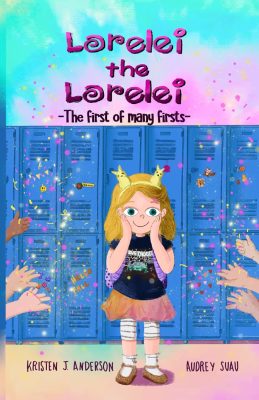
  • LORELEI The LORELEI: The First of Many Firsts by Kristen J. Anderson, Illustrated by Audrey Suau – Young Readers, Children’s Friendship Books, Children’s Confidence Books

    Little Peeps 1st Place Best in Category Blue and Gold Badge ImageLorelei the Lorelei seeks a best friend and to figure out what makes her truly special, all on her first day of public school. In Lorelei the Lorelei: The First of Many Firsts by Kristen J. Anderson, young Lorelei finds that not everything is as she expected.

    After anxiously waiting for her dad and baby brother J.J. to get ready, and armed with the wisdom of her Mee-maw, Lorelei strides into Hillside Elementary School. She shows off her eclectic fashion and discovers that even a teacher named ‘Miss Grim’ can be welcoming. At first, Lorelei’s plans are coming together. She’s certain that Adeline, a girl who shares her exuberant nature, will be her best friend.

    But Lorelei butts heads with Emily, aka “Hands” given her impatience to be called on. As a student of ballet and future sugary-cereal-advertisement star, Emily has little patience for Lorelei taking the spotlight.

    As a newcomer to public school, Lorelei has to navigate this conflict while learning new schedules, rules, and terms. But she keeps her heart and mind open, even when she doesn’t quite understand all of her new classmates.

    Anderson captures a childlike view of the world in her prose.

    Lorelei sees the end of summer as a portend for the first snows of winter—and the hot chocolate to come along with it. While she holds strong opinions, Lorelei is quick to consider new ideas and come up with explanations for why things are a certain way. Anderson’s written voice builds on the natural humor found in Lorelei’s excitable perspective, making this book immediately approachable for young readers.

    Lorelei herself is a relatable figure for many kids as she deals with the nervousness of a new experience.

    As much as school might excite her, Lorelei often gets anxious and has to use breathing techniques to keep her asthma from flaring up. Lorelei the Lorelei will help young readers face their own ‘firsts’, as Lorelei herself deals with unexpected problems.

    Throughout the book, Lorelei becomes a good role model for kids starting school or trying to make new friends.

    Like anyone, Lorelei can get annoyed at her family’s antics, but the love and familiarity between them is always clear to see. She’s a good sister to J.J. and carries her kind nature into the classroom. By standing up for other kids when they get picked on or left out of the group, Lorelei shows the importance of making space for others. Her classmates return that kindness, supporting Lorelei even when her messy bangs escape from her hairband.

    Lorelei ultimately learns not to make assumptions about people before she gets to know them, and that not everyone’s had the same experiences as her. In fact, she finds that her classmates have interesting stories of their own to tell. And, while understanding someone who annoys her is harder to do, especially after getting into an argument, Lorelei tries to empathize with Emily rather than become playground enemies for good.

    Illustrator Audrey Suau perfectly matches the tone of the story with a cheerful picture for each chapter.

    Little details, like Lorelei’s unique outfit, pop from the background. The characters are distinct and show their personalities in image and writing alike. Even bigfoot himself makes a cameo—at least, in the woodland of Lorelei’s imagination.

    Young readers will find a welcoming tale and valuable lesson in Lorelei the Lorelei.

    Lorelei embraces each new activity whether she was prepared for it or not, leaping in with an excitement that readers will share. She might not quite know what makes her unique by the end of the day, but she certainly makes her new friends feel special. After all, every kid could use a good friend on the first day of school.


  • FROZEN CONQUEST by Randall Krzak – Eco-Thriller, Conspiracy Thriller, Action & Adventure


    Frozen Conquest by Randall Krzak is a thrilling and intense conflict between the cold of Antarctica and the blazing ambition of those seeking global control, fusing the issues of power, greed, and survival into a high-stakes adventure.

    The icy edge of Antarctica serves as the center of a sinister organization, Diablo Corps. The ruthless leader, Walter Brown, threatens global mayhem if his aspirations for power are not met. With technological efficiency and the ability to disrupt critical infrastructure, Diablo Corps is poised to leverage its capabilities against the G7. Soon, an anonymous climate-related warning is sent out, with events such as the hacking of the London metal exchange proving to authorities the true weight of that threat.

    Such dire actions demand an immediate answer. A classified team of specialists is called upon to gather at Ramstein Air Base. With naturally skilled leader Craig, sharp and observant Evelyn, and the humor and humility of Rufus and August, the promising recruits form the Bedlam Quick Reaction Force (QRF) and venture out into the peril of a frozen land.

    On another canvas of the story, the scientific research vessel RV Aquavit is tasked with conducting climate change studies in Antarctica. Courageous climatologist Carine and the Scandinavian Protection Agency (SPA) parallel the QRF as heroes pitched against the demons perpetuating world chaos. Dodging obstacles around every corner, they take on not only corporate greed and environmental exploitation but also treacherous sabotage.

    Themes of unchecked power and betrayal lie deep in the narrative.

    The characters resist and even turn on former allies, reflecting how tyranny often creates conflict between those who submit and those who rebel. A broader struggle between morality and ambition builds on these ideas, such as in Brown’s use of environmental concerns as a facade for cyber terrorism. With grandiose goals of reshaping the global system and addressing climate change, Brown personifies the darker side of ambition blinding one to ethical considerations.

    Real-life debates on corporate greenwashing and genuine intentions find space through the fictional discourse.

    Brown hijacks environmental concerns to seek profit and power. His intentions, appearing to be rooted in environmental activism, ultimately turn an altruistic cause into a danger to global geopolitical stability and humanity. While characters like Brown’s assistant, Chris, embody the moral drive of humanity against powerful evil forces, the story also suggests the importance of aligning individual efforts with collective action and systemic solutions.

    Krzak weaves a complex web of action and cutting-edge technological intrigue, balancing quick, fast-paced scenes with cliffhangers and slower introspective sequences. With its atmospheric writing, Frozen Conquest caters to the readership of dark, intense settings.

    Frozen Conquest by Randall Krzak is a story wrapped in the undercurrents of greed, treachery, resistance, and resilience of the human spirit. It warns how the river of ambition, without the banks of morality to guide it, can flood and destroy everything in its path.


  • HEAVY HYSTERIA: A novel of Corporate Intrigue Involving the Minerals of this Sacred Earth by Charlie Robinson – Conspiracy Thrillers, Technothrillers, International Mystery & Crime

    Scientific and moral questions swirl in Charlie Robinson’s latest thriller, Heavy Hysteria: A Novel of Corporate Intrigue Involving the Minerals of this Sacred Earth.

    Readers are thrust into a suspenseful journey with worldwide implications alongside Dr. Charlie Cavanaugh, a 68-year-old priest and scientist.

    Arriving home after a spiritual retreat, he is surprised by an FBI agent sitting with Cavanaugh’s gun on his lap. The agent has subverted a freshly enhanced security system to retrieve Cavanaugh’s encrypted, unpublished Hybrid Hysteria report from a concealed USB stick.

    The FBI needs Cavanaugh’s assistance with a delicate national security issue.

    His widely researched and circulated Applied Physics Letters scientific publication revealed the severe danger that specific configurations of the Gauss Hybrid Electric Auto Company’s batteries posed for human health. That report saved thousands of lives—and his expertise is called back to action.

    GHEA is now under new management. Prices for GHEA battery minerals are rising rapidly, putting national security and electric car manufacturers at risk.

    A small secret organization wants to build on Cavanaugh’s research to track down the people behind the threat, focusing on the “Tones,” a rogue group within the Deep State. But chances are high that Cavanaugh’s involvement will again put him on the Tones’ radar, who previously abducted his fellow scientists and co-authors.

    Following the widely acclaimed Hybrid Hysteria—a Novel of Corporate Intrigue Both Holy and Diabolical, this serpentine tale reveals deep-seated treachery and calamitous profit-driven deception.

    Cavanaugh, a man of the cloth, shrewdly transcends his duty as a “simple priest” and takes on the unfamiliar hat of a spy to unearth complex truths. With a bull’s eye on his back, he assumes challenging positions that push him into the unfamiliar dark web.

    Heavy Hysteria’s corporate espionage transcends tribal territories and state borders.

    It is a truly compelling plot with a vividly drawn, sharp-witted hero, ticking all the boxes of a suspense thriller. Together, these features draw readers with ever-growing curiosity towards an exciting and unforeseen end.

    Well-written and propulsive, this novel delivers much more than it promises.

    Robinson’s background in electrical engineering and neuroscience also adds a unique power to his narration. Heavy Hysteria: A Novel of Corporate Intrigue Involving the Minerals of this Sacred Earth earns a high place within its genre.

    With an intriguing premise, this tour de force is bound to captivate readers whether or not they’re fans of suspense thrillers.


  • BELLA BROWN’S MESSIER THAN MESSY ROOM by J.W. Zarek – Children’s Practical Skill Books, Picture Books, Children’s Responsibility Books


    Bella can’t wait to visit a new butterfly garden, but in Bella Brown’s Messier Than Messy Room by J.W. Zarek, she has to tidy up some overwhelming clutter first.

    Initially, Bella’s excitement for painting at the butterfly garden makes her too impatient to clean her chaotic room. But with encouragement from Grandma Yetta over the phone, Bella finds the task isn’t nearly as daunting as she worried.

    Well suited to young readers, the writing will engage children in both structure and style.

    Short, rhythmic sentences create an exciting, tumbling pace throughout Bella’s room. Although the prose can be a bit repetitive, certain words—especially the great variety of motion verbs—pop onto the page in bubbly magenta letters, making for a fun vocabulary teaching opportunity.

    Grandma Yetta speaks in calm blue, which contrasts well against Bella’s lively pink. New readers will have an easy time telling dialogue apart.

    Illustrator Anastasiia at GetYourBookIllustrations perfectly complements the book’s eager tone with vivacious use of color.

    She makes Bella’s messy room into a delight of scattered visual details. Those who look closely will notice the appearances of Pip the Domovoi, an adorable fluffy companion in the wilds of laundry and toys. Pip adds a little game to nearly every page spread, rewarding curious young readers.

    Anastasiia captures childlike whimsy and creativity, making a towering clothes monster from Bella’s pile of laundry. Bella’s toys and games become a crashing wave, and her stuffed animals pillow fight on her unmade bed. Bella’s long hair, adorned with flowers and tiny hearts, flows wildly behind her as she leaps around her room, adding to the energetic feeling of the book even as the backgrounds become clean and organized.

    With a color scheme focused on pinks and blues, these illustrations match the two main characters—Bella and Grandma Yetta respectively. Giant pink butterflies cover Bella’s walls, and when she finally goes to the vibrant butterfly garden, she draws a special blue one on a thank-you card for Grandma Yetta’s help.

    Bella Brown’s Messier Than Messy Room teaches valuable lessons about taking care of chores rather than putting them off for later.

    Grandma Yetta guides Bella to clean her room one step at a time, organizing both her thoughts and her space alike. For children who struggle with cleaning, or focusing on other important tasks, this story shows that getting help from someone can make all the difference in handling things that seem hard.

    This colorful, comforting book will help young readers keep their spaces clean and take on other challenges. With pages full of energy and fanciful illustrations, Bella Brown’s Messier Than Messy Room provides both useful examples to follow and an engaging little tale.


  • THE SHADOW Of WAR: The Rise of Oceania Book 5 by Timothy S. Johnston – Climate Fiction, Sci-fi Thriller, Dystopian


    Blue And Gold badge recognizing The Shadow of War by Timothy S. Johnston for winning the 2023 Cygnus Grand PrizeIn Timothy S. Johnston’s The Shadow of War, gripping personal, ecological, and political battles rage undersea for autonomy and power against the powerful surface nations. But even the ocean depths churn with betrayal, conflicting loyalties, and the ruthless ambitions of humanity.

    This thriller opens on the dystopia of the year 2131, when rising sea levels have forced humanity to establish and inhabit underwater colonies. The fear of environmental collapse is heightened by the prospect of war as the colonies struggle to maintain their independence.

    A simple scientific exploration of the Chagos trench by two geologist brothers takes a horrific turn, snapping the science fiction tension with the impact of gore horror. A slight touch by one brother on the hull of their Seacar causes his hand to suddenly dissolve into a strange mass, melting flesh away from bone. This opening foreshadows the enigmas and anomalies to be unravelled in a vast undersea mystery.

    A few weeks later, Truman “Mac” McClusky, mayor of the underwater colony Triestes, must carefully balance between diplomacy and aggression.

    As mayor and intelligence agency head, McClusky has to ensure the independence of Oceania, a coalition of undersea colonies, from the surface superpowers. Mac forges alliances among other undersea cities, including with the influential and charismatic Sahar Noor of Churchill Sands, and the trusted advisor Richard Lancombe. But Mac knows that, even with his underwater coalition, he’ll need true military power.

    Mac knows of a peerless underwater weapon, one so robust as to alter the balance of power in favour of whoever holds it. He leads a group to acquire the various components of the weapon split across treacherous locations before they reach the wrong hands.

    Covertly infiltrating enemy labs, the group confronts a myriad of unforeseen complications. Mac must constantly be vigilant of allies with ambiguous loyalties, such as Commodore Clarke. He weighs his duty to protect Oceania against the jeopardy his position brings to his loved ones, who become sabotage targets. With a questioning conscience about the moral complexities of rebellion constantly fighting with his pragmatic approach to war, will Mac and his group conquer the United States Submarine Fleet (USSF), French Submarine Fleet (FSF), and other oppressive forces working to take the liberty of the undersea world?

    The Shadow of War is a stark reminder to humanity of the dire consequences of environmental degradation and unwavering human greed.

    The undersea world, a haven for humanity, doesn’t take long to turn into a battlefield as the remnants of power-hungry aspirations resurface even in this submerged refuge. The story utilizes humanity’s destructive tendencies to make this electrifying thriller as intense as it is thought-provoking.

    Johnston’s fast-paced prose fits perfectly in a high-stakes thriller, all the while balancing suspense and action with philosophical reflections. The ocean and the undersea world become a character in their own right, an embodiment of beauty, danger, and mystery, mirroring the psyches of the humans who live within them.

    The Shadow of War caters to readers looking for political intrigue and dystopian science fiction with emotional depth, told through thrilling action. It’s an open door to a world beneath the waves, where survival is uncertain and the fate of nations rests on the bloody dream of a weapon.

    The Shadow of War by Timothy S. Johnston won Grand Prize in the 2023 CIBA Cygnus Awards for Science Fiction.


  • THE ROCKET MAN’S DAUGHTER: A Novel of Family, Faith and Resistance in Nazi Germany by Bruce Gardner – Historical Fiction, WWII, Nazi Germany

    The Rocket Man’s Daughter: A Novel of Family, Faith and Resistance in Nazi Germany by Bruce Gardner tells a harrowing story of German life under the Nazi Regime from 1934 to 1945.

    Through the experiences of a young woman whose family is torn by competing loyalties, this riveting tale shines a rarely seen spotlight on some of the most heartwrenching moral dilemmas faced by German civilians and soldiers caught up in the crucible of fascist tyranny and war.

    Klara Neumann is the Rocket Man’s Daughter. She’s only fourteen in 1934 when the Führer, Adolf Hitler, finally eliminates all rivals and consolidates his control of Germany under the Nazi Party.

    Klara’s family represents a microcosm of the country’s middle socio-economic class, working in government-sponsored roles that demand slavish obedience to the Führer and his decrees. Her father, Erich, is the quintessential ‘rocket man’, a university professor dragged into the Nazi war machine to help his friend and colleague Dr. Wernher von Braun develop the deadly new V-2 rockets intended to terrorize Germany’s future enemies. Her mother, meanwhile, strives to be a dutiful Nazi wife, her brother an honorable Wehrmacht army officer, and her elder sister Elke the devoted leader of a female Hitler Youth section.

    Klara—an aspiring nurse—is the philosophical polar opposite of her sister, as Elke is a literal poster girl for the Nazi Party, while Klara does her best to protect her secret Jewish friends from the ever-increasing Nazi persecutions.

    As Germany sinks ever deeper into the morass of world war after 1938, the Neumann family members travel further down their divergent paths.  Gardner describes with chilling, historically accurate detail the horrific Nazi medical experiments that eventually drive Klara to augment her nursing job by secretly joining a Berlin resistance cell led by relatives of Dietrich Bonhoeffer, the charismatic, anti-fascist Lutheran pastor. Brutally intense, emotionally draining scenes of danger and betrayal follow as Klara and her resistance partners struggle to avoid discovery by a powerful, cunning SS police superintendent who has drawn Klara’s father and sister into his dark web of control and manipulation. Through the ordeal, Klara gradually learns to view her personal sacrifices for the resistance effort as an expected cost of true Christian discipleship, as Bonhoeffer had taught her.

    The story moves relentlessly toward its gripping, unforgettable climax in 1945 when Hitler’s V-2 rocket campaign fails to stem the Allied tide and the Soviet Army invades Berlin.

    The reader feels the stark terror along with Klara and her fellow citizens as Russian soldiers invade their hiding places and attempt to satiate their pent-up taste for revenge.  At war’s end, tensions reach their peak as Klara’s father is hunted down by competing Soviet and American intelligence teams attempting to capture and exploit the expertise of Nazi rocket scientists for their own national purposes in the Space Race to come. Will Klara overcome the seemingly insurmountable odds against rescuing her father from a horrible fate? And can she ever forgive her father’s disreputable wartime decisions and actions?

    The defining moral issue, which hangs over everyone involved, is that of responsibility for the terrible crimes of the Nazi regime. On what basis should Nazi-supporting civilians and soldiers be considered war criminals? Were they merely protecting themselves and their families? Were they just following orders? Does that justify their actions?

    The Rocket Man’s Daughter expertly depicts the fractures within the fictitious Neumann family to offer the reader some possible answers to these perplexing questions. It’s left to the reader to finally decide.

    Despite its expected longer length due to the extended time period and epic nature of the story, The Rocket Man’s Daughter by Bruce Gardner absolutely flies along with suspenseful situations and compelling dialogue the entire way.  It’s diverse and vibrant characters raise for the reader many thought-provoking questions about family loyalty, faith, and moral obligation to society under extreme circumstances. In doing so, it proves itself a worthy successor to the author’s previous award-winning novels. The story of Klara Neumann and her family provides yet another example of Gardner’s ability to weave fictional and historical characters into a marvelous portrait of a time and place—one that’s guaranteed to keep readers of wartime historical fiction glued to the page from beginning to end.

    Highly recommended!

  • BROKEN FACES: Historical Romance Based on True WWI Events by Chris Karlsen and Jennifer A Conner – WWI Historical Fiction, Medical History, Historical Romance


    A towering achievement, Broken Faces: Historical Romance Based on True WWI Events by Chris Karlsen and Jennifer A Conner follows two young people who, for different reasons, embark on a journey to restore the self-esteem torn from wounded soldiers by bloody conflict.

    The assassination of Archduke Franz Ferdinand on June 28, 1914 plunged Europe into one of the most horrific wars in history. Daily British papers featured articles about a bleak future. London quickly felt the effects of the war, with stores closing and basic goods in limited supply.

    Abigail Belorman, a young American woman and talented sculptor, had relocated to Britain with her newlywed husband Theo, the US ambassador to England. Pained by Theo’s emotional neglect, Abigail finds comfort in visiting injured soldiers who had returned from the front to a nearby hospital. Each of the young men there has a story to tell and wounds to recover from. Some, however, suffered irreparable damage to their faces, along with any chance at a normal life taken from them, and they will be forced into isolation.

    During a period when plastic surgery was unheard of, Abigail uses her sculpturing skills to make scar-concealing masks for the WW1 veterans, helping restore some measure of hope and dignity to those who had been subjected to wretched anguish in the trenches of battle.

    Colm Harp, an adept metalsmith, is fueled by the desire to give his brother Danny a second chance at life. Danny joined the war to escape constant mockery from neighbors, but returned from the front with a severely mutilated face.

    The loss of a loved one to suicide adds to Colm’s determination to join Abigail in helping soldiers heal from both external and internal scars. The two are forced to confront the tragedies of war and the realities of their own lives, revealing that empathy can triumph over adversity and little gestures of kindness do count.

    Karlsen and Conner take an unrelenting approach to the harsh realities of war.

    Their battlefield imagery and the mental anguish of those left on the home front waiting desperately for any information about their loved ones are palpable.

    Broken Faces further examines the social stigma these soldiers encountered upon their return home, contemptuously referred to in French as “les gueules cassées”—shattered rags. This led many to retreat from normal civilian lives, opting to live as recluses.

    The text offers a solemn tribute to war veterans, exploring their sacrifices and struggles through various fleshed-out characters. Karlsen and Connor illustrate these veterans’ rightful place in our hearts and society: one of recognition and accolade.

    The authors’ attention to detail, seamlessly intertwining prose and place in history, will keep readers invested in the lives of these broken men and the people who care for them.

    Broken Faces: Historical Romance Based on True WWI Events by Chris Karlsen and Jennifer A Conner is the go-to for curious minds about the personal impacts of WWI. This book will especially enthrall historical fiction enthusiasts who enjoy slow-burning war stories that blend romance, history, and endearing characters all into one.