Tag: Chanticleer 5 Star Book Review

  • BELLA BROWN—Grandma’s Missing Butterfly Locket by J.W. Zarek, Illustrated by Anastasia at GetYourBookIllustrations – Children’s Animal Stories, Picture Books, Children’s Butterfly Books

    In Bella Brown—Grandma’s Missing Butterfly Locket by J.W. Zarek, Bella and Grandma Yetta recall the various beautiful places they’ve visited to see the variety of butterflies around the world—and those same places where Yetta may have lost her locket.

    Over the phone, Bella imagines botanical gardens, temples, and natural places from China and Japan to Colombia and the Ozarks. Bella thinks about the butterfly locket in each location but can’t quite remember where it could be before she and her mom head to the local butterfly garden. Bella promises to draw a butterfly for Yetta, even if she can’t help her find out what happened to her locket.

    Grandma Yetta surprises Bella at the garden, and the two share a sweet moment as grandmother and granddaughter among their beloved butterflies.

    Zarek’s writing balances evocative description and ease of reading for young kids.

    Through an emphasis on motion and popping, colorful key words, the writing style embodies a childlike energy. Vivid sensory descriptions give a strong sense of place to each new location, working well with the illustrations to guide readers along Bella’s memorable journey.

    Different colors code the dialogue of Bella and Yetta, making it easy for young readers to follow along with their over-the-phone conversation.

    Illustrator Anastasia’s pastel coloring flows from page to page, matching Bella’s fantastical wandering through her memories.

    The myriad locations blend in and out of Bella’s room as if the reader’s stepping into them alongside her. A familiar blue and pink color scheme gives way to unique palettes for each new scene, with plants and butterflies alike shown in their beautiful variety. Those butterflies—illustrations of various real-world species—flock across entire page spreads to conjure the wonder of seeing them in person.

    The characters’ designs are as vibrant and playful as the butterflies they visit. They’re accompanied on their travels by Pip the Domovoi, an adorable little creature tucked away in the details of the illustrations.

    Across these destinations, Bella and Grandma Yetta bring up fun facts about the butterflies they see.

    Kids learn the cultural connotations of a visiting a white butterfly in Japan, and strange bits of biology about the migrating Monarchs. This book emphasizes the joy in sharing curiosity and appreciation of the natural world with your loved ones.

    Any young readers with an interest in butterflies will adore Bella Brown—Grandma’s Missing Butterfly Locket.


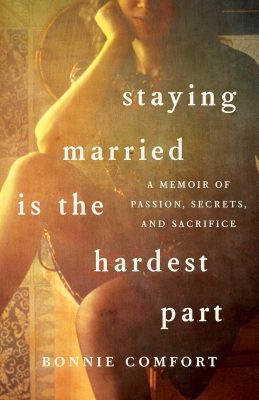
  • STAYING MARRIED Is The HARDEST PART: a Memoir of Passion, Secrets and Sacrifice by Bonnie Comfort – Memoirs, Marriage, Family

    In her stunning and intimate memoir Staying Married is the Hardest Part: A Memoir of Passion, Secrets and Sacrifice, Bonnie Comfort takes readers on a decades-long journey of deep love, laughter, and the challenges of a long-term marriage, from first meeting her husband Bob in the late 1970s until his death in 2010.

    Throughout their life together, Bonnie and Bob have their fair share of disagreements—including where to live—but the main conflict within their marriage centers around their conflicting sexual needs and preferences.

    As a professional psychologist, Bonnie shows the highs and lows of her marriage to Bob, contrasted by her job of helping others with their emotional and relationship problems. Bonnie and Bob’s committed love for one another makes staying married both the hardest and easiest part of their lives regardless of what challenges come their way.

    Staying Married is the Hardest Part also follows the complicated relationship between a mother and a daughter, and how it intersects with Bonnie’s marriage.

    Bonnie’s mother struggles to come to terms with her own decision to move from her beloved Southern California home to Canada in 1934 for the sake of her marriage. The disappointment Bonnie’s mother feels in her life choice creates conflict when Bonnie moves to Los Angeles as a young adult to follow her own dreams.

    Over the years, mother and daughter come to slowly understand each other, especially when Bob decides he wants to move and Bonnie fights to stay in LA. When the move doesn’t happen, Bob spends more and more time in a small town in Oregon.

    Bonnie recounts both marriage and maternal bonds beautifully in a way that touches many families’ experiences.

    The passages on Bonnie’s relationship with her mother are extraordinarily moving, as any child can relate to comparing their life to a parent’s, and the sacrifices made to follow a dream.

    Bob comes off as quite the character, fitting someone who worked in Hollywood. His infectious humor and love for life fill the pages with engaging levity. But what Bonnie illustrates throughout the memoir is that everyone has flaws, and the choice to stay with someone means asking yourself if you can accept those flaws for the sake of the love and laughter that comes with them.

    Bonnie Comfort’s Staying Married is the Hardest Part: a Memoir of Passion, Secrets and Sacrifice navigates the wild seas of married life to reveal its profound rewards. Avid readers of memoirs and contemporary fiction will find much to love about this engaging journey.

    Also available at: Simon & Schuster, Barnes & Noble, Target, Bookshop.org and Apple Books


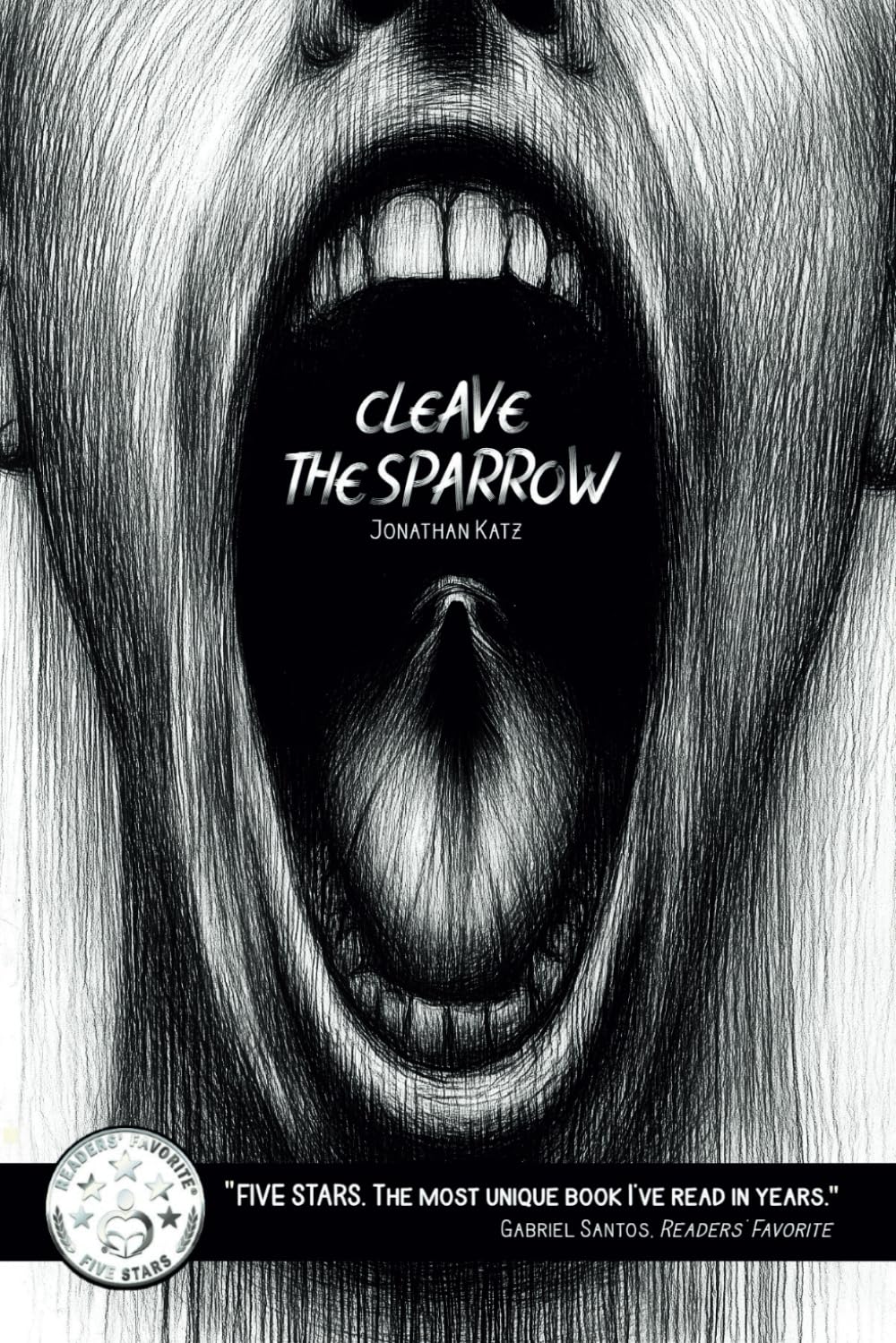
  • CLEAVE The SPARROW by Jonathan Katz – Political Satire, Existentialism, Absurdist Fiction


    Cleave the Sparrow by Jonathan Katz blends political satire, existential philosophy, and absurd humor to immerse readers in a complex, surreal dystopian narrative.

    Tom is a reluctant political candidate stuck on the blurred line between truth and power. His mentor, Crick—a controversial figure for his political views—has an ultimate goal in mind that pulls Tom into its wake. Believing in the limitation of human perception and the illusory nature of the world, Crick endeavors to destroy a ‘cosmic projector’ that he supposes fabricates this false reality.

    Cleave the Sparrow charts a course where Tom, as Crick’s successor, follows his holotapes to carry out this dream, plunging into political and scientific conspiracy and moral dilemmas—opening an unexplored trail to time travel, quantum mechanics, and existential dread.

    With Crick’s plan thrusting Tom onto a risky and unpredictable path, he scrambles to navigate fanatical beliefs and ideological purity, which ominously signal self-destruction.

    Plato’s allegory of the cave is the foundation behind Crick’s philosophy. Crick embodies Plato’s escaped prisoner, emphasizing the fluidity of reality and challenging social constructs and enforced limitations. Crick’s beliefs invite one to reimagine reality, to step beyond and explore the unknown.

    Cleave the Sparrow is a powerful and darkly comedic critique of modern politics and media.

    Politicians prioritize public perception and media manipulation over forming policies. Characters such as First Lady Kardashian, along with several over-the-top scenarios—a candidate’s affair with a coffee machine and robot President Microchip—satirize the current absurdity of politics and society.

    A constant tug-of-war between free will and fate stands out among this story’s themes, explored through concepts of time travel and quantum mechanics.

    Tom is aware that his every action and decision is part of a predetermined cosmic design. But with the equally forceful presence of time travel, is he capable of altering his destiny.

    Stream-of-consciousness prose provides an intimate window into Tom’s psyche, whose inner monologues—filled to the brim with nervous energy and wry observations—add to his persona as a relatable but unreliable narrator. The growing complexity of Tom’s journey, political machinations, and betrayals mirror the story’s surreal, fragmented intensity.

    Existential horror, political satire, and absurd comedy in perfect harmony, Cleave the Sparrow pulls readers out of their comfort zone into a realm demanding constant introspection.

    Along the lines of George Orwell’s 1984 and Philip K. Dick’s Do Androids Dream of Electric Sheep?, Jonathan Katz’s Cleave the Sparrow is an entry into a whirlwind of philosophy and science—a cosmic dystopia that oscillates between dread and contemplation, or both in tandem.


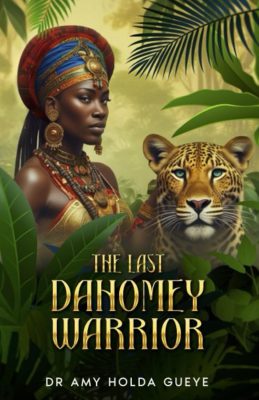
  • THE LAST DAHOMEY WARRIOR by Dr. Amy Holda Gueye – African Historical Fiction, Historical Action & Adventure, War & Military History

    The Last Dahomey Warrior by Dr. Amy Holda Gueye is the gripping story of a group of fearless and feared female soldiers of the Dahomey kingdom—and the young girl who withstands grave peril to stand among them.

    At age 11, Nanissa becomes the youngest candidate ever chosen to be one of the legendary Dahomey Akodgjie, an all-female elite class of warriors who protect their king and the Kingdom of Dahomey (now Benin).

    Left in the sacred forest with no weapons or food, Nanissa must survive ten days to earn her place on the path to becoming a Dahomey warrior. She encounters dangers during her test, but by listening to the voice of her mother she not only survives but is endowed by the spirit of the Leopard, which serves her well in battles to come.

    Nanissa learns to listen to more than just the teachings of her mother. The Queen Mother, Ahosi, who trains the Akodgjie warriors also serves as mentor to the young warrior. “Observe carefully, learn quickly, listen more, speak less…If you can learn what one does not say, memorize what one never teaches, and trust your gut, the voice right here in your chest… then you will make an excellent warrior.”

    Before Nanissa faces her first battle as a young woman, the Chief of a smaller tribe comes to the Palace with word that the French are coming—prepared for battle with armor and rifles.

    The Chief warns “ ‘…the French do not come with an open hand, Queen Mother. They did not come to trade, nor to seek Peace.’ His voice shook slightly. ‘They come to fight. To take what does not belong to them.’ ”  During these battles, the spirit of the Leopard emerges inside Nanissa, allowing her to fight in ways that are stronger than the men and cleverer than the enemy. Yet even with her skill, there are devastating losses.

    It is during this conflict with the French that Nanissa faces her greatest challenges, ones of betrayal and forbidden love. She must choose between her own desire for peace, even for a moment, and what she has been trained to do. She must defend her people with her life. In the end, she’s faced with a heart-wrenching choice to become the Last Dahomey Warrior.

    The Last Dahomey Warrior bridges multiple genres into a story as exciting as it is culturally meaningful.

    It’s historical fiction of a time, place, and remarkable people whom most readers have not been taught. It’s an adventure story of Nanissa braving the world of the Dahomey Akodgjie and proving her worth as a warrior. It’s a coming-of-age story, as Nanissa spends her tween and teen years not only learning to fight but navigating the challenges of being both a warrior and a woman.

    Finally, The Last Dahomey Warrior dispels ignorant Western beliefs that Africa was merely a “developing” continent without a past worth honoring. As Dr. Amy Holda Gueye writes in the Prologue, “This novel is more than a historical account; it is an act of reclamation…of Dahomey’s rich culture, the humanity of its people, and complexities of its history.”


  • SMITE The WATERS: The Isaak Collection by David T. Isaak – Terrorism Thriller, Conspiracy Thriller, International Mystery & Crime


    Smite the Waters by David T. Isaak begins with the xenophobic billionaire Rex Atwater whose goal is to eliminate terrorism. His certainty that it’s “us” or “them” has led him to one horrifying conclusion: he must nuke Mecca.

    Convinced of his twisted plot’s perfection, Atwater assembles a deadly team. Carla Smukowski is a military assassin mourning the death of her brother. Boyce Hammond works as a covert FBI agent deeply entrenched in a right-wing movement. And rounding out the cast is Gerald Graves, a nuclear expert willing to commit this heinous crime. Together, they vow to annihilate terrorism.

    Virtually every character in this story is fully fleshed out, gritty and driven, to draw the reader deep into their individual stories.

    Carla stumbles through a haze of alcohol, no job prospects and no money to fall back on. But even under the influence, she carries herself with violent prowess, showing the years of military action that have made her such a valuable operative for Atwater. And her dire straits are no position from which to refuse his offer—not that the rage over her brother’s death would let her anyway. Well-used to death, Carla drowns sympathy for the innocent under blood spilled by the guilty.

    Hammond, after years deep undercover, wants out. But the chance to catch a man like Atwater is too great for his superiors to allow his return to his own life. Catching the FBI’s white whale means putting himself in greater danger than ever, and even the Bureau couldn’t have predicted the scope of Atwater’s plan. As he realizes the true global peril Atwater poses, Hammond has to put his own safety aside for the sake of countless others.

    Dr. Gerald Graves is rescued from a rough and wrongful Patriot-Act empowered imprisonment and delivered the means to address serious nuclear disarmament—at least, as far as Atwater cares to tell him. Because, while some people can be paid enough to work any scheme, true believers in a mission are driven beyond their own sake. And as Atwater knows very well, that true belief can be directed to unparalleled violence.

    This dynamic cast is a highlight of Smite the Waters. Readers of the thriller genre might be used to shadowy figures who forward the narrative without much character behind them, but in this book, every person has their reasons for being here—whether they stand with or against Atwater.

    Smite the Waters careens like a nuclear bomb towards total disaster.

    Atwater’s goal—the destruction of Mecca to shatter the Muslim world and remove it as a threat to America—spurs intrigue and tension alike. Thriller readers will obsess over every revealed detail, trying to intuit how the grand plan will play out as some forces move to make it happen and others work against the clock to prevent it. Highjacking a cargo ship full of nuclear waste from Indonesia, turning it into a destructive bomb, and delivering it to its intended target is all in the plan, but can it be executed?

    Smite the Water by David T. Isaak is a thriller filled with action and intrigue that takes you on a complicated, perilous race. Along the way, it’s left to the reader to find out who it is that will reap the rewards, and who will suffer the consequences.


  • BUTTERFLY PINNED by Leslie Liautaud – Psychological Thriller, Suspense, LGBTQ+ Contemporary Fiction


    Fleeing a small and troubled life back home, college student Marin falls headfirst into the attention of the fabulous, wealthy, and mercurial Bette. In Leslie Liautaud’s psychological thriller Butterfly Pinned, Marin gives body and soul to Bette for agonizing want of transformation.

    Marin has toiled for the chance to become someone new and continues to fall back into her old limitations. Even as she moves to Chicago with a college scholarship, she struggles to escape the shadows of anxiety and poor self-esteem. But a chance meeting with Bette Winston casts her in glorious and terrible light.

    Bette enthralls Marin with poetry, luxury, and the backdoor invitation to a world of refined grandeur. She convinces Marin to double-major in philosophy, while pulling her away from classes and all other mundane responsibilities. Marin gets to share this new world with Bette’s high-class friends Ozzie and Harry, shunning any connection to her old, embarrassing life. But as she meets those who know Bette beneath her lustrous glamor, Marin glimpses a sinister history.

    However, even Bette’s shadows pull Marin deeper, until she finds herself living in them.

    Terrible family secrets wash away under currents of alcohol and unnamed pills. Bette tantalizes Marin with the trappings of wealth and stirs unfamiliar desire in her chest until all that could possibly matter is the chic, impressive woman Bette promises to carve from her flesh.

    Even as Marin sees the yawning chasms between Bette and those who truly know her, she can’t resist clinging tighter to her beloved. With each part of her old self that Bette cuts away, Marin grows ever more confident and ever more desperate. The quiet, unfashionable girl who first moved to Chicago becomes no more than an object of Marin’s disgust and fear. She sacrifices school, family, and her own mind at Bette’s shining altar, until she comes face to face with the dark truths that she’d tried to drown.

    Butterfly Pinned binds readers with the same aching tension that Bette binds Marin.

    We hear conflicting stories about Bette and see as many of her different faces. She’s a coiled snake, a girl in pitiable need of love, a sophisticate who sees the potential hidden in others, and a living façade who shapes her perfect world from glass and blood. A question—what Bette is truly capable of—grows with each unexpected turn in her behavior. When Marin finally gets an answer, the horror is at once shocking and inevitable.

    With an intimate, believable cast of characters, Liautaud shapes an emotionally resonant psychological thriller.

    Marin desires what many people do—to change, leave behind the parts of herself that haunt and limit her. Her constant battle to prove herself worthy of Bette’s attention is—while the cause of so much trouble—a motivation that makes her deeply sympathetic. Even when she makes her most questionable decisions, readers will follow her with understanding and mounting fear, rather than judgement.

    Bette, conversely, defies true understanding. Her capricious affection and gilded life might enchant Marin, but it’s Bette’s fathomless well of emotional need that makes her impossible to merely turn away from. This combination of mystery and intimate intensity gives Bette’s character a powerful gravity as both lover and villain. She looms over the story and everyone in it, maintaining the curiosity and dread anticipation at the heart of this genre.

    Liautaud fleshes out her novel with memorable and revealing side characters. The delightful and deplorable alike mingle at lustrous galleries, Marin refuses the caution and help of those who know the danger closing in on her, and each person’s true nature comes to light as the masks of privileged civility fall away. Slivers of Bette’s capacity for harm show in the guarded words of characters like Harry, Simon, and Eleanor—those few not fully taken by her illusions.

    A story of desire and self-deception, Butterfly Pinned asks the cost of truly becoming someone else.

    Beauty and cruelty go hand-in-hand throughout the novel as the first disguises and demands the second. Marin frequently refuses to look beneath the glimmering surface of Bette’s world. Even when she knows the murky depths waiting for her, Marin sinks for the chance to emerge reborn in glory.

    When Marin’s safety and very capacity to choose are taken from her, she faces grim reality and the risk that she might not emerge from those depths at all.

    Equal parts fascinating and painful, Butterfly Pinned delivers both a striking thriller and a profound exploration of toxic love and trauma.


  • SEA TIGERS & MERCHANTS: A New American Generation (Salem Stories Book 2) by Sandra Wagner Wright, narrated by Christa Lewis – Historical Fiction, Maritime & Naval History, US Historical Fiction


    Sandra Wagner-Wright’s audible version of Sea Tigers & Merchants: A New American Generation, Salem Stories Book 2 continues the sagas of two prominent families that dominate the shipping industry of young Salem. Narrator Christa Lewis fully embodies the unique characters of this swashbuckling historical adventure.

    Wagner-Wright takes us back to 1790. In recently independent America, the next generation of the Crowninshield and Derby families try to continue building their fortunes on the treacherous high seas. Threats of pirates, storms, and ever-changing economies drives their fates, their successes, and their failures. Wagner-Wright’s skillful pen brings to life each young person, female and male, as they variously seek out or shun a chance at love on shore.

    Captain George Crowninshield and Haskett Derby duke it out for power and control of the Eastern Seaboard, with their families caught up in the contest.

    Wagner-Wright shows how these merchants brave great risk through maritime exploits in France, the Netherlands, the West Indies, Africa, and Asia. During their adventures on the sea, these captains fight relentlessly for the vessels—which become as famous as those captains themselves.

    Wagner-Wright’s expert knowledge of this time period allows her to illustrate the nuances behind each family’s successes, humiliations, and failures.

    She explores a patriarchal society’s desire to control the lives of their women and offspring in pursuit of building empires. We become familiar with the strong women and daughters who support their men and help them make decisions to promote their children and businesses.

    Sea Tigers & Merchants recreates the courting process of early Americana, along with other rules and rituals of society at the time. We are taken behind the scenes to see how the women smooth the ruffled feathers of their proud and arrogant husbands, tempering feuds between fathers and sons. Wagner-Wright shows these patriarchs both at their most effective and their most flawed. This lends her male characters a sympathetic human element while highlighting the female power behind these strong men who depend on their women for guidance and counsel.

    The post-revolutionary times may have put the war behind them, but they are still fraught with aggressions by the British crown and pirates on the high seas. Wagner-Wright’s historical representation of this period brings to life the real threat imposed by an angry monarch at the mariners of the newly formed nation.

    The historical exploration of trade, politics, and romantic alliances in Sea Tigers & Merchants will appeal to any readers who appreciate the revolutionary period in America.

    This audible version will further engage and delight listeners through a combination of Wagner-Wright’s masterful storytelling and Christa Lewis capturing the voices of these myriad family members who helped shape a nation.


  • THE MONARCHS by Mark Sabbas – Sci-fi Adventure, Paranormal, Metaphysical


    Hounded by an authoritarian military, vicious fellow psychics, and his own mental shadows, teenage Samuel Helen seeks the only people who can help his comatose beloved Evelyn. In Mark Sabbas’s Metaphysical adventure novel, The Monarchs, Samuel has no choice but to trust a strange and powerful girl, Luna, as his guide.

    Decades after a nuclear apocalypse devastated Earth, the New Youth were born amidst rebuilding civilization. Vested with large, shining eyes and mysterious psychic power, these children are often feared as demons and taken by the Union military to be molded into weapons. Samuel himself spent most of his life in a military research facility. He grew up believing that a dark and furious power slumbered within him, eager to emerge and wreak havoc.

    But Samuel’s not quite alone in this painful world. He has the love of an orphaned non-psychic girl, Evelyn, who urges him to run away with her. And within the walls of the Facility, Samuel relies on the mentorship and counsel of the psychologist Walter. Walter’s old-world music awakens a sense of beauty and inspiration in Samuel, though he struggles to accept Walter’s belief in a beneficent cosmic power.

    Thanks to them and the few other New Youth he’s able to befriend, Samuel clings to an open mind and hope for a better world. Both of which are tested when an army of renegade psychics—the Children of the Dragon—lay waste to the Facility.

    Despite their words of liberation, leaders Matteo and Tiana leave death and suffering in their wake. They demand absolute obedience on their quest to bring down the Union and rise as Earth’s ‘rightful’ rulers. But even as the Children of the Dragon hold Walter over his head, Samuel refuses to bloody his hands for them. Instead, he and Evelyn flee the desolation.

    Though the two young lovers are aided by a mystical presence, it isn’t long before they’re found by a pair of hunters with cruel intentions. Samuel begins to draw more on his metaphysical power, but after his rescue attempt Evelyn is left in a state of supernatural unconsciousness. They would have surely died if not for the sudden appearance of Luna, a New Youth with incredible power both destructive and enlightened.

    Luna speaks of a Sanctuary led by her sister, where they can find safety and a healer capable of reaching Evelyn’s soul. But to get there, Luna and Samuel have to follow a mystical river and evade capture while caring for Evelyn’s body along the way. Samuel struggles against his internal demons, trying to grasp enough power to protect himself and his companions without giving in to guilt and hatred.

    Luna guides Samuel through the physical and spiritual alike as they both face shadows of the past.

    While Samuel can’t be sure how much to believe Luna’s words, he opens himself to the idea of connecting with a broader world consciousness and eventually learns that he has to accept the darkness inside himself in order to embrace the light. Samuel’s good heart and dedication to Evelyn make him an endearing protagonist and help to anchor his metaphysical experiences in relatable emotion.

    Luna herself breathes levity and life into the story as she clashes with Samuel’s troubled, sorrowful state. Their shifting dynamic will pull readers eagerly down the river with them. As Samuel learns more about Luna’s violent past, he and the reader alike wonder who this otherworldly girl really is.

    Samuel’s metaphysical encounters reveal that more than just his own destiny stands at a vital crossroads—the whole of Earth is caught in a battle between good and evil.

    The Monarchs shows a world on the precipice of great change. On one side are the old paradigms of violent dominance, perpetuated by both the Union military and the Children of the Dragon. On the other stands a vision of community and mutual understanding—an enlightened age rising from the ashes. This isn’t a battle that can be won by force, but rather through radical forgiveness and communion with the divinity inside every soul.

    Through music, out-of-body visions, and meditative dreams, The Monarchs engages with philosophy and spirituality.

    Although readers might struggle to grasp these visions at first, growing familiarity with the characters gives more shape to the abstract imagery and implications. Samuel in particular illustrates the idea of divine unity through his reckonings with traumatic memories and struggle to forgive himself for his mistakes. Later in the story these visions sometimes retread the same emotional ground, although with distinct settings and imagery.

    This adventure centers its message of optimism and universal belonging.

    The hope for a better world pushes Samuel on in the face of cruelty and loss. He learns to reject cynicism and a focus on the self, gradually putting his faith in a greater metaphysical plan than he can see at once. In his darkest moments, songs from his mother and from Walter’s revered records give him comfort.

    Throughout their journey, Samuel, Luna, and Evelyn are buoyed by the kindness of old friends and strangers alike. An old priest gives them shelter and spiritual guidance, a mother invites them to share her roof and food, and even some of those who did them harm in the past return to offer a helping hand. The Monarchs is a story of forgiveness, hope, and the power of love freely given.


  • PUPPIED To DEATH: A Dog Lover’s Cozy Mystery, Barkview Mysteries Book 9 by C.B. Wilson – Cozy Animal Mysteries, Murder Mysteries, Amateur Sleuths

    Puppied to Death: A Dog Lover’s Cozy Mystery by C.B. Wilson takes television editor-in-chief Cat Hawl from the quiet seaside town of Barkview to the lush landscapes of Hawaii on a mission to find her missing sister, Lani.

    The scene for book 9 in this award-winning series is laid when Professor Aimee Loong hires Lani as a dog sitter for her French bulldog, Oolong. As Lani and Aimee grew closer, she joins Aimee in her search for a family artifact of significant value — a Chinese lacquered box that has been missing for centuries.

    It matches two other similar boxes, and when brought together they are rumored to contain a powerful message: How to grow the best Oolong tea, a variety that dates back to the time of the Chinese emperors. Although this appears to be of minor importance to the common person, to Professor Loong’s family the tea’s value is immeasurable. If Aimee finds the missing box, her family’s farm could rely on that secret technique for many more successful years producing the prized tea.

    But when the professor is found dead and Lani vanishes, Cat enters the picture. She must rely on her wits — and the help of her Mahjong-loving mother and a group of amateur sleuths — to uncover the truth.

    Wilson weaves a complex mystery filled with unexpected twists and charming characters.

    Fans of cozy mysteries will appreciate the quirky cast, from the fiercely loyal Mahjong Mamas to the ever-watchful bulldog who holds more secrets than he lets on. The interplay between Hawaiian culture, ancient family rivalries, and modern-day murder gives this story a fresh, engaging angle.

    The storyline gives readers enough curious details to keep them eagerly turning the pages as they search for clues. As heart pounding excitement builds, you are immersed in the danger of a rivalry that stretches back to the days when the emperor sat upon his throne in the Forbidden City.

    As with previous entries in the Barkview Mysteries, Wilson doesn’t shy away from blending humor, heart, and suspense.

    Puppied to Death balances the charm of its dog-centric world with a genuinely puzzling mystery that will keep readers guessing. Pair that with well-developed characters who you’ll root for throughout the adventure, and you’re in for a T-R-E-A-T.

    For dog lovers and cozy mystery fans alike, Puppied to Death delivers a satisfying tale of intrigue and charm. Whether this is your first visit to Barkview or you’ve followed Cat’s adventures from the start, this delightful ninth installment will leave you eager for the next mystery to unfold.


  • BEFORE The SCRAMBLE: A Scottish Missionary’s Story by Roderick Sutherland Haynes – Historical Record, African Missionaries, 1880s


    Before the Scramble: A Scottish Missionary’s Story by Roderick Sutherland Haynes reveals the day-to-day writing of an early Christian missionary in what is now Malawi—one of very few such first-hand accounts to have survived nearly a century and a half.

    Driven from Scotland by evangelical zeal, economic depression, and the lionized stories of David Livingstone, James Sutherland travels for months to the Eastern coast of Africa. But the young agriculturalist still has a long journey ahead of him before he arrives at the Livingstonia Mission on Lake Nyasa (now Lake Malawi). He boats up the rivers Zambesi and Shire alongside fellow missionaries and workers from local African tribes.

    Withstanding the trials of unfamiliar landscape, constant travel, and tropical disease, Sutherland makes it to the largely British-controlled region around Lake Nyasa. Here, his work has only begun. Early missionaries worked in many fields at once to keep their stations running, and Sutherland takes on the even greater task of helping establish a new mission on a more promising plot of land.

    From November 2nd, 1880 to May 20th, 1881, Sutherland recorded his experiences—not with an eye to being etched in history, but as one man in a complex and mercurial world. Haynes frames Sutherland’s journal entries with historical context, creating a fuller picture of this pivotal moment.

    Before the Scramble contains clear and extensive research—into Sutherland himself, the many other figures who shaped the Lake Nyasa region, and the wider colonization of Africa. Primary sources and the works of various history experts match the authenticity of Sutherland’s own records. Readers will find bountiful references for further exploration of their own.

    This book begins with a broad-scope introduction to the time and place where Sutherland worked, including maps which make British Central Africa approachable even to those with little previous knowledge of it. Haynes examines the influence of figures like David Livingstone on the mindsets and motivations of people in the late 19th century, further illustrated by Sutherland’s own writings on their work.

    Before the Scramble gives Sutherland’s entries enough space to breathe, preserving his authenticity as a direct witness and actor.

    Sutherland writes simply compared to intentional historic records of the time, and in that simplicity gives his honest account of a land and people he’s never seen before. He shows the paternalistic views of his time, including a genuine belief in his spiritual calling as a missionary, but also curiosity and awe at the unfamiliar natural beauty of the Lake Nyasa region.

    His specific language provides ample opportunity to learn about the terminology of the day, and what it reveals about the culture surrounding these missionaries. Sutherland writes this personal journal with an unguarded voice, open about the particular hardships of travel as well as his thoughts on the various people he meets—African, Arab, and British alike.

    These journal entries conclude with a number of poems that Sutherland referenced, as well as three letters he sent back to his family members. These give a rare insight into his personal emotional perspective on life at the time, a fascinating piece of history that can’t be found outside of such direct first-hand accounts.

    As Sutherland illustrates the complexities of his life, Haynes gives a nuanced explanation of the role these early missionaries played in the eventual colonial scramble for Africa.

    Haynes points out the Victorian attitudes that people like Sutherland held and which were used to justify European imperialism: the cultural supremacy of Europe; the moral imperative to convert ‘heathens’ to Christianity; the desire to bring commerce and ‘civilization’ to Africa.

    While the history of colonialism bears out the immeasurable violence behind these ideas, Before the Scramble considers the moral nuances of people like Sutherland, especially as he witnesses some of the cruel Arab slave trade that European powers claimed to be fighting against.

    Regardless of intentions, Haynes explains how the work of these missionaries established infrastructure and social dynamics that would empower the following imperial conquest. And how, in turn, that conquest would provide the powerful backing for future missionaries to achieve their goals of conversion.

    This truly unique record shows the intricacies of daily life that are so easily scoured away by the sands of time.

    Before the Scramble is both a fascinating read in itself and a valuable companion piece for broader-scope historical writing about the early missionaries in central-Southern Africa. Sutherland’s ground-level experience of the Lake Nyasa region provides a glimpse into the challenges and subtle realities of those who walked a similar path to him. History readers, however well-seasoned, will find Before the Scramble a remarkable and human account of journey, purpose, and complex colonial groundwork.