Tag: Chanticleer 5 Star Book Review

  • ONE KISS by Michelle Ashton – Memoirs, Spirituality, Inspirational

    One Kiss by Michelle Ashton is a poignant and emotionally unvarnished memoir of life through loss, healing, and the grim, lovely battle of being human.

    One Kiss feels like a private journal—vulnerable, scattered at times, terribly real and sympathetic. Readers walk beside someone who’s still dealing with life’s challenges—working through heartbreak, trying to heal, stumbling, getting back up, and asking big questions she hasn’t yet found the answers to.

    Much of this book circles around Ashton’s deep, complicated attachment to Noah, the man she calls “Adonis” and her “Twin Flame.” She relates with painful but relatable honesty how it feels like to wait, to hope, to wonder if you should hold on or walk away. Who hasn’t sat there refreshing their messages or praying for a sign that maybe this time things will turn out differently?

    But One Kiss reveals far more than just romantic longing, as Ashton opens her everyday life to the reader.

    She shares her love for her brother Seb, the joy she gets from her niece and nephew, and the little experiences that remind her she’s still fighting. One moment, she’s breaking down over a memory that haunts her or a silence that’s too loud, and in the next moment, she’s belting out songs in the car or laughing with the kids. That mix of grief and light feels so real because our complex lives rarely offer just one emotion when we struggle.

    Ashton’s spiritual experiences thread through One Kiss.

    She talks about seeing signs, feeling nudged by something bigger, and wondering if the universe (or angels or God) is trying to guide her. She never comes across like she’s trying to preach or claim some special wisdom, but rather attempting to make sense of her own experiences with touching authenticity.

    Through her “One Kiss” project (which gives the book its name), Ashton wants to do something meaningful by helping survivors, protecting animals, and making the world a little less cruel. Even when she’s burned out or doubting herself, she keeps circling back to that powerful question: “How can I turn my pain into something useful?”

    One Kiss foregoes a typical memoir structure, reading like a conversation over coffee as someone pours their heart out.

    It rambles and loops back on itself at times, lending to its casual and personal tone. In the end, what may stick with the reader isn’t just Ashton’s heartbreak or her spiritual reflections, but her stubborn resilience. She’s learning, piece by piece, how to keep moving when everything feels stuck, how to keep loving even when it’s messy and painful, and how to slowly start building the life she wants to live.

    Michelle Ashton’s One Kiss maintains its conversational and realistic style even when it becomes passionate or fragmentary, which complements the narrative since it welcomes readers to empathize with their own experiences. You will likely discover elements of yourself here from times when you’ve felt sad, lost, and weary. The text is not flawless, but healing is not either and that’s what makes it hit close to home.


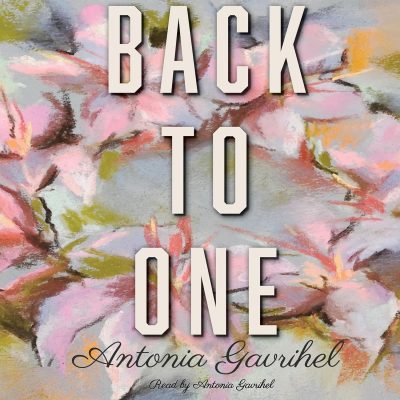
  • BACK to ONE by Antonia Gavrihel – Contemporary Romance, Family Life, Audiobook

    Antonia Gavrihel shows off superb storytelling and narration skills in her audiobook, Back to One, where passion, family, and, most importantly, friendship clash in an emotionally intimate slow-burn romance.

    When Catherine Leigh meets famous actor Kyle Weston at a Hollywood party, an unbreakable bond snaps into place. But, while Cate and Kyle each acknowledge this intense connection, their life situations make a courtship impossible. Cate is happily married, and Kyle’s career leaves him with little time for any personal ties.

    The two vow to take romance off the table and love each other as best friends—or at least try to.

    Cate and her young family help reinvigorate Kyle’s strained relationship with his son Scott, while Kyle revives Cate’s acting career. This surprisingly wholesome romance focuses on the support that two true friends can give each other, and how it forms a strong foundation to lean on during difficult times.

    Back to One, Gavrihel’s debut novel, was quickly followed up with three additional books in the series of the same name. This audiobook version brings even more vibrancy to her work.

    The audiobook’s dynamic and engaging character voices highlight Gavrihel’s entertainment background and family ties. She’s obviously comfortable in front of a microphone as she breathes life and emotion into each one of her characters.

    A captivating audio adventure from a perfect light beach read, Back to One delivers the feeling of a summery getaway no matter where readers are when listening to this engaging tale of star-crossed lovers. Gavrihel’s exceptional imagery and narration transport readers from Hollywood to Montana and New Orleans to Aruba.

    The greatest strength of this novel are the characters who bond and conflict with the perfect blend of drama and realism.

    The story’s villains are unsympathetic troublemakers motivated almost exclusively by lust or greed. Their schemes provide unending fuel for dramatic fire and leave the reader hoping their karma will come back to haunt them.

    The two incorruptible main characters stand out amidst their unethical antagonists. Cate is both flirtatious and innocent, reliant on the overprotectiveness of her older brother and Kyle to maintain her dignity and safety. Kyle fills the role of a self-identified player who feels guilty about not being there for his son while traveling for work.

    Gavrihel uses familiar romance tropes, infusing them with the atypical conflict of two lovers who attempt to put their true feelings aside for the sake of the other people in their lives.

    What makes the two characters unique is the care they show for their families and their genuine, though at times strained, commitment to platonically loving each other.

    Readers’ interest will be piqued with the ever-present question of whether or not their commitment to being friends will persevere despite their true feelings for each other. This sweet twist makes Back to One a perfect romance for readers who want some feisty drama and a bit of steamy tension, but nothing graphic, which can be a tough combination to find in contemporary adult romance.

    Ultimately, Antonia Gavrihel’s Back to One is an emotional romance that provides a unique perspective on the ties between friendship and love—and how difficult it can be to suppress the latter. Gavrihel’s impassioned narration and tension within the story create a compelling audiobook that’s nigh on impossible to pause.

    Back to One by Antonia Gavrihel is available through the above links and right here through Spotify!


  • DISABILITY Is HUMAN: The Vital Power of Accessibility in Everyday Life (Audiobook) by Stephanie W. Cawthon PhD – Disability Advocacy, Ableism, Accessibility


    In the audiobook Disability is Human: The Vital Power of Accessibility in Everyday Life, Dr. Stephanie W. Cawthon advocates for the rights and needs of a group that is often underrepresented, ignored, or misunderstood.

    This exceptional audio version of Disability is Human has a companion workbook for those interested in incorporating its ideas into programs, institutional practice, or daily life. The audio version covers the book to the last letter and is easy to comprehend.

    Cawthon contrasts ableism against accessibility, including her own experiences as a person born deaf who uses hearing aids and sign language to communicate. She tells of a time before anti-discrimination laws were enacted to protect disabled peoples’ rights and make the world available to everyone.

    Cawthon comes to this conversation with deep, personal knowledge of the issues faced by disabled people.

    As a child she received speech training at a special school for disabled children, but when she was seven years old her family moved to California and enrolled her in a mainstream Catholic school. To navigate the new hearing-centered learning environment she had to sat in the front row and read lips.

    After graduating, Cawthon went on to attend Stanford University, where she dove into early research on assessing accessibility for deaf children. This gave her the opportunity to explore what it fully meant to be disabled in today’s modern world.

    Disability is Human helps the reader understand many of the ways that one in four people might experience a disability.

    She emphasizes the need for understanding and suggests ways we can improve accessibility to a population that wants and needs to participate within this complex world—a world with buildings that lack a ramp to higher levels for people in wheelchairs, or lectures that don’t provide sign language interpreters to enable a deaf person to understand what is being said.

    Cawthon organizes her chapters around the concept of accessibility for all people, how to address some of the most glaring shortfalls, and how to discuss the topic of disability without making disabled people feel diminished or less-than. Her discussion isn’t coined in terms of victimization, but rather what accommodations could be authentically inclusive for all levels of abilities and not impose further barriers on a person who may already be struggling to engage in everyday life.

    Readers will find both expert knowledge and first-hand experience in this timely and important discussion.

    As the narrator of her own book, Cawthon reads with clarity and precision, and her years of training in enunciation and public speaking shine through. She doesn’t deviate from her text and even takes time to describe each graphic in the book.

    Cawthon lists her resources at the end of the book, guiding readers to explore more on the subject. She also includes a “Time to Reflect” section with focused questions and suggestions at the end of each chapter, and a “Creator Call Out” that offers links to other experts in the disability community who are working hard to break down barriers within their own spheres of influence.

    Readers in education, health, and business will find Disability is Human: The Vital Power of Accessibility in Everyday Life both engaging and informative. Cawthon provides valuable insights to help shape our perspective and encourages readers to engage in the conversation around accessibility in a meaningful way.


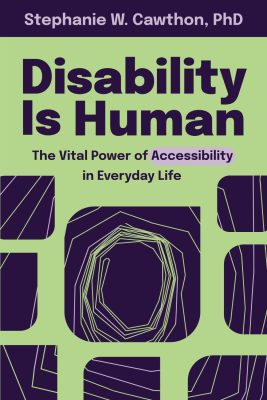
  • DISABILITY Is HUMAN: The Vital Power of Accessibility in Everyday Life by Stephanie W. Cawthon PhD – Disability Advocacy, Ableism, Accessibility


    In Disability is Human: The Vital Power of Accessibility in Everyday Life, Dr. Stephanie W. Cawthon advocates for the rights and needs of a group that is often underrepresented, ignored, or misunderstood.

    Disability is Human offers a broad scope of examples and advice that has proven to enhance lives through accessibility, whether implemented in programs, institutional practice, or daily life. The book also has a companion workbook for those interested in incorporating its ideas into programs, institutional practice, or daily life.

    Cawthon contrasts ableism against accessibility, including her own experiences as a person born deaf who uses hearing aids and sign language to communicate. She tells of a time before anti-discrimination laws were enacted to protect disabled peoples’ rights and make the world available to everyone.

    Cawthon comes to this conversation with deep, personal knowledge of the issues faced by disabled people.

    As a child she received speech training at a special school for disabled children, but when she was seven years old her family moved to California and enrolled her in a mainstream Catholic school. To navigate the new hearing-centered learning environment she had to sit in the front row and read lips.

    Cawthon attended the Standford University, where she dove into early research on assessing accessibility for deaf children. This gave her the opportunity to explore what it fully meant to be disabled in today’s modern world.

    Disability is Human helps the reader understand many of the ways that one in four people might experience a disability.

    She emphasizes the need for understanding and suggests ways we can improve accessibility to a population that wants and needs to participate within this complex world—a world with buildings whose stairs deny a person in a wheelchair, or a lecture that doesn’t provide a sign language interpreter for a deaf person.

    Cawthon organizes her chapters around the concept of accessibility for all people, how to address some of the most glaring shortfalls, and how to discuss the topic of disability without making disabled people feel diminished or less-than. Her discussion isn’t coined in terms of victimization, but rather what accommodations could be authentically inclusive for all levels of abilities and not impose further barriers on a person who may already be struggling to engage in everyday life.

    Readers will find both expert knowledge and first-hand experience in this timely and important discussion.

    Cawthon lists resources at the end of the book, guiding readers to future reading. She includes a “Time to Reflect” section with focused questions and suggestions at the end of each chapter, and a “Creator Call Out” offers links to other experts in the disability community who are working hard to break down barriers within their own spheres of influence.

    Readers in education, health, and business will find Disability is Human: The Vital Power of Accessibility in Everyday Life engaging and informative. Cawthon provides valuable insights to help shape our perspective and encourages readers to engage in the conversation around accessibility in a meaningful way.


  • SOMETHING I KEEP UPSTAIRS by J.D. Barker – Supernatural Thriller, Mystery, Horror


    An old and hungry thing wakes beneath the house on Wood Island. It calls out to another generation of children. In J.D. Barker’s supernatural mystery, Something I Keep Upstairs, a circle of New Castle teenagers digs up the unholy secrets of those who came before them.

    When the hermit Geraldine Rote dies without clear cause, her grandson Spivey inherits Wood Island and the historic house upon it. He plans to spend the summer as a carefree sixteen-year-old rather than submitting to another round of cancer treatments. With the help of the mysterious estate lawyer Marston, Spivey escapes his parents’ reach.

    At first, the island becomes a perpetual party, drawing an endless stream of kids and alcohol. But only a few learn the truth behind Wood Island’s dark stories.

    Billy Hasler goes along with the strange rituals that self-styled witch Alesia introduces to their friend group. He defends Spivey from their parents trying to wrestle legal control of his inheritance away. But both on Wood Island and among the older generation of New Castle, Billy begins to see a dangerous influence overtake the people he knows best.

    A missing girl, a doorway to the dead, and a demand for sacrifice leave Billy unable to tell who might get—or already have—blood on their hands.

    Billy struggles to protect himself and his friends without being ousted from their ghastly project. Local Police Chief Whaley roots through decades-old evidence to figure out the strange cycles of death surrounding Wood Island. Among those who were already claimed by the thing on that solitary rock, some push the kids away from that same fate while others lure them further in, eager to feed the beast.

    Drawing on the real-world ghost stories of New England, Barker creates a familiar small-town setting before revealing the horrors beneath the surface.

    The cast of teens embody the emotional struggles and reckless passion of adolescence. Spivey becomes swept up in the excitement of his inheritance and the social standing it gives him. He doesn’t consider the danger he’s putting himself and his fellows in—not until it’s too late to back out. Billy, even as he worries his friends might be taking their rituals too far, can’t bring himself to abandon his girlfriend Kira Woodward.

    Everyone wants to belong among their friends and loved ones. The only question is how much they’re willing to sacrifice for it.

    These mundane, relatable character conflicts both contrast and give emotional weight to the growing supernatural terrors. We fear and root for the teens because they feel like people we might know in our own lives—or might have been ourselves.

    This grounding character work makes each mystery impactful as Barker ties the tragedies of the island to those of the cast themselves.

    Something I Keep Upstairs holds a wealth of mystery fitting to its New England inspiration.

    The implausible coincidences around Geraldine’s death lead Whaley to the strangeness of Marston’s family law practice and the particulars of the will, which in turn only reveal further questions about the sinister power within Wood Island itself. The abduction of fifteen-year-old Lily Dwyer hangs over myriad characters as a dreadful implication of what their peers or family might be capable of.

    As the supernatural threats become undeniable, Barker reveals a blood-chilling history that confirms just how much danger the characters have welcomed upon themselves. Small details seeded throughout the early parts of the story take on new, terrible implications.

    By the time Billy learns what sort of beast his friends have awoken, they’re all caught in its jaws.

    Over the course of a Stygian summer storm, Something I Keep Upstairs pits its characters against a roaring, famished death. Uncovering the past might give them the chance to avoid repeating it, but not without a hair-raising fight.

    A tale of adolescence in the shadow of sacrifice, a mystery that relishes the mythic power of the dead, and a relentless supernatural thriller, Something I Keep Upstairs will—like its ancient villain—grasp myriad readers with no intention of letting go.


    5 Stars! Best Book Chanticleer Book Reviews


  • DUMB GIRL: A Journey from Childhood Abuse to Gun Control Advocacy by Heidi Yewman – Memoirs, Dysfunctional Families, Trauma & Recovery

    In this powerful and heart wrenching memoir Dumb Girl, Heidi Yewman confronts her past to turn the pain and shame of an abusive childhood into resilience and purposeful action. She connects with readers through her transformation and triumphantly advocates for change.

    During the #MeToo Movement, Yewman attended a stage production of the well-known “Vagina Monologues.” When audience members were asked to stand if they’d been abused, Yewman felt ashamed about her past but also obligated to rise. It was there that she decided to write her story as a release from that lingering sense of guilt.

    Yewman’s narrative takes us on an inspiring journey between her adulthood passion to advocate for gun control, and a traumatic childhood attempting to escape from a cycle of abuse.

    Growing up in a toxic environment under the constant mantra “Don’t Be a Dumb Girl”, Yewman’s recollections reveal the myriad forms of anguish she endured. From a father who hit her, forced her to line her bedroom walls with school papers of failing grades, and watched her naked in the bath as a teen; to an alcoholic mother; and a brother who sexually assaulted her with his “boyfriend/girlfriend game”.

    Dealing with such psychological and physical stressors, Yewman began building an inner grit that followed her throughout her life. When she was 17, on a bonding trip with her mother, she revealed being molested by her brother. The next step was individual and family therapy.

    By April of 1999, Yewman was married with two children when newscasts reported the Columbine High School shootings—the same school that Yewman had attended thirteen years prior.

    After attending a memorial for the school’s murdered basketball coach, Yewman made an important decision. She was determined to transform from a stay-at-home mom to an activist for a safer world.

    In her youth, Yewman had found solace in the church. But after Columbine she felt Christian leaders gave sales pitch speeches about giving your life to Christ, rather than offering words of love, healing, and empathy. As an adult, she found her “religion of compassion” in the world of gun violence prevention.

    From the Million Mom March in Washington, D.C., to press conferences and debates, a nervous Yewman prepared her stance on gun control and safety issues with her husband’s help.

    She began interviewing those who’d lost loved ones to gun violence and eventually authored the book “Beyond the Bullet.” For Yewman, as well as those she interviewed, tears became a cathartic part of the healing process.

    Yewman started work on a film about people who pulled a trigger—accidentally or intentionally—and the survivors of gun violence. In sharing her own story of grief and healing, Yewman’s discussed contemplating suicide as a teen when life seemed too difficult. This proved a relatable moment for others who had been victimized.

    Though Yewman had neither writing nor filmmaking experience, she believed that these tragic stories needed to be told.

    The importance of telling the heartbreaking tragedies others had endured became even more clear as she processed her own traumas. It empowered Yewman with questions worth asking and pushed her to garner support for her project, and she soon realized she was growing more comfortable in her attempt to do something totally new. This feeling of accomplishment was validated when she received Best Documentary and Best Director awards for Behind the Bullet at several film festivals.

    In the book’s final pages, Yewman writes a letter to her younger self, foretelling what happens thirty-seven years in the future. Yewman is clearly a survivor. She has much to be proud of— developing new skills to ultimately break a familial cycle of abuse and make a positive life-changing shift.

    This memoir’s open, honest, and genuine voice welcomes readers to empathize and share their grief.

    Yewman’s stories of her life experiences, both good and bad, are not only a point of personal pride for her accomplishments. They also act as a beam of hope to survivors that affirms there is a bright future waiting for them beyond the abuse. Dumb Girl proves a powerful, informative read of personal healing and hope for readers familiar with such traumatic situations.


  • OCCHI BELLI by Tim McDonald – Contemporary Romance, Grief, Italy


    Luca Lucchesi had it all—a successful restaurant, a loving wife, an adoring mother. Then it all came crashing down. Occhi Belli by Tim McDonald explores the depths of Luca’s despair, his battle with alcohol, and ultimately his journey back to life—and love.

    Luca hadn’t planned to work in the restaurant industry but eighteen years later there he was, what one would call a “lifer.” Time flows differently in the lives of restaurant people, and it flew by for Luca. He was coming up on Occhi Belli’s tenth anniversary but felt like he’d opened it just yesterday. Luca’s vision had been a simple one—to build a great restaurant with great food and great characters. With that goal in mind, he built Occhi Belli into a hugely successful neighborhood gem in north Seattle. He’d poured his life into it and truly loved it, but at what price?

    He knows he drinks too much, but it is part of the world in which he lives. So far, he’s been lucky and has never been caught driving after drinking. Then his luck runs out.

    He totals his car, is hit with a DUI, and his life begins to unravel. His wife, Lillian, announces she’s had enough and files for divorce. After nine years of watching Luca put his restaurant and alcohol before her and their marriage, she chooses her own well-being over his. But suddenly single at thirty-six, Lillian wonders what she will do next.

    Luca stumbles through his days and nights, drowning his feelings with drink and the intoxicating energy of the restaurant until he gets a phone call from his stepdad and must face his greatest fear. His beloved mother Francesca’s battle with lung cancer is at its end. She’s dying. Luca’s father died when he was twelve years old, and since then it had been just the two of them. But over the last ten years, the restaurant had become his priority and he’d not seen her as often as he should have.

    Occhi Belli follows Lillian and Luca as they struggle to find their separate ways forward to happiness, meaning, and love.

    Luca spends a stint in rehab, but returns to the restaurant and quickly plunges back into his old ways. Unable to face his grief and guilt, he continues to drink away his emotions and memories. Without Lillian or his mother in his life, what does he have to live for anyway? After a particularly painful bender, Luca realizes he has hit rock bottom. He must make a drastic change in his life to survive, so he sells Occhi Belli to his chef, packs up, and moves to Italy to learn how to make wine in the land of his parents.

    Luca feels his mother all around him in Italy—watching, judging, disappointed by him. He throws himself into the world of Italian wine and meets the beautiful, seductive, and perhaps slightly dangerous Matilda. When her past eventually finds them, it almost destroys Luca and the love they’ve nurtured.

    Meanwhile, Lillian struggles with her own regrets and overwhelming loneliness. She is working too much, sleeping too little, and living her life through her patients.

    When her best friend Sarah meets someone, Lillian is happy for her but also envious and afraid she’ll lose the one person who is always there for her. It’s only after Lillian realizes what she most wants that she begins her own new journey toward connection and fulfillment.

    Occhi Belli is above all else a story of love and change in the wake of sorrow.

    Anyone who loves Italy will recognize the strong passion Tim McDonald has for its mesmerizing beauty and transformative powers. His sumptuous descriptions of food and wine will revel in the joy of taste. As it turns out, Italian wine and Italian love can, indeed, break through grief and loss.


  • SIDNEY’S GAMES by Lolisa Marie Monroe, illustrated by Patrizia Donaera – Children’s Picture Books, Children’s Friendship Books, Children’s Animal Stories

    Welcome to the world of Sidney the Squirrel: a little adventurer with a big heart and an even bigger imagination. Throughout Lolisa Marie Monroe’s Sidney’s Games, readers tag along with Sidney and his two younger sisters as they explore their beautiful forest home.

    Packed with dazzling illustrations, Sidney’s Games is sure to spark children’s curiosity about the world and encourage them to invent their own outdoor games.

    Award-winning children’s author Lolisa Marie Monroe weaves a tale brimming with warmth and wonder.

    The story begins when Sidney plans a special game for “Make a Friend Day.” The three siblings venture into the forest neighborhood, initiating a chain of friendships among the other lovable animals. Along the way we meet Tommy the Turtle, Helen the Hedgehog, Charles Henry Cardinal III, Phineas the Porcupine, Betty the Bunny, and Chippy the Chipmunk—all with their own delightful personalities and unique voices perfect for silly bedtime reading re-enactments.

    Larger-than-life illustrations by Patrizia Donaera leap out of the frame and into readers’ hearts.

    Each page is a detailed masterpiece rich with magical woodland imagery, bringing the reader into the magic of Sidney’s forest. Attentive young readers can spend hours poring over the illustrations and imagining their own wild homes.

    Sidney’s Games is the perfect length and difficulty for beginning independent readers to build confidence in their abilities.

    Complete with an interactive component at the end—a wordsearch and maze—Sidney’s Games activates children’s creativity and encourages them to think outside the box and connect with old and new friends.

    Sidney’s Games is a story that little hands will reach for again and again to enter its fantastical world.

    Sidney’s creativity will inspire children to enjoy natural environments by making up their own games. A delight for adults and children alike, Sidney’s Games reminds readers that friendship and fun are everywhere—one only has to find a friend and start playing.


  • THE TALE Of The ENGLISH TEMPLAR by Helena P. Schrader – Historical Fiction, Knights Templar, 13th Century


    Far from the romantic legends of King Arthur and the Knights of the Round Table, Helena P. Schrader’s The Tale of the English Templar faithfully captures the harsh decimation of the Knights Templar. Schrader offers a sobering, immersive look at one of history’s darkest betrayals. This is historical fiction worthy of legend with its feet planted firmly in research—not myth.

    Set in the early 14th century, the novel captures the downfall of the Knights Templar at the hands of French King Philip IV. With the Pope’s reluctant cooperation, the Templars are accused of heresy and tortured until they confess to crimes they didn’t commit. The king’s true motive? Their immense wealth.

    Among those captured is Sir Percy de Lacy, an English Templar who is swept up in a raid by local French soldiers and caught in a mass arrest on Friday, October 13th, 1307. What follows is a harrowing account of imprisonment, torture, and unlikely survival.

    After being brutalized, Percy miraculously escapes the King’s dungeons, only to be found near-death and nursed back to health by Felice, the strong-willed granddaughter of a powerful and wealthy noblemanwith enigmatic Templar connections.

    Felice arranges for Percy to be brought to her grandfather Geoffrey. Together they risk their lives to shelter Percy and ultimately join his mission to save others from the Templar purge raging outside their walls. Though still marked by what he’s endured, Percy heals enough to join Geoffrey in rescuing fellow knights. Driven by loyalty and purpose, Percy risks everything to aid the knights still in peril.

    As the adventure unfolds, Felice’s arc rises as one of the novel’s most rewarding. From a teenage girl promised in marriage to a cruel Portuguese noble, she becomes a quiet revolutionary, challenging the roles available to women of her time. Her eventual alliance with Percy and Geoffrey becomes one of shared purpose and moral courage.

    The meticulous historical detail includes graphic descriptions of torture and public execution. Readers should be prepared for the historically accurate burning of 54 Templars in an auto de fe, a public execution orchestrated by the Inquisition. These scenes are unflinching but not gratuitous. Schrader’s intent is clear: to help readers grasp the full horror of what was done to these men—and why.

    There’s no clear-cut hero in this story. Instead, The Tale of the English Templar explores the ambiguity of morality and faith, and how loyalty, fear, and ambition intersect in dangerous times.

    At its core, this is a book about conviction—what we believe, and what we’ll risk to defend it.

    Fans of serious historical fiction will find much to admire here. Schrader’s characters are complex, her world brutal but vividly drawn. Readers looking for a fast-paced escape may find the philosophical reflection slows the narrative, but for those who enjoy layered, character-driven stories grounded in historical truth, this book delivers.

    The Tale of the English Templar by Helena P. Schrader rewards readers with insight, depth, and a cast of characters who refuse to be forgotten.

  • A Tail of Twirls: Kittina and the Starlight Ballerina by Once Upon a Dance – Children’s Picture Books, Children’s Animal Stories, Dance Books


    Once Upon a Dance’s captivating children’s picture book A Tail of Twirls: Kittina and the Starlight Ballerina follows an inquisitive cat as she makes a mysterious discovery.

    In Pirouette Pines, small cat Kit peers through the dirty window of an abandoned dance studio. After a desperate initial attempt to enter, Kit spots an opening. The dance photos on the walls fascinate her as soon as she walks in. Curiosity gets the best of her, and she attempts to mimic some of the dance positions.

    Her entire world changes in an instant when a voice—coming from a very unexpected source behind her—asks why she has been there every night. Kit has a cordial conversation with the animated mirror, which concludes with a pledge from the mirror to assist Kit in finding her dance.

    Kit gains proficiency quickly and is keen to learn more. But as she considers what she has learned and what she still wishes to, she is split between gratitude and despair. To complicate her learning further, Kit is taken aback by yet another startling discovery, which is swiftly followed by a directive that will have an impact on Pirouette Pines as a whole.

    A Tail of Twirls: Kittina and the Starlight Ballerina engages readers in fun and unique activities while they read along.

    The story effectively mixes mystery and humor, and its vibrant illustrations and photo images will hold any child’s interest throughout the entire book.

    Kids learn to help both themselves and their communities from Kit’s example. This is a novel that will spark lively discussions on sharing, resilience, supporting others, and pursuing one’s dreams.

    With particularly lovely touches to facial expressions, the illustrations create a wonderful tone for the narrative.

    Each element of the photos has been carefully considered to create a cozy and welcoming atmosphere. The layout is simple, fluid, and easy to read while providing excellent hints about the plot’s progression.

    Once Upon a Dance’s A Tail of Twirls: Kittina and the Starlight Ballerina is lengthy enough to deliver a complete and well-developed story without making it feel overwhelming—perfect for reading with children.