Tag: Chanticleer 5 Star Book Review

  • SPRUCE HARBOR POSSIBILITIES: Spruce Harbor Series Book 2 by David A. Stone – Romance, Contemporary Romance, Small-Town Romance


    Spruce Harbor Possibilities, the second book in David A. Stone’s Spruce Harbor series, pulls an independent bookstore owner and a savvy tech billionaire into an improbable whirlwind romance, but each with their own reasons to be guarded about love.

    Romantic Maggie Bennett’s last breakup diminished her self-confidence, and she’s since put all her energy into running her cozy literary shop in the small community of Spruce Harbor, Washington. Her best friend and co-worker Bobby wants her to get back in the dating game, but for the moment Maggie contents herself with the solace of her bookstore and her Golden Retriever, Mr. Darcy.

    That is until Jason Porter arrives in town.

    Handsome and extremely wealthy, Jason was co-founder of the Lifestar Gaming Company, recently and unceremoniously sacked by the Board of Directors and his business partner.

    Though they come from different worlds, there’s an undeniable attraction between Maggie and Jason.

    Maggie has her suspicions about this enigmatic stranger. But as the emotional chemistry draws them closer, they each put aside their doubts to join forces and overcome the wrongs of big business takeovers, each relying on one another to overcome wounds of the past and find happiness in the future.

    Spruce Harbor Possibilities gives readers an extremely well-rounded contemporary romance.

    Though this novel is the second book in a four-book series, it can clearly stand on its own. Maggie’s small town quaintness contrasts Jason’s unrestrained lifestyle, and the mirrored themes of hard work and determination vs. corporate greed create a complex storyline. The joy found in emotional resilience and trusting your heart in pursuit of true love elevates the romance.

    Stone weaves an engaging tale with two central characters who match each other’s intelligence despite their vastly different lives.

    Maggie has always had the support and love of family and friends, while Jason struggles with an aloof set of parents whose only interests are money and status. While each has their own baggage, their compatibility in romance and business ignites a positive and heartwarming relationship—even if they didn’t expect it.

    Maggie and Jason weather frequent outside dilemmas, giving their romance an active pace while showing their growing ability to work together.

    Like most romances there are ups and downs that illuminate Maggie or Jason’s insecurities. But the comfort provided by those closest to them, whether family and friends, or in Jason’s case a caring assistant and a wise college professor, all help the two realize what really matters.

    For those who enjoy an honest and comforting tale that taps into universal issues of trust, self-discovery, emotional growth, and the power of love, this second book in David Stone’s Spruce Harbor series should prove an ideal foray into romantic “Possibilities.”


  • ARES by Jayson Adams – Hard Science Fiction, Space Exploration, Sci-Fi Thrillers


    Blue, Gold, Badge, CIBACommander Kate Holman thought she understood the perils of leading humanity’s first manned mission to Mars. In Ares, Jayson Adams’ breathless science-fiction thriller, the Red Planet—and Holman’s own crew—confront her with threats she couldn’t possibly have expected.

    A secret mission changes everything for the Ares crew.

    As the spacecraft makes its final descent, a videotape from Earth delivers shocking news: Holman will be relieved of her command once they land. The expedition’s true mission remains classified even from her, and leadership transfers to Julian, the one fellow astronaut she detests most (a dislike the reader will almost certainly share).

    When a catastrophic malfunction nearly destroys their landing attempt, Holman’s quick thinking saves the mission but leaves their situation precarious. What follows is a cascade of disasters that test every ounce of the crew’s training, ingenuity, and will to survive.

    Ancient mysteries and modern perils collide at the face on Mars.

    Adams masterfully weaves together hard science fiction with elements of archaeological mystery. When the crew’s mission leads them to the legendary “Face on Mars” and discoveries that suggest an ancient human presence on the Red Planet, the line between scientific discovery and supernatural threat begins to blur. The team faces not only the harsh realities of equipment failures and communication breakdowns but also the psychological toll of isolation in an unforgiving environment.

    The novel’s strength lies in its relentless pacing and believable character development. Even as the situation grows increasingly desperate, readers never lose sight of these astronauts as real people struggling against overwhelming odds. Adams grounds the story in credible science while building tension through both external threats and internal crew dynamics.

    A merciless environment tests human ingenuity and spirit.

    Ares succeeds because it places recognizable human emotions and relationships within an extraordinary setting. Holman emerges as a compelling protagonist whose leadership skills face their ultimate test when conventional solutions fail and survival depends on improvisation and courage.

    The Martian landscape becomes almost a character itself—beautiful, alien, and utterly hostile to human life. Adams captures both the wonder of being the first humans on another planet and the terror of being completely cut off from any possibility of rescue.

    Ares by Jayson Adams is a gripping tale of survival and human determination will appeal to science fiction enthusiasts and general readers alike who enjoy stories of adventure, mystery, and the indomitable human spirit facing the unknown.

    Ares by Jayson Adams won Grand Prize in the 2024 CIBA Cygnus Awards for Science Fiction.


  • THE PROBLEM With SCIENCE FAIRS, CICADAS, And SEWERS: Lorelei the Lorelei Book 2 by Kristen J. Anderson, Illustrated by Audrey Suau – Children’s Friendship Books, Picture Books, Children’s Self-Respect & Determination Books


    Lorelei, the charismatic and outspoken seven-year-old, leaps at the chance to save her school’s science fair from disaster in Lorelei the Lorelei: The Problem with Science Fairs, Cicadas, and Sewers, second book in Kristen J Anderson’s Lorelei the Lorelei series.

    Beyond excited for the science fair, Lorelei prepares a project with a mission. She hopes to change people’s perception about cicadas, which most consider a gross nuisance of a bug. On the day of the science fair, during a trip to the restroom, Lorelei encounters a plumbing catastrophe.

    With the help of her family and friends, Lorelei put a plan in motion to protect the school fair, while learning valuable lessons about sportsmanship, classroom behavior, and empathy. She may be silly and likeable, but some of her quirks can get her into trouble too!

    Even when she gets into trouble, Lorelei is always and unapologetically herself.

    Readers see Lorelei express her emotions, usually with loud and sudden enthusiasm. In the lead up to the science fair, Lorelei feels excitement, nervousness, disappointment, and even a moment of frustration towards her class rival. The supportive adults in Lorelei’s life, from her grandma and grandpa “Bumpa” to her teachers and school administrators, help to steer Lorelei in the right directions whenever she responds inappropriately to a situation.

    As Lorelei says herself, she is only a kid and learns about emotions and social skills every day.

    Lorelei the Lorelei: The Problem with Science Fairs, Cicadas, and Sewers is a story that will get kids excited about science projects and will make older readers nostalgic for exciting days at school, whether a science fair, a special assembly, or even a short field trip.

    Excellent for beginner chapter book readers, Kristen J Anderson’s Lorelei the Lorelei series is a must-read for young inquisitive minds.


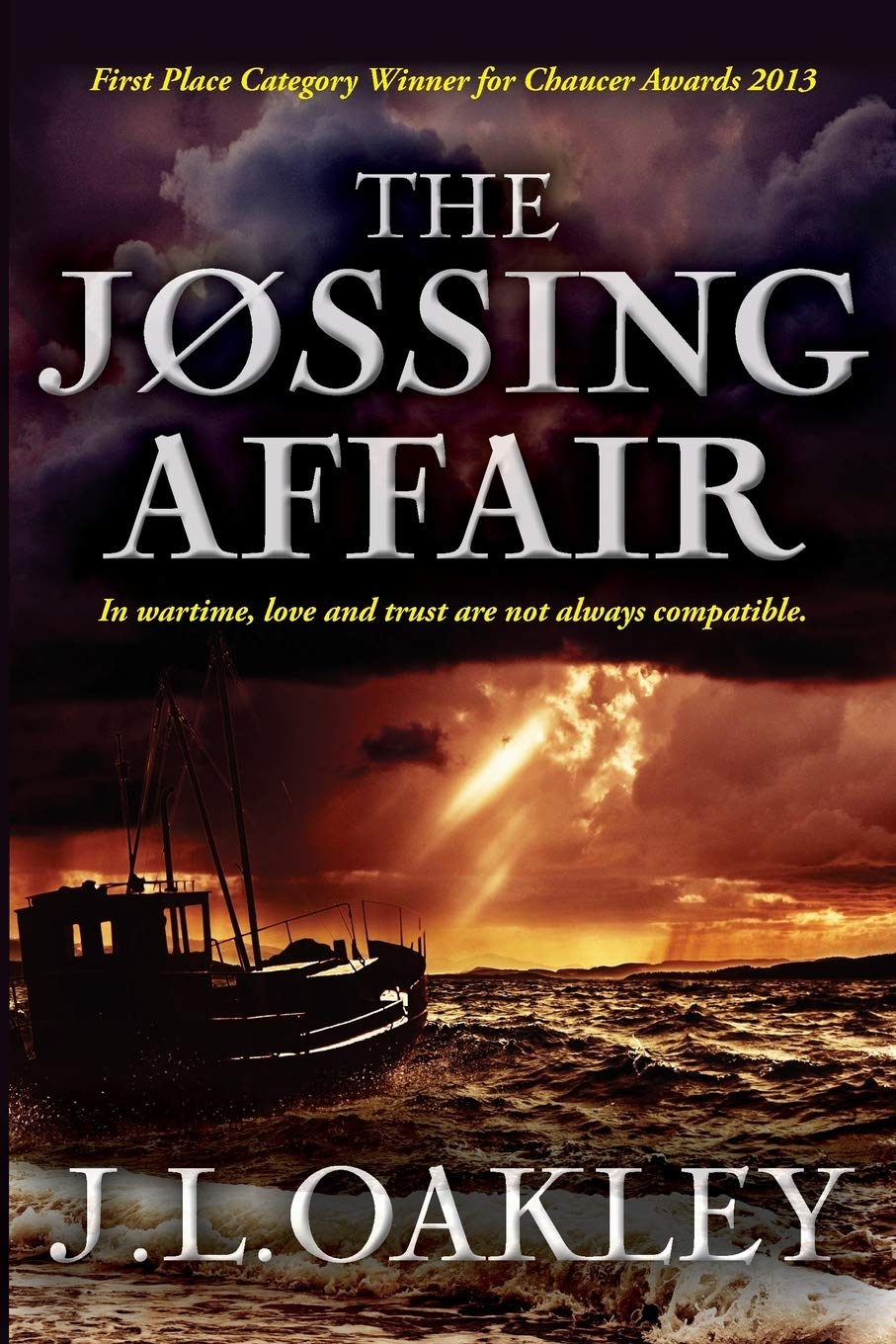
  • THE JØSSING AFFAIR by J.L. Oakley, narrated by Chris Humphreys – Historical Fiction, WWII, Norway


    In The Jøssing Affair, J.L. Oakley shifts the spotlight from the familiar battlefields of World War II to Norway’s brutal occupation, revealing the extraordinary courage of the jøssings—Norwegian resistance fighters who risked everything to oppose Nazi collaboration.

    For every action, there’s an equal and opposite reaction. In The Jøssing Affair by J.L. Oakley, opposition to the Nazi regime and all who collaborated with it is seen in the jøssings, those Norwegians who opposed Nazism and everything it stood for.  Those beleaguered jøssings worked tirelessly in the shadows in whatever way they could, whether by organized resistance, by sabotage, through intelligence operations, providing an escape route for those in immediate danger, or simply, but just as dangerously, by distributing uncensored news from abroad and the contents of rare supply drops from Britain and America.

    A master spy’s double life tests the limits of endurance.

    Tore Haugland lives a precarious double existence as an undercover intelligence agent posing as a deaf fisherman in the coastal village of Fjellstad. As the final desperate year of German occupation unfolds after D-Day, Tore must maintain his cover while building resistance networks. Smuggling arms and protecting his operations from Nazis and Norwegian collaborators – the despised quislings who gave their name to treachery itself.

    Oakley’s tight focus on Tore’s psychological journey creates remarkable intimacy within the vast canvas of war. Years of maintaining deadly secrets have worn down this stalwart operative, and when he finally allows himself to get close to someone in Fjellstad, the consequences threaten everything he’s worked to protect. The author masterfully captures the exhaustion of living perpetually on edge, where a single slip could doom not just Tore but everyone depending on him.

    Chris Humphrey’s exceptional narration brings the Norwegian resistance to life.

    The audiobook version of The Jøssing Affair showcases narrator Chris Humphreys at his absolute finest. Drawing on his Norwegian family heritage and considerable acting experience, Humphreys seamlessly blends his refined British accent with flawless Norwegian pronunciation, creating an authentically immersive listening experience. His nuanced performance captures both Tore’s outward calm as a simple fisherman and his inner turmoil as a resistance operative, while his smooth delivery of Norwegian names and phrases adds remarkable depth to the historical atmosphere.

    Humphreys’ vocal range brings distinct life to each character, from German occupiers to Norwegian collaborators to the brave jøssings themselves. His ability to convey the mounting tension as the German net closes around Tore makes the audiobook version particularly compelling for listeners seeking full immersion in this gripping wartime thriller.

    This vast and absorbing historical saga sets itself apart from other stories of World War II through its unique focus.

    Focused not on Western theater or the British or American home fronts, but on the less explored occupation of Norway, Oakley zeros in on the final year of the brutal German occupation in the desperate months after D-Day when the Allies’ march on Paris gave hope to so many that the war would soon end, even as the German forces in Norway dug in for one last bloody stand.

    By focusing this story on the Norwegian occupation and then tightening the focus to one single man’s experience of that war and the secret work needed to survive and win it, The Jøssing Affair creates an immediacy for the reader that is utterly compelling. WWII is a story that has been told many times over since 1945, and this setting makes all that history feel fresh and alive again.

    This is just the start of an extraordinary story of resistance and bravery.

    For historical fiction enthusiasts seeking fresh perspectives on World War II, The Jøssing Affair delivers compelling characters, meticulous research, and a story that honors the often-overlooked heroes of Norwegian resistance. And for listeners who have the time to invest in the audiobook of this work, the narrator’s flawless pronunciation and smooth inclusion of Norwegian names and simple phrases adds to the deep immersion in an already absorbing story.

    Tore Haugland’s story continues in Oakley’s award-winning series with the prequel, The Brisling Code and the sequel, The Quisling Factor, promising readers more adventures with this unforgettable protagonist.

    The Jøssing Affair by J.L. Oakley won Grand Prize in the 2016 CIBA Goethe Awards for Post-1750s Historical Fiction.


  • LITTLE BOY I KNOW YOUR NAME: A Second-Generation Memoir from Inherited Holocaust Trauma by Mitchell Raff –


    “The child remains with us.” Trauma, especially that suffered as a child or adolescent, does not fade easily. In his frank and unguarded memoir, Little Boy I Know Your Name, Mitchell Raff shows the generational impact of the Holocaust on his parents and guardians, and how their trauma continued through him.

    Mitchell’s childhood fractured between the grip of a deeply abusive mother and his extended family’s struggle to save him.

    Four years after she’d abandoned him as a baby, Mitchell’s mother Giza returned to claim him. Though his uncle Issa and aunt Sally didn’t want him to go with her, Mitchell was too small a child to resist the idea of having a Mom. With his father Moshe too deeply traumatized by surviving the Dachau concentration camp to raise a child, Mitchell packed his little suitcase and walked into a new childhood that would leave terrible wounds on his mind.

    Giza had spent WWII hidden in the barn of a Christian family, abused, terrified, hungry, and horribly alone when her own mother died. While none of Mitchell’s family spoke openly about their experiences under Nazi rule, Issa and Sally sought to protect him from such trauma. Giza, however, repaid the cruelty she suffered by inflicting the same onto her son. She beat Mitchell mercilessly. Often, he would have no idea what he’d even done. Mitchell became eternally vigilant, while subsisting on little food and less affection.

    For years, Mitchell could rely on only his little sister Regina and the support of Issa and Sally—although they had to remain distant or risk Giza’s fury.

    When Issa began proceedings to gain legal custody of Mitchell, Giza kidnapped Mitchell and took him and his sister Regina to Israel.

    Giza had become too sick with hepatitis to raise either of them, so Mitchell and Regina—who soon began going by her Hebrew name Malka—were left in the hands of the foster care system and eventually separated from one another.

    Even here, Mitchell had family who loved him. His aunt Ruska and uncles Yosef and Shraga worked with Issa to continue the arduous work of bringing Mitchell home. Eventually, they succeeded, but this was not without its own losses. Malka was Mitchell’s half-sister, so his extended family had no legal claim for custody. She had to stay behind. Yosef suffered fatal heart failure after exacerbating an earlier condition in a fight over transport documents.

    All of these traumas followed Mitchell into adulthood, leaving him a “well-dressed poser” who fled depression and guilt into addiction even as he built a seemingly stable life.

    Though he maintained a compartmentalized life for some years, Mitchell’s harmful coping strategies would end up costing him his relationship with his wife Betty and his son Joseph. He could present himself as the man he wanted to be, but beneath the surface couldn’t truly be so.

    Little Boy I Know Your Name doesn’t paint a clean picture of recovery from trauma but it shows that, even after decades, healing is possible.

    Over time, Mitchell recognized the patterns of harm that had ravaged his sense of security and self. And despite even greater loss than he had yet experienced, he began to face the trauma handed down to him.

    Raff maintains impressive and vulnerable honesty throughout Little Boy I Know Your Name.

    He empathizes with the scars of his family while being open about his own feelings towards them—even those feelings which might seem unfair or ignoble. This story approaches generational trauma without valorizing or demonizing those who bear it. Because of this honesty, Little Boy I Know Your Name reveals myriad ways people can respond to trauma, how they try to survive it and how it can transform as it is passed down to the next generation.

    Raff hopes this book will encourage others to work through the trauma they carry even when it feels insurmountable. His bold confrontation of the ugly reality of trauma—in himself as much as his family—will speak to readers with an impact that couldn’t come from a more sanitized story.

    A thoughtful recounting of family dysfunction, the cultural weight of trauma, and the daunting but necessary work towards breaking such a cycle, Little Boy I Know Your Name does justice to the joint pain and love in a wounded family.


  • THE SUMMER Of HAIGHT by George Petersen – Surreal Fiction, 1960s, Literary Fiction


    In The Summer of Haight, George Petersen opens a doorway into the hallucinatory dreamscape of 1967 San Francisco, where the counterculture’s bright ideals are shadowed by something far more sinister.

    Forget the peace signs and flower crowns. This isn’t a nostalgic romp through Haight-Ashbury. It’s a slow-burning gothic mystery where the air smells of something rotting just beneath the incense, and reality unravels one eerie page at a time.

    The Summer of Haight centers on Longfellow, a straight-laced, impeccably dressed British lawyer living in San Francisco. He’s logical, loyal, and just rigid enough to feel like he’s constantly one step out of place in the groovy chaos of 1960s counterculture. His best friend, the brilliant and eccentric scientist Dr. Jonathan St. Amour, seems to be riding high—hosting elite parties, building a private laboratory under his Victorian mansion, and showing off his mysterious new pet cat, Zelda, who wears a custom-cut diamond in the shape of a cat’s eye.

    Things start to tilt sideways when Jonathan suddenly asks Longfellow to draft a new will—one that leaves everything to a man named Dr. Asmodeus Youngblood.

    This ‘Youngblood’ is nobody Longfellow has ever met, and Jonathan refuses to introduce them. In fact, he makes Longfellow promise not to investigate him. Naturally, this only makes Longfellow more suspicious.

    What follows is a descent into something much stranger than legal drama. Youngblood isn’t just a mystery; he’s a walking contradiction, a man who looks like a flamboyant hippie but moves with something menacing in his step. He sleeps during the day, unnerves everyone in the house, and seems to have an unnatural hold over Jonathan. Even Zelda is terrified of him.

    As Longfellow breaks his promise and trails Youngblood through the fog-choked streets of the Haight, the novel morphs into a fever dream.

    There are LSD-drenched parties, glowing body paint, hallucinatory visions, and ominous signs that Youngblood may not be entirely human. The scenes at the Fillmore Auditorium—strobe-lit nudity and shadowy faceless figures—feel like a cross between Eyes Wide Shut and a haunted lava lamp. At one point, the atmosphere turns almost otherworldly: “Wide-eyed and anxious, I climbed the stairs to the auditorium, a red apple in one hand, a bright yellow balloon in the other… Janis Joplin belted out ‘Summertime’ on stage… tie-dye backdrops bathed in luminous liquid colors… A puppeteer hung a life-size marionette from the balcony so it could dance with the flower girls on the floor below…”

    Despite the surrealism, The Summer of Haight is also about aging, longing, and identity.

    Jonathan’s longing to be young again, to break free from the restrictions of respectability and embrace something primordial, is familiar but also terrifying. Readers will find the story clearly depicts how simple it is to lose oneself while pursuing the illusion of independence.

    The prose is moody, poetic, and at times playfully gothic.

    There’s fog, firelight, hidden blades, secret cellars, and symbolic snakes. But the pace is deliberate; it doesn’t sprint. Rather, it creates a dense atmosphere that allows the reader to feel the dread.

    If you like stories where a seemingly rational world starts to fray at the edges—where one must question not only the nature of the villain but that of reality itself—then The Summer of Haight by George Petersen might be your kind of delirium. It’s haunting, heady, and more than a little hypnotic.


  • UNFOLLOW ME by Kathryn Caraway – Memoirs, Stalking, Contemporary Social Issues

    When you’re a target of stalking, “Each day is a fight to stay alive. Even while sleeping, you must be ready.” So reveals Kathryn Caraway in Unfollow Me, a spine-tingling true crime novel tracing a life shattered by severe stalking.

    Although the author uses the pseudonym “Kathryn Caraway” throughout this novel to protect her identity, her harrowing tales of being the target of a stalker and fighting for her rights to freedom and safety are a testament to the real danger she was exposed to. Caraway’s experience creates a compelling story of one woman’s brave quest for justice against her torturer.

    Kathryn emotionally, mentally, and physically falls apart at the hands of a violent, ubiquitous presence. Despite the severity of the crimes committed against her, Kathryn’s concerns are routinely dismissed as irrational and hysterical by law enforcement officials, lawyers, and even long-time friends.

    Before a malicious intruder targets her, Kathryn is a beloved mother, a wonderful friend, and a confident employee. But after she is introduced to Todd, he begins to slowly strip her life from her control.

    Todd absorbs Kathryn’s routines and destroys any sense of safety. He starts hurtful rumors that damage her reputation and cause her to doubt herself and others around her. He invades an office space in her home, installs secret security cameras and listening devices, tracks her car, kidnaps her dog, clones her phone, and befriends her abusive ex-husbands, making her life a living nightmare.

    His aggressive actions only increase in extremity and frequency.

    Overtime, Kathryn’s circle of trusted people becomes smaller. Her sleep and mental health degrade as she spends every second aware of her vulnerability and Todd’s proximity. Any sense of normalcy is turned upside down as Kathryn is forced to become a ghost observing the shambles of her previous life.

    An inspiring story of survival, Unfollow Me brings awareness to the horrors of stalking and its devastating effects on the mental health of those targeted.

    Despite the seemingly endless suffering and anxiety, Kathryn remains steadfast in her commitment to defend her safety and punish Todd for his crimes against her and his other targets. Juggling hundreds of pages of documented incidents in a black binder, Kathryn assembles a case against Todd. Her sacrifices and bravery serve as an eye-opening lesson to readers on the lack of resources for those subjected to stalking and how to support those who are in danger.

    Caraway’s true-to-life novel focuses much-needed attention on stalking as a crime, its consistent dismissal by law enforcement, and the suffering of those who have been targeted

    Caraway not only shares her first-hand experience as a person who’s been the target of a sadistic stalker, but also the lack of compassion by those who are supposed to protect her. Left to fend for herself, Kathryn spends three years advocating for her own survival as any semblance of trust for others is demolished, which leads her to distrust her own mind. “My sole focus was on survival,” she writes. “Life, as I knew it, had become unbearable.”

    Caraway’s diligent attention to detail, a practice learned from years of scrupulous incident documentation, allows her to craft a truly captivating story. Readers will find themselves clenching every muscle in anticipation as Unfollow Me unfolds, horrified and enraged, but ultimately inspired.

    Unfollow Me by Kathryn Caraway won Grand Prize in the 2024 CIBA Journey Awards for Overcoming Adversity in Narrative Non-Fiction.


  • UNAUTHORIZED DISCLOSURES: A Navy Memoir of the 1980s by Rod Haynes


    Rod Haynes’s memoir Unauthorized Disclosures: A Navy Memoir of the 1980s portrays military life without filter, transcending glamorous and heroic images to explore the daily struggles, leadership challenges, emotional battles, and personal growth during his decade of military service.

    We first meet Rod as a young man trying to navigate a directionless civilian life. The burdens of unemployment, fractured family relationships, and an identity crisis lead him to a chance encounter in Seattle with ‘Space Case’, an eccentric, troubled, yet honest character. The relationship offers a glimpse at rock bottom—which Rod fears most.

    Rod decides to join the Navy because he needs employment.

    We follow Rod to Officer Candidate School (OCS), a mentally and physically grueling journey toward adapting to a new leadership role. He tells of the essence of leadership taught in the school, which emerges not through the wearing of a uniform, but through sacrifice, battling doubt, and a drive to look out for others. Marching in sleeting rain, performing relentless drills, and encounters with hard-nosed instructors, Rod ultimately survives the intense pressure of military training with the assistance of a fellow Officer Candidate, a prior enlisted sailor willing to show Rod survival techniques in a high stress military training environment.

    Rod must transition his lessons from theory to practice in real Navy life as he’s assigned to USS Joseph Hewes, a Navy frigate.

    The narrative intensifies with shipboard politics, the real-time pressure of a safety officer’s role, and new tests in leadership. With little glamour found in the life of a junior naval officer, there are gritty chores to perform and relentless demands to address. A racial incident prompts Rod to explore biases and inequalities within, demonstrating that leadership involves more than adherence to rules—it also means standing up for moral principles.

    Rod is no longer the confused youth who once wandered the streets of Seattle; he is now a leader whom people follow and trust, a role that comes with profound responsibilities. As USS Joseph Hewes is deployed into the perilous waters of the North Atlantic, Rod and his crew face challenges not only from Soviet submarines but also from icy winds and raging storms.

    Though a physically perilous experience, Rod emerges from the storm with new admiration for the Captain’s ship-driving skills and thanks that the entire crew survived the tempest.

    This enlightening memoir lays out Rod’s journey from an inexperienced, self-doubting officer to a dependable leader. His portrayal of real life in Ronald Reagan’s era of building a larger Navy is vivid and well researched.

    It’s a journey in which his nerves are constantly tested by drills, unpredictable emergencies, and unforgiving deck watches. He must also confront something that no class or training manual could prepare him for: losing a fellow officer and good friend to an accidental drowning overseas shatters Rod with a sense of helplessness. He realizes that being a leader entails not just issuing commands but also being accountable for the consequences, regardless of the pain that accompanies the orders.

    The character of Ellen Kincaid introduces an important layer of gender equality to the memoir through her silent strength and resilience.

    Haynes does not confine Ellen’s character to a clichéd romantic subplot. Instead, she possesses an independent arc, maintaining a strong presence in the Navy’s male-dominated environment and contributing meaningfully to Rod’s development.

    In October 1983, the USS Joseph Hewes was performing naval gunfire support duty off the coast of Beirut, Lebanon at the time of the Hezbollah attack on the US Marine compound at Beirut International Airport. Haynes’s eye-witness account of 241 US Marines killed during the attack on the morning of October 23, 1983 is a sobering reminder of the dangerous duty he is engaged in.

    Unauthorized Disclosures by Rod Haynes stands out as a narrative combining the authenticity of a memoir with the emotional depth of fiction. Every chapter serves as a lesson. The reader encounters reflections on duty, dignity, or the bonds of camaraderie. It’s an honest story of a life that transcends the honor of uniforms and medals, capturing the inner pain, growth, and resilience of the human spirit.

    Unauthorized Disclosures by Rod Haynes won First Place in the 2024 CIBA Military and Frontline Awards for Service to Others Non-Fiction.


  • VALLEY Of The GIANT SNAKES: Adventure Ace Book One by Mac Bell, Illustrated by Andrew Vanderbilt – Children’s Books, Action & Adventure, Picture Books


    After crash-landing his jet, young Ace must embark on an epic adventure through the treacherous Valley of Giant Snakes in this fun tale about imagination by Mac Bell and illustrated by Andrew Vanderbilt.

    Valley of the Giant Snakes, the first installment of the Adventure Ace series, takes readers journeying with Ace through a vast and fantastical wilderness.

    Ace encounters a humongous moth gliding overhead, casting an ominous shadow on this unknown world. He weaves his way through a forest of colossal mushrooms as he walks to a mountain in the distance.

    A pair of mysterious eyes glow inside a tunnel, and a giant snake blocks Ace’s path when he backs away. Ace has only his ingenuity to make it past the beast.

    Andy Vanderbilt’s illustrations hearken back to the adventure cartoons of the 70s and 80s, with a fresh look for the modern day.

    Just as you can see the influence of cartoons like Jonny Quest in the story’s action, you can see it in the strong color blocking and dynamic linework.

    Valley of the Giant Snakes delivers its action with a lightness and sense of adventure perfectly fit for young children.

    Adventure Ace will take 5-8 year olds through a land as exciting as it is imaginative. Young readers will enjoy challenging themselves with a few new words, and those who aren’t reading yet will find themselves captivated by the images as they listen to the story.

    Just like any great adventure, the story finishes with a surprising twist!

    Valley of the Giant Snakes by Mac Bell, illustrated by Andrew Vanderbilt, is a promising opener for the Adventure Ace series. Exciting, fearless, and always using his imagination, Ace encourages his young fans to come up with adventures of their own.


  • LITTLEST MANO At BEDTIME by Anita Dromey, Illustrated by Taranggana – Picture Books, Children’s Animal Stories, Children’s Bedtime Books


    In Littlest Mano at Bedtime by Anita Dromey, illustrated by Taranggana, Mano wants to keep grazing and playing in the hills when his mamma calls him to come down to the shore.

    The rest of the goats wait for Mano, who only comes when his mamma asks him to lead the group. But Mano trips in the evening darkness and loses his chance to lead the procession. Once he and all the other goats reach the ocean, he promises not to make them wait so long next time.

    Littlest Mano at Bedtime is a great evening book for children learning to read.

    Dromey writes in a consistent rhyming scheme, making the rhythm easy to grasp and read along with.

    This story teaches the importance of listening and cooperating with others, and does so with a soft hand fitting for very young readers.

    Mano’s mother speaks gently even as he insists on staying in the hills. She comforts him when he trips and keeps the other young goats from giving him too hard a time. Mano learns to temper his love for playing in the hills with the practical wisdom of his mom, who encourages him to try leading the herd again in the future.

    Lintang Pandu, through her art studio Taranggana, colors vibrant and soothing landscapes through which the goats walk.

    Her softly-shaded colors match the comforting tone of the story perfectly. Backgrounds start with the warm pastel tones of sunset highlighting Mano’s favorite verdant hills. As evening falls, the illustrations incorporate cool colors that fill the sea and night sky.

    Along with its effectiveness as a bedtime book, Littlest Mano at Bedtime introduces young readers to a herd of uniquely-colored goats, giving children plenty to hold their attention.

    With its nursery-rhyme writing and adorable goat characters, Littlest Mano at Bedtime will help children practice their reading skills and, like Mano, wind down for sleep.