Tag: Chanticleer 5 Star Book Review

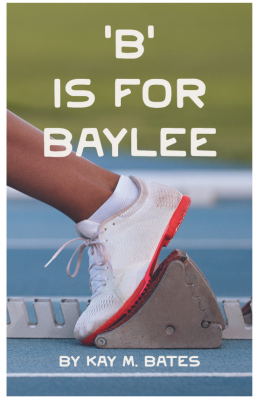
  • B is for BAYLEE by Kay M. Bates – Middle-Grade Fiction, Middle Grade Blindness Books, Middle-Grade Adventure Books

    B is for BAYLEE by Kay M. Bates – Middle-Grade Fiction, Middle Grade Blindness Books, Middle-Grade Adventure Books


    CIBA Gertrude Warner Middle-Grade Readers Awards Semi-Finalist round gold and green badge.

    Kay M. Bates delivers an inspiring middle-grade reader focusing on a young girl who suffers a severe injury that takes her life in a new and surprising direction in B is for Baylee. Along the way, she faces opposition, ridicule, and challenges. Still, she discovers the importance of determination and the actual value of friendship and acceptance when life throws you an unexpected curve.

    Twelve-year-old Baylee Harker plays first base in a Stoutland city league softball game when an errant ball strikes her. The unfortunate incident sets in motion a series of events that take her on a physical and emotional roller coaster ride of dealing with sudden vision loss and its life-changing repercussions. Between the hospital, emergency surgery, and subsequent visits with eye specialists who offer little hope for improvement, Baylee’s diagnosis: legally blind. Though she can see illumination and washed-out color with her right eye, she lacks visual acuity. The left eye offers fuzzy vision with black splotches across her visual field. Soon she’s wondering, “Will I be like this the rest of my life?”

    At home, Baylee is a typical “tween,” but her blindness compounds frustrations. Bates presents loving, though sometimes over-protective parents and close-knit siblings who help Baylee adjust to the situation. Bates smartly delivers Baylee’s mix of emotions and allows readers to feel it all: angst, fear, and exhilaration. Baylee’s disappointed at the closing of a favorite taco eatery; she’s concerned about descending a staircase on her own, and her anger at the disastrous results in attempting to make mac & cheese drives the story forward. But it’s joining a family sledding excursion that revives her exhilaration for the outdoors.

    Returning to school may be fun.

    A return to school and the world-at-large soon has Baylee realizing the frailties of human nature. Comments from a hair-flipping, so-called friend Margaux like, “Poor thing” and “… just faking it,” or a tense but ultimately humorous encounter with a parking lot bully emphasize the lack of knowledge and often little respect towards physically challenged individuals. In counterpoint, encouraging comments from a teacher suggest that Baylee’s injury might lead to other opportunities. “Keep your chin up, stay tough,” prove well-meaning words with an advantageous edge. With the help of a compassionate braille instructor and classmate, a mentoring track coach, and newfound friends, Baylee learns to navigate both life’s literal and figurative hurdles as she works to regain the parts of her identity she lost along with her eyesight.

    The story is heavy on conversational dialogue, which seems appropriately reflective of the subject matter. With limited vision, Baylee must adapt to a world where sound is now at the forefront of her life. Here a moment of sitting against an amplifier proves a stress reliever. She even turns her reliance on audio/verbal cues into a game by matching the voice of a person.

    Bates drew on her own experience to write a story that focuses on the main character’s loss of sight. Bates herself once dealt with severe vision impairment due to rare complications occurring after eye surgery. She now has full vision.

    While visually impaired individuals must face their unique journey, this book offers particular insight and perspective for those newly coping with such a sudden life change, as well as those around them. Triumphantly ”B” is for Baylee reflects not only the harsh realities of a blindness diagnosis, but it positively showcases the opportunity for hope and winning achievement.

    ”B” is for Baylee placed semi-finalist in the CIBA 2019 Gertrude Warner Awards for Middle-Grade Fiction.


    5 Star Best Book Chanticleer Reviews round silver sticker

  • EUDORA SPACE KID: The Great Engine Room Takeover – Book 1 by David Horn – Science & Math Adventure Children’s Books, Action/Adventure Books, Sci-fi Series Children’s Books

    EUDORA SPACE KID: The Great Engine Room Takeover – Book 1 by David Horn – Science & Math Adventure Children’s Books, Action/Adventure Books, Sci-fi Series Children’s Books


    Young readers with a penchant for math, science, and engineering are sure to fall in love with David Horn’s new Eudora Space Kid series. With the premiere story of The Great Engine Room Takeover, readers meet a precocious third-grader and her mad-cap adventures in outer space.

    Eudora Jenkins lives aboard a multi-level Astroliner called the Athena and hopes to be its chief engineer someday. The Athena is the flagship of the Astrofleet, a science and defense force for the Planetary Republic, which comprises twenty planets working together to make the galaxy a better place for all living things. Early on, we learn that aliens adopted both Eudora and her older sister Molly. Their new Mom resembles a beautiful gray wolf from the dog-like species of the planet Pox, and their father, Max, looks like an octopus and hails from planet Pow.

    Through an imaginative first-person narrative, this “most awesome girl” draws us into her space domain.

    Looking for more than a typical childhood existence aboard this flying craft, Eudora’s latest desire is to figure out how to increase the speed of the Athena. After hacking into the spaceship’s PA system, Eudora’s enticing birthday party announcement works as a ploy to empty the engine room. Here she applies her formulas and makes adjustments at the computer terminal in an attempt to break the Astroliner’s speed record.

    In Eudora’s funtastic, futuristic world, we meet all types of innovative technology and fabulous new friends.

    For example, her pet drago named Bologna appears as a cross between a bunny and a dragon.  Young readers will discover electropad devices that hold all the students’ books, notes, and work – and hear tales of exploding pumpkins that wreak havoc on a fuel storage chamber. Not only is this a book that fits in well with the STEM programs now in many educational curriculums, but the story quickly touches on an array of themes, from sibling rivalry and family variations to lessons about learning from our mistakes.

    Laced with humor, Eudora comments to her audience, “And you thought your parents were weird!”

    An opening illustration by Talitha Shipman sets the stage with a spaceship flying amidst a star-studded galaxy.

    Readers will see lion and octopus-headed creatures and a being with Spock-like pointed ears. Details in the artwork throughout the book capture the extreme facial expressions of these spacecraft residents. Eudora’s gleeful look while destroying an asteroid at the push of a button changes to a disgruntled frown when the captain reprimands her. The final pages offer a creative word search puzzle, and the audience also learns that more cosmic adventures with Eudora are on the way.

    Eudora Space Kid: The Great Engine Room Takeover will indeed win an audience among inquisitive, inventive-minded youngsters who like to push boundaries and reach for the stars.

    5 Star Best Book Chanticleer Reviews round silver sticker

  • SEVEN APRILS (American Civil War Brides Book 1) by Eileen Charbonneau – U.S. Military Romance, American Civil War Brides, Historical Romance

    SEVEN APRILS (American Civil War Brides Book 1) by Eileen Charbonneau – U.S. Military Romance, American Civil War Brides, Historical Romance


    Laramie Western Fiction 2019 Grand Prize Winner Seven Aprils blue and gold badgeDisguised gender identities, warfare, and thwarted romance all play a role in this many-layered novel, Seven Aprils, by award-winning fiction author Eileen Charbonneau.
    When Tess Barton, a hardscrabble farm girl, saves the life of a man attacked by a panther, she and he little realize how fated this encounter will prove. Ryder Cole, the man she saved, moves on, pursuing a medical career just as the United States seems destined for war. Intrepid Tess will move on, too, when she learns that her widower father sells her in matrimony to an old, brutish shopkeeper. A wise crone cuts Tess’s hair and garbs her in men’s attire. Reborn as Tom Boyde, who will soon, strangely, meet up with Ryder and become one of his “men,” conscripted into Lincoln’s armies. Tess/Tom shows promise as a medical assistant with some undeniable cooking skills, and together with two other conscripts, they make the team in the Union’s army hospital units.

    Things change again for Tess when she and the others visit a brothel in Washington, DC.

    The madam spies a young woman in Tess/Tom right away. She dresses and perfumes Tess and sends her to Ryder.  As for Ryder, he’s not stopped fantasizing about the huntress “Diana,” who saved him from the panther. As this strange link develops, Tom helps Ryder write to his “sister” Tess since Ryder has feelings – for Tom – that can only be assuaged by the hope of meeting the young man’s female twin someday. Meanwhile, their sexual affair blooms. Diana/Tess will meet Ryder only in darkness, though, and Tom/Tess serves mysteriously as their go-between. When the war ends, Ryder, assuming Tom to have been killed, feels compelled to seek out Tess, who has meanwhile met the Underground Railroad founder, Harriet Tubman, and has more than one surprise for her former lover and comrade-in-arms.

    Seven Aprils feels a lot like the mistaken identities and disguises found in a romping romantic Shakespeare comedy.

    The plot, undeniably complicated, appears in seven phases – beginning in 1860 with Tess and Ryder’s first encounter and concluding in 1866. When done with subterfuge, the two can finally see each other in complete honesty. The novel abounds with what is clearly the author’s deep commitment to historical fact. Many women disguised their physic to serve in the war.  The scenes of army medical care, savage as it had to be under the harrowing circumstances, are founded on real accounts. And the background of noted battles and locations is drawn from the annals of recorded history.

    If the tale seems a bit too fanciful, how could Ryder not see that Tom was a female at some point in their mixing?  Held together by the reader’s own wish to have it so, readers have a chance to sit back and enjoy the show. So long as Tess/Tom can sustain her/his deception, there will be a gripping war chronicle and a sensual love story on the boil. And in the end, Charbonneau deftly ties up all the threads, leaving an opening (this being Book 1) for more such dramas to play out in the future. Seven Aprils took home the CIBA Laramie Grand Prize for the Best Western Romance novel in 2019.

    5 Star Best Book Chanticleer Reviews round silver sticker

    Gold Foil Laramie Grand Prize Book Sticker


  • SHAPING PUBLIC OPINION: How Real Advocacy Journalism™ Should be Practiced by Janice Ellis, Ph.D. – Media and Internet Politics, Political Advocacy, Human Rights

    SHAPING PUBLIC OPINION: How Real Advocacy Journalism™ Should be Practiced by Janice Ellis, Ph.D. – Media and Internet Politics, Political Advocacy, Human Rights


    Shaping Public Opinion Grand Prize Nellie Bly Blue and Gold Badge

    Janice S. Ellis, Ph.D., introduces the journalistic theories of Walter Lippmann in her new non-fiction work, Shaping Public Opinion: How Real Advocacy Journalism™ Should be Practiced.

    Walter Lippmann, considered one of the foremost journalists in the field over the last 100 years, was a mentor in absentia of Dr. Ellis in the art of advocacy journalism. During Lippmann’s 40+ year career, his columns were syndicated in over 250 newspapers nationwide and over 25 other international news and information outlets. Lippman focused on the ethical dissemination of information, especially about communities, society, and the world. A theory, which Dr. Ellis calls Real Advocacy Journalism.

    Real Advocacy Journalism theory pertains to foundational behavior and ethical standing for those who report on, translate, and share information with the masses. This theory identifies the tension between individualism and collectivism, the private sector and public sector, the ruling elite, and the dormant masses.

    Real Advocacy Journalism™ eschews demagoguery and tribalism for a belief that reason, logic, facts, truth, and clear graphic language are the most effective instrument of public persuasion.

    Remarkably well researched, Dr. Ellis shows throughout the book how Lippmann identified challenges to factual sharing of information and how he spoke to the importance of choosing words wisely.

    Three tasks every journalist must consider in the pursuit of Real Advocacy Journalism, 1—separate words and their meanings in order to disentangle complex ideas, 2.-be effective at creating a visual picture to explain the words and concepts used, and, 3.-have a good understanding of the traits and characteristics of the target audience.

    Lippmann knew the impossible task of considering everything that the typical listener may utilize in their life as a filter of information. As the audience grows, the number of common words and references diminishes. The information becomes more abstract, lacking a distinct character of its own. This phenomenon leaves the general audience to interpret the message as they see fit, not necessarily equal to the original information. Age, race, gender, social standing, mood, and “his place on the board in any game of life he is playing” inform how information is understood.  The journalist must set the highest goal to clarify, evaluate and draw conclusions for readers and listeners too preoccupied or too removed from the actual events to judge clearly for themselves.

    The problem occurs when the constant feed of partial information is based on opinion and not wholly on facts.

    Information in its most proper form may be perceived as dull and uninteresting. To gain viewers, “opinion news” sources have become increasingly personal and deliberately dramatic to stop the viewer from tuning out or turning the channel. Not having the time, energy, or understanding to draw their conclusions, the listener accepts this partial information as truth.

    Ellis cites Robert O. Anthony as saying, “The secret to Lippman’s ability to reach such a wide audience lay in his expert understanding of the information, his reasonableness of temper, his complete honest and profound attachment to the principles of liberty.”

    Lippman’s “survivors,” Kennedy, Schlesinger, and others claim Lippman taught them how to think.

    He perfected a rare ability to impose verbal order on chaos. Even when wrong, corrected, or later expanded on, the goal was not to be the only voice but to be like “the village light post.” Ellis’ book exposes the dangers of “opinion news” and how very counterproductive “celebrity journalism” truly is, as it puts profits and popularity (ratings) over actual truth.

    Ellis encourages readers to research and discover the meaning of the words being used to grasp the whole picture of what any news source presents. Shaping Public Opinion: How Real Advocacy Journalism™ Should Be Practiced won Grand Prize in the 2019 CIBAs, Nellie Bly Awards for Longform Journalism.


    Chanticleer Book Reviews 5 Star Best Book silver foil sticker


  • The DEVIL PULLS the STRINGS by J. W. Zarek –  Young Adult Epic Fantasy Adventure, Young Adult Fantasy Action Adventure, Young Adult Urban Fantasy

    The DEVIL PULLS the STRINGS by J. W. Zarek – Young Adult Epic Fantasy Adventure, Young Adult Fantasy Action Adventure, Young Adult Urban Fantasy


    Overall Best Book of 2021 Grand Prize Badge for J.W. Zarek's The Devil Pulls the StringsThe protagonist and all-around decent guy, Boone Daniels, is in a heap of hurt in JW Zarek’s new Young Adult novel, The Devil Pulls the Strings.

    One would think being plagued by an evil spirit wendigo since age six would be enough inconvenience to last a lifetime, but when Boone jousts with his best bud at a Ren Faire and accidentally deals a mortal blow, the hurt he experiences suddenly lands on a sliding scale of 1 to 1 million. And Boone Daniels becomes a millionaire, so to speak.

    No ordinary guy, Boone makes a living as a handyman and swashbuckling knight at Renaissance Faires around Missouri. He’s also uniquely gifted with a form of eidetic memory coupled with synesthesia. What’s that? Simply put, synesthesia allows people to see colors and taste things when they hear music – and an eidetic memory allows folks to memorize whatever they’ve seen or heard one time. But that’s not all. Boone can time-travel, make friends with almost any feline or shapeshifter, and convince a certain immortal he’s worth more as an ally than a snack. No kidding, Baba Yaya loves human meat.

    After wounding his best friend, Boone promises to fill in for him as lead vocalist in the band, The Village Idiots, for a major gig in New York City.

    The gig caps off the Dragons and Nymphs Annual Charity Ball – a blood drive. (The irony of this will make readers chuckle.) After the band plays, a mysterious score of music by Niccolò Paganini will be played by the best violinist of the time, who also happens to be Boone’s fast-friend-confidant-maybe-girlfriend-we’ll-have-to-see, Sapphire Anjou. Sapphire, the French Ambassador’s daughter, has connections that tie her deeply to the Lavender and Rose Society. There’s more to these societies. The Dragons and Nymphs want nothing but destruction and chaos, while the Lavender and Rose Society maintain order and work to keep people alive. And both societies seek the magical score. You see, no one actually has the Paganini sheet music. It’s a mystery and plenty of people die and get maimed in the pursuit of the piece, but finally, just in the nick of time, Boone and Sapphire obtain it.

    What’s so special about this piece of music?

    It’s magic, of course! Whoever plays the Paganini score can summon anyone they want. The Dragons and Nymphs want it to summon Ambrogio, their Vampire All-Father, who now resides in Hell. One immortal wants it to free her sister, who’s been caught in a pocket universe (you’ll have to read the book to figure out what that means). And then there’s the nefarious all-around baddie, Ambrozij Sinti, humiliated as a young boy, who now seeks his revenge by using the Paganini piece to summon the Devil himself and destroy the world. The stakes are high, and there’s no time to lose.

    Told in first-person by hero Boone Daniels, J. W. Zarek spins an epic fantasy with tons of action, adventure, and folklore.

    His writing peppers readers with alliteration in trios, that serve to tighten phrasing to speed up action scenes, evoking visceral responses. Readers feel the panic Boone feels as the world closes in around him. Does it work? Like a charm. Almost perfect, readers will surely love this first in series, epic fantasy world and fall in love with Zarek’s leading man because of it.

    Somewhere between The Librarians meets The Magicians – mixed with the flawed hero archetypes of Jim Butcher’s Harry Dresden and Harold Hearne’s Atticus O’Sullivan, Zarek’s hero brings fans of the genre something new to dig their teeth into – and that’s an excellent thing. Fans will be thrilled to learn that the novel will release in Graphic Novel format soon!

    The Devil Pulls the Strings won a whopping four Ribbons at the 2021 CIBA Ceremonies, a First Place Ribbon in both Ozma and Cygnus, as well as the Grand Prize in Paranormal, and the Overall Best Book of 2021 for the Chanticleer Int’l Book Awards!

    Chanticleer Book Reviews 5 Star Best Book silver foil sticker


  • A YEAR of LIVING KINDLY: Choices that will Change Your Life and the World Around You by Donna Cameron – Spiritual Growth Self-Help, Happiness Self-Help, Communication and Social Skills

    A YEAR of LIVING KINDLY: Choices that will Change Your Life and the World Around You by Donna Cameron – Spiritual Growth Self-Help, Happiness Self-Help, Communication and Social Skills

    I & I Instruction & Insight Non Fiction 1st Place Best in Category for A YEAR of LIVING KINDLY

    Donna Cameron’s guide, A Year of Living Kindly: Choices That Will Change Your Life and the World Around You, invites readers to live more richly, thoroughly, and fruitfully.

    Perhaps the best way to enjoy Cameron’s guide to kindness is to drink it in slowly, for a year, as its structure suggests. Savoring one of its 52 meditations – thoughtful, introspective, resonate, and wide-ranging discussions – each week. She turns to a new topic grouping with the advent of each new month, traversing the four parts, the “seasons,” as the year progresses.

    Of course, as Cameron will tell you, living a year of kindness is not, in the end, enough; it’s a journey suited to a lifetime. But the habit of it, the joy of it, can take root throughout a year.

    Based on the experiences of its author, the book’s foundation lies in the work of a lifetime of nurturing nonprofits and championing causes from the varied perspectives of executive, consultant, trainer, and volunteer. The guide incorporates observation and situates itself also in research. In and among her insights, Cameron weaves the thoughts, studies, and findings of cultural anthropologists, philosophers, physicians, psychologists, investigative journalists, mindfulness experts, and other teachers. The source notes at the back are modest enough to be accessible to those outside academia, yet extensive enough to show sinew.

    So that readers might more easily incorporate these habits of thought into their own lives, each meditation ends with a Kindness in Action exercise. Together, these exercises are the passageways to reshaping ourselves.

    The four seasons – Discovery, Understanding, Choosing, and Becoming – mirror the natural contours of such a journey.

    In Discovery, we learn about kindness: what it is and what it isn’t, the health benefits that being kind grants, how we might begin to be truly warm and caring. In Understanding, we learn the barriers to kindness – from within and without and delve more deeply into opening ourselves to this way of encountering the world. In Choosing, we explore the courage that kindness can take, the roles of vulnerability and curiosity – yes, curiosity – play, and what it means to extend compassion to all, including standing up to bullies, online and off. In Becoming, we settle in to look soberly at the challenges, at what we might do to create a kinder world, and at what it means to live in kindness every day.

    This structure makes for a powerful presentation and easy entry into the eddies and currents of these gently meditative discussions. But it is not, as Cameron herself notes, necessary to follow a linear path. A reader could just as quickly open the book and flip to any point within it to encounter something rich and thought-provoking to ponder that day, that week, that month.

    In this journey to kindness, we might each of us follow whichever path calls to us.

    Giving our whole selves to kindness helps us to become whole.

    A Year of Living Kindly is a generous book brimming with open good-heartedness and calm practicality, with guidance firm yet gentle. Wise, yet itself kind. Cameron undertakes her journey from a position many would recognize – not so much unkind as hurried, distracted, disengaged. Perhaps in the habit of being, when the situation calls for it, “nice.” Civil, not especially warm. Cautious, not connected.

    Cameron invites us instead to be open to the world. To be generous with our time and our talent, in word, deed, and spirit. To be aware of and awake to others. To be fully present. To be, fully.

    She invites us to embrace kindness as a way of embracing life. Adopting the “mantle of kindness,” she says, will enable each of us to enjoy more entirely in the abundance of our own lives and in the richness the world has to offer. Such a journey connects us more deeply with ourselves and others, enabling us to live our best lives. And such kindness spreads. When we give so wholly of ourselves, others tend to take that gift and pass it along.

    The case she makes is compelling. The message, timely. It’s an invitation that’s difficult to resist, particularly in the company of such a guide. In the world it seems we’ve all been hurtling toward in the past five years or so, Donna Cameron’s steady voice and clear-eyed vision is a balm for the soul.

    Perhaps, just perhaps, with enough kindness, we might indeed remake neighborhoods, remake communities, and transform the national temper.  A Year of Living Kindly placed 1st in Category in the CIBA 2019 Instruction and Insight Awards for Non-Fiction How-To manuals.


    5 Star Best Book Chanticleer Reviews round silver sticker

    Non-Fiction Instructional & Insightful Chanticleer Int'l Book Awards 1st Place Winner

  • SOMETIMES WHEN I’M MAD by Deborah Serani, Psy.D. – Children’s Self-Help Books, Children’s Books About Anger, Children’s Books with Reader Guide

    SOMETIMES WHEN I’M MAD by Deborah Serani, Psy.D. – Children’s Self-Help Books, Children’s Books About Anger, Children’s Books with Reader Guide


    Sometimes When I’m Mad, “… it’s because everything goes wrong,” is the enticing opening phrase of psychologist Deborah Serani’s informative children’s book. It explores the emotion of anger and helps youngsters identify and cope with this often uncomfortable feeling.

    Here we meet a dark-haired girl with spiky pigtails who is easily frustrated by the day’s happenings. Whether a spilled glass of milk, a frantic search for a toy, or discontent when a friend doesn’t come over to play, sharp images of a furrowed brow, snarling face, or pouting lips tell the story. Concerned parents, grandparents, and a teacher soon help this youngster realize that simple actions can help remedy and manage her anger. Ultimately a talk or fun activity, a nap or hug, or sometimes even an apology can calm the inner turmoil and make an individual feel better.

    Kyra Teis’s artful illustrations beautifully complement the straightforward narrative.

    The opening background of a lined and spattered wall seems intentionally reflective of the tumultuous subject matter. Details like a crossed arm stance, ears covered to avoid listening, or the rising blush in cheeks when attempting to put on a pair of socks all prove indicative of the child’s building frustration. The color palette is natural yet toned down. For appropriate contrast, the central character’s bright red shirt and shorts and an orange sweatshirt draw the reader’s attention and accentuate the young girl’s intense upset. A final smiling image, where she dons cool-green attire and pets her ever-present, inquisitive feline, helps bring an element of soothing comfort to the storyline.

    The book’s final pages guide concerned adults looking to help a child deal with their emotions of anger. Learning to understand it can prove a transformative, healing, and empowering force. Serani smartly explains how the negativity of anger may appear as many physical symptoms like headaches, stomachaches, appetite, and sleeping problems. Anger unmanaged can also contribute to academic difficulties, as well as social and emotional concerns. Ideally, learning to express anger in adaptive ways will help build confidence and allow children to experience greater physical and emotional well-being.

    Serani also points out that anger can manifest itself differently within each child, but there are specific patterns to look for within the developmental stages of specific age groups.

    Treating children with respect, helping a child understand that anger is natural, encouraging open and honest communication, and providing age-appropriate consequences for aggressive behavior are also noted as methods to help promote healthy emotional expression. Special needs challenges such as ADHD, Autism, or learning disabilities may also influence a child’s anger. Likewise, if a child’s anger becomes more frequent and intense, consultation with a mental health professional or specialist may be in order. Also included is a list of various organizations offering information and support.

    An easy read intended for the 4-8 age group, Sometimes When I’m Mad proves an intelligent choice that delivers positive reinforcement and direct ways to handle complicated feelings that can stir within us at any age. Highly recommended.

    5 Star Best Book Chanticleer Reviews round silver sticker

  • I, TARZAN: AGAINST ALL ODDS by Jean-Philippe Soulé – Adventure Memoir, Overcoming Obstacles, Inspirational Memoir

    I, TARZAN: AGAINST ALL ODDS by Jean-Philippe Soulé – Adventure Memoir, Overcoming Obstacles, Inspirational Memoir

    In his adventure-infused memoir, I, Tarzan: Against All Odds, Jean-Philippe Soulé recalls a difficult childhood, fractured and sometimes anger-laced teen years, and remarkable adult accomplishments that continue to the present day.

    A child of the 1960s, born in France, Jean-Philippe learned many of life’s lessons through the early medium of television, watching the real-life exploits of Jacques Cousteau and the fantasy heroism of Tarzan. While Cousteau became a life-long role model for Soulé the man, the boy set up ropes to swing from in the backyard – much to his mother’s horror. Both role models, however, influenced Soulé to embrace the outdoors. His acerbic father took him on sailing excursions from time to time, increasing the boy’s sense of the challenges of nature.

    Challenges helped Soulé discover his resources and strengths.

    At a young age, the introverted Soulé wore glasses and became targeted by bullies, making his life at school hell. Nevertheless, he excelled at sports, proving himself the best runner in the school. Facing inevitable draft induction by age 18, Soulé longed for the opportunity to join the elite French Mountain Commandos, a small Special Forces unit of the 27 BCA. However, his chances were very slim as he had only a few weeks of experience in mountain climbing, and the highly lauded unit was at the time — and remains — a very exclusive military branch. Soulé put his incredible willpower to the test. Once allowed to compete, he so impressed his superiors with physical feats that he not only made the selection but also received rare promotions, participating in harrowing rescue and recovery missions in life-threatening conditions.

    The 27 BCA offered Soulé a long-term contract.

    Soulé debated about whether to accept the contract. At the end of the day, he refused the position. With scant funding, he decided to embark on the life of world exploration that he’d dreamed of as a child. Making his way to the US by various means, he joined the Microsoft team in its heyday. Outside of work, he met other intrepid men like himself. He learned diving and became an instructor — and even earned his recreational pilot’s license, something he’d been told he’d never be able to do because of poor eyesight in his right eye. At the age of twenty-six, Soulé resigned from Microsoft, ready to travel the world in earnest.

    I, Tarzan: Against All Odds, a truly inspirational and powerful memoir, conveys an invaluable message: if one determines a goal and pursues it without compromise, one will succeed. Soulé transports readers onto the scene of his many adventures. We feel what he feels, experience what he does in the truest sense, and delight in the ultimate reward of witnessing his personal growth in self-esteem and accomplishment. I, Tarzan, simply put, is the most inspirational memoir of the year. A final wrap-up includes color photographs of the author with the Indigenous peoples he’s met in the various countries he’s explored. In a brief Epilogue, he offers this hard-acquired wisdom: “If we choose to live our true life, no matter the odds, we can all be Tarzan.”


    5 Star Best Book Chanticleer Reviews round silver sticker


  • MY ONLY SUNSHINE by Lou Dischler – Humorous Fiction, Dysfunctional Family Humor, General Humor

    MY ONLY SUNSHINE by Lou Dischler – Humorous Fiction, Dysfunctional Family Humor, General Humor

    Lou Dischler delivers an intricately woven story about one well-meaning boy who tries to make sense of the crazy he’s been born into. Get ready for one belly laugh of an adventure in My Only Sunshine.

    Welcome to the Louisiana low country, home of 9-year-old Charlie Boone, a kid growing up in 1962. Charlie, a most unreliable narrator, concerns himself with giant wingless wasps and biting red velvet ants. Combine his critter-concerns with the legend of the giant slugs, the story of his mother taken up by a hurricane, and the episode of the puddle he and his brother dug that grew into a pond, then turned into a lake, and we have one wildly imaginative ride well-worth taking.

    Dischler delivers an epic tale that shifts from Charlie’s first-person point-of-view with his youthful ignorance coloring his observations to his Uncle Dan’s and “Aunt” Lola’s in third-person point-of-view. While Charlie ages and grows in wisdom as the story progresses, his uncle never seems to gain a lick of sense. Dischler skillfully applies the laws of magic realism to Charlie’s wonderful way of viewing his world. Uncle Dan’s story, on the other hand, derives from an inept conman’s rap-sheet – from failed grifts to bank robbery bungles that succeed only by accident. Dischler guides us, normalizing the ridiculous to the point that the characters jump off the page and set up camp in your living room.

    Charlie and his family come richly drawn.

    Altogether, the story lands somewhere between Stand by Me meets Bonnie and Clyde combined with an over-the-top sense of humor. Charlie’s easy banter transports us from the classroom to the lake, which becomes a vivid metaphor for his life. Through it all, readers experience the naïve confusion in Charlie at his uncle’s supposed wife, the Tijuana Bibles – more porn than scripture, and his uncle’s frequent disappearances. Dischler casts his spell, causing us all to fall for this 9-year-old boy and want to see what happens next.

    My Only Sunshine shines brightly.

    In the end, Dischler weaves the threads of this story into a fine cloth of satisfying, dysfunctional family love. Top that off with Charlie’s determination to find his mom no matter the outcome, and this novel shines like a gem. Readers can’t help but root for Charlie to catch a break, find his mom, and become the young man his destiny calls him to.

    This rollicking novel will keep readers up at night, rehashing the escapades of one young southern boy, someone to whom we can all relate. Charlie’s a well-meaning kid who makes mistakes. He’s human, after all, just a kid whose mission unfolds in hysterical detail on every page. Dischler’s My Only Sunshine comes highly recommended as a laugh-out-loud read with some thought-provoking issues on the side.


     5 Star Best Book Chanticleer Reviews round silver sticker

  • FATAL INFRACTION (Mike Stoneman Thriller Series #4) by Kevin G. Chapman – Thriller/Suspense Fiction, Police Procedural, Crime Thrillers

    FATAL INFRACTION (Mike Stoneman Thriller Series #4) by Kevin G. Chapman – Thriller/Suspense Fiction, Police Procedural, Crime Thrillers

    Football, love, racism, and murder are the subjects of interest Kevin G. Chapman uses in his latest crime novel, Fatal Infraction.

    Racial tension, throwing the game, and a love triangle all play a part in why the team’s controversial quarterback, Jimmy Rydell is dead. NYPD homicide detective Mike Stoneman and his partner, Jason Dickson, put their personal lives on hold after Rydell’s body turns up frozen in New York City’s Central Park. Who hated Jimmy enough to end his life? Readers soon find out what made the quarterback a possible target.

    The brutal way Jimmy dies drives the cops to chase any lead on every turn of the page with little evidence to go on. Waiting for the body to thaw leaves time for the cops and detectives of the NYPD to question all involved, including team members, girlfriends, Jimmy’s agent, and friends.

    How many times does a first-round draft pick end up dead in a metropolis like New York City?

    As the community becomes more agitated due to racial tension, the news reporters hound the players and people of interest to get the best insight and first story – the details of the murder. The sports reporters play the game, too, but they have an in with the players’ lives that the other reporters and the cops do not. Through myriad lies and deceptions, one truth becomes clear – someone is hiding something, and the cops and detectives know it.

    When the detectives uncover the murder of a possible witness and friend of Jimmy, the plot thickens. Can the detectives save a life while also solving the murder? That’s a question readers will find out for themselves.

    In the midst of the murder investigation, Jason and Mike face their own challenges that deepen each character’s growth and carry the series forward. Those subplots and several others weave a tapestry of topical social issues into the murder mystery. Although Fatal Infraction is the fourth book in the Mike Stoneman series, it stands on its own as a strong, relevant who-dun-it that will undoubtedly lead new readers to the first book in the series.

    Chapman’s style of storytelling and his extraordinary attention to detail in this present-day crime novel leaves no topic unturned before the murder of famous quarterback Jimmy Rydell is put to rest. The dialogue and prose of this intense crime novel resonate with authenticity and a style all its own. In short, Fatal Infraction will capture readers’ attention from the beginning to the end – with no timeouts.

    5 Star Best Book Chanticleer Reviews round silver sticker