Tag: Chanticleer 5 Star Book Review

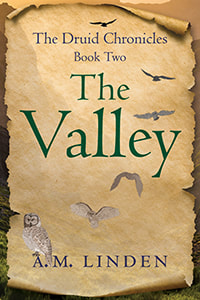
  • The VALLEY (The Druid Chronicles Book Two) by A.M. Linden – Medieval Historical Fiction, Alternate Religions Historical Fiction, Ancient Civilizations Historical Fiction

    Herrwn, Chief Priest of a secret Druid community, has spent his entire, privileged life in Llwddawanden, a secluded valley kept separate from the spread of Christianity from both Saxon and Celt alike, in A.M. Linden’s The Valley (The Druid Chronicles, Book Two).

    Nonbelievers of the Great Mother Goddess threaten inevitable persecution. But Herrwn has maintained the traditional practices passed to him by his own father. As an orator in charge of repeating the legends and beliefs of his people, he knows the importance and the heavy responsibility required by his sacred office. With the decrease in believers outside of the valley, he understands the precarious position of the community and the difficult balance he must maintain.

    Over the course of his long life, he has come to rely on his cousins, Olyrrwd (Chief Healer) and Ossiam (Chief Oracle). Still, as the years pass, his loyalties become torn when what starts as simple gibes between the two priests morphs into unspoken fear of what the other might do to gain favor with the various priestesses chosen as the Goddess Incarnate. Having lost his beloved wife and young child, Herrwn grows closer to Olyrrwd and becomes the peacekeeper between the priests to keep what remaining family he has left.

    When a promising young man, Caelym, the son of a former Goddess Incarnate, becomes the sole priest-in-training, the cousins further divide on the right course of action for the clan. At each turn, dissension and sedition threaten every belief and tradition that holds the people together, and Herrwn will have to make decisions that could change the course of his community forever.

    One notable strength of this prequel lies in Linden’s character development.

    Herrwn becomes real as his life story unfolds. The tragic loss of both Lothwen, his consort, and Lillywen, his young daughter, forge him into a contemplative and thoughtful character. The reader will feel his grief through his shared memories of their time together and the depth of the love that ran deep enough to keep him from ever becoming the consort of any other woman nor the father of any more children.

    The remembrance of his doting and proud father’s advice and the love of a mother long gone will resonate with readers. We witness his strength and forethought as he tries to soothe the growing tensions and tread the choppy waters of change surging through his once-tranquil life. However, Herrwn is only one of many such characters so well developed that they seem to leap from the pages into real life.

    Olyrrwd, the physician combining herbal and ritual healing, is another such character.

    His charm and humor will make him a reader-favorite with his sarcastic, albeit pithy comments. As the novel continues, the two become closer than just their familial bonds of cousins. Each is a sounding board for the other, and their relationship is reminiscent of that one friend every person has–the one who understands without words and knows us better than we know ourselves.

    However, the mixture isn’t complete without a bit of chaos, and that is where their cousin Ossiam takes the stage.

    The reader will love to hate him as much as Olyrrwd does in that classic villain way, second-guessing his every move and questioning his every motive. With his charismatic control over the young Goddess Incarnate and his scheming to gain more than her favor, he is a perfect catalyst to the majority of the boat-rocking that disturbs both cousins’ lives. This collision of values causes Herrwn’s peacemaker qualities to emerge.

    The ongoing battles between Olyrrwd and Ossiam create a palatable tension and serve to drive the force within the plot itself. It also reminds the reader that although millennia separate Herrwn, Ossiam, and Olyrrwd from the modern world, people are essentially the same. Fear, anger, love, hate–the emotions that make us human are the same as those of every human, creating a surprising connection to these pagan Druids.

    A theme within this frame story prequel revolves around change and its impact on human relationships and cultures.

    Right from the start, the Druid clan fights a dramatic shift within the Saxon kingdoms surrounding their valley. Set during the spread of Christianity and the turning away from pagan gods and goddesses, the sacred shrines and villages retreated into an even more secluded region.

    For many years, their isolation kept away the influences brought by Roman occupation; however, as more and more Saxons converted, the worshipers of the Mother Goddess began to follow suit, including members of Herrwn’s own family. Believers begin to defect and lose faith.

    For a Chief Priest set to educate future priests to pass on their very heritage, these changes literally show the end of an ancient religion. He must watch the foundation of his life shift and begin to crumble.

    Every choice and every thought is consumed with rituals that are fast becoming meaningless. Reconciling–much less accepting–these changes will cost Herrwn more than a sleepless night. Not only is the clan facing a loss of faith, but the mature priest must also learn to live with a younger generation that seems to disregard many of the traditions he is fighting so hard to save.

    From a Goddess Incarnate chosen for her beauty rather than wisdom to her blood-thirsty consort challenging better trained and better equipped Saxon enemies, the generation set to lead poses a change to the somber, thoughtful people of Herrwn’s youth.

    With the attention to detail, explanation of ancient rituals, and the mythology within the clan’s legends, this novel builds a community, exploring a people about which little is actually known. It’s an extraordinary portrayal, breathing life into a long-dead civilization. Readers feel Herrwn struggle as he endeavors to keep a secret Druid community alive, fracturing from within, persecuted from without by the spreading Christian church. Highly recommended!


    5 Stars! Best Book Chanticleer Book Reviews


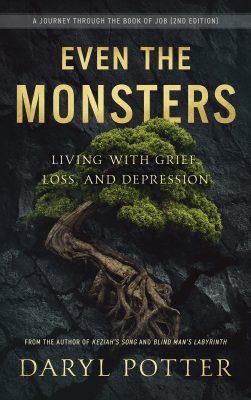
  • EVEN the MONSTERS. Living with Grief, Loss, and Depression: A Journey through the Book of Job (2nd Edition) by Daryl Potter – Personal Transformation, Coping with Grief, Christian Studies


    Meticulously researched and written, Even the Monsters. Living with Grief, Loss, and Depression: A Journey through the Book of Job (2nd Ed.), by Daryl Potter, goes well beyond a self-help book, a religious treatise, or an evangelical statement of faith.

    Linguists, historians, philosophers, geographers, sociologists—the list goes on—will find Even the Monsters… fascinating. In addition to appealing to a plethora of interests, the book also serves as a memoir of sorts. The author has interwoven biographical information regarding seemingly overwhelming, ongoing challenges to which the wisdom he found in Job was applicable, enabling his family to survive intact.

    Almost immediately, when beginning Even the Monsters. Living with Grief, Loss, and Depression…, the reader is captured by the voice. Potter’s attention to the details of Job’s life, considered in light of the customs and values of the society in which he lived, establishes a setting and mood to which the reader can relate. Each of the 1,070 verses in the book of Job are presented, parsed, and discussed in light of Job, the man.

    The author’s stated rationale for this approach makes perfect sense:

    “… when it comes to books about the Bible and personal spiritual growth, the scholarly and the practical are separated by an unacceptable divide. The depth in the academic literature is obtuse and inaccessible to the nonacademic [sic]. Accessibility in the more personal accounts often sacrifices accuracy [sic], richness, and lasting meaning by mainly focusing on emotional and subjective material. The scholarly cannot be easily digested, and the popular supplies inadequate nutrition.”

    The reader comes to know this man personally. Potter takes the time to explore Job’s life as if in real time. How must he have felt when each tragedy befell him and his family? How might he have reacted? What did those in his social circle think of his misfortunes? Potter asks the kinds of questions people today ask themselves when struck by unexpected or unwarranted adversity and extrapolates from the “what happened next.”

    In this process, along with revealing Job, the man, the author also reveals and reaffirms those qualities, often unrecognized or untapped, which are uniquely human. Having faith, exercising bravery in the face of adversity, and having the determination to prevail are among these gifts, which often lie dormant and unused by virtue of the individual’s ignorance of their existence.

    With this revelation, while the reader will not find pat answers or solutions to her personal dilemmas within this narrative, she may discover her unused and perhaps unrecognized inner resources that can help.

     Even the Monsters. Living with Grief, Loss, and Depression: A Journey through the Book of Job (2nd Ed.), is not a difficult read in terms of language and writing style, but it’s not a book one can hurry through. It is long, by nature of the care with which it was written, and rich with food for thought. Not just a book for Christians, it’s a book for humankind—well worth the time and consideration it demands, one we can highly recommend.

    5 Stars! Best Book Chanticleer Book Reviews

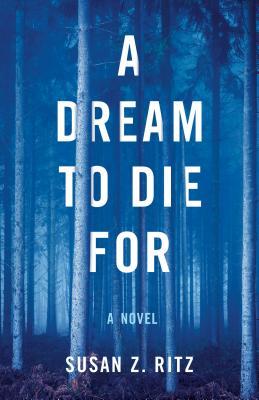
  • A DREAM to DIE FOR by Susan Z. Ritz – Mystery, Supernatural, Amateur Sleuth


    M&M Blue and Gold 1st Place Badge Image

    Some dreams delight. Some terrify. Celeste’s dream haunts her in Susan Z. Ritz’s supernatural mystery, A Dream to Die For

    Celeste wonders why she would dream of a woman in danger. After all, it seems like someone else’s dream. As Celeste reflects on what she remembers, indistinct features begin to focus, revealing details. Celeste’s concerns for the unknown woman grow. 

    That dream, so tangible in the moment, refuses to leave her. How could it, with the woman in imminent danger? Celeste doesn’t realize that this dream will put her in peril. Can she find the answers she needs before a killer switches his target? Can Celeste and the unknown woman be saved?

    Celeste rushes to the office of Larry–her therapist and Riverton’s acknowledged cult leader. 

    Despite her fiancé’s demands that she stop seeing Larry, Celeste hopes she’ll find the support and help she needs at his office. Instead, Larry convinces her to break up with her future husband. As for her beautiful engagement ring, well, that, of course, goes to Larry. 

    But when she describes the troubling dream to him, Larry trembles in fear, or was that fury? He throws her out of his practice. Later, Celeste returns to find Larry dead, murdered. The police are looking at Celeste as their primary suspect. Someone else’s dream becomes her nightmare.

    In immediate need of a savvy defense attorney, Celeste pleads for help from an old friend.

     Together the accused and her lawyer begin a fantastic, desperate, and risky investigation to find Larry’s killer. That strange dream, and the woman in it, become a surprising key to proving Celeste’s innocence. 

    Through their analysis of clues and suspects, they plunge into the depths of Larry’s cult, now in disarray. Both cult followers and doubters reveal many surprises. These two groups struggle against each other, but they may need to find a way to cooperate to expose the events that led up to Larry’s murder – and who did it.

    A chilling mystery, author Susan Z. Ritz has filled her book with intrigue and subtle clues.

    A variety of suspects hide the most compelling motives. Which of these Riverton characters, including Celeste’s intended, killed Larry? Can Celeste trust the guy, despite his questionable actions? This investigation puts her love for him to an extreme test. Can she live with him? Will she live without him? Should she fear him? 

    Ritz weaves a clever plot, set in a plausible contemporary social issue of a cult that demands complete loyalty and dominates every aspect of its followers’ lives. 

    How could Celeste prove her innocence and name the one who killed the cult leader? Celeste and others struggle to break the cult’s puzzling and psychological hold on them and learn to live free of it. Will the truth of the murder and the cult be discovered? Can Celeste save the woman in her dream? Will she find the killer before another person succumbs to A Dream To Die For?

    A Dream to Die For by Susan Z. Ritz won First Place in the 2019 CIBA Mystery and Mayhem Book Awards for Cozy and Not-So-Cozy Mysteries.


    5 Stars! Best Book Chanticleer Book Reviews

    M&M 1st Place Gold Foil book sticker image

  • The REFUSED by Ron Singerton – Historical Fiction, Action and Adventure Historical Fiction, Historical Thriller


    Fine artist and award-winning author Ron Singerton turns his astute attention to some little-known history, enmeshed in immortal names and enduring truth in his mystery romance novel, The Refused.

    The story boils from the first page, depicting families from the North and South in 1859 America. The brewing conflict will pull all of them into its orbit. In the South we meet Charlotte, her half-brother and slave, Jerome, who sail to France at war’s end.

    Life and love in Paris become the vibrant heartbeat in The Refused.

    Jack Volant, an aspiring painter and Union cavalry officer, wounded at Gettysburg, travels to Paris following the war to become a more accomplished artist. It is there that he begins a tumultuous relationship with Charlotte, a sculptor who sells her work to Empress Eugenie, wife of the Emperor, and a noted art patroness.

    Jack’s younger brother Steven, while still in America, becomes embroiled in an affair with a professor’s wife. When the professor, an expert shot, learns of it, he challenges the young man to a duel. Fearing for his life, Steven changes his name and flees to Paris where he engages in the eerie occupation of unwrapping mummies in the salons attended by the elite.

    All these dynamic characters, many involved in intrigue and murder, will interact in the decadent City of Light. They enjoy its ambience for only a short time, however, before war finds them once again. In 1870, the influence of the Empress, Prussian militarism and national rivalry will lead to disaster for France in the Franco Prussian war, the siege of Paris. In the chaos, Charlotte, deeply in love with Jack, waits anxiously as he attempts to save his brother and Jerome from the Prussian onslaught.

    The Refused is more than the title of a novel.

    Jack will find himself accepted by and creating new works alongside the Impressionist painters. Their adopted sobriquet, the Refused, stems from their rejection by the mainstream critics of the day. Their band includes Manet, Monet, Pissarro, Degas, Cezanne, and Renoir. They all resolve to paint what they want and hope for success, even if it be posthumous.

    This novel explores far more than artistic expression.

    Even after Prussian victories in the field, Paris holds out and becomes a hotbed of the Parisian underclass, the Communards. Jerome, with his sympathy for the desperately poor, joins the movement, putting his life in danger. As turmoil explodes around them, Jack, Charlotte, Steven, and Jerome attempt to survive as the reign of Emperor Louis Napoleon III and the Second Republic implode around them.

    Singerton writes with verve and intelligence. He fashions several interwoven plots in numerous historical settings, while making all his players come to life as credible people, some with high aspirations and others with low scruples.

    The author provides useful background in his “Author’s Notes.” He cites the real people and fact-based events that he selected for this engaging tale. The narrative encompasses formal dueling, womanly wiles, shadowy views of a typical morgue, costuming, cafés, conditions in Paris in wartime, and many other fine touches that powerfully immerse the reader in the times and places.

    Singerton served in Asia with the US military, was a Civil War cavalry reenactor, an art and history teacher, and enjoys saber fencing and horsemanship. He has penned notable works of historical fiction. And significantly, he is also, like several of the book’s protagonists, a professional artist. All these interests weld neatly together into this enthralling novel, sure to please his current audience and garner new readership.

    Read our reviews of Ron Singerton’s other books by clicking on their titles, A Cherry Blossom in WinterThe Silk and the Sword: Gaius Centurion, Book 2, and Villa of Deceit: A Novel of Ancient Rome.

    5 Stars! Best Book Chanticleer Book Reviews


  • COMMISSAR: A Novel of Civil War Russia by DV Chernov – Russian 20th Century Historical Fiction, Military Historical Fiction, War Fiction


    DV Chernov delivers the first book of the Anna Sokolova series, an historical thriller Commissar: A Novel of Civil War Russia destined to capture readers’ attentions and have them coming back for more.

    Chernov seamlessly blends historical figures with fictional characters in Commissar. Shining above them all is Anna Sokolova, a revolutionary who fights to protect the newly formed Cheka. Her idealistic goal is to improve the lives of her fellow countrymen.

    Anna Sokolova steps off the pages as a gutsy and beautiful woman who is also vulnerable and idealistic. She will do anything it takes to find the British spy “Reilly,” a real character from history, who threatens her country’s new political system.

    Chernov sets the scene in Moscow in 1918, after the revolution.

    The big players in this international espionage thriller are broken down into two opposing forces: the Red and the White armies. However, outside influences from Britain and the United States complicate the struggles. Anna pursues the British spy, but he eludes capture even with her best agents’ intelligence.

    Chernov expertly exposes the British and American desires of maintaining their outside capitalist ideologies within Russia. This forces the Reds to fight harder to preserve the newly formed government.

    Anna’s romantic involvement with Sergei, her longtime friend and mentor, falls apart when Sergei becomes withdrawn and places the party over her. Anna’s family disappoints her as well. They intend to flee Russia to Switzerland and resume their bourgeoisie life of wealthy business owners. Anna stays behind and throws herself into her work. Will she ever catch the spy Reilly?

    One day, Anna meets William, a representative of the American Red Cross, and with him plans the mission that will change her path forward. Together with Egorov and William, she drives a Rolls Royce, of all things, to southwestern Ukraine to entice a group of anarchists to help her catch the elusive Reilly.

    There is another reason for her mission, one involving the Russian treasury and the Bolshevik cause.

    Anna approaches Makhno, who helps her organize an ambush and attack of the heavily armed and guarded train transporting the gold, but he has two conditions. He gets all the gold as well as the train. Anna convinces him to split the gold 50/50, and she gets Reilly. Soon the mission details fall into place.

    The mission unfolds in a tense battle that claims the life of Anna’s friend and comrade in arms, Egorov. The many deaths weigh on Anna. Coupled with another failure to capture Reilly, Anna’s confidence is rocked, which leaves her questioning the decisions made by her superiors and what the Bolsheviks have come to represent.

    Even after her successful retrieval of three times the amount of gold she’d anticipated, Anna loses her drive for the cause. Her successful mission assures her a place in the government as a rising star, and as the winds of war change, the Reds gain control of the government.

    Chernov’s masterful blending of fictional with non-fictional characters and events creates a blockbuster read. He gives us a high espionage thriller through the eyes of a daring protagonist, Anna Sokolova, and delivers a riveting story that will keep readers up into the night. Moreover, Chernov’s attention to detail will impress the most avid historian, and his storytelling will appeal to lovers of historical fiction and spy thrillers alike. Highly recommended


    5 Stars! Best Book Chanticleer Book Reviews   Goethe Book Awards Semi-Finalist Badge


  • STONE: Rhone and Stone Series, Book One by Strider S.R. Klusman – Y/A Steampunk, Science Fiction First Contact, Y/A Western


    Award-winning author, Strider S. R. Klusman’s Stone: Rhone and Stone Series, Book One is set in the high desert outside of the dusty town of Skragmoore.

    With all the trappings of a western, he draws us into the Badlands and takes us on a merry and hair rising journey through lake strewn caves and the dusty little town of Skragmoore. This YA adventure will have readers riveted in place to find out what happens next.

    Rhone has survived alone in the wilderness since his mother’s death, but he has learned to thrive and spends more and more time out of doors under the open sky than at home in his old, dilapidated house. So, when he hears a voice, and no one else is there, he is confused to say the least. Where is the voice coming from and why won’t it shut up?

    Rhone has been carrying the stone in his pouch for several years.

    The most beautiful stone he’s ever seen, it is his prized possession and now it’s talking? Yet, somehow he is calmed by the voice and develops a sense of well being as it speaks. Soon Rhone is talking back and finds the stone’s intelligent conversation philosophical and instructive. His new friend educates him about how a lump of mineral can communicate with a human and where it came from.

    As part of a meteor that struck earth in the distant past, Stone’s story unfolds with the skill wielded only by Klusman’s master storytelling. Stone’s mission is to find more of his kind, the “We,” and Rhone pledges his services to help and his undying friendship.

    Meanwhile in the dusty town of Skragmoore, we meet Commissioner Dodge.

    A heavy-handed boss who drives his men with a clenched fist ready to strike. Dodge is planning his escape from the dying town, and when news reaches him of a beautiful stone that flashes blinding light, he knows it must be an artifact, and his dream of escape grows closer than he imagined. Thus begins the misadventure, and Rhone soon loses stone to Dodge’s men.

    Rhone will never give up on Stone, though.

    The bond they forged in the short time they were together is too strong for him to ignore, and Rhone won’t let his friend suffer at the hands of Dodge, who only wants to use Stone for his own gain. Rhone understands fully the Dodge will treat Stone as an object, not the sensitive, sentient being he is. Rhone uses the lessons that Stone instilled in him to memorize a route out of the maze of the badlands and rescue Stone.

    The Counsel has Dodge on their radar as a person of interest for poorly overseeing his commission, and they have also been informed of Stone. Agents Aundrea and Bran arrive in the Badlands in search of this stone and the boy who found it.

    Klusman’s fast-paced novel keeps readers turning pages to learn the fate of Rhone and Stone.

    Rhone becomes the unlikely hero who will do anything to help his friend and unwittingly exposes Dodge whose ruthless and cold-hearted nature lose him any friend he ever had. Part fantasy, part western, part YA, part adventure/thriller, Klusman’s novel melds genres seamlessly to give us a riveting and rollicking story of friendship, trust, and adventure. This five-star read will keep readers entertained and wanting more! And they are in luck because Book II in the Rhone and Stone series carries on the adventure.


    5 Stars! Best Book Chanticleer Book Reviews

  • BEEBE and BOSTELMANN by Kent Politsch – Historical Fiction, Historical Biographical Fiction, Deep Sea Exploration


    Dive deep into a three-part saga illuminating underwater discovery in Kent Politsch’s historical fiction novel, Beebe and Bostelmann.

    Well-researched with a strong environmental focus, Beebe and Bostelmann captures the incredible accomplishments of a multi-faceted naturalist and adventurer. But this charismatic man, Will Beebe, navigates his own emotional journey as well as the deep sea. Collaborating with him, Else Bostelmann brings life to his oceanographic discoveries through her artwork.

    In 1929, Will Beebe, newly wed to a young female writer almost half his age, sets out to understand the deep sea. As an ornithologist and explorer, he ventures nearly half a mile beneath the ocean’s surface.

    In his passionate quest, he connects with Otis Barton. The famous fortune seeker designs an enclosed submersible able to withstand the pressure of record-breaking dives.

    With entertaining pitches and backing from various patrons, the project begins south of Bermuda. Once there, the research team gathers at a laboratory set up on Nonsuch Island. However, technical delays, necessary testing, precarious refinements, and a stock market crash threaten the completion of the “bathysphere.” But Beebe and Barton persevere. They put their trust, and lives, in the hands of the invention.

    Politsch delivers brilliantly detailed descriptions of Beebe’s various sightings. Whether “coral clinging, weaving seaweeds dangling … tissue-thin pearl shells … ” an unknown quartet of fish, with “bird-like beaks … standing upright on a thin tailfin … colors brilliant” or bioluminescent fish in an abyss likened to “a moonless starlit night” – the intricate  illuminate the nuances of this far-reaching, mysterious seascape.

    Politsch weaves themes of love, loss, and heartfelt burdens through his story.

    While Else Bostelmann employs her unique ability to translate Beebe’s reports into beautiful artistic renderings, Beebe enjoys an open marriage – disregarding his wife’s feelings on the matter; indeed, he has several romantic liaisons. Bostelmann proves a character with the skill to observe human dynamics taking place within the island and its work. And, ultimately, this story shows the need for forgiveness and letting go of resentments.

    Beebe clearly possessed the ability to charm and attract women through both charismatic and intellectual means.

    However, Politsch distinguishes him as a mentor who gave women opportunities in the scientific field. The idea that “There is nothing about science that makes a man wiser than a woman …” may have been Will Beebe’s attitude regarding gender equality at the beginning of the 20th century, though his many liaisons would certainly cloud a person’s image in society today.

    Politsch’s final pages include short biographical sketches of the real-life individuals from whom this work derives. In addition to the intertwining human interest aspect of Beebe and Bostelmann, the author details the many dangerous dives far beneath the water’s surface. These dives highlight the significance of the ocean in the origins of life on our planet – and our ultimate future.

    Amidst the wonder of the sea, Will Beebe and Else Bostelmann play an essential part in the advancement of oceanic science. Beebe and Bostelmann serves as an artful and engaging odyssey introducing their important work to an audience that might otherwise be unaware of their significant place in history.


    5 Stars! Best Book Chanticleer Book Reviews


  • The WORLD PLAYED CHESS by Robert Dugoni – Coming of Age, Vietnam War, Friendship Fiction

    Robert Dugoni’s novel, The World Played Chess examines the demands of society and family, through the dawning adulthood of three different men in three different eras.

    Vincent Bianco, a Southern California lawyer raises his teenage daughter and high-school-senior son. He unexpectedly receives the Vietnam journal of William Goodman, with whom he had worked construction in 1979. Goodman scribbled the journal in pencil during desperate breaks in his service in Vietnam. This record describes Goodman’s harsh initiation and horrifying acclimatization to the war.

    Mirroring the Marine’s rapid maturation in the jungles of southeast Asia, Bianco recalls his own privileged coming of age. He compares it with his son Beau’s coming of age in present-day 2016 and 2017. With each entry in Goodman’s journal, Bianco remembers conversations, events, and decisions of his own pivotal summer. He sees similar decisions play out in his son’s life. What happens when they make decisions without thought, in frustration, or when they don’t make decisions at all?

    Tragedies and near-tragedies mark all three of the novel’s timelines. The three primary characters think and overthink their choices.

    Goodman’s squad leader, Victor Cruz emerges as the true protagonist of the story. Victor watches over Goodman during his time in Vietnam,  providing contrast to Goodman’s background. His actions after Goodman suffers a wound and returns to duty provide the impetus for the shocking key moment in this novel.

    We all must determine who we will be. Men, according to Dugoni, find this choice critical to a good life.

    Dugoni picks at the threads that have woven the lives of his most important characters. What leads to our academic careers and work lives, what brings us together with the people we care for? These questions, while not always clear, have crucial and sometimes horrible consequences. In the end, we are faced with the lives we have led and can either come to terms with them or not. Either way, one question remains: do we deserve our fates?

    Dugoni’s novel zigs and zags, just like the decisions and events that comprise human life. The reader can come to a conclusion about the novel’s characters in a gestalt way, only in the end realizing how artfully the author has led them to self-examination. We live our lives in moments, and, like William Goodman, Vincent Bianco, Beau Bianco, and Victor Cruz, we get the lives we deserve — even if we don’t deserve them.


    5 Stars! Best Book Chanticleer Book Reviews


  • BINGE by Anne Pfeffer – Addiction, Contemporary Fiction, Romance


    Twenty-seven-year-old Sabrina “Bree” Hunter has the chance to grasp her dream of being a published author, but will her binge eating spell the end of that dream?

    After years of working for a demanding B-list talent agent in Los Angeles, Bree earned a publishing deal with Fast Track Books. She should celebrate, thrilled that her life will finally go down the right path since her graduation from Dartmouth. However, Bree has a problem that isn’t easily fixed. Her publisher expects the skinny beauty on her webpage, a picture taken many years previously.

    Since the days of the photo, Bree has become a compulsive eater. She spends every moment of her day obsessing over junk food. Bree turns to food to comfort her, console her, and to bring her joy. This addiction has caused her to gain forty pounds since college. Finding dieting on her own harder than she expected, Bree agrees to attend a support group meeting. Her sister, Lena’s, boyfriend has recently found success in breaking his addiction to drugs and alcohol.

    Bree just doesn’t believe the sharing and belief in a higher power will help–until she meets Daniel. A successful lawyer and recovering over-eater, Daniel now strikes the figure of a hunk with blue eyes, as if right off the pages of her own novel. With a three-month deadline looming, an unappreciative boss, and her own doubts, Bree must find a way to overcome her compulsion.

    Sabrina’s addiction provides amazing insight into an area most people ignore.

    Compulsive eating is as much an eating disorder as bulimia or anorexia. However, many choose to see it as a choice rather than a real issue. Even Bree herself has a difficult time properly naming the truth of her overeating–as an addiction. The depiction of her compulsion will be a revelation for most readers. From hiding food in her desk to digging in the ladies’ room trash for candy, Bree shows her compulsion. Her behavior mimics that of a drug addict to a sad and astounding degree. Bree cannot see that she loves comfort food like a user on a bender.

    The extremity of Bree’s disorder will affect the reader. The burden of secrecy becomes overwhelming, crushing Bree’s spirit and her willpower at times. Her need to diet on a deadline only serves to enhance her cravings and creates a time crunch sensation. She struggles under the sense of an inevitable disaster with an impending, unavoidable culmination.

    Setting the novel in a place where image rules and only the skinny succeed highlights Bree’s struggle. Bree sinks to shocking depths to fulfill her urges. She must hit that metaphorical bottom before she can admit her addiction and begin to climb away from it. Readers will celebrate with her as she finds her true self in the land of Hollywood fakes.

    The reasons behind Bree’s addiction define part of her story, her growth into a confident, accomplished woman.

    Bree began associating comfort with food when her mother left Lena and her with their absentee father. At only nine years old, Bree raised her baby sister. They waited hungrily for their father to bring home food for them after he finally left work. Lena became both sister and pseudo daughter to Bree, who continues to bail her out even at the age of twenty-three.

    Bree has lost her vibrancy and her confidence, cowering behind her love for and addiction to sweets. Though she has accomplished more than Lena, Bree can only see her sister’s slimness, her perfect ease, in comparison to Bree’s own self-labeled corpulent incompetency. She will do anything, even considering bulimia and fasting, to achieve the same perfection in herself.

    She knows her weight causes her doubt and unhappiness, but she cannot overcome it alone.

    Through the insistence of the sister who works on her own issues, Bree attends a support meeting and begins the program that will change more than the numbers on the scale. When she meets Daniel, she has a hard time believing someone like him could like someone like her. However, spending time with him and the other members of her group soon empowers Bree.

    Bree’s recognition of the imperfection of others begins her metamorphosis. She learns that even those people who have seemingly flawless lives are far from that ideal. She stops bullying herself and being her own worst enemy. Eventually, she fully sees the time she has wasted in pursuit of the unattainable and finds satisfaction in who she is and the potential her REAL life holds.


    5 Stars! Best Book Chanticleer Book Reviews


  • REDLINED: A Memoir of Race, Change, and Fractured Community in 1960s Chicago by Linda Gartz – Memoir, Racial Segregation, Sexual Liberation

    Author Linda Gartz tells of her childhood and early adulthood amidst social upheaval in the city of Chicago in her memoir, Redlined: A Memoir of Race, Change, and Fractured Community in 1960s Chicago.

    Gartz grew up the second child of second-generation immigrants to the US. Her father’s father boldly made the trip to the land of opportunity at age 21. She spent much of her childhood in cramped quarters with her parents and her older brother, living alongside strangers. They paid this price for the “dream” – the couple bought a house in a decent neighborhood; keeping roomers, even living in the same flat with them, helped pay expenses.

    Gartz’s grandmother, a talented dressmaker, helped out with childcare and other chores while her mother worked to manage all the finances, tenants, and repairs in their rooming house; she had to do this alone half the year while Gartz’s dad traveled for his job. But Grandma K suffered mental illness and abused Gartz’s mother and father, sometimes violently. Gartz’s father felt oppressed by her presence, which caused ongoing, if mostly unspoken, conflict in the home.

    Chicago’s social and economic upheaval served as a microcosm for national change, and as backdrop for the Gartz family drama.

    African Americans fled the dangerous and economically dead-end South for more promising prospects in places like Chicago. But majority white cities and regions resisted their incursion through restructuring and re-designating neighborhoods and school districts. All the while, the civil rights movement sought large-scale change amidst peaceful protests, riots, and violent reprisals from the law.

    The influx of black workers into her own neighborhood affected Gartz’s choice of schools and friends. Civil rights struggles incited her sympathies while her parents expressed their older prejudice. They feared that all of their hard-earned investments would vanish if “the colored” came in. Still, the teen had black friends and neighbors. She felt touched by the spirit of rebellion in a new testing of societal limits: sexual freedom.

    Gartz felt driven to compose this intelligent account of the changing times when she and her brother “found our gold” in the attic of their parents’ home: diaries, letters, cards, calendars and notebooks reaching back to the couple’s own youth.

    The undercurrent of family tensions became clear. Grandma K’s psychosis put the house on edge. Gartz’s father struggled to balance his home and work life, needing to earn money with a job that required six months of travel across each year, and also supporting his over-burdened wife with the demands of their rooming house with as many as eleven tenants. Her mother saw her behavior in the sexual revolution as shocking. Gartz includes details of the subtleties of “redlining” that allowed cities and regions to keep African Americans down and poor by limiting their ability to own property. Family photos pepper her book, lending emotive touches. The result is a vibrant look at the coming of age of a nation through the eyes of a frank, freethinking woman.

    Redlined: A Memoir of Race, Change, and Fractured Community in 1960s Chicago by Linda Gartz won 1st Place in the 2019 CIBA Journey Book Awards for Narrative Non-Fiction and Memoir.


    5 Star Best Book Chanticleer Reviews round silver sticker