Tag: Chanticleer 5 Star Book Review

  • CITY Of PEACE by Henry G. Brinton – Murder Mystery, Religious Tension, Multicultural

    CITY Of PEACE by Henry G. Brinton – Murder Mystery, Religious Tension, Multicultural

    M&M Blue and Gold 1st Place Badge Image

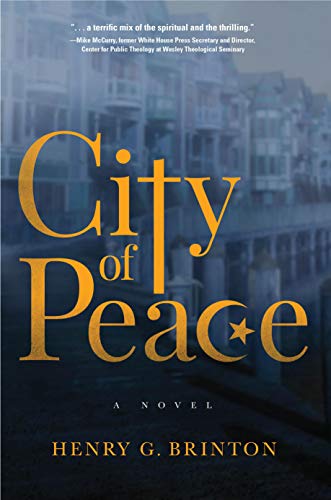
    Religions and personalities collide, mix, and meld in this vibrant multicultural, multinational mystery by author Henry G. Brinton, set in the engaging town of Occoquan, Virginia.

    Harley Camden never heard of Occoquan before he is assigned there by his bishop. She insists on a change of venue for him because both his sermons and his management of church affairs have lost their flavor – understandably – after his wife and daughter were killed in Brussels, by Islamic terrorists who used nail bombs to make their horrifying statement.

    Camden realizes that he needs the change, and soon finds that, despite his inner pain, Occoquan has many charms, and many charming residents who go out of their way to make him feel at home.

    Tim, who lays claim to no religion, introduces him to the remarkable history of the region, staunchly abolitionist during the Civil War. Tim also tells him about the Bayatis, an Iraqi family who operate the local bakery. Not long after Camden’s arrival, the complacent riverside town is rocked by sudden tragedy when Norah, the baker’s daughter, is murdered; the presumption made by law enforcement is that her father Muhammad is guilty of a ritualistic killing because Norah had consorted with a man, thus dishonoring her family.

    To preach the Christian gospel, find forgiveness in his enraged anti-Islamic mind, and to find a way to bring together the many strands of spirituality in the town – Christian, Jewish, Muslim – will be a task that Camden never expected to take on.

    Tormented by strange, seemingly prophetic dreams, and guided to meet a Coptic Christian couple and a Jewish woman about whom he receives psychic “messages,” Camden will also befriend the Bayatis and begin, almost without meaning to, to investigate Norah’s murder. In doing so he will uncover obscure but meaningful lore with a bearing on the town’s dilemma, providing regenerative fodder for his emotive sermons. In seeking Norah’s actual killer, he will also imperil himself, and ultimately uncover a terrifying danger hovering over Occoquan.

    Brinton knows whereof he writes, as a Presbyterian minister and well-known journalist whose articles often encompass the themes of multiculturalism, religious understanding, and tolerance.

    Examining as he does the thorny religious and political issues gripping the nation and our world today, Brinton makes Camden a spokesperson for those crucial themes. Mining materials from the history of the Galilean city of Sepphoris as the “city of peace” brings his story into broader focus, while the real-life town of Occoquan is almost a character in the book’s plot, so deeply does Brinton delve into its unique and admirable qualities.

    The first in a series of Harley Camden sagas, City of Peace is a tale of disruption and chaos – followed by reconciliation and interfaith resolve – that will fascinate readers of intelligent mystery fiction and make them seek more offerings from this talented wordsmith.

    City of Peace by Henry G. Brinton won 1st Place in the 2019 CIBA Mystery & Mayhem awards for Cozy & Not-So-Cozy Mysteries.


    M&M 1st Place Gold Foil Book Sticker Image

    5 Stars! Best Book Chanticleer Book Reviews


  • VOICES of NAVAJO MOTHERS and DAUGHTERS: Portraits of Beauty by Kathy Eckles Hooker with photos by David Young-Wolff – Navajo History, Memoirs, Indigenous Culture

    VOICES of NAVAJO MOTHERS and DAUGHTERS: Portraits of Beauty by Kathy Eckles Hooker with photos by David Young-Wolff – Navajo History, Memoirs, Indigenous Culture


    Voices of Navajo Mothers and Daughters: Portraits of Beauty by Kathy Eckles Hooker is a heartwarming work exploring the relationships between Navajo mothers and daughters, their connections with each other and their families, and their hopes and dreams for their children as they encounter a world far removed from their traditional lives.

    In these insightful interviews with Navajo women—grandmothers, mothers, and daughters—the twenty-one families that the author spoke to talked about their backgrounds and histories. They contrasted how the elder women grew up compared to their daughters and granddaughters (such as the lack of amenities like electricity, running water, or internal combustion vehicles). And they explored the many ways that traditional matriarchal Navajo culture continues to enrich their lives today.

    David Young-Wolff’s memorable, warm photographs of the interview subjects let us see the faces behind the stories. The charming presentations of the women, often with the backdrop of the land they grew up in and even of the family hogan, the traditional Navajo home, give the reader insight into the closeness between the generations and the natural and human environments that have shaped their lives.

    The thoughtful tales these women tell are interspersed with painful reminiscences about points in American history that changed their culture’s ways of life. Events such as the Long Walk, in which more than 10,000 Navajo were forcibly marched by the US military to a reservation in what is now New Mexico, and the Navajo-Hopi Land Dispute, the judicial results from which echo even now.

    In an outer society so dependent on cars, the elder women note how they were dependent on horse and buggy in their younger years. One woman recalls a memory of wonder when she saw a car for the first time. For some, water was only available by walking a certain distance to a well, and during times of drought, only used for feeding livestock or drinking.

    In addition, they tell stories about life in traditional homes. Sometimes these women remember their homes warmly and sometimes not. One family speaks of the heartbreak of having a home destroyed and the pets and livestock killed by persons unknown, despite being on good terms with their neighbors.

    The interviews in each case mention how the elders emphasized the need for education. But sometimes that “education” came in the form of abusive boarding schools that tried to erase native culture from the children they taught.

    Language is an especially important issue discussed by the women, both young and old.

    Only one of the families interviewed had a daughter who went to a boarding school that taught both Navajo and English. In the majority of cases, speaking Navajo was actively discouraged at the boarding schools. The disconnect of having to learn English to participate in the dominant American culture reflects on their lives and families even now.

    Then there are stories about traditional ceremonies, specifically about the kinaaldá, a four-day ceremony celebrating the girl’s first menses. The women tell warm and humorous tales about what’s involved (including running every day for four days, each day longer, to make sure the young woman is strong enough to withstand what her life will entail), and they describe the trials and tribulations of baking a cake that family and friends will enjoy… but the girl herself cannot.

    This book reveals how traditional culture has informed and continues to infuse the daily lives of Navajo women. Stories about arranged marriages, some expected and some a surprise (in one case only finding out the young woman is getting married the next day!), are eye-openers and provide food for thought.

    One of the recurrent themes that shape these women’s stories is the question of how to support their children and how the next generations would be educated and grow to support themselves. The traditional art of weaving was a major or even sole source of income for a significant number of women in the book. Some of the elder women recount how they discouraged learning the art so that their daughters could do better than they did. In turn, some of the daughters mourned that they never learned the traditional art, feeling bereft of a connection to their ancestors.

    Questions about what wisdom and skills we choose to pass along to our children are of course not unique to Navajo women; however, readers will enjoy Hooker’s way of illuminating this particular window into Navajo culture from the women who so graciously shared their journeys.

    Voices of Navajo Mothers and Daughters: Portraits of Beauty by Kathy Eckles Hooker, is a deeply moving, must-read for mothers and daughters everywhere, and one book we highly recommended!


    5 Stars! Best Book Chanticleer Book Reviews

  • A SPLINTERED STEP: A Sarah McKinney Mystery by Marian Exall – Mystery, International Crime, Suspense

    A SPLINTERED STEP: A Sarah McKinney Mystery by Marian Exall – Mystery, International Crime, Suspense

    Blue and Gold Clue 1st place badgeHow does one avoid family at all cost? A change to name and identity? Participate in AA? Use of a drug or alcohol as a coping habit? Live in a trailer home?

    Check out Marian Exall’s third book, A Splintered Step, in the Sarah McKinney series to find out what happens with her in Wales!

    In the second book, Sarah lands an offer to help her mentor locate his distant daughter, and this adventure takes her to rural Dordogne, France. She also must confront her own inner challenges and dangers. Now, McKinney faces her family fears and the origins of her demons in a heart-stopping and heart-breaking story!

    We learn more about a special someone in Sarah’s life who asks her to visit during the time between Christmas and New Year’s Day. She reconnects one evening with a musician named Deke. He ends up being her long-lost brother Shane who is in hiding from their abusive parents and plays covers of Rolling Stones songs. Exall describes all her characters effortlessly, making them lifelike, vivid and dynamic.

    Even though the conflict of McKinney’s family is troubling and for some hard to read, her supportive journalist beau Dykstra leads her on a fact-finding mission that is impossible to ignore.

    The pair reconnect over a cozy meal, where he surprises her with a lovely and sentimental family heirloom as a gift. They decide haphazardly to travel after attending the funeral of Dykstra’s beloved mentor, whose death came suddenly. While on their travels, they spend the first part of their trek getting to know Sarah’s musician brother, Deke. The two continue and after hours of driving into the white and cold dark winter, the snowbanks pile up and force them to reconsider their choice. As luck would have it, they end up at a bed and breakfast and spend the night, which is the scene for a plot twist!

    Sarah’s story and family origins make for good imagery and believable characters with great dialogue. Some transitions didn’t flow effortlessly and seemed out of place such as the bird sanctuary at the B&B, but overall, the story is well crafted and is hard to put down. The chemistry between Dykstra and McKinney uses their professions to their advantage to solve the case: Dykstra is a journalist; McKinney is an international advocate. Dykstra is no fuss and only out to get the next big story, but McKinney loves a good adventure which helps the two balance each other out.

    Although the descriptions of Wales as a location are sparse, the dialogue between a local host and his uncle (Uncle Georgie & Michael) give us a clearer understanding of the rural setting.

    The love and tenderness that Sarah shows her brother is also a bright light in their dark and abusive family’s past. Plus, the plot-lines pulling on Dykstra and McKinney compel readers to devour this whodunnit page turner.

    Readers will enjoy the story with or without the first two books in the Sarah McKinney series. A Splintered Step is a tale not for the faint of heart as there are some violent scenes, but it is worth continuing to see if the two can solve the case. The best audience for this book is someone who likes a good mystery, likes to travel in Europe and enjoys the Rolling Stones.

    A Splintered Step by Marian Exall won 1st Place in the 2019 CIBA Clue Awards for Suspense & Thriller Mysteries.


    5 Stars! Best Book Chanticleer Book Reviews

    Clue CIBA First Place Winners gold foil sticker image

  • The SATISFIED INTROVERT by Benjamin Plumb – Memoirs, Vocational Guidance, Family & Relationship Advice

    The SATISFIED INTROVERT by Benjamin Plumb – Memoirs, Vocational Guidance, Family & Relationship Advice

    From his earliest days, author Benjamin Plumb understood he was an introvert, someone who, described in a classic definition, feels more comfortable with their inner thoughts and ideas rather than what is happening externally.

    In his well-written memoir, The Satisfied Introvert, he tells us his life story through the lens of his introversion. He explains how he coped, often poorly, with his solitary nature in both his personal and business life, applying a variety of processing mechanisms that he describes as “recipes.” He explains that those processes didn’t apply to every life situation and sometimes kept him from seeing the possibility of making better decisions that would have made much of his life more gratifying.

    The purpose of his book, he explains, is to help fellow introverts find safety in an extroverted world and gain more satisfaction in life. “The recipe,” he explains, “is a coping mechanism that works in some situations, but you can’t stay dependent on it. To feel truly safe, you must move beyond your winning recipe and take off on your own.”

    The book takes the reader on his journey, from being the introvert in a show business family through his early romances, his education at Stanford and Harvard Business School and various entrepreneurial attempts around the world.

    He describes in detail how he found both success and failure in the business world, due, in his view, to applying and mistakenly depending on the defensive processes he acquired to protect himself as an introvert in an extroverted world.

    How he finally found peace and the success he hoped for in his professional and personal life is one of the achievements of this detailed personal memoir.

    People who identify as introverts will find this an excellent read because the writer is unafraid to expose the details of his life focusing on how he coped with his introverted nature.

    It is more of a cautionary tale, not a how-to manual. Whether it’s setting up businesses in South American jungles or revealing the dynamics of a marriage gone sour, The Satisfied Introvert is a series of life lessons learned along the way.

    For non-introverts, it’s a cogent description of a personality bent that may be misinterpreted or misunderstood in friends, colleagues or even family members. It may help you to see someone in a different light you may have thought to be stand-offish. unlikeable. Rather than a tell-all confession, it’s written by someone who hopes the sharing of his life will be of help to others.

    Overall, it offers a clear insight to a personality trait that is often misunderstood and little discussed. A read we are happy to recommend.


    5 Stars! Best Book Chanticleer Book Reviews

  • The DEVIL’S BOOKKEEPERS: The Noose Closes, Book 3 by Mark H. Newhouse – Jewish Historical Fiction, WWII Historical Fiction, Jewish Literary Fiction

    The DEVIL’S BOOKKEEPERS: The Noose Closes, Book 3 by Mark H. Newhouse – Jewish Historical Fiction, WWII Historical Fiction, Jewish Literary Fiction

     Blue and Gold Badge for the 2020 Series Grand Prize for Genre Fiction The Devil's Bookkeepers by Mark Newhouse

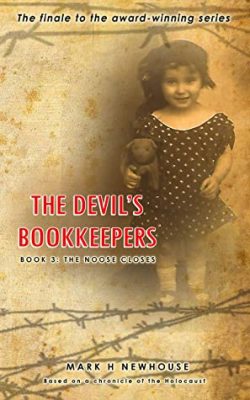
    In The Noose Closes, book three of the award-winning series, The Devil’s Bookkeepers, author Mark H. Newhouse continues the story of his compelling characters and their difficult predicaments in the closing months of World War II in occupied Lodz, Poland.

    Newhouse is a gifted writer and educator, born in Germany to Holocaust survivors. His series is a fictionalized account of what happened in the Lodz ghetto, a barbed-wire enclosed slum in Poland during the Nazi occupation. As he deftly utilizes the first-hand accounts of those who were there, we witness the ribbon of humanity and compassion woven through each book. This raises the series to premiere status – an exceptional if sobering examination of the immutable human spirit. His series should encourage all who read it that hope is a gift and kindness is the answer.

    Jewish engineer Bernard Ostrowski records the daily events for the ghetto chairperson, whom many call the Devil. Bennie and his small team find the information more terrifying with each passing hour. They compose their reports in a manner that will mollify the infamous ghetto boss, Chairman Rumkowski. Rumkowski and his embattled assistant, Neftalin, must please their Nazi handlers. Rumkowski oversees every aspect of the city and forces its residents into BECOMING factory workers for the German military. He hopes to keep the Nazis from taking control of Lodz by doing so.

    Even Ostrowski and his educated co-workers struggle to comprehend the desperation and death in the place they once called home. The sight of bony children fighting in garbage heaps for anything edible is unfathomable. How can this be happening in their city? Surely Rumkowski will help them.

    Ostrowski doesn’t quite know what to make of the masses of used shoes and other clothing that arrive via trucks, while Lodz Jews are shipped out of the ghetto almost daily. Are the Germans shepherding the Jews out of Lodz to safety from the war, as they and Rumkowski say?

    Rumors begin to slip in. The Jews are being taken to camps where only death awaits.

    The novel continues to weave in the story of Ostrowski’s love for his wife. Nearly defeated by the shocking events in book 2, Ostrowski longs for any news about his wife Miriam and his daughter Regina. The couple had become estranged when Bennie suspected Miriam of having an affair with the young and reckless Singer before the man disappeared.

    When Singer returns, now a resistance fighter, he attempts to enlist Ostrowski into an underground Jewish resistance movement. What follows are acts of bravery and sacrifice readers will remember long after the book is put down.

    Newhouse’s parents were among the 5,000 Jews of more than 200,000 trapped in the Lodz ghetto who survived the Nazi occupation. Will any of the novel’s characters survive as The Noose Closes around them?

    Newhouse utilizes the shocking events described in The Chronicle of The Lodz Ghetto (Yale University Press, 1984), placing sobering quotes from the historical account at the beginning of each chapter. Readers will feel as if they are on the streets of Lodz due to the vividly depicted sights, sounds, and smells during this bleak and desolate time. The Nazis’ wanted to annihilate an entire race of human beings. The incontestable proof became all too clear only as WWII came to a close.

    In The Noose Closes and the other books in The Devil’s Bookkeepers series, Newhouse interjects the ironic humor that brings the epic tale to life, gallows humor, if you like. These people are real – and readers feel it. Newhouse skillfully weaves into the story the profound depth of faith and belief that enabled desperate people to cling to hope, despite their dire circumstances.

    In fact, this bold human spirit enables the residents to find courage in the face of danger that rests at the heart of the series. His characters believe that relying on faith overcomes fear, and above all else, love will always be triumphant. This powerful series reminds us that the more we learn about the Holocaust, the more we remember this time of terror, the more likely it is that we can genuinely say, “Never again – to anyone!”

    The Devil’s Bookkeepers series won Grand Prize in the 2020 CIBA Fiction Series Awards and is a series that is not only timely, but one we highly recommend.

    Please read our reviews of the first two books in The Devil’s Bookkeepers by clicking on their titles, The Noose and The Noose Tightens.


    5 Stars! Best Book Chanticleer Book Reviews


  • WISHES, SINS, and the WISSAHICKON CREEK by PJ Devlin – Contemporary Fiction, Americana, Short Stories

    WISHES, SINS, and the WISSAHICKON CREEK by PJ Devlin – Contemporary Fiction, Americana, Short Stories

    Blue and Gold Somerset First Place Winner Badge for Best in Category

    Wishes, Sins, and the Wissahickon Creek by PJ Devlin emulates the lives of fictional characters brimming with hope and promise yet living a truthful life of existence in the gorgeous setting of Pennsylvania’s Wissahickon Creek.

    The book encompasses ten short stories making it a complete work of fiction. Devlin creates characters which are rich in both experience and struggle. Not only do they live in a real world created by Devlin, but her characters, a mix of children and adults, both struggle with daily, real-world issues most Americans deal with. The stories are all relatable in this sense, which makes the text come alive, page after page.

    The first story, I Wish It Every Day, exists in the premise of a lasting, pseudo friendship between two women, Mary and Julia. The two past high school friends reminisce at a coffee shop one fine day, yet the meeting exists only because of a chance. The reader learns of the ladies’ lack of real friendship since the time regrettably passes without daily correspondence. Piece Man, the second in the group of short stories, creates a picture from an art piece in an art gallery. A child and an adult realize the importance of time and the fleeting speed of life. Devlin’s third story, Original Sin, captures the lives of a family devastated by death and the sins of a priest. The irony of this story exists in the mother’s wish for her son.

    Wishes, Sins, and the Wissahickon Creek continues with beautiful settings and attention to detail in the depiction of every scene.

    Devlin’s attention to detail and superb storytelling acumen invites readers to live in these ten short stories, as if they are truly part of the text. Each story represents new characters and new dilemmas. The unique tie to the ten stories is the setting of Pennsylvania and the eastern United States. The strong and determined people of Wissahickon may suffer, yet they pick themselves up and move on, much like the determination and perseverance of middle-class Americans. Devlin skillfully captures the true spirit of twenty-first century middle Americana.

    Readers whose interests lie in middle America or Americana contemporary literature will enjoy this award-winning collection of short stories. Understanding the human dilemma as told by one who lives in the Wissahickon Creek area brings authenticity that readers will surely appreciate.

    Wishes, Sins, and the Wissahickon River by PJ Devlin won 1st Place in the 2018 CIBA Somerset Book Awards for Contemporary, Literary, and Satire Fiction.


    Somerset Literary and Contemporary Chanticleer International Book Awards 1st Place Winner oval Gold Foil sticker

    5 Stars! Best Book Chanticleer Book Reviews


  • The BEST WEEK THAT NEVER HAPPENED by Dallas Woodburn – Teen and YA Coming of Age Fantasy, Teen and Y/A Magical Realism Fiction, Y/A Contemporary Fantasy Fiction

    The BEST WEEK THAT NEVER HAPPENED by Dallas Woodburn – Teen and YA Coming of Age Fantasy, Teen and Y/A Magical Realism Fiction, Y/A Contemporary Fantasy Fiction


    Blue and Gold Grand Prize 2020 Winner Badge for the Dante Rossetti Awards for The best week that never happened by Dallas Woodburn

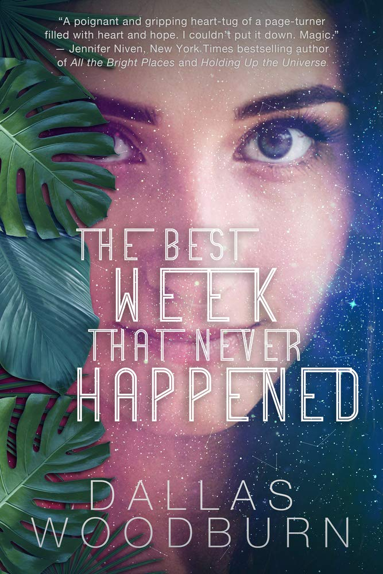
    Dallas Woodburn’s debut novel The Best Week that Never Happened is a roller-coaster ride through Hawaii and the mysterious depths of its briny deep, sparkling with unreal magic, a poignant romance, and incessant hope.

    Tegan Rossi, a freshly graduated eighteen-year-old, awakens in the secretive hideout she discovered with Kai Kapule as two eight-year-old children on her first trip to Hawaii Island. She needs to make amends with Kai as they had a major squabble over something very important that she now oddly forgets. When Tegan catches up with Kai in Hawaii, she enters her best week yet – the Best Week That Never Happened.

    The first-person narrative is a fusion of Tegan’s past three years ago and ten years ago, as well as a mystified chronicling of her present with Kai on the Big Island of Hawaii.

    Tegan and Kai run into each other for the second time in Hawaii ten years later. At Kai’s earnest request, they both meet at their childhood hideout The Lava Tubes. Reliving the nostalgia, they re-emerge as inseparable friends, sharing their lives over the phone 4,880 miles apart. Tegan’s reluctance to meet up with Kai’s graduation wish (a visit from Tegan) turns up in the two-months past narrative. With the present time leapfrog, Tegan arrives in Hawaii, fretting over her inability to remember how she turned up there.

    In the medical center of Kai’s aunt, Tegan discovers an hourglass tattoo on her body she never had.

    A series of incredible happenings follow. Tegan’s suitcase shows up out of nowhere with all she could ever wish for, her mom doesn’t seem to exist, at least she’s not answering her calls. Oh, yes, and the hourglass tattoo is losing sand. Most curious, Tegan discovers her Instagram photo in front of a train with a caption about her departure from Philadelphia to Washington DC. But the train crashed, killing 67 passengers.

    In her quest for an explanation, Tegan receives a message, “to trust enough to take the leap.” It is Tegan’s conforming to the message which will eventuate her best week, the week of confessing love, dealing with insecurities, and reliving the déjà-vu moments from the past with Kai into a reality.

    The Best Week That Never Happened ushers readers through alternating states of reflection and pessimism, until finally riding the waves of optimism and hope.

    Dallas Woodburn explores the complexity of a teenage psyche. Through Kai and Tegan, she reflects on our innate insecurities and the tendency to not embrace new ideas and opportunities out of fear. With the development of the two characters, the narrative tone gradually shifts from a tragic to an optimistic perspective, referencing their development as adults. This subtle shift brings about a symbiotic relationship between pessimism and optimism in which we all live.

    The aversion to change and embracing a better future is a predominant theme throughout the book.

    This underlying struggle is reflected in Tegan and Ross. Tegan struggles with the decision to confess her feelings for Kai, adamant to keep the relationship unchanged. By not confessing to her feelings, she risks making the best week of her life with Kai only an illusion of reality.  Kai dreams of becoming an artist and gets shortlisted to the prestigious CalArts College in Los Angeles. He adores his usual marine life with his family in Hawaii, his paradise, away from the suffocating fear of being stuck “at the bottom of the barrel” outside of Hawaii. Overcoming their fears and insecurities is what makes the debut novel, The Best Week That Never Happened, so very relatable.

    With a twist of magical realism and captivating storytelling, The Best Week That Never Happened revolves around the contemporary concerns of teenagers and adults alike. It’s an exciting read with a powerful message borrowed from Martin Luther King, Jr., “Take the first step in faith. You don’t need to see everything on the staircase, just the first step.”

    The Best Week That Never Happened by Dallas Woodburn won the CIBA 2020 Grand Prize in the Dante Rossetti Book Awards for Young Adult novels and is one book we highly recommend.


    Dante Rossetti Gold Foil Grand Prize Book Sticker

    5 Stars! Best Book Chanticleer Book Reviews

  • GREAT AS a BUTTON by Masoud Malekyari – Children’s Books, Children’s Self-Worth Books, Children’s Picture Books

    GREAT AS a BUTTON by Masoud Malekyari – Children’s Books, Children’s Self-Worth Books, Children’s Picture Books

    A blue and gold badge for the 2020 Grand Prize Winner for Little Peeps Children’s Books Great as a Button by Masoud Malekyari

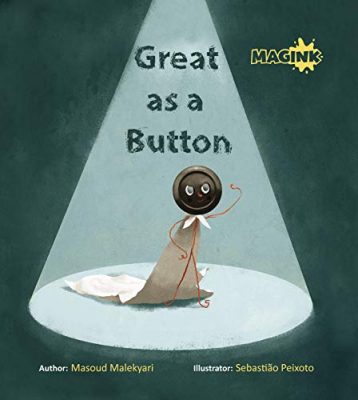
    Masoud Malekyari’s Great As a Button is a delightful children’s book that places a soulful little plastic adornment at center stage in a thought-provoking story that offers up a positive lesson about self-worth.

    This tale unfolds from a first person POV as a lonely, black plastic button falls off a shirt. The button ruminates over its plight of feeling too plain to be noticed, and wishes perhaps to be a sock, a key, or a pair of glasses, i.e., a more important item that the button surmises someone would go out of their way to look for.

    Amidst encounters with an inquisitive dog and some playful ants, the button has longings to reside in a big castle while adorning a king’s coat, or to sail across the ocean while attached to a boat captain’s slicker. Fate suggests that the button might be in trouble if snatched up by birds; lucky if used by a seamstress; or forlorn when not chosen like the more ornate accessories in a tailor’s shop. When given to a young boy, surprising opportunities send the button in an unexpected direction where ultimately, he discovers newfound importance on a sunny winter’s day.

    Illustrations by Sebastião Peixoto prove glowingly complimentary and are a key component of the story.

    The natural color shadings render quiet, yet well-defined drawings. Quirky and whimsical features lend true personality to the bevy of characters. From the intense facial details of a battling buttons army to the sad expression of the central plastic disc pondering his plainness, this simple character with its curlicued thread body is artfully brought to life.

    Peixoto also smartly visualizes enlightening options between the little button’s desire to live in a royal palace, contrasted with an outdoor tent-like open book structure, where a smokestack chimney provides warmth on a snowy day. Likewise, the thought of adventure on the high seas is pitted against the simplicity of a paper vessel floating down a curbside stream.

    Great As a Button is a charming take on learning to be happy with who you are.

    Like the little button, it may take some of us a bit longer than others, but finding our particular niche is key. Our own unique traits and talents will lead us to where we belong, and satisfaction will come with contentment. Comparisons with others is unnecessary, as we come to realize we are each an individual with our special place in this world.

    Like the simple button who comes to understand his self-worth, this quaint, imaginative read is an important work with a vital message for both young readers and the confident adults they aspire to be.

    Great As a Button by Masoud Malekyari won Grand Prize in the 2020 CIBA Little Peeps Book Awards for Early Readers Fiction.


    5 Stars! Best Book Chanticleer Book Reviews

    Little Peeps Grand Prize gold foil book sticker

  • EUDORA SPACE KID: The Lobster Tale by David Horn – Children’s Humor Books, Children’s Action and Adventure Sci-Fi Chapter Books, Children’s Humorous Action Adventure Chapter Books

    EUDORA SPACE KID: The Lobster Tale by David Horn – Children’s Humor Books, Children’s Action and Adventure Sci-Fi Chapter Books, Children’s Humorous Action Adventure Chapter Books


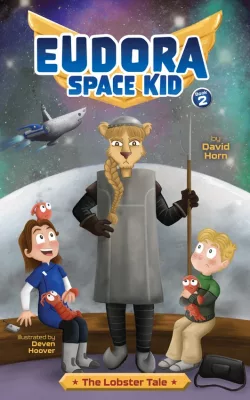
    In Eudora Space Kid: The Lobster Tale, author David Horn continues the spell-binding adventures of a third-grade girl living on a massive spaceship in the year 4021. Eudora Jenkins enjoys using her very sharp mind to play tricks on the grown-ups – but her latest one may backfire and cause an interplanetary crisis.

    As The Lobster Tale opens, Eudora, the narrator and mastermind of her sometimes disastrous but always hilarious gambits, is in a tunnel on the AstroLiner Athena. The plan? Just a few minor computer alterations. She is aided in this naughty but essentially harmless prank by her sometimes nervous buddy Arnold. Her changes will be revealed later when she and Arnold visit the ship’s bridge. Both are excited to watch the regularly scheduled battle training exercises they will view on the main computer. 

    Arnold’s stepdad is what Eudora calls a “Lootenant” (her spelling does not always keep up with her math and technical skills). He will allow them into Athena’s inner sanctum to watch war exercises staged to practice in case they are attacked by the galaxy’s worst enemies, the Qlaxons. Watching the practice is a rare treat and needs the approval of the ship’s captain, Captain Jax.

    Of course, Captain Jax welcomes Arnold, but some of the staff are annoyed to find Eudora with him. You see, Eudora has a particular reputation for mischief, which is proven again when her minor computer tweaks cause the “red alert” signal to blare out as an ancient earth song, “Wiggle Your Booty.”

    Eudora is sent to the “brig,” run by her mom. Her punishment? She is consigned to a holding cell to do her homework.

    While there, she learns that Athena’s head chef wants to commandeer all the lobsters in the ship’s aquarium to prepare a great feast. Eudora’s stepdad oversees the aquarium and studies sea animals. He would never agree to have the lobsters boiled and eaten. 

    Eudora hatches a plot to save the lobsters. Arnold, his usual slightly reluctant self, agrees to help. Sneaking through the ship with two huge bags of lobsters, they are caught up in what appears to be a potential war with the Qlaxons. But things really heat up when a lobster from Eudora’s stash leaps out and attacks!

    Horn’s creative skills are undeniably in sync with the younger readers (age 6 to 10). Children will be magnetized by the latest tale of Eudora’s shenanigans, supported perfectly by the energetic, illustrations by Deven Hoover.

    Both author and artist have humorized their personal descriptions, transforming even those usually didactic segments into a fun read. Eudora is an exemplary narrator, referencing earlier actions she has taken (i.e. writing to the president of the galaxy “to get homework added to the list of enemies”) or simply skims over another adventure, saying, “I’ll tell you about that another time.”

    This chatty, youth-centered storytelling brings out the hilarity and occasional genuine peril of Eudora’s antics far more powerfully than a third-person approach. This storytelling style serves to keep youngsters turning the pages. With a strong female protagonist accompanied by her more cautious and diplomatic companion, David Horn succeeds in fascinating all who read the book, whether the audience is young or a bit older. In short, Eudora Space Kid: The Lobster Tale is one Children’s chapter book we can highly recommend!

    Read our review of the first book in the series, Eudora Space Kid: The Great Engine Room Takeoverhere.


    5 Stars! Best Book Chanticleer Book Reviews

  • WHEN the WIND CHIMES by Mary Ting – Sisters Fiction, Kauai Hawaii Travel Books, Single Women Fiction

    WHEN the WIND CHIMES by Mary Ting – Sisters Fiction, Kauai Hawaii Travel Books, Single Women Fiction

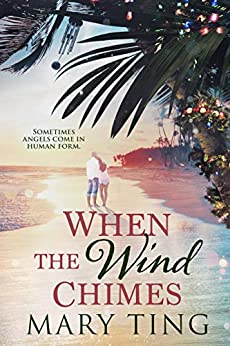
    A blue and gold badge for the 2020 Grand Prize Winner for Chatelaine Romantic Fiction When the Wind Chimes by Mary TingIn When the Wind Chimes by international best-selling author Mary Ting, Kate Summers wants to make this Christmas extra-special for her older sister, Abby, and four-year-old nephew.
    A year ago, she’d given up Christmas with her family to spend the holiday with her boyfriend, Jayden, whom she had caught cheating on her the next day. Not only is she hoping to erase that memory, but she also has another even more important reason to make this Christmas special.  A few months after her disastrous break-up with Jayden, her brother-in-law, Steve, passed away from cancer, so Abby and Tyler will be spending their first Christmas alone.

    After taking a leave from her job as a graphic designer in LA, Kate flies to Poipu, Kauai, determined to make this an amazing holiday, but on her way to her sister’s house, she meets a mysterious man, who gives up his cab for her. Kate can’t get the handsome stranger out of her head, and when she sees him again in her sister’s art gallery–and destroys his expensive shirt with paint–she is both mortified and excited.

    Billionaire Leonardo Medici, the heir and CEO of Medici Real Estate Holdings, is the most sought-after bachelor on the island and the most elusive. Lee just wants privacy and a temporary nanny for his four-year-old daughter, Bridget. When Kate applies for the job, neither is aware of their previous connection to each other until they meet in Lee’s mansion after Kate is hired by his permanent nanny, Mona. Bridget quickly bonds with Kate, and as they grow closer so do Lee and Kate. Kate’s rocky relationship past, however, keeps her on edge, and she must find a way to overcome the damage done by her cheating ex before she can ever learn to love again.

    The unpredictability of life and fate’s subsequent role in a person’s future is a major theme within this novel.

    Abby, Kate’s sister, never expected to be a widow in her twenties. Steve, her husband, died suddenly from cancer. The disease progressed more quickly than doctors predicted, and she is left to fend for herself and Tyler. Moving to Kauai, the place where she and Steve honeymooned, is an attempt to escape her sadness and find peace in the place where their life together began. Starting her own gallery in such a small community was another uncertainty, and while the gallery struggles at times, destiny brings Lee into her small business, and he becomes her best customer.  Lee purchases art to stage his more expensive listings, which is how he encounters Kate a second time after a quick-passing rainstorm brings them together the first time. Had Kate not jumped into his cab, slinging water all over his suit, they would not have met. Kate would have never seen the ad for a nanny had Abby not come down with a cold and needed Kate to drop Tyler off at preschool, and she would not have gotten the job had Mona not needed a replacement nanny for two weeks. The kismet that brings Lee and Kate together is an interesting and humorous part of the novel. This fate-filled string of coincidences adds a hint of the supernatural to their love’s beginning.

    Vulnerability is another great theme found in the award-winning, When the Wind Chimes.

    Abby is most definitely a strong woman. She not only begins her own business but also must be both mother and father to her son. However, Abby can’t do everything on her own. With her struggling business and the demands of her private life, she welcomes the help Kate brings and hopes she will stay on the island rather than going back to Los Angeles. The close relationship between the sisters is touching, and Kate’s job search shows how much she loves Abby and Tyler. Even though she fails to find a job as a graphic designer and has no experience as a nanny, she takes the job, planning to give the money to Abby to help her support Tyler.

    However, Kate’s willingness to try something new despite her uncertainty extends to her own artistic ability. Since her horrible experience with Jayden, she has lost her confidence and desire to paint even though Abby has successfully sold Kate’s pieces in the past. It takes courage and a release of her own fear to get her in front of a canvas, but her regained confidence brings her into contact with Lee again–albeit accidental. Lee has his own vulnerability issues. Opening up and bringing Kate into his life is a risk. He cannot allow just any woman into his life. Most of the women who approach him are only interested in his money or looks, and he must protect both his privacy and Bridget. His own past causes him trepidation because he harbors a deep hurt that is known only to those within his immediate circle. Both he and Kate learn to face their deep-seated emotions rather than burying them beneath fear and uncertainty, but to do that, they must give vulnerability free reign.

    When the Wind Chimes is more than a romance novel. It’s a heart-warming, feel-good read that will leave readers wanting more.

    Mary Ting won the Grand Prize in the 2020 CIBAs in the Chatelaine division for Romance and Romantic Fiction novels for her spell-binding novel.


    5 Stars! Best Book Chanticleer Book Reviews