Tag: Chanticleer 5 Star Book Review

  • The BOY WHO WROTE POETRY by Judy Taylor – Poetry, Family Memoirs, Artist Biographies

    The BOY WHO WROTE POETRY by Judy Taylor – Poetry, Family Memoirs, Artist Biographies

    The Boy Who Wrote Poetry is a heartwarming and inspirational work about Mark Ford, a promising young poet and writer who died a tragic and premature death at the age of eighteen. This collection is the poetry he left behind.

    Judy Taylor, Mark’s sister and the author of the book, tells the story of her brother’s short life and their family, the circumstances in which he grew up, and how he began to express his creativity at a very young age. The examples of Mark’s poetry and general writings that the author presents are remarkable and moving. Considering the tender age at which Mark wrote the poetry, the sophistication and insight revealed in the work are astonishing.

    Despite the sometimes perplexing narration and lack of photograph captions, leading to confusion about who’s who in the images presented, the pictures of the family growing throughout the years give a touching clue to the close-knit family and the seven children, of whom Mark was the eldest and the author, his sister Judy, was the youngest. The photos, even without clarity on which child is which (the glasses at least make clear which is Mark Ford), make for warm reminiscences and give a clue to how the young poet lived and grew.

    What is of particular note is the degree to which the self-awareness is evident in Mark’s work. “Please excuse the misspelled words,” he requests in the introduction to a collection of his poetry. “It was meaning, not grammar I strove (and am still striving) for.”

    There are glimpses of what kind of storyteller that Mark would have developed into with offerings like “What do you use/To keep out the night? Try to conceal/Your delicate fright. Don’t call for help/For nothing is worse/Than wounded dignity/Innerness unhorsed.” A little trepidation, a little humor.

    Mark, according to the author, went through phases including fantasy (in particular The Lord of the Rings trilogy by J.R.R. Tolkien) and Bob Dylan’s work, and produced imagery that reflects the prose of the time:

    What changes in a day?
    What makes the sky so grey?
    What takes the wind and makes it so alone?
    What breaks the earth and scatters senseless stone?
    On the horizon, the bare brown
    Horizon, glowing with the last of life,
    Glowing with the last of life.
    What changes in a week?
    What makes it easier to speak
    The words I should have said but could not say
    And now that day has joined the past days
    Littered in a pile.
    A useless pile of days.
    A useless pile of days.
    A lightning tears the sky in two.
    Another moment it is through
    And sky is whole.
    Beating down your wincing brow
    The rains betray your wisdom now.
    Alone the storm.
    You, your trials, disappear
    For who will equal or compare
    Its tear-born ire?
    The weeping storm screams out aloud.
    Its tears are naked, bare and proud,
    Anew for each departed leaf.
    The sky lays down and cries its grief.

    Not only that, more than a bit of insight amid the darkness, in his final poem before his death:

    Guilt drops hawklike on suspecting man
    And plummets toward his silent, secret sin.
    The soul is pierced in vain; no talon can
    Remove the stain when it is held within.
    The grace of God, when sought, can dull
    The beak and claws of guilt. A man can pray
    And ease the burden in a heart too full
    To bear, although the pangs of failure stay;
    For God is God above us all and draws
    Us up to Him, but man is man and shall
    Persist in needing comrades in the pause
    Between the ultimate rise and the ultimate fall.
    God’s gifts uplift, but cannot be compared
    In saving strength to sadness equally shared.

    Mark Ford’s poetry and creative writing, the focus of the piece, were truly outstanding, and his early demise heartbreaking.


    5 Stars! Best Book Chanticleer Book Reviews

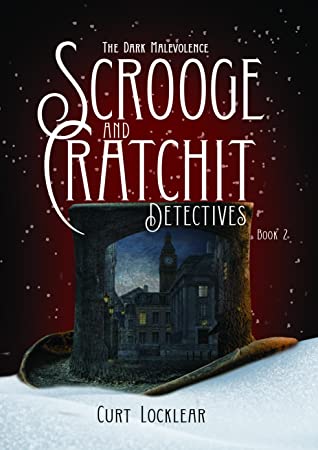
  • SCROOGE and CRATCHIT DETECTIVES: The Dark Malevolence by Curt Locklear – Victorian Mystery, Victorian Cozy, Holiday Fiction

    SCROOGE and CRATCHIT DETECTIVES: The Dark Malevolence by Curt Locklear – Victorian Mystery, Victorian Cozy, Holiday Fiction


    Curt Locklear’s The Dark Malevolence, book 2 in the Scrooge and Cratchit: Detectives series is an immersive Victorian murder mystery that sets readers firmly in the era alongside two of our favorite characters from the most famous novelist of its time, Charles Dickens.

    Once again Locklear hits the high notes of Dickens and Doyle as he paints good old London town in the days before electricity and public sanitation. We follow our heroes, Scrooge, Cratchit, and Lockie, as they put their talents to work to solve not one, but four mysteries.

    With a cast straight out of the classics, Locklear references Shakespeare as well as developing his “something is afoot” mystery. Upon taking the case of Mrs. Evangeline Peabody’s missing husband, the mystery soon becomes a murder case. The husband is found dead and a local police officer, or “Metropolitan,” is found mauled to death. Mystery-one leads to murders one and two, and each event leads readers to another crime, another suspect, and another victim.

    He does not shy away from the economic classes fraught with double standards, scandals, and social injustice. The story unfolds in upholding the Victorian penchant for complicated plots and stories and along with timeless investigative techniques as used by Sherlock Holmes. A compelling combination for lovers of classic mysteries.

    The historical period comes to life under the author’s deft crafting, and his characters fill the pages with high-stakes chases, shootouts, brawls, and mad dashes to safety.

    Lockie uses skills from his former life along with his knowledge of the criminal mind to help uncover leads his upstanding colleagues wouldn’t even recognize. Scrooge, a man trying to mend his uncharitable ways, uses his quick wit and abilities to judge character as they pursue one lead after another, and Cratchit uses his benevolent nature to bring all the talents together to help solve the crimes.

    Locklear introduces complication after complication and with it come characters from Grimm’s fairytales, namely Snow, alluding to Snow White, and her seduction and disappearance from her home with a family of little people who will do everything in their power to save her.

    Buckle up – there’s more!

    Add in a crime ring and new medical technology for Victorian times, and you have the elements for the darkly compelling work. Locklear creates a sinister world where evil reigns in the back streets and alleys, and the success of our heroes is uncertain.

    Locklear has done his research and the glossary of terms at the end of the book comes in handy for the language and terms used by the characters. The mystery builds and builds even as one murder is solved, and another begins.

    Shining a light on issues of the time, such as human trafficking, illegal human experimentation, and hypnotism – a very popular medium for the Victorian era – Locklear kept this reader immersed and turning the pages of this well-crafted murder novel.

    The characters become embroiled in and expose these issues. At times we cringe, but Locklear always holds out hope and optimism, even when Cratchit is afraid to sleep, and Scrooge dreads the wee hours of the night when Marley pays his visits.

    The complex subplots create tension and intrigue as we follow our heroes through the dark seamy alleys and warehouses of London to solve murder and mystery.

    The historical aspects lend a wonderful period flare, and the suspense and plot twists keep the tension high from beginning to end. Locklear’s Victorian mystery, a four caper in one book, has Lockie, Scrooge, and Cratchit rushing to solve each murder and put bad guys behind bars, but can they catch them all? The Dark Malevolence is a page-turner extraordinaire, a captivating read from beginning to end, and one we highly recommend.

    5 Stars! Best Book Chanticleer Book Reviews


    • HEALING OUT LOUD: How to Embrace God’s Love When You Don’t Like Yourself by Sandi Brown & Michelle Caulk, PhD, LPC – Christian Counseling, Memoirs, Friendship

      HEALING OUT LOUD: How to Embrace God’s Love When You Don’t Like Yourself by Sandi Brown & Michelle Caulk, PhD, LPC – Christian Counseling, Memoirs, Friendship


      Two writers – friends, and former counselor and client – combine forces to create Healing Out Loud, a dynamic book aimed at understanding and overcoming the deficits that life hands us.

      Sandi Brown, a radio personality with more grit than she realizes, seeks professional help. Michelle Caulk’s therapeutic methodology perfectly suits this case. The two offer examples of wishing for and finding true mental health through the development of a remarkable communicative relationship.

      Each chapter of the pair’s psychological explorations begins with a memory from Sandi, accompanied by her expanded view of incidents from childhood and beyond. These ruminations are then matched by counselor Michelle’s personal grasp of Sandi’s specific dilemmas, and well-constructed guidelines for a healing process that readers can incorporate into their own lives. Sandi, grappling with low self-esteem, was traumatized as a child when her father left her mother and brother, loudly and finally, with no explanation.

      This was followed by her mother’s marriage to a gruff and unloving stepfather who abused the little girl starting when she was six.

      As Sandi opens up to Michelle about this period of her life, she remembers once refusing to properly excuse herself from the supper table, simply sitting there for a protracted period in silent defiance. To this, Michelle declares that Sandi was “a fighter,” and this becomes a working theme in their therapy sessions as Sandi’s emotional grasp expands.

      She begins to realize she can confront and overcome her long held shame; she has a voice and she is loved, not only by those in her current life, but by God, who has a plan for her success. At each stage of her self-discovery, Sandi is offered another step in “The Unpacking Process with Dr. Michelle.” The day Sandi buys make-up is a notable turning point, since previously she considered herself too unattractive to draw undue attention to her features.

      Sandi and Michelle, whose relationship gradually enters the realm of friendship as both reveal their deepest aspirations, have constructed this vibrant manual to help others take on the task of self-healing.

      Part of the process, as is made clear in a variety of ways, is to speak out and invite others to share their own inner doubts and fears. The writing is both educated and plain, emphasizing their shared drive for outreach and their common Christian outlook. Useful metaphors include taking the plunge off a high diving board, throwing unwanted feelings off a bridge, and Sandi’s youthful memory – expanded now to include her greater understanding – of being a kite, learning to fly past her problems, accept life’s inevitable scars, and share her experiences with other battered flyers.

      Healing Out Loud is a most unusual literary experiment that combines a woman’s need to find a better path and greater fortitude, and another woman’s wish to help her see that the positive qualities she seeks already dwell within her. The resulting work has the power to evoke threads of memory and longing for improvement among its readers and can doubtless serve in both individual and group contexts.


      5 Stars! Best Book Chanticleer Book Reviews

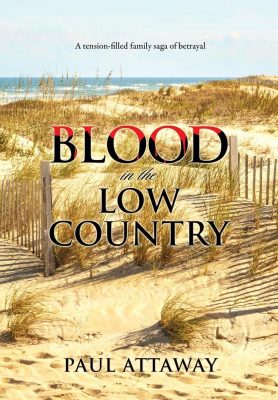
    • BLOOD In The LOW COUNTRY by Paul Attaway – Religious Mysteries, Action & Adventure Literary Fiction, Southern Literary Sagas

      BLOOD In The LOW COUNTRY by Paul Attaway – Religious Mysteries, Action & Adventure Literary Fiction, Southern Literary Sagas

      Are the sins of the father destined to burden the children? Or is it the sins of the mother that create a child’s worst nightmare? Find out in Paul Attaway’s riveting Southern mystery, Blood in the Low Country (The Atkins Family Saga).

      Rose Atkins is weighed down by a lifetime of desperate secrets. The mother of two teenage sons and wife to a lawyer, Monty, Rose goes to great lengths to keep her past hidden. Her attempts to conceal all details about this sordid history may bury both of her sons. With the passage of time, secrets become harder and harder to keep. The pressure builds and leads to cracks in the foundation that Rose carefully manufactured for her life. If she falls through, it may be her family that will pay the heaviest price.

      Rose’s brutal efforts to maintain a blissful family illusion is designed so she will be admired by all in the community.

      Behind closed doors their dysfunctional home life erupts. Rose idolizes her younger son, Walker and loathes her older son, Eli. Both extremes are destructive. Her misguided actions reflect her feelings about their different fathers.

      Despite their mother’s constant interference, sons Eli and Walker develop a close bond. They work to brighten their futures, creating their own secrets as they try to live undetected by their mother’s intrusive radar. At the same time, they can’t help but engage in a never-ending series of individual attempts to earn love from Rose and Monty. All their efforts end in disappointment. Rose and Monty always want more.

      The boys become discouraged and distraught by the pressure of their parents’ requirements of acceptance – of earning their love. Why does love have strings attached? Eli and Walker are caught in a sad cycle. If only Monty could find a way to unite the family, but he is mystified by his wife’s actions and unsure what he can do.

      Catastrophe strikes when Eli’s girlfriend, Kimberly is found murdered.

      Last seen in an argument with Eli, the boy becomes the prime suspect in her murder. Eli declares his innocence and naturally seeks support from his mother. She coldly turns her back on him. Abandoned, can her desperate son find justice on his own?

      The shock of this tragedy has forever altered the lives of Eli, Walker, his parents, and all those in Kimberly’s family. In the meantime, there is a killer on the loose who is emboldened knowing that all accusing eyes are distracted by Eli.

      Author Paul Attaway creates intriguing characters with complex interrelationships, presented in such a realistic way readers will find it difficult to put the book down.

      The characters’ reactions to their situations as the plot moves forward is compelling and heartbreaking. In short, those who enjoy their Southern Mysteries with an intricate plot and highly relatable characters will line up for more. Blood in the Low Country is one mystery we highly recommend.

      Author Paul Attaway is a master at showing a series of events from such varying characters’ perspectives. It’s so intriguing to discover the motives and actions of the different personalities when confronted by the same events. The writing is artfully paced, stimulating the reader with a constant curiosity of what can happen next.

      These characters, often at cross purposes, drive circumstances forward to an inevitable, explosive conclusion. The author ignites this climax by skillfully revealing surprise twists. While presenting this enticing drama, the story also contains a thrilling mystery and hunt for a killer. Readers follow the clues as they are uncovered, finding themselves caught up in the case and cheering for the families, and for justice. But, once Blood in the Low Country is spilled, can secrets be forgiven, love triumph, and trust be restored?


      5 Stars! Best Book Chanticleer Book Reviews

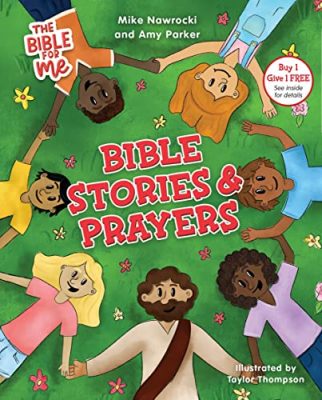
    • The BIBLE for ME: Bible Stories and Prayers by Mike Nawrocki and Amy Parker – Christian Children’s Books, Christian Children’s Early Readers Books, Children’s Devotional Christianity Books

      The BIBLE for ME: Bible Stories and Prayers by Mike Nawrocki and Amy Parker – Christian Children’s Books, Christian Children’s Early Readers Books, Children’s Devotional Christianity Books


      The Bible for Me: Bible Stories and Prayers by authors Mike Nawrocki and Amy Parker is a brightly illustrated, highly readable and listenable collection of fifty stories drawn from the Holy Bible and specifically geared for children of all ages.

      The collection moves through the Bible from Old to New Testaments, with twenty-five stories from each. In the first half readers will see, through simple words and vivid pictures styled to the text by artist Taylor Thompson, how the universe was created, and the Jewish people were chosen to carry God’s word throughout the known world in their time. The language is frank and will appeal to young readers, as we learn for example, how in the Garden of Eden “Adam and Eve Mess Up.”

      In “Three Friends in the Hot Seat” we see how three spiritual heroes – Shadrach, Meshach and Abednego – are punished by King Nebuchadnezzar for refusing to worship idols; they are thrown into a fire but are saved by an angel of the Lord.

      The special place of girls and woman is extolled, with the account of Esther, “The Girl Who Saved Her People,” and later through the story of young Mary, and her role in God’s plan as the mother of Jesus. Thorny issues such as Abraham’s willingness to sacrifice his own son for God are treated with wisdom and appropriate tact, as the authors follow the story with an ameliorating prayer in which the child reader may ask God “to put You first and to be willing to give up even our favorite things to follow you.”

      With the advent of Jesus in the book’s second segment, the traditional biblical stories are again accompanied by these prayers that help to make the meanings clearer. When Jesus is tempted by Satan, the prayer forthrightly thanks God “for showing us how to deal with the devil.”

      Both composers of these short, educational offerings have a background in writing and producing: Parker has authored more than sixty Christian-themed children’s books, and writer Nawrocki works in film and other media to provide Bible-based allegorical texts for youthful readers, watchers, and listeners, and of course was one half of the well-loved Veggie Tales creative team. Together with Thompson, whose pictorial interpretations range from puckish to powerful to awe-inspiring, a wide-ranging panorama of Christian history springs to life to help youngsters develop a grasp of higher truths.

      The authors begin by informing readers (and those who may read to them) that the stories they have chosen are aimed at speaking directly to their audience. They conclude with a closing prayer and brief “sermon” to encourage young people to accept Jesus and his saving grace.

      The Bible for Me by Nawrocki and Parker could be used in a Sunday school or other group context, as well as within a family, and may serve to inspire teachers, parents, and grandparents as well as their young listeners.


      5 Stars! Best Book Chanticleer Book Reviews


    • BLUE FLAME: Book 2 of the Daemon Collecting Series by Alison Levy – Fantasy, Supernatural, Adventure

      BLUE FLAME: Book 2 of the Daemon Collecting Series by Alison Levy – Fantasy, Supernatural, Adventure

      Leda Morley has just discovered she stands between the world and total devastation in Alison Levy’s second book, Blue Flame.

      As a gatekeeper, Leda is descended from a long line of women responsible for keeping Apep, a chaos daemon, from devouring the sun and spinning the world – at least the Notan dimension – into complete oblivion. After barely escaping the a terrifying journey to the world of Arcana, Leda has decided to learn everything she can about these alternate dimensions and the rules controlling them. Rachel Wilde, a collector in charge of sending defective daemons back home for repair, has agreed to allow Leda to shadow her on her job in order to collect as much data as possible. However, both Leda and Rachel get more than they bargain for when they investigate a market already familiar to Rachel.

      Naji El Sayed, the young son of the owners, has accidentally brought a Djinn into the Notan world, and the creature is bent on revenge and attempting to murder Naji’s mother. Rachel worries she won’t be able to help the family at all until she finds help in an unlikely place, a formerly homeless oracle. Bach Chesterfield spent six months living under a bridge and raging against the images constantly bombarding him until Rachel rescued him and moved him into her house, but will this unlikely hero have the courage to step up before it’s too late?

      Bach is truly a shining character in this novel. In this second installment of the series, the reader will see his backstory and his personality come forward.

      Having spent the last six months living under a bridge with other homeless people, Bach is terrified of “normal” life. He knows it would be incredibly easy to slip back into his previous life of obliviousness, but he refuses to do that. With the help of Simon Morley, Leda’s brother, he is painstakingly attempting to rebuild his shattered existence and overwhelmed mind from the wealthy parents who disowned him to the partner who kept his belongings and moved on.

      Seeing the past, present, and future of most people and creatures he meets has left Bach consumed and imprisoned within his own gift, but his resiliency to retake his life is touching. Even though he knows it’s impossible, he would help every person on the planet if he could, and he insists on giving back to those who helped him along the way, going so far as to track down a fellow homeless man who acted as his protector and giving him the information he needs to find the daughter who desperately wants to find him.

      When he must confront the Djinn, he finds a strength he never knew he possessed and even manages to bring forward the “humanity” within the being. Bach’s role in the plot cannot be undervalued and promises to be one of prominence within future installments.

      Leda and Rachel present an intriguing dichotomy. The women share a few similarities, yet their differences really highlight the unique world-building within the novel.

      The work of these women is one such area. While Leda loves learning about diverse cultures and has a voracious thirst for customs and language, she hates her job working for an administrator at a local museum. Her boss is lazy, often requiring her to perform his duties then complaining when the quality suffers following her near-death kidnapping and subsequent injury. She detests the harassment and sexualization she feels within her workplace and longs for the kind of world where that would never happen – a world like Arcana.

      In Rachel’s matriarchal society, a woman would never experience such an insult. She has a much more equalized workplace, but she, unlike Leda, has no love for what she does. Five years into her eight-year length of service, Rachel wants out. She dreams of returning to her family’s farm. Though she answers Leda’s myriad questions, she’s often confused by Leda’s conflicting emotions so different from her own background.

      Faith is, perhaps, the biggest and most significant difference. Leda struggles to reconcile her Christian upbringing where demons and angels hold supernatural posts with Rachel’s dogmatic practical explanation of inter-dimensional creatures malfunctioning on Earth’s plane. Though she sees the daemon in action, she cannot believe the stories she remembers so fondly are make-believe. Rachel cannot see them as anything but broken creatures needing help. However, while their discrepancies leave Leda with questions, her faith, interestingly, doesn’t diminish.

      The Daemon Collecting Series is a great spin on an age-old stereotype. It’s fun, engaging characters will create a fantastical journey without leaving the very world surrounding us.


      5 Stars! Best Book Chanticleer Book Reviews

    • CITY Of PEACE by Henry G. Brinton – Murder Mystery, Religious Tension, Multicultural

      CITY Of PEACE by Henry G. Brinton – Murder Mystery, Religious Tension, Multicultural

      M&M Blue and Gold 1st Place Badge Image

      Religions and personalities collide, mix, and meld in this vibrant multicultural, multinational mystery by author Henry G. Brinton, set in the engaging town of Occoquan, Virginia.

      Harley Camden never heard of Occoquan before he is assigned there by his bishop. She insists on a change of venue for him because both his sermons and his management of church affairs have lost their flavor – understandably – after his wife and daughter were killed in Brussels, by Islamic terrorists who used nail bombs to make their horrifying statement.

      Camden realizes that he needs the change, and soon finds that, despite his inner pain, Occoquan has many charms, and many charming residents who go out of their way to make him feel at home.

      Tim, who lays claim to no religion, introduces him to the remarkable history of the region, staunchly abolitionist during the Civil War. Tim also tells him about the Bayatis, an Iraqi family who operate the local bakery. Not long after Camden’s arrival, the complacent riverside town is rocked by sudden tragedy when Norah, the baker’s daughter, is murdered; the presumption made by law enforcement is that her father Muhammad is guilty of a ritualistic killing because Norah had consorted with a man, thus dishonoring her family.

      To preach the Christian gospel, find forgiveness in his enraged anti-Islamic mind, and to find a way to bring together the many strands of spirituality in the town – Christian, Jewish, Muslim – will be a task that Camden never expected to take on.

      Tormented by strange, seemingly prophetic dreams, and guided to meet a Coptic Christian couple and a Jewish woman about whom he receives psychic “messages,” Camden will also befriend the Bayatis and begin, almost without meaning to, to investigate Norah’s murder. In doing so he will uncover obscure but meaningful lore with a bearing on the town’s dilemma, providing regenerative fodder for his emotive sermons. In seeking Norah’s actual killer, he will also imperil himself, and ultimately uncover a terrifying danger hovering over Occoquan.

      Brinton knows whereof he writes, as a Presbyterian minister and well-known journalist whose articles often encompass the themes of multiculturalism, religious understanding, and tolerance.

      Examining as he does the thorny religious and political issues gripping the nation and our world today, Brinton makes Camden a spokesperson for those crucial themes. Mining materials from the history of the Galilean city of Sepphoris as the “city of peace” brings his story into broader focus, while the real-life town of Occoquan is almost a character in the book’s plot, so deeply does Brinton delve into its unique and admirable qualities.

      The first in a series of Harley Camden sagas, City of Peace is a tale of disruption and chaos – followed by reconciliation and interfaith resolve – that will fascinate readers of intelligent mystery fiction and make them seek more offerings from this talented wordsmith.

      City of Peace by Henry G. Brinton won 1st Place in the 2019 CIBA Mystery & Mayhem awards for Cozy & Not-So-Cozy Mysteries.

      M&M 1st Place Gold Foil Book Sticker Image

      5 Stars! Best Book Chanticleer Book Reviews


    • VOICES of NAVAJO MOTHERS and DAUGHTERS: Portraits of Beauty by Kathy Eckles Hooker with photos by David Young-Wolff – Navajo History, Memoirs, Indigenous Culture

      VOICES of NAVAJO MOTHERS and DAUGHTERS: Portraits of Beauty by Kathy Eckles Hooker with photos by David Young-Wolff – Navajo History, Memoirs, Indigenous Culture


      Voices of Navajo Mothers and Daughters: Portraits of Beauty by Kathy Eckles Hooker is a heartwarming work exploring the relationships between Navajo mothers and daughters, their connections with each other and their families, and their hopes and dreams for their children as they encounter a world far removed from their traditional lives.

      In these insightful interviews with Navajo women—grandmothers, mothers, and daughters—the twenty-one families that the author spoke to talked about their backgrounds and histories. They contrasted how the elder women grew up compared to their daughters and granddaughters (such as the lack of amenities like electricity, running water, or internal combustion vehicles). And they explored the many ways that traditional matriarchal Navajo culture continues to enrich their lives today.

      David Young-Wolff’s memorable, warm photographs of the interview subjects let us see the faces behind the stories. The charming presentations of the women, often with the backdrop of the land they grew up in and even of the family hogan, the traditional Navajo home, give the reader insight into the closeness between the generations and the natural and human environments that have shaped their lives.

      The thoughtful tales these women tell are interspersed with painful reminiscences about points in American history that changed their culture’s ways of life. Events such as the Long Walk, in which more than 10,000 Navajo were forcibly marched by the US military to a reservation in what is now New Mexico, and the Navajo-Hopi Land Dispute, the judicial results from which echo even now.

      In an outer society so dependent on cars, the elder women note how they were dependent on horse and buggy in their younger years. One woman recalls a memory of wonder when she saw a car for the first time. For some, water was only available by walking a certain distance to a well, and during times of drought, only used for feeding livestock or drinking.

      In addition, they tell stories about life in traditional homes. Sometimes these women remember their homes warmly and sometimes not. One family speaks of the heartbreak of having a home destroyed and the pets and livestock killed by persons unknown, despite being on good terms with their neighbors.

      The interviews in each case mention how the elders emphasized the need for education. But sometimes that “education” came in the form of abusive boarding schools that tried to erase native culture from the children they taught.

      Language is an especially important issue discussed by the women, both young and old.

      Only one of the families interviewed had a daughter who went to a boarding school that taught both Navajo and English. In the majority of cases, speaking Navajo was actively discouraged at the boarding schools. The disconnect of having to learn English to participate in the dominant American culture reflects on their lives and families even now.

      Then there are stories about traditional ceremonies, specifically about the kinaaldá, a four-day ceremony celebrating the girl’s first menses. The women tell warm and humorous tales about what’s involved (including running every day for four days, each day longer, to make sure the young woman is strong enough to withstand what her life will entail), and they describe the trials and tribulations of baking a cake that family and friends will enjoy… but the girl herself cannot.

      This book reveals how traditional culture has informed and continues to infuse the daily lives of Navajo women. Stories about arranged marriages, some expected and some a surprise (in one case only finding out the young woman is getting married the next day!), are eye-openers and provide food for thought.

      One of the recurrent themes that shape these women’s stories is the question of how to support their children and how the next generations would be educated and grow to support themselves. The traditional art of weaving was a major or even sole source of income for a significant number of women in the book. Some of the elder women recount how they discouraged learning the art so that their daughters could do better than they did. In turn, some of the daughters mourned that they never learned the traditional art, feeling bereft of a connection to their ancestors.

      Questions about what wisdom and skills we choose to pass along to our children are of course not unique to Navajo women; however, readers will enjoy Hooker’s way of illuminating this particular window into Navajo culture from the women who so graciously shared their journeys.

      Voices of Navajo Mothers and Daughters: Portraits of Beauty by Kathy Eckles Hooker, is a deeply moving, must-read for mothers and daughters everywhere, and one book we highly recommended!


      5 Stars! Best Book Chanticleer Book Reviews

    • A SPLINTERED STEP: A Sarah McKinney Mystery by Marian Exall – Mystery, International Crime, Suspense

      A SPLINTERED STEP: A Sarah McKinney Mystery by Marian Exall – Mystery, International Crime, Suspense

      Blue and Gold Clue 1st place badgeHow does one avoid family at all cost? A change to name and identity? Participate in AA? Use of a drug or alcohol as a coping habit? Live in a trailer home?

      Check out Marian Exall’s third book, A Splintered Step, in the Sarah McKinney series to find out what happens with her in Wales!

      In the second book, Sarah lands an offer to help her mentor locate his distant daughter, and this adventure takes her to rural Dordogne, France. She also must confront her own inner challenges and dangers. Now, McKinney faces her family fears and the origins of her demons in a heart-stopping and heart-breaking story!

      We learn more about a special someone in Sarah’s life who asks her to visit during the time between Christmas and New Year’s Day. She reconnects one evening with a musician named Deke. He ends up being her long-lost brother Shane who is in hiding from their abusive parents and plays covers of Rolling Stones songs. Exall describes all her characters effortlessly, making them lifelike, vivid and dynamic.

      Even though the conflict of McKinney’s family is troubling and for some hard to read, her supportive journalist beau Dykstra leads her on a fact-finding mission that is impossible to ignore.

      The pair reconnect over a cozy meal, where he surprises her with a lovely and sentimental family heirloom as a gift. They decide haphazardly to travel after attending the funeral of Dykstra’s beloved mentor, whose death came suddenly. While on their travels, they spend the first part of their trek getting to know Sarah’s musician brother, Deke. The two continue and after hours of driving into the white and cold dark winter, the snowbanks pile up and force them to reconsider their choice. As luck would have it, they end up at a bed and breakfast and spend the night, which is the scene for a plot twist!

      Sarah’s story and family origins make for good imagery and believable characters with great dialogue. Some transitions didn’t flow effortlessly and seemed out of place such as the bird sanctuary at the B&B, but overall, the story is well crafted and is hard to put down. The chemistry between Dykstra and McKinney uses their professions to their advantage to solve the case: Dykstra is a journalist; McKinney is an international advocate. Dykstra is no fuss and only out to get the next big story, but McKinney loves a good adventure which helps the two balance each other out.

      Although the descriptions of Wales as a location are sparse, the dialogue between a local host and his uncle (Uncle Georgie & Michael) give us a clearer understanding of the rural setting.

      The love and tenderness that Sarah shows her brother is also a bright light in their dark and abusive family’s past. Plus, the plot-lines pulling on Dykstra and McKinney compel readers to devour this whodunnit page turner.

      Readers will enjoy the story with or without the first two books in the Sarah McKinney series. A Splintered Step is a tale not for the faint of heart as there are some violent scenes, but it is worth continuing to see if the two can solve the case. The best audience for this book is someone who likes a good mystery, likes to travel in Europe and enjoys the Rolling Stones.

      A Splintered Step by Marian Exall won 1st Place in the 2019 CIBA Clue Awards for Suspense & Thriller Mysteries.


      5 Stars! Best Book Chanticleer Book Reviews

      Clue CIBA First Place Winners gold foil sticker image

    • The SATISFIED INTROVERT by Benjamin Plumb – Memoirs, Vocational Guidance, Family & Relationship Advice

      The SATISFIED INTROVERT by Benjamin Plumb – Memoirs, Vocational Guidance, Family & Relationship Advice

      From his earliest days, author Benjamin Plumb understood he was an introvert, someone who, described in a classic definition, feels more comfortable with their inner thoughts and ideas rather than what is happening externally.

      In his well-written memoir, The Satisfied Introvert, he tells us his life story through the lens of his introversion. He explains how he coped, often poorly, with his solitary nature in both his personal and business life, applying a variety of processing mechanisms that he describes as “recipes.” He explains that those processes didn’t apply to every life situation and sometimes kept him from seeing the possibility of making better decisions that would have made much of his life more gratifying.

      The purpose of his book, he explains, is to help fellow introverts find safety in an extroverted world and gain more satisfaction in life. “The recipe,” he explains, “is a coping mechanism that works in some situations, but you can’t stay dependent on it. To feel truly safe, you must move beyond your winning recipe and take off on your own.”

      The book takes the reader on his journey, from being the introvert in a show business family through his early romances, his education at Stanford and Harvard Business School and various entrepreneurial attempts around the world.

      He describes in detail how he found both success and failure in the business world, due, in his view, to applying and mistakenly depending on the defensive processes he acquired to protect himself as an introvert in an extroverted world.

      How he finally found peace and the success he hoped for in his professional and personal life is one of the achievements of this detailed personal memoir.

      People who identify as introverts will find this an excellent read because the writer is unafraid to expose the details of his life focusing on how he coped with his introverted nature.

      It is more of a cautionary tale, not a how-to manual. Whether it’s setting up businesses in South American jungles or revealing the dynamics of a marriage gone sour, The Satisfied Introvert is a series of life lessons learned along the way.

      For non-introverts, it’s a cogent description of a personality bent that may be misinterpreted or misunderstood in friends, colleagues or even family members. It may help you to see someone in a different light you may have thought to be stand-offish. unlikeable. Rather than a tell-all confession, it’s written by someone who hopes the sharing of his life will be of help to others.

      Overall, it offers a clear insight to a personality trait that is often misunderstood and little discussed. A read we are happy to recommend.


      5 Stars! Best Book Chanticleer Book Reviews