Tag: Chanticleer 5 Star Book Review

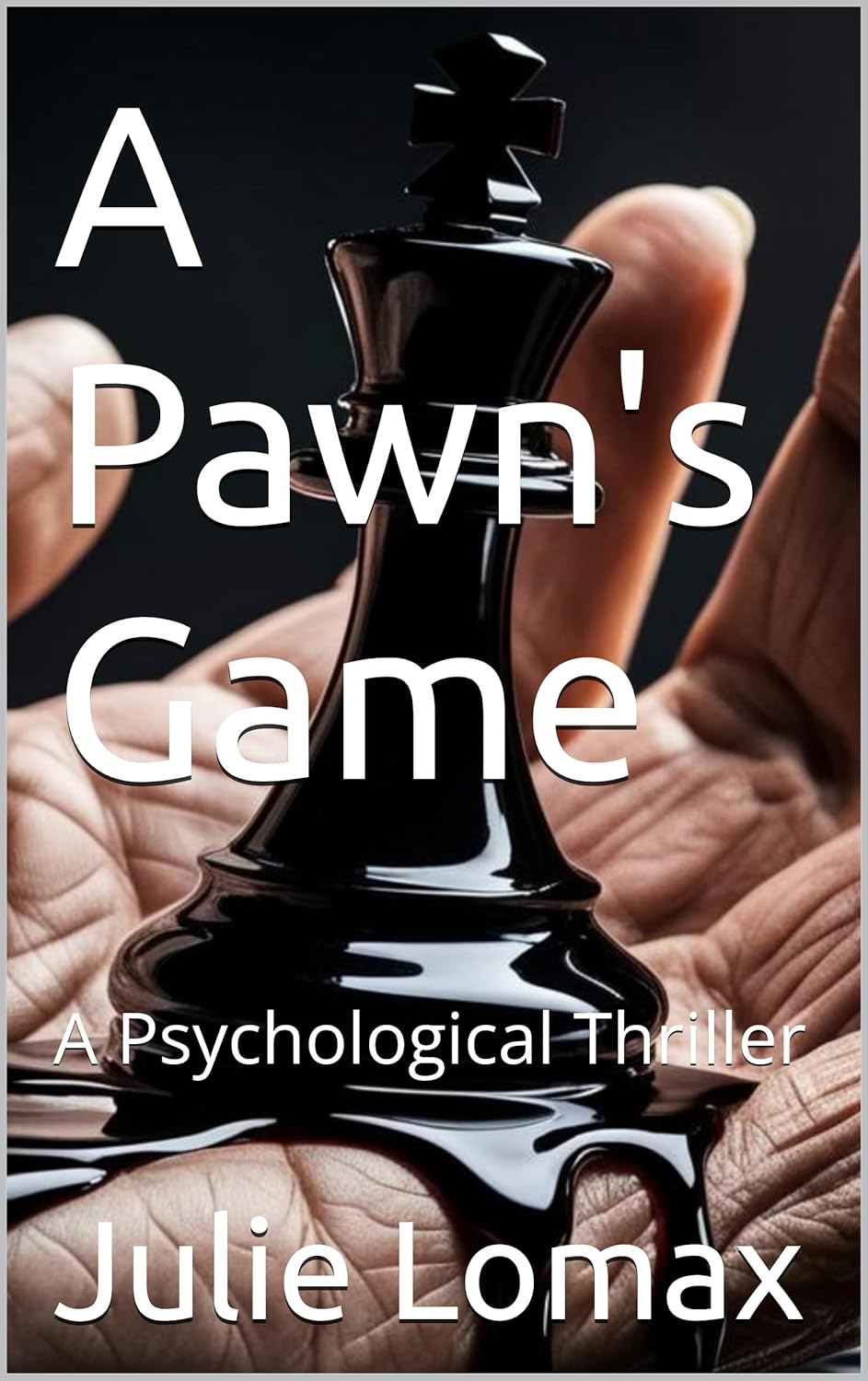
  • A PAWN’S GAME by Julie Lomax – Psychological Thriller, Serial Killer Thriller, Suspense


    In A Pawn’s Game by Julie Lomax, David Morgan wants a fresh start. He moves his family to Chicago, hoping to break his wife Liv away from her habitual affairs. But the Windy City doesn’t offer easy salvation.

    Emily, his teenage daughter, is angry in their new home, and David soon notices Liv’s eye wandering towards their neighbor Eric. Not only is his family life falling apart, but he soon discovers his coworkers have stolen his idea and presented it as their own.

    David finds peace only during his early morning runs. When David decides to play chess with Lehman, an elderly man he meets in the park, he never imagines that the game will draw him onto the board of a devious serial killer. Each lost piece tears away at more of his life, and casts David as nothing more than a pawn himself.

    As he starts to run out of moves in this game of real-life consequences, David must learn to rely on himself and become the king of his own destiny before he loses everything.

    David’s “punching-bag” mentality leads to an avalanche of problems, beginning with his wife’s infidelity that now focuses on their new neighbor Eric.

    He abandons a long-term job and forces Emily to leave behind her friends and her position on the cross-country running team. David can clearly see that Liv is a problem and that she will never change, but rather than separating from his disrespectful, unfaithful wife, he chooses to make both himself and Emily miserable. When Eric makes a pass at Emily, David has the perfect opportunity and reason to confront him, yet he doesn’t, choosing instead to brood angrily.

    It is only after playing chess against Lehman that David begins to understand the need to leave his perpetual defensive position.

    Rather than allowing Lehman’s game to completely destroy his life, he begins to devise a strategy of his own. Lehman is clearly the better player, but David refuses to go down without a fight. He begins to control of his own board, taking daring gambits despite the risk.

    Julie Lomax’s A Pawn’s Game is a bold psychological thriller where one wrong move can end the game for good. It fuses the elegance of chess with raw human emotion. From a seemingly supernatural chess game to a manhunt for a serial killer, readers will enjoy this cat-and-mouse competition.


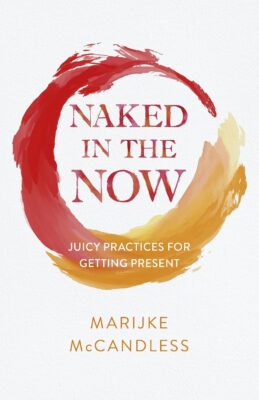
  • NAKED In The NOW by Marijke McCandless – Personal Transformation, Meditation, Mindfulness

    Naked in the Now: Juicy Practices for Getting Present by Marijke McCandless is a spiritual and psychological journey for restless minds to find authenticity, awareness, and how to be fully alive—an intimate quest and relational bridge between oneself and others.
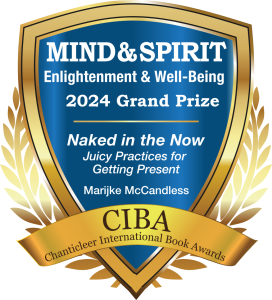
    Naked in the Now takes readers to landmarks of practice and reflection towards transcending the pressure of external achievements and cultivating instead present contentment within. Refusing the tonality of “fix yourself,” this guide invites one to rediscover their naked self, with several chapters acting as open letters to read and linger over.

    The introductory chapters focus on basic mindfulness and ease, while the later ones expand their scope to cover relationships, communication, and intimacy. A blend of poetic and practical styles ushers readers towards personal discovery in a way that balances firm instruction against a gentle directing hand. What coalesces by the end is a manual that calls forth one’s intrinsic goodness and connection through self-acceptance, playfulness, and vulnerability.

    The Buddhist idea of Dukkha (dissatisfaction) opens the journey, with McCandless referencing a nagging feeling of missing out on something despite being superficially affirmed in life.

    Ascribing this disillusionment to a “conditioned mind,” McCandless infers the solution to be in resting in the present moment. Aesop’s fable North Wind and the Sun, illustrates this idea through the power of warmth (awareness) over force.

    Naked in the Now goes on to explain mindfulness and meditation in an intrinsically playful manner: employing tactics of finding four-leaf clovers and watching rainbows as childhood memories, highlighting the real joy found in the process rather than the results.

    Metaphors of meditation as a “mini vacation” and “intimacy with lover” complement the intrinsically playful philosophy with practices such as breath watching, golden light relaxation, and sensory awareness. Journaling, self-inquiry, and devotion-based prayer further prepare readers to dismantle harmful mental conditioning.

    Further along, Naked in the Now takes a deeper turn–the inner striptease–guiding readers with suggestions on peeling off their social masks, roles, and ego identities.

    Tools such as Tarot/I Ching offer a novel perspective on the self. The focus then shifts to relationships, with pink light meditation, Tibetan tonglen (inhaling suffering and exhaling love), and love-letter exercises all reinforcing the idea that healing involves both oneself and one’s connection with others.

    Centering the interplay of communication and presence, practices such as reflective listening, gestures of a smile, sacred spaces, soul gazing, and mirror meditation all work to transform vulnerability into strength.

    The final stop is reaching the stage of “getting naked,” to lay bare one’s real desires and fears without filters through a gentle, moment by moment unfolding.

    This is a call to meet with a raw and vulnerable being, but also the most authentic and beautiful version of self.

    Each chapter cries out the motto of “Ease Over Effort”: real transformation dawns in coming home to oneself and surrendering, not in a tireless hunt for self-improvement.

    A tranquil sitting with inner restlessness becomes the goal, instead of forceful control of that chaos. Corresponding themes show in Naked in the Now’s advocacy for childhood wonder over stifling adulthood. This reminds us of how mindfulness isn’t necessarily a boring or rigid practice, but can be a joyful game. Conversely, the metaphor of the inner striptease emphasizes the significance of sober authenticity and vulnerability, with oneself and others.

    This book caters to readers who aspire to slow down from an over-scheduled life.

    It’s a soft entry point to meditation and mindfulness, a compassionate alternative to traditional and often tedious self-help narratives. Transcending aloof philosophy, this work is an experience-based, practice-oriented guide. It invites readers to learn the ways to a life of ease, love, and wonder.

    “Learning how to be still, to really be still and let life happen—that stillness becomes a radiance,” this quote by Morgan Freeman captures the essence of Naked in the Now. A guide that asks not for harsh effort but for an open-hearted willingness to nestle in inner moments and accept, without judgments, one’s emotions and desires.


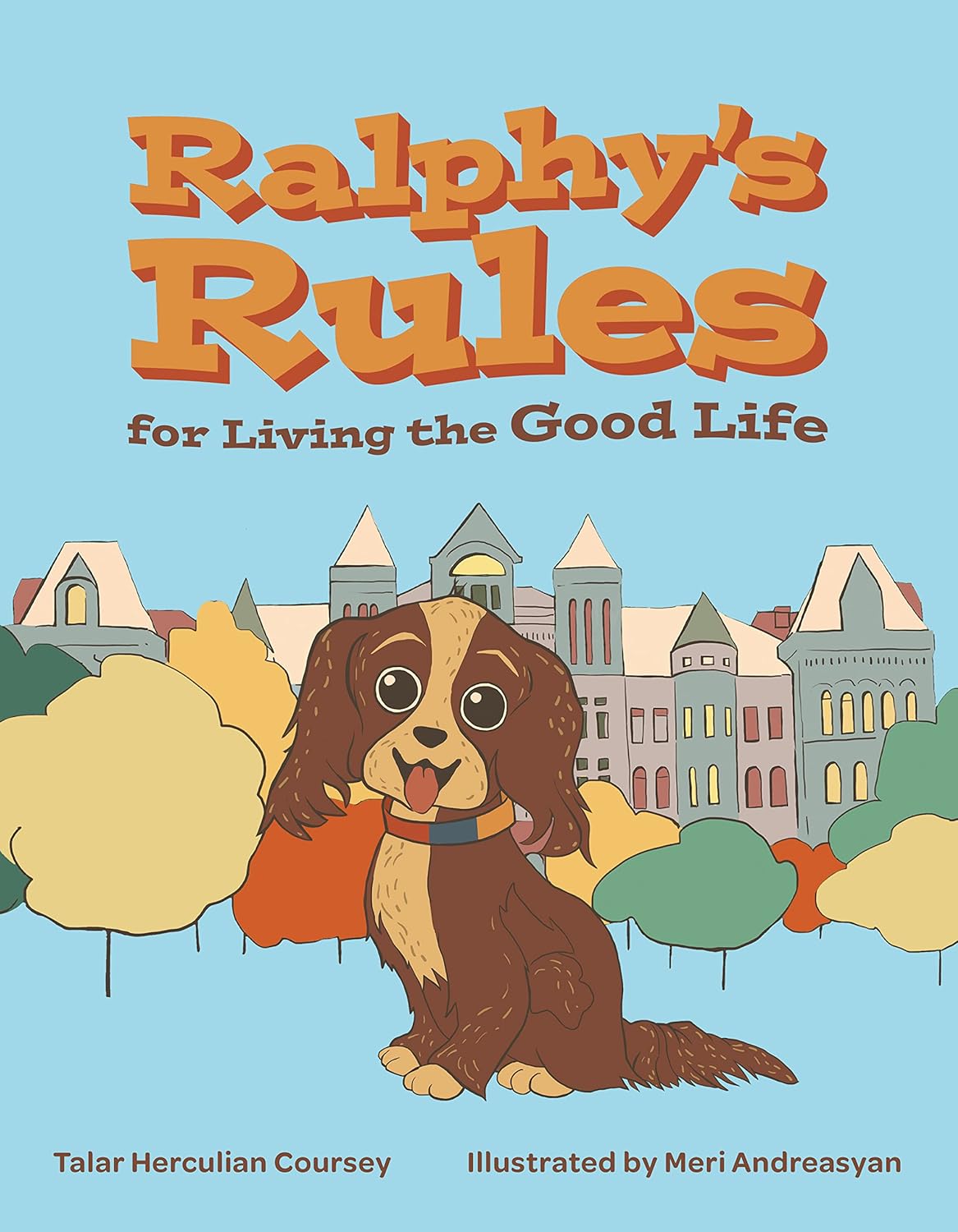
  • RALPHY’S RULES For LIVING The GOOD LIFE by Talar Herculian Coursey – Children’s Animal Stories, Children’s Self-Esteem Books, Picture Books


    Ralphy’s Rules for Living the Good Life by Talar Herculian Coursey teaches big lessons about seeing yourself and the world with kindness through an approachable, gentle, and colorful story for young readers.

    Joey the squirrel isn’t just grumpy but downright cranky. He’s weighed down by pessimistic thoughts about himself like “I’m not good at math” and “I’m funny looking.” But Joey bumps into Ralphy, a happy dog who introduces Joey to his different, empowering perspective, Ralphy’s Rules for Living the Good Life. Ralphy teaches him critical lessons on emotional resilience, which are communicated in a way that any child can identify with.

    Ralphy’s Rules for Living the Good Life stands out among its peers for its easy and flowing writing.

    The rhythm of dialogue between Joey and Ralphy makes reading aloud feel like you’re overhearing a conversation between two friends, one a little wiser than the other.

    Meri Andreasyan’s bright, warm, and expressive pictures make Joey’s frowns and Ralphy’s cheerful energy come alive.

    Through them young readers can easily understand Joey and how he changes as he learns. His initial words and way of seeing the world may remind you of moments as a child or even as a grown-up when you have muttered to yourself or to others about how you are not enough.

    The themes of kindness, resilience, self-love, and understanding others are clear but never heavy-handed.

    These lessons are not only for children but adults as well. They remind readers not to take things so personally, not to be so hard on themselves, and sometimes to be just a little bit braver.

    Ralphy’s Rules for Living the Good Life by Talar Herculian Coursey is cheerful, encouraging, and real. It’s a story that gives children life lessons they can adopt right away, and one that parents will appreciate for its lingering message of kindness to oneself.


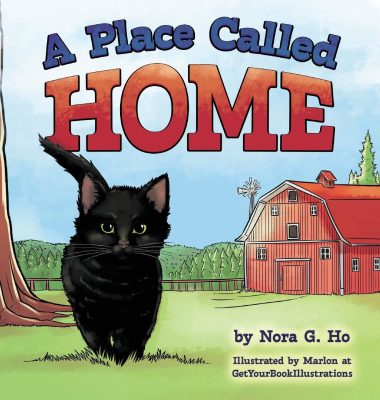
  • A PLACE CALLED HOME by Nora G. Ho, Illustrated by Marlon at GetYourBookIllustrations – Picture Books, Children’s Animal Stories, Children’s Cat Stories


    A Place Called Home, a kitten leaves his barn to adventure around the redwood forest, looking for somewhere he belongs among the diverse wildlife.

    The pond’s singing frogs and leaping trout draw his interest, but kitten certainly wouldn’t fit in underwater. He gets nervous in the woods, so vast around him, but also decides against a bunny burrow because it’s not nearly big enough. After intruding on a skunk’s dumpster and a bear’s cave, kitten finds his way back to the farm. Even the friendly pigs are too muddy for his fur.

    His journey returns to the barn with his mama and siblings, where kitten finds home waiting for him.

    Ho’s writing creates an easy and educational read-along for young children.

    Each line fits into a simple rhyming scheme. Frequent use of synonyms makes this book an effective introduction to new vocabulary, with a glossary in the back for less familiar words like ‘furrow’. Onomatopoeia words like “ribbit” and “oink” create an engaging and multisensory world of imagination for the readers.

    A Place Called Home teaches kids about the living habits of different species, from burrowing bunnies to slimy slugs. The book ends with further rhymes about each animal, along with a message on respecting wild creatures and the importance of the Redwood trees. Children interested in nature will share in the kitten’s curiosity throughout his journey.

    The art by Marlon at GetYourBookIllustrations gives vibrant personality to both the places kitten goes and the animals he meets.

    Landscapes stretch wide around the little kitten, each with its own visual identity. Pastel blue waters ripple around the frogs, titanic Redwoods reach far above the edge of the page, a skunk guards the colorful contents of its dumpster.  The imposing stones of the bear’s cave give way to a familiar green farm and finally the warm-lit wood and hay of the barn.

    Marlon depicts each animal with realistic shapes in motion, stylized enough to show their reactions to kitten. With his black fur, kitten pops against the bright colors of the background, highlighting the attention to detail in his dynamic feline mannerisms—the fuzzy attitude that any cat lover will recognize.

    An educational romp through nature and comforting bedtime story, Nora G. Ho’s A Place Called Home will be loved by any young reader.


  • RALPHY’S RULES For FEELINGS by Talar Herculian Coursey and Riley Herculian Coursey, illustrated by Meri Andreasyan – Picture Books, Children’s Educational Books, Children’s Emotion Books


    A gentle and thoughtful picture book, Ralphy’s Rules for Feelings by Talar Herculian Coursey and her son Riley Herculian Coursey, illustrated by Meri Andreasyan, helps young children understand and manage their emotions.

    Ralphy the cheerful school bus-driving dog takes along Jackson Johnson, a wise and compassionate “Furrapist” (furry therapist) for the first day of school. As children board, Jackson gently encourages them to name their feelings and reminds them that all emotions are welcome.

    Jackson introduces a creative way for the children to embrace their feelings as normal while taking some control over how they start their year.

    Some of the kids are scared, some sad, some tired, and others nervous or embarrassed—only one of them hops onto the bus excited. Instead of telling the children to push aside their negative emotions, Jackson tells them it’s okay to feel that way and that they can sit their feelings down next to them. Once they get to school, they can choose to take the feeling with them or leave it on the seat.

    Ralphy’s Rules for Feelings teaches children how to recognize their own emotions and the thoughts behind them.

    One of the kids feels sad because she misses her mom, but through Jackson’s gentle guidance shifts her focus to the fun she’ll have jumping rope with her friends at school.

    The idea that you can feel your feelings but don’t have to be controlled by them is both powerful and comforting to children in a world that often tells them to simply behave or stop crying.

    Ralphy’s Rules for Feelings nails this concept, reassuring kids that it’s okay to first acknowledge their emotions, then study them, and finally decide on how they want to change them. In capturing this insightful message, the book proves to be more than just a story but a practical tool for emotional regulation.

    Meri Andreasyan’s, gentle yet vivid illustrations render Jackson’s lessons both playful and soothing.

    The characters’ facial expressions capture their feelings without needing lots of extra words, making this book especially welcoming to young children.

    Parents, teachers, and counselors can use Ralphy’s Rules for Feelings as a springboard for conversations about difficult emotions, particularly with children who are starting school, navigating change, or dealing with anxiety.

    Ralphy’s Rules for Feelings by Talar Herculian Coursey and Riley Herculian Coursey guides kids through its memorable strategies with age-appropriate language and a kind, encouraging tone.

    An essential read in every home, classroom, and library, Ralphy’s tale will also help adults talk to children in a more thoughtful way. This friendly and concise lesson in an essential life skill comes highly recommended for ages 3–8 and any adult who wants to teach emotional intelligence in a clear and joyful way.


  • THE MOURNING FIELDS by David Beaumier – Short Story Collection, Contemporary Relationships, Greek Myths


    Ancient Greek myths resonate across millennia for their keen yearnings, tragedies, and refrains on human fragility. The contemporary short stories of David Beaumier’s collection, The Mourning Fields, echo these myths in both symbol and pathos.

    Ranging from homage to magical realism, The Mourning Fields keeps a loose relationship to its Ancient Greek inspirations. These are fresh and intimate stories of trauma, loss, survival, and desire, rooted in modern life. These page-turning stories deliver genuine catharsis, drawing readers into characters whose struggles feel both timeless and urgently contemporary.

    The Mourning Fields approaches violence and bigotry with a careful mix of social commentary and mythic allusion. The collection thoughtfully handles difficult subject matter including sexual assault and domestic abuse.

    “Charon’s Crossing”, “Medusa”, “The White Pine”, and “Siren” confront violence against women, casting mythical powers as manifestations of trauma or justice. But even as Beaumier re-interprets these ancient myths, his stories don’t shy away from the more grounded subject matter. Their central characters hold readers close with the gravity of their fear, hope, and anger.

    Where allusion lays thinner, The Mourning Fields maintains its own thematic coherence. “Just Say Yes” and “The College Experience” emphasize self-deception’s capacity for harm, as in each story the hero blinds themselves to sexual assault under their own roof.

    Much of this collection’s tragedy springs from those characters who paint an ideal mirage over the real people around them.

    “Kalanchoe” shows the violation of autonomy inherent to anti-queer bigotry, but also how difficult it can be to leave an abuser whose love has been genuine in the past. The collection’s titular story mirrors the form of a classic Greek tragedy, its hero driven to pursue someone who seems so perfect for him if not for her polyamory and his own irrepressible jealousy. Each piece appreciates the nuances of its characters, even around those motivations that drive them to hurt others.

    Beaumier draws mounting pressure from the fault lines in close relationships. Characters warp love into frightening forms, calling into question what they might do when reality finally crashes down on them.

    Fitting for its chosen pantheon of myth—and especially its particular namesake—The Mourning Fields illustrates many facets of desire.

    Selfish and unchecked, desire burns through the heroes of “The Mourning Fields”, “Just Say Yes,” and “Hera”, leaving a painful emptiness in its wake. But shared freely between people, desire can bring light and even peace to their lives. In the darkness between an alley and balcony, two men welcome each other’s trespass (“Juliet on His Balcony”). The gift of music illuminates a father’s lost memories of reconciliation with his daughter and her wife (“Orpheus”). An adopted son’s academic passion helps him accept the love his parents offer (“Last Wish”).

    Many of these stories explore the terrible consequences of a person trying to possess someone else in the supposed name of love. The Mourning Fields shows that true connection can only be made with an open hand.

    Beaumier’s prose builds a strong sense of place, rooting characters in their moment.

    Sensory description flows through them, taking on the weight of their emotion. The perpetual stickiness of a dive bar that glows in strange orange light, its signature drink stained by the taste of decay. Familiar streets and hallways become an exhausting labyrinth. Whether drawn from locations real or mystical, these settings feel lived-in, as if they’ve seen the cycles of their myths play out before.

    Rich in its contemporary setting, mythic parallel, and characters walking between the two, The Mourning Fields by David Beaumier stirs empathy and delivers catharsis. Readers of mythology and contemporary fiction will find each of these short journeys affecting both in their own right and as a collection.


  • SHE WHO RIDES HORSES: A Saga of the Ancient Steppe Book One by Sarah V. Barnes – Historical Fiction, Ancient World, Horse Fiction


    Wild horses race across the ancient Pontic-Caspian Steppe, hunted by predators and pastoral clans. But in Sarah V. Barnes’s She Who Rides Horses, Naya, daughter of a clan chief, ventures beyond the understanding of her people to form a bond of true partnership with a young filly.

    Naya spends day and night watching a wild herd, drawn to a filly who shares her burning red hair and a dream of purpose to be found between them. But, nearing adulthood, Naya will soon be expected to marry and likely leave her clan for another. Her mother Sata and grandmother Ajiwa conspire to give Naya the chance to prove that she can forge a bond with the wild horses like those her people treasure with their livestock.

    Though she has a vibrant will and the promise of a mystical vision behind her, Naya risks much more than social standing to ride the red filly.

    An accident leaves Naya terribly injured, separated from most of her clan on their migration south, and caught on the steppe as winter winds howl. Sata has only two mistrusted strangers—travelers Oyuun and Aytal—and a few sleds of spare supplies to watch over her daughter throughout moons of cold and hunger. But in the midst of the snow, a familiar band of horses draws near their camp.

    Through the wondrous vistas of the spirit world, the precarity of survival, and the choice whether to forgive the young man who wounded her, Naya reawakens to her dream of becoming She Who Rides Horses.

    Barnes fleshes out the Pontic-Caspian Steppe of 4000 BCE with complex and well-researched societies.

    Naya’s people live with a palpable connection to the natural world. Their relationships to plants, animals, and the landscape itself show how comprehensively their pastoral lifestyle shapes both daily life and culture. She Who Rides Horses explores the power structures in such a society, with Naya’s father Potis balancing his influence against that of the clan’s priests who claim sole access to the realm of the spiritual—something which Naya herself could threaten.

    Barnes builds this story on an impressive foundation of historic research for such a long-gone time. Drawing from archaeological and genomic findings, she presents a fictional but realistic setting for such a monumental development as the early domestication of the horse. The words and names of her characters even reference the Proto-Indo-European language, among those of other nearby cultures. For lovers of ancient history, Barnes includes a list of references on her author website.

    This historical detail comes through in colorful descriptions of every location and the tasks required to live within them. Wilderness and pockets of human settlement alike become palpable. As this world flows through the senses of each character, it reveals more about them both.

    She Who Rides Horses stands out for its central cast caught between conflicting burdens and desires.

    Naya and Sata share a painful distance from their own culture. Sata yearns for the far-away people of her childhood, and Naya bucks against patriarchal limitations while hoping that her elders can learn to appreciate the horses as she does. Oyuun, having lost his beloved many years ago, finds a connection growing between himself and Sata that could tear the bonds of both of their lives. Aytal gives up everything that he can in pursuit of forgiveness, even if it means turning away from his own purpose.

    Each must find their true path forward, and decide which responsibilities to drop from their shoulders—or which to take on.

    She Who Rides Horses switches between these characters’ perspectives, showing a more rounded view of their ancient world. No two have the same thoughts on their societies or relationships. The more readers learn of these disparate people along their shared journey, the more deeply they’ll care for each of them.

    For anyone interested in ancient history, nuanced character-driven stories, or of course our world-changing equine companions, She Who Rides Horses by Sarah V. Barnes will satisfy and fascinate in equal measure.

    Readers will gladly bound right into the second book of the Saga of the Ancient Steppe, A Clan Chief’s Daughter.


  • BIOCHEMISTRY For POETS LIVING In A CELL by Hari Hyde – Poetry Collections, Physiology, Nature Poetry


    Hari Hyde’s Biochemistry for Poets Living in a Cell encourages readers to reach beyond the scientific discourse and explore humanity through this collection of poems for creative intention.

    Written for lovers of science who enjoy poetry with a lyrical word play focused on all the interconnected workings of our physiology, these poems discover at the core of every one of us all the minutia of functions through the lens of a scientist. They create a conversation with the substructures that drive our nervous system as in, “Nerve Storm of GABA,” say, or our circulatory system, “L-asparaginase: Juggler in Bondage,” for example, or a virus such as the flu as it enters our body and proceeds to infect, as in “Influenza Virus Traitor.”

    This collection stands as a love poem that, within each vignette, explores the building blocks of what it is to be human, cell by cell.

    These poems meld science with poetic form in a way that only a talented scientist can achieve, and his mastery of both science and writing craft shine in this thoughtful assembly.

    Hyde’s latest collection of poems was written to explore the science behind what it means to be human beginning at the cellular level with “A Night in New Orleans with L10A Protein” and “The Inner Outpost of the Cell.”

    Hyde’s poems imagine the world at a subatomic level. He populates this world with actually occurring phenomena, as in “Microbiome Gangland,” or “Enzymes: Militant Maniacs.” Readers will enjoy the fun he has with his subject matter and witness his mastery in biotechnology shining through each stanza.

    Readers will see the poetic beauty in “Keratin, Fur, and Fun,” or the reality of aging in “The Heart’s Cold Clock.” Hyde’s expertise as poet coupled with his career as a research director in the biotechnology industry for three decades shines through each line as he explores the science behind the cellular structure of the average human as seen through the eyes of a poet.

    As a seasoned-published author, Hyde has honed his craft of short stories and poetry to deliver satisfying reads in several genres. This work will not disappoint. Fans of poetry, science, or fans of Hari Hyde himself will count this as another valuable addition to their collection. Five-Stars


  • LANDER’S GATE by Kevin S. Moul – Supernatural Suspense, Conspiracy Thriller, Mystical

    What fears, desires, passions, and talents in our bodies are shaped by past cycles? Lander’s Gate by Kevin S. Moul merges such Buddhist teachings of reincarnation with suspenseful fantasy into a riveting thriller.

    Lander Gate has the ability to access others’ past lives and relive that experience with them, spinning new stories that change the course of their futures. Through its cinematic setting and rich language, Lander’s Gate encourages readers to remain curious about their past lives and current passions.

    Our window to Lander opens on October 26th, 2009. A bruised and battered man wakes up on the street without any memories, only a hospital bracelet with the name “Lander Gate” and the strange ability to walk through the stories of others’ past lives.

    Despite his unfortunate circumstances, Lander is determined to make the best out of his situation. Somewhat aware that his experience in Wrimo Hospital was haunted by extreme violence, Lander hides on the streets of Phoenix, Arizona. He learns to endure the discrimination faced by the houseless community, trading support for his newfound skills at life-changing storytelling.

    In experiencing moments of others’ past lives, Lander makes himself vulnerable to overwhelming emotion but wields a vast amount of affective power.

    He solves past and future crimes, inspires people to locate their hidden talents, and reaches into people’s psyches to reveal the origin of their deepest fears. However, Lander’s powers drain him even as they save his life. Each time he makes contact with another’s past, they spiral into a doubled experience that merges the present and the past. “You can think of it as being in two times at the same place,” Lander explains. He must walk the line between using his talents for the benefit of his community and drowning in an infinite pool of the past.

    Along the way, Lander gathers a collection of friends who benefit from his gifts and join him on his mission to understand his own origins and destroy Wrimo Hospital’s evil core: the powerful Dr. Aradice. Tracing the story of Aradice’s past medical abuse and finding empowerment between the lines, Lander learns to understand his power, accept his story, and receive love from others.

    Lander’s Gate is steeped in enlightening Buddhist principles that allow readers to imagine a humanity built on shared experiences, intentional care, and honesty.

    Readers who are drawn to morally complex narratives, Eastern philosophy, and action-packed mystery will find Lander’s Gate by Kevin S. Moul impossible to put down.


  • A BLANKET Of STEEL: The Rise of Oceania Book 6 by Timothy S. Johnston – Techno Thriller, Global Thriller, Sci-fi


    In the year 2131, some people are now living in large underwater cities. They are free from the surface world’s rapidly deteriorating climate, overpopulation, rebellion, and dictatorships—but not its violent powers. In Timothy S. Johnston’s A Blanket of Steel, the fledgling marine union Oceania might be crushed from above, if it isn’t torn apart from within.

    Most of the great upper world countries want to maintain a tight yoke on the water world, hungry for their mining resources and advanced technology. Massive warships from the world’s top terrestrial nations—China, Russia, and others—are assembling on the surface.

    Truman McClusky, mayor of Trieste City off the Florida coast, declares the formation of Oceania to bring the 14 underwater cities together. Defense is their top priority. But within minutes of the announcement, a massive power blackout strikes Trieste. Is it an accident or an opening salvo?

    A war with the upper world is only one of McClusky’s problems, as subtler enemies circle him in the water.

    His chief of security, Cliff Sim, undertook a top-secret mission to a mysterious stretch of Oceania, and is murdered in a brutal fight. His murderer may be one of the world’s most ruthless killers, known as Steel Shiv—but why? Answering the questions of Cliff’s death might take dredging up the true nature of his mission.

    Speculation about the murder turns to Ivan Arkady Ventinov, the captain of a Russian dreadnaught, one of the largest undersea subs in existence. He has vowed to reap vengeance on McClusky at any cost for the destruction of his former vessel.

    Closer to home, three representatives from other undersea cities join McClusky in his upcoming fight with the land-based powers. But with Cliff’s death, and the dawning realization that information from inside Trieste is being leaked to the city’s enemies, McClusky suspects that one of the three city representatives is a spy. They could even be the Steel Shiv himself.

    The tension builds when Cliff’s mission is uncovered—he was searching for a substance called “graphene.” As a coating for the exterior of undersea vessels, this super-substance could allow them to brave further into the ocean’s depths than ever before.

    Warring nations, rogue international forces, would-be assassins; McClusky must battle with all of these forces at once.

    Fast paced and fully imagined, Timothy S. Johnston’s tale of underwater cities illustrates political dynamics only a few small steps from our own. But it’s also a personal story of trust, friendship and betrayal. A Blanket of Steel marries its science fiction setting and human conflicts to create a complex and rapidly changing world.

    A Blanket of Steel by Timothy S. Johnston won Grand Prize in the 2024 CIBA Global Thriller Awards.