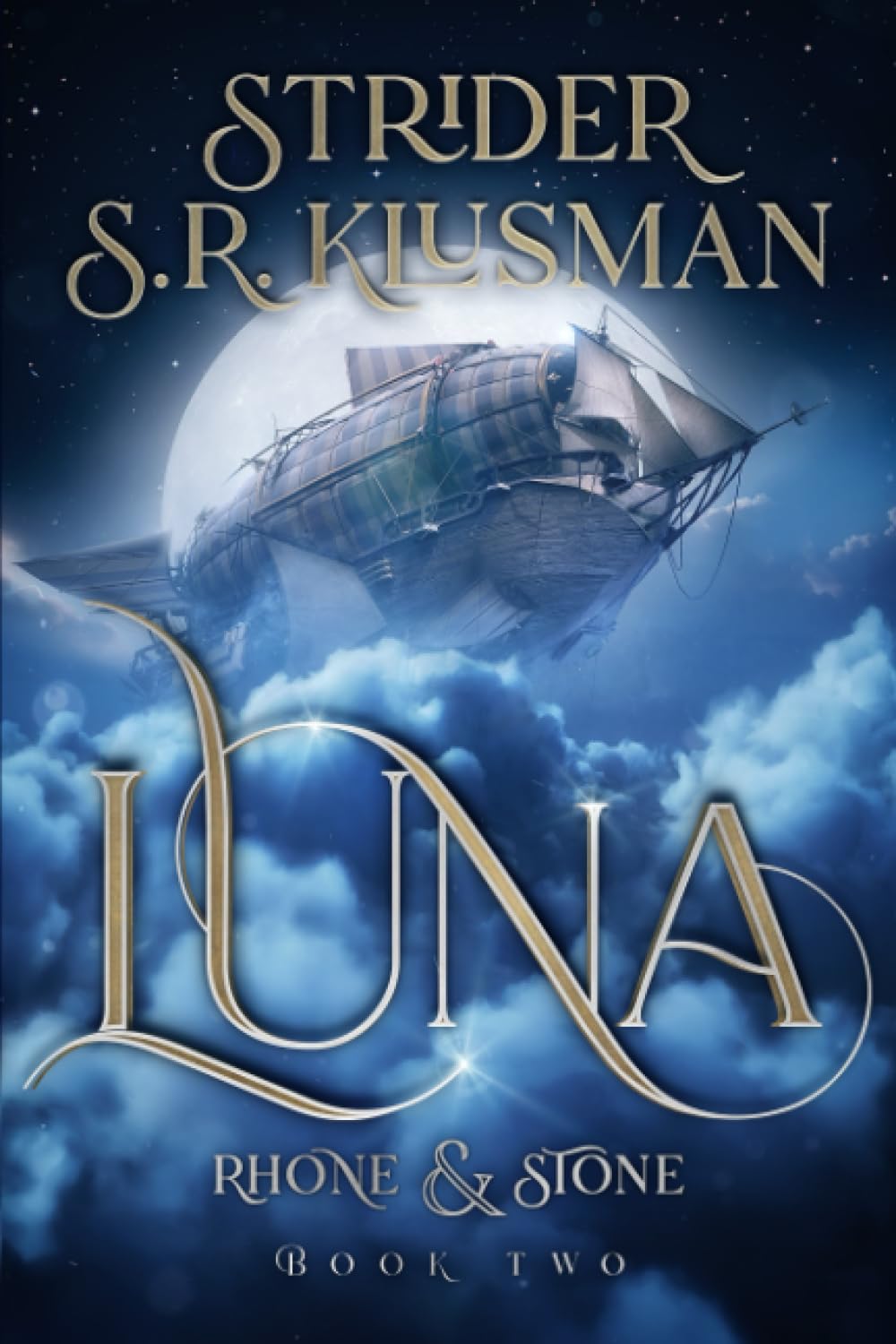
Luna, the second book in Strider S.R. Klusman’s YA Rhone and Stone Series, follows Rhone and his alien partner Stone as they develop a ship that can sail through the air.
The two train to become agents for the Office of Public Recrimination, urged to join by their friend – and now boss – Aundrea. Rhone struggles through training with the help of his trusty partner, but a much more difficult test remains before them – their first assignment.
Aundrea sends them to Corgy, a port town, without explaining their mission. But it doesn’t take long for Rhone to encounter troubles from shore and sea alike.
He and Stone meet Mayor Dugan, who takes an instant dislike for Rhone, posing as a wealthy merchant’s son. But it’s his front, designed so by the ladies of the OPR, and commands a great deal of respect and authority from the locals, if not Bella. Sometimes it’s difficult not to forget his actual purpose for being at Corgy. As an agent of the OPR, he must solve the town’s greatest problem, a rash of pirate attacks on Corgy’s vital ocean-borne trade; if they continue, Corgy won’t survive.
But to fix anything in Corgy, Rhone will need help.
The roguish Captain Black tests Rhone’s sea legs on the Backwater Mistress. Rhone passes the test of rough waters – barely – and garners the good captain’s respect.
He also meets the beautiful Bella, a waitress at The Common House in Corgy. Though he’s smitten with her, Rhone is on a mission, and ends up frustrating her with mixed messages.
Bella responds to him with a fiery personality, but Rhone finds her passion to be as enthralling as it is unpredictable. As he gets to know her, he helps Bella find her place in a society that tries to smother her drive for independence.
She wants to prove that she is as good as any man. And, when Rhone comes up with the idea to hunt Corgy’s pirates from the air, Bella has her chance to do so.
Rhone takes Bella’s opinions and advice as they design a unique kind of ship. Aviation is unknown to this world, but the trio – Rhone, Stone, and Bella – design and pilot their first prototype, named Bo, a hot-air balloon made from a whale’s bladder. While a proof-of-concept, Bo doesn’t last long, and they’ll need a much greater ship to take down the dangerous pirates.
Stone provides immense scientific knowledge, Rhone the training in sailing he received from Captain Black, and Bella a knowledge of materials and the resources of Corgy. Between them, they turn an awkward and dangerous balloon into a vessel worthy of the sky.
Joining with Captain Black, the three plan to stop the pirates in their tracks – despite the great danger.
Tense and descriptively rich action scenes will keep readers turning page after page to find out if Rhone and Bella will survive their flight in an experimental craft – relying on the work of their own minds and hands.
Klusman’s masterful storytelling takes this second book in the Rhone and Stone series to the next level. Readers who have not read the first book will have no problem following this story, but will eagerly go back to join Rhone’s first adventure. Rhone and Stone make a fabulous team, sharing thoughts and trust as they claw their way out of danger time after time.
This book is a five-star read and a great adventure. Readers will be chomping at the bit for book three!
Diane Fedt Topolski’s The Candle Glass breathes vibrant new life into traditional children’s morals, inspiring both young and old to strengthen the light inside them through intentional reflection and connection with a supportive community.
Stunning yet simplistic scratchboard drawings lift the story off the page, capturing readers’ attention and bringing the text to life. This simultaneously comforting and thrilling adventure will stick with readers and shed new light on the capacity for goodness within each person.
Topolski narrates the heartwarming tale of a young boy named Cappy, as he tries to invent a method of uncovering the hidden truth within each person.
When Cappy overhears his parents and grandmother discussing a “bad egg” they know, he concocts a machine to spot “the good, the bad, and the rotten” hidden within humankind. Constructed with two circus mirrors and a brightly lit candle, his remarkable invention shows him the inner lights of his loved ones.
However, the essence of each person is more nuanced than Cappy first assumes. Rather than revealing the ugliness within Cappy’s friends and family, the candle glass displays their inherent good, and the capacity of that good to expand. In fact, there isn’t “one rotten egg in the bunch.” Along the way, Cappy learns to trust his intuition and nurture the light within himself.
With vivid imagery, parents can use The Candle Glass to teach their young readers about seeking the good in every person.
The mesmerizing black and white illustrations complement the story’s theme of moral light clearing the way through the shadows. After all, as Topolski reminds readers, “everyone needs some work. Like the chick in the egg, we are just beginning.” Cappy’s imaginative adventures encourage children to deepen their curiosity about the world and its people, setting their minds and hearts to work.
Overall, The Candle Glass surrounds its readers with a warm, magical glow, allowing access to a world built on security, love, and trust. Readers will find themselves looking inward and realizing that when they join hands with their community in love, “the light becomes dazzling.”
“There is something magical about money—the way it appears and disappears, grows and shrinks, and, in a similar way of taming a hesitant wild horse, with calm assuredness and confidence, not only will you learn to control it, but you will find you can joyfully master it.” -Author Kasey J. Claytor
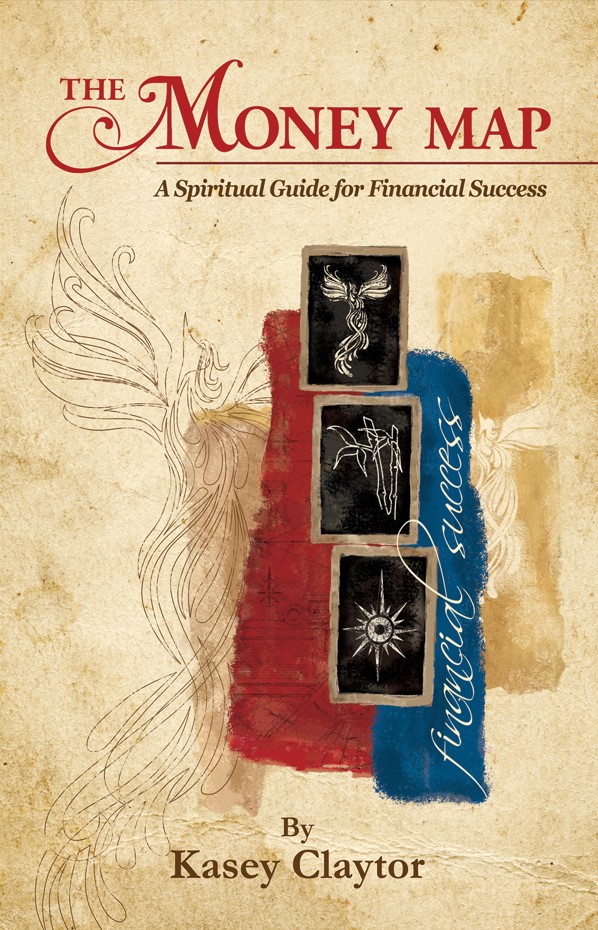
Claytor insists that every successful endeavor starts with an individual’s thinking and beliefs. She details this concept – and how to live with it in mind – in her new book, The Money Map: A Spiritual Guide for Financial Success.
From the onset of her business-oriented career, Claytor has drawn from her beliefs as she upholds financial success as a spiritual goal. In this volume, she takes the mystery out of money to show it as an extension of the mind, body, and spirit. Claytor ensures the beginning of an endearing journey toward clearer financial decision-making, investments, and goals by asking readers to identify the worries of their own ego and to eliminate unproductive ideas and actions.
Claytor offers insight on how one can change their thinking and behavior to allow the floodgates of abundance to open up, with solid advice for achieving undivided focus, intelligent poise, and a competent thought technique.
She asserts that everyone can step outside of themselves and hold the point of view of the observer. If one is mindful and aware of their present moment, they can move toward much-needed peace and confidence, allowing the growth of new ideas and productivity.
The route to monetary independence may appear too steep to ascend, but The Money Map will guide readers to the summit, one checkpoint at a time.
This book’s eye-opening revelations about the mindsets of affluent people and its secrets to what they carry inwardly, earn it must-read status in the business resources category.
The Money Map: A Spiritual Guide for Financial Success will provide readers with invaluable advice, standing beside such works as Spiral Dynamics by Dr. Don Edward Beck Ph. D., Map of the Scale of Consciousness by Dr. David Hawkins M.D. Ph. D., and Integral Psychology by Ken Wilbur. The Money Map will aid anyone in discovering the most beneficial path to financial success, regardless of their current situation.
Continuing his series of important financial lessons told through fun stories, Anthony C. Delauney teaches readers about greed and gambling in Rohan and Nyra and Big Sister’s Bet.
Rohan eagerly waits for his big sister to return home from school for the weekend. Nyra brings home a challenge for Rohan in the form of a game. For every catch of the ball, Rohan will earn one dollar, but if he drops the ball at any point, he will lose it all. Rohan has tons of fun catching the ball over and over, thinking of all the things he will be able to buy with each added dollar. Will Rohan decide to keep the game going even when he becomes tired, or will he stop while he is ahead? Read Rohan and Nyra and Big Sister’s Bet to find out!
The lesson at the heart of the story is an important one, for children and adults alike. It’s easy to get caught up in the excitement of taking risks.
Rohan and Nyra and Big Sister’s Bet highlights the importance of thinking through your decisions. Of course, one must sometimes take risks, but should do so thoughtfully.
With illustrator Chiara Civati’s whimsical artwork and Deluaney’s simple yet attention-grabbing rhyming, Rohan and Nyra and Big Sister’s Bet is a children’s book not to miss! Check out the other books in the series: Dash and Nikki and the Jellybean Game and Lilly and May Learn Why Mom and Dad Work.
Having escaped unjust imprisonment at the Fort Grant facility for juveniles, Curtis Jefferson is on the run, in Merging Paths, the third installment of Vince Bailey’s gripping, paranormal, Curtis Jefferson Series.
With only a small jug of water and the clothes on his back, Curtis has to cross the Sonoran Desert and find a way back to his mother and grandmother in Jacobs Well. But his trip is plagued by more than thirst, hunger, and fear of animals. A racist sheriff’s deputy, Myron Aycock, is hellbent on finding Curtis not only for the acclaim such an arrest will give him but also for vengeance against the beating he received at the hands of the aspiring boxer.
Trapped and desperate, Curtis is rescued by a mysterious figure and taken to Isabel and Ray Cienfuegos. After hearing Curtis’s unsettling stories about Fort Grant, the two understand that they have all been fighting the same evil forces – under the control of the sadistic Ezra. In a final confrontation, Isabel faces off against the wicked spirit, but just as they believe their problems are over, a new threat arises under the guise of friendship, and Isabel makes a life-changing decision that will mark her forever.
Intuition plays a huge role throughout the series, becoming vital to the central characters in this final book.
Throughout his harrowing experiences at Fort Grant, Curtis has relied upon his innate sixth sense to warn him of impending doom. A gift passed from his mother, this awareness has guided him to carefully choose his friends. Through this sense, he trusts Isabel and Ray, even seeming to know parts of their story before they tell it. He accepts Isabel’s questionable actions because his instincts tell him they were her only choice.
Isabel shares this remarkable perception. In fact, Isabel trusts her intuition so far as to commit acts most would consider insane. While Curtis’s near-clairvoyance is a guide, Isabel’s is a force. This sense helps Isabel to understand the evil of Ezra and tells her how to rid herself of him forever. But her intuition pushes her to one final act of destruction as well – the murder of a former confidante – a choice that will haunt her for the rest of her life.
Isabel and Curtis aren’t the only characters with an advanced awareness of evil. Father Frank Cullen, a priest to whom Isabel goes for confession, shares the gift. He has always doubted Curtis’s guilt, and when his not-so-chance meeting with Isabel brings him back into Curtis’s life, he uses his sense to help bring Curtis home.
But he could never have accomplished the deed without the intervention of Natchez Mendoza, a former judge and the son of the man Ezra was in life.
Natchez is, perhaps, the most “knowing” of the quartet. Natchez first appeared in book one, where he recognized the evil in twelve-year-old Harvey Huish. He also first met Curtis in book one, under extremely unusual circumstances, so when they meet again some eighty years later, Natchez knows Curtis’s story intimately and helps to release him from Fort Grant’s grasp.
Justice becomes central to the final struggles of these characters.
Will Farnsworth is a silent, but important example of this need for justice. Having died via decapitation in a car wreck during book one, Will has served as a knight errant since, responsible for the rescue of both Ray and Curtis. As a lawyer for the corrupt Huish family, he hated his job and his clients and longed to be free of both, but it was only in death that he could become the very thing he tried to be in life, the good guy riding in to save the day.
However, Isabel’s pursuit of justice is more complicated.
Her quest to rid the world of Ezra’s evil is commendable and noble, but her later conflict with Freddie Hightower approaches the slippery slope of vengeance. Freddie’s betrayal angers Isabel to the point of no return. She deems him unforgivable and takes matters into her own hands, perverting justice. Other characters like Sergeant Joe Garcia, Constable Frankie Quintana, Deputy Myron Aycock, and Sheriff Pete Alvarado represent the legal side of justice, both good and bad. Natchez Mendoza, white cane and all, straddles the line between legal and supernatural, determined to keep Curtis safe for his own contribution to justice for his massacred tribe.
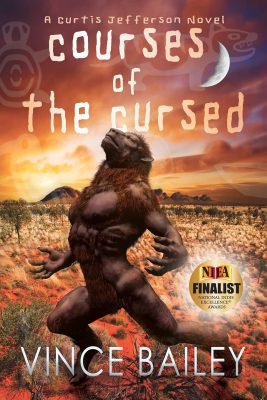
Imprisoned in a boys’ institution for a crime he did not commit, Curtis Jefferson must again face his nemesis, Harvey Huish. In Courses of the Cursed, the second installment of Vince Bailey’s paranormal Curtis Jefferson series, the fight comes with much higher stakes.
Estranged from his constant companion, Randy, Curtis continues his training alone, bewildered as to why Randy believes Harvey to be more than a vicious bully. But as Curtis’s strange visions and dreams increase, he needs Randy more than ever. He begins to question whether Randy has been preparing him for an encounter beyond the violence between boys.
Unbeknownst to Curtis, he isn’t the only one being tortured by the evil of Fort Grant. A local artist, Ray Cienfuegos, has his own date with destiny. As the last male descendant of his family, Ray’s fate is tied to the massacre that occurred near the fort almost one hundred years ago.
Two young men, one a savior and one a sacrifice, will be tested by the wicked power of the sacred land. But who will survive the encounter?
This complex work twists its way through a maze of interconnected storylines and characters who each, in their own way, embody the age-old battle between good and evil.
Ezra, an old Apache shaman, embodies something horrible and ancient. Whether he is Satan or some malicious pagan entity, he facilitates the cruelty done to the characters in the novel. However, upon closer examination, Ezra’s “evil” becomes much more complicated. While he tortures Ray and sometimes takes the form of an enormous would-be rapist were-coyote, he is also the voice of a long-dead, long-forgotten people, innocents slaughtered in a sick game of commerce.
Ezra does unforgivable harm, but he does so in the name of justice, begging the question of whether justice can be achieved through bloody vengeance.
The idea of justice defines many characters, including Lieutenant Roy, the cavalry commander who refused to serve out the original retribution for which Ezra fights. In opposition to Ezra’s malignancy stands Isabel Cienfuegos, Ray’s aunt. She serves as foil to all that Ezra represents and becomes an avenging angel, toting a 12-gauge instead of a fiery sword.
Numerous other characters strive to do good in the world around them.
Vince, the narrator, admits that his faith is the very reason he must tell the story. Leon and Georgy, fellow inmates of Curtis, drag him to church to pray for guidance and courage for what lay ahead, leading the reader to question if Curtis’s actions are divine justice, or if he is merely a pawn in Ezra’s plan.
The symbology of fire frames this story.
If Ezra is – or is in league with – the devil, the use of fire is a pointed reference to the retribution forced upon those who have done wrong in life. However, when Ray receives his blood money from Ezra, Isabel throws it into a fire to rid them of the thing that led to Ray’s abduction and torture. The fort’s original inhabitants were complacent in the massacre of the tribe, so when it partially burns down, the flames cleanse part of that history. Ray uses fire as a healer, to help him rehabilitate after his disfigurement at Ezra’s hands.
But fire takes its most questionable form when a beloved character, a “knight” in search of justice, is set ablaze by Ezra. Fire here is only a punishment, wrought on someone who has done nothing to deserve it. The role of fire, just like that of good and evil, is a complicated one with a multitude of interpretations.
Courses of the Cursed asks what sort of justice can come from vengeance, and what really will bring peace to the past. A thrilling paranormal adventure that we highly recommend!
On August 18, 1920, the Nineteenth Amendment to the United States of America Constitution was ratified and signed into law on the 26th that same month.
Celebrating the 103rd Anniversary of the 19th Amendment: A Triumph of Perseverance and Equality
In the tapestry of history, some threads are woven with courage, resilience, and indomitable will. This year, as we commemorate the 103rd anniversary of the 19th Amendment to the United States Constitution, we honor the relentless dedication of those who paved the path to gender equality and universal suffrage.
Join us in celebrating this significant milestone, reflecting on the arduous journey that spanned over seven decades. The suffrage movement wasn’t a mere campaign; it was a movement that transformed society and opened doors to empowerment.
This commemoration takes us back to the historic victory that marked the amendment’s ratification on August 18, 1920, forever engraving the right for women to vote into the framework of American democracy. The amendment stood as a testament to unity, courage, and the conviction that change is attainable.
The Nineteenth Amendment was the capstone of that fight, but it took over seventy years to achieve it.
We are celebrating the 103rd anniversary of the Nineteenth Amendment’s adoption into the U.S. Constitution: the amendment that guarantees citizens the right to vote regardless of their gender, and the victory of the American Suffrage Movement. It took more than seventy years of protesting, picketing, and struggles for women to gain the civil right to vote in US elections. And many more decades passed before other disenfranchised groups were systematically denied the right to vote.
And still, the vote was not granted to Black women and men. That right came about much later than most people realize, June 6, 1965, whenPresident Lyndon Johnson signed the Voting Rights Act, which outlawed the discriminatory voting practices that some Southern states adopted after the Civil War.
Women’s suffrage was not just a long fight, but one taken on by many pivotal figures. But the story of the suffrage movement is best told by remembering many of its impactful suffragists, such as Alice Stone Blackwell, Elizabeth Cady Stanton, Matilda Joslyn Gage, Ida B. Wells, Mary Church Terrel, Josephine St. Pierre Ruffin, and Harriet Tubman whose unwavering dedication rallied people to challenge oppressive norms. Their legacy echoes through the ages, inspiring us to continue championing justice and equality.
Suffragists were physically attacked by mobs of angry men and boys while police looked the other way. They’d been roughly arrested; been held in fetid, cold, vermin-infested cells; been shackled to the wall; and endured abuse and even torture in jail. When they went on hunger strikes, they were force-fed, tubes rammed up their noses. The Christian Science Monitor.
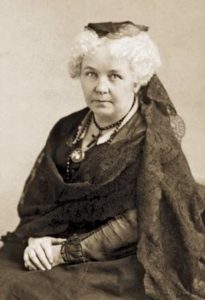
Elizabeth Cady Stanton, c. 1880
Elizabeth Cady Stanton was one of the women who first crystallized the Suffrage Movement, having helped organize the Seneca Falls Convention. Her unique background was pivotal in formulating the first demand for women’s suffrage in 1848.
As the movement grew and drew public attention, Stanton proved herself to be a skilled orator and writer, working closely with Susan B. Anthony throughout the years; Stanton actually wrote some of the speeches that Anthony delivered, and– along with Anthony– was one of the founders of the National Woman Suffrage Association. Stanton wrote for a more equitable future in more than voting; in addition to the question of suffrage, she championed a broader view of women’s freedoms, supporting labor rights, property rights, and the right to divorce. She saw that women should have the chance to lead their own lives, taking part in all aspects of society equally to men.
Movements don’t just happen, they come alive when a group of people decides to take action against injustice, and even small beginnings can lead to sweeping change.
Elizabeth Cady Stanton came from a privileged background and used her position and means to propel her views. Her father was a prominent attorney, Congressman, and a judge. He also was a slave owner. Elizabeth was exposed to the study of law and the government mechanisms that govern by her father. She was particularly against how religion was used to justify the oppression of women. She pennedThe Woman’s Bible to tackle misogynistic traditions rooted in religious dogma after being sent to a seminary at the age of sixteen.
She became an adamant abolitionist to end the practice of slavery in the United States in 1839 at the age of 24. Many historians believe that the Abolitionist Movement to End Slavery experiences and lessons were essential to pave the way for the Women’s Suffrage Movement.
Stanton wasn’t the only suffragist who saw the reality of sexist injustice throughout her society, and one of her contemporaries joined her in drawing attention to these wrongs. Matilda Joslyn Gage was considered a radical in her time, having fought against traditionalist views as Stanton had. Matilda was on the revising and editing committee for Elizabeth’s highly controversialThe Woman’s Bible.
Matilda Electa Joslyn March 24, 1826
This right to vote was a battle, fought and won 103 years ago by women we will never know, but by what they have written, what others have written about them, and what they have done for all of us.
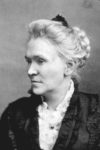
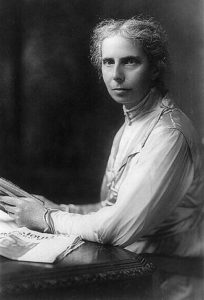
Alice Stone Blackwell
One of the women who played a significant role in uniting these two groups was Alice Stone Blackwell.
She was in a position to do so because of her connection to the AWSA: her mother was Lucy Stone. Along with Alice’s father, Henry Browne Blackwell, they were some of the primary organizers of the group. As Alice Stone Blackwell grew up, she worked with her parents on their paper, theWoman’s Journal, and eventually ran the paper. Once the AWSA and NWSA had merged, Blackwell served as the NAWSA’s recording secretary.
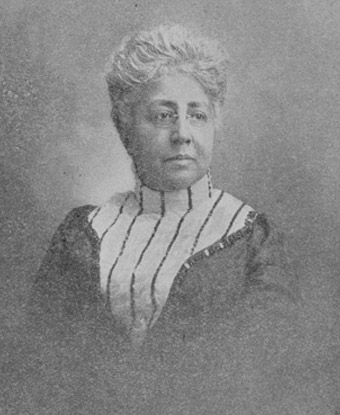
Publisher and founder of the Woman’s Era Club (which laid the foundation for NAACP), Josephine St. Pierre Ruffin, an activist at heart, a community leader, and a national organizer, grew up surrounded by the abolitionist ideals of justice, equality, and political representation. Her earliest public service dates to the Civil War, during which Ruffin recruited African American men for the 54th and 55th Massachusetts infantry regiments. After the war, Ruffin served on several charities that helped Southern Blacks. Ruffin dedicated her life to bettering the lives of women and Black Americans both locally and nationally. NPS.Gov/People/Josephine-St-Pierre-Ruffin.
Josephine St. Pierre Ruffin
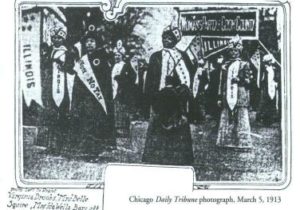
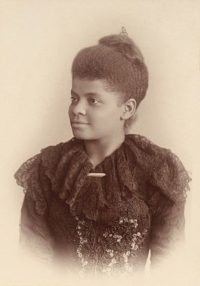
While the centennial celebrates the federal adoption of women’s suffrage, we shouldn’t forget the smaller victories and works that punctuated the movement’s length, those who spoke out against injustice in many forms, while seeking the vote. One such woman was Ida B. Wells, who played an active role in the suffrage movement of Chicago. The city had given partial suffrage to women. Wells, along with a fellow suffragist Belle Squire, started the Alpha Suffrage Club to advance women’s suffrage further and educate women on civic involvement.
Ida Wells & Belle Squire marching in 1913
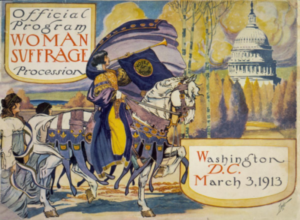
The club especially supported African American candidates for the city’s elections, working to break down multiple unjust barriers in politics. Wells participated in one of the NAWSA’s best-remembered marches, set in Washington D.C. the day before the inauguration of President Woodrow Wilson. At the beginning of the rally, she was told to walk at the back, but she refused. Ida B. Wells marched with her sister suffragists from Illinois at the front. The power of social change comes from unified work between many people, and Wells refused the idea that she, as a suffragist, could be divided from anyone else.
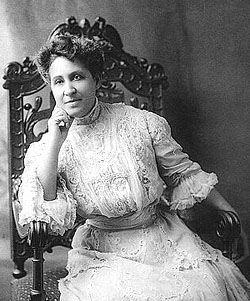
Along with women like Wells and Ruffin, Mary Church Terrel was an advocate for racial equality. She was entwined with gender equality, which shows throughout her work with the NAWSA, where she frequently met with Susan B. Anthony and Elizabeth Cady Stanton. She insisted that the movement fight for the rights of black women alongside those of white women, and spoke highly of the suffragists who fought for everyone oppressed by the political and social systems of the time. She spoke at NAWSA meetings, delivered speeches, and called for the suffragists to remember all of the women whose vote they worked so hard to gain.
Ida Wells
Let’s not allow their work to be forgotten – and let us never give up our full Rights as U.S. Citizens to carry out this all-too-important privilege.
Despite the NAWSA’s issues with racism, some black women did act within that organization, such as Mary Church Terrel, who was an advocate for racial equality entwined with gender equality, which shows throughout her work with the NAWSA, where she frequently met with Susan B. Anthony and Elizabeth Cady Stanton. Mary insisted that the movement fight for the rights of black women alongside those of white women, and spoke highly of the suffragists who fought for everyone oppressed by the political and social systems of the time. She spoke at NAWSA meetings, delivered speeches, and called for the suffragists to remember all of the women whose vote they worked so hard to gain.
Mary Church Terrel Sept 23, 1863
Women’s suffrage had a complex relationship with black civil rights in large part thanks to the period of history in which the suffrage movement began: the Seneca Falls Convention took place in 1848, seventeen years prior to the abolition of slavery. This meant that the women’s rights movement was progressing and focusing at the same time that black people across were achieving freedom and directing themselves in a country that, while changing dramatically, still marginalized them.
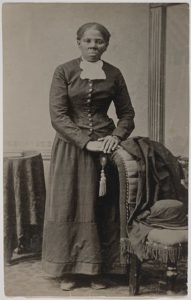
Harriet Tubman’s work is an example of how black women fought on both fronts; she’s a figure best remembered for her work as a liberator, freeing slaves prior to and during the civil war, but she took part in the suffrage movement as well. During the time of the NAWSA, she traveled to meetings and demonstrations to give speeches, telling of her experiences fighting for freedom and facing down oppressive and dangerous power structures during the time of slavery, and how important the struggle for freedom is. She bridged her advocacy for equality into the fight for the vote, and during this time, Ruffin’sThe Woman’s Erawrote a profile on Tubman, as the country’s attention was once again drawn to her fight.
Harriet Tubman after the Civil War
All of these histories show that the suffrage movement’s victory– the adoption of the nineteenth amendment– was the result of disparate people, dedicated and idealistic people coming together and fighting hard for their rights. They gave time, energy, and passion to a movement that would, eventually, provide them with the right to participate in the democracy of their country. The fact that the suffrage movement stayed strong for 70 years united its two significant organizations, tackled legislation at both the national and local levels, is a testament to the people who refused to give up, and whose worked– together– to win the fight.
It’s been a century since women won the right to vote, and more than 170 years since the American suffrage movement started in earnest. This movement has a lot it can teach us: the value of working together, across the country, to bring about change; the importance of remembering that there is always more than one fight for progress and rights, that we should listen to the voices of everybody who’s been pushed down and denied their rights and opportunities; and, of course, that even in the face of a power structure that calls rebellion and the fight for equal freedoms’ radical’, that fight is a good one, and worth taking on.
At the Seneca Falls Convention, the call for women’s suffrage rang out in America, whereas before it had been considered a fringe idea, or even impossible. The fight was long, but after seventy-two years, the suffragists made what was ‘radical’ a reality.
So, in the spirit that the right to vote is something that all people deserve, and should never have been restricted to any one group over another, let’s celebrate the centennial of a victory that brought America one step closer to the ideals of equality, freedom, and the rights of all. The power of the vote has shaped America’s history. We must all understand the importance of voting, and today we recognize those who fought for our rights. We are thankful for those brave suffragettes, for it is their struggle that has given us the right to participate in our democracy regardless of gender.
It required three generations of fearless activists over a span of more than seven decades working in more than 900 state, local, and national campaigns to finally win the vote for American women. And that active verb – win – is important: Women were not given the vote; they were not granted the vote. As one commentator so aptly describes it: “They took it.” Christian Science Monitor
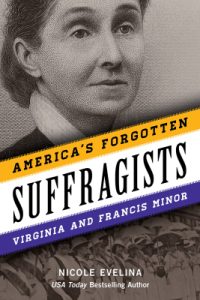
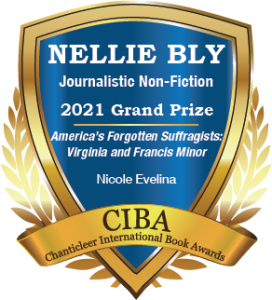
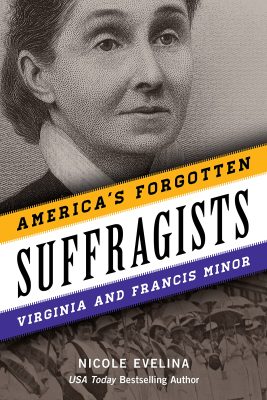
This year holds a special place in our hearts as we also celebrate the exceptional work of Nicole Evelina, whose groundbreaking book, ‘America’s Forgotten Suffragists: Virginia and Francis Minor,’ sheds light on the indelible contributions of lesser-known suffragists. Evelina’s meticulously researched biography illuminates the lives of Virginia and Francis Minor, who, alongside their better-known contemporaries, shaped the course of women’s rights and equality. Their story, like many others, exemplifies the unyielding spirit that fueled the suffrage movement.
As we honor the remarkable journey that brought us to this juncture, we are reminded that progress is a collective endeavor. The road to universal suffrage was marked by sacrifices, courage, and a shared vision of a more just world. The fight for equality continues to resonate, urging us to safeguard the rights that were hard-fought and won.
Join us in commemorating the 103rd anniversary of the 19th Amendment, a testament to the power of determination, unity, and the enduring spirit of change. Let us remember the past, honor those who blazed the trail, and carry forward their legacy as we champion equality and justice for all.
Comprehensive in its own right, America’s Forgotten Suffragists by Nicole Evelina is an essential addition to the canon of women’s suffrage and first-wave feminism.
Equal parts local history of women’s right to vote in the nineteenth century and biography of Virginia and Francis Minor, America’s Forgotten Suffragists illuminates the story of a wife-and-husband feminist duo who were the first to fight for women’s suffrage at the Supreme Court level.
We learn about the lives of Virginia and Francis Minor by way of historical records, intersecting timelines with other suffragists, and news articles and letters. Virginia Minor was raised on the new and intellectually stimulating University of Virginia campus, where her father worked. Born into a colonial settler and slave-owning family, Virginia came into her own as she grew older, forming abolitionist and feminist beliefs.
In 1869, Virginia realizes that, through implication, the Constitution could grant women the right to vote by way of the Fourteenth Amendment, which acknowledged the freedom, citizenship, and human rights of Black men freed from enslavement. She shares her thoughts with Francis — a practicing lawyer and constant ally for women’s financial independence. And when Virginia is denied from registering to vote in 1872, she sues and goes to court with Francis as her attorney, to introduce her interpretation of the law.
As history reveals, the Minors lost their case. However, they ignited conversations about women’s suffrage nationwide, pushing others to take up the charge.
Virginia became good friends with Susan B. Anthony, collaborating on suffrage campaigns in the Midwest, and giving speeches in territories that were becoming states. Francis Minor continued his advocacy for the feminist cause by publishing his writing on women’s rights. To preserve their words, biographer Evelina includes many of the Minor’s speeches and articles, as well as Virginia and Francis’s petition in full calling for the Supreme Court to acknowledge women’s right to vote based on the Fourteenth Amendment.
What truly shines about this book — along with its gentle prose and historical scene-setting — is what it teaches about the origins of first-wave feminism and why the American voting system continues to disenfranchise Black citizens.
Nicole Evelina takes great care to analyze Virginia’s 1875 Supreme Court case, Minor v. Happersett, from all angles.
Minor v. Happersett has been (mis)used over seven times since the trial to reinforce voter suppression tactics. Evelina demonstrates through this extensive biography of Virginia and Francis Minor that the issues we face today — election tampering, gerrymandering, expunged registration records, and restrictions on accessible voting methods for the working class — can, in part, be traced back to this case.
This biography documents one woman’s bold path to securing women’s rights, a beacon of hope for a world where no person is lesser than another.
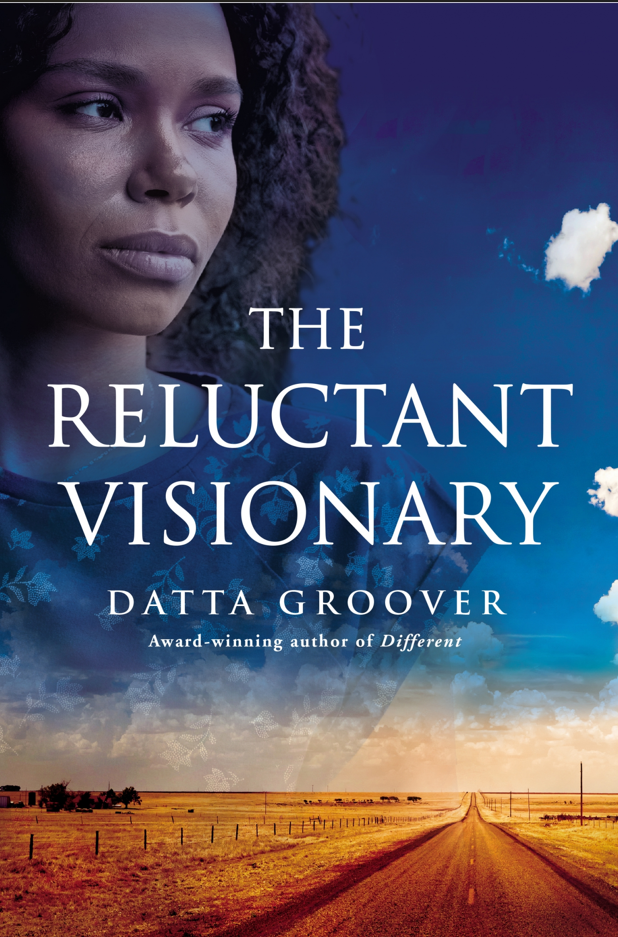
Visions of the future swirl, unclear and contradictory, giving dire warnings of lives soon to be cut short, in Datta Groover’s The Reluctant Visionary.
Three women, Anna Mae, Kat, and Jess each confess to being the visionary of her era. They never asked for the ability to glimpse danger ahead, to have the opportunity to save others from a terrifying destiny. It’s a heavy burden when people refuse to believe them, and the dangerous consequences of their visions lay in wait. The best of intentions lead the ladies further into a dire struggle. Can they survive all that life throws their way, and learn how to reshape the future? Or will they lose their way in the blur of chilling prophecy?
Jess is in her mid-twenties, a resident of a rural town in contemporary Texas. She works hard with her family to hold on to the ranch that’s been with them for generations.
No matter what they try, they continue to experience misfortune and lose more money. As they slip further and further into debt, they wonder what is the root of all their bad luck. Jess juggles this financial struggle with her visions of the future, just like her mother, Kat, did. Visions of violent and heart-wrenching crimes haunt Jess and drive her to act defiantly and protect the innocent victims.
As she delves into a criminal mystery, she has no idea the danger she’ll face along with her family, and the secrets she’ll uncover in her mission to change the future. She partners with the lone law enforcement officer who believes in her and her visions, but can she resist his charms?
In the 1960s, an entrancing story set in rural Tennessee plays out parallel to Jess’.
Anna Mae has just turned eighteen and lives at home with her abusive parents. Her visions of the future are met with anger and fear from the people she’s trying to help, and someone even reports her to the police when her attempt to save a child in danger is deliberately misinterpreted. Anna Mae seeks a tranquil and happy life but her disturbing visions make that wish impossible.
She finds herself in the middle of an investigation when the police accuse and arrest the wrong person for a crime. She’s determined to save him. In the midst of the chaos, Anna Mae falls in love with the wrong man and is faced with a drastic, life-altering decision. Will she find a wise path forward in her visions?
Author Datta Groover tells a story of three generations of strong female protagonists.
These women show how a determination to light a hopeful way forward ignites courage despite threats of desperation and peril. Their contrasting struggles, inherent to different decades and settings, leap off the page, relatable and emotionally vivid. And just as in real life, the ending of the story is filled with unexpected surprises, even for these visionaries.
The College Guidebook: Biological & Biomedical Engineering by Rachel A. Winston, Ph.D., is a unique and useful college admissions guidebook with invaluable information on internships, testing, interviews, and scholarships, along with research and profiles of 56 universities that offer programs in biological and biomedical engineering.
Dr. Winston wrote this book to give her engineering students, and aspiring biomedical engineers like them, the tools to pursue their interests. This work will give curious students insight and inspiration to achieve their goals, such as various methods by which to present their abilities and talents to admissions committees. The author, an educator for nearly forty years, has been a chemist, research scientist, mathematician, college professor, and more, and has the know-how and expertise to guide students through the labyrinth of academia. All the while, Winston peppers the work with inspirational quotations, such as “Scientists dream about doing great things. Engineers do them.” —James A. Michener
Young people must ask themselves what they want to do with their life, and a handy reference book like this one is a rare, valuable boon in helping help them find the answers.
The College Guidebook provides a remarkably comprehensive view of its chosen fields: a broad explanation of biomedical engineering and its past, present, and future; the expectations and training for the field (such as high-tech healthcare, nanotechnology, informatics, prosthetics, and mimetics); how to prepare academically; the summer programs and internships for high school and undergraduate students; university options and which programs are best suited for those interested; college admissions, tests, essays, resumé, and recommendations; how to pay for the education; the employment outlook; a list of the accredited biological, biomedical, and chemical engineering programs; the top programs in adjacent engineering fields; and more. This guidebook offers everything those students may find useful.
This book offers encouragement to those students with questions, and comfort to those who have concerns about which schools offer the subjects they need and with which companies they can find employment post-graduation.
“The future is yours. Choose a path that makes sense for your life goal. The information contained in this book will lead you on your way and, hopefully, inspire you as a leader who empowers others along their educational pathway,” Winston reminds the reader.
Dr. Rachel Winston’s deep understanding of biological and biomedical engineering allows her to guide prospective students through all the possibilities in these fields.




 Having escaped unjust imprisonment at the Fort Grant facility for juveniles, Curtis Jefferson is on the run, in Merging Paths, the third installment of Vince Bailey’s gripping, paranormal, Curtis Jefferson Series.