Tag: Chanticleer 5 Star Book Review

  • The Adventures of Mrs. Crockess and Ivy: No Pockets? No Problem! by Julia Kolouch and illustrated by Petros Bouloubasis – Picture Books, Children’s Humorous Books, Animal Stories


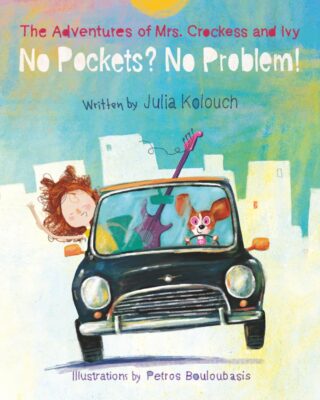
    The Adventures of Mrs. Crockess and Ivy: No Pockets? No Problem! by Julia Kolouch, illustrated by Petros Bouloubasis, is a wacky tale of innovative solutions to one of life’s greatest struggles: pockets!

    A joyful lesson in problem-solving and independence, this is the perfect story for young readers who want to do things all by themselves. They’ll want to hear it over and over again—and then learn how to read it on their own.

    The adored Briggs’ family dog, Mrs. Crockess, is a snuggly reading partner to Mrs. Briggs, an extra hand (or paw) in the kitchen to Mr. Briggs, and a rock n’ roll bandmate, slushy enjoyer, and flower-picker to her best friend, little Ivy Briggs. Together, Ivy and Mrs. Crockess are a force to be reckoned with.

    When a string on Ivy’s guitar breaks in the middle of their jam session, they have to rush to the music store so they can keep rocking out. But—oh no! Mrs. Crockess lacks an essential item for their mission: a pocket!

    Without a pocket, she can’t hold her money, her keys, her phone, her map, her bone, or her lip balm. The best friends put their noggins together to come up with a creative solution to the pocket problem. But when that idea falls through, they need another… and another … and another … and another! They only have until the music store closes to come up with the perfect solution.

    Tag along with lovable Ivy and fantastic Mrs. Crockess as they learn to solve big problems with lots of love, silliness, and patience for each other.

    Packed with Petros Bouloubasis’s colorful illustrations and goofy details, No Pockets? No Problem! will make kids laugh out loud and ask important questions like: “Why does a dog need lip balm?” “What kind of word is “Phwump’?” and, “How in the world does a dog play the drums?”

    Inspired by stories imagined by her 3-year-old niece, No Pockets? No Problem! by Julia Kolouch will have kids and adults alike wondering what in the world Ivy and Mrs. Crockess will do next.


  • THE DAY WE FOUND YESTERDAY by Tamara Dever, illustrated by Missi Jay – Children’s Books, 1980s, Picture Books


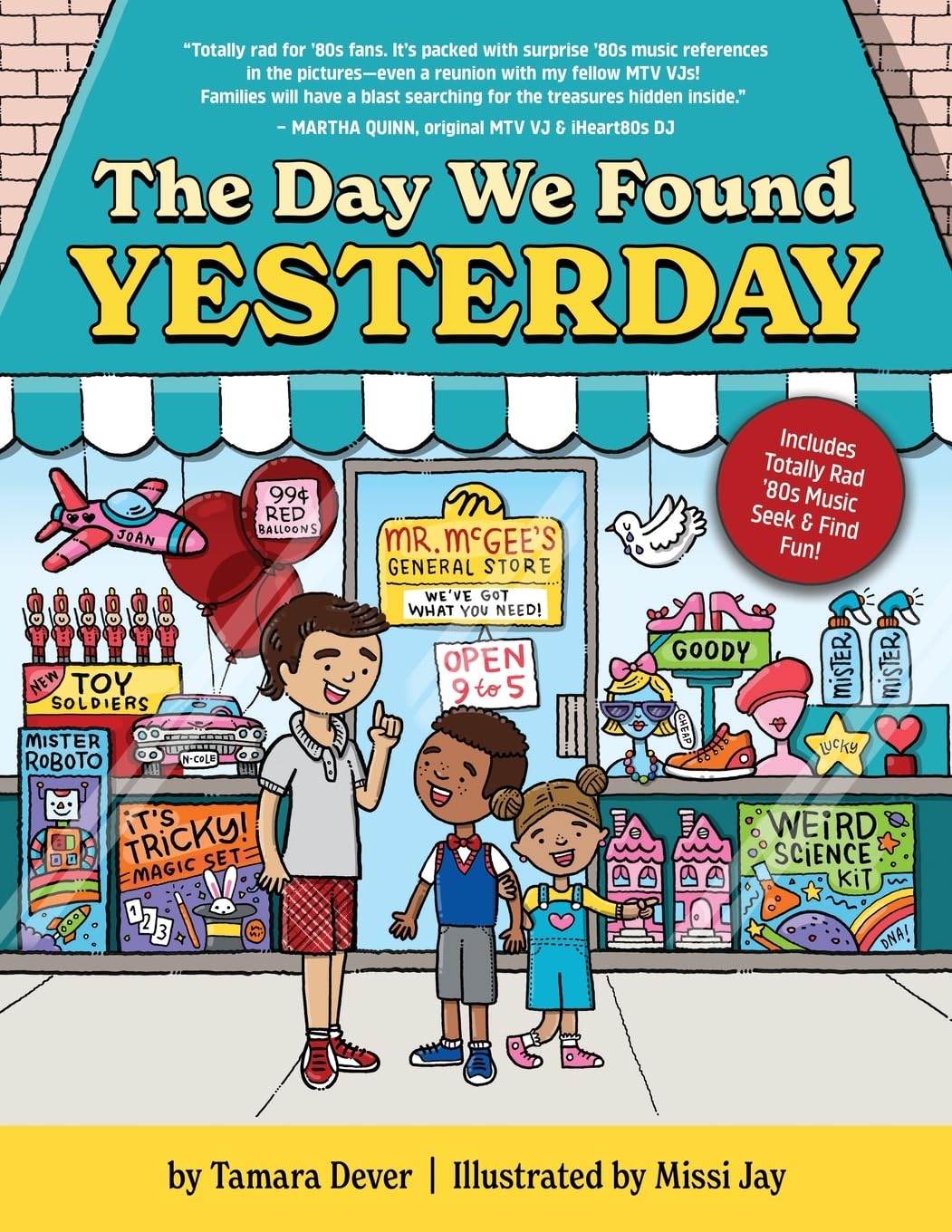
    Tamara Dever’s The Day We Found Yesterday is a blast from the past, a picture book for both young readers and nostalgic GenXers to experience the ’80s. Dazzling funky illustrations with 500+ music references will catch anyone’s eye and instantly transport readers back to the days of “I want my MTV!”

    Eileen, Mickey and Eddie love their grandparents, Nana and Papa. When they overhear them grieving something special they lost long ago, the grandkids set out on a mission in their grandparents’ hometown to find it. They visit their grandparents’ friends at their local businesses, hoping that one of them will have the answer to the question of the missing treasure.

    Their journey quickly turns into a time-traveling adventure as they gather stories of their grandparents’ ’80s childhoods from the friends and family who watched them grow up.

    The shops are covered with ’80s music callbacks, like “Karma” the Chameleon in the pet store, the travel agency slogan, “On the Road Again,” and a reminder on the doctor’s office wall that “every breath you take keeps lungs healthy.”

    Each page of The Day We Found Yesterday, illustrated by Missi Jay, is a universe of detail.

    Colorful signs and carefully hidden objects cover every inch, inviting children to pore over the pages, pick out favorite illustrations, and giggle over silly puns. New readers will find ’80s slang like “atomic” and “funky” to be an exciting challenge!

    Once the kids’ adventure has come to an end, there’s more to explore at the back of the book.

    Young readers can treasure hunt through the pages for tiny items like bells and hamsters. Meanwhile, adults can search for references to songs, artists, and even spot cameos from ’80s celebrities like Corey Hart, Debbie Gibson, and the lead singers of Men Without Hats, A Flock of Seagulls, and Led Zeppelin’s Robert Plant. Mark Goodman, Nina Blackwood, Alan Hunter, and Martha Quinn also show up in colorful images as the original MTV VJs.

    The Day We Found Yesterday by Tamara Dever opens opportunities for children to learn more about their parents’ and grandparents’ lives, sparking connection beyond generational boundaries in a fun, colorful adventure. This is a story that will last through the decades!


  • A CLAN CHIEF’S DAUGHTER: She Who Rides Horses Book 2 by Sarah V. Barnes – Historical Fiction, Ancient World, Metaphysical Fiction

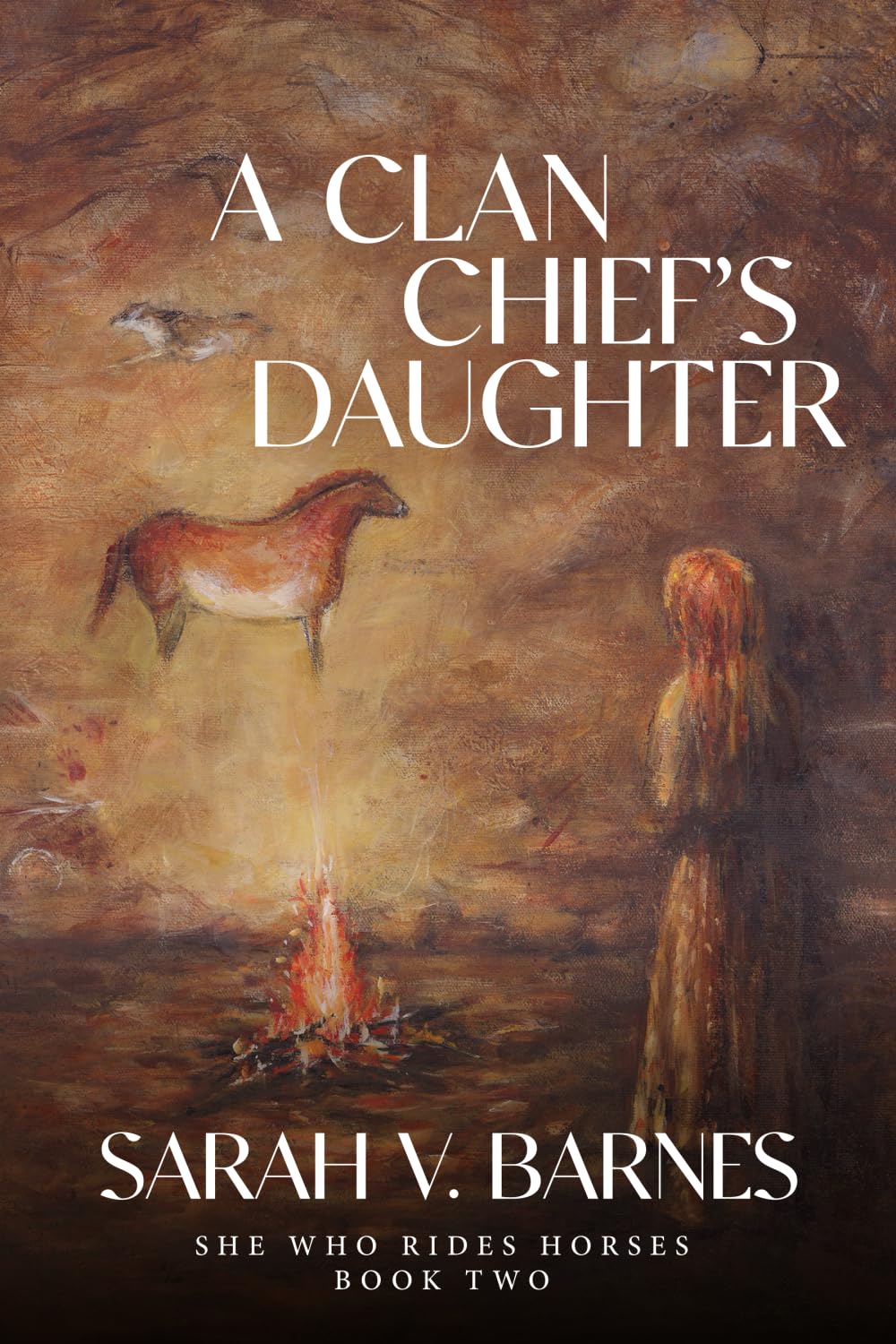
    Caught in the midst of a succession crisis, Naya sacrifices much of herself to be the dutiful girl she thinks her father expects. In A Clan Chief’s Daughter by Sarah V. Barnes, Naya’s kept in the dark while enemies plot her family’s downfall.

    In the previous book of the series, She Who Rides Horses, Naya began the monumental task of bonding with the wild horses of the Pontic-Caspian Steppe. Guided by dreams of purpose alongside the red filly Réhda, they’d gone so far as to gallop free together. But returning to her clan after a winter apart, Naya finds a terrible captivity waiting for both her and the horses she loves.

    A confluence of tragedy and treachery leaves Naya’s father, Potis, vulnerable in his role as Chief.

    The clans of the Plānos tribe are soon convening for their annual Gathering. As this year’s host, Potis is expected to supply a plentiful animal sacrifice, especially since he hopes to claim his late father’s position as Plānos Chief of Chiefs. That would be hard enough after a brutal winter, but without warning much of the clan’s livestock are slaughtered in a senseless and suspicious attack.

    The stage set, a captivating young man arrives as the clan’s seeming savior. Wailos, son of Potis’s main rival, helps the clan capture a herd of horses that had become habituated to humans—the very same whose trust Naya earned. They are to be sacrificed in place of the clan’s missing livestock.

    Wailos shows interest in Naya, who’s begun preparations to be presented as a young woman at the Gathering. He promises a rich bride price of livestock, and such a marriage could prove a valuable political alliance in itself. Naya disregards her own reservations about Wailos in the hopes of helping her father and maybe even sparing the horses.

    Naya’s self-denial extends to her loved ones and her very purpose, as she holds herself responsible for the suffering of the horses in captivity.

    She refuses her grandmother Awija’s lessons on the importance of dreams and following one’s own heart. Visiting the horses is more than she can bear, especially as it brings her close to Aytal. While Naya holds deep resentment towards the young man, she can’t forget the connection and affection that grew between them over the winter.

    Naya’s mother Sata leaves the clan for her childhood home alongside Oyuun, Aytal’s father, and Naya refuses to see it as anything but a betrayal of her and Potis. She turns away from the pain of her conflicted feelings and into the role of a clan chief’s daughter.

    When the promises of that role unravel around her, she risks losing her freedom, her loved ones, and her heart’s deepest desire forever.

    Barnes builds a societal conflict with complicated systems of alliance and tradition, enriching the story and historical detail through their combination.

    The contest for power as Plānos Chief of Chiefs is well-grounded in the immediate and daunting challenges Potis faces as he struggles to stabilize his people. All the while, threads of conspiracy close in around Potis and Naya alike, with the villains always a step ahead. Potis decides not to reveal the danger Wailos poses to Naya, building a powerful sense of dread as Wailos uses the social expectations of their tribe to draw her into a cruel trap.

    This conflict revolves around a theme of cooperation versus competition. Potis understands the necessity of maintaining peaceful bonds within and beyond their tribe, but he faces people who are willing to destroy anyone to grasp power.

    A Clan Chief’s Daughter shows the injustice of strict gender roles and the vital importance of fighting against them. Barnes uses her rich characters to illuminate different facets of this oppression.

    Awija and Sata both hope to turn Naya away from accepting what is expected of her—to be traded away as a commodity through marriage. But though Sata’s struggle to understand her desires against social stricture mirrors Naya’s own, Naya can’t listen without confronting the parts of herself she wants only to escape.

    Throughout Naya’s preparation for the Gathering, Awija tries to instill an understanding of self-possessed womanhood in her and the other girls. Having come from a different culture in her youth, Awija contrasts the beliefs of the Plānos. She implies how such gender roles are not essential facets of nature but rather tools of control and power consolidation—tools that this story’s villains wield to harrowing effect.

    After months trying to put her wants and fears aside to better serve her expected role, Naya is betrayed completely. She hopes that there might yet be friends she can turn to, but will only reach them if she learns to trust herself again.

    Naya’s inner journey takes her through despair at how much she loses, but also an enlightening catharsis. She sacrifices her connection to the horses in a way that mirrors Aytal’s earlier sacrifice of his skill as a bowman, making A Clan Chief’s Daughter an effective rejoinder to the themes established in She Who Rides Horses.

    Once Naya accepts that she cannot separate her love, anger, and grief from one another, she can finally begin to brave her nightmares to recover her own destiny.

    In its well-crafted combination of vulnerable personal journey, well-researched ancient setting, and commentary on social roles that still manifest in our world today, A Clan Chief’s Daughter by Sarah V. Barnes will fascinate and satisfy in equal measure. A worthy successor to the first book in the series, She Who Rides Horses.


    Buy it now through Bookshop.org!

  • HE FOLLOWS ME by Kathryn Caraway – Suspense Thriller, Stalking, Mystery


    When a monster can’t be contained, the only way to protect yourself is to become invisible.

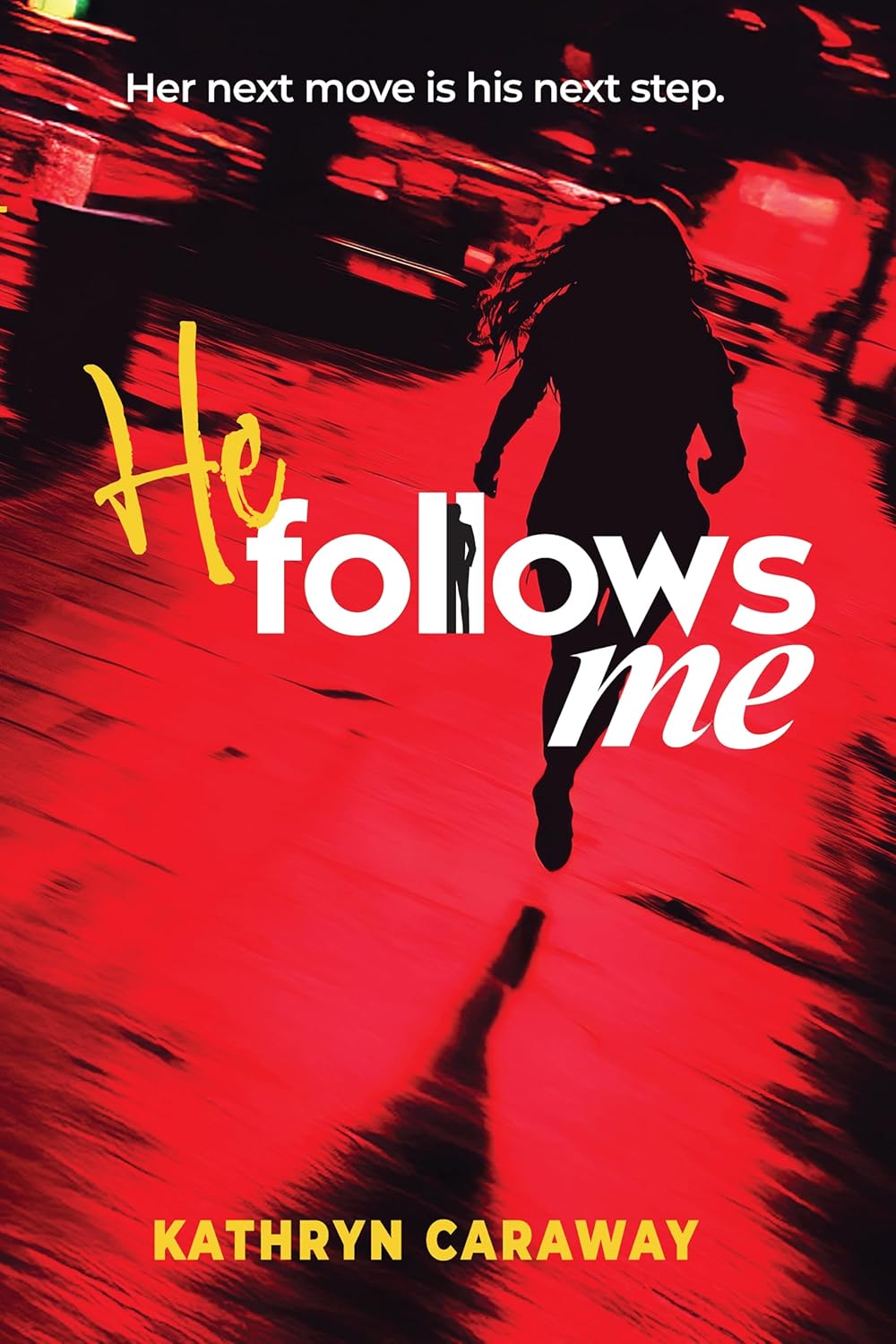
    Terror forces Kathryn Caraway to trade in her previous life as a victim for one of secrets when her sadistic stalker, Todd Bennett, is released from prison in He Follows Me.

    After years of fighting for her freedom against this relentless monster by proving the severity of the threat to the dismissive US criminal justice system, Kathryn has no choice but to disappear. She relocates to a small New Zealand town, only able to rely on her new federal relocation “watchers”. But Kathryn wonders: Who can she trust? Is starting over even possible? And to what lengths must she go to protect herself?

    Picking up where Caraway’s debut novel Unfollow Me left off, He Follows Me will further captivate readers in Caraway’s masterfully-constructed mysteries and compelling characters.

    While Unfollow Me reads like a memoir narrating one woman’s desperate attempt to regain control over her spiraling life, He Follows Me is an action-packed thriller connecting storylines of political and military suspense through two distinct perspectives. Each line is a full-course meal. Caraway’s storytelling subme

    rges readers in a spectacularly rich world of intrigue, romance, and danger.

    Readers will empathize with Caraway’s self-insert character, Kathryn, in her struggles to regain independence and strength despite the traumatic paranoia that plagues her daily life. Everywhere she goes, Kathryn “feels panic claw at her like a living thing.”

    When Todd Bennett emerges from prison in her small town, more determined than ever to claim her as his own, Kathryn gives her life to the Victim Protection Program.

    She loses her name, identity, home, and everyone she knows to start a new life in Werneth, New Zealand. Over time, Kathryn is reborn as “Tara Quinn”, making new friends as a barista andeven re-entering the dating scene despite her horrifying memories.

    Meanwhile, Tara’s handler Deputy U.S. Marshal Wes Kade watches her every move. Cold and seemingly unfeeling, Kade’s motivation is unclear. To Kade, Tara is “Something to protect, something to fix, something he could break if he’s not careful.” This ‘protector’ declares his undying loyalty to her safety, but might yet be another dangerous man.

    No matter how far she runs, Tara isn’t safe from her past.

    Determined not to dismiss red flags again, Tara begins to see signs that Todd Bennett might have found her. Tara’s axis spins out of control yet again. She must decide who to cling to for safety and how far she is willing to go to protect her freedom. The hunted could even become the hunter.

    If you have trouble prying your fingers from the cover after you finish He Follows Me, have no fear: Tara’s trials will continue in a new series about her ongoing quest for justice. Readers can look forward to more harrowing adventures in each of Kathryn Caraway’s memorable novels.


  • RECALLED: The Adventures of Rhone and Stone Book 3 by Strider S.R. Klusman – Steampunk Fantasy, Middle Grade Adventure, Mystery


    Readers will fall instantly into Recalled, the third book in The Adventures of Rhone & Stone Series by Strider S.R. Klusman, as its rich world of steampunk fantasy blends with spy intrigue and some truly breathtaking character moments.

    Rhone, a young agent for the Office of Public Recrimination (OPR), has just completed his first mission when he’s suddenly summoned back to the capital city. But he’s ambushed in the thick, untamed forests on the way. He nearly loses his telepathic crystal companion, Stone, and ends up forming an uneasy alliance with the bandit Lev—a former OPR agent with grave warnings for him.

    A shadowy group called The Brotherhood—five power-hungry brothers—pulls the strings of government power behind the scenes. Each holds a shard of their late father’s shattered magical amulet and view for power within their own ranks.

    Rhone and his boss, Aundrea, realize that something is seriously wrong in the capital. They start digging into who’s watching them and why—drawing ever more dangerous attention.

    Recalled stands out for its character development.

    Rhone is still a bit young and naive—awkward, not exactly a master swordsman—but his resilience and authentic heart push him forward in confronting conflict from well before his own time. Stone, his crystal companion, is the perfect foil: grumpy, brilliant, and full of dry humor. Their banter is fun and engaging, and their bond deepens the emotional core of the story.

    Lev is guarded, clearly haunted by her past, but as she starts opening herself to Rhone, her caring nature will draw readers well into her corner. And the villains? Those five brothers add just the right amount of creepy, selfish, and mysterious to the story. You know they’re up to no good, but not quite how, and that tension hums under every scene.

    Klusman’s writing style is straightforward and familiar like someone telling you a story around a campfire. It’s not overly polished, but that rawness actually adds to the personal charm.

    He uses the steampunk setting to introduce intriguing details. Tiny mechanical creatures (think bug-sized automatons) shape the intrigue and give the world even more texture. This setting feels alive, always transforming with new technology.

    Themes of trust, redemption, what it means to be part of a family, and the corrupting nature of power resonate throughout Recalled.

    This is one of those stories that’ll keep you reading late into the night. It has action, heart, mystery, and enough emotional weight to make it stick with you long after the last page. Readers of the past two books in the series may miss Bella and the airship from the previous entry, but as Rhone’s world grows more connected and complex he learns the importance of calling on old friends.

    Recalled by Strider S.R. Klusman doesn’t leaves behind shadows, open questions, and the sense that The Adventures of Rhone and Stone are only beginning. Readers who love fantasy, secret plots, and characters who struggle and grow will find themselves enthralled—and maybe even left a little restless, wondering what comes next.


  • SARITA by Natalie Musgrave Dossett – Adventure Western, Suspense, Historical Fiction


    Set against the backdrop of Prohibition and Pancho Villa’s waning reign of terror, Sarita by Natalie Musgrave Dossett combines a page-turning western adventure and the coming-of-age of a bold young woman.

    Set in 1920 South Texas, 19-year-old Sarita has already been through tough times. She had to return from high school, and her dream of being a reporter, to care for her dying mother. As she deals with those losses, Sarita’s fiancé, Jackson Cage, deserts her.

    When the vicious tequila smuggler Javier Salsito de Ortega shoots her little brother, JJ, for their horses, Sarita finds herself alone in the face of grave danger.

    The Texas Rangers focus their resources on Prohibition and the border incursion of Pancho Villa’s rebels, lacking the manpower to go after JJ’s murderer. Sarita worries that her grieving father will sell their land to an oil speculator. Weak with a bad heart, he is unable to pursue justice, so Sarita takes matters into her own hands.

    Once Sarita crosses the Rio Grande, she stumbles into a situation much more treacherous than she’d imagined.

    It doesn’t take long for Sarita to realize she is in over her head, caught in the clutches of criminals and drunks who think women are only good for one thing. To her surprise, Jackson Cage comes to her aid. But he seems to be in league with those who killed her brother. Sarita joins a childhood friend and that friend’s great-aunt on the dangerous trek to Santa Rosa, where Sarita hopes to find Javier and get her revenge.

    As Sarita faces challenges beyond anything she was prepared for, she discovers an inner strength that chafes at the restrictions placed on women of her time. “A red-hot wave engulfed me. I was tired of being told what to do; of men taking what they wanted. I was tired of being threatened. I’d seen enough.”

    Sarita by Natalie Musgrave Dossett is a suspenseful novel that does not shy away from the brutality of the 1920s, the consequences that others could suffer at the hands of ruthless smugglers and Villa’s rebels just for being in the wrong place at the wrong time. The tension is palpable as Sarita navigates her journey to justice all the while hoping to show her father that she is capable of taking care of their land.

    Sarita by Natalie Musgrave Dossett won Grand Prize in the 2024 CIBA Laramie Awards for Americana Fiction. 


  • THE RABBI’S KNIGHT by Michael J. Cooper – Historical Fiction, Mystic Theology, Adventure


    Knight Templar Jonathan St. Clair bears two messages for Rabbi Samuel of Baghdad, one of mortal treachery and another of mystic wonder. In The Rabbi’s Knight by Michael J. Cooper, they journey across the Holy Land to Jerusalem while divisions of faith portend the bloody conclusion of the Crusades.

    Games of knowledge and influence play across the Mamluk Sultanate, as the Latin Kingdom holdout city of Acre braces for its last fight.

    Samuel and another Rabbi, Solomon Petit, stand opposed in a bitter debate within Judaism concerning the integration of philosophy and science with religious tradition—a controversy sparked by the writings of the medieval philosopher Maimonides.

    Samuel plans to excommunicate Petit for burning the writings of Maimonides and desecrating his tomb. Petit doesn’t intend for him to get the chance. Before Samuel can arrive in Acre, Petit makes a deal with the nearby Emir to kill Samuel in exchange for the secrets of Acre’s defenses as the last city under Christian rule will soon be put to siege.

    Petit’s pupil, Isaac, realizes his teacher’s betrayal only after he helps him carry it out. He rushes to stop the scroll on Acre’s defenses from reaching the Emir, aided by William Wallace, a young Scottish pilgrim bound for Jerusalem.

    Meanwhile, St. Clair and Samuel elude the Emir’s soldiers by hiding in a leper colony on the shores of the Galilee.

    Throughout their adventure, Samuel teaches St. Clair some aspects of the mystic tradition of Kabballah—guiding the knight to an understanding of the inscription on the ancient scroll that St. Clair had brought to Samuel to unlock the hidden secrets of Jerusalem’s Temple Mount.

    The Rabbi’s Knight weaves together fictional characters and fictionalized historical figures into a dynamic, lively cast.

    Each of the central characters brings a distinct view of their world into the story, multifaceted and endearing in their own way. Isaac’s clever and welcoming nature makes Petit’s cruelty against him keen, and his friendship with Wallace—a newcomer unfamiliar with the region—pushing both young men to consider how they relate to the broader conflicts around them. As intrepid underdogs, their side of the story is particularly exciting to follow.

    We also gain insight into the motivations of the villains, as bound by histories of violence as they are willing to perpetuate them. Rabbi Petit ruminates on the burning of Jewish holy texts in France while plotting the death of his own chosen ‘heretic’. Emir Abdullah and Prince Khalil, son of Qa’la’un, both use the coming siege of Acre as leverage to grasp at the Mamluk Sultanate throne.

    St. Clair and Samuel share a confluence between their faiths, nurturing a friendship that underpins their journey, though disagreeing in the face of Zahirah—a Mamluk woman who joins their pilgrimage from the leper colony. Samuel tries to convince St. Clair that his growing affection for Zahirah is a sanctification of God, rather than a betrayal. Zahirah herself embraces her desire for St. Clair, dedicated to her own bold will despite how much it clashes with her culture’s expectations for women.

    Readers get the pleasure of growing familiar with these good-hearted people through their complicated negotiations with religious philosophy and the various social structures that shape their world.

    Cooper relishes in historical detail, welcoming readers to the lived-in corners of 13th-Century Palestine.

    Isaac maneuvers through the cosmopolitan port of Acre while its Templar defenders are supplied by sea for the looming attack. The narrow alleys of Jerusalem reveal remnants of ancient history beside the works of restoration and craftsmen. Wallace chafes with his gaudy disguise as a Genoese merchant. Lepers cling to the hope that Rabbi Samuel’s examination will declare them clean.

    The Rabbi’s Knight opens with a helpful map of the Holy Land in 1290. As the characters journey through it, readers get to explore living cities and hallowed landmarks through reverent sensory descriptions.

    Despite how far in the past this story takes place, the setting feels suitably ancient to the characters themselves. They and readers share the experience of trying to understand a long-past but still relevant time.

    Beneath its adventure, suspense, and history, The Rabbi’s Knight embraces a mystic philosophy of the pan-human search for the divine.

    Jewish theological debate defines the conflicts between Rabbis Petit and Samuel, while Samuel’s instruction of St. Clair introduces readers to some Kabalistic concepts—uncovering the layered emanations of God’s essence. In his role as teacher, Samuel refutes the sectarian divides between and within different religions, insisting that each faith is dedicated to understanding the sacred pattern of creation.

    The characters themselves grow to reflect this philosophy, risking all to help one another, they come to a far greater understanding of the world than they ever could have alone.

    A thoughtful and rewarding tale, Michael J. Cooper’s The Rabbi’s Knight will satisfy lovers of history and theology alike, all on a well-paced adventure to the Holy City. Readers can follow the story further, centuries into the future, through Cooper’s earlier novels Wages of Empire and Crossroads of Empire.


  • OF WHITE ASHES by Constance Hays Matsumoto and Kent Matsumoto – WWII Historical Fiction, Asian American Literature, Romance


    When the world is upended by war, the important pieces of your life fall around you, victims of a swirling wind. This is the story of Of White Ashes by Constance Hays Matsumoto & Kent Matsumoto.

    Just as radioactive ashes smothered Hiroshima after the United States dropped its first atomic bomb on Japan in August 1945, the unimaginable effects of war press down on Ruby and Koji, two kids on opposite sides of the Pacific.

    Ashes caught in swirling wind become a metaphor for the romantic story of these two children. Their mirrored journeys reveal layers of their identities they never knew existed, while the demands of their warring countries reshape their lives.

    Grounded in historical accuracy and part love story, Of White Ashes begins in 1939 with Ruby and Koji both living happily, Ruby in a beachfront Hawaiian town and Koji on his family’s farm near Hiroshima. Both will have their carefree childhoods taken from them after the 1941 attack on Pearl Harbor.

    Ruby and Koji share Japanese heritage and American citizenship, but far divergent attitudes to both.

    Ruby is an all-American girl, only vaguely aware of her heritage, largely from Japanese-American community. Koji, in contrast, only finds out about his American citizenship when he discovers his parents’ secret history of living several years in the U.S. All the while, Japan, the country he calls home, plunges headlong into the war.

    Ruby is ripped from her peaceful life, first by her mother’s sudden death and her father’s quick remarriage, then by forced incarceration due to the United States’ Executive Order 9066.

    Made a prisoner because of her race, Ruby grows embittered about her government’s willingness to persecute rather than protect all U.S. citizens because of its entrenched racism. Her fight is both philosophical and personal, and becomes more extreme when she is told by her father that she must emigrate with him back to Japan after the war. As a child she is powerless to make her own decisions.

    Koji, on the other hand, is curious and fascinated about his American heritage even though he must act like the standard-issue, politically faithful child expected by Japanese government and society.

    He sees his government’s harsh demands for people to scrimp for the war effort, taking every scrap of metal in their households for weaponry, and forcing children to leave school to make rifles in factories. Once the war ends, he manages to immigrate to the U.S. where he learns to speak English, goes to college, and even volunteers to serve in the U.S. Army during the Korean War. Despite the horrors of World War II, and his early life in Japan, he emerges as a proud U.S. citizen.

    Constance Hays Matsumoto and Kent Matsumoto’s Of White Ashes develops a beautifully complex love story through Ruby and Koji dealing with their deeply held differences.

    Their diametrically opposed philosophical stances cause years of heartache and stress after they meet and fall for one another. There is no easy path to pave over their conflicts no matter how many years have passed. However, as they couple, uncouple, and finally find a lasting path together, their story becomes a warm, relatable search for the goodness deep within themselves and each other that makes being together possible.

    Of White Ashes by Constance Hays Matsumoto and Kent Matsumoto won Grand Prize in the 2024 CIBA Hemingway Awards for 20th Century Wartime Fiction.


  • Inês: The Queens of Portugal Trilogy by Catherine Mathis – Historical Fiction, Romance, Courtly Intrigue


    Blue and Gold Chaucer 1st Place BadgeInspired by a true story, Catherine Mathis’s incredible novel, Inês: The Queens of Portugal Trilogy, follows the forbidden love of Ines de Castro and Infante Pedro, and their indelible connection to one another even after a most tragic death.

    Alfonso, the rightful heir to the Portuguese throne in Chao da Feira Palace in Santarem, nearly loses his crown to his stepbrother. Goncalves, a courtier, rescues the situation, earning him the king’s undying loyalty. Alfonso puts his son Pedro under Goncalve’s care to learn the moral code and values of the royal court. As the heir to the Portuguese throne and an only child, his father arranges a royal union for him with Infanta Constanza, a Castilian noblewoman.

    Love, however, does not conform to alliances or compromise. The arrival of 15-year-old Ines de Castro of Castile in 1339, a lady-in-waiting to Infanta Constanza, creates a precarious rift between a father and his son. Pedro falls madly in love with Ines despite being already married to Constanza. He begins an affair that displeases the king and fuels palace gossip among the nobles. Fearing for the independence of his nation and possible revolts, King Alfonso is forced to take drastic measures that fan power struggles, betrayal, dishonor, and even death.

    Catherine Mathis takes a blazingly smart and deep dive into an era of history that still resonates today.

    With rich, robust, and evenly matched characters, she offers a historically accurate plot that is voyeuristic in all the right ways. Being fictionalized, in part, there is a lot to relish in the author’s creative craft, such as the introduction of minor characters who propel the plot into a sweeping conclusion. Plunging readers into the royal heart of a love story that has shaped history, Inês: The Queens of Portugal Trilogy is sublimely sensual with a captivating sense of charm.

    Although it has a well-trodden conflict alongside it, this romance between a royal heir and a lady-in-waiting will gratify readers. Mathis excels through an abundance of tense and evocative dialogue, balancing it with the right amount of lively banter. The result is a tour de force that is surefooted and rich in human emotion.

    The book’s details are brilliant and perceptible, whether they are used to describe the culture, sounds, attitudes, or smells of 14th-century Portugal.

    The text’s most imperative scenes, within the palace walls, exude the intrigues of an institution that influences every sphere of society.

    Inês: The Queens of Portugal Trilogy is a compact tale of love, loss, vengeance, and justice, delivering a swift kick to the heart. Exquisitely researched and told at a rapid pace, Mathis’s debut offering is a sweep of grace and virtuosity in its genre.

    Inês: The Queens of Portugal Trilogy by Catherine Mathis won First Place in the 2019 CIBA Chaucer Awards for Pre-1750s Historical Fiction.


    5 Stars! Best Book Chanticleer Book Reviews

  • BACK To BAINBRIDGE by Norah Lally – Middle Grade, Contemporary Fiction, Friendships & Family


    Norah Lally’s upper middle grade novel Back to Bainbridge sees unstable family life through the eyes of thirteen-year-old Vicki Hanlon. The story opens as her single mother has just lost another boyfriend, and the family is being evicted from their house in upstate New York.

    Vicki’s memories, recalled as the family travels on the interstate down to grandmother’s apartment in the Bronx, shows the tumultuousness of her young life so far. It has left her with a world view based on disappointments, leaving friends, and the absence of a secure home.

    To say Vicki’s family is dysfunctional would be an understatement. She can predict her life circumstances based on her mother’s relationships with men: happy, bereft, flirty, angry. As the eldest child, she cares for her siblings when her mother can’t despite how young Vicki herself is. Judith, her younger sister, wears her scars in the form of mistrust and cynicism, while her ten-year-old brother Dylan still clings to his stuffed bear as a small piece of reliable comfort.

    Vicki’s mother deems their stay at grandmother’s home temporary, but also realizes she needs to change her life for her children’s sake. She promises this new beginning will be good for them all. Vicki can’t believe her, but one minute after meeting her grandmother she realizes this no-nonsense woman means business, and they need her for their very survival.

    Vicki wants a stable home life, but she wants friends and a sense of belonging even more.

    That first night in her grandmother’s home, she hears the voice of an angel. She opens the window and meets Rosa, the daughter of the building’s superintendent. They form an instant bond, and Vicki has her first friend inher new neighborhood. Then she meets James, the skater-dude whose problematic parents abandoned him to live with his aunt in the same apartment building. His parents’ past unruly behavior has left a bad impression on the other tenants, an unfortunate reputation that sticks to James like stale perfume. No one trusts him, not even Rosa, but Vicki won’t let anyone tell her who she can and cannot be friends with. She immediately sees something she likes in James and gives him the benefit of the doubt.

    Vicki even refuses to judge her cranky downstairs neighbor, Mrs. Kirby, based on other people’s opinions. Word on the block is that she’s an old witch, but Vicki embraces everyone—a trait that proves invaluable as her friendships begin to blossom and change her view on the world.

    When the talented Rosa leaves for a cultural-artistic summer camp, she entrusts the keys to her secret hideout with Vicki so that she can feed the rescued cats living in the basement against building rules. Vicki agrees but she has an ulterior motive for wantingthe keys; the ability to gain access to the basement storage units, especially the one holding her mother’s magenta bag. She suspects her mother has been keeping secrets about her father, whom she dreams of reuniting with in California.

    What Vicki discovers in her exploration of the storage units surprises her. She uncovers forgotten treasures that tell the stories of her neighbors’ hidden lives, and as Vicki learns more about the multi-dimensional humans whom she sees each day, she realizes that there is truly more to everyone than what meets the eye, and she has empathy for them all.

    Through her experiences, Vicki comes to respect the people of Bainbridge Avenue, and she becomes a builder of bridges, not walls, until even her own mother opens up to her and they grow closer.

    The changes that occur over the course of this novel in Vicki, her family, and her new friends on Bainbridge Avenue show us the power of respect and understanding to heal and create lasting bonds. Vicki embraces acceptance and forgiveness, even after she learns about family secrets that her mother and grandmother have tried to keep shrouded due to shame and fear of being judged. In the end, the family is able to support one another and look ahead to better days.

    Lally writes lovingly with great respect for kids and their real-life challenges, and the diverse urban setting of the Bedford Park neighborhood in the Bronx (where Lally’s own grandmother lived) is brought to life in intimate and vibrant detail. But the greatest gift you will receive by going Back to Bainbridge with Vicki in this book is the simple but profound recognition that everyone is deserving of being seen for who they are, afforded the grace to stumble and get back up again, and having  a place to call home where they can feel a sense of safety and belonging. This charming debut novel is must-read for kids and adults alike.

    Back to Bainbridge by Norah Lally won Grand Prize in the 2024 CIBA Getrude Warner Awards for Middle Grade Fiction.