Tag: Chanticleer 5 Star Book Review

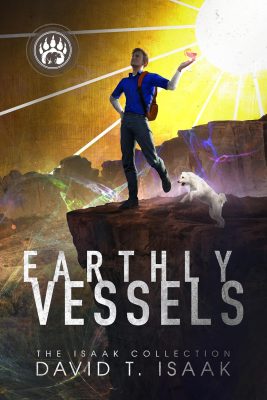
  • EARTHLY VESSELS by David T. Isaak – Metaphysical Fiction, Coming of Age, Mystical Fiction

    EARTHLY VESSELS by David T. Isaak – Metaphysical Fiction, Coming of Age, Mystical Fiction

    In Earthy Vessels by David T. Isaak, Crystal Keeling encounters a mystical power that sends her on a journey of true chaos.

    Crystal wasn’t necessarily seeking spiritual enlightenment on the streets of Manhattan, but there were certainly plenty of fools and charlatans peddling it back in 1969 – as well as both legal and illegal means of achieving ‘higher consciousness’ one way or another.

    Fortunately – and unfortunately – for Crystal, the man who found her, cult leader Anton Reginald LaMarr, and his Children of Pan were the real deal, whether they knew it or not. They had discovered a ritual that could draw down the soul of a Hero, and planned to implant that Hero’s soul into Crystal – using the usual orgiastic methods.

    Crystal was fine with the ritual sex but had not signed up for imprisonment and pregnancy. She ran far and fast and never looked back.

    When she discovered that she really was pregnant despite the birth control regimen she religiously maintained, she took it in stride – as did all the other members of whichever commune or co-op she happened to be living in at the time.

    The child, however, a boy she named Rainbow Bounty, rebelled against her counterculture lifestyle every bit as much as Crystal had rebelled against her conservative upbringing before him.

    Thus, readers follow Rainbow Bounty, who calls himself by his initials RB, pronounced ‘Arby’, because having people in the early 2000s think you’re named for a brand of fast food is much better than advertising that your mother was and still is a ‘flower child’. Arby makes his way from a job in the oil fields of Bahrain to Portland, Oregon because his mother hinted that there is a life-threatening event on the horizon.

    But she’s not the one whose life is about to be threatened and thrown off its course.

    The ritual that gave Arby life is about to come crashing down on his head – one way or another – and the fate of the world rests on him reconnecting with the abilities of his past lifetimes.

    Whether those abilities will help or hinder is a crapshoot of the highest order, because Arby isn’t the avatar of some long-dead Hero or God. That would be much too easy. Arby is, as he has so often been in his life, the avatar of chaos, the embodiment of Murphy’s Law.

    Arby is destiny’s Fool, and his purpose is to cast all plans into disarray. Even his own.

    Earthly Vessels, beginning as it does in the counterculture movement of the 1960s, reads with a sense of nostalgia for that brief era, and Crystal’s acceptance of and equally brief involvement with the Children of Pan fits right in with books of the time, from the Harrad Experiment to Stranger in a Strange Land.

    As the story moves from Crystal to Arby, a different perspective emerges, as the reader learns Arby’s place in the post-9/11 world right along with him. Arby discovers his expected role at a compelling pace, as there are forces beyond his understanding searching for him – on both sides of the cosmic balance that human shorthand calls ‘good’ and ‘evil’.

    The scope of Arby’s story, diving deeply into that longest of long-running battles, with avatars fighting on both sides of the divide, will remind readers of both Good Omens and American Gods.

    Earthly Vessels is both a deep exploration of the philosophy of the cosmos and a compelling thriller in one breathless story.

    Arby is a protagonist readers can easily empathize with, an Everyman who rises to an occasion he never dreamed was possible, doing his damnedest along a path he doesn’t fully understand.

    This story will keep readers turning pages as fast as they can, from the first until the surprising, fitting, and delightful last.


  • STAY With The WAGONS: Ghosts Along the Oregon Trail Book 3 by David Fitz-Gerald – Historical Fiction, Oregon Trail, Mystery Edit | Live

    STAY With The WAGONS: Ghosts Along the Oregon Trail Book 3 by David Fitz-Gerald – Historical Fiction, Oregon Trail, Mystery Edit | Live


    Blue and Gold Badge recognizing Ghosts Along the Oregon Trail by David Fitz-Gerald for winning the 2023 Series Grand PrizeThe wheels roll relentlessly westward. In Stay with the Wagons, book 3 of David Fitz-Gerald’s Ghosts Along the Oregon Trail series, the families upon those wheels must face not only the consequences of the trail behind them but also new dangers that lie ahead.
    Dorcas, the resilient mother, widow, and adventurer will need to summon forth all her remaining strength– physical and emotional– to survive these new challenges. Especially with her children to protect. Their community of waggoneers have supported each other through great hardship, but cracks are growing between them.

    Amongst its incredible beauty, the country they travel through contains great danger, wild animals, and a hidden evil energized by greed and violence. There is a promise, a hope of happiness on the trail west if you Stay With The Wagons, but nothing is guaranteed.

    There’s no turning back now for Dorcas and her children, as they near the halfway point to Oregon.

    She can’t give up on this dream, facing down their long way to go into the unknown. Dorcas yearns to truly become a strong and independent Athena-style woman, yet doubts linger.

    It’s the first day of summer, so the weather conditions are improving, but even this helpful development brings forth new challenges. So far the graves left behind them due to illness have been isolated cases. Dorcas buried her husband, but now she faces her own possible demise as she falls deathly sick.

    While she fights desperately for life, her children must step up to responsibilities beyond their years. Their friends in the wagon train do what they can to help, but can this family carry on and can their mother summon the vitality to recover? Like a mustang out on the plain, will the family’s wild spirit prevail?

    Along the trail there are many spirited encounters. Some are animalistic, some are devilish, some are affairs of the heart– none are predictable.

    Grizzlies, snakes, even scorpions seem to conspire against the invaders of their lands. But true evil lurks in human form, and paranormal forces hovers over the wagons.

    The complications of love are woven within the community, and even beyond. It’s not only romance that provokes trembles, but also the love for family, and wishing only the best of dreams for those who are cherished. When they reach a fork in the trail, life choices must be made with dire stakes.

    Don’t fall behind now. This series continues west to the promised future.

    Author David Fitz-Gerald propels readers through the 1850 American West, alongside the people of that era in the journey of their lifetime. We all know the destination, but no one knows whether– or how– this wagon train will arrive. Fitz-Gerald wields an amazing talent for suspense and surprise twists.

    Readers will feel as if they’re walking the trail step by step with Dorcas and her family, sharing the emotional heights of rocky precipices as well as the depths of valleys in all their vivid beauty and daring, as they continue onward to Stay With The Wagons.


  • WOKELYND by George Denny – Dystopian, Political Fiction, Contemporary Social Issues

    WOKELYND by George Denny – Dystopian, Political Fiction, Contemporary Social Issues

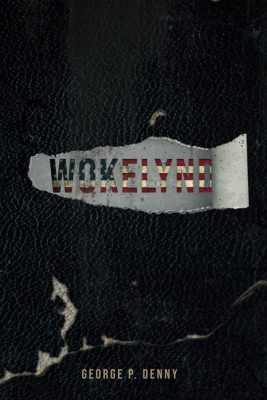
    Wokelynd by George Denny transports readers to a futuristic New California, where the government’s benevolent rhetoric of equity and inclusion disguise instead an insidious quest for power and dominance.

    A panoramic view of New California as an independent nation in 2066 sets the scene. The authoritarian JSS (Justice of Social Soldiers) wields absolute control over the population of this nation, where despotic policies stifle human autonomy. The ‘intersectionality score’ of an individual governs their position in the social hierarchy; the higher the score– the higher the chances one has experienced historical oppression– the higher their privileges. The result is chaos: an ideological rift has taken over the nation as the Liberati challenge the status quo with a stance of ‘Anti-Anti-Racist ideology’.

    Distrust and division pervade New California. The story opens on a fierce military operation between the JSS and Nevada at Lake Tahoe over ideological disputes. The ambiguity and perplexity of soldiers are embodied through Quinceton, a teenage sniper with the identity of a straight cisgender boy of African descent. A soldier under the JSS government, Quinceton straddles his commitment to JSS and his dilemma due to a growing awareness of the complexities in the despotic system. Wokelynd ushers Quinceton along a journey of self-discovery and resistance, along with companions Sarah and Bones, as they navigate the treacherous paths of identity politics and societal change.

    The climax throws Quinceton into the throes of uncertainty as he grapples with the JSS’s professed motive of universal equity versus their thirst for power.

    The horrors of warfare with Nevada further disillusion Quinceton, leading him to question his duty and the greater good of all. As Quinton and his companions navigate through the apocalyptic landscape of post-war New California, they encounter the elderly Tinh, living off the grid with his family. Tinh reveals his involvement in the secret network ‘Rooftop Railroad’, aiding refugees out of JSS’s grasp, as well as opening clandestine chapters in the history New California, which were otherwise written only from the regime’s viewpoint.

    The encounter foreshadows a critical juncture for the three soldiers, especially Quinceton, as they turn to the precarious roles of revolt and defiance. The peril of Anti-Anti-Anti Racist (AAA), the muscle of JSS, awaits them. To AAA patrolpersons, dissenters are terrorists who end up in the ‘DIE’ camp– offers either indoctrination or death. With AAA’s manipulation and severe disciplinary measures in place, the trio is headed for a future where equality reigns supreme.

    George Denny makes an intriguing correlation between language and power dynamics.

    The JSS government exercises control by shaping the discourse of citizens. Phrases such as “Anti-Racist” and “Anti-Anti-Anti-Racist” (AAA) reinforce the ideas that the New Californian Society stigmatizes. Likewise, the title “Knowers”, for the top members of society with the highest influence over people and policymaking, reflects the government’s implied justification for their every decision. But this use of language to maintain authority is echoed in the linguistic tactics of the opposing Liberati to mobilize resistance.

    Social and political allegory of frail government policies and the erosion of freedom manifest through Tinh’s family. Tinh disregards the JSS’s programs aimed at promoting equality and welfare. He stresses autonomy and self-reliance, recognizing the inherent limitations of government projects that perpetuate exclusion and dependency despite their professed objective of encouraging fairness.

    “The most potent weapon in the hands of the oppressor is the mind of the oppressed.” This quote by Steve Biko reverberates in the pages of Wokelynd. This piece lays bare an insatiable desire for power and control contrasted with the indomitable spirit of human agency.


  • MISTRESS Of LEGEND: Guinevere’s Tale Book 3 by Nicole Evelina – Arthurian Legend, Historical Fantasy, Myths & Legends

    MISTRESS Of LEGEND: Guinevere’s Tale Book 3 by Nicole Evelina – Arthurian Legend, Historical Fantasy, Myths & Legends


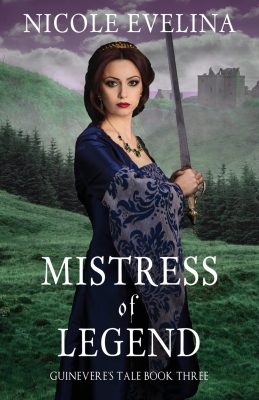
    In Mistress of Legend, the enticing finale of Nicole Evelina’s Guinevere’s Tale trilogy, matters are life-and-death by the second sentence, pulling readers deep into Guinevere’s fate in this retelling of Arthurian legend.

    We come upon heroine Guinevere in the midst of an ill-fated romance with Lancelot. It’s far from her first troubled entanglement, but the stakes rise as she’s severely injured and faces even more threats, pursued by possible enemies. The novel’s beginning is woven with backstory, which adds suspense to the drama unfolding in Guinevere’s present. This summarizing might be slow for readers familiar with the series, but makes the story accessible for those who haven’t picked up the first two books.

    Many more characters appear, waving the web of intrigue Guinevere finds herself caught in.

    Evelina builds this setting through well-researched cultural details, like the holidays and rites of Guinevere’s pagan world, and the symbolism and ideology of the Christianity that threatens to blot her world out.

    Though it’s a work of fantasy, Mistress of Legend has the feel of magical realism. Paranormal abilities like Guinevere’s “sight” fit subtly within Evelina’s carefully constructed foundation. Details down to ritualistic makeup and intoxicants are based on fascinating historical truths, many of which are explained in the author’s notes at the end.

    Evelina avoids foreshadowing to ensure her characters’ futures long remain inscrutable. Unpredictable shifts in individuals and relationships seem to arrive at every turn, making for a thrilling, if at times mystifying, read. Guinevere’s relationship with Morgan, Arthur’s second wife, feels uncertain until the end, as the two vacillate from enemies to friends and back again. Meanwhile, Mordred, son of Morgan and Arthur, undergoes surprising development that makes perfect sense only in retrospect.

    The use of “the sight” by characters like Guinevere and Morgan provides windows into other places, even the future, as the women experience highly realistic visions.

    This allows Evelina to show two places at once without using multiple points of view (though some characters are so fascinating that readers may wish they could see things through their eyes). Instead, only Guinevere’s perspective is given, and readers feel her claustrophobic sense of being trapped in the mechanisms of fate.

    Along with the characters involved in it, this tale of political intrigue only grows more complex with time.

    The story begins to feel like a tapestry whose threads disappear and reappear in the weave. Some characters – even main ones – vanish and are nearly forgotten, only to return when they’re least expected. Guinevere’s life-threatening injuries, so crucial to the first pages, are soon eclipsed by even more pressing problems. Yet they return to the narrative from time to time, the marks left behind to remind the aging Guinevere of how much she’s lived – and how much is still in store.

    Mistress of Legend fits well within the literary tradition of retelling classics from a strong woman’s point of view.

    It’s a great pick for readers of magical realism, historical fiction, and new twists on old classics. It takes things a refreshing step further, too, with a strong female character who remains formidable, agile, and the subject of much male attention as she ages past 40. Youth is no threat to Guinevere. The foolish grabs for power that surround her are.

    The pace of the novel shifts wildly: speeding through seasons, only to suddenly slow and zoom in on the intense details of a moment. At times, it feels a bit like whiplash – but surely that’s how Guinevere felt, as the life she built crumbled time and time again. Readers remain close within her viewpoint, feeling everything she feels, in a world whose only constant is change. Ambitious though she is, her true quest is simply for peace.

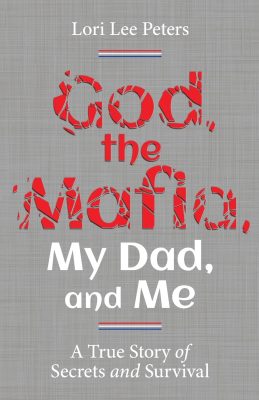
    Mistress of Legend by Nicole Evelina won First Place in the 2018 CIBA Chaucer Book Awards for Pre-1750s Historical Fiction.

    The Guinevere’s Tale series by Nicole Evelina won Grand Prize in the 2021 CIBA Book Series Awards for Fiction Series.


    5 Star Best Book Chanticleer Reviews round silver sticker


  • GOD, The MAFIA, MY DAD, and ME: A True Story of Secrets and Survival by Lori Lee Peters – Memoirs, Family Relationships, Organized Crime

    GOD, The MAFIA, MY DAD, and ME: A True Story of Secrets and Survival by Lori Lee Peters – Memoirs, Family Relationships, Organized Crime


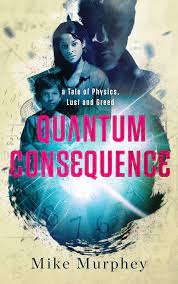
    God, the Mafia, My Dad, and Me by Lori Lee Peters begins in the voice of a child, compelling not just for its narrative honestly, but for the fact that it might not be reliable. As the book opens, we learn that this narrator firmly believes she will be killed.


    Readers can easily see through the childlike hyperbole, but that doesn’t detract from the intrigue. How did a kid come to such an extreme conclusion? Is there any seed of truth to it? These questions will hook readers from the start.

    Author Peters set out to write a book about her dad. God, the Mafia, My Dad, and Me tells the true story of her father, and his fascinating work helping the FBI tackle Mafia activity in Lodi, California. Yet in the end, this is a memoir in which the compelling lead character – young Lori – overshadows her father in many ways.

    We only see Lori’s father through Lori’s eyes, so he seems larger-than-life. Lori herself becomes the truly fascinating figure, especially as her life grows more complex with age. At first, the book holds little suspense, as young Lori unpacks the seemingly-straightforward details of her and her father’s life. Yet what seems to be an idyllic childhood starts to break down as the narrator reveals her complicated family dynamics and very real fears. Lori’s fear of God takes on a literal meaning, far beyond religion. In fact, it starts to tear apart her life.

    Author Peters provides every detail with remarkable calmness, giving a window into the adult writing the story.

    Yet the book maintains the voice of a child until near the end, which may leave readers wishing for more reflection from present-day Lori. Instead, we walk closely with young Lori through the twists and turns of a childhood plagued by fear. Her father’s challenges dealing with the Mafia undercover become more tangible, and in some ways, easier to face. They seem to pale in comparison to Lori’s nebulous personal troubles, especially since she’s so afraid to speak them out loud.

    Peters includes moments from her father’s perspective, recreated from later research. These recreations feel less lively than other scenes, but ultimately, the book is more memoir than biography. Scenes increasingly focus on Lori’s life as time progresses, and readers will feel drawn in by the truthful way she relates her struggles.

    God, the Mafia, My Dad, and Me avoids traditional chapter headings, and initially jumps back and forth through time, which can create some confusion. However, later sections settle into a steady rhythm as Lori enters adulthood, plagued by growing anxiety and secret issues with grasping reality itself.

    Watching her slowly confront, then overcome, these inner problems is the heart of the book, and provides an ending even more satisfying than her father’s win over the Mafia.

    As a narrator, Lori offers compelling moments of honesty and understanding, such as when she goes through a messy divorce with vast compassion for her soon-to-be ex. When she grows up, the adult Lori emerges as a stronger and more reliable narrator, giving readers reflection and depth that ties the book together. This warm and thoughtful voice that will keep readers invested throughout the story.

    God, the Mafia, My Dad, and Me by Lori Lee Peters won Grand Prize in the 2022 CIBA Shorts Awards for Novellas, Collections, and Anthologies.


    Shorts GP gold sticker

    5 Stars! Best Book Chanticleer Book Reviews

  • QUANTUM CONSEQUENCE: Physics Lust and Greed Series Book 5 by Mike Murphey – Time Travel, Action & Adventure, Satire

    QUANTUM CONSEQUENCE: Physics Lust and Greed Series Book 5 by Mike Murphey – Time Travel, Action & Adventure, Satire

    blue and gold badge recognizing Quantum Consequence by Mike Murphey for winning the 2023 Humor and Satire Grand PrizeQuantum Consequences, the fifth book in the Physics, Lust, and Greed Series by Mike Murphy, mixes conflicts from the past, present, and future as a group of time travelers clash over the fate of multiple worlds.

    Marta and Marshall have to protect Baptiste, a child living under the rule of his mother’s abusive boyfriend, Ignace Aguillard. When their friend Cecil is murdered, Baptiste inherits his money and stake in a secret governmental facility beneath the Arizona desert, the Historical Research Initiative Complex. To keep that money out of Aguillard’s hands and confirm whether Aguillard truly killed Cecil, Marta and Marshall take Baptiste to the HRI, revealing its true nature as the hub of interdimensional time travel.

    Meanwhile, a team of assassins and former HRI personnel, Gillis, Lexi, and Elvin, are instructed by a future version of Lexi to kill John Dexter– Lexi’s bitter ex and future higher-up in the dystopian Christian Fundamentalist States of America. They break into the HRI, now seemingly abandoned, to figure out whether they should take the job.

    But the two groups run into much greater trouble than just each other.

    A paramilitary squad under the employ of Amazon, a set of AI with delusions of grandeur, and even the metaphysical custodians of the quantum corridor upon which time travel trespasses try to flex their will over the HRI. All the while, an even more mysterious force orchestrates murder and corporate-political schemes, working in the shadows of the future.

    True to its name, Quantum Consequences brings together a menagerie of storylines from earlier in the series, as the characters’ time-traveling work catches up to them. This complex story is skillfully wrangled as each action echoes onward to cause problems further down the line. Marshall suffers the mistakes of cosmic bureaucracy that leave him with a body from another universe, Marta’s alternate self flees from the authorities, and John Dexter tries to guide his past self to escape from mob ties and secure his political power in the future.

    This story shares its infinite universes through engaging characters and a strong sense of humor.

    Even as they reckon with the power to change the past, these characters remember their human ties, joking with, protecting, and loving the people who connect them to the world. Although time travel wipes away much of their memories, enough remains for them to slowly build a sense of the greater powers at play.

    This use of time travel allows author Murphey to create moments of great tension, but also hilarious coincidences and well-executed dramatic irony. The story twists in wonderful and unexpected ways as different character perspectives show readers entirely new angles on events that seemed simple at first.

    Quantum Consequences will draw readers in with grounded conflicts that get to the heart of characters like Marshall, Marta, and Baptiste, then expand to otherworldly concerns with entire universes at stake, and ultimately return to see these characters confront the issues weighing on them.

    An excellent mix of satire, humor, and drama breathes life into this sci-fi adventure.

    Tongue-in-cheek political commentary connects the events of this strange future to those of our modern day, and though Quantum Consequences doesn’t shy away from dark subject matter in its conflicts, running jokes and ridiculous situations keep the tone light throughout.

    While this comedic tone is occasionally strained by the contrast with cruel villains, it holds up very well throughout the finale. As disparate conflicts come crashing together deep in the HRI, flashes of action and vital decisions shape an ever more intense story for this series.


    5 Star Best Book Chanticleer Reviews round silver sticker

  • THE ESMERALDA GOODBYE by Corey Lynn Fayman – Mystery, Crime Thriller, Police Procedural

    THE ESMERALDA GOODBYE by Corey Lynn Fayman – Mystery, Crime Thriller, Police Procedural


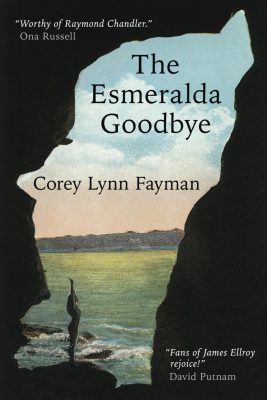
    In The Esmeralda Goodbye, Corey Lynn Fayman crafts a suspenseful crime story about a patrolman who becomes entangled in a criminal saga with stakes as high as his life.

    The duty of investigating a suicide threat made by well-known author Raymond Chandler falls to Jake Stirling, one of the newest members of the San Diego Police Department. With a deft maneuver, Jake prevents Chandler from ending his life when he visits his apartment. This success fills Jake with excitement to make a name for himself in his new career as a police officer.

    Months later, he’s called to investigate the theft of a diamond necklace from the Del Charro Hotel. Jake first questions a hopeful lead: J. Edgar, the FBI Director, who just so happened to be there during the raid. But though Jake plans to simply file a report so that detectives can be assigned to the case, he’s taken aback when the director encourages him to give up the case and concentrate his time elsewhere, such as assisting the decent, law-abiding citizens in the neighborhood. As he mulls over the director’s idea, a well-known name from the Creeper case— which had ruined his father, a police officer before his death— reappears.

    Jake becomes engrossed in speculations about a piece of interest he took from Chandler’s house a few months earlier.

    Moreover, he encounters a formidable investigative officer who is secretly working with a web of cartels. Jake’s life takes a drastic turn after a buddy passes away, and he quickly discovers that his independent demeanor has given his bosses cause for concern. Bearing down on him all the while, the Creeper case has turned its destructive attention from father to son.

    Fayman has crafted a page-turner filled with drama, intrigue, and thrilling action that readers will find difficult to put down.

    Starting with an unlikely sequence of events, the first chapters reveal unexpected motivations from unlikely individuals. A steady and regulated pace during the uncovering of the mystery keeps readers steeped in curiosity and ever-changing theories, with skillful distribution of clues. New information gradually comes to light through the interactions of real, multifaceted individuals, and a high degree of tension stretches from beginning to end.

    “The Esmeralda Goodbye” is a masterpiece with excellent character development. Its remarkable tale and charming hero revel in the excess of 1950s Southern California atmospheres.


    5 Stars! Best Book Chanticleer Book Reviews

  • YOU CAN’T FOOL A MERMAID by Judy Keeslar Santamaria – Magical Realism, Family Saga, Self Discovery

    YOU CAN’T FOOL A MERMAID by Judy Keeslar Santamaria – Magical Realism, Family Saga, Self Discovery

    Blue and Gold Badge Recognizing You Can't Fool a Mermaid by Judy Keeslar Santamaria for winning the 2023 Somerset AwardYou Can’t Fool a Mermaid by Judy Keeslar Santamaria is a glorious dance of well-intentioned ghosts. In the words of Violet, a twenty-one-year-old pianist, it’s “bewitching as hell.”
    Santamaria opens with a tiny mermaid bodysurfing through the gutters of Seattle. College student and pianist Violet Bacon chalks up “gutter-mini-mermaid” to her wildly imaginative mind, but when she stumbles upon a magical theater-turned-piano-rescue with a retinue of shopkeeping cats, the separation between imagination and reality no longer seems as important as discovering her true self.

    Violet has been living a lie: keeping up the pretense that she’s dating a woman to make her father angry. She reluctantly goes along with what other people want and pretends she doesn’t desperately need a cat. As she practices a complex Stravinsky concerto, her abiding love for music is all that sustains her.

    But Hector Kouris, the proprietor of the theater-turned-rescue, reintroduces Violet to her childhood piano, Bossy.

    The piano seems to speak to her through phantom notes in the days that follow. Santamaria deftly folds a menagerie of other companions into Violet’s life, living and inanimate: a friendly pigeon guide, a blue cat from the ocean, a mysterious and otherworldly busker who knows more than he should, and a patchwork-quilt tote bag that collects treasures leading to hidden truths.

    With the help of this host of confidantes, Violet learns about not only her deceptive father, but the history of all those she loves. (Those who enjoyed Santamaria’s debut novel will be delighted to learn that the character Morgen from Jetty Cat Palace Café returns as Violet’s mentor.)

    Motif after motif enters the story, first in ripples, then in rivers, until oceans of symbols haunt Violet’s life in a wild storm that sings, “to thine own self be true.” Santamaria’s expert handling of magical realism will leave you wondering what is real as she convinces you to just “go with the flow but be mindful.”

    Santamaria guides readers to connect with the ghosts of their past just as Violet does, for people sometimes need to go backward before they can move forward.

    At the center of Violet’s journey through family history lay a mysterious tragedy that occurred at the theater years ago. Violet learns secret after secret in a heart-wrenching crescendo until she finally discovers the spirit at the heart of this beautiful patchwork story. Readers will come away understanding that no one can escape their ancestry, but the way people respond determines whether the past is a prison cell or a key.

    As part of Violet’s journey, Santamaria invites readers to explore many cultures and communities. Her handling of neurodivergence and disability is especially thoughtful.

    This book is the perfect choice for anyone who enjoys cats, magical realism, a dash of romance, music, and characters who bravely face intergenerational trauma. It doesn’t allow any character to be singularly villainized, for all live in the shadow of their ancestors. If you were raised to doubt yourself but have since learned that you can’t fool your inner mermaid, this book might haunt you long after you finish reading it.

    5 Stars! Best Book Chanticleer Book Reviews

  • THE GHOST In The GARDEN by Alisse Lee Goldenberg – Mystery, Young Adult, Paranormal

    THE GHOST In The GARDEN by Alisse Lee Goldenberg – Mystery, Young Adult, Paranormal


    In Alisse Goldberg’s engaging young adult mystery, The Ghost in the Garden, a curious 11-year-old must face the challenges of moving to a new city, losing old friends, making new ones, and encountering historic specters in her new home.

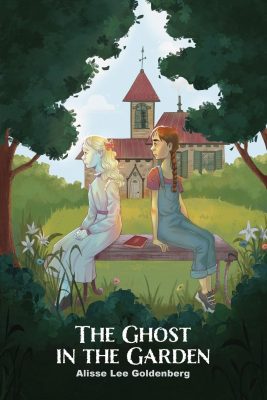
    Sophie Madison seems none too happy about her recent move from the bustling city of Calgary, Ablerta to the smaller, quieter landscape of Stratford, Ontario. But upon arrival with her parents, she begins noticing the charm of the place, appearing like a step back in time. Their new house in particular catches her interest, with its tall turret topped by stained glass window panes where Sophie’s bedroom will be. In addition, the wild beauty of the backyard garden draws her in.

    Soon, a mysterious blonde-headed girl named Tabitha appears in the garden.

    As she gets to know Tabitha and faces abnormal happenings with her closet door, Sophie’s left on edge, with nightmares riddling her sleeping hours.

    But with the help of her parents, some newfound friends, and Tabitha’s haunting journal from the attic of Sophie’s closet, Sophie comes to terms with the spirits of the past and gains a positive outlook for her future.

    Author Goldenberg’s story is artfully centered around giving new people and places a chance.

    With clear familiarity and care, Goldenberg and illustrator Hannah Al-shaer paint a beautiful and detailed backdrop of Stratford, a place one could easily grow to love. From the artsy vibe of murals in an area laced with parks, shops, and restaurants, to a fairy gate in the center of town, the place oozes picturesque charm.

    An engaging cast of characters fills this colorful place, from Sophie’s loving and concerned parents to a friendly but quirky vegetarian lady who happens to be the Mom of Sophie’s new friend, Fitz. These two pre-teens enjoy an easy camaraderie, as Fitz introduces Sophie to the area, and the two join forces to investigate the strange happenings in Sophie’s room. A hip, young teacher with an interest in the town’s paranormal history compliments the mysterious storyline.

    Conversation throughout the narrative is realistic and genuine, and text messages between Sophie and Fitz lend a modern-day flair.

    Here the haunting theme of apparitions and spirits continues in present-day terms when Sophie appears to be “ghost” texted by her best friend back in Calgary. Perhaps an indication that friendships may not always withstand the miles.

    Goldenberg weaves a stirring plot with enough questions and scares to keep readers invested, but not cowering.

    Shredded doorframes, decapitated teddy bears, and dark entities with clawing hands likened to a “zombie, hag monster”, offer up just the right amount of chills and thrills.

    For audiences both young and old who enjoy a ghostly mystery featuring relatable issues about settling into a new place, dealing with new people, and discovering things that go bump in the night, The Ghost in the Garden proves a venturous and entertaining literary move.


    5 Stars! Best Book Chanticleer Book Reviews

  • THINGS UNSEEN: The Isaak Collection by David T. Isaak – Murder Mystery, Amateur Sleuth, Mysticism

    THINGS UNSEEN: The Isaak Collection by David T. Isaak – Murder Mystery, Amateur Sleuth, Mysticism


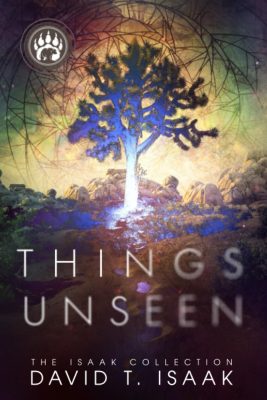
    After the murder of his sister, Dr. Walker Claybourne journeys to the Yucca Valley to wrap up Claire’s affairs– including the investigation, in David T. Isaak’s mystery novel, Things Unseen.

    As a geology professor at the University of California in San Diego, a leading authority on volcanic landforms of the Southwest, Walker lives a life as solid and routine as the very rocks he studies. He has his tenure, his condo, and his quiet existence. On sabbatical to write a textbook, Walker plans on staying in Claire’s rented house just long enough to pack her things. However, he isn’t there long before guilt sets in as he realizes how little he knew his only sister.

    With his parents both dead and his only other sibling teaching at Cambridge, Walker realizes how very alone he is, and he decides to investigate Claire’s murder.

    His initial stop with the detective covering the case leaves him more confused than enlightened, so Walker turns to Claire’s friends, a strange group of both mystics and intellectuals. He quickly begins to see the complex woman his little sister was– counselor, reformer, and spiritual pilgrim. As the mystery deepens, the questions yield a plethora of suspects, while Walker faces multiple attacks on himself. He gradually begins to questions his own beliefs and long-standing intellectualism the more he learns about Claire.

    This novel offers a fresh and complex take on the journey of self-realization.

    In the beginning, Walker is a well-established skeptic and intellectual. His entire existence is built upon scientific observation and proof, the kind one can see and touch. He absolutely refuses to believe in the psychic visions of Claire’s friend Mandy or the Wiccan glamour spell entrancing him to another friend, Melanie.

    Where Claire is passionate, seeing the power in the beautiful and often deadly landscape surrounding her, Walker is coldly calculating, analyzing those measurable traits easily explained by his many years of study and research. He admits that his life has been about endurance, a “doggedness” that has gotten him both his tenure and his lack of true friends.

    However, Walker knows this stubbornness is exactly what he needs to keep him on the scent of Claire’s killer.

    The more Detective Bolles pushes against his investigation, the more resolve Walker has to understand Claire and make up for all the years he’d wasted. He often wonders if his newfound obsession with knowing Claire’s mind and inner circle is healthy, or just a way of assuaging his guilt with the thrill of achievement in finding her killer.

    However, this very uncertainty is, in itself, personal growth for Walker. As a goal-oriented man, he is always clear in his expectations and desires, but by investigating his fierce, loyal sister, he steps out of his “normal,” and likens the experience to his brain splitting and evolving.

    Along the way, Claire’s friends and eventually Claire’s presence– whether in his mind or as a true spirit– convince him not to ignore the things for which he has no real explanation.

    Walker begins to think that his years in academia have just been a way to hide rather than face life head-on as Claire always did, and he begins to truly notice the little details he sees every day. While Walker isn’t sure what the correct life path is, he no longer believes it’s simple. The path to truth, just like the mystery of Claire’s death, is a winding mixture of factual and spiritual, but one full of strong friendships and deep devotion.


    5 Stars! Best Book Chanticleer Book Reviews