Tag: Chanticleer 5 Star Book Review

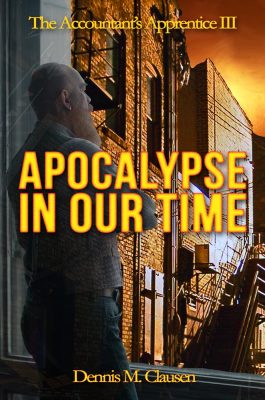
  • APOCALYPSE In OUR TIME: The Accountant’s Apprentice Book 3 by Dennis M. Clausen – Paranormal, Metaphysical Fiction, Contemporary Social Issues

    APOCALYPSE In OUR TIME: The Accountant’s Apprentice Book 3 by Dennis M. Clausen – Paranormal, Metaphysical Fiction, Contemporary Social Issues


    In The Accountant’s Apprentice III: Apocalypse In Our Time by Dennis M. Clausen, the director of a homeless shelter sees subtle changes in the community around him, changes that are both worrisome and bizarre—portending a change to the world beyond human understanding.

    The story of Justin Moore, director of a homeless shelter in San Diego, continues. In the previous books in the series, he has met individuals who seem to be not quite of this world. A.C., a mysterious man in a wheelchair who played an important role earlier in the trilogy, is gone as of the third book, but his wheelchair is now being used by another man— seemingly catatonic and with no name. This man is known only as “Levi” by the staff at the bus depot where he was found, but Justin finds there is something more to him beneath the surface. Levi seems to have certain things in common with A.C., but with unique abilities. Justin is warned by a woman that the man he knows as Levi may be dangerous, but is he? And who is she, anyway?

    So many questions are raised, and Justin has few if any answers. In the previous book, he saw a demonic army gathering on the horizon. Was that real? A.C. had given Justin a limited ability to see the future, and a horrifying promise of things to come:

    “No one else saw what I saw that day. They only saw the huge, monstrous tsunami wave approaching from the west and engulfing the Mission Beach Pier. They did not see the demonic army forming on the horizon and threatening every living thing on the shore.

    “… A. C. did what he said he would do. He used me as his camera to see present events—but also future possibilities. What I saw on the pier was not only a vision of the tidal wave that was approaching from the west. It was a vision of the future and the demonic forces of pure evil that were aligned against all life on the planet Earth.”

    Apocalypse in Our Time gives us a peek into the future— or perhaps a peek into our own minds. A story of the world coming of age, so to speak, with menace on the horizon and possible salvation, if such a thing can exist.

    As this story continues, the narrative becomes deeply intriguing. The beginning reintroduces readers to the setting and characters, and once this final part of the series begins in earnest it gives us a sense of wonder and mystery, while at the same time the alarming scenario escalates around Justin. The intensifying plot echoes through well-fleshed-out characters like Angelina, a young girl living in the homeless shelter, fascinated by Shakespeare and his works, who explores her own unique abilities—and connection with Levi.

    End of the world, or something more? That is left to the reader to decide. Certainly, after the events that the characters see and experience, the world—and they—will never be the same. Dennis Clausen’s third work in his trilogy is both ephemeral and thoughtful, making the reader wonder about the end of the world well after the end of the book.


  • R&R: A Feast of Words by Maria Giuseppa – Contemporary Fiction, Friendships & Relationships, Covid-19 Fiction

    R&R: A Feast of Words by Maria Giuseppa – Contemporary Fiction, Friendships & Relationships, Covid-19 Fiction


    In R&R: A Feast of Words by Maria Giuseppa, two life-long friends, Rachele and Raffaele, connect through letters and emails during the early stages of COVID quarantine.

    Their conversations–fusing with each other and evolving rapidly through life stages–culminate in a long-overdue reunion and a trip to Portugal and Italy. Through the loss of a spouse, divorce, parenting struggles, and the apocalyptic reality of COVID-19, two real-as-life characters–oft-neglected in their daily lives–share their thoughts with one another across an intimate distance.

    Simple and elegant, Giuseppa’s heartrending storytelling will inspire readers to live with intention and purpose–and perhaps, to cook more delicious food and write more meaningful letters.

    R&R is a small, close story. With only two active characters, readers come to inhabit their daily monotony and to crave adventure and companionship alongside them. Despite each letter’s lack of timestamps, the current of time is constantly pressing forward in the background. Holidays come and go, tragedies break and are healed, even as some days feel never-ending.

    At first, Rachele’s and Raffi’s confined spaces are palpably claustrophobic. “I think the world as we knew it no longer exists,” Rachele admits. But as time moves on and they realize there is more to their friendship than meets the eye, the world opens for them in both exciting and dangerous ways. Despite how long they’ve known each other and the correspondence that connects them, they realize that there is no end to the newness they uncover in one another.

    In the end, their submission to vulnerability leaves them raw and at the mercy of their instincts, freeing them to live unabashed in their tenderness for one another.

    While an undercurrent of romance keeps Rachele and Raffi drifting ever closer, this novella transcends any superficial sort of tale.

    This is a story of two people who belong with each other no matter what form their belonging takes. Although hints of “long lost love” appear, the reader feels that no romance is necessary for a satisfying ending. As Raffaele admits to Rachele, “For the first time in my life, I am longing for something other than a lover. I want a true friend. You are the one.” This insistence on friendship continues throughout the novella, despite the romance that threatens their close connection.

    They support each other through hardship, coach each other through difficult decisions, and love ceaseless despite mistakes and wrongs. With their letters, the characters create space for vulnerability and cultivate a communal understanding of selfhood despite the physical and social barriers that inhibit their ability to share their lives together.

    R&R will linger in readers’ hearts for a lifetime, urging them to intentionally reflect on their own intimate details, including relationships, adventures, faith, regrets, secrets, loss, politics, trauma, travel, parenthood, and so much more.

    The form of letters allows the characters, as well as readers, to “strip away boundaries and…share” the most vulnerable parts of their lives. Giuseppa weaves together the intricacies of the characters seamlessly into a world all their own. When readers reach the final page and leave Rachele and Raffi behind to finish their glorious adventure, they’ll be moved to feast on their own blessings as well, moving toward openness and belonging.


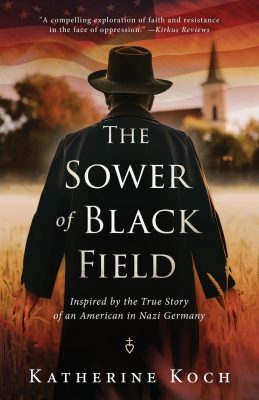
  • THE SOWER Of BLACK FIELD by Katherine Koch – Historical Fiction, WWII, Religion & Community

    THE SOWER Of BLACK FIELD by Katherine Koch – Historical Fiction, WWII, Religion & Community


    In The Sower of Black Field, Katherine Koch’s historical fiction novel, Father Viktor Koch— a 67-year-old Catholic priest— presides over a monastery in a small German village, as the Nazi regime sweeps through the country.

    The time is April, 1941. Fr. Viktor’s order, the U.S.-based Passionists, built the monastery eight years prior, providing employment for most of the villagers and remaining a symbol of their faith.

    Fr. Viktor has lived in Europe for over 20 years, but balances his love of Germany, its land, its mysticism, with his American roots. He will need all his personal and religious resources over the next four years as the Nazis take hold in the village and, later, the Americans come to “de-Nazify” the town and hold its people responsible for the horrors of the Holocaust.

    The village is far more Catholic than Nazi, even as the regime does its best to turn its citizens away from their faith.

    They take over the monastery despite Fr. Viktor’s strenuous efforts to hold onto it. Their next major push is to remove crosses from the schools. That measure is met with a petition from the villagers, a move that threatens to land them in prison.

    We get to meet several villagers who personify the conflict between their way of life and Nazi fanaticism.

    Norbert and his wife and family run the local bakery, a central food supply to the villagers. His anti-Nazi stance threatens his life as well as destroying this important community resource. Helene, a woman who lost her husband who served in Hitler’s army, will do anything to protect her two sons from their forced enrollment in the Nazi youth corps.

    Klaus, her oldest son, endures his militarist, cult-like corps training. Hans, the youngest, remains true to his Catholic faith. This look into the indoctrination of Germany’s children remains one of the most powerful aspects of this novel.

    Among the Nazis, the party official Seiz becomes the lens through which we see even the most dedicated member recoil when he finds out first-hand the horror of the Holocaust— as it reaches deep into the village in a horrifying, unexpected way.

    Faith in God, and the testing of that faith, is interwoven throughout the novel.

    As Nazi horrors close in on the village, the heavily religious community finds itself questioning how a just and merciful God can allow these acts to happen. Even Fr. Viktor must dig deeply into his faith to answer the unknowable “framework” of God’s plan.

    When the war nears its end, the town becomes flooded with refugees from other parts of Germany. Stories of Russian atrocities and rumors of American “gangsters” flood the small, outlying town. When liberty finally comes, the conquerors impose their own set of rigors on the people, further testing the faith of adults and children alike. Fr. Viktor is stressed to his limit as he becomes the village’s voice.

    The Sower of Black Field shows us everyday Germans as peace-loving people of faith trying to survive during WWII, a side of that terrible conflict not often shown.

    A picture emerges from this novel of people caught up in a conflict not of their making, resisting as they can from its evils, and finding strength in the courageous example of their pastor.


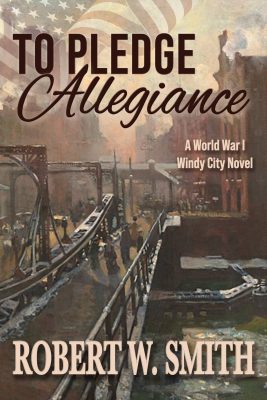
  • TO PLEDGE ALLEGIANCE: A WW1 Windy City Novel by Robert W. Smith – Historical Fiction, WWI, Chicago History

    TO PLEDGE ALLEGIANCE: A WW1 Windy City Novel by Robert W. Smith – Historical Fiction, WWI, Chicago History


    In To Pledge Allegiance: A WWI Windy City Novel by Robert W. Smith, Conor Dolon, a defense lawyer, investigates the suspicious death of his friend, and ends up unearthing horrifying family secrets as well as deeply ingrained espionage activities.

    Conor, Irish-American living in Chicago, receives shocking news. His wife Maureen has been abducted by a bunch of vigilantes walking the streets of the city and sporting flag armbands. The previous evening, Maureen had agreed that her outspoken support of the IRB (Irish Republican Brotherhood) in Ireland and her neutrality actions were becoming risky given the unpredictability of the current political climate.

    Even when she eventually returns unharmed, the police officer who found her did not detain the kidnappers despite their evident presence. As Conor subsequently discovers, his wife’s captors questioned her attitude toward the Kaiser, involvement in Irish groups, and allegiance in the case of war.

    When a friend is shot during a warehouse burglary, Conor is once more taken aback. He later finds out from a nurse that, despite the hospital saving his life, he unexpectedly passed away from an infection.

    This friend had not previously suffered fever symptoms, so the nurse finds that stated cause strange. Conor goes out to look into his friend’s death, and bumps into a woman he’d saved earlier from hooligans pestering her during a peaceful demonstration. She turns out to be the daughter of one of his primary suspects, a ruthless and vindictive man who leads a prominent gang. But her elegant sense of style rapidly wins Conor over, almost shattering his marriage to his wife.

    And as information about the affair surfaces, Conor’s wife reveals a fifteen year old secret about her involvement with one of Conor’s close friends from his early years in Chicago—the man who had helped him navigate the quagmire of the city’s politics.

    The events of World War I in Europe in 1917 serve as the backdrop, instilling this story with real historical elements such as the Department of Justice approving a group of criminals and even giving them badges to carry out their violence.

    An immigrant family of well-known Irish Republicans—the Clan-na-Gael—has also been well depicted. The author carefully shows the role that many organizations played in Chicago, a city which has been at the epicenter of powerful movements opposing the nation’s war policy. Readers fascinated with history and World War politics will appreciate the richness of material in this book, including details on the largest-ever patriotic group’s endeavor, fully backed by the US government, to suppress opposition and foster nationalism.

    Robert W. Smith’s book To Pledge Allegiance: A WWI Windy City Novel is a story propelled by likable characters who remain true to their era.

    It weaves action, romance, mistrust, familial insecurities, and war-related themes into a narrative that will hold the reader’s attention from beginning to end. An engaging, judicious and well-written work!


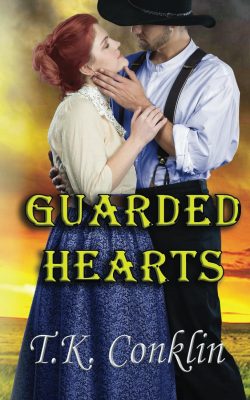
  • GUARDED HEARTS by T.K. Conklin – Romance, Western, Suspense

    GUARDED HEARTS by T.K. Conklin – Romance, Western, Suspense

    The 2022 Laramie Grand Prize Badge for Guarded Hearts by T.K. ConklinGuarded Hearts by T K Conklin is a sensual romance in the Wild West, with all the passion and excitement natural to the setting.

    Sparks fly between a man with an outlaw past and a woman with a terrifying gift to heal or harm. Strykes is a man haunted both by a violent childhood and his time in an outlaw gang. But he has found a place in Rimrock, where he met LaRisa, an auburn-haired woman whom the townspeople have labeled a “witch” due to her healing herbs and rumors of her “powers”.

    LaRisa has kept her distance from people, afraid of her gift of healing touch that can turn dangerous, even deadly. But, when she comes to town to deliver her medicinal herbs, she makes her way to the livery with tasks for Strykes such as shoeing her horse or fixing a spring in her wagon. He is only too happy to oblige the auburn-haired beauty. The attraction between them is instantaneous, yet they both are hesitant to act on it, fearing they would hurt the other– he from his violent past, and she from her “witch” power.

    But when Strykes arrives at her isolated cabin, riddled with bullets, LaRisa knows she must use her healing touch to save him.

    During his time recovering, they discover passion and love in each other’s arms until  Strykes’ past catches up to him and  they both must run for their lives together. If they survive this threat, can they overcome their fears about hurting each other?

    This romance is fast-paced and riveting, with the reader easily captured by the growing relationship between the two leads, both wounded by their past and yet desperately in love, hoping for a future with the one they can’t live without.

    Guarded Hearts is the second book in the Wild Love series but can stand strong as its own title. There are a few references to events in the first book, but nothing that takes away from this one.

    Guarded Hearts by T.K. Conklin won Grand Prize in the 2022 CIBA Laramie Awards for Americana Fiction.


    Gold Foil Laramie Grand Prize Book Sticker

    5 Star Best Book Chanticleer Reviews round silver sticker

  • AKASH And MILA And The BIG JUMP by Anthony C. Delauney – Children’s Books, Self-Respect & Determination, Gymnastics

    AKASH And MILA And The BIG JUMP by Anthony C. Delauney – Children’s Books, Self-Respect & Determination, Gymnastics


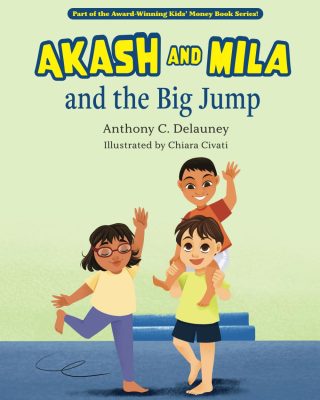
    In Akash and Mila and the Big Jump by Anthony C. Delauney, best friends Akash and Mila excitedly start their first class together at TRIumph Gymnastics.

    They enter a building full of athletes of all ages, shapes and sizes. But they also see captivating trophies, banners, and prizes that gymnasts from the school have won over the years, and hope to eventually have their own trophies, too– that they’ll be winners.

    Though excited to learn today during this special event the school is holding, they’re both nervous to start because they both have never had any gymnastic training.

    A fellow friend, Dash, does the springboard and lands with a perfect pose. Akash tries the same, but lands flat on his belly. He’s worried what the others will say of his first attempt. Mila decides to take a pass on her turn until she feels more comfortable and confident.

    Dash learns that Akash and Mila are scared to try because they don’t want to be made fun of by the others. He has the perfect solution. Dash introduces them to his friend and fellow gymnast, Lulu, and he explains that he felt the exact same way when he started doing gymnastics, but Lulu helped him learn to succeed at the floor exercises.

    Akash and Mila, feeling a bit more adventurous, both try to do the springboard this time.

    The bright and vibrant illustrations allow readers to get fully engrossed in this wonderful children’s story.

    Without a doubt, readers will be cheering Akash and Mila on as they make their attempts at learning the springboard. This book teaches children that, if at first you don’t succeed, you should keep trying until you get it right– even if you’re worried what others might say or think of you. Be your own individual and just know that you tried and gave it your all.

    The author wrote this as book 5 in the Owning the Dash series, which skillfully teaches children that it’s important to have confidence in yourself because you can achieve anything you set your mind to.

    Akash and Mila and the Big Jump is a compelling and effective learning tool for children, without making the learning process to obvious.

    The characters were very believable and fun to get to know, allowing children to want to become friends with Akash, Mila, and the other gymnasts at the school. Akash and Mila and the Big Jump was written for ages 4-8 years and fits perfectly for children within that age range.


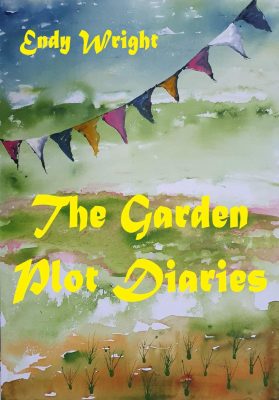
  • THE GARDEN PLOT DIARIES by Endy Wright – Short Story Collections, Small Town Fiction, Humor

    THE GARDEN PLOT DIARIES by Endy Wright – Short Story Collections, Small Town Fiction, Humor


    Endy Wright’s The Garden Plot Diaries is a delightful collection of four short stories about life, relationships, and consequences.

    Wright captures the gossip and rivalries between factious groups of town folk, all between sixty and ninety-something, who have known each other since childhood and carry the grudges to prove it. Our delightful narrator professes, “I am a rambling old man with a tale to tell and in no hurry to tell it.” So, settle in.

    Hailing himself from New Hampshire, Wright has set these stories in Monadnock, a New England town/region which he peoples with a menagerie of colorful octogenarians who drink, dance, and feud. In the voice of his narrator again, “[these are stories] of chaos creeping into God’s Garden.” Wright’s stories certainly do deliver a wonderful kind of chaos and pandemonium usually expected in a kindergarten class.

    We meet Old Lady Sourton, known after her introduction as the OLS. We meet Ivendricus Poudry, or Iven as his friends call him, the sidekick to our narrator, and of course our humorous and witty prankster narrator whose name we never learn, even as we grow to love him.

    These delightful characters, and so many more, leap off the page as they garden or go to the Oval in the town center to visit, shop, or pick up the morning paper. A tall tale lurks behind every pair of garden sheers and pot of tomato plants.

    No place is safe, even while fishing on the ice. Iven and our narrator head out with Ned Jalbert and Chester Turcotte with some of Iven’s famous Lion’s Tooth wine. Our narrator brings along his fresh homemade cheese he calls Cutting Cheese. They travel to Lake Massabeesacomapesit and commence the tradition of setting up their picnic in the ice fishing house or “bob.” Soon, the wine and cheese are flowing, and the stories turn surprisingly real for our fishermen.

    Wright spins his yarn and lures us into these hilarious fishing stories. Within the hour, the characters are reliving their WWII battle memories and becoming a force that even Eris Heavystep’s twelve-year-old twins can’t compete with– and when I say they can’t compete, these boys didn’t know what hit ‘em that day on the ice.

    After our heroes wake from their post-fishing naps, they find that the OLS has won their special cheese at the town’s Christmas auction.

    They waste no time in getting to the OLS’s house only to find they are too late. Her Zulu war outfit is missing from the mannequin in her museum-like home. Music is blaring and they can’t find the OLS. When they do, Wright describes a scene that will have readers rolling on the floor.

    The grand finale is a ghost story to end all ghost stories, as only Farmer Horthfarger Ghunt can tell.

    He sets a group of youngsters down in his pumpkin storage shed and spins a yarn for Halloween that would make Freddie Krueger run and hide. It’s a perfect way to end this wonderful and hysterical romp through Monadnock.

    These four stories capture the quaint side of small-town living in New Hampshire. Wright draws a picture of a small town then colors outside the lines. Readers will fall in love with this motley crew of mischievous elders planting their gardens and sowing the seeds of prankery and high jinks. Five stars all the way!


    5 Star Best Book Chanticleer Reviews round silver sticker

  • EARTHLY VESSELS by David T. Isaak – Metaphysical Fiction, Coming of Age, Mystical Fiction

    EARTHLY VESSELS by David T. Isaak – Metaphysical Fiction, Coming of Age, Mystical Fiction

    In Earthy Vessels by David T. Isaak, Crystal Keeling encounters a mystical power that sends her on a journey of true chaos.

    Crystal wasn’t necessarily seeking spiritual enlightenment on the streets of Manhattan, but there were certainly plenty of fools and charlatans peddling it back in 1969 – as well as both legal and illegal means of achieving ‘higher consciousness’ one way or another.

    Fortunately – and unfortunately – for Crystal, the man who found her, cult leader Anton Reginald LaMarr, and his Children of Pan were the real deal, whether they knew it or not. They had discovered a ritual that could draw down the soul of a Hero, and planned to implant that Hero’s soul into Crystal – using the usual orgiastic methods.

    Crystal was fine with the ritual sex but had not signed up for imprisonment and pregnancy. She ran far and fast and never looked back.

    When she discovered that she really was pregnant despite the birth control regimen she religiously maintained, she took it in stride – as did all the other members of whichever commune or co-op she happened to be living in at the time.

    The child, however, a boy she named Rainbow Bounty, rebelled against her counterculture lifestyle every bit as much as Crystal had rebelled against her conservative upbringing before him.

    Thus, readers follow Rainbow Bounty, who calls himself by his initials RB, pronounced ‘Arby’, because having people in the early 2000s think you’re named for a brand of fast food is much better than advertising that your mother was and still is a ‘flower child’. Arby makes his way from a job in the oil fields of Bahrain to Portland, Oregon because his mother hinted that there is a life-threatening event on the horizon.

    But she’s not the one whose life is about to be threatened and thrown off its course.

    The ritual that gave Arby life is about to come crashing down on his head – one way or another – and the fate of the world rests on him reconnecting with the abilities of his past lifetimes.

    Whether those abilities will help or hinder is a crapshoot of the highest order, because Arby isn’t the avatar of some long-dead Hero or God. That would be much too easy. Arby is, as he has so often been in his life, the avatar of chaos, the embodiment of Murphy’s Law.

    Arby is destiny’s Fool, and his purpose is to cast all plans into disarray. Even his own.

    Earthly Vessels, beginning as it does in the counterculture movement of the 1960s, reads with a sense of nostalgia for that brief era, and Crystal’s acceptance of and equally brief involvement with the Children of Pan fits right in with books of the time, from the Harrad Experiment to Stranger in a Strange Land.

    As the story moves from Crystal to Arby, a different perspective emerges, as the reader learns Arby’s place in the post-9/11 world right along with him. Arby discovers his expected role at a compelling pace, as there are forces beyond his understanding searching for him – on both sides of the cosmic balance that human shorthand calls ‘good’ and ‘evil’.

    The scope of Arby’s story, diving deeply into that longest of long-running battles, with avatars fighting on both sides of the divide, will remind readers of both Good Omens and American Gods.

    Earthly Vessels is both a deep exploration of the philosophy of the cosmos and a compelling thriller in one breathless story.

    Arby is a protagonist readers can easily empathize with, an Everyman who rises to an occasion he never dreamed was possible, doing his damnedest along a path he doesn’t fully understand.

    This story will keep readers turning pages as fast as they can, from the first until the surprising, fitting, and delightful last.

  • STAY With The WAGONS: Ghosts Along the Oregon Trail Book 3 by David Fitz-Gerald – Historical Fiction, Oregon Trail, Mystery Edit | Live

    STAY With The WAGONS: Ghosts Along the Oregon Trail Book 3 by David Fitz-Gerald – Historical Fiction, Oregon Trail, Mystery Edit | Live


    Blue and Gold Badge recognizing Ghosts Along the Oregon Trail by David Fitz-Gerald for winning the 2023 Series Grand PrizeThe wheels roll relentlessly westward. In Stay with the Wagons, book 3 of David Fitz-Gerald’s Ghosts Along the Oregon Trail series, the families upon those wheels must face not only the consequences of the trail behind them but also new dangers that lie ahead.

    Dorcas, the resilient mother, widow, and adventurer will need to summon forth all her remaining strength– physical and emotional– to survive these new challenges. Especially with her children to protect. Their community of waggoneers have supported each other through great hardship, but cracks are growing between them.

    Amongst its incredible beauty, the country they travel through contains great danger, wild animals, and a hidden evil energized by greed and violence. There is a promise, a hope of happiness on the trail west if you Stay With The Wagons, but nothing is guaranteed.

    There’s no turning back now for Dorcas and her children, as they near the halfway point to Oregon.

    She can’t give up on this dream, facing down their long way to go into the unknown. Dorcas yearns to truly become a strong and independent Athena-style woman, yet doubts linger.

    It’s the first day of summer, so the weather conditions are improving, but even this helpful development brings forth new challenges. So far the graves left behind them due to illness have been isolated cases. Dorcas buried her husband, but now she faces her own possible demise as she falls deathly sick.

    While she fights desperately for life, her children must step up to responsibilities beyond their years. Their friends in the wagon train do what they can to help, but can this family carry on and can their mother summon the vitality to recover? Like a mustang out on the plain, will the family’s wild spirit prevail?

    Along the trail there are many spirited encounters. Some are animalistic, some are devilish, some are affairs of the heart– none are predictable.

    Grizzlies, snakes, even scorpions seem to conspire against the invaders of their lands. But true evil lurks in human form, and paranormal forces hovers over the wagons.

    The complications of love are woven within the community, and even beyond. It’s not only romance that provokes trembles, but also the love for family, and wishing only the best of dreams for those who are cherished. When they reach a fork in the trail, life choices must be made with dire stakes.

    Don’t fall behind now. This series continues west to the promised future.

    Author David Fitz-Gerald propels readers through the 1850 American West, alongside the people of that era in the journey of their lifetime. We all know the destination, but no one knows whether– or how– this wagon train will arrive. Fitz-Gerald wields an amazing talent for suspense and surprise twists.

    Readers will feel as if they’re walking the trail step by step with Dorcas and her family, sharing the emotional heights of rocky precipices as well as the depths of valleys in all their vivid beauty and daring, as they continue onward to Stay With The Wagons.


  • WOKELYND by George Denny – Dystopian, Political Fiction, Contemporary Social Issues

    WOKELYND by George Denny – Dystopian, Political Fiction, Contemporary Social Issues

    Wokelynd by George Denny transports readers to a futuristic New California, where the government’s benevolent rhetoric of equity and inclusion disguise instead an insidious quest for power and dominance.

    A panoramic view of New California as an independent nation in 2066 sets the scene. The authoritarian JSS (Justice of Social Soldiers) wields absolute control over the population of this nation, where despotic policies stifle human autonomy. The ‘intersectionality score’ of an individual governs their position in the social hierarchy; the higher the score– the higher the chances one has experienced historical oppression– the higher their privileges. The result is chaos: an ideological rift has taken over the nation as the Liberati challenge the status quo with a stance of ‘Anti-Anti-Racist ideology’.

    Distrust and division pervade New California. The story opens on a fierce military operation between the JSS and Nevada at Lake Tahoe over ideological disputes. The ambiguity and perplexity of soldiers are embodied through Quinceton, a teenage sniper with the identity of a straight cisgender boy of African descent. A soldier under the JSS government, Quinceton straddles his commitment to JSS and his dilemma due to a growing awareness of the complexities in the despotic system. Wokelynd ushers Quinceton along a journey of self-discovery and resistance, along with companions Sarah and Bones, as they navigate the treacherous paths of identity politics and societal change.

    The climax throws Quinceton into the throes of uncertainty as he grapples with the JSS’s professed motive of universal equity versus their thirst for power.

    The horrors of warfare with Nevada further disillusion Quinceton, leading him to question his duty and the greater good of all. As Quinton and his companions navigate through the apocalyptic landscape of post-war New California, they encounter the elderly Tinh, living off the grid with his family. Tinh reveals his involvement in the secret network ‘Rooftop Railroad’, aiding refugees out of JSS’s grasp, as well as opening clandestine chapters in the history New California, which were otherwise written only from the regime’s viewpoint.

    The encounter foreshadows a critical juncture for the three soldiers, especially Quinceton, as they turn to the precarious roles of revolt and defiance. The peril of Anti-Anti-Anti Racist (AAA), the muscle of JSS, awaits them. To AAA patrolpersons, dissenters are terrorists who end up in the ‘DIE’ camp– offers either indoctrination or death. With AAA’s manipulation and severe disciplinary measures in place, the trio is headed for a future where equality reigns supreme.

    George Denny makes an intriguing correlation between language and power dynamics.

    The JSS government exercises control by shaping the discourse of citizens. Phrases such as “Anti-Racist” and “Anti-Anti-Anti-Racist” (AAA) reinforce the ideas that the New Californian Society stigmatizes. Likewise, the title “Knowers”, for the top members of society with the highest influence over people and policymaking, reflects the government’s implied justification for their every decision. But this use of language to maintain authority is echoed in the linguistic tactics of the opposing Liberati to mobilize resistance.

    Social and political allegory of frail government policies and the erosion of freedom manifest through Tinh’s family. Tinh disregards the JSS’s programs aimed at promoting equality and welfare. He stresses autonomy and self-reliance, recognizing the inherent limitations of government projects that perpetuate exclusion and dependency despite their professed objective of encouraging fairness.

    “The most potent weapon in the hands of the oppressor is the mind of the oppressed.” This quote by Steve Biko reverberates in the pages of Wokelynd. This piece lays bare an insatiable desire for power and control contrasted with the indomitable spirit of human agency.