Tag: Chanticleer 5 Star Book Review

  • NUTSHELL REGATTA by Jonna Laster – Picture Books, Children’s Adventure Books, Imagination & Wonder


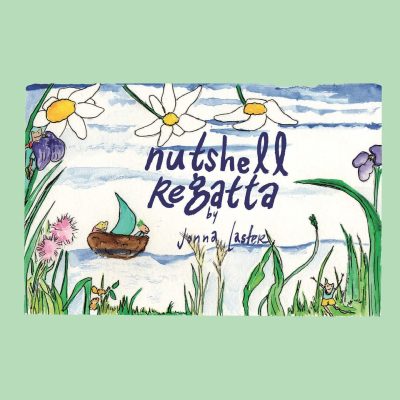
    Little Peeps 1st Place Best in Category Blue and Gold Badge ImageIn Nutshell Regatta by Jonna Laster, the narrator’s grandmother reveals adventures in nature that could easily be missed without her watchful eye.

    With her wise guidance, clouds turn into campers, dandelions hold moon yokes, leaves sing, and a broken branch takes on the form of a fox. Most importantly, twigs and pebbles become sailors who embark on a grand regatta in their nutshell sloops and sailboats.

    Three ships come to the forefront of the story. Two of them sink, their twig sailors swimming safely to a nearby lily pad, while one continues on. Its passengers Burt the pebble and Betula the birch twig encounter what appears to be disaster, but when they fall over a waterfall, the grandmother guides the narrator to listen close. When they hear a faint “yipeeeeee” from the bottom of the waterfall, it’s clear that all has turned out well.

    The narrator takes more ownership over the fantasy in the end, wondering aloud to their grandmother about where Burt and Betula might end up—downstream or even all the way to sea. The grandmother doesn’t miss a beat, suggesting the twig and pebble passengers might send a postcard. And indeed, the final illustration of the book is just that—a postcard from Burt and Betula!

    From beginning to end, Nutshell Regatta is an imaginative poem.

    Laster takes mundane aspects of nature—like twigs, pebbles, and common flowers—and turns them into lyrical images and dramatic adventures sure to captivate any child or child-like heart. The tension of Burt and Betula falling over the waterfall is just the right touch of stress, with a valuable resolution.

    Laster could have resolved the story with the grandmother or narrator scooping the nutshells out of the water to save them. Instead, she takes a different and more developmentally helpful direction: the little sloops fall down the waterfall, and the grandmother coaches the child on creating a happy outcome for the event (the passengers going on a new adventure). This resolution could help guide anxious children to find positive meanings in change and transition.

    The illustrations are wholesome and sweet, with little twig people peeking out of each picture even before they are introduced into the story.

    The images serve the story immensely by bringing to life the cheerful adventurers in all shapes and sizes.

    Regardless of what children take away on a conscious level, they will be delighted by the fantastical lens through which we see Burt and Betula’s adventures.

    But for discerning young readers, Laster’s direct message is that “there are passengers everywhere,” if only you might look for them.

    Children will surely come away from Nutshell Regatta inspired to make twig people and shell boats of their own the next time they find themselves in nature.

    Nutshell Regatta by Jonna Laster won First Place in the 2023 CIBA Little Peeps Awards for Early Readers and Children’s Books.


    Little Peeps 1st Place Gold Foil Sticker

  • GECKOS In The GARDEN by Ruth Amanda – Picture Books, Children’s Animal Stories, Learning to Count


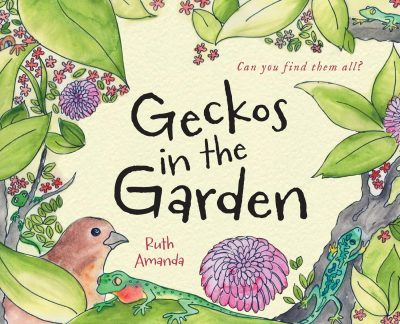
    Little Peeps 1st Place Best in Category Blue and Gold Badge ImageGeckos in the Garden by Ruth Amanda is a children’s counting book that takes readers through a delightful, rhythmic, aesthetically pleasing romp past a series of hidden geckos.

    Amanda starts out with just one gecko in the garden. Every page after, one more is added amongst myriad natural details such as flowers, a snail, a palm tree, garden taps, rocks, a mango tree, leaves, a gate, a bird’s nest, a pond, and more.

    Amanda demonstrates a natural sense of narrative arc even within a counting book—readers will feel the climax of the adventure when they arrive at the ninth gecko and read the line, “I spot one—two—no, six—no, more! Nine!” The escalation of the words’ momentum makes the ninth and tenth geckos more dramatic. Furthermore, the clever dénouement includes the narrator realizing the geckos might watch them just as much as they watch the geckos, and this is written alongside an adorable picture of a gecko looking in the window of the narrator’s home.

    The rhyme and rhythm of the story are extremely satisfying and feel natural, making the book effective at engaging children learning to count.

    The counting practice is not just in the words of the story, but in a scavenger hunt for each of the geckos in the illustrations. When a gecko is hidden in a challenging spot, hints like “I bet I’d find more geckos/If I hunted in the hedge” are integrated into the story. This is sure to create a game out of counting that will please children and adults alike. The images are beautiful and clear at the same time—perfect for ease in counting as well as maintaining interest.

    Pristine formatting helps the excellent writing style and lovely images to shine.

    The font serves the rhythm of the story, with bold words to guide readers toward the correct emphasis in the line. The images are balanced around the words in such a way that the pleasing layout draws the eye in the correct direction down the page. And finally, the consistent placement and slight tilt to the number on each page (“One!” and “Two!” etc.) creates a predictable and comforting routine for young readers to follow, even making it possible for them to anticipate the number that’s coming next.

    Geckos in the Garden is the perfect book for a child learning to count through playful means. Amanda makes it easy for an adult reader to read with a satisfying beat because of the balanced arrangement of words. Any child will surely be inspired to count geckos or other creatures like them upon sight even when the book’s covers have been closed for the day.

    Geckos in the Garden by Ruth Amanda won First Place in the 2023 CIBA Little Peeps Awards for Early Readers and Children’s Books.


    Little Peeps 1st Place Gold Foil Sticker

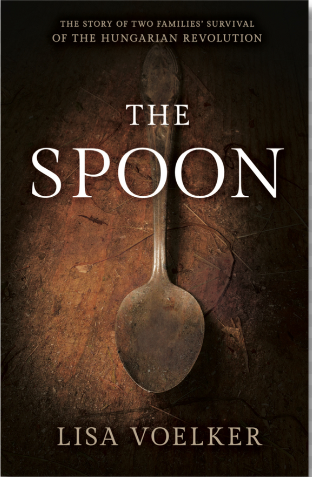
  • THE SPOON: The Story of Two Families’ Survival of the Hungarian Revolution by Lisa Voelker – Historical Fiction, Family Saga, Hungary


    Lisa Voelker’s historical fiction novel, The Spoon, takes us back to the 1950s in Hungary during the daring student uprising, and attempted revolution, in Buda and Pest. The author weaves historical facts with fiction in the form of family lore that has been handed down for generations.
    We follow scores of people whose lives intersected during this uprising of 1956. The revolution was, at its inception, a time of joyous upheaval, but in less than two weeks became one of devastating dissolution. People fled Hungary by the thousands, but not before giving the Soviet Union a taste of their discontent.

    Voelker introduces Rebeka, a member of the Varga family with old ties to the bourgeoisie, who lived a life of privilege on a farm east of Buda and Pest. As well as Peter, a member of the Turea family who attends Budapest Technical University, where students began demonstrating against the Hungarian Government that was under Soviet control.

    Voelker’s cast of characters stems from over a dozen families, some involving four generations, so even as this story focuses on Rebeka and Peter, we get the sense that it is truly the story of a nation. It’s the story of a people who are embroiled in the ramifications of a revolution attempt that was less than two weeks long but reverberated for decades.

    The national pride and courage of the demonstrators stands out.

    Their resilience and continued opposition against the Soviet super-power, pushed forward by the resistance fighters, never wavered. Voelker captures that loyalty and bravery on every page, just as her well-researched novel captures the imagination.

    The ultimate mystery of the book is based on actual family lore, and Voelker keeps us turning the pages to find out what the significance and importance of a particular object is. She gives clues that whet our appetites, and with perfect timing reveals the satisfying conclusion.

    Rebeka and Peter move through the uprising along with friends, family, and people they meet along the way. Voelker’s mastery in developing these interesting individuals keeps us invested in their stories and their successes— and yes, sometimes their failures.

    There are tragedies, as with any war-like situation, and this is an underdog story, much like many international news stories that we see today.

    As philosopher George Santayana wrote: “Those who cannot remember the past, are condemned to repeat it.” This idea has been paraphrased and passed down in many variations, but the truth behind it remains, and we commit this error at our own peril.

    Voelker plays with themes of liberty, freedom, nationality, family bonds, first love, war, and more.

    Her ambitious novel delivers an excellent read while also making connections between the past and the present, and showing us the strength of the family myth— stories that we pass down through generations.

    Lisa Voelker’s The Spoon matches the interest of any history buff, any war novel aficionado, or any reader who loves learning while they enjoy a good book.

    The Spoon by Lisa Voelker won First Place in the 2023 CIBA Goethe Awards for Late Historical Fiction.


  • NOT THAT KIND Of CALL GIRL by Nova Garcia – Contemporary Fiction, Mexican-American Fiction, Contemporary Social Issues


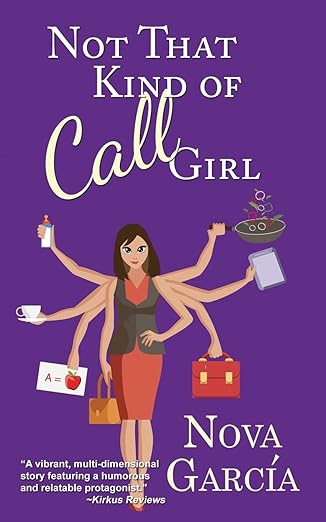
    Blue and Gold Somerset First Place Winner Badge for Best in CategoryIn Nova Garcia’s novel, Not That Kind of Call Girl, Julia Navarro-Nilsson balances a lot heavy responsibilities on her plate. She’s the supervisor of the Cascade City Chronicle call center, has just had her first child, and is dead set on saving her newest employee from a lifetime of abuse.

    As a Mexican-American, Julia knows first-hand how difficult life can be for a minority woman, so when Carmen Cooper shows up for a job interview, Julia is determined to hire the young college student even though her story and answers to Julia’s question are sketchy. This reluctance to share her personal information intrigues Julia, but Carmen’s life turns out to be much more challenging than Julia would have ever dreamed.

    Sussing out the truth behind the timid young woman’s clearly fictional story, Julia turns detective with the help of her reporter friend, Jerry. The two are dogged in their search and discover a secret so deep that it will rock Hollywood — that is, if she can juggle her new baby, her neglected husband, her sexually harassing boss, and an unending visit from her critical mother.

    Julia’s detailed character makes her easy to empathize with, especially as she faces issues that many women confront in the real world.

    Her biggest personal struggle is with motherhood. After the birth of Trey, Julia expects to be overwhelmed with her love and devotion to this tiny person. However, when she doesn’t feel those things — feeling almost the opposite actually — she is shocked and disappointed in herself. She has no immediate connection, instead suffering from postpartum depression.

    To add to her fears of motherly inadequacy, she endures multiple bouts of mastitis — landing her in the hospital on one occasion— and she finds that maternity leave feels like a prison sentence rather than a chance to bond with Trey. She hates that she is missing work and hates that she hates that! Julia’s muddled feelings leave her frightened and uncertain, far from her sense of self pre-motherhood.

    Like many women, Julia has a hard time accepting her body for what it is.

    She has never been a petite size four, like her still-attractive mother, who always pressures her to conform to a different standard of beauty. Julia is tall and full-figured, a curvy, sensual woman. Post-birth, she feels “fat” and unattractive. Because she has to continue wearing her maternity pants (another very common experience), Julie feels as though she has failed again in some way. Though her adorable, loving husband Charlie still tells her she is beautiful and shows her that he continues to find her desirable, Julia has a hard time engaging in any physical contact. Her mother’s comments don’t help the situation, and with her confidence in tatters, Julia stress eats, continuing an unhealthy cycle.

    Julia takes great pride in her position as call center manager for the local newspaper, but that position comes with near-constant harassment from her boss.

    She cares about her employees, knows their problems, and is fighting for their jobs as the newspaper owners negotiate a sale of the business. In fact, it’s this level of concern that leads to her involvement in Carmen’s tragic life. Julia takes her job seriously and maintains high expectations for herself, but at every turn her boss Carlton Cressey epitomizes a villain to all of womankind. He makes jokes about various body parts and propositions Julia directly for sex. Even though she is a hard-working employee, likely his best, he can only see her body and face, so not only is Julia worried about her employees losing their jobs, she is also worried about losing her own if she reports him to HR.

    Julia is a strong, normal woman. She’s not a superhero or a rich Country Club wife. She’s real, and many readers will identify with the problems she faces.

    Not That Kind of Call Girl by Nova Garcia won First Place in the 2023 CIBA Somerset Awards for Literary and Contemporary Fiction.


    Somerset Literary and Contemporary Chanticleer International Book Awards 1st Place Winner oval Gold Foil sticker

  • TSARINA’S CROWN: The Nightingale and Sparrow Chronicles by Jerena Tobiasen – WWI, Historical Fiction, Romance, Espionage, Russian Revolution


    Jerena Tobiasen delivers a sharp, first-rate novel in Tsarina’s Crown, first installment in The Nightingale and Sparrow Chronicles, capturing a precise panorama of Russian politics and British espionage during a delicate period in time.

    The year is 1915 and Simon Temple, a young naval officer aboard the RMS Guardian— a British Royal Navy Ship— patrols the North Sea for questionable communications and marine activity. Months later, he is entrusted by the British crown to serve as a liaison on a covert mission in Petrograd, Russia. Simon is careful not to blow his cover as a young aristocrat while he is thrust into the world of international politics, the ruthless Russian Revolution, and becomes caught right in the middle of two powerful royal families.

    The mission turns out to be longer than Simon anticipated, and his life quickly becomes threatened as he tries to navigate a dangerous political labyrinth, all the while hoping to unearth the spy information that his King requires of him. But as the precarious wheel of mayhem and chaos churns in Russia, Simon’s only way to survive is to escape, realizing that his wit and intelligence might not save him from the tense political atmosphere. Things become even more complicated when he is joined by two other people who hope to flee.

    Told with verve and heart, the plot offers a raw and intimate portrait of events and activities bookended by the First World War.

    The tension and suspense are palpable in every chapter as Simon wrestles his way out of one dangerous situation after another.

    Tobiasen’s lucid writing and adept storytelling capture the culture and intricate details during one of the biggest social and political upheavals of the twentieth century. She takes us behind palace walls of both Britain and Russia, offering readers a globetrotting experience as we glimpse into the intrigues of the aristocracy amid controversy and fiery protests.

    The author does a remarkable job balancing vocabulary and syntax appropriate for this period while using modern language to make her text easily graspable. The meticulous research done before writing this novel is salient in her story and keeps the chronology accurate, a worthy indication of an author in command of her genre.

    Love becomes a central theme in the story, giving weight to the characters’ emotions and connections.

    An element of romance sparks between Simon and Mary, allowing characters to maneuver not just external conflicts but inner ones as well, pushing them to grow as people. Simon Temple is a character to cheer on, with admirable boldness and determination. The supporting characters are memorable and well-wrought too, adeptly playing their role in moving the story forward.

    Tsarina’s Crown: The Nightingale and Sparrow Chronicles is a striking start to a promising series, and one of the best espionage stories in modern historical fiction.

    Tsarina’s Crown by Jerena Tobiasen won First Place in the 2023 CIBA Hemingway Awards for 20th Century Wartime Fiction.


  • ONE Of FOUR: World War One Through the Eyes of an Unknown Soldier by Travis Davis – Historical Fiction, WWI, Family Relationships


    One of Four: World War One Through the Eyes of an Unknown Soldier by Travis Davis is a compassionate and intimate portrait of the tenuous and unforgiving First World War, as shown through the eyes of an American soldier on France’s front lines.

    Based on real people and events in 1918 France, One of Four begins with a young French girl, Camille, who stumbles upon a diary lying next to an unknown American soldier. He was killed among his comrades in a German ambush near the banks of the Aire River, as he tried to protect his fellow soldiers. When Camille comes of age, she leaves her hometown to seek a better life in Paris. There, she is killed after joining a German resistance group. But before her death, she tucked the soldier’s diary in her Bible and hid it in a local bookstore.

    Decades later, a man by the name of Walter travels to France with his son, Alex, to whom he’d become estranged after the painful divorce from Alex’s mother. He hopes this will be a journey of healing and exploration and that their time together will revive their shaky relationship. While there, Alex purchases the Bible left by Camille many years ago. By reading the hidden diary entries of the soldier together, Alex and Walter’s relationships takes an unexpected turn.

    One of Four deftly alternates between Walter and Alex’s story—detailing their growth, reflections, musings, and dialogues—and the soldier’s diary records of his experiences in France.

    The unknown soldier is among the first American to leave the United States to fight in Europe, and his diary entries recounts the excitement and joy that he and his comrades felt upon boarding the ship for France—even as an air of uncertainty casts a long shadow over their lives.

    His narrations relay the enthusiastic reception the US military received in France, but the entries take on a more somber tone as he details the vivid brutality of the war amidst harsh weather conditions. Hiding in desolate muddy trenches, the soldier is worn down by the constant sound of cannons, rigorous combat training and drills, and the sorrowful deaths of his friends from disease and shell fire alike. The author presents these experiences to readers in a succinct and often fervent manner. His wish was to return home, and although his wish was not granted, his thoughts and feelings live on in the diary, even as his remains are laid to rest in the Tomb of The Unknown Soldier back in his home country.

    Davis asserts, “Kindness can be found even in the worst conditions known to man; you don’t have to look far. The compassion that lies in a man’s heart is, at times, overwhelming, and those same hearts are trained to kill their fellow man.”

    The text demonstrates this idea impeccably, with readers retracing the steps of the unknown soldier in the period between 1917-1918, through the bloodshed for which the war was infamous. Yet, his narrations provide an unwaveringly honest panorama of his dedication and loyalty to his fellow soldiers in the face of tremendous challenge.

    This powerfully told tribute to a brave American soldier is not only emotionally resonant but also a worthy demonstration of the resilience of the human spirit in the face of insurmountable tragedy. Here, literary fiction and historical threads are woven together expertly, as the writer whisks us back to a bleak era, one that implores us to reflect and learn as we draw strength from those who came before us. Ultimately, One of Four by Travis Davis is a page-turner whose payoff upon its conclusion is well worth a read.


  • THE SILVER WATERFALL: A Novel of the Battle of Midway by Kevin Miller – WWII Historical Fiction, Battle of Midway, Military History


    In The Silver Waterfall, author retired U.S. Navy Captain Kevin Miller reveals the intricate and deadly turns of the Battle of Midway, a combat shaped by transforming warfare, and one that would in turn shape the rest of WWII’s Pacific Theater.

    After their surprise attack on Pearl Harbor, the Japanese Navy seeks to draw American aircraft carriers into an ambush, to secure Japanese power over the Pacific. In a time of great upheaval for warfare technology, aircraft carriers dominated both sea and sky. So, to destroy the USS Enterprise, Yorktown, and Hornet, Chūichi Nagumo— commander of the Japanese First Air Fleet— brings to bear his own four carriers, HIJMS Akagi, Hiryū, Kaga, and Soryu.

    But the Americans had cracked the Japanese communication codes, so as the First Air Fleet launches their provoking attack against the Midway Islands, the American carriers are already steaming into position. From June 4th to June 6th of 1942, planes filled the skies above the remote Pacific waters, both American and Japanese pilots dashing back and forth, knowing that either they sink the enemy’s carriers, or they’ll have none of their own to return to.

    Author Miller, author of the highly-rated Raven One trilogy of contemporary carrier aviation, draws on his experience as a former carrier-based fighter pilot to place the readers into the shoes of commanders, strategists, pilots, and gunners alike.

    Readers get a glimpse into the intricate planning and communication involved with this sort of naval warfare, as each character struggles to glean the information vital to their own success— and survival. This is a warfare of radio, fuel tank ranges, hand-drawn plotting boards, and cloud cover. Characters clash over the right move, knowing that any mistake could cost their lives and more.

    Amidst all this detailed information, however, The Silver Waterfall takes time to shown the humanity of its characters. Though specific moments and personal dynamics are fictional, each character was a real person in the Battle of Midway. Their little conflicts with each other, their moments of bonding, and the lives that they hope against the odds to return to, become palpable. And every bit of personal charm lives under the shadow of their next flight.

    From the bunks of the aircraft carriers to the cockpit of a Devastator torpedo plane, neither characters nor readers can escape an imposing sense of danger, the ever-present possibility that someone’s unique, full life will be snuffed out in a cloud of black smoke.

    The Silver Waterfall takes on a massive amount of information, given the complex nature of real naval warfare.

    Readers will have to pay close attention to understand the events of the battle, as planes take flight time and time again. Thankfully, Miller provides a list of commanders and naval jargon/acronyms, so those unfamiliar with this specific setting will be able to grasp the details. As well, a few helpful diagrams throughout the book keep locations clear— a luxury not afforded to those in the battle itself.

    Though each side pores over their plans, information is precious and incomplete. The Japanese strategist Genda argues with his superiors as they wait for confirmation on the presence of enemy carriers, just as John Waldron— Commanding Officer of Torpedo Eight— pleads for a fighter escort, knowing that death awaits his pilots without one. But even solid plans have fractures and crack apart amidst tracer rounds and enemy pursuit.

    The dynamics between different groups of pilots stand out amongst the chaos, with torpedo planes (“torpeckers”) and bombing squadrons relying on scouts and fighters to bring them into— and more importantly out of— enemy fire. Tensions rise with every miscommunication and bad decision, as everyone must grapple with the fact that they hold someone else’s life in their hands.

    The Battle of Midway is filled with personal weight. Characters on both sides become easy to empathize with.

    The Japanese pilots are much like the American ones— sent to kill and die for the sake of their country. They share the fear of death, the thirst for vengeance as their comrades fall out of the sky or into the flames of a dying carrier, and heartbreaking moments of grief— all the more horrible for the fact that they can’t take but a moment away from the fight.

    Knowing these characters at a personal level makes each flight gripping. Will Taisuke Maruyama somehow escape the storm of anti-aircraft fire from the American ships? Is Bill Evans really going to follow his CO Waldron to his death? Will Lloyd Childers ever get to pay Darce the money he owes him? Or, will these young men be lost? Readers will feel the importance of each answer they receive.

    More than anything, The Silver Waterfall confronts the horrific impact this battle has on the people who wage it.

    Grief turns to rage, the flames fanned by racism, national supremacy, and the unrelenting, unpredictable chance of death. Miller shows that for every kill made in the name of a fallen warrior, a soldier on the other side etches another name into their memory. But to speak of rage and revenge alone wouldn’t do these pilots and gunners justice.

    It takes monumental feats of bravery for these soldiers to get in their planes and fly into danger. Readers sit with them in those terrible seconds of watching a compatriot go down, and the true comradery of the pilots looking out for one another. They yearn for the glory of a hit on an enemy carrier. They act for their cause despite death all around them. And in an ocean of violence and terror, their humanity, their compassion reminds the reader that these are not just soldiers— they’re boys, some no older than nineteen.

    But this story saves its deepest sorrows until the quiet after the battle, as the characters themselves must do the same.

    With pathos and intricate detail, The Silver Waterfall makes for a fulfilling read.

    Fans of historical fiction will appreciate the clear amount of research that went into this novel, which illuminates the back and forth aircraft carrier warfare in one of its earliest and most impactful forms. Readers of all sorts will end the book with a greater understanding of one of WWII’s most pivotal battles— an understanding both factual and emotional.

    The Silver Waterfall by Kevin Miller won Grand Prize in the 2023 CIBA Hemingway Awards for 20th Century Wartime Fiction.


  • APOCALYPSE In OUR TIME: The Accountant’s Apprentice Book 3 by Dennis M. Clausen – Paranormal, Metaphysical Fiction, Contemporary Social Issues


    In The Accountant’s Apprentice III: Apocalypse In Our Time by Dennis M. Clausen, the director of a homeless shelter sees subtle changes in the community around him, changes that are both worrisome and bizarre—portending a change to the world beyond human understanding.

    The story of Justin Moore, director of a homeless shelter in San Diego, continues. In the previous books in the series, he has met individuals who seem to be not quite of this world. A.C., a mysterious man in a wheelchair who played an important role earlier in the trilogy, is gone as of the third book, but his wheelchair is now being used by another man— seemingly catatonic and with no name. This man is known only as “Levi” by the staff at the bus depot where he was found, but Justin finds there is something more to him beneath the surface. Levi seems to have certain things in common with A.C., but with unique abilities. Justin is warned by a woman that the man he knows as Levi may be dangerous, but is he? And who is she, anyway?

    So many questions are raised, and Justin has few if any answers. In the previous book, he saw a demonic army gathering on the horizon. Was that real? A.C. had given Justin a limited ability to see the future, and a horrifying promise of things to come:

    “No one else saw what I saw that day. They only saw the huge, monstrous tsunami wave approaching from the west and engulfing the Mission Beach Pier. They did not see the demonic army forming on the horizon and threatening every living thing on the shore.

    “… A. C. did what he said he would do. He used me as his camera to see present events—but also future possibilities. What I saw on the pier was not only a vision of the tidal wave that was approaching from the west. It was a vision of the future and the demonic forces of pure evil that were aligned against all life on the planet Earth.”

    Apocalypse in Our Time gives us a peek into the future— or perhaps a peek into our own minds. A story of the world coming of age, so to speak, with menace on the horizon and possible salvation, if such a thing can exist.

    As this story continues, the narrative becomes deeply intriguing. The beginning reintroduces readers to the setting and characters, and once this final part of the series begins in earnest it gives us a sense of wonder and mystery, while at the same time the alarming scenario escalates around Justin. The intensifying plot echoes through well-fleshed-out characters like Angelina, a young girl living in the homeless shelter, fascinated by Shakespeare and his works, who explores her own unique abilities—and connection with Levi.

    End of the world, or something more? That is left to the reader to decide. Certainly, after the events that the characters see and experience, the world—and they—will never be the same. Dennis Clausen’s third work in his trilogy is both ephemeral and thoughtful, making the reader wonder about the end of the world well after the end of the book.


  • R&R: A Feast of Words by Maria Giuseppa – Contemporary Fiction, Friendships & Relationships, Covid-19 Fiction


    In R&R: A Feast of Words by Maria Giuseppa, two life-long friends, Rachele and Raffaele, connect through letters and emails during the early stages of COVID quarantine.

    Their conversations–fusing with each other and evolving rapidly through life stages–culminate in a long-overdue reunion and a trip to Portugal and Italy. Through the loss of a spouse, divorce, parenting struggles, and the apocalyptic reality of COVID-19, two real-as-life characters–oft-neglected in their daily lives–share their thoughts with one another across an intimate distance.

    Simple and elegant, Giuseppa’s heartrending storytelling will inspire readers to live with intention and purpose–and perhaps, to cook more delicious food and write more meaningful letters.

    R&R is a small, close story. With only two active characters, readers come to inhabit their daily monotony and to crave adventure and companionship alongside them. Despite each letter’s lack of timestamps, the current of time is constantly pressing forward in the background. Holidays come and go, tragedies break and are healed, even as some days feel never-ending.

    At first, Rachele’s and Raffi’s confined spaces are palpably claustrophobic. “I think the world as we knew it no longer exists,” Rachele admits. But as time moves on and they realize there is more to their friendship than meets the eye, the world opens for them in both exciting and dangerous ways. Despite how long they’ve known each other and the correspondence that connects them, they realize that there is no end to the newness they uncover in one another.

    In the end, their submission to vulnerability leaves them raw and at the mercy of their instincts, freeing them to live unabashed in their tenderness for one another.

    While an undercurrent of romance keeps Rachele and Raffi drifting ever closer, this novella transcends any superficial sort of tale.

    This is a story of two people who belong with each other no matter what form their belonging takes. Although hints of “long lost love” appear, the reader feels that no romance is necessary for a satisfying ending. As Raffaele admits to Rachele, “For the first time in my life, I am longing for something other than a lover. I want a true friend. You are the one.” This insistence on friendship continues throughout the novella, despite the romance that threatens their close connection.

    They support each other through hardship, coach each other through difficult decisions, and love ceaseless despite mistakes and wrongs. With their letters, the characters create space for vulnerability and cultivate a communal understanding of selfhood despite the physical and social barriers that inhibit their ability to share their lives together.

    R&R will linger in readers’ hearts for a lifetime, urging them to intentionally reflect on their own intimate details, including relationships, adventures, faith, regrets, secrets, loss, politics, trauma, travel, parenthood, and so much more.

    The form of letters allows the characters, as well as readers, to “strip away boundaries and…share” the most vulnerable parts of their lives. Giuseppa weaves together the intricacies of the characters seamlessly into a world all their own. When readers reach the final page and leave Rachele and Raffi behind to finish their glorious adventure, they’ll be moved to feast on their own blessings as well, moving toward openness and belonging.


  • THE SOWER Of BLACK FIELD by Katherine Koch – Historical Fiction, WWII, Religion & Community


    In The Sower of Black Field, Katherine Koch’s historical fiction novel, Father Viktor Koch— a 67-year-old Catholic priest— presides over a monastery in a small German village, as the Nazi regime sweeps through the country.

    The time is April, 1941. Fr. Viktor’s order, the U.S.-based Passionists, built the monastery eight years prior, providing employment for most of the villagers and remaining a symbol of their faith.

    Fr. Viktor has lived in Europe for over 20 years, but balances his love of Germany, its land, its mysticism, with his American roots. He will need all his personal and religious resources over the next four years as the Nazis take hold in the village and, later, the Americans come to “de-Nazify” the town and hold its people responsible for the horrors of the Holocaust.

    The village is far more Catholic than Nazi, even as the regime does its best to turn its citizens away from their faith.

    They take over the monastery despite Fr. Viktor’s strenuous efforts to hold onto it. Their next major push is to remove crosses from the schools. That measure is met with a petition from the villagers, a move that threatens to land them in prison.

    We get to meet several villagers who personify the conflict between their way of life and Nazi fanaticism.

    Norbert and his wife and family run the local bakery, a central food supply to the villagers. His anti-Nazi stance threatens his life as well as destroying this important community resource. Helene, a woman who lost her husband who served in Hitler’s army, will do anything to protect her two sons from their forced enrollment in the Nazi youth corps.

    Klaus, her oldest son, endures his militarist, cult-like corps training. Hans, the youngest, remains true to his Catholic faith. This look into the indoctrination of Germany’s children remains one of the most powerful aspects of this novel.

    Among the Nazis, the party official Seiz becomes the lens through which we see even the most dedicated member recoil when he finds out first-hand the horror of the Holocaust— as it reaches deep into the village in a horrifying, unexpected way.

    Faith in God, and the testing of that faith, is interwoven throughout the novel.

    As Nazi horrors close in on the village, the heavily religious community finds itself questioning how a just and merciful God can allow these acts to happen. Even Fr. Viktor must dig deeply into his faith to answer the unknowable “framework” of God’s plan.

    When the war nears its end, the town becomes flooded with refugees from other parts of Germany. Stories of Russian atrocities and rumors of American “gangsters” flood the small, outlying town. When liberty finally comes, the conquerors impose their own set of rigors on the people, further testing the faith of adults and children alike. Fr. Viktor is stressed to his limit as he becomes the village’s voice.

    The Sower of Black Field shows us everyday Germans as peace-loving people of faith trying to survive during WWII, a side of that terrible conflict not often shown.

    A picture emerges from this novel of people caught up in a conflict not of their making, resisting as they can from its evils, and finding strength in the courageous example of their pastor.