Tag: Chanticleer 5 Star Book Review

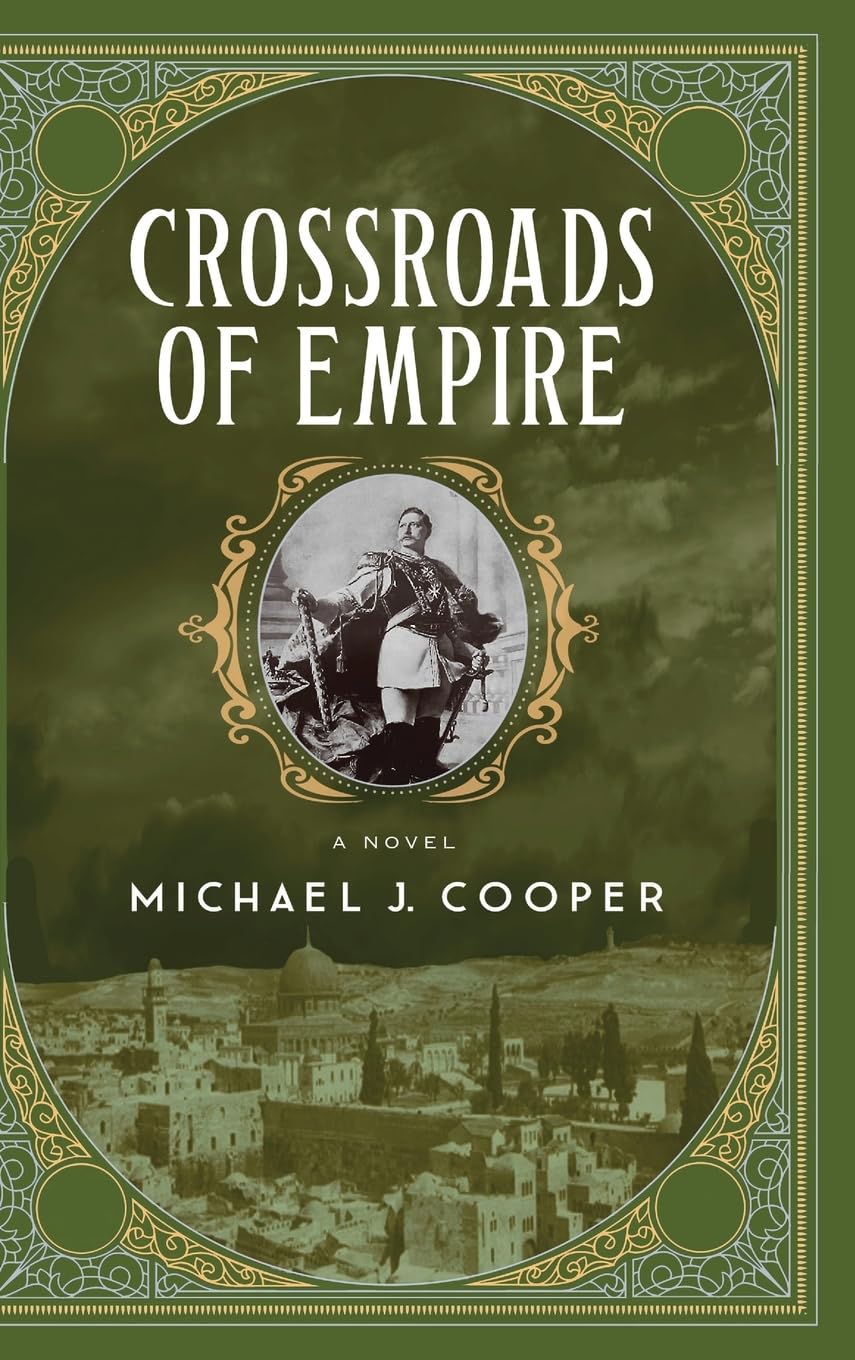
  • CROSSROADS Of EMPIRE by Michael J. Cooper – Historical Fiction, World War I, Family Saga

    Crossroads of Empire by Michael J. Cooper brings readers back into sixteen-year-old Evan Sinclair’s journey through the battlefields of WWI. The adventures and the war itself pick up right where the award-winning Wages of Empire left off. 
    As in the first book, Evan begins his part of this story by going missing, this time not just from his father’s perspective, but from his own. Severely injured during his service with the Flemish resistance, Evan is discharged from a French field hospital. He’s on his way back to England by hospital ship when it is sunk by a German U-boat. When he reaches British shores as the sole survivor in a lifeboat, he’s left with amnesia and has no memory of who he is.

    Evan’s search for his own identity leads him to Rosslyn Castle, the Sinclair family’s ancestral home in Scotland. There he unravels secret family histories and connections long buried. Finally, with assistance from a wise woman, Evan regains his memory. Without the protection the amnesia provided, he faces a host of painful and traumatic memories.

    Crossroads of Empire brings to life a journey of self-discovery set against a backdrop of the war in motion. The horrific trench warfare along the Western Front, the disastrous defeat of the Entente at Gallipoli, and the British route of the Turks at the Suez Canal are made real and vivid to the reader.

    Likewise, Evan’s journey takes place while the imperial powers jockey for position at the crossroads of empire in the Middle East as the Ottoman Empire, the ‘sick man of Europe,’ teeters on the brink of dissolution. The British, seeking to expand their colonial empire, feed the flames of Arab independence through T.E. Lawrence’s missions to the Bedouin tribes and to the man who would be king of an independent Arab State, Faisal son of Hussein, the Sharif of Mecca.

    Cooper’s skillful storytelling sets an unrelenting pace with the international events of the early twentieth century coupled with Evan’s search for answers—about himself and his family’s history.

    Back in England, biochemist and Zionist Chaim Weizmann gives his expertise in the production of key munitions components to the British government in the hope of leveraging his critical contribution to the war effort for the promise of Britain’s backing of a Jewish homeland in Palestine.

    And all the while, Kaiser Wilhelm II looms over the conflict, hoping to sweep in and take the prize he’s always coveted – as have so many others over the centuries – Jerusalem.

    Cooper deftly lays out separate strands of memorable historical and fictional characters across the globe – from Kaiser Wilhelm to a Red Cross volunteer – to bring this chapter of history to life. He elegantly intertwines the multiple strands he has created, making for a read that is both a gripping page turner and a series of carefully observed character studies.

    Two parallel and equally compelling tracks make Crossroads of Empire impossible to put down. First, Evan’s story, which gives readers a young hero they can root for, and then an insightful and multi-dimensional perspective on a dramatic historical struggle now a century in the past, though one that still reverberates in the present.

    The war is thus seen through a kaleidoscope of perspectives beginning with Evan’s father Clive Sinclair at work in London’s War Office, and also includes a fascinating array of people and places which allows the reader to fully experience the war through immediate first-hand experiences. These figures, marvelously brought to life, range from Gertrude Bell and T.E. Lawrence to a proto-Nazi Guido von List in the service of the kaiser, to the future King Faisal of Iraq and the future first president of Israel, Chaim Weizmann.

    As Evan recovers in Rosslyn Castle unravelling long-hidden family mysteries, the war rages on—from the killing fields of the Western Front, to the debacle of Gallipoli, to Lawrence’s mad race across the Sinai to warn Cairo of an Ottoman attack on the Suez Canal. Throughout, Crossroads of Empire races through its world at a breathless pace that will leave readers gasping for more.

    Beautifully written in a voice and in details that capture the era, Crossroads of Empire is a must-read for readers of all ages with high hopes for more of Evan’s adventures yet to come.

    5 Star Best Book Chanticleer Reviews round silver sticker

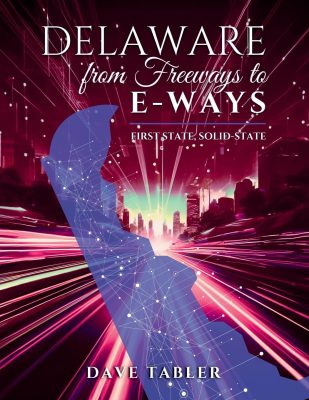
  • DELAWARE From FREEWAYS To E-WAYS by Dave Tabler – American History, Delaware, Vignettes

    Dave Tabler’s Delaware from Freeways to E-Ways presents a nonlinear kaleidoscope view of Delaware’s twentieth-century history, braiding together snapshots of the state through a variety of lenses.

    By dissecting the history of the state’s education system, economy, politics, war, technology, social dynamics, religion, agriculture, and conservation of the natural world, this book becomes a patchwork quilt of Delaware’s contributions to recent American history.

    Tabler strategically places historical images throughout the first half of the book to help paint a vivid picture of what Delaware life has been like across the years. The second half of the book then expounds on every snapshot, allowing the reader to pursue the parts that most interest them. Tabler concludes each of these deeper dives by describing the impacts on present-day Delaware and America. These threads of connection to current events help the reader find meaning within the overall arc of history.

    The reader can feel Tabler’s passion for Delaware’s heritage in his storytelling lilt.

    Sometimes his tone is delighted, such as when he explains the origin of the Punkin Chunkin competition. Other times, he’s awed, using lyrical language to describe the snow geese migrating over Delaware Bay, “Their soft honks echo across the refuge as they glide over the brackish tidal marsh.” He frequently highlights clashing perspectives between historical figures and organizations with the tone of a racetrack commentator. This energizes his depictions of the growth of the du Pont family or the conflict between suffragettes, politicians, and the community. Even heartbreak shapes Tabler’s words as he tells the story of John T. Hopkins, who lost his farm to eminent domain.

    Tabler’s writing style offers an à la carte tour of Delawarean history, clearly supported by thorough research.

    Each story can stand on its own as a vignette, and together they reveal myriad perspectives on the state’s character. The engaging storytelling may encourage readers to dig deeper into the subjects on their own, and Tabler’s mix of historical images with several AI renderings give context to the information.

    Tabler excavates nuanced twentieth-century stories of Delaware with contagious fascination. Readers curious about the ways in which seemingly small events of the past are connected to lasting traditions in the present will find great interest in Tabler’s well-researched view of the state of Delaware.

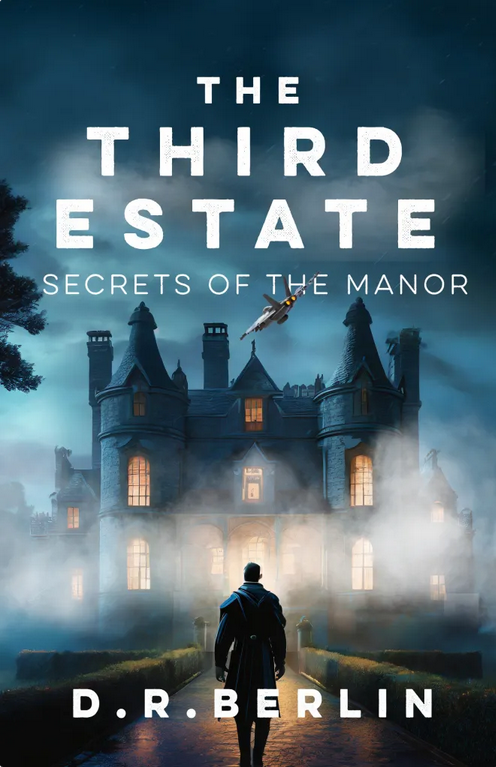
  • THE THIRD ESTATE: Secrets of the Manor by D.R. Berlin – Murder Mystery, Conspiracy Thriller, Amateur Sleuth


    In The Third Estate: Secrets of the Manor by D.R. Berlin, we are introduced to Kai Lovac, an assassin working for The Third Estate—a group of powerful individuals who wield their influence to enrich one another.

    Lovac sets out to kill Professor Milo Anderson, a former member of the prestigious Stockton Military Institute of Combat Aviation in Colorado. The Professor is working on top secret data wanted by both the government and The Third Estate.

    The military has obtained images of Anderson meeting with individuals from The Third Estate, incriminating him as working with a dangerous group known to eliminate any living person who hinders their goals. The military labels him a traitor and will stop at nothing to find out why the Professor has decided to work for such a heinous organization.

    Meanwhile, Cadet Sophie Allard prepares for her last flight at the Stockton Military Institute—which she must fly perfectly to earn her graduation. But an uncovered secret weighs on her mind.

    She recently discovered that her adoptive father, Professor Milo Anderson, used to attend the Institute as well some years ago. She can’t understand why he would keep that secret from her—nor can she let go of the question.

    As she’s going through her practice runs for graduation, she is notified that her father was involved in a lab accident and has passed away. Her superiors allow her time to go to her former home, Grand Lake Manor, to attend her father’s memorial service.

    When Sophie arrives at the family manor, she notices that something is not quite right at her home.

    She sets her mind to a secret investigation, hoping that she can get to the bottom of what actually happened in the lab explosion that caused her father’s death. Sophie doesn’t yet realize that she’s placing her own life in peril.

    Right from the start, readers are pulled into this intricately tangled web of lies, espionage, and assassination attempts.

    As the story begins to unfold, readers will wriggle in their seats as they grasp the many details of the mystery, trying to put together these valuable puzzle pieces. The mystery keeps revealing itself until the very last page of this thriller.

    Readers will think they know a character very well, only to have the rug pulled out from under them further into the story. The many twists and turns make each turn of the page an anxiety-inducing event as readers find out what will happen to each character—and just what side they are truly working for.


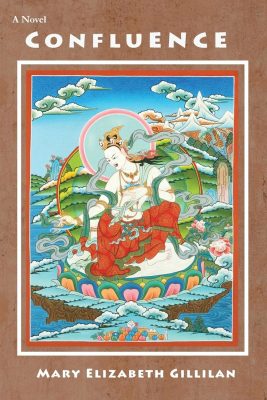
  • CONFLUENCE by Mary Elizabeth Gillilan – Contemporary Fiction, Travel Novel, Buddhism


    In Confluence by Mary Elizabeth Gillilan, Maya has lived much of her life where she feels safe—at home with her Buddhist mother in the small town of La Conner, Washington. But a surprise discovery about Maya’s past pushes her to explore a wholly unfamiliar corner of the world.

    Living with cerebral palsy, and a self-professed homebody, Maya is the queen of getting out of plans. But at sixty-five, two years after her mother passed, Maya finds a suitcase with her grandmother’s diary, several photos, and a letter written by her mother hidden inside.

    In the letter, Maya learns she was born in a place called Sangam and her father could still be living there. The letter names a nun who helped deliver Maya and founded a hospital in that area, Yeshe Maya. Hesitant to leave her comfort zone, Maya waits to write to Yeshe Maya for a year. It takes even longer for Maya to work past all that is holding her back from the call of adventure.

    Maya’s neighbor Jack, who’s like a brother to her, is a seasoned world traveler and supports her in facing her fears. Bolstered by her own desire to learn about her origins and reunite with her father, Maya begins the long journey to Sangam.

    As a sacred place, Sangam’s location is a secret closely guarded from outsiders. A well-known guru wants to find Sangam to use for his own exorbitantly priced retreats. He decides to follow Maya’s movements after he learns the significance of her origin story.

    A journey of unleashing one’s own inner strength, and a love letter to a beautiful location and way of life, Confluence is a gem of a novel.

    Within the first page, the setting and Maya’s character are masterfully established. As a shorter novel, Confluence keeps up this efficient pace. Gillilan’s prose flows easily and carries the plot with natural speed. The shorter chapters provide readers a perfectly-sized break with an uplifting story.

    Confluence is a reminder to step out of your comfort zones because you never know what life there is to live if you don’t go and find it.

    The story is influenced by Buddhist ideology, but Gillilan makes its messages accessible and impactful to readers regardless of their familiarity with Buddhism.

    Mary Elizabeth Gillilan creates her characters with heart. Finding inner strength to seek all the love and wonders life has to offer is a challenge, but it’s one we can all benefit from. In Confluence, we are reminded how that first step, while it may be difficult to take, opens the door to experiences and people that add so much to our lives.


  • EXOSTAR: The Lost Space Treasure Series, Book 1 by Rae Knightly – Sci-Fi, Middle Grade Adventure, Space Opera

    Blue and Gold Badge Recognizing EXOSTAR: The Lost Space Treasure Series, Book 1 by Rae Knightly for Winning the 2023 Gertrude Warner Grand PrizeIt has been said that “the Golden Age of Science Fiction is twelve.” Rae Knightly’s Sci-Fi adventure, Exostar, embodies this childlike sense of wonder that the best of the genre evokes in its readers.

    Twelve-year-old child-robot Trinket takes off on a rocketing spaceship straight towards danger and excitement, with the mostly able assistance of the blue-furred spy and saboteur Woolver Talandrin. Trinket is searching for identity—as all the best young science fiction protagonists do. Woolver is trying to bring down an evil empire—as all the other best science fiction protagonists do.

    Together they’ve been thrust into the kind of epic tale that is guaranteed to keep young readers on the edge of their seats—including the twelve-year-old that lurks inside every science fiction fan.

    Trinket doesn’t know exactly who or even what she is.

    Her memories begin at age six with a mad scientist she believed, or at least hoped, was her creator. But the old man is dead, and Trinket is alone and looked down upon by the residents of her backwater colony as a ‘piece of scrap’. Her dreams of escape are on the verge of coming true when she’s captured by the occupying forces of the Remnants who are gobbling up the galaxy, even as Woolver and his crew attempt to stage a rebellion.

    The Remnant’s Supreme Leader is convinced that Trinket, whether child or android, is the key to the biggest treasure the galaxy has ever seen. Trinket knows only that there is some great secret locked in her mind—or maybe it’s her memory banks—that will either save the universe or destroy it. And her, as well.

    Exostar is fast and utterly furious from the very first page.

    Trinket’s search for identity will resonate with young readers, while older science fiction fans will also be caught up in the struggles of the wider galaxy. The epic fight between good and evil, the fractured Alliance vs. the rapacious Remnants, is sure to light a spark in any and all readers.

    As the opening salvo in The Lost Space Treasure series, Exostar does an excellent job of setting the scene for the ongoing adventure.

    Trinket begins as a young person searching for herself, and it’s clear from this first book that the series will be her coming of age journey where she finds that identity, whatever it might be. She has been beaten down by her circumstances and will have to learn to stand confidently on her own two feet—even if one of those feet is attached to a prosthetic leg.

    The universe in which Trinket finds herself is in a chaos that deepens over the course of Exostar. There is a huge struggle on the horizon of this epic space opera. The reader is introduced to it in careful stages as Trinket learns that the galaxy she will have to navigate is much bigger than her small town on its tiny planet could have prepared her for. As her perspective expands, her universe gets bigger, and she brings the reader right along with her on a grand adventure of deadly peril and potentially universe-shattering consequences.

    Exostar by Rae Knightly won Grand Prize in the 2023 CIBA Gertrude Warner Awards for Middle Grade Fiction.


  • TEACHING In The DARK by Genét Simone – Teacher Memoirs, Native Alaskan Culture, Social Issues

    How does place shape who we are—and who we’ll become? In this memoir, Teaching in the Dark, Genét Simone puts that question to the test by recounting her first year as a teacher.

    The initial year of teaching is never an easy feat, but for Simone it was especially challenging, and transformative. She spent it with Native students in the remote island village of Shishmaref, on the Arctic edge of Alaska—no small wonder the school year became an unforgettable one.

    Today, Simone has decades of teaching experience to draw upon. Yet, in this memoir she rarely employs her present voice to reflect on the past. Instead, the narrator remains in the moment: a young and inexperienced Simone, who only knows that she feels destined to be a teacher. When she signs up for the Shishmaref teaching job, she doesn’t even realize that it’s on an island.

    Equipped with snow boots and passion, she arrives on the island only to realize just how unprepared she is.

    She must navigate unfamiliar terrain on the windswept land before the school year even starts. Conveniences that are common elsewhere, from stores to flushing toilets, are hard to come by in Shishmaref. Simone narrates these early days with vigor and levity, allowing readers permission to laugh alongside her at the mishaps. Simone even lets us in on the time she tipped a snowmobile over while trying to plow through a pair of snowdrifts, spilling the garbage she was hauling across the road.

    This lighthearted book is also laced through with necessary moments of seriousness. Simone finds herself confronting questions about herself and her place in the world. Many of the questions are too big for her to answer, but the reflections are still welcome. Though this isn’t an instructive book, she teaches through example, inspiring readers to think deeply about interactions with people from other cultures.

    As the school year begins, she learns the Native people of Shishmaref are grappling with the recent and ongoing impacts of colonialism.

    They’d rather be speaking their Native language, picking berries, and hunting than sitting at a desk and speaking English. The Western-style school where she teaches runs counter to their culture, and the students often struggle with tasks like reading, math, and attendance. Yet Simone starts to find ways to connect with them. The student newspaper she helps run is a great success, because it becomes an outlet for her students’ passion about their community and culture. She keeps looking for more ways to understand her pupils better while also keeping her spirits up, as lesson plans fail, and the darkness of winter grows longer each day.

    In spite of the many surprises and mishaps Simone experiences, a sense of tediousness starts to creep into the school year. For a long time, the snow and the dark days seem endless.

    Some of the brightest parts of the book come when Simone steps out of the classroom, such as her alcohol-fueled Thanksgiving trip with fellow teachers. (Though it’s not terribly raucous, the getaway provides palpable relief from teaching’s monotony.) But the most touching moments come from interactions with her students outside the classroom. She sees them at their best when they’re able to express their culture and the love they have for their land. Simone has one such experience when she takes her students to a ski meet, watching as they rise to surmount unexpected challenges.

    Simone paints a wonderful picture of nearby areas, both in their natural splendor and their importance to humans.

    She visits the remote and rocky Little Diomede Island. There, a village with a brand-new school is perched on the island’s steep, icy cliff overlooking the sea. While Little Diomede is part of the US, its sister island, Big Diomede, sits on the other side of the Russian border—an artificial division that’s long separated Native families living on these islands. Yet, as in Shishmaref, Little Diomede’s traditions persist in spite of colonialism’s influence. In one visceral scene, Simone watches local men pull an immense Alaskan king crab from the ice, before the shifting ice floes force everyone to evacuate. Such danger and challenge is part of life for the people of Little Diomede.

    Back in Shishmaref, spring is beginning to emerge, and Simone struggles to make sense of the year’s experiences.

    What does it mean to try to improve students’ lives through education, while also representing the culture that oppresses them? Although she doesn’t answer questions like this conclusively, her pondering is touching and necessary. She even begins to doubt whether she’s made a real difference in these students’ lives. As the school year ends, she’s forced to ask herself whether she is able to help them more by staying, or by leaving.

    Readers are left to wonder where Simone’s teaching career took her next, and whether she ever found answers to the hard questions of Shishmaref. The book’s remote location and narrative surprises make this story a page-turner. Though it may be cold and snowy on every village street, it’s still enticing to see what’s around the corner.

    This is a tale of finding joy, appreciation, and acceptance in every unexpected moment, offering lessons of respect and supporting others that readers can take back even to warmer and sunnier climes.


  • EATING TOGETHER, BEING TOGETHER: Recipes, Activites, and Advice from a Chef Dad and Psychologist Mom by Julian C.E. Clauss-Ehlers and Caroline S. Clauss-Ehlers – Cooking, Parenting, Childhood Psychology


    blue and gold badge recognizing Eating Together Being Together by Julian C E Clauss-Ehlers and Caroline S Clauss-Ehlers for winning the 2023 Instruction and Insight Grand PrizeEating Together, Being Together is a rare, enlightening book that teaches the importance of family dining, both on the culinary side and in its benefits for childhood and young adult development beyond the kitchen walls.

    Co-authored by master Chef and Dad, Julian C.E. Clauss-Ehlers, and Ph.D. Psychologist and Mom, Caroline S. Clauss-Ehlers, Eating Together, Being Together offers up their parental wisdom and expertise from the heart of the home—the kitchen.

    With informative but relaxed conversations about food choices, preparation, and related activities, the two provide great insight into how family mealtime promotes well-being in a child’s life. As involved adults, they incorporate thoughtful discussions about spending quality time with their children, sharing and mitigating bad feelings, and making wonderful memories. Ultimately, they showcase family meals as nourishment for both the body and soul.

    Within the pages of the book readers will find ways food can serve as a message of care and support, as well as a way to model kindness in the face of questions and concerns.

    The book includes a HAVEN model (an acronym that supports listening to our loved ones), which proves a critical parenting skill. A parent/child shared culinary experience can prove the ideal time to hear and validate a young person’s thoughts and feelings.

    The book is divided into twelve chapters, beginning with “Eating Mindfulness.” The concept is to make kids aware of what they are eating, rather than fooling them into hidden healthy options. Undoubtedly, it translates into other areas of their life. The goal is to raise not only informed eaters, but well-rounded, understanding youngsters.

    Age appropriate activities not only correspond with the recipes, but also suggest a broader theme. For instance, organizing the kitchen for meal prep can translate into putting order in our lives, i.e. cleaning a room or scheduling time for homework.

    From British Flapjack Bars (a sweet oatmeal treat), to Red Snapper baked in a bag, the recipes in this book cover a broad palate.

    Included are soups, salads, snacks, entrees, drinks, and desserts that range from the simple to the sublime and incorporate a variety of tastes, tasks, and techniques. Culinary tips and fun fact sidebars supplement the recipes themselves.

    Baked Mac & Cheese offers up simple comfort, exotic flavors are explored in a colorful Moroccan-Style Vegetable Salad, parents and children bond over “The Most Amazing Homemade Popcorn”, and a Bittersweet Chocolate & Orange Mousse indulges in decadence. Each creation is uniquely enticing!

    This book intentionally foregoes photographs of the dishes so that readers avoid comparisons and can find the perfection in their own culinary craft.

    The final chapter, entitled “Setting the Table for Connection”, finds purpose in coming together to address issues and challenges in the parent/child relationship, and creating family rituals that offer flexibility in our busy lives.

    Eating Together, Being Together by Julian C.E. Clauss-Ehlers and Caroline S. Clauss-Ehlers is an inspirational twofold offering that combines the creative opportunities of the culinary experience with the connections it can strengthen. This unique collection of gastronomical exploration, activities, and advice proves the ideal recipe for building long-lasting connections with food and family.

    Eating Together, Being Together by Julian C.E. Clauss-Ehlers and Caroline S. Clauss-Ehlers won Grand Prize in the 2023 Ciba I&I Awards for Instructional and Insightful Non-Fiction.


  • MATILDE’S EMPRESS: The Visigoth Saga Book 3 by Robert S. Phillips – Historical Fiction, Ancient Rome, Historical Women Leaders

    In Matilde’s Empress, book three of The Visigoth Saga by Robert S. Phillips we follow Matilde’s exploits during the decline of the Roman Empire, with unrelenting battles, meticulous period detail, and insight into how Romans and non-Romans alike dealt with shifting alliances and the frequent loss of loved ones.

    Now eighteen, feisty and wise Matilde has lost a child, her lover, and her safety. After she escapes to Thessalonica where her stepbrother Alaric presides, a courier brings word of Emperor Arcadius’s desire to rid his Eastern kingdom of the Visigoths. All Roman subsidies for the Goth’s armed forces are canceled.

    Ever the advisor, Matilde pushes for Alaric’s people to shift loyalties and align with Stilicho, the sympathetic Roman general who leads the Western kingdom’s military. Under the guise of delivering wedding gifts to the Western Emperor Honorius, a delegation departs to meet with Stilicho. However, not before Matilde enters a three-way marriage with Alaric and his wife, Pentadia.

    During her travels, Matilde discovers she’s pregnant.

    The web of politics becomes more complicated as Stilicho remains on friendly terms but will not go against the East. Soon after the delegation returns, Matilde gives birth to Theodoric. It quickly becomes apparent that without enough money to go around clans will soon fall on each other and dissolve into pure conflict. The chieftains appoint Alaric as King of the Goths, which bestows on him the responsibility to find his people a fertile land far from their enemies.

    As their migration begins, they wade through a land of violence – battles within the barbarian tribes, between barbarian and Roman armies, and between Romans and Huns. Men are slaughtered, and their wives and children are sold to slave traders.

    Amidst the bloodshed, Matilde – Queen of the Goths by virtue of her marriage to Alaric – is taken captive. She becomes enamored with a Roman general, Constantius, and they begin an affair.

    Political machinations – treachery, poor planning by excessively proud men, frequent shifts of power – create an intriguing plot. But while Matilde’s love affairs provide some respite, the near-constant fighting and casual indifference to death wears at the heart. Even Matilde is not immune to the weight of it: “Constantius allowed the captured legionaries to swear allegiance to Emperor Honorius. Only a few refused. He had them executed, along with all the barbarian prisoners. I thought that brutal, but, indeed, how were we to manage prisoners?”

    Even when there’s hope, sorrow lurks nearby: Matilde is finally released to go home to her family, only to find that a sickness has taken many. Alaric insists that their son Theodoric, his only heir, remain with him. He grants Matilde a divorce so that she can return to Italia with Constantius.

    The Roman Empire continues its fall, as usurpers such as Constantine arise, and allegiance to the Western and Eastern emperors is easily turned by gold.

    All sides continue to loot, plunder, and pillage any unfortified community. Incestuous marriages are made as power plays. When a longtime Roman ally of Alaric’s is murdered, the empire’s last grasp of power loosens. In 410 CE, Alaric leads the Goths to sack Rome.

    Lands and migrations are granted, only to see more battle over those lands. Within a year, Britain is no longer Roman. Within eight years, the Romans finally conceded to allowing barbarian tribes to live peacefully within their territory.

    Despite her years of foresight and reasoned counsel, men continued to discount Matilde for being a mere woman. Even Constantius loses interest when she fails to provide him with an heir. Her closest friend, Placidia—ready to marry Constantius once the two divorce – tells her, “A wife either produces sons or she is not a good wife. Your brilliance and other qualities were interesting but not essential.”

    In a few years, however, Placidia seeks her help in fending off Honorius. Matilde muses, “Of course, I will go. My next adventure is just beginning.”

    This final chapter in The Visigoth Saga will satisfy readers with Matilde’s tale of a girl who grows into a woman on her own terms. Phillips dives into the ancient world and brings readers with him to stand side-by-side with a legendary warrior heroine.


  • A HAUNTING At LINLEY: A Henrietta and Inspector Howard Novel by Michelle Cox – Cozy Mysteries, Murder Mysteries, Women Sleuths


    Blue and gold badge recognizing A Haunting at Linley by Michelle Cox for winning the 2023 Mystery & Mayhem Grand PrizeDire darkness descends upon Castle Linley in A Haunting at Linley by award-winning author Michelle Cox. Lord Linley is dead, black blankets and sashes cover windows, mirrors, and all sources of light. Mourning overtakes all—well, almost all.

    Henrietta and her husband, Inspector Clive Howard, return to England and the estate. They come to offer comfort, but quickly discover the family needs much more help than anticipated.

    Lord Linley’s death is only the first.

    Another death follows, and it’s clearly murder. The killer remains a threat among the estate’s residents and guests, who witness yet more extraordinary and concerning activities.

    Henrietta and Clive find Lady Linley beside herself with grief. Her son Wallace shows patience with his mother but has his hands full with his own emotions and the practical concerns of the estate. A fast-evolving financial crisis due to pending taxes and other complications demands immediate action. After all, Wallace is now Lord Linley.

    Henrietta and Clive help where they can. Wallace decides to quickly put the estate, or at the very least parts of the estate, up for sale. He presses on despite great resistance from his mother and other people involved.

    A local realtor arrives to show the home to a potential buyer, but the sale is called off when the agent is found poisoned. Everyone at the estate becomes suspects. A local inspector begins questioning them, but, with Clive’s own background as an inspector and the investigations he and Henrietta have conducted, the duo grow concerned that the local police may be inept. To solve the murder, they have to open their own investigation.

    The family, guests, and staff at Castle Linley all have their own distinct and compelling motives to uncover.

    As Clive and Henrietta explore different possibilities and question the suspects, they run into personal danger. The haunting of the castle adds a further eerie dimension to the facts of the case, as Lady Linley is certain the culprit must be the spirit of a maid who had been hanged.

    In the meantime, other family members outside England are left to manage crises of their own. Elsie and Gunther are living peacefully on a farm in Omaha, meeting life’s struggles head on. Then Elsie is stunned to find Oldrich Exely at their door one day. He has an idea for a specific course of action Elsie must take to change her life, and he is determined to make her comply. Julia struggles with terrible marital issues. Melody is plunged into mischief and can’t find her way out. The historical setting of the 1930’s is well presented across this variety of locales.

    The award-winning duo of Henrietta and Inspector Howard continues with a complex new puzzler in this seventh book of the series. 

    A Haunting at Linley maintains the cozy, suspenseful plotting. It’s filled with interesting clues that invites readers to try to solve the mystery alongside the investigators.

    Each character remains consistent in personality throughout the series and is fascinating to follow and analyze as their character continue to develop throughout each book. An abundant array of suspects are on display for the reader to scrutinize their actions, motivations, and secrets. As the suspense builds on every page, the apparent paranormal incidents will keep you wondering who or what has taken up A Haunting at Linley.

    A Haunting at Linley by Michelle Cox won Grand Prize in the 2023 CIBA M&M Awards for Cozy and Not-So-Cozy Mysteries.


  • FISHING With HYENAS by Theresa Mathews – Life at Sea, Surviving Loss, Women’s Memoirs


    Theresa Mathews’ memoir, Fishing with Hyenas, is filled with adventure, love, and the spirit of an explorer, all on the high seas. In the audio version, the author herself tells this gripping story of love and death, grief and recovery.

    Mathews begins the book in a place most difficult for her. She takes us through her emotional devastation at the news of her husband’s death. We see all the stages of her grief from the initial call: denial, disbelief, bargaining, and finally acceptance. Readers will be hooked in the first chapter.

    She then deftly fills in the gaps with the backstory of how she met her husband Bart, their first date, their decision to commit to one another, and her first time she went for a ride on his Harley. These are often hilarious recaps of her anger and frustration, and her examination of what this relationship with a man who loved the sea would mean for her city-girl life.

    Mathews alternates between the present and past with perfect pacing, giving readers a balance between the immersion in and relief from the intense emotion of her husband’s unexpected death.

    She perfectly captures the experience of grief, revealing her weaknesses and her strengths. The support she received—and the support she gives in return when tragedy hits the families of her friends—is truly inspiring.

    Mathews paints the colorful world of what living and working on the ocean meant for Bart and herself.

    She explores the limits of surviving on the Pacific in a tuna boat with a dead engine. She masterfully builds tension, then releases it, just as the ocean swells take hold of their boat, then release them. Mathews takes us through storms both emotional and meteorological, and by the time she wraps up this heartfelt memoir, we are on the other side of grief and loss and perhaps have a new idea of how to survive ourselves.

    This memoir embraces reality head-on. It reveals the best and the worst about fishing: being at sea for months at a time, weathering monster storms with only a small crew to manage the onslaught of waves and high winds, and sometimes, dealing with the raw guilt of surviving that crashes down upon a person.

    Old timers will appreciate reminiscing about fishing large schools with colorful jigs, when fish were still sold at market value.

    Mathews captures the love of the sea held by her late husband and the members of the Hyenas—a name that has a fabulous story to tell on its own. She develops salty characters that we grow to love, only for us to grieve when they are gone. We relate to Mathews’ own grief and her struggles after Bart’s death. Even if we’re not fishermen, we easily understand the depths of her loss.

    Readers of women’s fiction, memoir, fishing, boat stories, or survival stories will all draw something from this excellent audiobook of Mathews’ memoir Fishing with Hyenas. They’ll find much to laugh, cry, and get goosebumps about as they come to understand the many perils of loving a man who loves the sea.

    This is a five-star listen!

    Fishing with Hyenas won First Place in the 2017 CIBA Journey Awards for Narrative Non-Fiction.